Frequently Asked Questions
-
Who enrolls in TPU?
Most TPU participants are professionals in the field. They work for NGOs, they are journalists, they are practitioners and peace workers. In recent years more and more students of IR and Peace Studies are finding their way to TPU to add some practice indicative substance to their academic background.
-
What are the fees per course?
Is there a discount if I participate in more than one course?
The standard fee of 900 € is due per twelve-week course. There is a reduced fee of 450 € for participants from non-OECD-countries and should you enroll in two or more courses you will get a reduction. Please refer to the table below for all fees.
| | OECD | non-OECD |
| One course: | 900 € | 450 € |
Two courses
incl. reduction: |
1800 €
1500 € |
900 €
750 € |
-
What kind of certificate do I receive?
After completing the “single course option” successfully, you will receive a certificate of completion issued by TRANSCEND International. It will be signed by your respective course instructor and TPU’s current rector and founder of the academic discipline of peace studies: Prof. Johan Galtung. Please note that though all TPU courses are independent from each other, they can be connected to suite your specific interests and needs. You also have the option of a “multiple course diploma” with TPU which allows students and interested participants to combine any number of courses superior to three “3” full courses of their choice.
-
Do you have an MA-programme?
TPU does not offer a Master degrees but practice indicative qualification on selected issues directly pertaining to peace-practice and peace-studies. If you are interested in our courses we are more than happy to assist you in finding adequate courses for your specific field of expertise.
-
Do I get any kind of grades, marks or academic credits (such as ECTS-points or others)?
Please remember TPU does not usually assign academic degrees.The purpose of studying Peace within TPU is to train practitioners for them to apply what they have learned to help overcome concrete situations of strife, conflict and trauma in the real world. We have no interest in creating a hierarchy that underlines who knows more and who knows less. Grades are only given to students who enrol upon explicit advise from their faculty. TPU prides itself of its intellectual independence and institutional autonomy and is therefore not inherently tied to any official university. If you are enrolled in a university you are most welcome to approach your specific faculty to find out whether they would give you credits for one or more of our online courses. This has proven to be a practicable alternative - which of course depends on the university's policy. For instance participants from the university of Costa Rica have successfully done so in the past.
-
Why did the terminology change from Fall/Spring term and summer session to first, second and third term?
The northern and southern hemisphere have different seasons at different times. As an online and therefore trans-border facility, we have preferred to stick to a neutral expression not linked to the seasonal cycle of a given region of the world over another.
-
What's the workload?
All our online-courses are designed for fully-employed or full-time student participants. We assume a work-load of 10-12 hours a week.This time frame, which includes all the reading, group-work, writing of the essay etc, is very subjective and depending on your experience with self-reliant learning and academic work, it can be more or less. The truism that one gets out of the course what one puts into it goes without saying.
-
How do the online-courses work and are there exams/marks?
There will be no exams; basic requirements to pass the course successfully are weekly and bi-weekly reading and writing assignments [which might be (a)individual, (b)collective essays or (c)group-work] and general participation in the course. The course instructors will also communicate with the course about possible online-meetings. The exact appointments for the online-meetings will be decided together with the participants as they have to be adjusted to the different time-zones the prospective students might be living in. The participants will also be asked to meet in the online-forum for collective assignments without the instructor to discuss the ongoing topics. They'll receive their feedback from the instructors after handing in the assignments.
-
What kind of technical devices do I need to participate?
As we want our courses to be accessible for as many people as possible all around the world we try to keep the technical requirements as low as possible for an online-course. You have to be able to access the internet on a regular basis to download the reading material and to upload your contributions/your essays to the course. Interaction is an integral part of the online course. Participants are expected to work together through a chat room provided as facility by TPU and the Galtung-Institut online platform. Some courses may require the use of skype. We recomend you to download for free the last skype version available on the internet and, when possible, to get a Skype premium account, to enjoy fully the advantage of group video calling.
-
How do I enroll? Do you need my CV?
You are most welcome to enroll on our website www.transcend.org/tpu.
Some people who'd like to study with us may be academically well educated but still do not have the respective CVs due to financial or political obstacles. This is why we do not select participants by their CVs but expect all of our students to be able to work independently in an academic context.
-
Is there a deadline to enroll?
Since the number of participants is limited, it is strongly advised to enroll and to transfer the fees latest 1 week before the course starts.For those who are wishing to quit we would recomend to do it WITHIN the first week
Welcome to TPU - the Transcend Peace University
The Transcend Peace University, TPU is an all-online university, currently headed by Prof. Dr. Johan Galtung, widely recognized as the core founding-figure of the academic discipline of peace-studies. Our inter-disciplinary courses are designed to cover issues pertaining to peace and development studies.
As specialists in this domain, we emphasize solution-oriented approaches. Our faculty members are leading peace scholars and internationally recognized mediators. The purpose of TPU, the educational institute of TRANSCEND, is to impart to our students the knowledge and skills required for professional peace and development work.
TPU equips students with analytical and practical competence in conflict-transformation and -resolution. Our methodology draws from more than fifty years of knowledge provided by distinguished researchers and practitioners from all over the world.
Our 12-week and 6-week (Summer Sessions) online courses are addressed to government and non-government practitioners - including students - in need of high level analytical peace & conflict competence. The Galtung-Institut offers additional on-site tutorials in southern Germany - for further information please visit the homepage of the institute: www.galtung-institut.de.
TPU online courses appeal to participants of graduate or post-graduate level, or people with equivalent experience. Participation requires the commitment to read and analyze the materials posted by the academic course instructors, to participate actively in group discussions and assignments and to respect the reading and responding time frames. Our past experience has proven, that participants must be ready and willing to devote no less than six to eight hours a week in order to benefit satisfactorily from the course.
The fees per course amount to € 800 for participants from OECD-countries and € 400 for participants from non-OECD countries for the 12-week courses in spring and fall, and € 400 for participants from OECD-countries and € 200 for participants from non-OECD countries for the 6-week summer courses.
Please understand that our courses are designed
to accommodate a limited minimum as well as a specified maximum number of
participants. When ever the minimum threshold is not met, we reserve
the right to cancel the course and whenever the maximum threshold is
exceeded, further applications will be encoured to enroll in a
different course or apply for the next semester. These are measures of
quality control that serve to improve our teaching and your online
learning experience.
To deepen your studies please visit the Galtung-Institut which is the on-site carrier of the Transcend Peace Universtiy program, offering on-site tutorials on Conflict Transformation during the TPU-terms in Grenzach-Wyhlen in southern Germany.
We will be happy to assist you with any additional information; please contact us: tpu-admin@transcend.org
Enroll to our courses
Please wait a second while we are forwarding to our enrollment page via a secure connection... Support us
The easiest way to contribute is: Donate! You can do so here on the website. Contact us
Please do not hesitate to get in touch for any kind of further
inquiry or specific considerations pertaining to your profile. tpu-admin@transcend.org
TPU History
Below you can get an overview of all our courses since 2011.
2nd Term 2017 (Sep 18th - Dec 8th)
hu
1st Term 2017 (Mar 13th - Jun 9th)
2nd Term 2016 (Sep 19th - Dec 9th)
1st term 2016 (March 14th - June 11th)
12 weeks: March 14th - June 11th 2016
3rd term 2015 (Sept. 21st - Decemb. 19th)
12 weeks: September 21st - December 19th 2015
2nd term 2015 (July 20th - August 29th)
6 weeks: July 20th - August 29th 2015
1st term 2015 (March 16th - June 12th)
12 weeks: March 16th - June 12th
3rd Term 2014 (9/22 - 12/19)
12 weeks: 22nd September - 19th December 2014
2nd Term 2014 (7/21 - 8/30)
6 weeks: 21st July - 30th August 2014
1st term 2014 (3/10 - 6/6)
12 weeks: 10th March - 6th June
3rd Term 2013 (9/30 - 12/27)
12 weeks: 30th September - 27th December
2nd (Summer) Term 2013 (7/15 - 8/29)
6 weeks: 15th July - 29th August 2013
1st term 2013 (12th March - 30th May)
3rd Term 2012 / Winter (September 21st - December 13th)
2nd Term 2012 / Summer (July 16th - August 31st)
1st term 2012 (March 5th - May 25th)
2nd term 2011 (September 26th - December 16th)
1st term 2011 (March 7th - May 27th 2011)
← go backDialogue, Negotiation and Mediation
This course will not be offered during the next terms.
Please check our course overview for similiar courses!Course instructor: Dr. S. P. Udayakumar
As someone put it tersely, we do not get in this life what we deserve but only what we negotiate. In today's world of growing complexities and contradictions, negotiation is a survival skill. Similarly, being an effective negotiator also helps one to be a good mediator and make meaningful contributions to peace and justice in our families, communities and in the larger world. To be an effective mediator is part of being a "good" human being in today's conflict-ridden world. Both negotiation and mediation are based on dialogue. If we think of a spectrum between nonpurposive and nonmanipulative discourse, and persuasive arts (such as rhetoric), dialogue lies somewhere between the two. It is not wholly free from purpose and it may involve arguments that seek to persuade (Lipman, 2003). Negotiation is a structured dialogue just as mediation is assisted negotiation. This course will deal with this important trio, Dialogue, Negotiation and Mediation (DNM).
As dialogue, negotiation and mediation are more of skills than theories, our course will also be skill-based. We will focus on the following sets of skills:
Speaking-Writing-Recording-Communicating;
Listening-Reflecting-Reproducing-Understanding;
Facilitation; Dialogue;
Negotiation; Cross-cultural negotiation
Mediation.
We will be favoring the transformative approach supported by the Transcend method rather than the conventional problem-solving approach.
There will be quite a few short and long articles to be read and discussed (to be distributed); and we will also engage in some online role-plays and play a few simulations. As the course requirement, you could prepare a mediation case study or develop a simulation game or write a theoretical paper on any aspect of the course besides the occasional response papers on the readings.
Books to be followed:
[1] Johan Galtung, Transcend & Transform: An Introduction to Conflict Work (London : Pluto Press, 2004): Johan Galtung distinguishes between hard and soft negotiations. Hard negotiations are a continuation of war by other means. The front lines are called positions, there is fighting over the terrain between them. How much a party is ready to sacrifice and willing to retreat is kept secret. Victory comes to the party whose original position is closest to the result of the negotiation. (page 172) Soft negotiations are the ones in which the link of the conflict worker is removed and the parties have dialogues directly with each other. The effort should be transcending the contradiction between dialogue and negotiation, and transcending [t]he two extreme positions [that] are dialogue with one party at a time and hard negotiations in order to win. (page 178) The transcending position would be having direct dialogues with each other both in pairs and in groups in order to develop ideas and not to win.
[2] Robert A. Baruch Bush and Joseph P. Folger, The Promise of Mediation: Responding to Conflict Through Empowerment and Recognition (San Franscisco: Jossey-Bass Publishers, 1994). This book contrasts two different approaches to mediation. The first is the problem solving approach which emphasizes finding solutions to problems and generating mutually-acceptable settlements. This kind of mediation, which has become dominant, tends to be quite directive and settlement oriented. The second approach is the transformative approach which emphasizes empowerment and recognition as primary goals, not settlement.
[3] Roger Fischer & William Ury (Harvard Negotiation Project), Getting to Yes (1981): offers concise, step-by-step strategy for coming to mutually acceptable agreements in every sort of conflict; teaches how to separate people from problem; focus on interests not positions; establish precise goals at the outset of negotiations; work together to create options that will satisfy both parties; negotiate successfully with opponents who are more powerful, or refuse to play by rules, or resort to dirty tricks; improved theory and practice of negotiation;
[4] William Ury, Getting Past No: Negotiating With Difficult People (New York: Bantam Books, 1991). Getting Past No begins with a recognition that some degree of cooperation is needed between the negotiators for an interest based system to work, and provides a series of techniques for obtaining that cooperation where the other negotiator is either unfamiliar with or rejects the interest based approach; In this book he uses a five step approach: taking time to think, restating the issues from the other person's viewpoint, changing the negotiation process, easing the process of agreement, and closing the option not to agree. Needless to say, his use of catch phrases and his clear examples make these approaches appear both attractive and feasible in situations where one might otherwise question whether they are workable.
[5] Christopher W. Moore , The Mediation Process: Practical Strategies for Resolving Conflict (San Francisco: Jossey-Bass Publishers, 1996). Mediation has become an integral part of resolving disputes in our increasingly contentious society. And while labor, family, and divorce conflicts were the major part of mediation practice just a decade ago, now the field has exploded to include a growing range of commercial, interpersonal, public, and international arenas.
[6] Matthew Lipman, Thinking in Education. Cambridge : Cambridge University Press, 2003.
[7] Brad McRae, Negotiating and Influencing Skills: The Art of Creating and Claiming Value. Thousand Oaks , CA : Sage, 1998.
[8] Roger Fischer and Daniel Shapiro, Beyond Reason: Using Emotions as You Negotiate. New York: Viking Penguin, 2005.
← go backNonviolence
This course will not be offered during the next terms.
Please check our course overview for similiar courses!Course instructor: Dr. Jørgen Johansen
Nonviolence as Political tool and Philosophy
Week one :
Introduction to the course and getting to know your colleagues at the
course. The students will be divided into working-groups of five participants in each. It is
recommended that students who know each other well join different groups. Each group
will benefit from a diversity of backgrounds, ages and we will put in a good word for
gender balance. Students will be asked to write some pages about their background,
motivations and why they signed up for this course.
Week two and three:
What is meant by the terms CONFLICT, PEACE and WAR?
Discussions of the different definitions, their use, advantages and difficulties.
Students are asked to explain to each other in a written text (3-5 pages) How they
understand the concepts and the different ways they are used. After distributing all texts
to every student, they shall comment on each other texts. There will be guidelines
available for how good feedback is given and received. The instructor will focus more on
commenting on the comments and feedback than on the actual texts.
Week four and five: The concept of nonviolent handling of conflicts. Articles will
be distributed and must be read and used as references in the students papers.
The aim is for students to get a better understanding of conflicts and their handling when
nonviolent cases are included.
Each student writes a paper, distributes it among the others in her/his group and all
discuss each others papers.
Week six and seven:
The Gandhian concept of Nonviolence is much more that a political tool. A better
description could be "a philosophy of life". What parts of the tradition from Gandhi are of
value to modern social movements of today? Each student are asked to describe one
movement which clearly are in the tradition and one who would benefit from adopting
more of the Gandhian practice. What are the possibilities and limitations of adopting a
nonviolent philosophy for social movement of today?
Each student writes a paper, distributes it among the others in her/his group and all
discuss each others papers.
Week eight and nine:
The Arab Spring and the use of Nonviolent means to remove authoritarian regimes. The student shall write a paper on one aspect of these events and use literature on NV-theories to explain what happened.
Week ten and eleven:
Nonviolent responses to wars and/or terror. What are the possibilities and limitations for nonviolent reactions to extreme violence? Articles will be circulated and links to web-sites provided.
Each student writes a paper, distributes it among the others in her/his group and all
discuss each others papers.
Week twelve:
This week the course focus on a proposal for how to promote the
nonviolent options in conflicts. What are the roles for schools, NGOs, States, Business
community, International organisations etc etc?
Each student writes a proposal on one specific promotion activity. Arguments in favour
and against the proposal shall be included. Put emphasis on the possible problems,
conflicts and hindrances with promoting Nonviolence.
Examination: The teacher evaluate each students participation in the discussions. In
addition to the texts for each case, the summarizing text for week fifteen is included in
the evaluation. A Certificate is send to all who meets the required standard.
The last week includes a discussion if the whole, or parts of, the group wants to continue
to keep in contact and build a network for support and mutual encouragement in the
future.
All students are offered to receive information via mail for coming courses and activities within TPU and associates.
← go backThe Crisis of Democracy and Capitalism
This course will not be offered during the next terms.
Please check our course overview for similiar courses!Course instructor: Prof. Paul D. Scott
From the Arab Spring to China's Bloggers to Occupy Wall Street
Dr. Paul D. Scott
RATIONALE
Why democracy? What is democracy? Who does development benefit? What is the
nature, scope, and impact of development? What is the causal link between
development and democratization? These questions challenge us at a variety of levels.
All writers on political theory are confronted by the contradictions and gaps that exist
in almost all states that call themselves democratic. These contradictions and gaps
raise more questions than they answer.
In many parts of today’s world, there is a mistrust of democracy as the practice itself
is associated with exploitation, imperialism, colonialism, and war.
There are few satisfactory definitions of democracy. If participation rates are low, is
this democratic? If participation rates are low and this is coupled with a first past the
post election system then is majoritarian rule democratic? Some analysts talk about
party democracy but what happens when the political parties themselves are corrupt,
opaque, and undemocratic? In this case, instead of the term party democracy,
shouldn’t we use the term elite democracy? Finally, the media and IT shapes and
frames political activity. Already in a few short sentences we have at least six
different democracies: electoral, participatory, majoritarian, party, elite, and media.
Since the events of September 11, the debate over democracy has taken on even more
significance. Was Tony Blair’s decision to go to war in Iraq, despite the
overwhelming opposition of the people of Great Britain, democratic? Disturbing
questions remain about fairness, equality, clarity of the voting process, and the
manipulation of information.
The rise of the People’s Republic of China as an economic power has led many
pundits to declare that authoritarian rule is the better political form as it provides both
stability and growth. On a variety of levels this author is repelled by this line of false
reasoning. This, along with the challenge of illiberal democracies, will be discussed.
We are certainly living within the third wave of democratization. Most notably, we
can point to the rise of new democratic states in the immediate aftermath of the First
World War. Tragically, these democracies were easily swept aside by more powerful
reverse currents of militarism, war, and totalitarian regimes. The Cold War and its
surge of frontier wars in which the Soviet Union and the United States challenged
each other indirectly by supporting their client states was not a time when democracy
flourished. In fact, in the name of anti-communism right-wing regimes were
supported, encouraged and propped up. Northeast and Southeast Asia (Cold war
geographies themselves) with the exception of Japan, were categorized by
revolutionary violence and endemic poverty.
There are a number of fundamental questions relating to the third wave: 1) How deep
and lasting has this process been? 2) Will we soon witness another historic reversal?
3) If the new democratic states are weak, then how can we measure and evaluate their
performance in order to strengthen institutions and build a civil society? 4) Lastly,
since all state systems are dynamic, and all traditions inventions, what steps must the
older democracies take in order to enhance and ensure that their political rhetoric
matches reality. Interlocked with the myth and metaphor of democracy comes the
experience and the practice. The concepts of democratization and development have
been shaped and reshaped as political institutions and economic structures have
evolved and changed.
A critical examination of the ideas, interests, competing forces and institutions
involved in the democratization and development debate is at the core of this course.
The stage for this course is of course global but students are encouraged to address
and discuss each weekly topic from their own local-national-regional experience.
Grading will be based on the weekly and bi-weekly assignments.
← go backPeace Business: The Global Compact
This course will not be offered during the next terms.
Please check our course overview for similiar courses!Course instructor: Prof. Frederick C. Dubee
PEACE AND THE GLOBAL COMPACT
RATIONALE
In-depth critical exploration of the context, concept and development of the Global Compact. Examination of theoretical underpinnings of the notion of corporate social responsibility and the role business can and should play in pursuit of peace and justice. Human rights principles; labour rights principles and environmental principles - where do they come from and how can they be applied in different situations?
The Global Compact itself is an exciting experiment in multi-stakeholder network architecture which not only raises issues in governance and credibility but also provides a platform for a number of creative inititaves.
AIMS & OUTCOMES
Opportunity to explore the Global Compact and the role of business with Fred Dubee, a Senior Advisor and long term advocate of the Global Compact - the UN global initiative to engage with business and harness its energy and creativity for peace, development and sustainability. Fred is a highly experienced business executive who was in at the start of this project launched with the personal prestige of UN Secretary General Kofi Annan. This is a rapidly growing field in international development and the course will be of potentially great practical use for students in their future career.
COURSE OVERVIEW
A. Origins and Concept of Global Compact (weeks 1 and 2)
Corporate social responsibility and the role business can and should play in pursuit of peace and justice.
B. Human rights principles (week 3)
C. Labour rights principles (week 4)
D. Environmental principles (week 5)
E. Tackling corruption (week 6)
F. Accountability and Credibility (week 7)
G. Governance (week 8)
H. Creating Levers, The Financial Community (week 9)
I Building for the Future, The Academic Community (week 10)
K. Making a Difference, the research question (week 11)
L. Putting it All Together (week 12)
ASSESSMENT AND PROCEDURES
On-line learning process based on:
• Q and A
• Chats
In this course, the work in each of weeks One to Twelve inclusive will Q and A or chats. The work for each week is worth 5% of
your course mark, making 60% altogether.
At the end of the course, you will be asked to write a 2,500-word essay, which will be worth the additional 40% of the mark. Details of the essay question and criteria for assessment will be distributed later. You have to pass both the coursework section
and the essay in order to gain a Pass mark for the unit.
← go backPeace, Music and the Arts
This course will not be offered during the next terms.
Please check our course overview for similiar courses!Course instructor: Dr. Olivier Urbain
PEACE, MUSIC AND THE ARTS Course Director: Olivier Urbain
The course is mostly based on Felicity Laurence and Olivier Urbain, eds., Music and Solidarity, Questions of Universality, Consciousness and Connection, Transaction Publishers, 2011.
Some articles from Olivier Urbain, ed., Music and Conflict Transformation: Harmonies and Dissonances in Geopolitics, I.B.Tauris, 2008 will also be used. Finally the website of the Transcend: Art and Peace Network (T:AP) will serve as a third source of references. Even though the books are about music, essays can be written about other types of arts, based on the methodology and insights gained from the course.
The twelve weeks will be organized as follows:
Introduction: the power of music and musicians for peace and conflict transformation.
Two weeks with one individual essay.
Theoretical Background: Music, Conflict Transformation, Universality and Identity.
Two weeks with collective essays.
Case Studies: Music, Conflict Transformation and Connectedness.
Two weeks with collective essays.
Musical Events: Music and Ideal Relationships.
Two weeks with collective essays.
Music and the Arts Database: Critical Evaluation of the Transcend: Art and Peace Network (T:AP) Website. Two weeks with collective essays.
Conclusion: Ways to Maximize the Power of Music and the Arts for Peace.
Two weeks with one individual essay.
In short: two individual essays and four collective essays.
Students will learn how to explore and analyze the power of music and the arts for peacebuilding based on the writings of expert researchers and activists. They will also learn how to develop a database as well as their own methodology and expertise in order to further explore this field.
← go backReconciliation
This course will not be offered during the next terms.
Please check our course overview for similiar courses!Course instructor: Dr. Joanna Santa Barbara
Prior Reading: Johan Galtung's "After the Violence: Reconstruction, Reconciliation, Resolution" is available from the TRANSCEND website www.transcend.org
Course structure: This will be based on the forthcoming text, "Reconciliation: Closing the Past, Opening the Future" by Joanna Santa Barbara, Johan Galtung, Diane Perlman. TRANSCEND University Press, 2011.
Week 1: Introduction
Weeks 2 and 3: Elements and Dimensions of Reconciliation
Week 4: Practices of Reconciliation
Week 5: Cases of reconciliation
Week 6: Dilemmas of Reconciliation
Weeks 7-12 will be spent on application of this developing knowledge to cases of reconciliation relevant to each participant, to pursuing issues generated by the participants, and to broadening knowledge by wider reading and discussion.
Assignments: Essays every second week. Some of these may be collective essays.
Evaluation: Will be pass/fail on the basis of written work, comments, research and questions during the course. Where essays are judged to be below standard, there will be opportunity to incorporate feedback and improve them, except for the last one.
Additional reading:
1.Prager CL, Govier T. Dilemmas of Reconciliation: Cases and Concepts. Waterloo: Wilfred Laurier University Press; 2003.
2.Abu-Nimer, Mohammed (ed.) Reconciliation, Justice and Coexistence: Theory and Practice. Lanham, Maryland and Oxford: Lexington Books, 2001
3.Govier Trudy. Taking Wrongs Seriously. Amherst New York: Humanity Books. 2006.
4.Minow, Martha. Between Vengeance and Forgiveness: Facing History after Genocide and Mass Violence. Boston: Beacon Press. 1998.
← go backPeace and Islam
This course will not be offered during the next terms.
Please check our course overview for similiar courses!Course instructor: PD Dr. Abbas Aroua
A- Thematic sessions
1- Islamic history & culture: An introduction to the geography, history, and demographics of the Muslim world and the interaction of Islam with various cultures.
2- Islamic Law: An introduction to Islamic law, its aims, the main domains of goodness, the basic principles of human rights and the laws of war in Islam.
3- Conflict Cartography of the Muslim World (1): Scanning and mapping the conflicts within or involving the Muslim Arab world.
4- Conflict Cartography of the Muslim World (2): Scanning and mapping the conflicts within or involving the Muslim non-Arab world.
5- Conflict & Peace in Islam: Concept of conflict in Islam, non violent vs. violent conflict, perception of conflict in the Arab culture, peace in Islam through its foundational texts.
6-Conflict Resolution in Islam: Conflict resolution as a religious duty, Islamic theory of reconciliation, treatment of historical wounds.
7- Facts vs. Interpretation: Conflicts and the content and interpretation of images, discourses and sacred texts.
8-Positions vs. Interests: Political-Religious Conflicts (Algeria, BinLaden|Bush).
9- Positions vs. Interests: Political-Ethnic Conflicts (Somalia, Soudan).
10- The Clash of Values: Discussion of conflicts related to apparently contradictory values such as respect of sacred vs. freedom of speech, democracy vs. human rights. Illustration with a number of examples (Muhammad's Face Cartoons - Denmark, Fitna Film - The Netherlands, The Scarf - France, The Minarets - Switzerland).
B- Case studies: Conflict Cartography of the Muslim World
A list of 25 conflicts within or involving the Muslim world is given, covering various geographic regions and cultural areas. Some of them will be selected and studied and presented individually or in groups of students. The presentation will address the following:
Background information (geography, history, geopolitics);
Nature of the conflict. What is at stake? Beware, one conflict may hide another! Look at the various types of conflicts in the same place (intra-state, inter-state, national, regional, global, political, socioeconomic, religious, ethnic, etc.).
Mapping (identification of the parties in conflict and their positions/interests/needs, third parties internal or external influencing the conflict)
How to transcend the conflict. This will consist in legitimizing the goals and trying to bridge them in a creative way.
List of suggested conflicts
01 Afghanistan - Pakistan
02 Algeria
03 AlQaeda / USA
04 Azerbaijan
05 Balkans
06 Baluchistan
07 Chad
08 North Caucasus (Chechnya, Ingushetia, etc.)
09 Egypt
10 Horn of Africa (Somalia, Ogaden, etc.)
11 India / Pakistan (Kashmir)
12 Iraq
13 Iran / Gulf States
14 Kurd regions (Iraq, Iran, Syria, Turkey)
15 Lebanon
16 Morocco / Spain
17 Nigeria
18 Sahel
19 Saudi Arabia
20 Southeast Asia (Philippines, Indonesia, etc.)
21 Sudan
22 Turkey/Armenia
23 Western Sahara
24 Xinjiang (East Turkestan)
25 Yemen
In order to give all the students equal chance, the selected 10 conflicts will be studied in random order.
← go backIntroduction to Galtungism
This course will not be offered during the next terms.
Please check our course overview for similiar courses!Course instructor: Prof. Dr. Johan Galtung
This course is directed by Prof. Johan Galtung.
The rationale for giving a six weeks' course with that title is that the word "galtungism" is increasingly heard, and it might be interesting to have a course--and a dialogue!--about its meaning. It is actually done in 50 Years: 25 Intellectual Landscapes Explored, TRANSCEND University Press, 2008, www.transcend.org/tup, the text-book for the course, with 25 chapters. However, only thee first 12 will be explored in this short course focussed on four basic themes:
1. HOLISM AND DIALECTICS - Introduction to epistemology.
This daoist-Orient approach enriches the aristotelian-cartesian views in the Occident and Western universities considerably. Participants will be asked to write a one-page essay on a problem of their choice.
2. DEEP NATURE-STRUCTURE-CULTURE - Three Pillars.
"Something basic underneath"--maybe insights by Darwin, Marx, Freud can be enriched holistically and dialectically? The participants will be divided into chat rooms and produce collective essays.
3. SEEKING VS TRANSCENDING INVARIANCES - Time symmetry.
Are we slaves of the past or are we basically able to "go beyond", to transcend, and create new realities? Can we identify some conditions for transcendence at various levels of the human condition? Again, there will be collective essays focused on specific problems.
4. A VIEW OF MACRO-HISTORY - Sufficiency vs necessity.
Realism vs idealism, optimism vs pessimism; are there other angles such as degree of logical, space and time coupling, and where do they bring us? To Ibn Khaldun? Participants will be asked to write individual essays related to the problem chosen in the first week.
Essays are one page. The course language is English, but the essays can also be in Spanish, French, Italian, German and Norwegian.
← go backThe Arab Spring and the use of Nonviolence
This course will not be offered during the next terms.
Please check our course overview for similiar courses!Course instructor: Dr. Jørgen Johansen
Week one: presentation of participants, relevant background, and expectations. Each write at least one page and circulate to the full group.
Week two: A short history of opposition movements in Tunis and Egypt. Texts will be circulated and the students asked to write a minimum two pages on the situation prior to the first large demonstrations in January 2011.
Week three: The means used my the opposition in Tunis and Egypt. Texts and links to be circulated and each student to write a minimum of three pages of their
understanding and views on the protests, demonstrations, strikes etc.
Week four: What was different in Libya? Based on texts to be circulated the student shall analyse the factors that turned Libya into a civil war and why external states were intervening with military means. The UNSC resolution 1973 shall be commented. A minimum of three pages to be written.
Week five: The opposition in other states in the region. Each student shall give an
overview of the present situation in the region and pick one state for more detail
description. Links and articles will be circulated and the students are encouraged to search for more information on the web and from other sources.
Week six: The role of nonviolence as a way to change the political leadership in
states and the importance of Egypt and Tunis as sources of inspiration for other
oppositional movements in the region. A minimum of two pages from each student. And a short evaluation of the course added to the paper.
← go backThe Challenges of Democracy and Constructing Just Peace
This course will not be offered during the next terms.
Please check our course overview for similiar courses!Course instructor: Prof. Paul D. Scott
Rationale
Why democracy? What is democracy? Who does development benefit? What is the nature, scope, and impact of development? What is the causal link between
development and democratization? These questions challenge us at a variety of levels. All writers on political theory are confronted by the contradictions and gaps that exist in almost all states that call themselves democratic. These contradictions and gaps raise more questions than they answer.
In many parts of today's world there is deep mistrust and suspicion of the older democracies who are associated with violence, war, (neo)colonialism and exploitation. The older democracies in many cases supported and propped up anti-democratic regimes. Yet, in the Mahgreb and other areas it is democratic revolutions that are overthrowing the old regimes. Moreover, the use and misuse of information technologies add new dimensions to social and political activism that are beyond the control of the state.
There are few satisfactory definitions of democracy. If participation rates are low, is this democratic? If participation rates are low and this is coupled with a first past the post election system then is majoritarian rule democratic? Some analysts talk about party democracy but what happens when the political parties themselves are corrupt, opaque, and undemocratic? In this case, instead of the term party democracy, shouldn't we use the term elite democracy? Finally, the media, both traditional and electronic, shape and frame political activity. Already in a few short sentences we have at least six different democracies: electoral, participatory, majoritarian, party, elite, and media.
Since the events of September 11, the debate over democracy has taken on even more significance. In Pakistan, when General Musharraf took power, he declared that he was instituting not martial law only another path towards democracy. The armed forces have no intention to stay in charge any longer than is absolutely necessary to pave the way for true democracy to flourish in Pakistan.
Clearly we can see that by attaching the word democracy to behaviour, even a military coup d'etat, is advantageous because it adds the gloss of legitimacy and credibility. General Musharraf also justified his coup by comparing the sham democracy to true democracy. Who sets the standards?
We are certainly living within the third wave of democratization. Most notably, we can point to the rise of new democratic states in the immediate aftermath of the First World War. Tragically, these democracies were easily swept aside by more powerful reverse currents of militarism, war, and totalitarian regimes. The Cold War and its surge of frontier wars in which the Soviet Union and the United States challenged each other indirectly by supporting their client states was not a time when democracy flourished. In fact, in the name of anti-communism right-wing regimes were supported, encouraged and propped up. Northeast and Southeast Asia, with the exception of Japan, were categorized by revolutionary violence and endemic poverty.
There are a number of fundamental questions relating to the third wave:
1) How deep and lasting will this process be?
2) Will we soon witness another historic reversal?
3) If the new democratic states are weak, then how can we measure and evaluate their performance in order to strengthen institutions and build a civil society?
4) Lastly, since all state systems are dynamic, and all traditions inventions, what steps must the older democracies take in order to enhance and ensure that their political rhetoric matches reality. Interlocked with the myth and metaphor of democracy comes the experience and the practice.
A critical examination of the ideas, interests, competing forces and institutions
involved in the democratization and development debate is at the core of this course. The stage for this course is of course global but students are encouraged to address and discuss each weekly topic from their own local-national-regional experience.
Course Overview
Week One: Why Democracy.
Readings, videos, tasks
http://www.whydemocracy.net/
Tasks: Please add another 10 questions.
View one of the videos and write a two page reflection paper
Week TwoÖ What is Democracy. What is an illiberal democracy?
How can democracy be practiced at the small group level?
How can rules of order and procedure be changed to allow for increased voice?
Read
http://www.foreignaffairs.com/articles/53577/fareed-zakaria/the-rise-of-illiberal-democracy
http://www.newsweek.com/2010/03/11/how-democracy-dies.html
http://www.economist.com/node/15270960
Task - List the minimum requirements (benchmarks) for democracy.
And
Should be employing the term illiberal democracy?
Week Three: Democracy in Asia or Asian Democracy? Democracy in Islam or Islamic Democracy? The battle of values and political/social practice.
Readings:
http://mideast.foreignpolicy.com/posts/2011/02/02/game_over_the_chance_for_democracy_in_egypt_is_lost
http://www.huffingtonpost.com/amnesty-international/unfounded-fears-of-egypti_b_818029.html
Task: Is the above article in Foreign Policy correct? And, should we be fearing Egyptian democracy?
Week Four: Roland Paris At War's End — a critique of post-conflict reconstruction and Wilsonianism.
Readings - http://pdx.academia.edu/PyucinMyoKyawMyint/Papers/547106/At_wars_end_building_peace_after_civil_conflict
Roland Paris's book At War's End is a must read. In it he critiques the formula that has been applied to most post-conflict transitions. Mandy Turner, above reading in turn critiques Paris. You can read the introductory chapters of At War's End on google books.
Question Do we have the luxury of choosing institutional building before liberalization?
Week 5: Measuring Democracy.
Look at Freedom House, the Economist's Index of Democracy and the Asia Democracy Index (ADI). I am the Project Director of ADI.
Question: Is it fair to categorize countries as democratic, partially democratic, and undemocratic? What questions should be asked or can be added to give an accurate snapshot of the state of democracy?
Week 6 -: The role of information technology. Debating the twitter revolution.
Read Morozov, The Myth of Techno-Utopia http://online.wsj.com/article/SB10001424052748703983004575073911147404540.html
Questions:
What role does anonymity play in how network based social movements function? Is anonymity necessary or a precondition: is representation overvalued? How would you imagine a movement that does not hinge on anonymity? According to Evgeny, open source is not necessarily neo-liberal. This means that the idea of unfettered information the Internet provides does not necessarily make societies more free. Do you agree with his argument?
When we speak of information technology, we still posit positive and negative effects. However, if we accept a certain ontological scale in terms of effect (one being more 'real' more 'important' than the other) - then by the same measure - is political action in a city square more effective (both positive and negative) than online activism in the digital square? Compare the two modes of action - if there is a difference, what that difference is, and how they function differently.
Supplementary readings:
Pusey, Michael, 1993: Jürgen Habermas. London: Routledge, pp 89-113.
Rawls, John, 1996: Political Liberalism. New York: Columbia University Press, pp 3-46.
Macpherson, C. B., 1973: :Rawls' Distributive Justice', ch 3 in Democratic Theory: Essays in Retrieval, Clarendon Press, pp 87-94.
Fukuyama, Francis, 1995: :Reflections on The End of History Five Years
Later', History and Theory vol 34 no 2, pp 27-43.
Lynch, Jake, 2009: :The post-aligned mediascape', in Reporting Conflict: New
Directions in Peace Journalism, Jake Lynch and Johan Galtung. Brisbane: University of Queensland Press, forthcoming.
Rogers, Paul, 2009: :A World on the Edge', opendemocracy.net Jan 31.
Suggested but not required readings:
Alagappa, Muthiah, :Indonesia: Transformation of Civil Society and
Democratic Breakthrough', in Alagappa, Muthiah, Civil Society and Political
Change in Asia. Stanford: Stanford University Press, 2004, pp 61-96.
Goldsmith, Benjamin E. and He, Baogang, 2008: :Letting Go without a Fight:
Decolonization, Democracy, and War, 1900-94', Journal of Peace Research
45, 5, pp 587-611.
← go backAdvanced Peace Theory
This course will not be offered during the next terms.
Please check our course overview for similiar courses!Course instructor: Prof. Dr. Johan Galtung
The course is based on the book "A Theory of Peace" by Prof. Johan Galtung, TRANSCEND University Press, 2011; freely available to the participants. Having read Peace By Peaceful Means (London: SAGE, 1996) is an advantage, but not indispensable. Warning: This is not an introductory peace course.
The five parts of the book are divided over the twelve weeks of the course as follows:
Concepts, definitions: Two weeks with individual essays, first your own concept of peace applied to a peace problem of particular concern, then having it challenged, then writing a second version;
Peace Discourses: The theory of the book draws on health studies and the idea that heath:disease=peace:violence, on similarities between pathologies and violences, of diversity+symbiosis taken from ecology, on entropy and chaos and the idea of cosmology (deep culture). There will be two weeks for one collective essay--chat rooms!--on a peace problem applying these perspectives; material to be distributed;
Peace Factors: Major causes of war and peace, macro-histories of war and peace; the role of states and regions, the role of nations and civilization; of the state-capital-civil society-media system. There will be two weeks for one collective essay--chat rooms!--on a peace problem and the role of these factors; material to be distributed;
Peace Actors: The role of peace actors based on gender and generation, religion, law-human rights-democracy, the future professionals taking shape, peace education-business-movements-journalism-arts. There will be two weeks for one collective essay--chat rooms!--on a peace problems and possible role of these actors; material to be distributed;
Peace across levels: Peace with self, across fault-lines, abolition of war as social institution, the role of globalization. There will be two weeks for one collective essay--chat rooms!--on a peace problem at one of these level; material to be distributed.
Conclusion: Two weeks with individual essays, one applying the course to the peace problem picked in Week 1, and one on course evaluation.
In short: four individual essays, and four collective essays; all with responses from the course director.
All essays and all responses will be communicated to all participants for collective learning.
Goal: to acquire a creative, constructive and concrete idea of peace an how to build it, through the book and complex, real life, exercises; having the peace problem of one's own choice discussed with the participants, and with the course director.
General rule: Essays due on Saturdays, next assignments on the following Sunday with the responses. No waiting for latecomers.
← go backPeace Economics: Alternatives to the Present Crisis
This course will not be offered during the next terms.
Please check our course overview for similiar courses!Course instructor: Prof. Dr. Johan Galtung
Course Director: Johan Galtung
Course Secretary: Erika Degortes degortes@transcend.org
The course is based on the digital version of Johan Galtung's forthcoming PEACE ECONOMICS, TRANSCEND University Press, 2012; and the book will later be freely available to participants.
Further, the book PEACE BUSINESS (Transcend University Press, 2009) by Jack Santa Barbara, Fred Dubee and Johan Galtung, together with A THEORY OF DEVELOPMENT (Transcend University Press 2010), by Johan Galtung are part of the program.
The five parts of the book so far (see below) are divided over the six weeks with one individual, then two collective essays based on participant dialogue in chat rooms, two weeks for each essay, and then a final individual essay. The first three essays will be based on Part One, Parts Two-Three and Parts Four-Five of the text and the final essay on the whole book. All essays and responses will be communicated to all participants for collective learning.
A Killing Economy: one week with one individual essay; material to be distributed;
Peace Economics/Business: Culture and Structure: Two weeks with one collective essay--in chat rooms--on a theory problem; material to be distributed
Peace Economics/Business in Action: Examples. Two weeks with one collective essay--chat rooms!--on a concrete problem; material to be distributed;
Conclusion: One week with individual essays on the problem picked in Week 1, and course evaluation.
General rule: Essays due on Saturdays, assignments-responses on Sundays distributed to all participants. No waiting for late-comers!
Goal: to acquire a creative, constructive and concrete idea of the economy and its transformation, through the book and complex, real life, exercises. And, to have the problem of one's own choice discussed with the participants and the course director. The more work you put into the course, the more you get out of it! Most welcome; Johan and Erika.
← go backFrom the Arab Spring to Chinas Bloggers to Occupy Wall Street -- The Crisis of Democracy and Capitalism
This course will not be offered during the next terms.
Please check our course overview for similiar courses!Course instructor: Prof. Paul D. Scott
From the Arab Spring to China's Bloggers to Occupy Wall Street
Dr. Paul D. Scott
RATIONALE
Why democracy? What is democracy? Who does development benefit? What is the
nature, scope, and impact of development? What is the causal link between
development and democratization? These questions challenge us at a variety of levels.
All writers on political theory are confronted by the contradictions and gaps that exist
in almost all states that call themselves democratic. These contradictions and gaps
raise more questions than they answer.
In many parts of today’s world, there is a mistrust of democracy as the practice itself
is associated with exploitation, imperialism, colonialism, and war.
There are few satisfactory definitions of democracy. If participation rates are low, is
this democratic? If participation rates are low and this is coupled with a first past the
post election system then is majoritarian rule democratic? Some analysts talk about
party democracy but what happens when the political parties themselves are corrupt,
opaque, and undemocratic? In this case, instead of the term party democracy,
shouldn’t we use the term elite democracy? Finally, the media and IT shapes and
frames political activity. Already in a few short sentences we have at least six
different democracies: electoral, participatory, majoritarian, party, elite, and media.
Since the events of September 11, the debate over democracy has taken on even more
significance. Was Tony Blair’s decision to go to war in Iraq, despite the
overwhelming opposition of the people of Great Britain, democratic? Disturbing
questions remain about fairness, equality, clarity of the voting process, and the
manipulation of information.
The rise of the People’s Republic of China as an economic power has led many
pundits to declare that authoritarian rule is the better political form as it provides both
stability and growth. On a variety of levels this author is repelled by this line of false
reasoning. This, along with the challenge of illiberal democracies, will be discussed.
We are certainly living within the third wave of democratization. Most notably, we
can point to the rise of new democratic states in the immediate aftermath of the First
World War. Tragically, these democracies were easily swept aside by more powerful
reverse currents of militarism, war, and totalitarian regimes. The Cold War and its
surge of frontier wars in which the Soviet Union and the United States challenged
each other indirectly by supporting their client states was not a time when democracy
flourished. In fact, in the name of anti-communism right-wing regimes were
supported, encouraged and propped up. Northeast and Southeast Asia (Cold war
geographies themselves) with the exception of Japan, were categorized by
revolutionary violence and endemic poverty.
There are a number of fundamental questions relating to the third wave: 1) How deep
and lasting has this process been? 2) Will we soon witness another historic reversal?
3) If the new democratic states are weak, then how can we measure and evaluate their
performance in order to strengthen institutions and build a civil society? 4) Lastly,
since all state systems are dynamic, and all traditions inventions, what steps must the
older democracies take in order to enhance and ensure that their political rhetoric
matches reality. Interlocked with the myth and metaphor of democracy comes the
experience and the practice. The concepts of democratization and development have
been shaped and reshaped as political institutions and economic structures have
evolved and changed.
A critical examination of the ideas, interests, competing forces and institutions
involved in the democratization and development debate is at the core of this course.
The stage for this course is of course global but students are encouraged to address
and discuss each weekly topic from their own local-national-regional experience.
Grading will be based on the weekly assignments.
← go backA Theory of Civilization
This course will not be offered during the next terms.
Please check our course overview for similiar courses!Course instructor: Prof. Dr. Johan Galtung
A THEORY OF CIVILIZATION Course Director: Johan Galtung
Course Secretary: Erika Degortes degortes@transcend.org
The course is based on the digital version of Johan Galtung's forthcoming
A THEORY OF CIVILIZATION, TRANSCEND University Press, now in the making. The
book will later be freely available to participants.
The five parts of the book (see next page) are divided over the 12 weeks course with two
individual essays in the beginning and at the end, and four collective essays in the middle. 5-6
participants will dialogue in chat rooms two weeks, and together write the essay. Johan will be
available some time on Skype for all kinds of queeries.
In the first individual essay you will write about civilization and and what you might see as
problematic; in the second essay you will bring in Part One material, in the third you will bring in
the whole book and in the fourth a reflection on the whole course. Inevitably, you will learn a lot
about other civilizations, and about your own.
The four collective essays will be based on Parts Two, Three, Four and Five respectively.
You will get the material and the assigments for the chat room groups to explore as we
progress; they will typically be both theoretical and practical. The dialogues make learning
mutual.
General rule: Essays due on Saturdays, assignments-responses on Sundays distributed
to all participants; everything communicated to all participants for collective learning.. No
waiting for late-comers.
Goal: to acquire a creative, constructive and concrete ideas of civilizations and their
transformations, and to have the problem of one's own choice discussed with other participants
and the course director. The more work you put into the course, the more you get out of it.
Most welcome! Johan and Erika.
A THEORY OF CIVILIZATION
Overcoming Cultural Violence
Table of contents
Preface
Dedication - to Fumiko Nishimura
PROLOGUE: Civilization and Cultural Violence:
The West vs the Rest Dialogue and Its Discontents: Why, How, Why Not?
Part One CIVILIZATION AS MEANING
[1] What is in a Word: Civilization as Meaning
[2] A Theory of Civilization: Dialogue and Mutuality
[3] 6 Cosmologies: Occident I & II Indic Buddhic Sinic Nipponic+
[4] 7 Dimensions: Nature Self Society World Time Trans Episteme
[5] Relations Among Civilizations: Clash-Vacuum-Dialogue
Part Two SPECIFICATIONS OF CIVILIZATIONS
[6] Genders and Generations: Man:Woman:Occident:Orient?
[7] Classes
[8] Intellectuals and Professionals
[9] Nations and States
[10] Relations Among Specifications
Part Three CARRIERS OF CIVILIZATIONS
[11] Family as Carrier of Deep Structure
[12] Basic Material Needs; Food Sex Sport Technology
[13] Language as Carrier of Deep culture
[14] Basic Symbolic Needs: Art Religion Ideology
[15] Relations Among Carriers
Part Four IMPLICATIONS OF CIVILIZATIONS
[16] Cosmology in Time and Space: Unfolding and Encounters
[17] Cosmology and Conflict
[18] Cosmology Development Environment
[19] Cosmology, War and Peace
[20] Relations among Implications
Part Five EXPLORATIONS OF CIVILIZATIONS
[21] Cosmology Life-cycles: Origin, Maturity, Extinction, Evolution
[22] Is there a General Cosmology for Humanity?
[23] Are there Good and Bad Cosmologies to Construct or Repair?
[24] Premisses and Limitations of Cosmology Analysis
[25] Relations Among Explorations
EPILOGUE: Civilization as a Way of Life
Appendix 1: Civilization Dialogue-Mutuality Indicators
Appendix 2: Two Ways of Being Western: Liberalism and Marxism
Appemdix 3: On the Epistemology of Cosmology Analysis
Endnotes
Literature
Index
← go backEducation for Peace
This course will not be offered during the next terms.
Please check our course overview for similiar courses!Course instructor: Prof. Dr. H.B. Danesh
Course-Overview (not to be reproduced without permission)
Education for Peace course is based on the Integrative Theory of Peace (ITP) formulated by H.B. Danesh. ITP consists of four subtheories:
• Peace is a psychosocial and political as well as moral and spiritual condition;
• Peace is the main expression of a unity-based worldview;
• Comprehensive, integrated, lifelong education is the most effective approach for
developing a unity-based worldview;
• A unity-based worldview is the prerequisite for creating both a culture of peace and a culture of healing.
Education for Peace (EFP) course integrates the concept of unity, in the context of diversity, into contemporary peace education, peace-building, community development, leadership, and governance practices. This course will provide a basic introduction on the theory and practice of EFP, and explores the application of unity-centered methodologies to inter-personal, organizational, inter-group, and global contexts. Topics covered include: concept of unity, definition and classification of worldview, the intersections of developmental psychology with peace and peace-building, theories of social change, and the skills of peace-based education and relationships in the family, school and the community.
Objectives
The study of peace requires exploration of both the genesis of peace and the practice of peace building at intrapersonal, interpersonal, intergroup, and global levels. The development of creative and critical perspectives on theoretical assumptions underlying contemporary theories and practices of peace is another objective of the course.
By the end of the course students should:
- Understand the concepts of Unity, Worldview, and Individual and Collective
Development
- Be able to use these concepts to analyze processes of peace-building, including their own practices and skill-sets as peace-builders
- Understand the relationship between peace, unity, justice, equality, at interpersonal, intergroup, and global levels
- Have a basic understanding of the stages and steps of Education for Peace
- Have a preliminary exposure to skills involved in the practice of EFP
The course provides the necessary framework for analyzing peace-building processes through the lens of unity and engages the participants in creative individual and small group experiments on how to create a culture of peace in their respective work/life environments.
Evaluation
To successfully complete this course, students are required to:
1. Complete a reflection paper of about 2,000 words. The paper should reflect on your journey through the course and your engagement with the course materials. You are encouraged to provide your own thoughts and describe your experiences with regard to the concepts of unity and worldview and how they relate, or do not relate, to conflict-prevention and peace building in your unique environment. The paper is due within 8 weeks after the completion of the course.
2. Participate in online discussion sessions and complete all individual and group exercises and assignment.
Participation Requisites
This course is open to all interested individuals and is particularly suited for those involved in peace studies, educators, education policymakers, those involved with peace-oriented programs by NGO or governmental organizations, and individuals working in zones of conflict, post-conflict communities, and with refugees.
[ Click here to download the complete course outline as PDF ]
← go backPeace-based Leadership
This course will not be offered during the next terms.
Please check our course overview for similiar courses!Course instructor: Prof. Dr. H.B. Danesh
Please see the downloadable outline for details.
[ Click here to download the complete course outline as PDF ]
← go backPeace and the Global Compact
This course will not be offered during the next terms.
Please check our course overview for similiar courses!Course instructor: Prof. Frederick C. Dubee
RATIONALE
In-depth critical exploration of the context, concept and development of the Global Compact. Examination of theoretical underpinnings of the notion of corporate social responsibility and the role business can and should play in pursuit of peace and justice. Human rights principles; labour rights principles and environmental principles - where do they come from and how can they be applied in different situations?
The Global Compact itself is an exciting experiment in multi-stakeholder network architecture which not only raises issues in governance and credibility but also provides a platform for a number of creative inititaves.
AIMS & OUTCOMES
Opportunity to explore the Global Compact and the role of business with Fred Dubee, a Senior Advisor and long term advocate of the Global Compact - the UN global initiative to engage with business and harness its energy and creativity for peace, development and sustainability. Fred is a highly experienced business executive who was in at the start of this project launched with the personal prestige of UN Secretary General Kofi Annan. This is a rapidly growing field in international development and the course will be of potentially great practical use for students in their future career.
COURSE OVERVIEW
A. Origins and Concept of Global Compact (weeks 1 and 2)
Corporate social responsibility and the role business can and should play in pursuit of peace and justice.
B. Human rights principles (week 3)
C. Labour rights principles (week 4)
D. Environmental principles (week 5)
E. Tackling corruption (week 6)
F. Accountability and Credibility (week 7)
G. Governance (week 8)
H. Creating Levers, The Financial Community (week 9)
I. Building for the Future, The Academic Community (week 10)
K. Making a Difference, the research question (week 11)
L. Putting it All Together (week 12)
ASSESSMENT AND PROCEDURES
On-line learning process based on:
In this course, the work in each of weeks One to Twelve inclusive will Q and A or chats. The work for each week is worth 5% of your course mark, making 60% altogether.
At the end of the course, you will be asked to write a 2,500-word essay, which will be worth the additional 40% of the mark. Details of the essay question and criteria for assessment will be distributed later. You have to pass both the coursework section and the essay in order to gain a Pass mark for the unit.
← go backPeace and Democracy
This course will not be offered during the next terms.
Please check our course overview for similiar courses!Course instructor: Prof. Paul D. Scott
Rationale
Why democracy? What is democracy? Who does development benefit? What is the nature, scope, and impact of development? What is the causal link between development and democratization? These questions challenge us at a variety of levels. All writers on political theory are confronted by the contradictions and gaps that exist in almost all states that call themselves democratic. These contradictions and gaps raise more questions than they answer.
In many parts of today's world there is deep mistrust and suspicion of the older democracies who are associated with violence, war, (neo)colonialism and exploitation. The older democracies in many cases supported and propped up anti-democratic regimes. Yet, in the Mahgreb and other areas it is democratic revolutions that are overthrowing the old regimes. Moreover, the use and misuse of information technologies add new dimensions to social and political activism that are beyond the control of the state.
There are few satisfactory definitions of democracy. If participation rates are low, is this democratic? If participation rates are low and this is coupled with a first past the post election system then is majoritarian rule democratic? Some analysts talk about party democracy but what happens when the political parties themselves are corrupt, opaque, and undemocratic? In this case, instead of the term party democracy, shouldn't we use the term elite democracy? Finally, the media, both traditional and electronic, shape and frame political activity. Already in a few short sentences we have at least six different democracies: electoral, participatory, majoritarian, party, elite, and media.
Since the events of September 11, the debate over democracy has taken on even more significance. In Pakistan, when General Musharraf took power, he declared that he was instituting not martial law only another path towards democracy. The armed forces have no intention to stay in charge any longer than is absolutely necessary to pave the way for true democracy to flourish in Pakistan.
Clearly we can see that by attaching the word democracy to behaviour, even a military coup d'etat, is advantageous because it adds the gloss of legitimacy and credibility. General Musharraf also justified his coup by comparing the sham democracy to true democracy. Who sets the standards?
We are certainly living within the third wave of democratization. Most notably, we can point to the rise of new democratic states in the immediate aftermath of the First World War. Tragically, these democracies were easily swept aside by more powerful reverse currents of militarism, war, and totalitarian regimes. The Cold War and its surge of frontier wars in which the Soviet Union and the United States challenged each other indirectly by supporting their client states was not a time when democracy flourished. In fact, in the name of anti-communism right-wing regimes were supported, encouraged and propped up. Northeast and Southeast Asia, with the exception of Japan, were categorized by revolutionary violence and endemic poverty.
There are a number of fundamental questions relating to the third wave:
1) How deep and lasting will this process be?
2) Will we soon witness another historic reversal?
3) If the new democratic states are weak, then how can we measure and evaluate their performance in order to strengthen institutions and build a civil society?
4) Lastly, since all state systems are dynamic, and all traditions inventions, what steps must the older democracies take in order to enhance and ensure that their political rhetoric matches reality. Interlocked with the myth and metaphor of democracy comes the experience and the practice.
A critical examination of the ideas, interests, competing forces and institutions involved in the democratization and development debate is at the core of this course. The stage for this course is of course global but students are encouraged to address and discuss each weekly topic from their own local-national-regional experience.
← go backThe End of the Western Development Model
This course will not be offered during the next terms.
Please check our course overview for similiar courses!Course instructor: Prof. Dr. Johan Galtung
TRANSCEND Peace University Summer term 2012.
Course Director: Johan Galtung
Course Secretary: Erika Degortes degortes@transcend.org
The course is based on the digital version of Johan Galtung's forthcoming A THEORY OF CIVILIZATIONS, TRANSCEND University Press, 2012; and the book will later be freely available to participants.
The five parts of the book so far are divided over the six weeks with one individual, then two collective essays based on participant dialogue in chat rooms, two weeks for each essay, and then a final individual essay. The first three essays will be based on Part One, Parts Two-Three and Parts Four-Five of the text and the final essay on the whole book. All essays and responses will be
communicated to all participants for collective learning.
Week 1: Civilization as Meaning: One week with individual essays by participants on a civilizational problem, which then will be analyzed;
Weeks 2, 3: Specifications and Carriers of Civilization: Two weeks for one collective essay on a concrete problem; material to be distributed;
Weeks 4, 5: Implications and Explorations: Two weeks for one collective essay--chat rooms!--on a concrete problem; material to be distributed;
Week 6: The whole text: One week with individual essays on the problem picked in Week 1, and course evaluation.
General rule: Essays due on Saturdays, assignments-responses on Sundays distributed to all participants. No waiting for late-comers.
Goal: to acquire a creative, constructive and concrete idea of civilizations and their transformations, through the book and real life exercises; and to have the problem of one's own choice discussed with the participants and the course director. The more work you put into the course, the more you get out of it.
Most welcome; Johan and Erika.
← go backAdvanced Conflict Transformation
This course will not be offered during the next terms.
Please check our course overview for similiar courses!Course instructor: Prof. Dr. Johan Galtung
This course is based on the book "A Theory of Conflict" by Prof. Galtung, TRANSCEND University Press, 2010 which will be freely available to participants. It is also assumed that the course participants know some of the pertinent freely available material on transcend.org/galtung.
Further, the elementary book by the same author, Transcend & Transform, London-Boulder CO: Pluto, Paradigm 2003, should be read.
Topics:
-
Concepts, definitions
-
Simple actor conflicts
-
Complex actor conflicts
-
Structural conflicts
-
Conflict across spaces
-
Conclusion
Assignments during the course will be: four individual essays, and four collective essays; all with responses from the course director. All essays and all responses will be communicated to all participants for collective learning.
Goal: to acquire a creative, constructive and concrete idea of conflict and its transformation, through the book and complex, real life, exercises. At the same time to have the conflict of one's own choice discussed with the participants and the course director.
Overview:
The course, which spans 6 weekends, covering a total of 12 weeks, will give an insight into the method of conflict transformation (including conflict theory, conflict analysis & peace theory). In order to develop a more multilateral approach to interactive learning, the course, directed by Prof. Johan Galtung, is organized into modules with the contribution of other experts through six Skype sessions, involving when possible, also parties to the conflicts.Interaction is an integral part of the online course. Participants are expected to work together through a chat room provided as facility by TPU and the Galtung –Institut online platform, and are expected to deliver 6 collective essays (of maximum 10 pages, Font: Times new Roman size 10), on the six cases listed below:
-
ISLAM AND THE WEST: from violence to cooperation ?
-
AFRICA: searching for futures beyond decolonization?
-
The AMERICAS: A declaration of Independence and more North – South cooperation
-
The ASIAS: Japan, China, Korea: toward an East Asian community?
-
The EUROPES: GIPSI (Greece-Italy- Portugal-Spain-Ireland) vs. Germany-EU. The decline of Europe?
-
The MIDDLE EAST and WEST ASIA: "IS" - Turkey-Israel/Palestine-Iran-Afghanistan: Paths towards Nonviolent Diplomatic Solutions?
General rule:
Study course material will be made available on Tuesdays in order to be discussed and developed during the next Skype session. At the end of that, participants will get a collective assignment on which they will work together for the following week. Written collective essays are expected on Tuesdays (eleven days later), whilst responses and comments by Prof. Galtung are issued within 72 hours. Everything distributed to all participants for collective learning. Due to the nature of the course, deadlines must be respected. No waiting for late-comers.
Please notice: the Skype sessions will last 1 (one) hour (with some flexibility) and will be organized according to the time zone of participants and course instructors. They are meant as a Question/Answers session based on the reading material. Studying it is essential!
Study Material:
The course is based on Johan Galtung's books:
-
50 Years 100 Peace and Conflict Perspectives, Transcend University Press
FREELY AVAILABLE TO PARTICIPANTS
-
The Fall of the US Empire and then What, Transcend University Press
available for half price (check our price list here): 10 € instead of 20 € including postage
-
KOREA: The Twisting Roads to Unification, Transcend University Press
available for half price (check our price list here) : 5 € instead of 10 € including postage
Participants will also receive additional reading-material, assignments and comments from the other experts involved during the 12 weeks of the course.
Objectives:
By the end of the course participants should:
-
recognize socio-dynamic contradictions and assess the importance of their dialectics for the diagnosis, prognosis and therapy of conflict formations. At the core of this solution oriented course on conflict transformation, concepts of violence, peace and equity will be studied at the meso (between and within groups), macro (between and within States and Nations) and mega level (between and within Civilizations).
-
be able to use these concepts to evaluate the capacity of the various approaches of peace-building, peace-keeping and peace-making to solve conflicts nonviolently.
-
own methods and heuristic tools which will allow them to improve their professional competencies in the field and enhance their skill-sets as conflict transformation specialists.
The course provides the necessary toolkit for analyzing conflicts and investigating pathways to solutions, through the lens of nonviolence, empathy and creativity.
← go backJust War / Just Peace
This course will not be offered during the next terms.
Please check our course overview for similiar courses!Course instructor: Prof. Paul D. Scott
Iraq, Syria, Libya, Rwanda, Bosnia, Kosovo, Somalia, Sierra Leone, the Congo – these markers of extraordinary violence begs the question of how the international community has reacted and more importantly should respond to genocides, ethnic cleansings, politicides, and mass killings. This is a core issue in not only international law but also in the behavior of individual states and global institutions.
This course will explore the process of how not only what Responsibility to Protect is but how it has been operationalized.
The course will rely on on-line readings. Each topic will seek to ask and partially answer fundamental questions about the nature, scope, and operation of RtoP. Each discussion should take two weeks.
-
Week 1: Just War : Setting and debating thresholds.
Listen and critique President Obama's Nobel Prize Speech.
-
Week 6: Libya, Syria, the Congo?
Did Libya meet the criteria for RtoP?
Why not Syria? The Congo?
← go backDemocracy and Development
This course will not be offered during the next terms.
Please check our course overview for similiar courses!Course instructor: Prof. Paul D. Scott
RATIONALE
Why democracy? What is democracy? Who does development benefit? What is the nature, scope, and impact of development? What is the causal link between development and democratization? These questions challenge us at a variety of levels. All writers on political theory are confronted by the contradictions and gaps that exist in almost all states that call themselves democratic. These contradictions and gaps raise more questions than they answer.
In many parts of today’s world, there is a mistrust of democracy as the practice itself is associated with exploitation, imperialism, colonialism, and war.
There are few satisfactory definitions of democracy. If participation rates are low, is this democratic? If participation rates are low and this is coupled with a first past the post election system then is majoritarian rule democratic? Some analysts talk about party democracy but what happens when the political parties themselves are corrupt, opaque, and undemocratic? In this case, instead of the term party democracy, shouldn’t we use the term elite democracy? Finally, the media and IT shapes and frames political activity. Already in a few short sentences we have at least six different democracies: electoral, participatory, majoritarian, party, elite, and media.
Since the events of September 11, the debate over democracy has taken on even more significance. Was Tony Blair’s decision to go to war in Iraq, despite the overwhelming opposition of the people of Great Britain, democratic? Disturbing questions remain about fairness, equality, clarity of the voting process, and the manipulation of information.
Syllabus – Topics and Readings
-
Week 2: What is democracy?
Readings: Galtung and Scott (G&S), 16-45.
-
Week 3: Setting Minium standards.
G&S, pp. 151-177
-
Week 4: Listing obstacles to democratisation.
G&S, 178-263
-
Week 6 the last task is to ask critical questions for D&D.
Write 25 questions that should be asked about D&D. The first five are:
1. Why democracy?
2. What is democracy?
3. Is there a link between development and democracy?
4. Why development?
5. How can development be sustained in a way that contributes to justice and fairness?
← go backPrinciples of Peace-Based Leadership and Governance
This course will not be offered during the next terms.
Please check our course overview for similiar courses!Course instructor: Prof. Dr. H.B. Danesh
Course Description:
Overview
Peace-Based Leadership and Governance (Leadership for Peace) is a conceptual and practical course designed to provide students with the necessary knowledge and practical skills to:
1. Diagnose various models of leadership and governance,
2. Evaluate the salient characteristics of each of these models,
3. Determine the type of leadership most appropriate for specific circumstances,
4. Identify their own unique potentials and skills of leadership, and
5. Be able to act as effective and progressive leaders in their respective domains of activity in the context of progress and peace.
Topics covered include:
1. Concept of leadership;
2. Definition and classification of various types of leadership;
3. The intersection of developmental psychology, peace and peace-building, and leadership;
4. Theories of social change, and
5. Principles and skills of peace-based leadership and governance.
Objectives
The study of leadership, in general, and peace-based leadership, in particular, requires exploration of:
1. The nature and dynamics of power and authority in human social relationships;
2. The role of worldview in choice of and practice of leadership;
3. The nature and dynamics of peace-based leadership at interpersonal, inter-group, international, and global levels;
4. One’s own approach to leadership, its genesis, positive qualities, possible negative dimensions, and
5. Whether our respective leadership styles are conducive to peace-based approaches to leadership and governance.
By the end of the course students should: Understand the concepts underlying the practice of Peace-Based Leadership; Be able to use these concepts to analyze processes of Peace-Based Leadership, including their own practices and skill-sets as leaders; Understand the relationship between power, authority, justice, and leadership at interpersonal, inter-group, and global levels; Have a basic understanding of the prevalent modes of leadership in various parts of the globe and levels of governance; and Have basic skills of Leadership for Peace
Participation Requisites
This course is open to all interested individuals and is particularly suited for those involved in leadership responsibilities both in the civil society and governmental agencies; business community; and those involved with peace-oriented programs by NGO or governmental organizations, and individuals working in zones of conflict, post-conflict communities, and with refugees.
[ Click here to download the complete course outline as PDF ]
← go backNonviolent Movements
This course will not be offered during the next terms.
Please check our course overview for similiar courses!Course instructor: Dr. Jørgen Johansen
Course Description:
Overview
This course will start with discussions of core terms and concepts. Central here are: 1. Nonviolence // 2. Nonviolent Action // 3. Civil Resistance // 4. Peace // 5.Conflict // 6. Movement // 7. Civil Society // 8. Revolution. The students will read and discuss some of the main movements that have formed our world in the last 100 years.
1. The liberation of India // 2. Solidarity in Poland // 3.The fall of the communist regimes in Eastern Europe // 4. Otpor in Serbia // 5. The recent events in Tunis and Egypt: These are some of the revolutionary movements we will read about and discuss. Nonviolent movements have frequently and successfully fought for development of basic democratic rights and freedoms all over the world. Historical cases will be studied in order to understand the present movements like Occupy, environmental-, animal rights, and peace-movements. The strategies and tactics used will be analysed and explained. How unarmed movements can win against states with armed police and military is one central part of this, but also how violence can backfire and destroy the goals. Students will be trained to use analytical tools on complex societal conflicts and suggest nonviolent actions to create awareness, build a movement, and achieve the goals.
Objectives
The goal is to give the students a deep understanding of the nonviolent movements dynamic, theories to understand the complexity, and skills to start acting. Well aware that 12 weeks are far from enough we will inspire and show how to continue study and practice nonviolence in the time to come. Students will be given the opportunity to dig deeper into a specific topic of their choice in the last part of the course.
Participation Requisites
This course is open to all interested individuals and is particularly suited for political activists, educators, education policymakers, actors involved with liberation movements, with peace-oriented programs by NGO and political movements. It is most suited for individuals working in zones of conflict and post-conflict communities.
[ Click here to download the complete course outline as PDF ]
← go backConflicts at the Micro Level
This course will not be offered during the next terms.
Please check our course overview for similiar courses!Course instructor: Prof. Dr. Kees Van der Veer
Course Description:
Overview
This course deals with interpersonal conflicts, causes, coping strategies and conflict resolution from a social psychological point of view.
Objectives
The objectives of this course are:
1. Getting insight in potential causes of interpersonal conflicts.
2. Getting insight in conflicts in organizations and assessing the contributing factors.
3. Analyzing conflicts and being able to present possible solutions.
Content part one
The first part of the course will deal with potential causes of interpersonal conflicts, with attraction and relationships, with the development of social attachments. Attitude formation and behavior will be studied in order to better understand the influence of group membership as well as processes of social influence: Conformity, Compliance and Obedience. Furthermore, hostile intergroup behavior such as Prejudice, Stereotypes, Discrimination and Aggression will be discussed together with the common thread of humanity as Altruism and other forms of Prosocial behavior. Concepts of Morality and Competition, Justice and Cooperation will also be elaborated.
Content part two
The second part of the course will pay attention to interpersonal conflicts directly, looking at potential causes, coping strategies and perspectives on conflict resolution in organizations. Relationships and conflicts at work and organizational power will be discussed in in view of politics and gender factors. Culture conflicts in a cross-cultural perspective will also be discussed alongside conceptions of fairness and reconciliation.
[ Click here to download the complete course outline as PDF ]
← go backResponsibility to Protect or Humanitarian Imperialism: Debating and Discussing Intervention
This course will not be offered during the next terms.
Please check our course overview for similiar courses!Course instructor: Prof. Paul D. Scott
Syria, Libya, Rwanda, Bosnia, Kosovo, Somalia, Sierra Leone, the Congo – these are markers of extraordinary violence that beg the question of how the international community has reacted and more importantly should respond to genocides, ethnic cleansings, politicides, and mass killings. This is a core issue in not only international law but also in the behavior of individual states and global institutions. This course will explore the process not only of what Responsibility to Protect is but how it has been operationalized. Participants will be involved in extensive discussions on the intricacies of the topic of RtoP.
The course will rely on on-line readings. Each topic will seek to ask and partially answer fundamental questions about the nature, scope, and operation of RtoP. Each discussion should take two weeks.
DISCUSSION 1:
The UN Charter, international law and sovereignty, and the protection of civilians.
Readings: UN Charter, Chapters II, VI, and VII.
International Law and the Protection of Civilians. The Geneva Conventions
Two concepts of sovereignty - Annan
The UN Charter is clear on state sovereignty.
Do you accept the premise that state sovereignty should be eroded?
DISCUSSION 2:
Peacekeeping: Why, who, where, when, how, and exit.
Somalia as a case study in mission creep as well as becoming “Africa adverse.”
DISCUSSION 3:
Was Bosnia illegal and legitimate?
NATO's Intervention in Kosovo as “Illegal but legitimate” – an Essay
Killing with Kindness: The UN Peacekeeping Mission in Bosnia
DISCUSSION 4:
Rwanda the tipping point. The preventable genocide.
http://www.theatlantic.com/magazine/archive/2001/09/bystanders-to-genocide/304571/
See the documentary “Shake Hands with the Devil”.
DISCUSSION 5.
Responsibility to Protect
Core documents http://www.responsibilitytoprotect.org/index.php/publications
Read 1. ICISS,"The Responsibility to Protect "(PDF)
DISCUSSION 6.
Libya, Syria, the Congo? Did Libya meet the criteria for RtoP?
Why not Syria? The Congo?
← go backContending Theories of International Relations
This course will not be offered during the next terms.
Please check our course overview for similiar courses!Course instructor: Prof. Paul D. Scott
This course revolves around seven interlocking and overlapping themes:
-
theories of international relations especially realism
-
the behavior of state actors
-
theories of conflict prevention with a critical analysis of “conflict curves”,
-
democratic peace theory and its critics,
-
peace building with attention towards Roland Paris, and:
-
what an “atlas of human security” reveals about conflict.
This course will be designed around a series of questions that we will develop and discuss. Two weeks per topic are allotted. All readings are on-line.
1 – An overview of the “isms” of international relations.
Question 1: Is there a clear lens of theory in which we can view international relations? What are the limits of “realism?”
Question 2: Comparative Analysis of structural realism
Question 3: Examining the conflict curve. Why should we be critical of this construction?
Question 4: Towards a democratic peace and/commercial peace? Examining the democratic/commercial peace hypothesis.
Question 5: Roland Paris and his critics: How can we best evaluate the success of the liberal peace building? Are there alternatives?
Question 6: What do the findings in the Mini-Atlas on Human Security suggest about the nature and dimensions of human security?
← go backMethods of Analysis and Research for Peace
This course will not be offered during the next terms.
Please check our course overview for similiar courses!Course instructor: Prof. Dr. Alberto L`Abate
Course Description:
Overview
This course is based on Prof. L'Abate's lectures at Florence University, on “Peace Research Methodology” for the Peace Workers’ graduate course (now amalgamated with the one for Economic Development) and also for the course specializing in social research technologies.
This study deals with its subject in a rather original way if compared with the usual research methodology texts. First of all, it discards the traditional standpoint of research “neutrality”, which, according to the Prof. L'Abate, favours the preservation of the “status quo” with all its obvious detriments, since research is increasingly financed by the state, by the army or by important economic entities, which are more concerned in furthering their own power rather than promoting peace.
Objectives
The goal of the course is for the participants to acquire creative, constructive and concrete ideas of how to carry out research which is aimed to better understand the reasons an causes of conflicts, how they can be overcome and especially how they can be prevented from escalating into violence.
A special emphasis is placed on "action-research" in the field. It is a kind of research that does not end with a written report, but works towards changing a given reality in the field towards a meliorative outcome regarding humanist and humane standards.
The participants at the end of the course should be able to plan and carry out research on a specific conflict, chosen by them, and should be able to produce an "action-research" programme which could , if not solve a given problem , at least enable them to de-escalate the intensity of the conflict chosen by them.
Participation Requisites
Both a passionate interest and a burgeoning curiosity for sociological or political theory might prove useful to participants. This course is open to all parties in search of deeper theoretical insight into practical political and social measures that currently shape the world we live in. It is particularly suited for practitioners with immediate project management concerns who wish to polish up their conceptual toolkit. This includes policymakers in the field of education as well as development aid workers concerned with implementing ethical positions such as "do no harm" into their programmes right from the start.
[ Click here to download the complete course outline as PDF ]
← go backInterventions in the Aftermath of Civil Wars
This course will not be offered during the next terms.
Please check our course overview for similiar courses!Course instructor: Dr. Claude R. Shema
The “interventions in the aftermath of civil wars-” course is tailored on fundamental strategies and approaches that are useful for reconstruction, rehabilitation and reintegration processes in war ravaged countries. The main objective of this course is to share pertinent information acquired through field experience and provide skills or useful knowledge to the learners and stakeholders , who are interested in the field of peace, rehabilitation on the ground. The course encompasses main points related to peace building in the aftermath of civil wars. Among others we shall concentrate on:
-
The picture and impact of war,
-
Assessment of needs in the aftermath,
-
Effective approaches for intervention,
-
Case studies,
-
Cross cultural and other relevant aspects and interventions in the aftermath period.
The main emphasis will also be given to the case studies, to help learners grasp and get a firm grip on the forms of intervention and strategies needed to successfully conduct effective interventions.
Learners will choose from their own experiences or fictitious case studies, and work on the solution oriented approaches for any given case study.
There will also be exercises, interaction/discussion, assignments throughout this course, and a final paper (3 pages minimum) in the end, which will give the learners the right to acquire the certificate.
By the end of this course, learners will be able to design effective strategic interventions to tackle the aftermath challenges, and will be able to improve their performance in the field, or even go beyond this course by tailoring more sustainable and suitable strategies and approaches within their own working experience.
[ Click here to download the complete course outline as PDF ]
← go backGender and Peace
This course will not be offered during the next terms.
Please check our course overview for similiar courses!Course instructors: Yotam Ben Meir, Dr. Gal Harmat (Ph.D)
This is a comprehensive course researching the relations between gender and peace building as well as war and militarism. During the course we will map women's role in war, peace building and mediation, while addressing the UN Security Council resolutions on the subject.
The course aims at enabling the student to understand the correlation between gender and positive peace, as much as gender, violence and war. It is a practical as much as a theoretical course aiming at equipping the students with skills with which to apply her/his understanding of our course to (1) their daily life, (2) proffesional work and (3) activism.
The course includes a reader, films, presentations, discussions, a short weekly reflection assignment and a choice between a detailed action plan and/or writing an article as a final assignment.
[ Click here to download the complete course outline as PDF ]
← go backSecurity Studies: Theory of Human Security
This course will not be offered during the next terms.
Please check our course overview for similiar courses!Course instructor: Dr. Bishnu Pathak
...See the complete course outline of the weekly content...
[ Click here to download the complete course outline as PDF ]
← go backIntroduction to Peacekeeping and Peacebuilding
This course will not be offered during the next terms.
Please check our course overview for similiar courses!Course instructor: Antonino Drago
The course presents a grassroots viewpoint on international interventions in crisis areas. Then develops according to three political assumptions; the need to ban nuclear weapons, the need to empower the UN as the present best opportunity for a socially empowering world government, and non-violence as the most valuable motivation inside the participants to the Peace movement.
The course makes use of the first chapters of the book by L. Schirch: Civilian Peacekeeping, Life and Peace, 2005 (online) about the immediate response of grassroots peacekeeping, as well the experiences accumulated in past decades. Then, it presents by means of the first two a theoretical examination of the historical change that mankind has to perform in view of a new notion of collective defence (peace as a paradigm shift). The present military paradigm is characterised in the details also of a structural kind, according to Galtung’s theory of a conflict as an A-B-C. To the crucial question whether there exists an alternative it is answered positively by paying attention to suggestions by the alternatives offered by the Western progressive movement and in the sciences too; accordingly, an alternative model of conflict resolution is illustrated; it turns out to be the Gandhian non-violent one. This structural theory of non-violent conflict resolution allows a detailed presentation of multiple aspects of the conflict to be considered by a Peacekeeping operation. This one is examined according to the two different models of conflict resolution which, being mutually incommensurable, stress the problem of a mutual translatability between the respective actors.
Then a peacekeeping operation is illustrated according to the three actors of the international political arena that are primarily involved in such operations. A State carries out peacekeeping operations according to the old paradigm that suggests that only military actions are capable of solving conflicts. Instead UN proposal of An Agenda for Peace is to perform three kinds of intervention, i.e. peacemaking, peacekeeping and peacebuilding, all including civilians. The strict constraints and great potentialities of UN interventions are illustrated. NGO peacekeeping is presented in its main aspects, its several actualisations, its potentialities and successes. The remaining chapters of Schirch’s book are intermixed in order to complete the presentation of the last subject. A case-study, i.e. Palestine/Israel, is presented.
In order to offer a long-term strategy of NGO-interventions, the previous theory of conflict resolution is enlarged to a theory of non-violent politics, relying on the notion of a co-existence of four models of development, which both concur and conflict in specific aspects. By means of this basic notion, the political consciousness of the present world situation as well as the various components and strategies of the Peace movement is obtained. Eventually, the statistical study on all the revolutions in the 20th Century is shortly reported; among them the non-violent ones resulted to be both very frequent and highly successful.
← go backAdvanced Conflict Transformation Around The World
This course will not be offered during the next terms.
Please check our course overview for similiar courses!Course instructor: Prof. Dr. Johan Galtung
Course Director: Johan Galtung
Course Secretary: Erika Degortes degortes@transcend.org
Course Fees:
The course fees amount to
-
€ 690 for participants from OECD-countries
-
€ 390 for participants from non-OECD countries.
It includes the price for the course, for the course material and the certificate of attendance including the shipment of the latters.
Overview:
The course will give an insight into the method of conflict transformation (including conflict theory, conflict analysis & peace theory). In order to develop a more multilateral approach to interactive learning, the course, directed by Prof. Johan Galtung, is organized into modules with the contribution of other experts through six Skype sessions, involving when possible, also parties to the conflicts.
Interaction is an integral part of the online course. Participants are expected to work together through a chat room provided as facility by TPU and the Galtung –Institut online platform, and are expected to deliver 6 collective essays (of maximum 10 pages, Font: Times New Roman, size 10), on the six cases listed below:
1. ISLAM AND THE WEST: from violence to cooperation ?
2. AFRICA: searching for futures beyond decolonization?
3. The AMERICAS: A declaration of Independence and more North – South cooperation
4. The ASIAS: Japan, China, Korea: toward an East Asian community?
5. The EUROPES: GIPSI (Greece-Italy- Portugal-Spain-Ireland) vs. Germany-EU. The decline of Europe?
6. The MIDDLE EAST and WEST ASIA: Turkey-Israel/Palestine-Iran-Afghanistan: Solution?
General rule:
Study course material will be made available on Tuesdays in order to be discussed and developed during the next Skype session. At the end of that, participants will get a collective assignment on which they will work together for the following week. Written collective essays are expected on Tuesdays (eleven days later), whilst responses and comments by Prof. Galtung are issued within 72 hours. Everything distributed to all participants for collective learning. Due to the nature of the course, deadlines must be respected. No waiting for late-comers.
Please notice: the Skype sessions will last 1 (one) hour (with some flexibility) and will be organized according to the time zone of participants and course instructors. They are meant as a Question/Answers session based on the reading material. Studying it is essential!
Study Material:
The course is based on Johan Galtung's books:
-
50 years 100 Peace and Conflict Perspectives, Transcend University Press
-
The Fall of the US Empire and then What, Transcend University Press
-
KOREA: The Twisting Roads to Unification, Transcend University Press
Participants will also receive additional reading-material, assignments and comments from the other experts involved during the 12 weeks of the course.
Objectives:
By the end of the course participants should:
-
recognize socio-dynamic contradictions and assess the importance of their dialectics for the diagnosis, prognosis and therapy of conflict formations. At the core of this solution oriented course on conflict transformation, concepts of violence, peace and equity will be studied at the meso (between and within groups), macro (between and within States and Nations) and mega level (between and within Civilizations).
-
be able to use these concepts to evaluate the capacity of the various approaches of peace-building, peace-keeping and peace-making to solve conflicts nonviolently.
-
own methods and heuristic tools which will allow them to improve their professional competencies in the field and enhance their skill-sets as conflict transformation specialists.
-
The course provides the necessary toolkit for analyzing conflicts and investigating pathways to solutions, through the lens of nonviolence, empathy and creativity.
Schedule:
The Skype conferences will be organized as part of the course according to the detailed schedule you can find below. Please notice that during the weeks there may occur some minor changes. You will be adequately informed in advance.
The skype sessions are organized according to the time zone, and previously agreed between instructors and participants Depending on the number of participants, there might be more than 1 skype session.The first Skype session will be a short ‘’welcome’’ session where you will be introduced mainly to technical aspects and you will be able to ask questions. Please make sure to add ‘’tpu-admin’’ to your skype contacts. Being a working day we are aware that there might be problems for some of the participants to attend. We would like to emphasize that all information will be transmitted also via e-mail. For any further question, please contact Erika Degortes at tpu-admin@transcend.org.
← go backPeace by African Peaceful Means
This course will not be offered during the next terms.
Please check our course overview for similiar courses!Course instructor: Rais Neza Boneza
Obstacles and Resources to Peace
Course description
This course is meant to provide a greater understanding of politics, peace and conflict in African societies and regional blocks. The course also attempts to provide with Africans theoretical tools and concepts to evaluate peace building in Africa with a deep insight on African cosmologies. The course promote a creative understanding of the different interpretations, discourses and policies on history, politics, conflict and development in Africa, and their application to contemporary issues both at micro, meso and macro level and their consequences. You will acquire specific knowledge and understanding of methodologies of conflict analysis, management, resolution and peace-building with an African perspective. The participants will attempt to remedy problems of conflict and under-development facing African societies but also giving a reflection on how Africa can contribute to peace in the world.
No prior knowledge of Africa or African issues is needed
Objectives
-
Exploring the emancipatory history of Africa (Past –Present-Future)
-
Tapping into the root cause of Africa’s development, conflict and peace issues
-
Analyzing the conflicts and exploring the solutions using African’s peaceful means
Steps development of the Courses
First: The course begins with a discussion of what constitutes African Societies and then moves on to an historical overview of Africa.
Second: the course considers detailed recent economic and political developments in Africa with deep insight of the local elements that could fuel conflict and those elements that are a premise to a culture of peace in the continent. Then, through the use of group-based problems, the course considers such topics as refugees and migration, the environment, trade and aid, and conflict resolution before concluding with an examination of more thematic issues such as gender and ethnicity in Africa.
← go backTranscend International 20th Anniversary course: Mediating at the Micro- Meso-Macro-Mega level
This course will not be offered during the next terms.
Please check our course overview for similiar courses!Course instructor: Prof. Dr. Johan Galtung
Course Director: Johan Galtung
Course Secretary: Erika Degortes degortes@transcend.org
Course Fees:
The course fees amount to
-
€ 690 for participants from OECD-countries
-
€ 390 for participants from non-OECD countries.
It includes the price for the course, for the course material and the certificate of attendance including the shipment of the latters.
Overview:
The course will give an insight into the TRANSCEND method of conflict transformation (including conflict theory, conflict analysis & peace theory). Interaction is an integral part of the online course. Participants are expected to work together through a chat room provided as facility by TPU and the Galtung –Institut online platform, and are expected to deliver 6 collective essays of maximum 10 pages, Font: Times New Roman, size 10.
1. Conflict as a challenge, A Theory of Conflict
2. Transforming simple, complex actor conflicts
3. Transforming structural conflicts
4. Peace as a Summum Bonum
5. Peace Factors and Peace Actors
6. Peace Building as a way of life
General rule:
Study course material will be made available on Tuesdays in order to be discussed and developed during the next Skype session. At the end of that, participants will get a collective assignment on which they will work together for the following week. Written collective essays are expected on Tuesdays (eleven days later), whilst responses and comments by Prof. Galtung are issued within 72 hours. Everything distributed to all participants for collective learning. Due to the nature of the course, deadlines must be respected. No waiting for late-comers.
Please notice: the Skype sessions will last 1 (one) hour (with some flexibility) and will be organized according to the time zone of participants and course instructors. They are meant as a Question/Answers session based on the reading material. Studying it is essential!
Study Material:
The course is based on Johan Galtung's books:
-
Transcend and Transform: An Introduction to Conflict Work, Pluto
-
A Theory of Conflict, Transcend University Press
-
A Theory of Peace, Transcend University Press
Participants will also receive additional reading-material, assignments and comments from the other experts involved during the 12 weeks of the course.
Objectives:
The course provides the necessary toolkit for analyzing conflicts and investigating pathways to solutions, through the lens of nonviolence, empathy and creativity which will allow participants to improve their professional competencies in the field and enhance their skill-sets as conflict transformation specialists.
By the end of the course participants should:
-
be able to deepen the Transcend discourses for Conflict and Peace toward a practice–indicative peace concept, spelled out in the Peace formula:
equity x harmony
trauma x conflict
-
be able to identify Peace factors in reality from vast ranges of space-time.
-
be able to transform peace factors into peace actors
Schedule:
The Skype conferences will be organized as part of the course according to the detailed schedule you can find below. Please notice that during the weeks there may occur some minor changes. You will be adequately informed in advance.
The skype sessions are organized according to the time zone, and previously agreed between instructors and participants Depending on the number of participants, there might be more than 1 skype session.The first Skype session -scheduled on Monday 23rd September 2013 at 12.00 (noon) Central European time- will be a short ‘’welcome’’ session where you will be introduced mainly to technical aspects and you will be able to ask questions. Please make sure to add ‘’tpu-admin’’ to your skype contacts. Being a working day we are aware that there might be problems for some of the participants to attend. We would like to emphasize that all information will be transmitted also via e-mail. For any further question, please contact Erika Degortes at tpu-admin@transcend.org.
← go backSocial and Political Transformation in the digital age
This course will not be offered during the next terms.
Please check our course overview for similiar courses!Course instructor: Prof. Paul D. Scott
The role of media and information technologies.
Course Outline:
This course examines the implications of broadcast and digital media on the social and political transformation associated with the term globalization. The course considers the critical issues raised by global information technologies and how they impact on notions of the nation as well as represent new avenues for empowerment as well as manipulation. Some of the key issues covered in the course include international media and content flow, nationalism, new media technologies, diaspora communities, and media regulation.
Course Objectives:
-
To understand the theoretical and contemporary political and social issues associated with global media.
-
To comprehend the influence of the media and information technology on social and political transformation.
-
To enable us to make reasoned theoretical and critical arguments about global media and politics
Week 1: Neither Utopia nor Dystopia but What? Debating the Net.
Week 2: Comparing media systems
Week 3: Crisis States and the role of the media
Week 4: Arab Spring – Power dynamics and the Arab Spring: Tahir Square and Beyonf
Week 5: The Visibility of Suffering and the role of the Media: Transformative Imaging and Symbolism
Week 6: Critical questions and multiple scenarios – discussing futures
← go backTheory of Civilization-Six concrete cases
This course will not be offered during the next terms.
Please check our course overview for similiar courses!Course instructor: Prof. Dr. Johan Galtung
THEORY OF CIVILIZATION Course Director: Johan Galtung
Course Secretary: Erika Degortes degortes@transcend.org
This is a special course combining an online dimension, through TRANSCEND Peace University, and, for those participants who can attend, an onsite dimension at the Galtung-Institut for Peace Theory and Peace Practice located in Germany. This course is also intimately linked with the Transcend Peace University online course Advanced Conflict Transformation.
Participants who enroll in both courses will receive a discount as follows:
-
Course Fee for OECD Countries: 1.000€ instead of 1.200€
-
Course fee for NON-OECD Countries: 500€ instead of 600€
Overview:
The course is spread over spans 6 weekends, covering a total of 12 weeks, from Tuesday 12th of March 2013 till Thursday 30th of May 2013. In order to develop a more multilateral approach to interactive learning, the course, directed by Prof. Johan Galtung, is organized into modules with the contribution of other experts through six Skype sessions, involving when possible, also parties to the conflicts.
Interaction is an integral part of the online course. Participants are expected to work together through a chat room provided as facility by TPU and the Galtung –Institut online platform, and are expected to deliver 6 collective essays (of maximum 10 pages, Font: Times new Roman size 10), on the six cases listed below:
1. OCCIDENT I: Judaism-Christianity-Islam: similarities and differences.
2. AFRICA SUB-SAHARA : Is there an African civilization?
3. US and Latin American: Two Civilizations?
4. INDIC-BUDDHIC-SINIC-NIPPONIC: similarities and differences.
5. English-French-German-Italian-Spanish-Russian: Is there a European Civilization?
6. DAOISM-BUDDHISM VS. CARTESIANISM: Is there a Global Epistemology?
General rule:
Study course material will be made available on Tuesdays in order to be discussed and developed during the next Skype session. At the end of that, participants will get a collective assignment, on which they will work together for the following week. Written collective essays are expected on Tuesdays (eleven days later), whilst responses and comments by Prof. Galtung are issued within 72 hours. Everything distributed to all participants for collective learning. Due to the nature of the course, deadlines must be respected. No waiting for late-comers.
Please notice: Please notice: the Skype sessions will last 1 (one) hour (with some flexibility) and will be organized according to the time zone of participants and course instructors. They are meant as a Question/Answers session based on the reading material. Studying it is essential!
Study Material:
The course is based on the digital version of Johan Galtung's forthcoming book A THEORY OF CIVILIZATION, TRANSCEND University Press, (THIS WILL HAVE A HYPER LINK WITH THE TABLE OF CONTENT) now in the making and Freely available to participants.
Participants will receive additional reading-material, assignments and comments from the other experts involved during the 12 weeks of the course.
Objectives:
By the end of the course participants should:
-
develop familiarity with the concept of Direct, Structural and Cultural Violence and how the three types of violence relate to each other.
-
understand how Civilizations construct Nature, Self, Society, World, Time, Trans-person, Episteme, and what are the implications related to peace and development.
-
have a clear idea on the deeper aspects of cultures in the collective subconscious and the impact of these aspects in the political, military economic and cultural spheres of society and power.
-
acquire creative, constructive and concrete ideas about civilizations and their transformation with a focus on bringing about peace by peaceful means.
THE DETAILED SCHEDULE WILL BE AVAILABLE VERY SOON
A T H E O R Y O F C I V I L I Z A T I O N
(Overcoming Cultural Violence)
Table of contents
Preface
Dedication - to Fumiko Nishimura
PROLOGUE: Civilization and Cultural Violence:
The West vs the Rest Dialogue and Its Discontents: Why, How, Why Not?
Part One CIVILIZATION AS MEANING
[1] What is in a Word: Civilization as Meaning
[2] A Theory of Civilization: Cosmologies and Carriers
[3] 6 Cosmologies: Occident I & II Indic Buddhic Sinic Nipponic+
[4] 7 Dimensions: Nature Self Society World Time Trans Episteme
[5] Relations Among Civilizations: Clash-Vacuum-Dialogue
Part Two SPECIFICATIONS OF CIVILIZATIONS
[6] Genders and Generations: Man:Woman:Occident:Orient?
[7] Classes
[8] Intellectuals and Professionals
[9] Nations and States
[10] Relations Among Specifications
Part Three CARRIERS OF CIVILIZATIONS
[11] Family as Carrier of Deep Structure
[12] Basic Material Needs; Food Sex Sport Technology
[13] Language as Carrier of Deep culture
[14] Basic Symbolic Needs: Art Religion Ideology
[15] Relations Among Carriers
Part Four IMPLICATIONS OF CIVILIZATIONS
[16] Cosmology in Time and Space: Unfolding and Encounters
[17] Cosmology and Conflict
[18] Cosmology Development Environment
[19] Cosmology, War and Peace
[20] Relations among Implications
Part Five EXPLORATIONS OF CIVILIZATIONS
[21] Cosmology Life-cycles: Origin, Maturity, Extinction, Evolution
[22] Is there a General Cosmology for Humanity?
[23] Are there Good and Bad Cosmologies to Construct or Repair?
[24] Premisses and Limitations of Cosmology Analysis
[25] Relations Among Explorations
EPILOGUE: Civilization as a Way of Life
Appendix 1: Civilization Dialogue-Mutuality Indicators
Appendix 2: Two Ways of Being Western: Liberalism and Marxism
Appemdix 3: On the Epistemology of Cosmology Analysis
Endnotes
Literature
Index
← go backHabits for Peace- Creating New Patterns to Respond to conflicts
This course will not be offered during the next terms.
Please check our course overview for similiar courses!Course instructors: Sabin Muresan, Ina Curic
Overview
This course is designed for people who are involved in different conflicts and have an interest to a) understand their causes and implications b) learn options for constructive, nonviolent and empathic transformation of conflicts and c) develop new patterns and habits to deal with conflicts in their lives. The course includes resources to assist participants in creating new habits for dealing with conflicts in different areas of their personal and professional lives. It aims to support the participants in improving the quality of relationships with self and others, leading to a harmonious and joyful day-to-day living.Core conceptual and analysis tools will be introduced in a practical way, exploring ways to link the personal, family, work and social levels for conflict transformation. Methods of creative conflict transformation - specifically the TRANSCEND approach - will be practiced. The participants will explore elements of conflicts & violence in general and also pertaining their direct experience; Understanding and changing personal actions and reactions in conflict situations will be emphasized. Approximately one third of the course will focus on creating new habits for daily conflict transformation. Recognizing the existence of unwanted, aggressive or even violent patterns will need concrete action: designing new personal habits to bring change into one's life. Each participant will work with the instructors and a peer among the group to set clear goals for their practice within the last third of the course. The transformation goals will include four dimensions: physical, intellectual, spiritual and emotional. Each participant will have the chance of a coaching meeting on Skype with one of the instructors, in an attempt to taylor and personalize the process according to one’s needs and hence maximize the course benefits. The final week will provide the opportunity to offer mutual feedback and identify the support needed to continue practising the peace habits and set goals. This will be extremely useful both for future courses, as well as for responding to potential individual needs for post-course support and cooperation, should the the participants require it.
← go backEconomic-Development-Conflict:The Indian Experience
This course will not be offered during the next terms.
Please check our course overview for similiar courses!Course instructor: Vithal Rajan
Gandhian Alternative Paths to Community & Personal Self-Reliance
Overwiew:
Many people in the world, whether rich or poor, whether living in the West or in Third World countries, experience great dissatisfaction with the way of life that is possible today. The conventional wisdom of leaders seems to be unable to cope with rising crime, job insecurity, falling standards in health care and education, corruption in high places, destruction of the environment, climate change, and social alienation.
The purpose of this course is to illuminate what has happened in India over the past century, though it was in the forefront of the struggle not only against 19th century Imperialism, but under the leadership of Mahatma Gandhi against modern, aggressive and individualistic values of exploitative societies. Gandhi was both a spiritual leader and an astute politician, and he vigourously propagated alternative pathways to a happy and contented quality of life to the prevailing Western model, for he foresaw many of our present-day problems. His vision was based on the age-old knowledge of many Eastern spiritual traditions, Hindu, Buddhist, Islamic and Christian.
However, the previous two-hundred years of Colonial Rule and the breakdown of the feudal Moghul Empire had almost destroyed the artisanal-industrial fabric of India, and led to wide-spread emiseration throughout the country with repetitive large-scale famines. Indian and
British social reformers tried various ameliorative measures, and it is important to acknowledge their constructive efforts against the general background of imperial policies if we are to understand what followed after Independence.
Widespread poverty and general distress seen against an image of past glories led Pandit Jawaharlal Nehru, India’s first prime minister, to opt for a Western industrial model of development based upon American and Russian successes. Sixty years after following this course, we see India as an IT giant, with over 50 corporate billionaires, and a 100-million strong powerful English-educated middleclass. It is in possession of nuclear weapons. At the same time, half of its children are malnourished, many of whom are child labourers; more than half of India’s rural women are illiterate and subject to violence and female infanticide; the rural population is living on less than a dollar a day, and prolonged agricultural crises is leading to hundreds of thousands of farmers committing suicides. In this phase we see in detail the violence that so-called development has perpetrated on the vast masses of people.
The ruling classes of India have tried to ameliorate some of the disastrous consequences of their policies through several measures, giving: reservations to members of disadvantaged communities; subsidies for agriculture, export industries, and renewable energy; and writing off bank loans; and creating opportunities for rural employment. It is important to assess these measures, not only to see the limitations of such efforts but also to perceive the socio-political complexities of governing a billion people struggling to overcome their feudal colonial past and the economic structures of capitalism.
Civic resistance to this form of development has been vigourously voiced by the people; women, scientists, farmers, writers, civil society activists. They have opposed environmental destruction and desertification; the construction of large dams across several rivers; the rapid introduction of nuclear energy; corporatization of agriculture and the introduction of GM crops; and policies that have led to widening social disparities and privatization of education and medical care. There have also been mass protests against widespread political corruption, and against violence against women. This democratic struggle in process is beginning to lessen the influence of highly placed people, and slowly democratize government policies.
However, the most heartening trend is the creation of alternative pathways to development, many of which mirror some of the policies envisioned by Mahatma Gandhi a long time ago. These people’s initiatives include non-governmental charitable organizations that take care of their communities; self-help programmes; cooperatives trade unions even of working women; community-based medical care; institutes for training barefoot rural experts; farming associations for preserving grain; and innovative educational methodology.
Many of these examples of people helping themselves and rebuilding their communities from the bottom upwards have lessons for a better life for people living elsewhere, even in the rich countries of the North.
[ Click here to download the complete course outline as PDF ]
← go backSABONA - Searching for Good Solutions - Learning Solving Conflicts
This course will not be offered during the next terms.
Please check our course overview for similiar courses!Course instructor: Synøve Faldalen
Representing Sabona Core Group: Lars Thyholdt, Vigdis R.F. Thyholdt, Aase Marie Faldalen and S.F.
Course Secretary: Erika Degortes degortes@transcend.org
Overview
The course, which spans 6 weekends, covering a total of 12 weeks, from Monday 23th of September 2013 till Friday 20th of December 2013, will give an insight into the method of conflict transformation in daily life. SABONA is a Zulu word standing for "I see You". It teaches tools for conflict transformation inside the school system as well as in daily life - couples and family, at work- to help people understand what happens in conflicts, how conflicts can be solved and better relations be built. In order to develop a more multilateral approach to interactive learning, the course, directed
by Synoeve Faldalen - with Lars Thyholdt and Vigdis R. F. Thyholdt joining some sessions - is organized into modules through six Skype sessions. Participants are expected to work together through a chat room provided as facility by TPU and the Galtung Institute online platform.
General rule
Study course material will be made available on Tuesdays in order to be discussed and developed during the next Skype session. At the end of that, participants will get a collective assignment on which they will work together for the following week. Written collective essays are expected on Tuesdays (eleven days later), whilst responses and comments are issued within 72 hours. Everything distributed to all participants for collective learning. Due to the nature of the course, deadlines must be respected. No waiting for late-comers.
Please notice: the Skype sessions will last 1 (one) hour (with some flexibility) and will be organized according to the time zone of participants and course instructors. They are meant as a Question/ Answers session based on the reading material. Studying it is essential!
Study Material
The course is based on the book: SABONA, searching for good solutions - Learning Solving Conflicts, Transcend University Press
Participants will also receive additional reading-material, assignments and comments during the 12 weeks of the course.
Objectives
By the end of the course participants should:
-
Develop ability to understand, analyze and handle everyday conflicts
-
Be familiar with the 7 Sabona tools and the toolkit
-
Understand the connection between conflicts in everyday life and more large scale conflicts
-
See the connection between conflict tools and tools for cooperation
← go backCivil-Military Relations
This course will not be offered during the next terms.
Please check our course overview for similiar courses!Course instructor: Dr. Bishnu Pathak
Civil-Military Relations
Workload: 6/7 hours per week
TPU Rector: Prof. Dr. Johan Galtung
Course Instructor: Prof. Dr. Bishnu Pathak
Course Director: Ms. Erika Degortes (degortes@transcend.org)
Overview
The study on Civil-Military Relations (CMR) is recognized as one of the principal components of human security studies. The CMR course has been particularly designed to describe the relationship of the people and civil society as a whole with the military authority and/or its organization/s. The CMR in a democracy is based on a three-polar flying buttress, called Trinity Theory that consists of Civilian Control, Effectiveness and Efficiency. The Trinity Theory relates briefly to the institutional theory of Samuel P. Huntington’s The Soldier of the State: The Theory and Politics of CMR (1958), Convergence Theory of Morris Janowitz’s The Professional Soldier: A Social and Political Portrait (1960), Agency Theory of Harry G. Summers’s On Strategy: A Critical Analysis of the Vietnam War (1982), and Rebecca L. Schiff’s The Military and Domestic Politics: A Concordance Theory of CMR (2008). In addition, the CMR leads to Objective Control Theory, Subjective Control Theory, Horizontal Control Theory, and Vertical Control Theory in terms of theoretical as well as empirical discussions. The civil-military relations in different political regimes, including some communist framework of China and Vietnam, and the opportunities and challenges of the CMR in Nepal will also be undertaken. A brief outline of the module for each week has been given below.
Week 1: Introduction
Week 2: Concept and Understanding on Civil-Military Relations
Week 3 & 4: Three-Pillar Theory of Civil-Military Relations
Week 5 & 6: Control Theory of Civil-Military Relations
Week 7 & 8: Civil-Military Relations in Communist Regimes
Week 9: Civil-Military Relations in Nepal
Week 10 and 11: Combatants of the Maoist Army (re) Integration in Nepal
Week 12: Lessons Learnt on Civil-Military Relations
Goal
The goal is to acquire 3Cs of creative, constructive and concrete relationship between the people in a community and the military authority at micro (within and between grassroots), meso (within and between districts and regions), macro (within and between states and nations), and mega (within and between human civilizations) levels. Efforts will be made to attain it through sharing real-life experiences and literature as far as possible.
Objective
For the successful completion of the 72-hour curriculum requirement, each participant is expected to
-
recognize the existing problems of CMR and its importance within and between the civilian and military organizations;
-
realize the self-ownership existing within and between the society and the military and share the constructive lens of CMR equipped with non-violence, empathy and creativity among the like-minded individuals and institutions;
-
enhance the democratization process within the military organization, improvise friendly relationships among the eminent security experts, civilian and civil society organizations; and
-
initiate discussions for allocation of more funds in the cause of humanitarian intervention and reduction of military spending, nuclear weapons, and over-armament.
Methodology
The electronic course will consist of reading materials, online discussions among participants, and five formal collective essays. All reading materials will be available in English to each participant at the beginning of each week. Participants will have the opportunity to attend live one-hour (with some flexibility) Skype session for each module every week. Skype sessions will also include questions and answers related to the study materials. Such live discussions will be held on Saturdays or Sundays. However, the participants may send emails to discuss further on the modules anytime they feel like. Each participant shall present an essay of maximum 5 pages in length (in Times New Roman Font, Size 12), on a general theme linking the CMR and lessons drawn from her/his personal experiences, reading materials presented, and discussions held during the course. The essay should include:
i ) Participant’s Past Background, Interests and Motivations on Civil-Military Relations
ii ) Concepts and Obstacles of Civil-Military Relations
iii ) Theory of Civil-Military Relations
iv ) Personal Experiences of Civil-Military Relations
v ) Lessons Learnt from the Course
The last week will include deliberations to assess whether the group as a whole or in parts would prefer to continue to remain in contact and build a network for support and mutual encouragement in future.
Examination
The instructor shall evaluate each student‘s participation in the discussions and the quality of her/his paper. Upon successful completion of the course with the required standards, a certificate duly signed by the TPU Rector and the Course Instructor shall be mailed to all the concerned participants.
Study Materials
-
Civil Military Relations: Theories to Practices (November 2012)
-
Women and DDR in the World (September 2011)
-
UNMIN’s Humiliating Withdrawal (March 2011)
-
Civil-Military Relations: Nepalese Context (2011)
-
Disarmament Demobilization and Reintegration And Security Sector Reform in Nepal: A Preliminary Sociological Observation (March 2010)
-
Army in Politics: Politics in the Army (May 2009)
-
Transformative Harmony and Inharmony (June 2013)
-
The Culture of Militarization in South Asia (March 2009)
-
Modelling the Integration of the Maoist Army: DDR SSR? (December 2008)
-
Others
← go backDr. Lynda-Ann Blanchard
Lynda-Ann Blanchard is the Programme Development Officer for the Centre for Peace and Conflict Studies at the University of Sydney, is a consultant to the Conflict Resolution Network and an executive member of the International Institute for Peace through Tourism (Australia). She is currently a doctoral candidate at Sydney University and her research focuses on cultural difference and social justice. As a teacher and educational consultant in Australia and Japan, she developed curricula, advised on policy formulation and taught in prisons schools and universities.
At Sophia University (Japan), Lynda taught international studies and more recently has conducted peace education workshops for the Japanese Association of Language Teachers (JALT). In 2002, she was invited to teach a proseminar on the intersection of gender and peace at the University of Innsbruck and is coordinator of the postgraduate course Gender and the Development of Peace at the University of Sydney. Awards include the inaugural King Hussein Scholarship for the Asia Pacific Region for a paper entitled "Building A Culture of Peace through Tourism" (1999).
Publications include six articles for domestic and international books and journals. She is also co editor of Managing Creatively: Human Agendas from Changing Times (1996) and has collaborated on Human Rights Corporate Responsibility: A Dialogue (2000), Indigenous People and the Law in Australia (1995) and Women, Male Violence and the Law (1994).
website
email
← go backProf. Dr. H.B. Danesh
Dr. H. B. Danesh is the founder and president of the International Education for Peace Institute (Canada and Switzerland), visiting faculty at the European Peace University (Austria); World Peace Academy, University of Basel (Switzerland), and the former president of Landegg International University, Switzerland (1998–2003). He is a retired professor of conflict resolution and peace education, (1998–2003) and psychiatry, University of Ottawa, Canada (1973–1983). His areas of research and expertise include Peace studies, Education for Peace, Leadership for Peace, religion and peace, causes and prevention of violence, marriage and family therapy, unity-based conflict resolution, and psychology of spirituality. Dr. Danesh is the author and creator of the internationally acclaimed Education for Peace Program—first piloted in Bosnia and Herzegovina—and the main author of its 11-volume curriculum.
A Journey to Peace
Our academic and professional interests and insights have their roots in our background, education, areas of research and expertise, life experiences and observations, and personal beliefs and commitments. All of these issues have contributed to my intense interest in peace. The quest for peace is an intrinsic human quality. I became particularly aware of this fact when I began my work as a psychiatrist, which I did for some 30 years. During these years I was privileged to work with and help many individuals, families, and groups who shared with me as their doctor their deepest thoughts, feelings, hopes, aspirations, worries, and sentiments. And all of them, in the final analysis, were seeking peace—intrapersonal, interpersonal, intergroup, and, more generally, peace with life, with destiny, and with God. It was in the context of the constant search for peace on the part of my clients that I decided to dedicate all my efforts to the cause of peace.
More at: http://www.hbdanesh.org/a-journey-to-peace.html
← go backProf. Frederick C. Dubee
Frederick Charles Dubee
Born in Canada, Professor Fred Dubee was educated in Canada, Switzerland, Ireland, the United Kingdom and Austria; he joined the automotive industry in 1968 where he spent three decades focused on marketing, strategy and international bridge building in North and South America, Europe and Asia. Since 2000, Fred Dubee has served the United Nations Global Compact initially as Senior Officer, Executive Office of the Secretary-General and continues to serve as Special Advisor with focus on supporting the development of the Global Compact Network in China.
Fred Dubee teaches at the post-graduate level at the World Peace Academy, University of Basel, Switzerland, the University of Sydney, Australia and in China at Shanghai University where he is also Executive Director (International) of the MBA Center and Global Management Education Institute. He is a professor (hc) at BGI (Beijing Genomics Institute). Fred is also the Chairman of Cosmos International.
Fred is a Senior Advisor to a number of high level institutions including the State Administration of Foreign Expert Affairs (SAFEA) and China’s umbrella and most prestigious think tank, the China Center for International Economic Exchanges (CCIEE).China and lectures internationally at academic institutions and research institutes. He is a frequent contributor at high level national and international events and acts as an advisor to leaders of government and industry around the world. Fred is an elected Memberof the Club of Rome. He has authored numerous academic papers co-authored the book “Peace Business” published in 2009 which has been translated into Chinese and will be published by Shanghai University. Fred is the co-editor of “China the Way Forward” which was published in China in June 2010 by the World Trade Centers Association.
← go backProf. Dr. Johan Galtung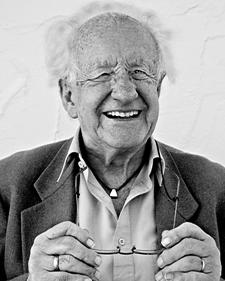
Johan Galtung, born 1930 in Oslo, Norway, lives in Spain, France, Japan and the USA and is mainly engaged in mediation and research. He is one of the core founding figures of the academic discipline of peace studies and is currently rector of the TRANSCEND PEACE UNIVERSITY.
Professor Galtung founded TRANSCEND International – A Peace, Development and Environment Network for Conflict Transformation by Peaceful Means – in 1993. Today, the global network is composed of 400 experts and practitioners from over 80 countries around the world. He has authored and co-authored 150 books and 1500 articles/research papers over the last 50 years. Since 2008, he has published 8 of the 15 academic textbooks he began writing simultaneously about 25 years ago.
← go backDr. Jørgen Johansen
Jørgen Johansen is an international free-lance academic and activist with 35 years of experiences in more than 100 countries.
Johansen has published 6 book and thousands of articles in 16 languages. His engagement in peace-, environment-, solidarity, womens-, human rights-, and democracy- movements is ongoing.
Training, lecturing, and reserach on Nonviolence, Democracy, and Social Movements are his main focus in recent years. Johansen works closely with a huge network of people around the globe.
Some of his present engagements are:
-
Resistance Studies Magazine, rsmag.org
-
The Transnational Foundation, transnational.org
-
Syracuse University, Strasbourg, France, suabroad.syr.edu
-
Transcend Peace University, Global, transcend.org/tpu
-
European Peace University, Austria, epu.ac.at
-
World Peace Academy, Switzerland world-peace-academy.ch
-
Centre for Peace and Reconciliation Studies, Coventry University, UK, coventry.ac.uk/peacestudy
-
Networkers SouthNorth, networkers.org
-
Culture Clinic, cultureclinic.org
-
Skjeberg Folkehøyskole, skjeberg.fhs.no
-
Hacettepe University, Peace Studies, Turkey http://www.peace.hacettepe.edu.tr/
-
http://resistancestudies.org/
-
http://www.ifgk.de/
← go backDr. Graeme MacQueen
GRAEME MACQUEEN has recently retired from the Religious Studies Department at McMaster University in Hamilton, Ontario, Canada, where he taught for 30 years. His academic specialization is Buddhist Studies, in which he received his doctorate from Harvard University. In 1989 Graeme helped found McMasters Centre for Peace Studies, of which he became director from 1989 until 1996. He was also a founder and co director of the Centres War and Health programme committee, which has carried out research and activities on behalf of victims of war in several zones of armed conflict (Croatia, Gaza, Sri Lanka, north India, Afghanistan).
He remains committed to developing the fruitful connections between health and peace, on the one hand, and spirituality and peace, on the other hand. Graeme has been a social activist for years. He was a member of the Alliance for Nonviolent Action and he has at various times chaired the Hamilton Disarmament Coalition, the Board of Directors of Peace Magazine, and the National Coordinating Committee of Peace Brigades International (Canada).
← go backDr. Joanna Santa Barbara
Prof. Dr. JOANNA SANTA BARBARA was a child and family psychiatrist for over 30 years and is an Associate of the Centre for Peace Studies, McMaster University, Hamilton, Ontario, Canada where she has taught Introductory Peace Studies, Conflict Transformation and Peace through Health. She has been a member of Physicians for Global Survival Canada since 1982, and was a past president of that organization. She has been actively involved in International Physicians for the Prevention of Nuclear War, serving as a board member and a vice president. She was part of annual delegations of IPPNW affiliates to NATO in Brussels from 1999 to 2002. She is a member of Science for Peace and of the Pugwash group in Canada.
Besides ongoing work on the abolition of nuclear weapons, other projects include trauma healing and peace education with war affected children in Croatia and in Afghanistan, nonviolence and respect for diversity in high school youth, media violence, and using health as a bridge to peace. She has published work in some of these areas. A textbook on Peace through Health, coedited with Neil Arya, was published in May 2008.
Joanna Santa Barbara is currently in New Zealand to contribute to the development of sustainable settlements in response to climate change, peak oil, loss of biodiversity and ecosystem degradation. Peace between humans and the Earth, as well as between humans, is a major preoccupation.
← go backProf. Paul D. Scott
Dr. PAUL D. SCOTT , born in 1950 in New York, is a Professor of Modern Chinese and Japanese History in the Asian Studies Program at Kansai Gaidai University in Osaka, Japan, since 1985. His specialization is modern Sino Japanese relations. His publications include:
Arao Sei, Japan China and the Paradox of Cooperation; Japanese Literary Travelers to China (with Joshua Fogel), and "Conflicted Pacifism
SDF Recruitment in Japan."
For the past ten years, he has been involved in democratization movements in Asia and is the project director of the Asia Democracy Index. He majored in Chinese and Asian Studies at Seton Hall University, 1972. In 1971 he spent one year on a kibbutz in Israel. He has and M.A. in comparative political analysis and international relations from New York University. 1975 77 he lived in Taiwan and taught at National Taiwan University. 1977 81 he was Head of International Programs, Nagoya International School, Japan. He has an MA in Chinese and Japanese History, and a Ph.D. in history 1985. 1983 85 he was a graduate student at the University of Tokyo. He is a Steering Committee member of The Alliance for Reform and Democracy in Asia; an advisor to the Zorig Foundation in Mongolia. He has made frequent research and speaking trips to Pakistan and Mongolia. He is an Associate Editor of The Intercultural Research Institute at Kansai Gaidai University; Political editor, Kansai Timeout; consultant, Kyoto Journal. Except for two years in Virginia, USA, he has lived in East Asia since 1975.
He is co-author, most recently, of Democracy Peace Development with Johan Galtung, TRANSCEND University Press, 2008.
← go backDr. S. P. Udayakumar
S. P. Udayakumar has an MA in Peace Studies from University of Notre Dame (IN, US) and a Ph.D. from University of Hawaii (HI, US). He is teaching peace and conflict-related courses in several institutions around the world. He has published several books, journal articles and essays in popular publications on many topics. The latest book is co-authored with Johan Galtung (More than a Curriculum: Education for Peace and Development). He lives near the southernmost tip of India with his wife, two sons and parents. He and his wife are running a school here with peace education focus. He is also an anti-nuclear activist and creative writer.
wikipedia
← go backDr. Olivier Urbain
Olivier Urbain is the director of the Toda Institute for Global Peace and Policy Research
(Tokyo and Honolulu) and the founder and coordinator of the Transcend: Art and Peace Network (T:AP).
He was formerly professor of modern languages and peace studies at Soka University, Japan. He is also the founder of the Commission on Art and Peace of the International Peace Research Association (IPRA).
Publications include articles about the power of the arts for peace, a book entitled Daisaku Ikeda’s Philosophy of Peace (2010), as well as the editing of Music for Conflict Transformation (2008) and the co-editing of Music and Solidarity (2008) with Felicity Laurence.
← go backPD Dr. Abbas Aroua
DR. ABBAS AROUA, born in Algeria, is a medical physicist and peace activist living in Switzerland. He obtained his PhD from the Ecole Polytechnique Federale de Lausanne in 1991. He is currently Adjunct Professor at the Lausanne Faculty of Medicine and head of Aroua Health and Education. He is Director of the Center for Conflict and Peace Studies at the Cordoba Foundation in Geneva.
He leads the Hoggar Institute, a research institute publishing works related to Algerian politics and history, particularly on human rights violations by the Algerian government in and since the Algerian Civil War. He co-authored An Inquiry into the Algerian Massacres (Hoggar Press, 1999), an extensive analysis of the Algerian massacres of the 1990s arguing for government complicity in them, and edited Horroris Causa: Feminisme a lere de la Sainte-Eradication (Hoggar Press, 2000). In 2007, he co-founded Rachad, an organisation dedicated to changing the Algerian government through mass nonviolent resistance.
← go backDr. Freya Higgins-Desbiolles
FREYA HIGGINS DESBIOLLES is a lecturer in Tourism with the School of International Business of the University of South Australia. She holds a B.A. in Politics from the University of Dallas and a M.A. in International Relations from Schiller International University in London. She is currently completing a PhD thesis on the topic of "Tourism, Globalisation and the Responsible Alternative" with the School of International and Political Studies of Flinders University of South Australia. She has an interest in the topic of tourism as a force for peace through the life experiences she has accumulated.
She was a Peace Corps volunteer between 1987 and 1989 to the Kingdom of Tonga. She then moved to the United Kingdom in order to obtain a Masters Degree in International Relations, which she achieved through course work in Foreign Affairs and Diplomacy as well as through a thesis focused on terrorism in the European Union in light of the Schengen Agreement of 1992. Moving to Australia in 1995, she worked as the coordinator of a NGO called the Global Education Centre in Adelaide for three years.
It was working simultaneously as a volunteer with Community Aid Abroad's tours unit (now Oxfam CAA in Australia), which put her firmly in the discipline of tourism and led to her embarkation on the path towards a PhD focused on tourism. She has also worked with the Ngarrindjeri Aboriginal community of South Australia for five years and has written and presented on their contribution to Reconciliation Tourism through their facility called Camp Coorong Race Relations and Cultural Education Centre.
← go backProf. Dr. Alberto L`Abate
email // website // wikipedia (italian) // facebook
Alberto L'Abate, born in Brindisi (Puglia, South Italy) in 1931, lives in Florence, Tuscany. He graduated in Social and Political Sciences at Florence University, and specialized in Methods of Social Research and the relationship between Social Action, Nonviolence and Social Change at the Collége Cooperative and the Ecole Pratique des Hautes Etudes in Paris, (France); at the Tavinstock Clinic in London (England); and with Gene Sharp, the so called Machiavelli of Nonviolence , at Harvard University, Cambridge (USA). His commitment to better understanding various aspects of nonviolence has not been limited to studies and writings , but also put into practice: working with Danilo Dolci, the so called "Italian Gandhi", in slums of Palermo, where he lived for two years, and in struggles against nuclear power stations in Tuscany, which contributed to the rejection of the project, and against a missile base in Comiso (Sicily) , which was subsequently converted into a civilian airport. He has also been active abroad in the attempt to prevent armed conflicts in the first Gulf War, in Iraq, and as Peace Ambassador in Kosovo. Though these attempts failed, they were very instructive as regards the reasons for war and the possibilities of preventing them. In Italy he has published various books and numerous articles, some of which have been translated in eight languages. For his writings and engagement in active nonviolence, he has received various awards, in Italy and abroad.
← go backYotam Ben Meir
YOTAM BEN MEIR is a peace educator and activist, Jewish-Palestinian dialogue encounters facilitator, a lecturer on peace and leadership at the Tel Aviv University and a feminist, active in the refusal, Peace and anti-occupation movements in Israel over the past 13 years. Have established in 2005 a unique activist men's group, which dealt which issues of ending men's violence against women as much as men's role and room in the feminist movement and the question (and practice) of masculinities. Since 2011 responsible for the development and co-facilitation of a Gender-Sensitive Non-Violent Activism training for mixed groups of men and women from civil society's NGO's, with an emphasis on the realm of masculinities and violence.
Yotam holds an EU Masters degree on Human Rights and democratization and a BA on the Philosophy of Ethics from the Tel Aviv University and he teaches Peace and Conflict Studies, Cinema and Philosophy.
← go backDr. Gal Harmat (Ph.D)
DR. GAL HARMAT (Ph.D) is a Gender and Peacebuilding Specialist. She has extensive experience in training on issues of conflict analysis, dialogue facilitation and gender empowerment and gender mainstreaming. Since 2004, she is teaching conflict transformation and gender and is Co-Director of the Social Justice and Peace Education Teachers Training Programme of the Kibbutzim Teachers College in Tel Aviv.
In the last 20 years Gal gave hundreds of Peace building and Gender equality and empowerment trainings in conflict zones around the world. She is a lecturer of the Masters Degree courses of World Peace Academy and at Basel University and at the Social nad Art master program in Israel. Gal has been in charge of gender trainings for journalists, young politicians, lawyers and teachers. These comprehensive trainings included field research regarding women's rights violations, centered mainly around violence against women and sexism and the system of war. She is also a regular consultant for intergovernmental organizations such as UN Women and the Organization for Security and Cooperation in Europe (OSCE), corporate donors such as the UBS (Union Bank of Switzerland), Optimus Foundation, and peace organizations such as the Peres Centre for Peace (founded by President of Israel and Nobel Peace Prize Laureate Shimon Peres) and Freinds of the Earth Middle East.
Gal worked as General Director, Mahapach – Student Movement for Social Change, Israel. This extensive work included leading a staff of 30 full-time community organizers and 400 students, negotiating with various ministries, academic research regarding social developments in communities. Gal holds a Master of Arts in Gender and Peacebuilding from the UN University for Peace in Costa Rica, and a PhD in Education-Gender Analysis of Multi-Cultural Education at Nitra University (Slovakia).
← go backDr. Claude R. Shema
Dr.Claude R.Shema (medical doctor, peace activist, author, and lecturer) has experience in the field of peace building and sustainable development especially in the war torn zones.
He served as a medical doctor in Rwanda, during and after the unspeakable Rwanda genocide and massacres in 1994 that claimed more than 800.000 lives in 3 months of massive human slaughtering.
Dr.Claude R.Shema also contributed to the rebuilding of Rwanda through psychosocial rehabilitation programs on national and grass root levels, working with youth and for youth organizations and women networks in the great lakes region of Africa. He served as mediator and crisis worker on international levels, in different crisis and various countries like Burundi, Uganda, and Democratic republic of Congo, Sierra Leone, Ethiopia and Eritrea, Liberia, Cote d’Ivoire, Middle East.
Beside his medical background, Dr.Claude R.Shema pursued his extensive studies in psychiatry (Cardiff University/UK), clinical psychology ( California University/USA),and psychological foundation of peace building studies and Conflict Transformation Across Culture ( CONTACT) at School for International Training,SIT/Vermont-USA) and United States Institute of Peace studies-USA, and intensive studies in peace and conflict studies in Austria, Romania, South Africa, Norway. He has consultant status with different organizations like WHO, UNICEF, Child Policy Forum,UNIFEM, Doctors without borders ( Medecins Sans Frontieres),Humanitarian organisations, etc..., founder of Great Lakes Peace Network, and peace activist, . He lives partially in Norway and Canada.
← go backProf. Dr. Kees Van der Veer
Dr. Kees (C.G.) van der Veer, currently director of the Cultural Studies Foundation in Amsterdam, is a former research fellow from the International Peace Research Institute Oslo and emeritus from VU University in Amsterdam. He studied empirical sociology and (social) psychology in Amsterdam and Groningen, and received his PhD in 1986 with a dissertation on Ideology and Mass Media. He has been lecturing in social research methodology, statistics, communication and organization, psychology, and sociology. His research interests are in topics like: social research methodology, including public opinion research, pre-testing and scaling; organization, communication and conflicts; inequality on the labor market and job mediation; the position of and attitudes toward (illegal) immigration; measuring xenophobia, and factors contributing to it.
← go backProf. Jake Lynch
Jake Lynch is currently Associate Professor and Director of the Centre for Peace and Conflict Studies at the University of Sydney and an Executive member of the Sydney Peace Foundation. Lynch is a seasoned international journalist, with experience covering many conflicts in the Middle East, South East Europe and East Asia. He worked as a presenter and reporter for the BBC, a Political Correspondent for Sky News and the Sydney Correspondent for the London Independent.
← go backTatsushi Arai
Associate Professor of Peacebuilding and Conflict Transformation
School for International Training (SIT) Graduate Institute, Vermont, USA
Visiting Scholar, School for Conflict Analysis and Resolution (S-CAR)
George Mason University, Virginia, USA
← go backDanya Nadar
Danya Nadar has been a producer for one of the top five U.S independent news organizations The Real News Network in Washington DC. She is currently a member of the egyptian media collective Mosireen, and is producing a documentary-film The Red Line.
As a professional producer, her passion is the study of the media’s impact on society, thus her daily work consists of finding new ways of making information accessible to an increasingly global audience. After completing an undergraduate degree in Mass Communications and International Development studies from York University in Toronto, she went on to complete a Masters’ Degree in International Trade, with a focus on the 2008 food crisis from the Norman Paterson School of International Affairs in Ottawa." Among other topics, she has worked on Food Sovereignty in Ottawa, Ontario, (Maison Tucker House; Just Food; The Canadian Biotechnology Action Network).
Mrs. Nadar currently lives and works in Egypt as a film producer witnessing and engaging in major aspects of the Egyptian revolution and its larger societal repercussions. She is also freelancing with different communities in and around Cairo to deepen her social & political activism in these revolutionary times.
← go backNaakow Grant-Hayford
Political Science and African Studies at the University of Marburg.
Director of TRANSCEND International Ghana.
Co-founder of the Galtung-Institut for Peace Theory and Peace Practice.
← go backDr. Bishnu Pathak
Bishnu Pathak
-
Current
-
-
Chief Coordinator at Global Harmony Association
-
Senior Peace, Security and Human Rights Expert at Particip GmbH, Freiburg, Germany
-
Secretary at Nepal Institute for Strategic Studies (NISS)
-
Past
-
-
Education
-
-
Tribhuvan Vishwavidalaya
-
Amrit College
← go backAntonino Drago
Having graduated in Physics in 1961, I experienced research in several fields, particularly in History and Foundations of Sciences. I taught History of Physics at the University of Naples (at present retired). I was a social activist for the empowerment of Neapolitan people in obtaining public housing. Being a conscientious objector, I participated in the Italian non-violent movement (particularly, IFOR) and was able to obtain a law on this subject; later, I worked on the National campaign for the refusal of military taxes. As a scholar of Lanza del Vasto, I promoted the Italian friends of "Ark" and a Community.
I am a member of IPRA and Transcend International, and have as such promoted Italian curricula on Peace Studies since they started (2001). I have taught non-violence at Pisa University and Florence University. I have published over four hundred publications and ten books on scientific subjects, and two hundred publications and five books on subjects concerning peace and non-violence. I am studying non-violence as spirituality, as a philosophical and scientific thinking, as a political theory.
← go backSabin Muresan Sabin Muresan, together with Ina Curic, have a background in peace & conflict transformation and NGO management, with more than 14 years work experience in civil society organizations in Eastern Europe and internationally. They have been staff and thereafter affiliates of the Romanian Peace Institute (PATRIR) since 2001 and TRANSCEND members since 2004. With a strong background in civil society organizations and youth education, their peace work has focused on conflict transformation and peacebuilding in crisis and post war areas. Ina's main focus has been on supporting gender, peace and development initiatives, while Sabin has been active in developing local peacebuilding capacities and nonviolent third party intervention in conflict situations.
Both of them have worked on international consultancies including training, teaching, programme management and support, combining direct action with reflection and writing. Post their Iraqi experience they co-authored “Through War to Peace: a Dead End. Iraqi Experiences”(2005). Their combined areas of expertise include Iraq, the Philippines, Burundi, Dominican Republic, Sudan and South Sudan, and Eastern Europe.
Currently they are based in Romania where they are experimenting with and facilitating social transformation processes (including permaculture, ecological architecture and social change) and conflict transformation workshops. They also teach internationally and facilitate gender and peace and conflict processes upon request.
← go backIna CuricIna Curic together with Sabin Muresan, have a background in peace & conflict transformation and NGO management, with more than 14 years work experience in civil society organizations in Eastern Europe and internationally. They have been staff and thereafter affiliates of the Romanian Peace Institute (PATRIR) since 2001 and TRANSCEND members since 2004. With a strong background in civil society organizations and youth education, their peace work has focused on conflict transformation and peacebuilding in crisis and post war areas. Ina's main focus has been on supporting gender, peace and development initiatives, while Sabin has been active in developing local peacebuilding capacities and nonviolent third party intervention in conflict situations.
Both of them have worked on international consultancies including training, teaching, programme management and support, combining direct action with reflection and writing. Post their Iraqi experience they co-authored “Through War to Peace: a Dead End. Iraqi Experiences”(2005). Their combined areas of expertise include Iraq, the Philippines, Burundi, Dominican Republic, Sudan and South Sudan, and Eastern Europe.
Currently they are based in Romania where they are experimenting with and facilitating social transformation processes (including permaculture, ecological architecture and social change) and conflict transformation workshops. They also teach internationally and facilitate gender and peace and conflict processes upon request.
← go backVithal Rajan
Vithal Rajan (BA Hons McGill, PhD London School of Economics) emigrated to Canada from India in the mid 1960’s, and worked for several years as Information Officer for Canadian Industries Ltd. (I.C.I.) in Montreal. A special task assigned to him was developing a program of ‘social consciousness’ for the company.
Following the intensification of the Vietnam War, he involved himself in the peace movement, and served as a ‘mediator’ in Belfast, Northern Ireland, in the early 1970’s on behalf of the World Council of Churches and the Pontifical Commission for Justice & Peace. Later, he was a founder faculty member of the School of Peace Studies, Bradford University, U.K. Following the suspension of civil liberties in India by Mrs Indira Gandhi, he felt impelled to return to India, and based at Hyderabad, he worked as Senior Faculty, Administrative College of India, and later in an honorary capacity with several civil society organizations, especially with ‘dalit’ communities of very poor women.
He was founder volunteer chair of the Deccan Development Society, which promotes integrated rural development in the semi-arid poverty-stricken Deccan plateau, literacy and community health programs, and ecological agriculture. Several civil society organizations like his own helped establish the fact that poor women can save and manage very successfully large funds in their community interest. He was honorary chair of the ASP Dalit-Bahujan Cooperatives Federation of Andhra Pradesh, a federation of over a hundred thousand member families of the poorest of the poor. He is a founder honorary Trustee of the AME India Foundation which helps small dryland farmers of southern India achieve sustainable rural livelihoods. He was Emeritus Chair of SKS Microfinance, India, and Emeritus Chair of the Confederation of Voluntary Associations, a network of 800 agencies, which work through community empowerment for harmony between poor Hindu and Muslim communities. This association also plays a vital role in the Pakistan-India Peoples Forum for Peace and Democracy, a citizens’ initiative to bring peace to the two great powers of South Asia. He was on the board of several other organizations, including the Environment Protection Training & Research Institute of the government of India. He was an honorary member, Poverty Eradication Mission, of the Andhra Pradesh government. Special projects he has initiated include ecological management of agricultural crops, such as cotton, without resort to dangerous pesticides; the introduction of solar energy, and is Director of Visionary Light & Energy Pvt Ltd, India which is providing Solar-powered LED lamps for the benefit of poor communities.
He has instituted special scholarships for graduate students at the Ramanujan Institute for Advanced Study in Mathematics at the University of Madras in memory of his late father, Shri Srinivas Rajan ICS [Madhya Pradesh]; and for girls at Vidyodaya High School Madras, in honour of his mother, Ms Champakavalli Rajan, who was in the first batch of the school.
Over the last three decades, he has also worked on brief stints in Europe, as Chair of World Studies, International School of Geneva; as Director, Ethics and Education, World Wide Fund for Nature International, Switzerland; and as Executive Director, the Right Livelihood Awards, Sweden (better known as the ‘Alternative Nobel Prize’), and continues on its Jury.
He has written extensively on academic and development-related issues, and recently taken to writing fiction, short stories and plays, published by The Writers’ Workshop, Kolkata; Random House India; Rupa Publications; Hachette India; Fingerprint; and Heures Bleues, Montreal. He is an active member of the Transcend Global Network for Peace and Development; the Jung Centre, Bangalore; and The Little Theatre, Hyderabad, India.
In 2006, he was made an Officer, of the Order of Canada, that country’s highest national honour, for a lifetime of achievement and merit of a high degree, especially in service to Canada and to humanity at large. He was invited to be a founder Councillor, of the World Future Council, at its Inaugural Congress in Hamburg, in May 2007.
He lives in Hyderabad, India, with his wife, Dr. K. Lalita, a well-known feminist, activist and writer, who was the first president of the Progressive Organization of Women, India, and the founder Coordinator of Anveshi Research Centre for Women Studies, India. His daughter, Diia Rajan, a former intern with IDRC in Ottawa, worked on a gender and citizenship project in India focused on Muslim women who have experienced trauma in Gujarat, Mumbai and Hyderabad, and is presently director in India for an international students exchange program.
← go backRais Neza Boneza
Course instructor
Rais Neza Boneza. MH; Dr.hc
Author, peace researcher and practitioner. He is also a poet who besides writing his own poetry works to promote artistic expressions as a means to deal with conflicts and maintaining mental well-being and spiritual growth.
He has travelled thoughtfully around Africa and the world as lecturer and consultants for several institutions or organizations. His background, combined with his sensitive artistic mind and his scholarly background have equipped him with the ability to work with in peace practice and healing. He specialized in African deep cultures and cosmologies. Originally from the Democratic Republic of Congo, He lives Norway; He has published art and peace essay worldwide.
|