



Books on Peace Education
EDUCATION, 8 Dec 2025
Surya Nath Prasad – TRANSCEND Media Service
Victor Hugo once said, “A human being who can read has been saved.” Reading to be saved means saved from oppression, dependence and hunger. Through the act of reading, oppressed and oppressors, exploited and exploiters both will become aware of reality and being human, capable to change the world of exploitation. And the way to continue human is to keep on reading. The reading of popular books has brought great revolutions in history. The modern democracy is also the advent of reading the books like : Traite Sur la tolerance by Voltaire (1763), The Rights of Man by Thomas Paine (1791), The Social Contract by Jean Jacques Rousseau (1762), Liberty Today by C.E.M. Joad (1935), Democracy on the March by David Lilienthal (1944), Equality by David Thompson (1949), Towards Social Equality by John A. Hobson (1791) and other similar books, and also essays like “On Liberty” by John Stuart Mill (1859), “Two Concepts of Liberty” by Isaiah Berlin, “Civil Disobedience” originally “Resistance to Civil Government”) by Henry David Thoreau (1849), and The Dangers of Disobedience by Harold J. Laski (1930) and similar essays.
In the past two years I read several books and essays on humanitarian education such as peace education, human rights education and tolerance education. I would like to mention a few of them which have impressed me much and my own ideas have got much support from the views contained in the books read by me, and thoughts in the books have also provoked and stimulated me to think further.
Hints for Self Culture written by Lala Har Dayal (1977) is a wonderful book. Though it is small in size it covers a wide field of knowledge. Almost every discipline has been covered, reflected upon, discussed and commented. It incites free-thinking in every field of knowledge. Therefore, I consider Hints for Self – Culture of Lala Har Dayal as an excellent and indispensable epic. In the beginning page of this book, Lala Har Dayal observed: “Most men and women today are not free and wise they are like kites flown by the priests and politicians who hold the string. They are fleeced and fooled on account of their ignorance of Science, History, Economics and other subjects”, and he diagnosed and wrote “Half of the ills of Mankind are due to ignorance, and other half arise from Egotism.” Understanding the habit of mankind he suggested, “You feed the body several times a day: don’t starve the Mind. Keep a diary, in which you should note the titles of new books. Get new and secondhand catalogues from the booksellers… Own a private library, however small. Take pride in the books that adore your home. With every book you buy, you add a millimeter to your mental stature… Set apart a fixed proportion of your income for the purchase of books and Journals: call it THE BOOK FUND, and don’t draw upon it for any other purpose…”
Lala Har Dayal advocated free thinking. Therefore he advised all people to learn from each teacher, and warned not to be enslaved by any, quoting Corneille who said, “O Moses, be silent! And thou Truth, eternal and immutable Truth, speak to me.” And he suggested us, “You may also appeal from the partial lives of the great men to the Ideal, in which alone Perfection is found.” Further he has written, “It is absurd to ascribe absolute perfection to any man or woman dead or living.”
Regarding democracy in the World – State, he was in favour of direct democracy, not representative. He questioned putting some genuine reasoning, “A citizen does not eat by proxy, drink by proxy, marry by proxy, or die by proxy: why should be then make laws and choose policy by proxy?” And he himself suggested the answer, “The people will discuss and decide everything directly by the Initiative and Referendum, not indirectly through Parliament and Councils, as they are compelled to do at present.” He considered parliament as an unnecessary evil saying, “Parliamentary democracy is not democracy at all; it is oligarchy based on fraud.” Quoting Demos who must now rise in wrath and say, “Away with these hucksters and tricksters, who draw big salaries for deceiving and duping me. Why should they dictate to me? Why should 615 mercenary talkers make laws for forty-eight million? Who ordained these political priests and mediators that have turned my Temple of Wisdom into a den of thieves? This circus must now be closed for ever. I will legislate directly in future, and thus be mistress in my own house.” Lala Har Dayal hoped, in the World-State. “Its Ministers will be sages and saints, its civil servants will be scholars and scientists. It will be responsible not only for administration, but also for education and edification. It will train the citizens in all Virtue and Wisdom. It will correspond to Aristotle’s definition of the State…”
Though Lala Har Dayal has commented and discussed deeply and thoroughly on all the disciplines of Intellectual, Physical, Aesthetic and Ethical Cultures, which are ocean of knowledge, I have tried to put some of ideas on areas of interest to Har Dayal. Different readers and scholars may be enlightened and provoked by reading different sections of this book as per interest of their own areas of ideas, studies and activities.
Another tiny book, but large and emphatic in ideas contained in it, is The Reconstruction of Humanity written by Pitirim A. Sorokin (1962). In the Prologue of his book, Sorokin tells us, “Humanity wants peace in place of war. It is hungry for love in lieu of hate. It aspires for order to replace disorder. It dreams of a better humanity, of greater wisdom, of a finer cultural mantle for its body than the bloody rags of its robot civilization…” Further he says, “… humanity has childishly followed in this quest one leader after another and has credulously tried various plans of salvation. In vain! None of the leaders and none of the plans have delivered the goods they promised. Instead of peace they have produced two world wars. Instead of happiness and plenty they have brought mankind into an inferno of misery…” Therefore he suggests, “… More imperatively than heretofore must it choose new leaders.” Sorokin has put his whole ideas in six parts and 15 chapters in the book. Part-1 deals with Quack Cures for War and Impotent Plants for Peace. Insufficient Factors of Altruism have been discussed in Part-II. Part-III explains about Cultural Factors of Altruism and Egoism. Social Factors of Altruism and Egoism have been commented upon in Part-IV. Part-V argues about Personal Factors of Creative Altruism. And the concluding Part-VI puts questions and gives answers on the Ways of Realization of the Plan. Sorokin says, “No human group can survive without a minimum of altruistic conduct among its members. If newborn infants were not cared for, they would die, and their death would end the existence of the group…” Further he tells, “Without a minimum of altruism, all the sick, incapacitated, and aged members of a group would soon die…” Therefore according to Sorokin, there is no peace or survival without altruism. He considers an increase of altruism as a condition of lasting peace. Sorokin considers some of the great persons as altruists. He makes known to us, “The great altruists of humanity, such as Buddha, Jesus (as a man) and Saint Francis of Assisi represent the highest type of altruists. They were free from anti-altruism and largely from no altruism; they loved even their enemies, their sphere of love was unlimited; their love was more intense, their altruism was of the most creative, wisest, and purest type.” In Chapter-3, Sorokin says, “… neither the growth of school education nor the multiplication of technological inventions and scientific discoveries has led to a decline of wars and revolutions. As a matter of fact, they have been attended by an enormous increase in war and revolution during the most literate and scientific century of all history.”
Power and Morality: Who Shall Guard the Guardians? written by Pitirim Sorokin and Walter A. Lunden (1959) is an excellent and inspiring guide book not only for enlightened readers but also for rulers, heads of state, servants of people, elders of all the institutions and especially youth of every society. Though it is a small book, it has twelve chapters well digested. They observe that the well-being of the human race is today largely determined by a mere handful of the top rulers of the great nuclear powers. But they raise questions, “Can we entrust the fateful decision of war or peace and through that the life, liberty, and pursuit of happiness of hundreds of millions of human beings – to the few magnates of this power? Do they have the wisdom of the serpent and the innocence of the dove necessary to lead us to a lasting peace and a magnificent future?” For their part they are inclined to answer these questions in the words of the Psalmist: “Put not your trust in princes (and rulers)… in whom there is no help” (Psalms 146:3). They say that this advice, so correct in regard to the rulers of the past, is particularly timely in its application to contemporary governments. They are strictly of the view that the gigantic tasks of peacefully resolving the tremendous difficulties of the present, of preventing new wars, and securing man’s creative progress, cannot be entrusted to the existing governments, and especially to “the nuclear governments” of the great powers. They call them tribal governments of politicians, by politicians, and for politicians, who do not display the minimum of intellectual, moral and social qualifications necessary for a successful solution of these tremendous tasks. Therefore, they prescribe sages and scientists for all the governments. They say, “Ascending governments of scientists of all nations, the United Nations, and the future World Government can be enormously improved in their moral strength and wisdom by including in all governments these sages and moral experts. Their presence can prevent the governments from committing moral blunders, can increase their wisdom and morality and reinforce the total moral and spiritual order in the human universe.” They forecast, “A few decades from now the governments of politicians, by politicians, and for politicians are likely to be as rare as white elephants. Their place will probably be taken by governments of and by scientists and experts.” Whether such a government will also become the oligarchic government of scientists, by scientists, and for scientists is the question which has been discussed thoroughly in the book.
Pedagogy of the oppressed written by Brazilian educator Paulo Freire (1972) reflects his works and real experiences. His ideas contained in the book represent creative reaction of his sensitive mind to the very unusual misery and suffering of the oppressed around him. His own identification with the lives of the poor also led him to the discovery of what he calls the ‘culture of silence’ of the dispossessed. He experienced that the whole educational system was one of the main instruments for the maintenance of the culture of silence. Hence, Freire criticizes all aspects of the existing educational system of the oppressive society. He attacks the aims of education, the device, the method and language of teaching, the contents of curriculum and the teacher-student relationship. Freire observes that the goal of the educational system is deposit making to minimize or annul students’ creative power and stimulate their credulity and to serve the interests of the oppressors who care neither to have the world revealed nor to see it transformed. Freire proposes liberation as the aim of education and the role of teacher is to liberate, and to be liberated with the students. He says that the conviction of the op pressed that they must fight for their liberation is the result of their own conscientization. Freire diagnoses education as suffering from Narration – Sickness. He tells that narration (with the teacher as the narrator) leads the students to memorize mechanically the narrated contents. Therefore he proposes dialogue which is essential for authentic education. Without dialogue there is no communication and without communication there cannot be true education Freire says that dialogue imposes itself as the way in which men achieve significance as men. Dialogue is the encounter in which the united reflection and action of the dialoguers are addressed to the world which is to be transformed and humanized. Freire feels that through dialogue the teacher-of-the students, and students of the teacher cease to exist and new term emerges teacher-student with students-teacher. The teacher is no longer merely the one who teaches, but the one who is himself taught in dialogue with the students, who in their turn, while being taught, also teach. Freire gives emphasis to the problem posing method in teaching. To problematize’ in his sense is to associate an entire populace with the task of codifying total reality into symbols which can generate critical consciousness and empower them to alter their relations with nature and social forces. According to Freire, the problem – posing method affirms men as being in the process of becoming as unfinished, uncompleted being in and with a likewise unfinished reality. Freire criticizes the banking method of teaching be-cause this method allows the scope of action to the students, extends only as far as receiving, filling and storing the deposits. Further he says that banking method emphasizes permanence and becomes reactionary, problem posing method which accepts neither well-behaved present nor a predetermined future toots itself in the dynamic present and becomes revolutionary. About the language, Paulo Freire says in this great revolutionary book that in order to communicate effectively, the educator and the politician must understand the structural conditions in which the thought and language of the people are dialectically framed. Here lam tempted to quote from the writing on the theme Intellectuals and Indian Democracy of Amrik Singh (1979) who tells that Indian intellectuals are very far from the masses, while Indian politicians are near to the masses through communication. Indian intellectuals communicate through English but the common people do not understand English. The politician operates through the language of the masses. Not only does he use that language, he uses that idiom too. Freire calls his Pedagogy of the Oppressed as a humanist and libertarian pedagogy which has two distinct stages. In the first, the oppressed unveil the world of oppression and through the praxis commit them-selves to its transformation. In the second stage, in which the reality oppression has already been transformed, this pedagogy ceases to belong to the oppressed and becomes pedagogy of all men in the process of permanent liberation.
In the following lines I would like to mention similar quotes on ‘School as Agent of Violence’ from different popular books and writings of different authors read by me. Rabindranath Tagore (1917) in his book Personality has written about school: “We have come to this world to accept it, not merely to know it. We may become powerful by knowledge, but we attain fullness by sympathy. The highest education is that which does not merely give us information but makes our life in harmony with all existence. But we find that this education of sympathy is not only systematically ignored in schools, but it is severely repressed. From our very childhood habits are formed and knowledge is imparted in such a manner that our life is weaned away from nature and our mind and the world are set in opposition from the beginning of our days. Thus the greatest of educations for which we came prepared is neglect-ed, and we are made to lose our world to find a bagful of information instead. We rob the child of his earth to teach him geography, of language to teach him grammar. His hunger is for the Epic, but he is supplied with chronicles of facts and dates. He was born in the human world, but is banished into the world of living gramophones, to expiate for the original sin of being born in ignorance Child-nature protects against such calamity with all its power of suffering, subdued at last into silence by punishment.” John Amos Comenius (1967) wrote in his The Great Didactic, “Schools are the terror of boys and the slaughter houses of minds-places where a hatred of literature and books is contracted, where ten or more years are spent in learning what might be acquired in one, where what ought to be poured in gently is violently forced in and beaten in, where what ought to be put clearly and perspicaciously is presented in a confused and intricate way, as if it were a collection of puzzles places where minds are fed on words.” Johan Galtung in his popular essay: How to Succeed in Peace Education without really trying, wrote, “Only rarely is education nowadays sold with direct violence, the days of colonialism and corporal punishment are more or less gone. But structural violence is there, and it takes the usual forms a highly vertical division of labour which in this case it expresses in one-way communication… and if in addition the contents of education are included, the structural violence becomes even more apparent.” Christoph Wulf, in his paper on Peace Education, comprehends undesirable conditions within society which foster violence even including elements of violence in the family and the school system. In his book Compulsory Miseducation, Paul Goodman (1962) has written, “Schools are losing the beautiful academic and community functions that by nature they do have.” He observes that a major pressing problem of our society is the defective structure of the economy that advantages the upper middle class and excludes the lower class. John Holt (1972) in his book Freedom and Beyond writes, “Schools and school people, even those who do not dislike poor kids, discriminate against them in another way, more kindly, less contemptuous, but probably more destructive.” Further he says, “Schools do not have the power of life and death over children. But they do have power to cause the mental and physical pain, to threaten, frighten and humiliate them and destroy their future lives.” Hence, Everett Reimer (1973) considers schools as dead. In his book School is Dead, he shows, “Most of the children are not in school. While children who never go to school are most deprived, economically and politically they probably suffer the least psychological pain. Peter Buckman (1973) who edited the book Education without Schools writes, “Schools perpetuate the social barriers the deprived seek to cross.” This is why Ivan Illich (1973) wants to deschool the society and abolish compulsory schooling altogether and the monopoly of knowledge by educational institutions and to devote the vast funds thereby released to a true education for every citizen that would last from cradle to grave. This idea of deschooling has been propounded by Ivan Illich (1973) in his most famous book Deschooling Society.
But the author of these lines hopes that twenty-first century school will certainly be a non-violent and just. The future school will not be confined within four-walls only. It will cater to everyone for his proper development and awareness towards his total environment which will help him in becoming human. As Jacques Maritain put it, “Education is not animal training. The education of man is a human awakening.” Paulo Freire (1972) also considers education as conscientization of human being. This is why Comenius (1967) expressed his two wishes regarding education of man, and he said, in The Great Didactic:
“Our first wish is that all men should be educated fully to full humanity, not any one individual, nor a few nor even many, but all men together and singly, young and old, rich and poor, of high and lowly birth, men and women — in a word all whose fate it is to be born human beings, so that at last the whole of the human race may become educated, men of all ages, all conditions, both sexes and all nations.
Our second wish is that every man should be wholly educated, rightly formed not only in one single matter or in a few or even in many but in all things which perfect human nature…”
In the light of the above definition of Comenius, Robert M. Hutchins (1968), the author of the famous book The Learning Society, considers all educational systems of the past and present as to some extent inhuman, non-human and antihuman. Hence, he has written in his book cited above, “Unless everybody can be educated, democratic aspirations will shortly seem naive, and man must renounce his claim to be called a political animal. He will be ruled by a bureaucracy, which may guarantee him certain rights, but not right to achieve full humanity through political participation. The lot of people will be bread and circuses.”
In the recent years, I have also read some notable essays (which are now all published in some books) on Peace Education a newly emerging discipline – of renowned peace educators of the world. Magnus Haavelsrud in his paper The Substance of Peace Education (Now it is a part of UNESCO’s Teacher’s Kit on Peace Education) says that peace education involves the principles of problem-oriented (content) and participatory-decision-making (dialogical form). He writes that conscientization efforts would create political forces which would be instrumental in struggle for social justice on the global as well as local levels, including changes in the formal system. In his essay on Aims of Peace Education and World Studies, Robin Richardson also says that personal liberation is the final aim of peace education or world studies, indeed of all education. The crucial connection between such liberation on one hand and peace or world order on the other lies in the view that the latter involves not only, and not so much, the absence of direct violence but also structural violence, hence the presence of justice, of freedom, of self realization. According to Johan Galtung, who has written in his popular essay How to Succeed in Peace Education without reality trying (which I repeat here with some more ideas of his), the form of peace education has to be compatible with the ideas of peace, i.e. it has in itself to exclude not only direct violence, but also structural violence. Only rarely is education nowadays sold with direct violence; the days of colonialism and corporal punishment are more or less gone. But the structural violence is there, and it takes the usual form a highly vertical division of labour which in this case ex-presses itself in one-way communication, fragmentation of the receivers of that communication so that they cannot develop horizontal interaction and organize and eventually turn the communication flow the other way, absence of truly multilaterality in the education endeavor. All this relates to forms and if in addition the content of education is included, the structural violence becomes even more apparent. He further writes that peace education should be an attempt to do away with this. Adam Curle’s mind about peace studies has been cleared in his essay The Scope and Dilemmas of Peace Studies. He writes that the study of peace is not the study of pacification, of suppressing dissent, of maintaining the status quo; however, painful it may be to the less privileged. Some would maintain that peace was simply the absence of overt violence, but he believes that there are forms of concealed or indirect violence which do as much harm as more open sorts and which may, on occasion, be employed in the name of maintaining peace or law and order. Nor, on the other hand, does he believe that peace studies can be based on a kind of sentimental attempt to make everyone be friends, without correcting genuine injustices or conflicts of interest between them. The student of peace, for example, would not attempt to reconcile the master and the slave without having first worked to abolish the practice of slavery. Christoph Wulf in his essay entitled Peace Education tells us that since the early 60’s peace education was conceived as a humanistic, idealistic education for the ideal of peace. Since then in peace education a more realistic attempt is made by relating the major conflict formation of the international system to the daily social experiences of the individual. It is attempted to make children, students, members of political parties etc aware of the fact that the political situation of the international system has an immediate impact on their own life. It is tried to relate the political and social experiences of the individual to the conflict formations of international system which is considered as one of the major tools to peace education. In this attempt specific reference to the concept of structural violence and organized peacelessness is given. In her essay Disarmament. A key concept for Peace Education, Betty Reardon says that the purpose of peace education is to provide knowledge to be applied to the problem of reforming and/or restructuring present human society to make it more just and less violent.
Taittiriyopanishad (1965), which is smallest one, is complete book on education or peace education. It is totally neglected by the modern educationists. It is not even mentioned in the courses of Bachelor and Master of Education. In it, there is dialogue between son, Bhrigu and father, Varun. There is a question: What is needful? And answers are mentioned in it as righteousness, truth, meditation, self-control, peace, ritual and humanity, which are sacred learning and teaching. There are two sections in the book:
- Education, and 2. Peace. The concept of man, who is made of five sheathes (body, vitality, mind, intellect and spirit), is discussed, and education, which should be based on these five potentialities of man, is explained in this book.
The advent of tolerance, or rather its recognition as a factor for civil peace and a safeguard against injustice, was largely the work of philosophers. Among those, Voltaire (1763) was its real champion. His main contribution is still his Traite Sur La Tolerance. The exceptional importance of this text lies in the fact that it is not simply a philosophical dissertation. Thought here stemmed from action, from what we would nowadays describe as the writer’s ‘commitment. He has written in it. “Oh, thou of beings, of all worlds of all times (…) we pray (…) that all the little differences in (our) clothes, in our inadequate languages, in our ridiculous customs, in our imperfect laves: in our illogical opinions, in our ranks and conditions, which are so disproportionately important to us and so meaningless to you, that these small variations that distinguish those atoms that we call men from one another may not be signals for hatred and persecution.” The recent UNESCO publication – Tolerance: the Threshold of Peace, which is published to mark 1995 International Year of Tolerance, is worthy reading. It is teaching guide-lines towards educating for tolerance. There are five chapters in the guide which deal with questions of why it is necessary to educate for tolerance, how to diagnose tolerance, and describe tolerance, the problems and opportunities, how schools themselves are a kind of laboratory for practicing tolerance; and finally, how to include the concept of tolerance into every subject taught at every level and in every country.
Education and Significance of Life written by J. Krishnamurti (1953) is also an excellent book which pleads for free thinking. It has eight chapters. Each chapter is illuminating, and deconditions the minds of the readers, and incites for self-knowledge and awareness of oneself in whom the whole of existence is gathered. I am much impressed with the last Para of Chapter-V: “The School” of his book in which he says: “The true teacher is not he who has built up an impressive educational organization, nor he who is an instrument of the politicians, nor he who is bound to an ideal, a belief or a country, the true teacher is inwardly rich and therefore asks nothing for himself, he is not ambitious and seeks no power in any form, he does not use teaching as a means of acquiring position or authority, and therefore he is free from the compulsion of society and the control of governments. Such teachers have the primary place in an enlightened civilization, for true culture is founded, not on the engineers and technicians, but on the educators.”
The Prophet of Kahlil Gibran (1976) is also a wonderful book. Readers of this book may find some liberating thoughts from every page. I would like to quote from pages 67-68 of this book. When asked by a teacher to speak of teaching, Kahlil Gibran (1976) Said:
“No man can reveal to you aught but that which already lies half asleep in the dawning of your knowledge.
The teacher who walks in the shadow of the temple. among his followers, gives not of his wisdom but rather of his faith and his lovingness,
If he is indeed wise he does not bid you enter the house of his wisdom, but rather leads you to threshold of your own mind.
The astronomer may speak to you of his understanding of space, but he cannot give you his understanding.
The musician may sing to you of the rhythm which is in all space, but he cannot give you the ear which arrests the rhythm, nor the voice that echoes it.
And he who is versed in the science of numbers can tell of the regions of weight and measure, but he cannot conduct you thither.
For the vision of one man lends not its wings to another man.
And even as each one of you stands alone in God knowledge, so much each one of you be alone in his knowledge of God and in his understanding of the earth.
Last but not the least, for extension of knowledge, which is the basis of peace, I recommend to read the Chinese Classic: The Great Learning of Comenius in Legge, James (trans.1971), in which it is noted:
“The extension of knowledge consists in the investigation of things. When things are investigated, knowledge is extended. When knowledge is extended…. the mind is elevated; when the mind is elevated, the personal life is deepened; when the personal life is deepened, the family will be regulated; when the family is regulated, the State will be in order; when the State is in order, there will be peace on earth.”
Some books and essays as referred above are not familiar by names of Peace Education. However, they may be called Books on Peace Education because these all deal with peace ideas, peace studies and peace activities.
Bibliography
Buckman, Peter (edited, 1973) Education without School. Souvenir Press.
Comenius, J. A. (1967). The Great Didactic (J. M. Keatinge,
Trans.). Russell & Russell.
Comenius, J. A. in Legge, James (trans.1971). Confucius: Confucian Analects, The Great
Learning and The Doctrine of the Mean. New York: Dover 1971.
Everett, Reimer (1973). School Is Dead: An Essay On Alternatives in Education. Penguin.
Freire, Paulo (1972). Pedagogy of the Oppressed. Penguin Books.
Gibran, Kahlil, (1976). The Prophet. Allied Publishers Limited.
Goodman, Paul (1962). Compulsory Miseducation. Vintage Books.
Hardayal, Lala (1977). Hits for Self-Culture. Jaico Press Pvt. Ltd.
Hobson, John A. (1791). Towards Social Equality. Joseph Johnson.
Holt, John (1972). Freedom and Beyond. E. P. Dutton.
Hutchins, Robert M. (1968). The Learning Society. Pelican Book
Illich, Ivan (973). Deschooling Society. Penguin Books.
Joad, C.E.M. (1935). Liberty Today. E.P. Dutton.
Krishnamurti, J. (1953). Education and the Significance of Life. Harper & Row.
Lilienthal, David (1944). Democracy on the March. Harper & Brothers
Mill, John Stuart (1859). On Liberty. John W. Parker and Son.
Paine, Thomas (1791). The Rights of Man. Joseph Johnson.
Rousseau, J. J. (1762). The Social Contract. Paris, France
Sorokin, P.A. (1962). Reconstruction of Humanity. Bharatiya Vidya
Bhavan.
Sorokin, P. A. & Walter A. Lunden (1959). Power and Morality: Who Shall Guard the
Guardians? Porter Sargent Publishers.
Tagore, Rabindranath (1917). Personality. Macmillan and Company.
Taittiriyopanishad. In Sarvadananda, Swami (trrans.1965). Sri Ramkrishna Math
Thompson, David (1949). Equality. Cambridge University Press.
Voltaire, François-Marie Arouet (1763). Traite Sur la tolerance.
The Cramer Brothers.
_______________________________________________
This Paper is based on the author’s article Books on Peace Education published in University News – A Weekly Journal of Higher Education published by the Association of Indian Universities, Vol. XXXIV, No. 7, 1996.
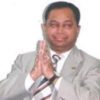 Dr. Surya Nath Prasad, Former President of the International Association of Educators for World Peace (IAEWP), Retired Professor of Education (India), Former Visiting Professor at Graduate Institute of Peace Studies, Kyung Hee University, Republic of Korea, Founder and Editor-in-Chief of Peace Education: An International Journal. dr_suryanathprasad@yahoo.co.in
Tags: Education for Peace
This article originally appeared on Transcend Media Service (TMS) on 8 Dec 2025.
Anticopyright: Editorials and articles originated on TMS may be freely reprinted, disseminated, translated and used as background material, provided an acknowledgement and link to the source, TMS: Books on Peace Education, is included. Thank you.
If you enjoyed this article, please donate to TMS to join the growing list of TMS Supporters.

This work is licensed under a CC BY-NC 4.0 License.
Join the discussion!
We welcome debate and dissent, but personal — ad hominem — attacks (on authors, other users or any individual), abuse and defamatory language will not be tolerated. Nor will we tolerate attempts to deliberately disrupt discussions. We aim to maintain an inviting space to focus on intelligent interactions and debates.