


Education for Democracy to Build a Global Common Society for Peace
EDUCATION, 30 Mar 2026
Surya Nath Prasad - TRANSCEND Media Service
The Present State of Governance in the Nations
13 Mar 2026 – The position is that there is no democracy in all nations of the World. In today’s world, maximum States are dictatorships of one kind or another, where one or a dozen persons hold the decision-making power that enables them to declare which persons or groups of nations should die. Even in the countries of which their number is much less – that can be called democratic or quasi-democratic, a very small number of individuals (the economic and political elites) who control the presidency or the cabinet, the communication media and political parties are really making most of the crucial decisions most of the time. These powerful Individuals have the right to decide that millions of people should be sacrificed for what they perceive to be betterment of the rest. Thus people of the world are deprived of their own nature. And external forces cannot bring real democracy in those nations. And a nation lags behind real democracy, that nation will not only make its people to suffer and fall to create and to promote peace but also disturb peace and unity of its own and the world.
This is the reason that democracy without education always leads to injustice, unrest, chaos, violence and war. Such democratic societies never hesitate even to kill educated people of their own. Pitirim A. Sorokin has given facts and figures in detail in his book: Reconstruction of Humanity. The society which executed a great educator Socrates was democratic at that time. And the leadership of Athens descended from the summit to the lower levels of talent and character. Athens Itself was virtually destroyed under the strain of war. Acharya Kripalani rightly told once in his Radio talk, “Democracy without education is the government of the Cattle, by the Cattle and for the Cattle.” But also to maintain peace is very difficult for education without democracy. Education without democracy will be no more true education to serve the purpose to make man human, co-prosper, and peaceful.
The Position of Democracy in the World
Today, wherever there is democracy there is not the democracy of the people’s participation in decision-making, but there is the government of brokers or proxy government. And we may say that the present democracy is the government of ‘buy the people’, ‘far the people’ and ‘off the people’
Here I would like to quote the gist of the public debate on the theme: “What is Democracy for the future?“ between renowned French Sociologist Alain Touraine and Michael Walzer, a leading American Philosopher and Political Scientist at UNESCO Head-quarters Paris on 14 November 1997. Touraine, the author of What is Democracy, said that although authoritarian regimes around the world were declining and the idea of democracy was gaining ground, representative democracy was increasingly “manipulated by elites“. Even in well established Western democracy, Touraine said, “social exclusion hits one third of the population, rendering them unrepresentable“.
Walzer of Princeton University who is co-editor of the Political Review Dissent and the author of Spheres of Justice regretted that “the process of democracy has been taken over by television, big money and make-up artists“ at the expense of grass-root participation. He deplored that individual representation through parties and organizations fraternities, unions and churches is declining and has been replaced by fund raising organizations with paid lobbyists. Touraine argued, “The only way to reunite instrumental institutions and subjective values is for every individual and group to take charge of their sovereignty. As we look for new ways of democracy to reconstruct itself, we must not ask for social policies of insurance (the welfare state) but policies that provide support for individual initiative. Our politics will only be democratic if they enable each and every one of us to develop their own life project and leave room for everybody’s cultural rights”. Touraine insisted that “the desire to be free and to create is hampered by two hurdles: the markets and communalism.”
Then UNESCO Director-General Federico Mayor, who introduced the debate, denounced the weakness of democracy in the age of globalization: We are constantly being counted in opinion polls and in election, but we do not count. Mayor argued that democracy is only possible in a society in which all are allowed to participate. He juxtaposed René Descartes’ epistemological, “I think therefore I am”, and a political postulate, “I participate therefore I am.”
However, it is not easy for all to get chance to participate in the governance due to the political conditioning of capitalistic civil democracy against the absolute monarchy made by the French Revolution and also of social democracy done by the Russian Revolution for socialistic quality for proletariat under the totalitarian system. Young Seek Choue calls the French- Russian Revolution as the First Democratic Revolution that produced an unequal society of the rich-get-richer and the poor-get-poorer. And he considers the Russian Revolution as the Second Democratic Revolution that could not allow individual freedom and creative activities of men.
Universal Democracy for Global Common Society
Therefore, Dr. Young Seek Choue has been initiating for the last several years the Universal Democratic Revolution which he calls: the Third Democratic Revolution based on liberty and equality both integrally for the development of whole human society regardless of stratum, class, race and nationality which he hopes will change the attitude of nations for regionally and globally cooperative nationalism. Dr. Choue has been saying again and again for ensuring freedom, equality and co-prosperity of all peoples as well as equal rights and co-existence of all nations, big or small, in accordance with the spirit of the United Nations Charter. For this, he suggested to elevate our democracies of today to the universal democracy which he has advocated for a long time. (See his book. The Democratic Liberty: Hanil Publisher Co., 1948).
Thus Universal Democracy is a must to build a Global Common Society which will lead to peace for all.
Education for Democracy & Democracy for Education: What, Why and How?
Education for Democracy means education for man-making. It is education for human-centrism as advocated by Dr. Young Seek Choue. Real democracy is universal democracy, and education makes it true. Hence, democracy and education both are required for Global Common Society and peace. If education becomes in practice the deliberate attempt to help people to become human then it will inevitably promote world peace. Democracy can maintain justice, freedom and peace. Every act of assent on the part of the governed is a product of education. Democracy is a common education in life process. The ideal democracy is the democracy of education. Thus democracy is the best school for teaching equality, freedom, brotherhood, cooperation, tolerance Justice and peace.
John Dewey considered that if we used our resources, including our financial resources, to build up among ourselves a genuine, true and effective democratic society, we will find that we had a surer, a more enduring and a more powerful defense of democratic institutions both within ourselves and with relation to the rest of the world than the surrender to the belief in force, violence and war could ever give. He knew that our schools were doing a great deal to inculcate ideas of peace, and sometimes, he wondered hose far this went beyond a certain sentimental attachment to a realization of what peace would actually mean in the world in the way of cooperation, goodwill and mutual understanding.
But democracy cannot be evolved by force or indoctrination. It should come through self-realization, or education. This was why Mahatma Gandhi once said, “I hold that democracy cannot be evolved by forcible methods. The spirit of democracy cannot be imposed from without. It has to come from within.” Then actually it can be hoped that the peace may emerge on the globe because a truly democrat is the man of the universe and his life is dedicated to the whole humanity. Henderson rightly defines democracy as based on two assumptions: the infinite value and worth of human personality and belief that men are capable of managing their own affairs in such a way as to promote the welfare of all that therefore, they should have the freedom to do so.
Democracy in national Governments is a necessity for Global Common Society for world peace, progress and development; but without democratic education, there will be no real government. If it is formed, it will last no more as democratic. It will be immediately transferred either in oligarchy or in totalitarianism in the name of political or social democracy represented by a handful of autocratic diplomats and politicians.
Therefore, peace within and between nations of the world would be a reality only when democratic education is imparted to pupils. To be a democrat is the basic requirement of man. Man (male and female both) needs liberty, feels equality, deals with fraternity and lives with co-operation, tolerance and justice. These all are fundamental principles of democracy. Thus, man is very fond of democracy to the development, progress and peace of his own and his fellow-beings.
Democracy in national Governments should be direct. And citizens of national governments will vote on all matters, discuss and decide everything directly. National democratic Governments should consider parliament as an unnecessary evil because it never represents the people and exploits them. We must agree with the views of Dr. Lala Hardayal who said, “A citizen does not eat by proxy, drink by proxy, marry by proxy, or die by proxy, why should he then make laws and choose policy by proxy?” He considered parliamentary democracy as oligarchy based on fraud. He hoped that demos must now rise in wrath and say: “Away with these hucksters and tricksters who draw big salaries for deceiving and duping me. Why should they dictate me? Why should a few mercenary talkers make laws for millions of people? Who ordained these political priests and mediators that have turned by temple of wisdom into den of thieves? This circus must now be closed forever. I will legislate directly in future, and thus be mistress in my own house.”
No doubt, this business of parliamentary democracy will continue till direct democracy emerges that can represent the people efficiently. But direct democracy would be in reality only when all people are educated democratically. Robert M. Hutchins rightly observes, “Unless everybody can be educated, democratic aspirations will shortly seem naive, and man must renounce his claim to be called a political. He will be ruled by a bureaucracy, which may guarantee him certain rights, but not the right to achieve full humanity through political participation. The lot of the people will be bread and circuses.”
Hence, to evolve real democracy for national governments, democratic education should be introduced in academic institutions by all the nations of the world whatever the forms of their governments. Because peace is unlikely unless there are continuous, unlimited opportunities for education and unless men continuously avail themselves of them and also the worldwide democracy cannot be realized without the worldwide education for democracy. This is why it is asserted in the report of the International Commission on the Development of Education (UNESCO’s Learning to Be), “Whatever rules, forms and customs through which this or that country may apply the principles of democracy, democratic life necessarily presupposes debate of Ideas and confrontation of opinions. Education, through its instruction, practice and commitment should contribute to a project which is very typical of our time, that of replacing a mechanical, administrative type of authority by a lively, democratic process of decision-making.”
Democratic education, of course, may lead to real democracy in long run. UNESCO also observes, “democratic education must become a preparation for the real exercise of democracy” “Educate your masters” is the first slogan of democratic education and we should advocate Universal Democratic Education for all through which human person may become a whole man, capable of building integrated families, integrated communities and above all Global Common Society, and peaceful world. There is a great hope from UN, UNESCO, and GCS International, International Association of University Presidents, International Association of Educators for World Peace and other alike NGOs which are engaged in effort to make fundamental education democratic and universal throughout the world. Thus democratic education brings peace in the individual, the nation and the whole world. UNESCO also considers. “The Development of democracy is required for peace. It encourages tolerance, friendship and co-operation between nations.”
Therefore, democratic atmosphere should be created in schools, colleges and universities. Children should be treated equal Principles of democracy should be inculcated in the minds of all children. And education should be based on equality, liberty, fraternity, co-operation, tolerance and justice. Self-realization, social relationship, economic efficiency and civic responsibility which are aims of democratic education should be attained through both manual and intellectual works.
National and world peace would be a half-reality, if manual work is kept aside from education. Manual work is the best aid for the democratic education to attain peace. Many educationists are in favour of implementation of manual work in education for self-reliance and peace. Rousseau had advocated manual work to eliminate prejudice against it. Pestalozzi recommended it for the sense of training and tried to show that industrial and intellectual training could go side by side. Gandhi differs from Dewey in the way that he does not mean to supplement literacy with manual training, but makes manual training the means of literary and intellectual training. Karl Marx maintained that education should be related with productive process. Tolstoy’s teaching suggested education through some handicraft and industry. Ruskin talks of training schools for boys to be connected with factories and workshops.
Hence, both the developed and under developed countries require democratic education with facilities of manual work in educational curriculum. The Introduction of manual training will serve double purposes. It will return for the education of our children and train them occupations through which they earn their livelihood. This continuity makes the man and the nation and the whole world self-reliant and peaceful with their productive and creative efforts.
Therefore, educational planners and educators must give a lead by implementing democratic education in rural and urban areas both with the introduction of manual work in relevance to national and international necessities for prosperous and peaceful mutually co-operative national governments.
Thus, today democracy and education are urgent and earnest demand of all peoples of the whole world for their perpetual independence, progress and peace. And peace educators including servants of peoples and statesmen from all over the world are urgently needed for the development of universal democracy and education to build the ideal society of Oughtopia, namely a Global Common Society which would be spiritually beautiful, materially affluent and humanly rewarding as rightly envisioned by Korean global peace thinker and peace activist Dr. Young Seek Choue.
_______________________________________________
This article is based on the Speech presented in the International Academic Peace Conference on Building a Global Common Society through Neo-Renaissance held in Manila, the Philippines, September 19-20, 2003 in Commemoration of the 22nd International Day of Peace.
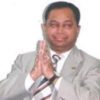 Dr. Surya Nath Prasad, Former President of the International Association of Educators for World Peace (IAEWP), Retired Professor of Education (India), Former Visiting Professor at Graduate Institute of Peace Studies, Kyung Hee University, Republic of Korea, Founder and Editor-in-Chief of Peace Education: An International Journal. dr_suryanathprasad@yahoo.co.in
Tags: Education for Peace, International Day of Peace
This article originally appeared on Transcend Media Service (TMS) on 30 Mar 2026.
Anticopyright: Editorials and articles originated on TMS may be freely reprinted, disseminated, translated and used as background material, provided an acknowledgement and link to the source, TMS: Education for Democracy to Build a Global Common Society for Peace, is included. Thank you.
If you enjoyed this article, please donate to TMS to join the growing list of TMS Supporters.

This work is licensed under a CC BY-NC 4.0 License.
Join the discussion!
We welcome debate and dissent, but personal — ad hominem — attacks (on authors, other users or any individual), abuse and defamatory language will not be tolerated. Nor will we tolerate attempts to deliberately disrupt discussions. We aim to maintain an inviting space to focus on intelligent interactions and debates.