


Why North Americans Turned to Al Jazeera Instead of CNN or Fox During Iran War
MEDIA, 13 Apr 2026
Zvika Klein | The Jerusalem Post - TRANSCEND Media Service
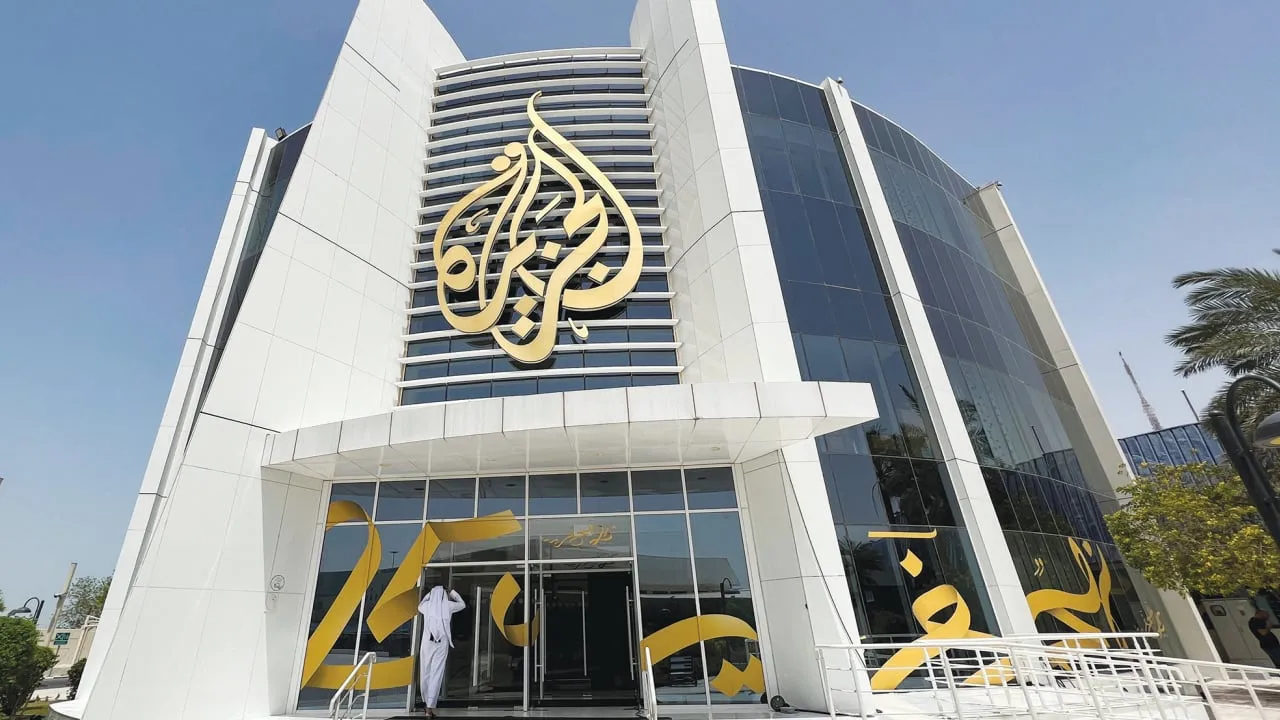
Al Jazeera headquarters in Doha, Qatar
(Photo credit: Imad Creidi/Reuters)Qatar now funds the most-watched English-language news channel covering the Middle East. And it got there because the West stopped showing up.
9 Apr 2026 – This number, which has nothing to do with missiles, should worry Israeli strategists more than most of what came out of the 40-day war.
Through AJ+, the network also publishes digital-first video content in French and Spanish. Al Jazeera has more than 40 million subscribers on its YouTube platform alone. CNN and Fox News have 34.4 million subscribers combined.
Nobody in Jerusalem is tracking this news. Nobody in Washington is either. But that single data point tells you more about the trajectory of the next decade’s information wars than any Pentagon briefing or think tank’s white paper.

Qatar now funds the most-watched English-language news channel covering the Middle East. And it got there because the West stopped showing up.
Americans were at war. They went looking for coverage on a channel bankrolled by Doha.
Going back to October 7
The trajectory dates to October 7, 2023. The Iran war locked it in. And the problem isn’t bias, though bias is real enough. The problem is that Western media have stopped being present in the region they claim to cover.
Last year, 71% of Democrat-leaning Americans under the age of 50 viewed Israel unfavorably, up from 53% a few years earlier, Pew reported. Those numbers came from a generation that can see, in real time, that it’s being shown one side of a two-sided war.
The New York Times had eight or more named correspondents in Israel and zero inside Iran, Fairness and Accuracy in Reporting (FAIR) reported on March 30. Not a reduced bureau. Nobody. When the paper of record wanted an Iranian perspective on a war being waged against Iran, it called contacts in Istanbul.
CNN’s Fred Pleitgen became the first American journalist to physically enter the country. The State Department said his dispatches were “pro-Iran regime propaganda” and told news organizations to “confirm their reporting with the US government before presenting to the public.”
The US government, waging a war of its own choosing, told its own free press to clear copy with the state. Most outlets, with no one on the other side to push back, complied through silence.
The result was coverage that felt, to tens of millions of viewers, like it was missing half the story. Because it was. You can’t cover a war against a country when you have nobody in that country.
That’s not a bias problem but rather a staffing decision made across every major Western newsroom over two decades, and during the Iran war, the consequences became visible to anyone with a cellphone and a search bar.
Pakistan brokered the ceasefire that ended the war, and most American outlets barely registered it, because they had no one in the region who understood what was happening.
The vacuum didn’t stay empty: In February, aljazeera.com logged 63.4 million visits, the biggest year-over-year jump among the world’s top 50 English-language news sites. In March, traffic surged 232.7%. Half the English site’s audience is Western, including 30% American, 7% British, and 7% Canadian.
What’s intriguing is that the Iran war cracked something inside Al Jazeera that had held firm since the October 7 massacre. When Iranian drones hit Qatar, the network’s editorial unity broke for the first time in its modern history.
Al Jazeera Arabic ran opinion pieces praising American and Israeli strategy. An on-air analyst was likened by viewers to “a Zionist analyst” after encouraging escalation against Tehran. Three journalists were reportedly arrested in Doha for “supporting Iran.”
The Foundation for Defense of Democracies (FDD), no friend of the network, concluded there was “no single Al Jazeera line on this war.” Throughout the Israel-Hamas War in Gaza, Al Jazeera held an iron editorial posture. The Iran war revealed that the posture depends entirely on whether Qatar’s own security is at stake. When the patron gets hit, the line shifts.
That tells you something about the network’s real center of gravity, and it’s an exploitable vulnerability if anyone in Jerusalem would pay attention.
And this is where the conversation has to shift from diagnosis to prescription.
We cannot compete with Al Jazeera at the moment. Not Israel and, frankly, not Western media either. The reason is structural. The traditional business model for international news is broken. Foreign bureaus are expensive. War coverage is expensive. And news, for the most part, isn’t profitable anymore.
The difference is that Qatar understood, 30 years ago, that owning a global media network is a strategic investment. It spent $1 billion launching Al Jazeera English alone. It funds 70-plus bureaus at a permanent loss. It built an AI-integrated newsroom while Western networks were debating whether to keep their Beirut office open.
Qatar treats the media the way it treats sovereign wealth: as infrastructure that pays returns in influence rather than revenue.
Israel, and the broader pro-Western coalition, has no equivalent. i24NEWS exists but operates at a fraction of the scale. The Government Press Office runs on a budget that wouldn’t cover Al Jazeera’s Doha canteen. And we banned Al Jazeera itself through December 2027, which means Israeli voices are absent from the only English-language platform that is gaining an audience among young Westerners. That is, essentially, a gift to Qatar.
What’s needed is an impact investment in English-language international journalism on a serious scale. Not hasbara (public diplomacy). Not government-funded propaganda that audiences will immediately discount. A real, editorially independent news operation, funded by people who understand that the return isn’t measured in subscription revenue but in whether the next generation of Western opinion-makers gets a complete picture of what happens in this region.
The model exists. Bloomberg proved it works. Qatar proved it works. The question is whether anyone on our side of the argument is willing to write the check and then keep their hands off the newsroom.
The biggest shift in how the world processes Israel’s wars happened on screens, not in the sky over Tehran. It happened over the years, while nobody in Israel or the US was paying attention.
 Zvika Klein is the Editor-in-Chief of The Jerusalem Post and the paper’s former Jewish World analyst. He’s considered one of the world’s top journalists specializing in Jewish Diaspora affairs. Klein was formerly a correspondent for Israel’s Makor Rishon and Maariv newspapers.
Tags: Al Jazeera, Alternative Media, CNN, Corporate Media, Engaged Journalism, Fake News, Journalism, Media, Military Industrial Media Complex, North America, Propaganda, USA, War Journalism
DISCLAIMER: The statements, views and opinions expressed in pieces republished here are solely those of the authors and do not necessarily represent those of TMS. In accordance with title 17 U.S.C. section 107, this material is distributed without profit to those who have expressed a prior interest in receiving the included information for research and educational purposes. TMS has no affiliation whatsoever with the originator of this article nor is TMS endorsed or sponsored by the originator. “GO TO ORIGINAL” links are provided as a convenience to our readers and allow for verification of authenticity. However, as originating pages are often updated by their originating host sites, the versions posted may not match the versions our readers view when clicking the “GO TO ORIGINAL” links. This site contains copyrighted material the use of which has not always been specifically authorized by the copyright owner. We are making such material available in our efforts to advance understanding of environmental, political, human rights, economic, democracy, scientific, and social justice issues, etc. We believe this constitutes a ‘fair use’ of any such copyrighted material as provided for in section 107 of the US Copyright Law. In accordance with Title 17 U.S.C. Section 107, the material on this site is distributed without profit to those who have expressed a prior interest in receiving the included information for research and educational purposes. For more information go to: http://www.law.cornell.edu/uscode/17/107.shtml. If you wish to use copyrighted material from this site for purposes of your own that go beyond ‘fair use’, you must obtain permission from the copyright owner.
Join the discussion!
We welcome debate and dissent, but personal — ad hominem — attacks (on authors, other users or any individual), abuse and defamatory language will not be tolerated. Nor will we tolerate attempts to deliberately disrupt discussions. We aim to maintain an inviting space to focus on intelligent interactions and debates.