
Class, Struggle, and the Theft of March 8
IN FOCUS, 9 Mar 2026
Biljana Vankovska – TRANSCEND Media Service
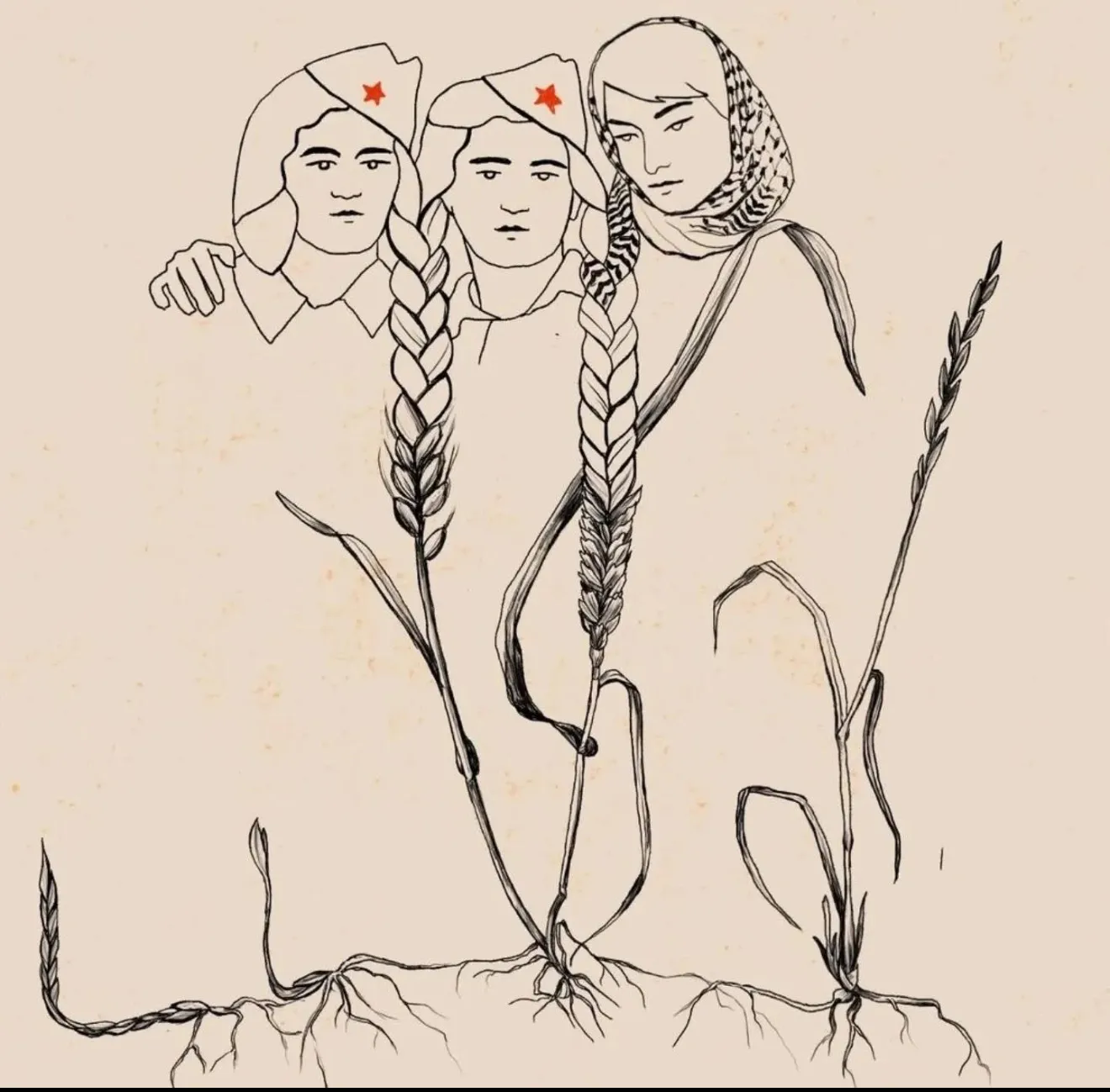
8 Mar 2026 – Born into socialism and raised with the natural conviction that women and men are equals, I now find myself in a “democratic” world sinking deeper into decadence, militarism, and machismo. Every year, on the occasion of the International Women’s Day, 8 Mar, I wade through an avalanche of messages oscillating between banality and hypocrisy. What strikes me most is when, within that sentimental chorus, one encounters colleagues—professors—repeating the most predictable clichés: “Every woman deserves attention, respect, love, support. Every real man will do that. We cannot live without each other.”
Notice the logic embedded in such phrases. Women are reduced to objects of affection and protection—passive recipients of male benevolence. The message says nothing of rights, autonomy, or equality, only of kindness bestowed upon women by “real men.” And what exactly is a “real man”? One suspects this category surfaces precisely once a year, on March 8, before vanishing again into the everyday structures of power.
Over the decades, I have watched International Women’s Day slowly lose its meaning—softened, sentimentalized, stripped of its historical roots. What began as a militant day of working women demanding labour rights, dignity, and political participation has been gradually transformed into a harmless celebration of “femininity,” flowers, and motherhood. There can hardly be a more complete distortion of the day’s essence. In the twenty-first century, such sentimentalization borders on insult.
March 8 was never meant to celebrate women as symbols of tenderness or sacrifice. It was born out of struggle—out of strikes, factory floors, and the collective demands of women workers who understood that democracy begins in the sphere of labour. Emancipation was never simply a question of gender identity; it was, and remains, inseparable from class. The rights won by women in the twentieth century were not gifts offered by benevolent men or enlightened institutions. They were the result of political struggle waged by women and men together against exploitation and inequality.
Yet today, public discourse around women’s rights floats largely above this material reality. It speaks the language of empowerment while ignoring the structures of power. It celebrates representation while remaining silent about the economic and social conditions that shape women’s lives. And it is increasingly entangled with geopolitical agendas in which women’s rights become rhetorical instruments rather than genuine commitments.
Forgive me, then, for asking a simple question: how many women in positions of power today truly embody political and moral leadership? How many stand firmly against war, injustice, and exploitation? Too often we see the opposite—women occupying positions of authority while faithfully reproducing the same militaristic and imperial logics that have historically oppressed both women and men. Some once invoked the suffering of Afghan women as moral justification for intervention; now they shed tears for Iranian women under the tyranny of the mullahs. Their concern appears curiously selective—or naïve—or perhaps born of a liberal sincerity that genuinely mistakes Western democracy for a universal remedy.
Meanwhile, the women whose experiences should command our deepest attention remain largely invisible: the women who bury their children after bombardments, who endure sanctions, poverty, and displacement, who hold families and communities together under conditions that few Western commentators can even imagine. These women rarely appear in the polished speeches and symbolic gestures of March 8. And yet their resilience, dignity, and capacity for collective survival contain far more political wisdom than the carefully curated feminism of elite circles.
My own heroines are the mothers, workers, and activists from India to Palestine, from Iran to Cuba and Sudan—women whose lives are shaped not by privilege but by struggle. Among more visible voices, I find inspiration not in those who align themselves with the machinery of power, but in intellectuals and activists such as Arundhati Roy, Clare Daly, and Radhika Desai—women who refuse to separate feminism from anti-imperialism and social justice. And there are many others, some of them dear soul sisters, who carry this burden as though it were nothing extraordinary. I do not know how I would survive without such comrades. Yet the highest respect belongs above all to those whose courage is measured not in titles or media visibility, but in endurance—the women with rough hands and broken hearts who continue to stand upright in the face of unimaginable loss.
In the end, a day is just a day. It will pass like any other. Tomorrow the same structures of power will remain intact. The “real men” will once again flex their muscles, and the “real female democrats” will faithfully follow, or, in some cases, lead them. March 8 will return next year, wrapped once again in flowers and empty phrases, unless women and men together reclaim it as a day of struggle, not sentiment. And if we survive the coming Armageddon…
_____________________________________________
 Biljana Vankovska – Professor of political science and international relations at Ss. Cyril and Methodius University in Macedonia, TFF board member, No Cold War collective member, peace activist, leftist, columnist, 2024 presidential candidate.
Go to Original – biljanavankovska.substack.com
Tags: Democracy, Equality, Inequality, International Women's Day, Patriarchy, Women liberation
DISCLAIMER: The statements, views and opinions expressed in pieces republished here are solely those of the authors and do not necessarily represent those of TMS. In accordance with title 17 U.S.C. section 107, this material is distributed without profit to those who have expressed a prior interest in receiving the included information for research and educational purposes. TMS has no affiliation whatsoever with the originator of this article nor is TMS endorsed or sponsored by the originator. “GO TO ORIGINAL” links are provided as a convenience to our readers and allow for verification of authenticity. However, as originating pages are often updated by their originating host sites, the versions posted may not match the versions our readers view when clicking the “GO TO ORIGINAL” links. This site contains copyrighted material the use of which has not always been specifically authorized by the copyright owner. We are making such material available in our efforts to advance understanding of environmental, political, human rights, economic, democracy, scientific, and social justice issues, etc. We believe this constitutes a ‘fair use’ of any such copyrighted material as provided for in section 107 of the US Copyright Law. In accordance with Title 17 U.S.C. Section 107, the material on this site is distributed without profit to those who have expressed a prior interest in receiving the included information for research and educational purposes. For more information go to: http://www.law.cornell.edu/uscode/17/107.shtml. If you wish to use copyrighted material from this site for purposes of your own that go beyond ‘fair use’, you must obtain permission from the copyright owner.
Join the discussion!
We welcome debate and dissent, but personal — ad hominem — attacks (on authors, other users or any individual), abuse and defamatory language will not be tolerated. Nor will we tolerate attempts to deliberately disrupt discussions. We aim to maintain an inviting space to focus on intelligent interactions and debates.