



Capitalism and the Cloud
ARTIFICIAL INTELLIGENCE-AI, 1 Dec 2025
Toby Miller and Joan Pedro-Carañana – TRANSCEND Media Service
The Dangers and Costs of the AI Bubble
24 Nov 2025 – A giant, hydra-headed specter is haunting the UK. In part, this phantom is visible, knowable. But we can’t easily discern its form or understand its impact.
In the past, one could arrive in a British town or city and immediately encounter physical, working monuments to public infrastructure based on the socialisation of risks and needs. We’re talking about visible things like schools, post offices, electricity stations, railway terminals, and telephone exchanges.
Today, visitors confront – or don’t – much ghostlier visages: about 500 barely-seen data centres, or ‘clouds’. Readers may not know the site of their nearest existing or future ‘cloud’, but its destructive power is tremendous, matched only by a desire to keep you at a distance.
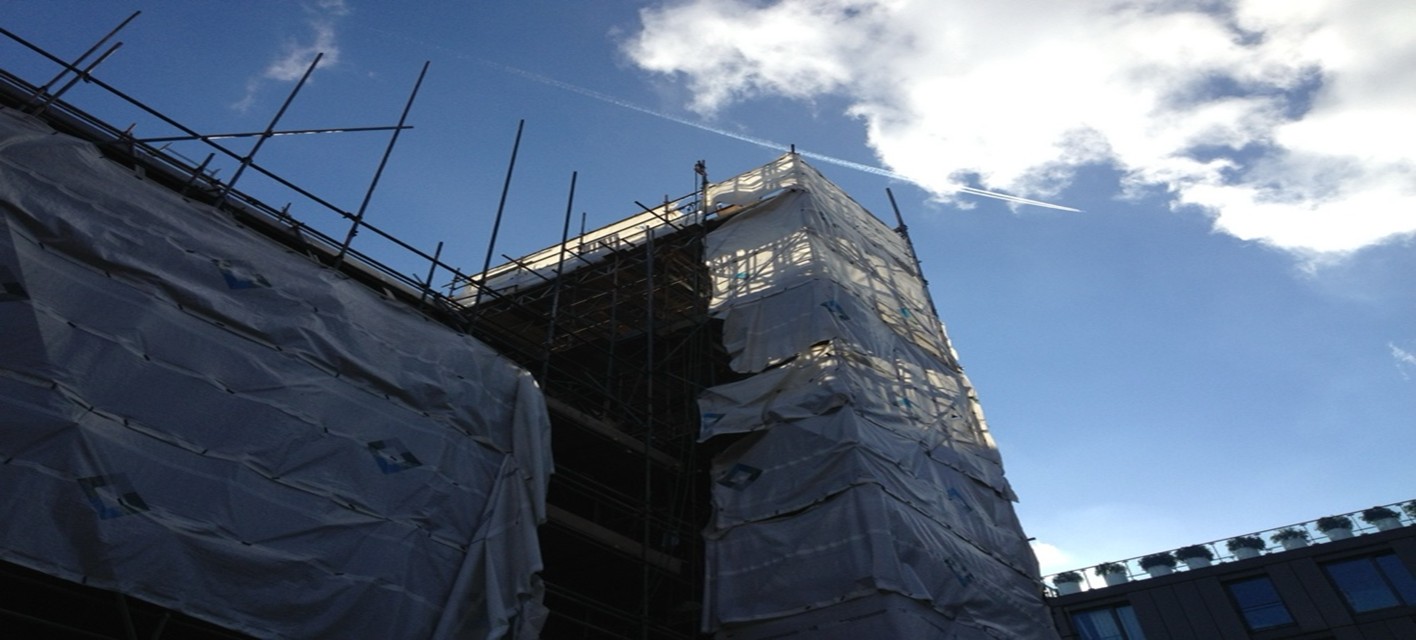

Data centres are active or underway in much of the country, many in the south-east corridor, that polite way of saying ‘London’ and its environs. Big business needs to be near the centre of politics, corporations, and the City, data ‘must’ travel fast, and three-quarters of the nation’s artificial intelligence firms are in this corridor.
Last year, companies spent £1.75 billion on building ‘clouds’ in Britain. Expenditure on new centres is estimated to be £10 billion a year by 2029. Most of this new investment comes not because of increased demand for email, video, journalism, education, sports, or so-called social media. It’s due to Meta, Google, Amazon, and Microsoft being drunk on AI.
All four have willing sales reps. Their chief UK manservant, Keir Starmer has undertaken to ‘inject AI into the veins of this enterprising nation.’ The glorious-leader-who-brooks-no-dissent and his merry band of Whitehall pranksters are confident the technology ‘will deliver a decade of national renewal’.
Starmer and his kind, hegemons of governments, universities, corporations, and religions, guarantee a new world. So ghostwriters for his friend in the White House promise that: ‘Winning the AI race will usher in a new golden age of human flourishing, economic competitiveness, and national security for the American people. An industrial revolution, an information revolution, and a renaissance—all at once.’
These people aren’t sharing the reality with us. It’s not pretty, and it’s not something one would wish injected into one’s veins, enterprisingly or otherwise.
Our focus here isn’t on the suicides associated with ChatGPT, nor the risks of AI acting against humans, the systematic disinformation demonstrated in election campaign after election campaign across fifty countries, or what the Financial Times (!) terms ‘America’s AI Colonialism’.
The AI bubble
We’ll concentrate on two themes. The first is the current stock-market boom, based on the construction of data centres to service AI.
Time after time, surges of irrational investment in new communications technologies have produced economic chaos. Today’s implications are broader, deeper, and more dire. Amazon, Google, Meta, and Microsoft dedicated $350 billion to building ‘clouds’ this year, with $400 billion scheduled for 2026. The rush is on, driven by a fear of missing out. Techbro FOMO may be preventing US recession, but the Bank of England discerns similarities with ‘the peak of the dot com bubble,’ aggravated by the trillions soon to be borrowed.
It’s likely that costs will spiral and the technology grow ‘obsolete far quicker than anticipated, requiring new investment that decreases returns for its owner—or forces them to sell at a discount.’ Subsequent stock-market catastrophes will probably ruin small-to medium-sized participants while huge platforms sup on the remains.
Forget for a moment the obvious problem of capitalist over-production. Assuming the hysteria ‘self-corrects’, what is the evidence for AI doing what the manservant and his mandarins promise?
Nobel laureate Daron Acemoglu finds little support for claims of dramatic economic growth through AI. He predicts its stimulus to productivity over the next decade may reach a towering 0.53%, accompanied by worsening wage inequality. Geoffrey Hinton, who won his Nobel Prize for machine learning, says the new technology ‘will make some people much richer and most people poorer.’
Data centres employ few people once their construction is complete. Filipino and Colombian workers enter AI data for US corporations for $1.50 an hour. Mid-level US office staff devote 15% of their time to correcting mistakes AI makes every day. Is that the future for Starmer’s ‘enterprising nation?’
Meanwhile, despite $30-40 billion of business investment in GenAI, 95% of organisations report zero improved business performance. Pharmaceutical companies have been in the vanguard, and their decade of vast AI expenditure has produced virtually nothing. The Economist notes that ‘faith in great God-like language models is waning,’ its advances ‘akin to boring phone upgrades.’ Watch for an economic disaster coming to a ‘cloud’ near you.
Ecological disaster
Our second focus is on AI’s environmental impact, due to the gigantic number of data centres ‘needed’ to make it happen. Unlike the working monuments mentioned above, many are inconspicuous; some nestled in areas zoned for office life, others located in the countryside or small cities. The newest are huge, and private.
The term ‘cloud’ artfully obscures the fact that data centres are buildings. By associating them with natural precipitation, it diverts attention from their use of resources.
For these all-too concrete, all-too corporate places are hungry for power, thirsty for water, and set to dominate global ecology. Two years ago, ‘clouds’ consumed the same amount of energy as Britain. The International Energy Agency predicts that within a decade they will require as much as India. In addition, the techbros’ data-centre fetish draws water from some of the driest areas of the world to cool their ‘clouds’. Google’s used six trillion gallons of water in 2024, a third of Turkey’s drinking supply.
At an individual level, each ChatGPT request we make consumes ten times the energy of a conventional Google query. A brief conversation with GPT-3, or a hundred words sent via email, relies on 500 millilitres of water to cool data centres.
Watch for an environmental disaster emanating from a ‘cloud’ near you.
There is some responsible journalistic coverage of these issues, such as the financial press warning of collapse and the Guardian reporting that a huge new centre in Lincolnshire ‘could cause more greenhouse gas emissions than five international airports’.
And there is popular resistance internationally, for example Spain’s Tu Nube Seca Mi Río [Your Cloud is Draining My River Dry] and the Movimiento Socio Ambiental Comunitario Por el Agua y el Territorio (the Socio-Environmental Community Movement for Water and Land) in Chile. These movements organise demonstrations, talks, media interventions, and policy critiques, insisting on scientific and community evaluation of data centres’ ecosocial impact.
Global Action Plan calls for serious discussion of saving the planet versus dutifully obeying the men of Silicon Valley. Greenpeace laments that ‘our climate and our lungs will pay the price’ of the bubble. Foxglove launches a legal challenge against ‘cloud’ construction. Mild-mannered groups such as CPRE—The Countryside Charity note with some alarm that Labour is quietly excluding basic environmental norms from construction approvals. And protests have begun against what activists call ‘clanker,’ troping a Star Wars gaming term for droid robot soldiers.
Such actions can counter AI’s deleterious impact, not just on our emotions, elections, and jobs, though they are crucial, but the very survival of our planet.
It’s a formidable task: the techbros have spent $100 million on superficially-independent coin-operated organisations to oppose regulation of data centres and copyright obstacles to AI.
All that said, none of the above matters if you subscribe to the White House’s AI plan, Removing Barriers to American Leadership in Artificial Intelligence.
It rejects ‘radical climate dogma,’ favouring a path to ‘victory’ that refuses ‘references to misinformation, diversity, equity, inclusion and climate change.’ Donald J Trump has called for censorship of any ‘woke Marxist lunacy’ lurking within AI.
The UK government’s consultants guarantee energy savings from the technology and its AI Energy Council will ‘make sure supply can meet demand, alongside £104bn in water infrastructure investment.’ Amazon, Microsoft, Google, and government entities dominate the membership. There’s no scholarly, worker, or activist participation.
So that’s all fine, then. Sit back, relax, and let Keir Starmer open your veins.
This won’t hurt a bit. The giant unseen spectre will take care of your every need.
Or we resist.
_____________________________________________________
 Joan Pedro-Carañana is Associate Professor at Computense University of Madrid and a member of the Latin Union of Political Economy of Information, Communication and Culture (ULEPICC).
Toby Miller is Distinguished Professor, Instituto Tecnológico de Monterey, Mexico.
Tags: Artificial Intelligence AI, Capitalism
This article originally appeared on Transcend Media Service (TMS) on 1 Dec 2025.
Anticopyright: Editorials and articles originated on TMS may be freely reprinted, disseminated, translated and used as background material, provided an acknowledgement and link to the source, TMS: Capitalism and the Cloud, is included. Thank you.
If you enjoyed this article, please donate to TMS to join the growing list of TMS Supporters.

This work is licensed under a CC BY-NC 4.0 License.
Join the discussion!
We welcome debate and dissent, but personal — ad hominem — attacks (on authors, other users or any individual), abuse and defamatory language will not be tolerated. Nor will we tolerate attempts to deliberately disrupt discussions. We aim to maintain an inviting space to focus on intelligent interactions and debates.
Read more
Click here to go to the current weekly digest or pick another article:
ARTIFICIAL INTELLIGENCE-AI: