



Detained by Canada: A Puzzling Experience
EDITORIAL, 1 Dec 2025
#927 | Hilal Elver & Richard Falk – TRANSCEND Media Service
1 Dec 2025 – Just few weeks ago, on October 23-26 in Istanbul, we completed the final session of the Gaza People’s Tribunal. It was a very successful event due to the high quality of expert and witness testimonies, as well as well as the enthusiastic response of the live audience attending the Tribunal. After this very good experience in Istanbul, and an uneventful return to the US we never thought the Canadian Government would challenge our entry to attend another more limited Peoples’ Tribunal two weeks later in Ottawa.
In response to a question as to why we were in Canada, we informed the Canadian Border Security Agency (CBSA) interrogator that we were formally invited to participate in the Palestinian Tribunal on Canadian Responsibility in Ottawa over the course of the next two days, November 14-15. Yet such a possibility was evidently much on the minds of the Canadian immigration authorities who at the outset of the first period of interrogation informed us about the purpose of this detention:
“We have the responsibility for determining as to whether you pose a threat to Canadian national security.”
But this still doesn’t explain ‘why Canada would regard two professors with admittedly somewhat controversial views on the Israel/Palestine conflict as threats to national security?’ It would be reasonable for Canada to view the two of us as marginalized individuals who harbor no wish more dangerous than that their critical voices be heard and heeded by those in Ottawa shaping government policy. It is our core belief that the world becomes less dangerous and unjust when international law is implemented. Israel behaved lawlessly in Gaza for decades, most dramatically during these two plus years of genocide.
At first, we were both amused and surprised by such a framing by the Canadian government. Amused as the charge of threatening Canada’s national security seemed so disproportionately grandiose as compared to our long demonstrated actual capabilities or, for that matter our intentions. There is no hidden agenda. We are proud to be independent scholars relying on nothing other than the language at our disposal to demand justice for the vulnerable Palestinian people, long victimized by a deeply rooted apartheid structure and by the genocidal assault on Gaza in supposed retaliation for the attack on October 7. We were coming to Ottawa to support our Canadian brothers and sisters in their resolve to plan a Palestinian Tribunal on Canadian Responsibility that would depict and reject Canadian complicity with Israel by way of arms exports, and diplomatic support. And finally to remind Canada of its treaty obligation to live up to the expectations of the Genocide Convention that parties had legal duties to seek to prevent and punish genocide, and certainly not act as enabler.
It was our hope that Canada would go beyond its welcome conditional support of Palestinian statehood in recent weeks to reject both Israeli impunity and a peace process that rewards a government that engaged in genocide while further punishing and humiliating the grossly victimized Palestinian people. We were determined in our Tribunal testimonies to get this dissenting message across at the Tribunal. We still wonder how such an exercise of the right of free expression in a democratic country came to be considered a threat to Canadian national security? More correctly understood, such advocacy should be seen as aligning Canadian national security with international law, considering the human interest in regional and global stability, as well as peacefulness.
We emerged from this experience of over four hours at the Toronto Airport quite exhausted. We quickly realized that our detention involved far more than routine protocol at the original immigration window when the official kept looking at his computer until finally telling us to wait while he went to check with more senior staff. After many minutes he finally returned with several questions about the logistics of the Ottawa event. Were we speakers, were we being paid to do so, were our travel expenses and hotel costs covered. It seemed strange to us that nothing was asked about the conference, its themes and relation to Canadian national security. Then, the interrogating Agent indicated that he had to check further with ‘his boss’ on whether we would be allowed to enter Canada.
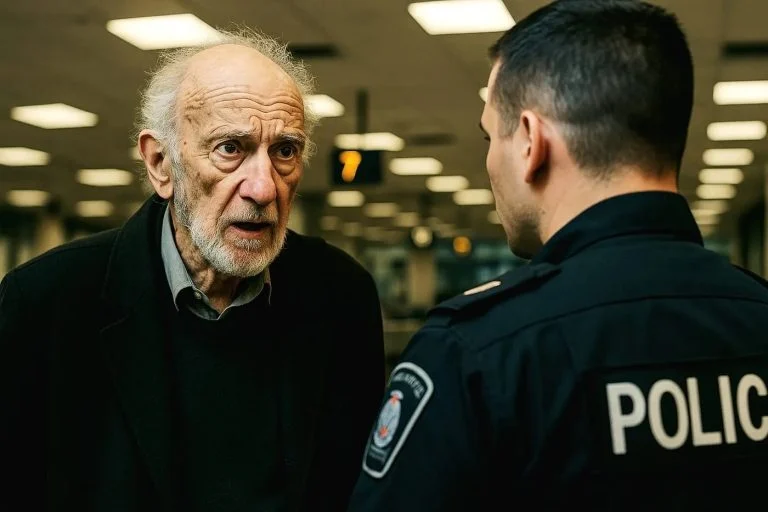
By then we had missed our connecting flight to Ottawa and were kept waiting for another 90 minutes until the Agent returned with a somewhat different line of questions, but still somewhat peculiar as very abstract and general. Did I realize that I was accused widely of being an antisemite? Were we connected in any way with Hamas? Did I have any connection with Euro-Med Human Rights Organization? We gave straight forward honest answers and expected follow up questions aimed at developing some useful reasoning on why we were security threats, but none was forthcoming. Once more the Agent left for an exasperating further 30 minutes or so before returning to tell us we were free to enter Canada but giving us no further explanation.
In conclusion, this was a puzzling experience. If there was a serious security concern, then why did they fail to inspect our luggage including such devices as smart phones and laptops. Or at least ask questions that if answered in certain ways would be self-incrimination. Their questions were very abstract and vague, not meant to elicit information about the Tribunal nor about concrete concerns relating to Canadian national security. The most reasonable interpretation of the incident was that by keeping us from taking part in the Tribunal it was integral to a broader strategy of harassment directed at those critical of Israel’s behavior in relation to the Palestinian struggle to achieve basic rights.
After our lengthy interrogation at the airport after, we learned that the initial site of the Tribunal at the University of Ottawa was no longer available due to a decision to cancel made by administrative officials. The Canadian Senator Yuen Pau Woo, himself a critic of Canada’s approach to the Palestinian ordeal, responded to the cancelation by agreeing to host the Tribunal event in the Senate building. Perhaps, the backlash caused by our detention will have the unintended effect of having the CBSA operate more carefully in the future. This would means addressing authentic security threats and not using ‘security’ investigations as an excuse to harass scholars and others for adopting views alleging Israel’s responsibility for genocide and Canada’s derivative responsibility by being complicit.
The Tribunal completed its two-day program, we testified as planned, and the event focused its energies on Canada’s distinctive responsibilities rather than addressing the underlying questions as to whether genocide and crimes against humanity can be assumed short of an ICJ decision on the legal allegations. Our detention occurred in this atmosphere, made more confusing by the UN adoption of the US framework for a long-term Gaza solution, which we regard as a furtherance of the original crimes by altered means.
The entire intimidation efforts by the (CBSA) taught us that global civil society movement to defend Palestinian people, stop genocide and ask for accountability have an important impact on the domestic political life of perpetrators and complicit governments. They act to silence hostile voices. These tensions actually are beginning to show that crude intimidation tactics do not work, and we, as civil society members with a global conscience, are gaining influence slowly but surely over national public policy that violates international law and morality. It should be obvious that there is scant prospect of Palestinian self-determination without continuing Palestinian sumud and the solidarity initiatives of activists throughout the world. Without Israeli compliance with judicial orders to withdraw from Occupied Palestine and to refrain immediately from any further interference with the international delivery of humanitarian aid the genocide continues.
__________________________________________
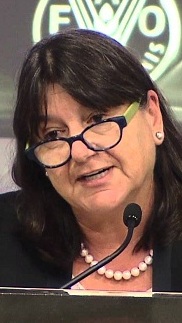 Hilal Elver was a member of the Academic Council of the UN Least Developed Countries (2011–2021) and the United Nations Special Rapporteur on the Right to Food from Jun 2014 to May 2020. She is a research professor at University of California, Santa Barbara and a Global Fellow at the Resnick Food Law and Policy Center UCLA Distinguished Law School. Her appointment as Special Rapporteur was criticized by the governments of the United States and Canada. Elver is the author of three books, including The Headscarf Controversy: Secularism and Freedom of Religion (2012) and Peaceful Uses of International Rivers: The Case of the Euphrates and Tigris River Basin (2002). She is married to Richard A. Falk.
 Prof. Richard Falk is a member of the TRANSCEND Network, of the TRANSCEND Media Service Editorial Committee, Albert G. Milbank Professor Emeritus of International Law at Princeton University, Chair of Global Law, Faculty of Law, at Queen Mary University London, Research Associate the Orfalea Center of Global Studies at the University of California, Santa Barbara, and Fellow of the Tellus Institute. He directed the project on Global Climate Change, Human Security, and Democracy at UCSB and formerly served as director the North American group in the World Order Models Project. He also is a member of the editorial board of the magazine The Nation. Between 2008 and 2014, Falk served as UN Special Rapporteur on Human Rights in Occupied Palestine. His book, (Re)Imagining Humane Global Governance (2014), proposes a value-oriented assessment of world order and future trends. His most recent books are Power Shift (2016); Revisiting the Vietnam War (2017); On Nuclear Weapons: Denuclearization, Demilitarization and Disarmament (2019); and On Public Imagination: A Political & Ethical Imperative, ed. with Victor Faessel & Michael Curtin (2019). He is the author or coauthor of other books, including Religion and Humane Global Governance (2001), Explorations at the Edge of Time (1993), Revolutionaries and Functionaries (1988), The Promise of World Order (1988), Indefensible Weapons (with Robert Jay Lifton, 1983), A Study of Future Worlds (1975), and This Endangered Planet (1972). His memoir, Public Intellectual: The Life of a Citizen Pilgrim was published in March 2021 and received an award from Global Policy Institute at Loyala Marymount University as ‘the best book of 2021.’ He has been nominated frequently for the Nobel Peace Prize since 2009.
JOIN THE BDS-BOYCOTT, DIVESTMENT, SANCTIONS CAMPAIGN TO PROTEST THE ISRAELI BARBARIC GENOCIDE OF PALESTINIANS IN GAZA.
DON’T BUY PRODUCTS WHOSE BARCODE STARTS WITH 729, WHICH INDICATES THAT THEY ARE PRODUCED IN ISRAEL. DO YOUR PART! MAKE A DIFFERENCE!
7 2 9: BOYCOTT FOR HUMAN JUSTICE!
Tags: Bullying, Canada, Gaza Tribunal, Genocide, Israel, Justice, National Security, Palestine, Richard Falk
This article originally appeared on Transcend Media Service (TMS) on 1 Dec 2025.
Anticopyright: Editorials and articles originated on TMS may be freely reprinted, disseminated, translated and used as background material, provided an acknowledgement and link to the source, TMS: Detained by Canada: A Puzzling Experience, is included. Thank you.
If you enjoyed this article, please donate to TMS to join the growing list of TMS Supporters.

This work is licensed under a CC BY-NC 4.0 License.
One Response to “Detained by Canada: A Puzzling Experience”
Join the discussion!
We welcome debate and dissent, but personal — ad hominem — attacks (on authors, other users or any individual), abuse and defamatory language will not be tolerated. Nor will we tolerate attempts to deliberately disrupt discussions. We aim to maintain an inviting space to focus on intelligent interactions and debates.
[…] Detained by Canada: A Puzzling Experience […]