



Mali, Lithium, and the New Scramble for Africa
TRANSCEND MEMBERS, 1 Dec 2025
Raïs Neza Boneza – TRANSCEND Media Service
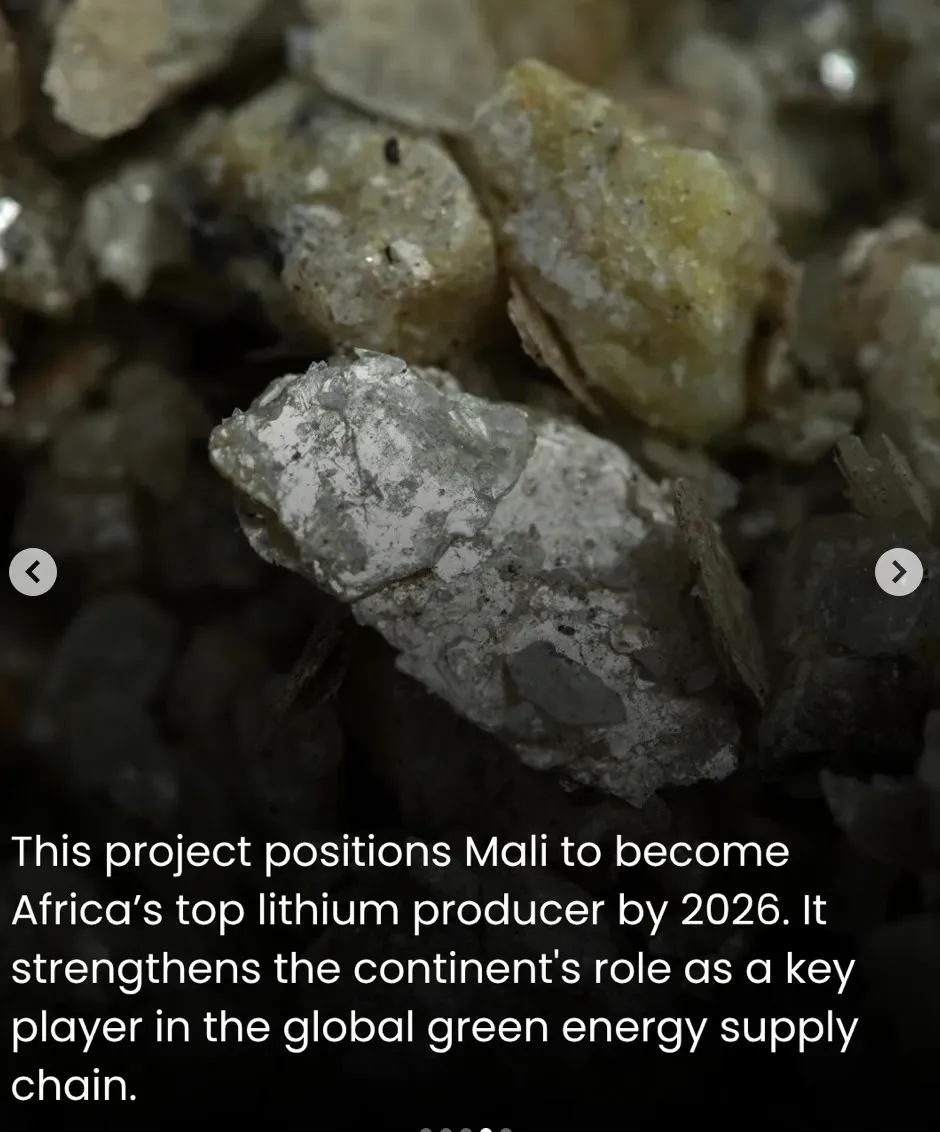
24 Nov 2025 – In recent weeks, international headlines have warned of Mali’s imminent collapse: “Bamako is about to fall.” “Terrorists are at the gates.” Western embassies urge citizens to flee, and foreign analysts speak of an Afghan-style scenario in the Sahel. Yet behind this chorus of alarm lies a more strategic story — one that reveals as much about global competition for resources as it does about Mali’s security. The real struggle, many in the region suggest, is not about ideology or terrorism. It is about lithium — the white metal that powers the world’s future.
Fear as a Weapon
The notion that Mali’s capital could fall within weeks has circulated widely through Western media. But inside the country, such claims are viewed with deep skepticism. For many Malians, these reports amount to psychological warfare — part of a campaign to undermine confidence in the state and to justify a potential “stabilization” intervention.
The truth, according to Malian observers, is more complex. Armed groups remain a threat, but they are far from capable of taking Bamako. Their power has been reduced to sporadic road ambushes and local disruptions rather than the sweeping offensives seen years ago. Still, fear serves a purpose. It weakens institutions, deters investment, and prepares public opinion abroad for renewed foreign involvement.
The Real Battle: Lithium
Mali’s newfound prominence in global headlines coincides with a quiet but profound economic development: the opening of major lithium mines at Goulamina and Bougouni. Together, these sites could produce over half a million tonnes of lithium concentrate each year — placing Mali among the world’s top suppliers. Lithium is indispensable for electric cars, renewable energy storage, and virtually every rechargeable device on Earth. In short, it is the oil of the 21st century.
What distinguishes Mali’s lithium projects is who controls them: not Western conglomerates, but Chinese and Malian partnerships. The Goulamina mine, in particular, involves major Chinese investment. Western companies — and the governments behind them — have been notably absent.
This shift toward non-Western partners represents more than a commercial choice; it is an act of economic sovereignty. It threatens to overturn a centuries-old pattern in which African resources are extracted for foreign benefit, leaving little value behind.
The Geopolitics of Disruption
To understand the intensity of current media coverage, one must see the pattern. Whenever an African nation attempts to nationalize or control a key resource, it suddenly becomes the focus of humanitarian concern, security alerts, or political pressure.
The argument is that this is not coincidence but a long-term strategy — maintaining control through fragmentation. The logic is simple: weaken the state, question its legitimacy, isolate it economically, and eventually reintroduce foreign “assistance” to restore order — along with access to its resources.
History provides painful parallels. In Libya, the promise of African-led oil sovereignty ended in chaos and foreign reoccupation. The same fate, many fear, could await the Sahel if Mali’s attempt at self-determination is crushed.
Media Narratives and Economic Leverage
Recent corporate maneuvers underscore this connection. Shipping giants such as CMA-CGM temporarily halted transport to Mali, citing instability, only to resume operations days later. The sudden suspension — and equally sudden reversal — seemed more like a political signal than a logistical decision. Such gestures contribute to an atmosphere of uncertainty that discourages trade and investment, amplifying the perception of a nation on the brink.
Meanwhile, Western networks feature “experts” who echo the same alarmist narrative — many of whom, Malians say, have little knowledge of the terrain. This is not simply misinformation but information warfare, designed to delegitimize African autonomy.
A New Colonial Equation
Mali’s fate reverberates far beyond its borders. If it falls, the argument goes, the center of West Africa will unravel — destabilizing Burkina Faso, Niger, and the broader region. Such an outcome would invite new international interventions, each claiming to “restore peace” while reasserting geopolitical control.
The pattern is familiar: chaos, intervention, extraction. In each African region, one key state’s collapse can reshape the entire geopolitical map. The destruction of Libya transformed North Africa; the Congo crisis reshaped Central Africa. The collapse of Mali, many fear, could inaugurate Libya 2.0 in West Africa — another externally managed zone of endless “stabilization.”
Between Paranoia and Pattern
Skepticism is healthy. Conspiracy theories often flourish where transparency is lacking. Yet dismissing these warnings outright ignores a long history of foreign interference justified through the language of “security” and “development.” From the Congo in the 1960s to Iraq and Libya in the 21st century, resource-rich nations have repeatedly learned that sovereignty can be undone not only by coups or invasions, but by narratives that make domination seem like rescue.
Today, as Mali seeks to redefine its place in the global order, it stands at a crossroads between vulnerability and autonomy. Lithium is not just a mineral — it is the currency of tomorrow’s world. And whoever controls it will shape not only the global economy but also the very balance of power between continents.
____________________________________________
 Raïs Neza Boneza is the author of fiction as well as non-fiction, poetry books and articles. He was born in the Katanga province of the Democratic Republic of Congo (Former Zaïre). He is also an activist and peace practitioner. Raïs is a member of the TRANSCEND Media Service Editorial Committee and a convener of the TRANSCEND Network for Peace Development Environment for Central and African Great Lakes. He uses his work to promote artistic expressions as a means to deal with conflicts and maintaining mental wellbeing, spiritual growth and healing. Raïs has travelled extensively in Africa and around the world as a lecturer, educator and consultant for various NGOs and institutions. His work is premised on art, healing, solidarity, peace, conflict transformation and human dignity issues and works also as freelance journalist. You can reach him at rais.boneza@gmail.com – http://www.raisnezaboneza.no
Tags: Africa, Lithium, Mali, Resources
DISCLAIMER: The statements, views and opinions expressed in pieces republished here are solely those of the authors and do not necessarily represent those of TMS. In accordance with title 17 U.S.C. section 107, this material is distributed without profit to those who have expressed a prior interest in receiving the included information for research and educational purposes. TMS has no affiliation whatsoever with the originator of this article nor is TMS endorsed or sponsored by the originator. “GO TO ORIGINAL” links are provided as a convenience to our readers and allow for verification of authenticity. However, as originating pages are often updated by their originating host sites, the versions posted may not match the versions our readers view when clicking the “GO TO ORIGINAL” links. This site contains copyrighted material the use of which has not always been specifically authorized by the copyright owner. We are making such material available in our efforts to advance understanding of environmental, political, human rights, economic, democracy, scientific, and social justice issues, etc. We believe this constitutes a ‘fair use’ of any such copyrighted material as provided for in section 107 of the US Copyright Law. In accordance with Title 17 U.S.C. Section 107, the material on this site is distributed without profit to those who have expressed a prior interest in receiving the included information for research and educational purposes. For more information go to: http://www.law.cornell.edu/uscode/17/107.shtml. If you wish to use copyrighted material from this site for purposes of your own that go beyond ‘fair use’, you must obtain permission from the copyright owner.
Join the discussion!
We welcome debate and dissent, but personal — ad hominem — attacks (on authors, other users or any individual), abuse and defamatory language will not be tolerated. Nor will we tolerate attempts to deliberately disrupt discussions. We aim to maintain an inviting space to focus on intelligent interactions and debates.