Towards Piracy 2.0
IN FOCUS, 15 Dec 2025
Claudia Aranda | Pressenza - TRANSCEND Media Service
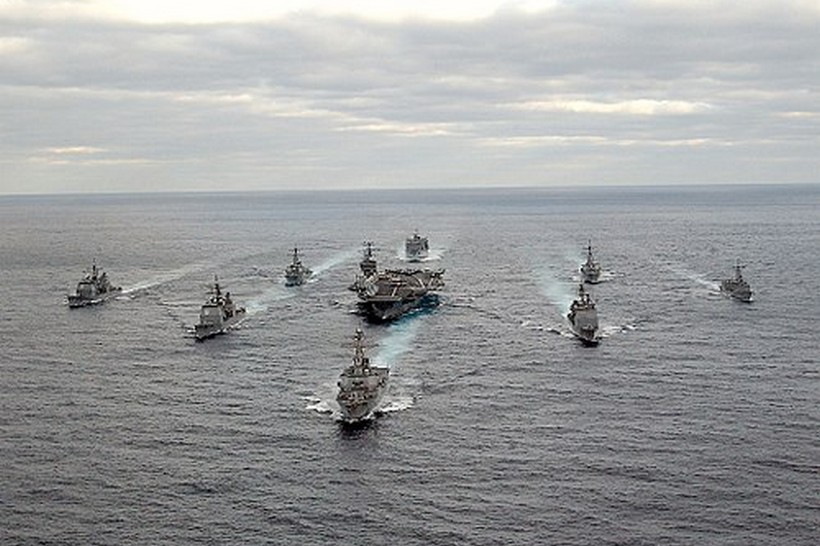
The New Pirates of the Atlantic – US Navy
13 Dec 2025 – The world is not entering a grey zone of international law. It is leaving it. What is taking shape is not an anomaly, nor a “moment of tension,” nor an exception justified by geopolitical circumstances: it is the normalization of plunder, carried out by states that proclaim themselves guardians of the global order while dismantling it piece by piece. The sea —that space which for decades symbolized regulation, trade, and cooperation— is once again becoming a stage for naked force.
This is not a chaotic regression, but something worse: an administered regression, wrapped in legal technicalities, national judicial seals, and polished press releases. A form of piracy that no longer needs black flags because it operates under official banners. A piracy that does not hide, but justifies itself.
Piracy now dresses in a legal suit, even though in practice it still consists of ambushing and robbing a ship. Classic piracy was crude: black flag, boarding, looting. Piracy 2.0 is more sophisticated: it uses national courts as a pretext. It cloaks itself in technical language (“sanctions,” “regulatory compliance”). It operates with state military force, not corsairs. But the core is the same: forcibly appropriating what does not belong to you. That is theft. The difference is that the loot is now called oil, gas, strategic minerals, maritime routes, cables, ports, infrastructure.
And thus, in a single stroke, we move from a rules-based order to an order based on “who can.”
When rules are not universal, not symmetrical, not applied to the powerful, they cease to be rules, and the message sent to the international system is brutally clear: if you are strong, you can. If you are weak, you endure. That is not international law. That is maritime neo-feudalism.
And one of the many risks —to put it mildly— is the potential contagion effect. In reality, more than a risk, it is the real danger. Can you even imagine it? Piracy 2.0 does not remain contained, because when a power steals and pays no real cost, others imitate, standards erode, violence is normalized. And then we have the United States stealing again and again, Iran intercepting, Russia blocking, China protecting routes by force, non-state actors reappearing. Not because they are “bad,” but because the referee broke the whistle.
Thus we return to the sea as a no-man’s-land, because historically, when law collapses, the sea becomes wild territory again, routes are militarized, trade becomes more expensive, and peoples pay the price. We have already lived this between the sixteenth and eighteenth centuries. Now it returns, but with satellites, drones, and “legal” narratives.
I could conclude, without embellishment, that yes, we are heading toward piracy 2.0. Not because norms are lacking, but because the powerful have decided they do not apply to them. The United States is playing at the edge of the precipice–a rogue state par excellence. And when law ceases to protect everyone, what remains is not order; it is organized crime.
My intuition is not alarmist.
It is historical. And, regrettably, quite lucid.
Go to Original – pressenza.com
Tags:
Anti-hegemony,
Anti-imperialism,
Big Oil,
Bullying,
Disaster Capitalism,
Latin America Caribbean,
Mafia,
Military Capitalism,
Pentagon,
Piracy,
Rogue states,
US Navy,
USA
Share this article:
email
mastodon
facebook
🔗 copy link
DISCLAIMER: The statements, views and opinions expressed in pieces republished here are solely those of the authors and do not necessarily represent those of TMS. In accordance with title 17 U.S.C. section 107, this material is distributed without profit to those who have expressed a prior interest in receiving the included information for research and educational purposes. TMS has no affiliation whatsoever with the originator of this article nor is TMS endorsed or sponsored by the originator. “GO TO ORIGINAL” links are provided as a convenience to our readers and allow for verification of authenticity. However, as originating pages are often updated by their originating host sites, the versions posted may not match the versions our readers view when clicking the “GO TO ORIGINAL” links. This site contains copyrighted material the use of which has not always been specifically authorized by the copyright owner. We are making such material available in our efforts to advance understanding of environmental, political, human rights, economic, democracy, scientific, and social justice issues, etc. We believe this constitutes a ‘fair use’ of any such copyrighted material as provided for in section 107 of the US Copyright Law. In accordance with Title 17 U.S.C. Section 107, the material on this site is distributed without profit to those who have expressed a prior interest in receiving the included information for research and educational purposes. For more information go to: http://www.law.cornell.edu/uscode/17/107.shtml. If you wish to use copyrighted material from this site for purposes of your own that go beyond ‘fair use’, you must obtain permission from the copyright owner.
Join the discussion!
We welcome debate and dissent, but personal — ad hominem
— attacks (on authors, other users or any individual), abuse
and defamatory language will not be tolerated.
Nor will we tolerate attempts to deliberately disrupt discussions.
We aim to maintain an inviting space to focus on intelligent
interactions and debates.


