
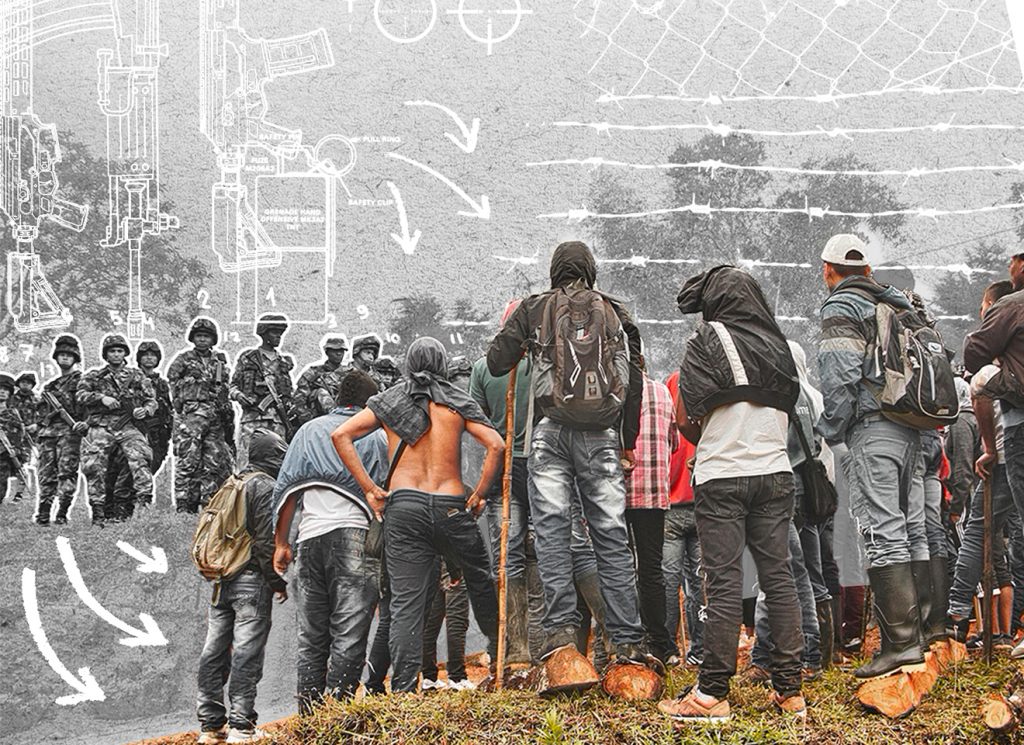
Photograph (PUPSOC), Cajibío, Cauca: clash during forced coca eradication.
IN FOCUS, 23 Feb 2026
Vijay Prashad | Tricontinental: Institute for Social Research – TRANSCEND Media Service
12 Feb 2026 – The drug trade – and the ‘War on Drugs’ that polices it – unleashes a value chain of suffering on peasant communities in the Global South. You cannot explain such systematic brutality without anger.
For Nicolás Maduro and Cilia Flores
A few months ago, I travelled with a team from our institute to Cauca, Colombia, to meet with a range of organisations affiliated with the Popular Unity Process of Southwest Colombia (PUPSOC), a coalition of organisations that defend the land and rights of rural communities. Cauca is home to coca-growing campesino (peasant) communities, where families do not plant coca out of ‘choice’ but because dispossession and state abandonment have closed off dignified livelihoods for them. Their labour barely sustains them, yet their crops are drawn into an obscenely lucrative global value chain of suffering. Along with the Coordinadora Nacional de Cultivadores y Cultivadoras de Coca, Amapola y Marihuana (National Coordination of Coca, Poppy, and Marijuana Growers, COCCAM), we carried out the research that became dossier no. 97, The War on the Poor: Narcotics, Campesinos, and Capitalism (February 2026). The images in this newsletter are from dossier no. 97; they feature photographs by PUPSOC with interventions by Tricontinental’s art team.
I began to write this newsletter in prose but could not get the words out properly. So, I turned it into a long, meandering poem. I did so because the rage I feel at the system that produces this value chain of suffering cannot be easily explained without the emotion of anger. So here goes:
Photograph (PUPSOC), Cajibío, Cauca: clash during forced coca eradication.
They arrived,
oh yes, they arrived –
one morning the sea opened
like a blue wound,
and ships crawled out
heavy with hunger.They brought civilisation
in their pockets,
wrapped like a knife
in silk.Civilisation, they said,
as if naming a flower.But it was hunger.
It was gunpowder.
It was paper contracts
that bit deeper
than teeth.Their ships drank gold
from the ribs of the continent,
and exhaled chains
into the bodies of men.The earth,
the ancient earth,
patient as a mother,
was forced to open her veins
for strangers.They took the land.
They took the labour.
They took the forests
still wet with birdsong.They drained the mountains
until even the stones
felt poor.And what did they leave?
Poverty,
like a cracked bowl
left in the dust
for children to lick.
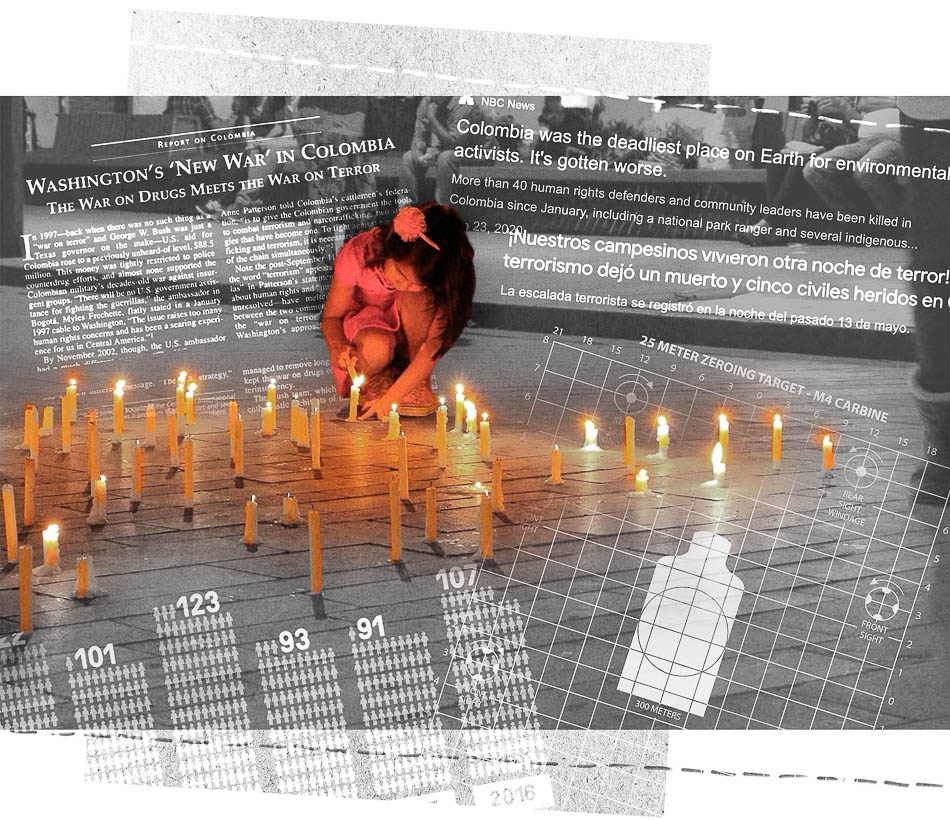
Photograph (PUPSOC), Popayán, Cauca (2020): tribute to victims of police repression in the 2019 uprising.
Later,
the bandits changed costumes.They threw away
their metal skins,
their swords,
their crosses of conquest.Now they wore suits
the colour of ash.Their mouths learned
new words:development,
democracy,
law and order –perfume sprayed
over the same corpse.And always
they declared war.War on Drugs.
War on Terror.
War on the poor.War, war, war –
as if war were the only prayer
their empire knows.
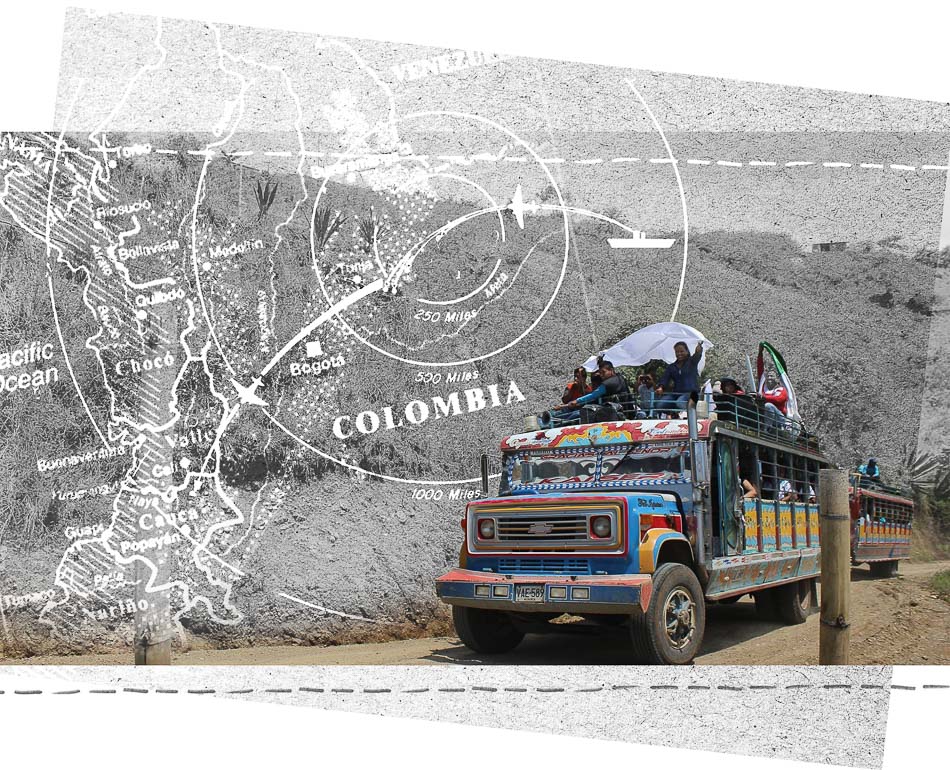
Photograph (PUPSOC), Monterredondo, Cauca: campesinos welcome former FARC combatants after the 2016 peace accord.
They tell us:
The drug trade is an infection,
a darkness outside the system,
a criminal underworld
beneath the clean city.But capitalism,
oh capitalism,
has always had sewers
beneath its shining streets.Its banks are cathedrals
built atop dirty rivers.The mafia is not outside.
The narco is not outside.
The arms dealer
is not outside.They are arteries
in the same body.Dirty cash rises
like smoke from a furnace,
is washed,
ironed smooth,
and returned
as legitimate capital
to sit politely
at the table of power.This is not an accident.
It is the hidden organ
of the beast.Marx named it
originary accumulation –but it never ended.
Colonial conquest,
enclosure,
the theft of land,
the trade in human beings –capital was not born clean.
It was born
with blood on its lips.And when it hungers,
when it thirsts,
it returns again
to banditry,like a vampire
leaning over the neck
of the world.
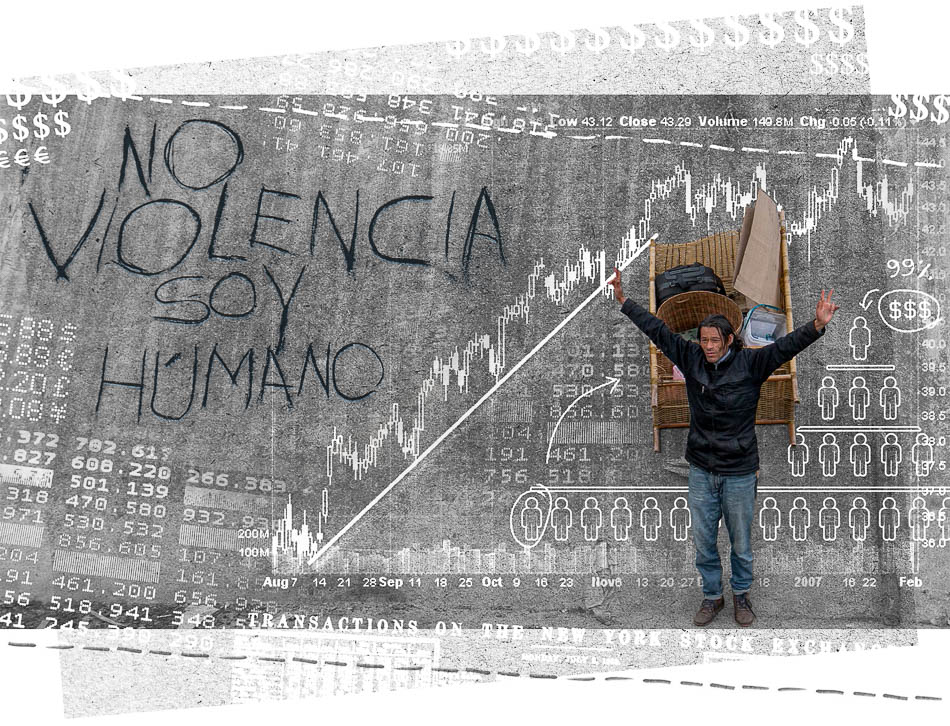
Photograph (PUPSOC), October 2020: a participant of the Social and Community Minga for the Defence of Life, Territory, Democracy, and Peace.
Look –
look at the campesinos
in Colombia.The newspapers call them criminals.
The state calls them enemies.
But they are only
humans with soil
under their fingernails,
parents
counting hunger
in the faces of their children.The helicopters arrive
like metal locusts.Glyphosate rains down
like poisoned weather.The army marches
through the crops
as if marching through flesh.And the campesino grows coca
not from greed,but because capitalism
closed every other door.Land concentrated
into a few hands.Legal crops collapsing
like tired birds.No roads.
No markets.
No schools.
No hospitals.Only abandonment.
Only coca
as the last green coin
of survival.At the farm gate
they earn almost nothing –a handful of dust.
But the leaf travels.
Through clandestine labs,
through trafficking corridors,
through the veins
of the global market –and its value multiplies
until it becomes
a monstrous miracle:from a dollar
to tens of thousands.This is capitalism:
value extracted upward
like marrow from bone.Poverty enforced downward
like gravity.The campesino remains poor.
The cartel boss lives violently.
And the banks –
the immaculate banks –
receive the surplus
like priests receiving offerings.
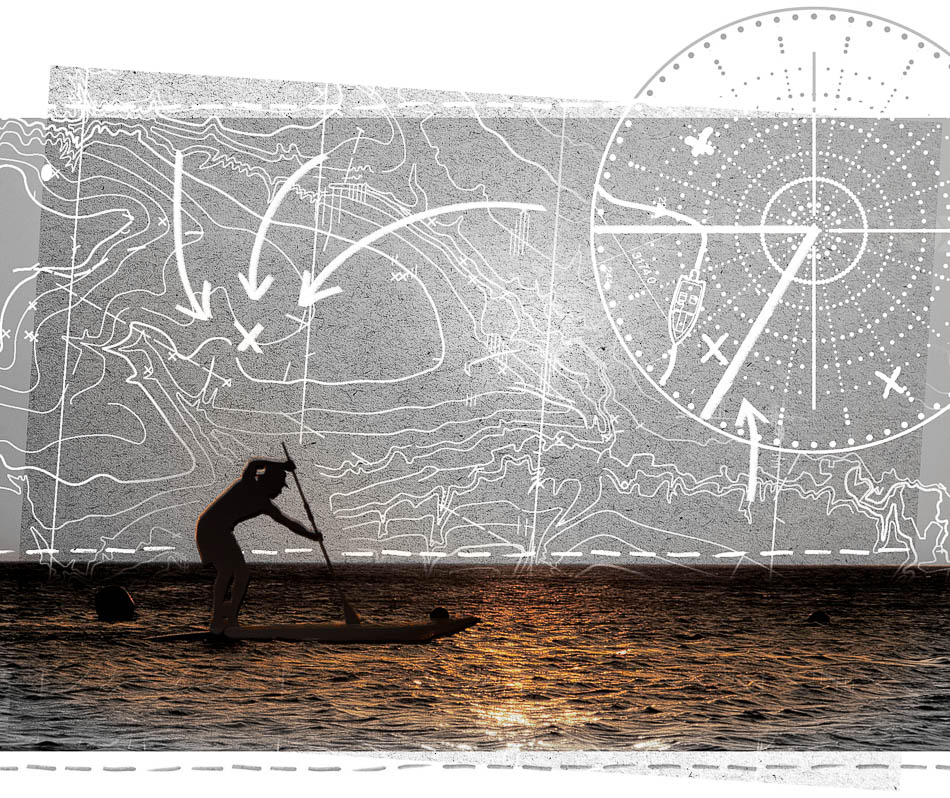
Photograph (PUPSOC), Santa Marta, Colombia: campesino fishing on the Atlantic coast.
Occasionally
a scandal erupts.HSBC launders
a billion dollars.The penalty is paid
like a small coin
tossed to silence.No executives go to jail.
Too big to jail.
Too sacred to touch.
Because laundering
is not incidental.It is structural.
The war does not reach
the vault.It reaches
the field.The War on Drugs
is not a war on drugs.It is an imperial weapon.
A moral cloak
for aggression.Plan Colombia
militarised peasant soil.Today the same rhetoric
is aimed at Venezuela –narco-terrorism accusations
manufactured like bullets.Evidence irrelevant.
Narrative everything.
Empire always needs
a holy excuse
for its violence.And the rainforest burns.
Poisons sprayed
across the Amazon
to destroy coca,while the North’s addiction
to oil, money, extraction
goes unnamed.They cry:
‘destroy the plant that kills!’But it is their war
that kills.This war is waged
against nature
as much as against people.
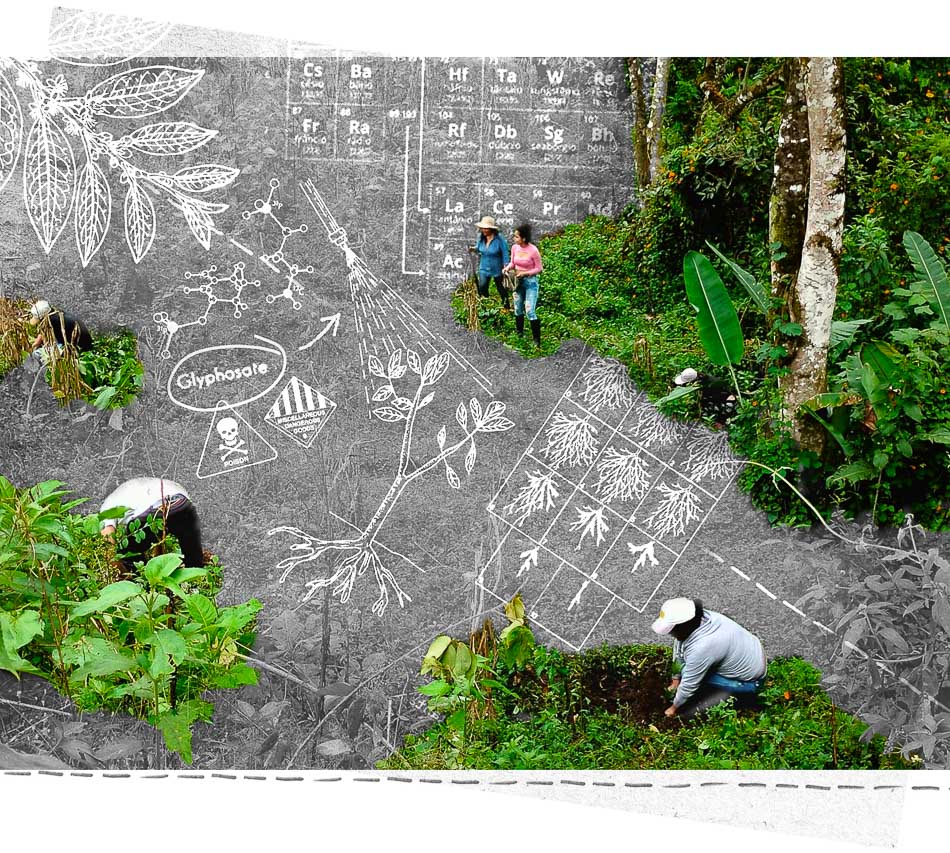
Photograph (PUPSOC), Cauca River basin: reforestation project by local environmental committees.
Where does peace begin?
Not with eradication.
Not with militarisation.
Not with prisons.
Peace begins
with dignity:land reform,
guaranteed crops,
roads,
schools,
hospitals,
rights.The reconstruction
of rural life.Because the problem
is not the coca leaf.The problem
is the system.The War on Drugs
is not a war on drugs.It is a war
on the poor.And to end it
requires not reform,but rupture –
another world
rising like dawn
over the bloodstained sea._______________________________________________
 Vijay Prashad is an Indian historian, editor and journalist. He is a writing fellow and chief correspondent at Globetrotter. He is the director of Tricontinental: Institute for Social Research and a senior non-resident fellow at Chongyang Institute for Financial Studies, Renmin University of China. He has written more than 20 books, including The Darker Nations and The Poorer Nations. His latest book is Washington Bullets, with an introduction by Evo Morales Ayma.
Go to Original – thetricontinental.org
DISCLAIMER: The statements, views and opinions expressed in pieces republished here are solely those of the authors and do not necessarily represent those of TMS. In accordance with title 17 U.S.C. section 107, this material is distributed without profit to those who have expressed a prior interest in receiving the included information for research and educational purposes. TMS has no affiliation whatsoever with the originator of this article nor is TMS endorsed or sponsored by the originator. “GO TO ORIGINAL” links are provided as a convenience to our readers and allow for verification of authenticity. However, as originating pages are often updated by their originating host sites, the versions posted may not match the versions our readers view when clicking the “GO TO ORIGINAL” links. This site contains copyrighted material the use of which has not always been specifically authorized by the copyright owner. We are making such material available in our efforts to advance understanding of environmental, political, human rights, economic, democracy, scientific, and social justice issues, etc. We believe this constitutes a ‘fair use’ of any such copyrighted material as provided for in section 107 of the US Copyright Law. In accordance with Title 17 U.S.C. Section 107, the material on this site is distributed without profit to those who have expressed a prior interest in receiving the included information for research and educational purposes. For more information go to: http://www.law.cornell.edu/uscode/17/107.shtml. If you wish to use copyrighted material from this site for purposes of your own that go beyond ‘fair use’, you must obtain permission from the copyright owner.
We welcome debate and dissent, but personal — ad hominem — attacks (on authors, other users or any individual), abuse and defamatory language will not be tolerated. Nor will we tolerate attempts to deliberately disrupt discussions. We aim to maintain an inviting space to focus on intelligent interactions and debates.