
Explainer: How Important Is the Strait of Hormuz?
SPOTLIGHT, 9 Mar 2026
Xinhua - TRANSCEND Media Service
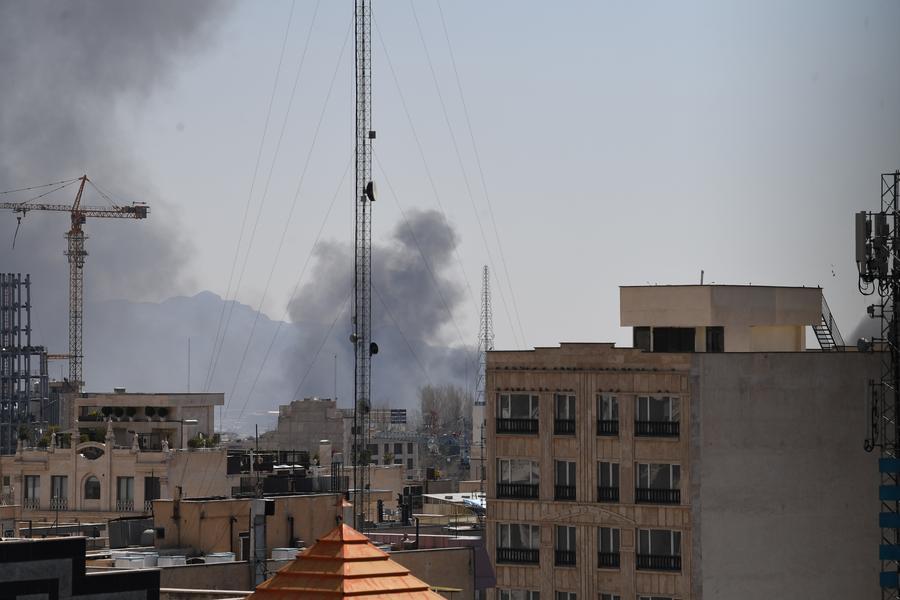
3 Mar 2026 – Following the U.S.-Israeli military strikes against Iran that began on Sat 28 Feb, global attention has turned to the Strait of Hormuz, particularly after Iran warned it would disrupt transit through this vital waterway in retaliation, sending shock waves through international markets.
What makes the strait so vital? Has this critical passageway ever been closed before? Is a complete blockade feasible?
WHY THE STRAIT MATTERS?
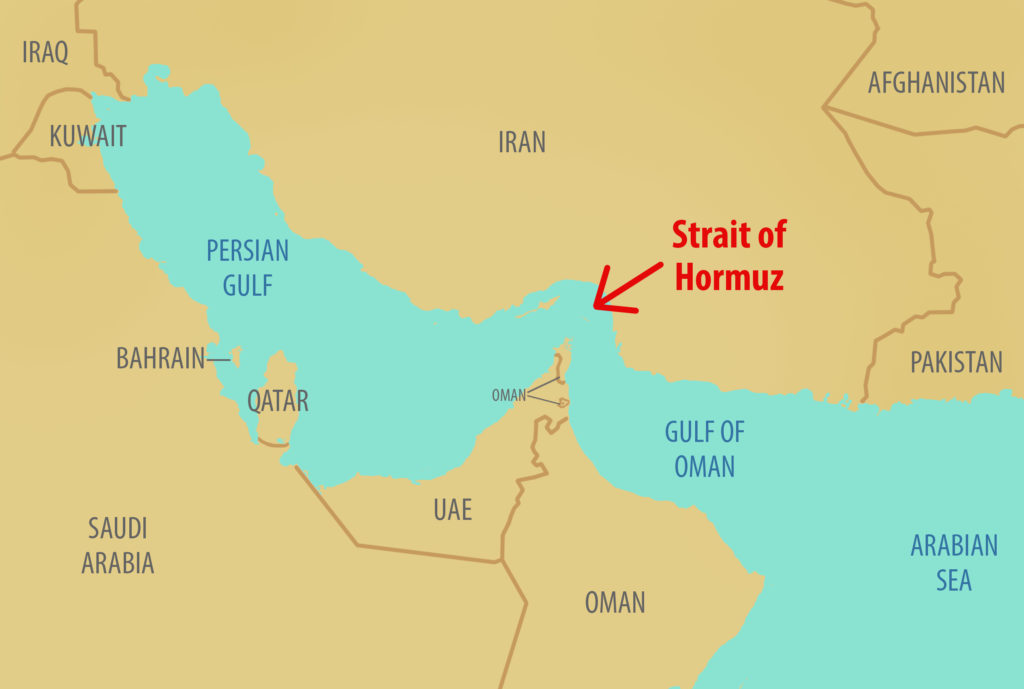
Nestled between the Gulf and the Gulf of Oman, the strait serves as the only sea passage from the Gulf to the open ocean, cementing its status as one of the world’s most strategically vital choke points.
In a recent report by J.P. Morgan, analysts warn that oil producers in the Middle East could sustain output for “no more than 25 days” if the Strait of Hormuz were completely shut. Saudi Arabia, Iraq, Qatar, and the United Arab Emirates, alongside Iran itself, depend on this narrow passage to export their crude oil.
Around 20 percent of global oil shipments pass through this critical strait. For liquefied natural gas (LNG), the stakes are equally high: Qatar, one of the world’s top three LNG exporters, moves nearly all its supply through the strait, accounting for roughly 20 percent of the global total.
The U.S.-Israeli strikes on Iran have caused a dramatic surge in international oil prices. On March 1, Light Sweet Crude Oil futures for April delivery jumped 12.4 percent to 75.33 U.S. dollars per barrel on the New York Mercantile Exchange, while Brent Crude futures for May delivery surged 13 percent to 82.37 dollars on London’s ICE Futures Exchange. Analysts warn that if the conflict persists, oil prices could skyrocket to 150 dollars per barrel.
The ripple effects extend beyond crude. Freight and insurance costs are climbing as shipping giants, including Mediterranean Shipping Company (MSC), Maersk, CMA CGM, and Germany’s Hapag-Lloyd AG, divert vessels to seek safe harbors, suspend new bookings, and reroute schedules.
An analysis by The Economist cautions that tensions in the Strait of Hormuz could significantly inflate global energy transportation costs, with soaring insurance premiums as well as tankers forced to take the long way around the Cape of Good Hope.
HAS IT BEEN CLOSED BEFORE?
While the Strait of Hormuz has never been fully or permanently closed, every strategic tremor in the region has registered on global price charts.
During the Iran-Iraq War (1980-1988), Iran repeatedly threatened to close the strait and laid mines in 1987, targeting oil tankers. These operations pushed oil prices from over 30 dollars per barrel to more than 45 dollars, while tanker freight rates doubled.
More recently, in July 2018, Iran detained a British oil tanker in the strait, sending oil prices slightly upward. The move came just two months after the United States withdrew from the Iran nuclear deal and reimposed sanctions.
In June 2025, after the U.S. strike against Iran’s nuclear facilities at Fordow, Natanz and Isfahan, Tehran’s parliamentary consensus to close the strait triggered a 6 percent jump in Brent Crude Oil prices.
IS A COMPLETE BLOCKADE FEASIBLE?
While the closure of the Strait of Hormuz would pose an unbearable burden on the global economy, military experts doubt that a complete blockade is feasible.
The geography itself presents challenges: the strait spans just 21 nautical miles at its narrowest point, with shipping lanes only two miles wide in each direction. Keeping the waters continuously mined would be incredibly hard to sustain and would almost certainly provoke military retaliation from other stakeholders.
There’s another constraint: Iran’s own oil exports transit the same waters. Blocking the strait would effectively sever a crucial source of national revenue, a self-inflicted wound Tehran has historically avoided.
As a crucial artery for global energy, the Strait of Hormuz remains under intense international attention. Iran must also weigh the risks of confrontation with the many nations that rely on this passage for their energy security.
Take Japan for instance. According to its public broadcaster NHK, the country’s economy would suffer a “fatal blow” if the strait were ever permanently closed, as it imports 90 percent of its crude from the Middle East. Such a disruption could potentially reduce Japan’s GDP by 3 percent.
For now, a total and long-term shutdown appears unlikely. But the uncertainty alone casts a shadow over global energy transportation and economic stability. In the narrow waters of the Strait of Hormuz, the world’s economic pulse beats, and every threat causes it to skip a beat.
Go to Original – english.news.cn
Tags: International Trade, Iran, Israel, Middle East, Strait of Hormuz, USA, Warfare
DISCLAIMER: The statements, views and opinions expressed in pieces republished here are solely those of the authors and do not necessarily represent those of TMS. In accordance with title 17 U.S.C. section 107, this material is distributed without profit to those who have expressed a prior interest in receiving the included information for research and educational purposes. TMS has no affiliation whatsoever with the originator of this article nor is TMS endorsed or sponsored by the originator. “GO TO ORIGINAL” links are provided as a convenience to our readers and allow for verification of authenticity. However, as originating pages are often updated by their originating host sites, the versions posted may not match the versions our readers view when clicking the “GO TO ORIGINAL” links. This site contains copyrighted material the use of which has not always been specifically authorized by the copyright owner. We are making such material available in our efforts to advance understanding of environmental, political, human rights, economic, democracy, scientific, and social justice issues, etc. We believe this constitutes a ‘fair use’ of any such copyrighted material as provided for in section 107 of the US Copyright Law. In accordance with Title 17 U.S.C. Section 107, the material on this site is distributed without profit to those who have expressed a prior interest in receiving the included information for research and educational purposes. For more information go to: http://www.law.cornell.edu/uscode/17/107.shtml. If you wish to use copyrighted material from this site for purposes of your own that go beyond ‘fair use’, you must obtain permission from the copyright owner.
Join the discussion!
We welcome debate and dissent, but personal — ad hominem — attacks (on authors, other users or any individual), abuse and defamatory language will not be tolerated. Nor will we tolerate attempts to deliberately disrupt discussions. We aim to maintain an inviting space to focus on intelligent interactions and debates.