


Global Atrocity Risks Rising, Warns New United Nations Adviser on Genocide Prevention
UNITED NATIONS, 15 Dec 2025
Human Wrongs Watch | UN News - TRANSCEND Media Service
 8 Dec 2025 – The world is witnessing an alarming erosion of respect for international law, with conflicts increasingly targeting civilians and heightening the risk of atrocity crimes, warns the United Nations’ newly appointed Special Adviser on the Prevention of Genocide.

“The risk of atrocities, and the actual happening of atrocities, is very, very high.”
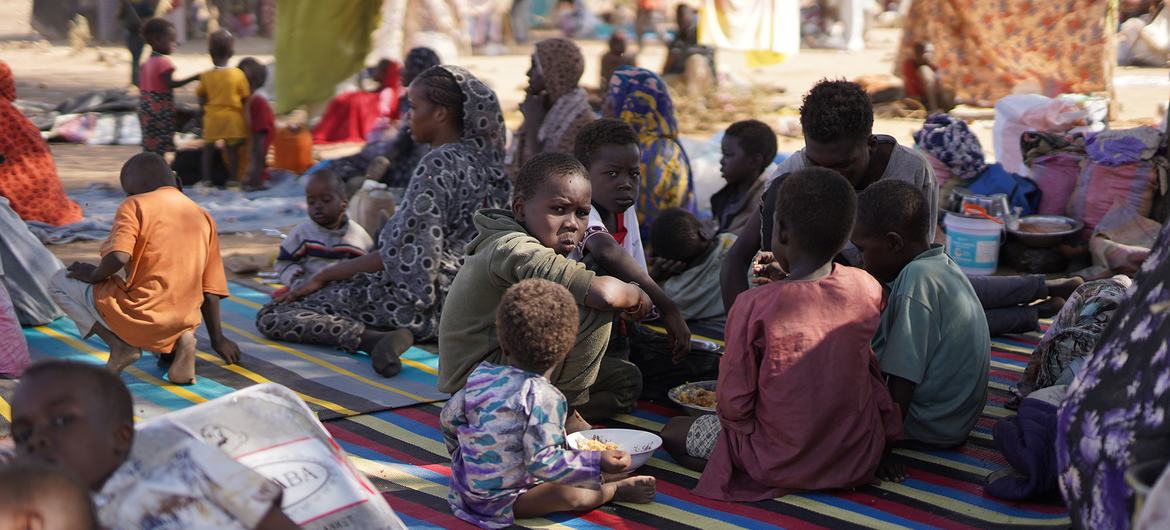
He cited the worsening violence in Sudan as one of the most urgent examples. The Darfur conflict, first investigated by a UN commission in the 1990s, continues to spiral decades later. “Nothing has changed,” he said. “The fall of the civilian government has only exacerbated the crisis.”
Early warning system
The Office on the Prevention of Genocide and the Responsibility to Protect functions as an early warning system within the UN. It alerts the Secretary-General, the Security Council and the wider UN system – in that order – when the risk of atrocity crimes, including genocide, is detected.
Drawing on the 1948 Convention on the Prevention and Punishment of the Crime of Genocide and legal opinions on genocide-related court cases, the Office monitors and analyzes 14 factors ranging from armed conflict involving ethnic or religious groups, to hate speech, and the collapse of the rule of law, among others.
What is genocide?
Greek prefix genos (people, race or tribe) and Latin suffix cide (killing)
According to international law, genocide means any of the following acts committed with intent to destroy, in whole or in part, a national, ethnical, racial or religious group, as such:*
- Killing members of the group
- Causing serious bodily or mental harm to members of the group
- Deliberately inflicting on the group conditions of life calculated to bring about its physical destruction in whole or in part
- Imposing measures intended to prevent births within the group
- Forcibly transferring children of the group to another group
*Article II of the genocide convention.
When these risks show a violent pattern, Mr. Beyani issues advisories and coordinates responses with UN officials, maintaining close links with regional organizations like the African Union and the European Union, and other international mechanisms.
“Once our Office sounds the alarm, it signals that the threshold is about to be crossed,” he said.
“Our role is not to determine genocide but to prevent it,” Mr. Beyani emphasized, stressing that his Office defers to international courts to determine whether the crime has been committed.
Breaking the silence
The Special Adviser also underscored the important role of courts and justice in the protection of vulnerable people.
“The one thing that you want to do in the context of dealing with atrocities is to make aware those who are participating in conflicts that they’re being watched and monitored,” Mr. Beyani said.
An example is the International Criminal Court’s conviction of Congolese warlord Thomas Lubanga in 2012 for recruiting child soldiers. This led other warlords to publicly denounce child recruitment.
He also referenced the International Court of Justice provisional measures issued under the obligation of prevention of genocide in the application of the Genocide Convention in Gaza, in the case of South Africa versus Israel.
Among other cases, the ICJ will next year hear the full case brought by The Gambia against Myanmar, also on the application of the Convention on the Prevention and Punishment of the Crime of Genocide.
“Prevention includes accountability,” the Special Adviser said.

Emerging threats
Among emerging threats which Mr. Beyani’s Office monitors are misinformation and hate speech. His Office works with technology companies like Meta and Google to address online incitement, and with religious and community leaders to counter hate narratives at the local level.
Environmental degradation and climate change are also becoming catalysts for conflict.
He said that the UN Security Council was right to be looking at environmental degradation as a security risk, as it did during a debate on 6 November: “We are seeing resource-based tensions, from the Sahel to small island states at risk of submersion. Climate change itself is not causal, but it amplifies other risk factors.”
The adviser noted that indigenous communities, often targeted in disputes over land and natural resources, are among the groups most in need of protection.
“Extraction industries and deliberate actions against them put them at enormous risk,” he said. “Their identity and way of life make them particularly vulnerable.”
Despite the gravity of his mandate, the Special Adviser remains focused on diplomacy and prevention over public condemnation.
“This Office was designed to engage quietly, to advise the UN Secretary-General and the Security Council, and to make public statements when necessary,” he explained. “States see it as threatening in some respects.”
Looking ahead, the Special Adviser emphasized that prevention requires memory as much as action.
“Commemoration of past genocides reminds us of the UN’s founding promise of ‘never again,’ and the basis upon which the Genocide Convention stands” he said, noting preparations for the International Day of Commemoration and Dignity of the Victims of the Crime of Genocide and of the Prevention of this Crime on December 9.
“But remembrance alone is not enough. We must strengthen our tools, build trust, and act early.”
Tags: Genocide, Genocide Convention, Genocide Studies, International Association of Genocide Scholars, UN Special Adviser on the Prevention of Genocide
DISCLAIMER: The statements, views and opinions expressed in pieces republished here are solely those of the authors and do not necessarily represent those of TMS. In accordance with title 17 U.S.C. section 107, this material is distributed without profit to those who have expressed a prior interest in receiving the included information for research and educational purposes. TMS has no affiliation whatsoever with the originator of this article nor is TMS endorsed or sponsored by the originator. “GO TO ORIGINAL” links are provided as a convenience to our readers and allow for verification of authenticity. However, as originating pages are often updated by their originating host sites, the versions posted may not match the versions our readers view when clicking the “GO TO ORIGINAL” links. This site contains copyrighted material the use of which has not always been specifically authorized by the copyright owner. We are making such material available in our efforts to advance understanding of environmental, political, human rights, economic, democracy, scientific, and social justice issues, etc. We believe this constitutes a ‘fair use’ of any such copyrighted material as provided for in section 107 of the US Copyright Law. In accordance with Title 17 U.S.C. Section 107, the material on this site is distributed without profit to those who have expressed a prior interest in receiving the included information for research and educational purposes. For more information go to: http://www.law.cornell.edu/uscode/17/107.shtml. If you wish to use copyrighted material from this site for purposes of your own that go beyond ‘fair use’, you must obtain permission from the copyright owner.
Join the discussion!
We welcome debate and dissent, but personal — ad hominem — attacks (on authors, other users or any individual), abuse and defamatory language will not be tolerated. Nor will we tolerate attempts to deliberately disrupt discussions. We aim to maintain an inviting space to focus on intelligent interactions and debates.