


Does Israel Katz Speak for Israel? Will Trump Diplomacy Accept ‘Greater Israel’?
TRANSCEND MEMBERS, 5 Jan 2026
Richard Falk | Global Justice in the 21st Century – TRANSCEND Media Service
27 Dec 2025 – The short assessment of Israel’s strategic objectives that are not addressed in the Trump Twenty-Point Plan was initially written in response to a question by a Brazilian journalist with a special interest in the Middle East.
*************************
Reading Israel Katz’s Comments on Annexation of the West Bank, Permanent Presence in Gaza, and Policies of Disproportionate Reprisal
Israel Katz, Israel’s Minister of Defense, used blunt language to express his version of ‘Greater Israel’ that is alone an acceptable outcome of this long struggle culminating in the Gaza Genocide. What Katz proposes is at minimum the de facto annexation of the West Bank and Israel’s permanent presence in the 53% of Gaza that Israel now occupies, made irreversible by the establishment of Jewish settlements in Northern Gaza.
Katz can be read as implicitly recognizing Israel’s inability to reach these goals de jure, which can be understood as an expression of Zionist realism as to the limits of Israel’s influence at any given time. Such remarks may have been unscripted, and not indicative of how Netanyahu proposes to handle this interaction between the Trump Plan and the Zionist Endgame.
This controversial language of Katz should be interpreted both as trouble ahead for the Trump diplomacy, an exhibition of Israel’s growing awareness that the contradictions between the further implementation of remaining fundamental tenets of the Zionist vision and the Trump diplomacy may collide in the future. In the past this gap between what geopolitical managers were willing to grant Israel and what Israel insists upon as the price of peace meant a frozen diplomacy. Before Katz spoke this acceptance of a de facto version of realizing Israeli goals had rarely openly acknowledged by a public official in relation to these expansionist and hegemonic ambitions.
This official silence in relation to Israel’s unattained strategic objectives may have been intended as a temporary expression of deference to the international consensus on an endgame for the struggle between Jews and Palestinians, which has been the case since the General Assembly 1947 Partition Resolution of 181, continues to support a ‘two-state solution.’ Such solution is not favored by a wide spectrum of opinion among the political elites and citizenry of Israel that currently affirm a commitment to a single Israeli state, often known as ‘Greater Israel’, but seemingly excluded from the Trump Plan. This helps explain why Netanyahu and other prominent Israelis have in recent months made their determined opposition to Palestinian statehood in any form. Also relevant is that criticism directed at Israel’s tactics of starvation and civilian targeting has been made by the governments most complicit with the genocide (except the US), including France, the UK, and Canada, that pointedly and stubbornly support the establishment of a Palestinian state. [See French-backed New York Declaration:United Nations High-Level International Conference – New York Declaration on the Peaceful Settlement of the Question of Palestine and the Implementation of the Two-State solution (29 July 2025)]
A previous signal of Israeli one-statism was the refusal to declare existing territorial borders as final.
Katz has made other disturbing comments in his official response to a deadly stabbing attack in the West Bank a few days ago. Katz declared that he has “ordered a military action against the home village” of the Palestinian attacker, a measure of reprisal contrary to international law in two respects: openly attacking a civilian village and inflicting collective punishment on an innocent community. Israel newspapers reports more measured Israeli responses to the incident of course labeled as ‘terrorism’ that may suggest that Katz’s provocative words should be partially discounted given his reputation as a stand-alone ‘hothead.’
All along Israel has opted for disproportionate and indiscriminate responses to any signs of armed Palestinian resistance. Israel formulated the so-called Dahiya Doctrine, first enunciated in 2006 as an articulation of Israel’s response to Hezbollah operating out of Lebanon in solidarity with the Palestinian struggle. As Dahiya was long understood it was nothing new. It made explicit what Israel had been doing all along in the name of national security.
What may be noteworthy with respect to these utterances by Katz is their relevance to territorial sovereignty ambitions and the future of Gaza. It has long been agreed upon by expert observers of Israel that the current leadership of Israel to varying degrees adhered to Zionist ideology that included the prospect of West Bank annexation and further Judaification by way of the settlement movement as well as the partial annexation of Gaza reinforced by Jewish settlements situated in northern Gaza. That Zionist ambitions along these lines existed in Tel Aviv should not have come as a surprise in informed circles, although its open acknowledgement at this time is unexpected, especially as it rubs against the grain of US efforts to build wide international support for the Trump 20 Point Plan, which is strongly weighted in favor of Israel and dismissive of Palestinian grievances.
The timing of Katz’s utterances may reflect Israeli concern about the nature of Trump’s regional approach that seemed to preclude such territorial expansion. This might slow down Israel’s timetable, but would not likely inhibit the Israeli leadership, that Israel will move forward with its ‘day after’ diplomacy while paying lip service to the Trump Plan. Trump’s diplomacy has major benefits for Israel. It masks accountability issues, thereby ensuring impunity for Israel’s engagement with the criminality of genocide and apartheid, and possibly ecocide, exhibited daily in the past two plus years to the entire world. The Miami meeting scheduled for Monday, December 29 between Netanyahu and Trump may cast light on whether Katz’s comments touched on points of tension between Washington and Tel Aviv or were just a way of reminding the world of a major tenet of Zionist ideology at a critical moment when the non-Israelis were formulating the future of what has become known as Occupied Palestinian Territories. Time will tell us more about the relative leverage of Israel and the United States in crafting a post-genocide future for the two peoples. In this sense, it is most unfortunate that no modality of Palestinian participation could be agreed upon during this period of Trump diplomacy.
As such thoughts linger, the people of Gaza have not been treated with dignity but mostly left homeless amid the rubble to cope with fierce Winter without heat, adequate food, and a conscientious Israel effort to abide by the ceasefire that it has consistently violated in ways that overcome any uncertainty. There is little reason to doubt that Israel’s annexationist and expansionist goals retain their position at the top of Israel’s policy agenda.
__________________________________________
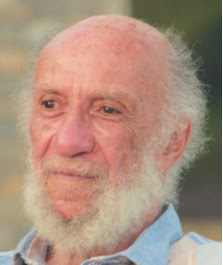 Prof. Richard Falk is a member of the TRANSCEND Network, of the TRANSCEND Media Service Editorial Committee, Albert G. Milbank Professor Emeritus of International Law at Princeton University, Chair of Global Law, Faculty of Law, at Queen Mary University London, Research Associate the Orfalea Center of Global Studies at the University of California, Santa Barbara, and Fellow of the Tellus Institute. He directed the project on Global Climate Change, Human Security, and Democracy at UCSB and formerly served as director the North American group in the World Order Models Project. He also is a member of the editorial board of the magazine The Nation. Between 2008 and 2014, Falk served as UN Special Rapporteur on Human Rights in Occupied Palestine. His book, (Re)Imagining Humane Global Governance (2014), proposes a value-oriented assessment of world order and future trends. His most recent books are Power Shift (2016); Revisiting the Vietnam War (2017); On Nuclear Weapons: Denuclearization, Demilitarization and Disarmament (2019); and On Public Imagination: A Political & Ethical Imperative, ed. with Victor Faessel & Michael Curtin (2019). He is the author or coauthor of other books, including Religion and Humane Global Governance (2001), Explorations at the Edge of Time (1993), Revolutionaries and Functionaries (1988), The Promise of World Order (1988), Indefensible Weapons (with Robert Jay Lifton, 1983), A Study of Future Worlds (1975), and This Endangered Planet (1972). His memoir, Public Intellectual: The Life of a Citizen Pilgrim was published in March 2021 and received an award from Global Policy Institute at Loyala Marymount University as ‘the best book of 2021.’ He has been nominated frequently for the Nobel Peace Prize since 2009.
Go to Original – richardfalk.org
JOIN THE BDS-BOYCOTT, DIVESTMENT, SANCTIONS CAMPAIGN TO PROTEST THE ISRAELI BARBARIC GENOCIDE OF PALESTINIANS IN GAZA.
DON’T BUY PRODUCTS WHOSE BARCODE STARTS WITH 729, WHICH INDICATES THAT THEY ARE PRODUCED IN ISRAEL. DO YOUR PART! MAKE A DIFFERENCE!
7 2 9: BOYCOTT FOR HUMAN JUSTICE!
Tags: Gaza, Genocide, Invasion, Israel, Israeli occupation, Jewish Settlers, Middle East, Palestine, USA, West Bank
DISCLAIMER: The statements, views and opinions expressed in pieces republished here are solely those of the authors and do not necessarily represent those of TMS. In accordance with title 17 U.S.C. section 107, this material is distributed without profit to those who have expressed a prior interest in receiving the included information for research and educational purposes. TMS has no affiliation whatsoever with the originator of this article nor is TMS endorsed or sponsored by the originator. “GO TO ORIGINAL” links are provided as a convenience to our readers and allow for verification of authenticity. However, as originating pages are often updated by their originating host sites, the versions posted may not match the versions our readers view when clicking the “GO TO ORIGINAL” links. This site contains copyrighted material the use of which has not always been specifically authorized by the copyright owner. We are making such material available in our efforts to advance understanding of environmental, political, human rights, economic, democracy, scientific, and social justice issues, etc. We believe this constitutes a ‘fair use’ of any such copyrighted material as provided for in section 107 of the US Copyright Law. In accordance with Title 17 U.S.C. Section 107, the material on this site is distributed without profit to those who have expressed a prior interest in receiving the included information for research and educational purposes. For more information go to: http://www.law.cornell.edu/uscode/17/107.shtml. If you wish to use copyrighted material from this site for purposes of your own that go beyond ‘fair use’, you must obtain permission from the copyright owner.
Join the discussion!
We welcome debate and dissent, but personal — ad hominem — attacks (on authors, other users or any individual), abuse and defamatory language will not be tolerated. Nor will we tolerate attempts to deliberately disrupt discussions. We aim to maintain an inviting space to focus on intelligent interactions and debates.