


Covenantal Abrahamic Peace and Dharmic Non Violence: Toward a Unified Framework for Global Harmony
TRANSCEND MEMBERS, 2 Feb 2026
Prof Hoosen Vawda – TRANSCEND Media Service
Integrating Abrahamic sacred law and dharmic ethical principles for 21st‑century peace, policy, and planetary care integrating tablets of stone and hearts of compassion: The meeting of covenantal law and dharmic virtue based on a comparative philosophical exploration of duty, non‑violence, and the laws that shape societies, using the Ark and the Ten Commandments across Judaism, Christianity, and Islam: Texts, Traditions, and Contemporary Societal Impact. [1]
This publication is suitable for general readership. Parental guidance is recommended for minors who may use this research paper as a resource material, for projects.
The author, unconditionally apologises for any misrepresentation of the hermeneutics expressed in this publication, while promoting global peace propagation and religio-cultural cohesion.
The author invites and welcomes any comments and discussions, by the readership. (vawda@ukzn.ac.za)

Peace tablets cast in Stone: The Ten Commandments, as revered and doctrinised by the Abrahamic faiths of Judaism, Christianity and Islam, in antiquity. These tablets are a direct communication between The Divine and His creation. It encapsulates the period when the Divine spoke directly to his creations and they are literally “cast in stone”, for all of humankind to subscribe to, in order to ensure that community and global peace and harmony prevails. The Decalogue is the master template, provided by the Divine, as a moral and social guidance for all of humankind. It only remains for the shepherd to lead the flock appropriately so tha the sheep will not go astray, causing gross peace disruption.
Original Photograph Conceptualised by Mrs V. Vawda January 2026
Prologue
This paper offers a comparative account of the Ark of the Covenant and the Ten Commandments (Decalogue)[2] across the three Abrahamic religions and traditions: Judaism, Christianity, and Islam and evaluates their contemporary societal impacts.[3] It synthesises scriptural, historical, and legal‑ethical scholarship to show how a covenantal moral core ([4]and by Qur’anic mīthāq/ʿahd in Islam) continues to shape communal identity, law, human rights discourse, social policy, and interfaith praxis in the twenty‑first century.[5]
Introduction: Covenant as the Grammar of Peace, Law, and Culture[6]
Scholars of Jewish ethics and law argue that covenant, more than contract, structures communal obligations, identity, and intergenerational responsibility; this framing remains central to understanding the Ark and Decalogue as a people‑forming moral architecture. In biblical thought, shalom signifies comprehensive well‑being (wholeness, justice, flourishing), not mere absence of conflict, thereby locating peace within an integrative order of truth, law, and social repair. Parallel covenantal concepts in the Qur’an (ʿahd, mīthāq) form a normative framework governing God–human and interhuman relations, including limits on the use of force and commitments to welfare and coexistence, resources vital for contemporary interfaith peacebuilding. [7]
The Ark and Decalogue in Judaism: Presence, Law, and Memory
The Classical Narrative and Disappearance of the Ark and its Holy Contents[8]
In Jewish tradition the Ark (Aron ha‑Brit) was a gold‑overlaid acacia chest with a kaporet (mercy‑seat) and cherubim, housing the tablets placed in the Holy of Holies; it was borne by Levites using poles as prescribed. The Ark’s disappearance prior to the Babylonian destruction (586 BCE) is recalled in two principal streams: a deuterocanonical account that Jeremiah hid the Ark, the Tent, and the incense altar in a cave and sealed the entrance until a future divine regathering, and rabbinic traditions that King Josiah concealed the Ark in a subterranean chamber beneath the Temple. Both place the Ark’s absence before the First Temple fell. [9], [10]

The respectful transport of the Holy Ark, across the present-day Arabian Peninsula, to the present-day Damascus, for interconnectedness, security and national cultural cohesion.
Original Photograph Conceptualised by Mrs V. Vawda January 2026
The Ten Commandments and Jewish Ethical Life[11]
The Aseret ha‑Dibrot embody the covenant’s core; their authority radiates through halakhic life and communal norms. Jewish readings of shalom present a holistic ethic where bodily health, social justice, and fidelity to Torah form a single fabric of peace.
Contemporary Societal Impacts in Judaism[12]
- Liturgical and Educational Centrality[13]: The weekly and festival lectionaries and synagogue catechesis keep Sinai’s voice present; shalom as wholeness informs pastoral care and social service cultures in Jewish communities worldwide.
- Law and Public Ethics: Although modern states are secular, Jewish legal thought often engages civic debates via Decalogue‑aligned norms (truthful testimony, respect for life/property) and the prophetic demand for justice as prerequisites for communal peace. [14]
- Memory Politics and Archaeology: The Ark’s disappearance fuels heritage protection and scholarly caution against politicizing antiquities; Jewish scholarship emphasizes textual memory and ethical continuity over relic retrieval. [15]
- Interfaith Bridgework:Jewish covenantal ethics (e.g., no false witness, Sabbath humanization, Jubilee resets) provide shared platforms with Christian social teaching and Islamic maqāṣid frameworks for cooperative justice and anti‑corruption agendas. [16]
The Ark and Decalogue in Christianity: Typology, Moral Grammar, and Public Theology
Historical Reception
Christianity inherits Israel’s Sinai narrative and regards the Ark within salvation history; historically, the Second Temple (destroyed 70 CE) [17]did not contain the Ark, aligning with Jewish traditions of its earlier disappearance. The Temple’s fall catalyzed a theological shift from sacrificial cult to ecclesial worship around word and sacrament, with the Decalogue retained as moral catechesis.
The Decalogue’s Moral and Legal Influence
Christian legal and moral theology appropriates the Ten Commandments as a universal moral grammar within natural‑law discourse. Legal historians warn against the claim that modern law is a direct codification of the Decalogue; yet they affirm its enduring influence on prohibitions against murder, theft, and perjury and on public arguments for truthfulness and human dignity. [18]
Contemporary Societal Impacts in Christianity
- Catechesis & Conscience Formation—Global catechisms and preaching employ the Decalogue to form conscience, linking personal virtue to social justice agendas (e.g., truthful governance, protection of the poor, family policy).
- Human‑Rights Advocacy, Scholars and church leaders locate theological convergences with the Universal Declaration of Human Rights (UDHR), dignity, equality, and freedom, while acknowledging the UDHR’s secular drafting amid multi‑tradition inputs. [researchgate.net], [pdfs.seman…cholar.org]
- Law & Culture Debates—The Decalogue surfaces in courtroom iconography and public controversies; careful scholarship clarifies influence vs. direct derivation, helping temper polarizing claims while preserving moral insight for civic discourse. [jewishvirt…ibrary.org]
- Peace & Disarmament Imagination—Isaian “swords into ploughshares” informs Christian peace witness, channelling budgets from militarization to human development and agriculture, a motif that also resonates in secular diplomacy. [eotcmk.org]
The Ark and the Covenant in Islam: From Relic to Normative Mīthāq; From Tablets to Maqāṣid[19]
Covenants in the Qur’an and Islamic Thoughts
While the Qur’an does not center a physical Ark cultus as in the Hebrew Bible, it presents a pervasive theology of covenants, ʿahd, mīthāq, that binds believers to God and to others, structuring obligations for welfare, truth, equity, and restricting armed force to self‑defense and treaty violation. Recent scholarship systematizes these as part of the maqāṣid (higher objectives) of the Sharīʿa, articulating a covenantal architecture for peaceful coexistence and interreligious guarantees. [20]
Comparative Note on Tablets and Law
Islam recognizes Moses and Sinai within a larger prophetology; covenantal obedience, not a single relic, anchors law and ethics. Contemporary legal‑theological work frames Qur’anic covenants as legally cognizable structures analogous to contract yet transcending it, with offer/acceptance patterns and public‑order consequences, thus dialoguing with Jewish‑Christian covenant models. [21]
Contemporary Societal Impacts in Islam
- Treaty‑Ethics and Peacebuilding:Modern Muslim scholars highlight covenants as bases for pluralism, minority protection, and limits on force, informing interfaith compacts, constitutional guarantees, and international engagement. [explainthat.org]
- Human‑Rights Convergence:Covenant discourse interfaces with global rights norms (dignity, security, welfare), providing an Islamic rationale for commitments resonant with the UDHR while mediating tensions via maqāṣid [explainthat.org], [researchgate.net]
- Ethics of Truth and Commerce—The Qur’anic emphasis on honesty and fulfillment of pledges converges with Decalogue‑type prohibitions against false witness and theft, reinforcing anti‑corruption drives and fair‑dealing initiatives in Muslim‑majority contexts. [explainthat.org], [jewishvirt…ibrary.org]
The Decalogue and Modern Law: Influence without Reduction
Legal historians and scholars of religion–law relations differentiate moral influence from direct codification: while prohibitions against murder, theft, and perjury align with Decalogue norms and helped shape Western legal culture (via conscience formation, natural‑law reasoning, and iconography), modern legal systems are not mere reproductions of the Ten Commandments and draw from multiple sources (Roman law, common law, Enlightenment, etc.). This distinction is crucial for responsible public theology and constitutional discourse. [jewishvirt…ibrary.org], [sefaria.org]
Toward a Covenantal Peace Praxis in Plural Societies
Convergences
- Truth as civic infrastructure (against false witness): indispensable for courts, media, and elections. [jewishvirt…ibrary.org]
- Humane limits and restorative cycles (Sabbath/Jubilee): debt relief, ecological rest, and anti‑predation design in finance and land use. [biblehub.com], [cambridge.org]
- Justice as the engine of peace (Isaiah): demilitarization joined to equitable governance and economic fairness. [eotcmk.org]
- Covenants across difference (Qur’anic mīthāq): treaty‑keeping, minority protections, and ethics of coexistence. [explainthat.org]
Policy Implications (Comparative)
- Jewish communities can translate shalom metrics (social trust, family stability, ecological stewardship) into communal planning and advocacy coalitions. [crosstalk.ai]
- Christian institutions can advance “plowshares” budgeting—redirecting resources from violence to human development—while rooting human‑rights advocacy in covenantal moral formation. [eotcmk.org], [researchgate.net]
- Muslim organizations can expand covenant charters for interfaith neighborhoods, codifying Qur’anic treaty‑ethics and maqāṣid protections at city and provincial levels. [explainthat.org]
Parallels Between the Ark, The Ten Commandments and Dharmic Faiths[22]
Although Dharmic religions do not possess a single relic, chest, or divinely inscribed tablet equivalent to the Ark of the Covenant (a physical container of sacred law) or the Ten Commandments (a divinely revealed code), they do preserve functional analogues in the form of:
- Sacred moral codes (Dharma, Yamas–Niyamas, Five Precepts, Jain Ahimsa codes, Sikh Rahit)
- Textual canons that serve as repositories of divine truth
- Symbolic objects or institutions that house, transmit, and embody sacred law
- Structures of discipline (Vinaya, Dharma Shastras) that play roles similar to the ethical purpose of the Commandments.
Thus, the parallels are conceptual (law, duty, sanctity, moral authority) rather than physical.
Hinduism: Dharma, Yamas–Niyamas, and the “Internal Ark” of Moral Law
- a) Parallel to the Ten Commandments: Yamas and Niyamas
Hindu ethics are not codified as a divine “Ten,” but Yamas (restraints) and Niyamas (observances) serve as the closest analogue, functioning as ethical imperatives shaping personal and social conduct. Scholars describe these as Hinduism’s “ethical imperatives… that function like commandments” even if not in a Judeo‑Christian legal format. [23]
These include:
- Ahimsa (non‑violence)
- Satya (truthfulness)
- Asteya (not stealing)
- Brahmacharya (purity/discipline)
- Aparigraha (non‑possessiveness)
These directly correspond to several Commandments (no killing, no false witness, no stealing, no coveting).
- b) Parallel to the Ark: Dharma Shastras as a “Repository of Sacred Law”[24]
Hinduism does not have a chest containing divine tablets, but it possesses Dharma Shastras, extensive treatises governing law, ethics, ritual, and social order. They function as the authoritative “container” of Hindu jurisprudence and duty. [britannica.com], [en.wikipedia.org]
They emphasize:
- Duties > rights
- Protection of the moral and social order
- Purity, truth, non‑violence, righteous conduct
- c) Societal Impact
These texts have shaped:
- Family law and ethical norms in ancient and colonial India (Dharma‑Śāstra influenced Hindu personal law). [britannica.com]
- Contemporary Indian moral discourse on purity, duty, caste, and governance. [culturalat…sbs.com.au]
- Modern ethical debates (environmental ethics, business ethics, bioethics). [ijrah.com]
Parallel summary: Hinduism replaces a physical Ark with a textual-ethical ark—the Dharma, enshrined in scriptures and lived duty.
Buddhism: Vinaya and the Five Precepts as Ethical Counterparts
- a) Parallel to the Ten Commandments: Five Precepts and Vinaya Discipline
Buddhism centers ethical life on the Five Precepts for laity (do not kill, steal, commit sexual misconduct, lie, or take intoxicants). These directly parallel core Commandments.
The Vinaya, a vast code of discipline, acts as a moral and legal corpus governing Buddhist monastic life. [en.wikipedia.org]
Vinaya’s purpose includes:
- Purifying conduct
- Maintaining communal harmony
- Institutionalizing ethical training
- Preventing moral transgressions
Its rules expand Ten‑Commandments‑like prohibitions into hundreds of detailed ethical regulations.[25]
- b) Parallel to the Ark: Canon and Monastic Containers
While Buddhism has no physical Ark, the Vinaya Pitaka acts as a structural container of sacred discipline, preserving, transmitting, and safeguarding the Dharma in the monastic community. [26]
- c) Societal Impact
- Monastic discipline has shaped Asian legal and cultural norms, emphasizing non‑violence, truthfulness, and moral restraint. [undv.org]
- Buddhist ethics influenced contemporary mindfulness, social welfare systems, and non‑violent political philosophy.
- Lay precepts function socially like the Ten Commandments: foundational moral code for public ethical life.
Parallel summary: Buddhism’s “Ark” is not a box but the Vinaya, and its “Commandments” are the Five Precepts plus the expanded monastic code.
- Jainism: Ahimsa Codes and the Purest Moral Analogues[27]
- a) Parallel to the Ten Commandments: Jain Ethical Absolutism
Jainism maintains one of the world’s strictest moral codes, particularly Ahimsa, which governs action, speech, and thought. Jain ethics also include:
- Truth (Satya)
- Non‑stealing (Asteya)
- Celibacy (Brahmacharya)
- Non‑possessiveness (Aparigraha)
These strongly mirror the Commandments concerning killing, stealing, adultery, false witness, and coveting.
- b) Parallel to the Ark: Scriptures and Tirthankara Teachings[28]
Jain canonical texts (Agamas) and monastic rules function as the “custodian of sacred law,” akin to the Ark’s role as the container of divine moral authority.
- c) Societal Impact
- Jain ethics have shaped India’s cultural emphasis on vegetarianism, non‑violence, and legal protection of animals.
- The Jain business community is known for ethical commerce and philanthropy rooted in these ancient precepts.
Parallel summary: Jainism parallels the Ten Commandments more closely than any Dharmic tradition in its strict prohibition of harm, deceit, theft, sexual misconduct, and attachment.
Sikhism: Guru Granth Sahib as the “Eternal Ark” and Sikh Rahit as Moral Law[29]
- a) Parallel to the Ten Commandments: Sikh Rahit Maryada[30]
Sikhism provides a code of moral and spiritual discipline, including:
- Truth (Satya)
- Honest labor (Kirat Karni)
- Sharing with others (Vand Chakna)
- Restraint from intoxicants
- Equality and justice
These function like a Sikh “Decalogue,” even if not enumerated as ten.
- b) Parallel to the Ark: Guru Granth Sahib (Sacred Scripture)
The Guru Granth Sahib, treated as the living Guru, functions as the sacred repository of divine wisdom—a textual Ark.
It is enthroned, covered, carried in processions, and attended with reverence, much like ancient Jewish treatment of the Ark (though without physical relics). [uiw.edu]
- c) Societal Impact
- Sikh ethics drive equity, hospitality, charity, and service (seva) in global Sikh communities. [uiw.edu]
- Sikh institutions (langar, volunteerism, justice activism) apply these scriptural principles in real-world societal uplift.
Parallel summary: Sikhism’s Ark is the enthroned scripture, and its “commandments” lie in its ethical mandates for truthful, just, service‑oriented living.
Deep Structural Parallels: What the Ark & Ten Commandments Share with Dharmic Traditions
- a) A Symbolic Center of Law
- Ark → Jewish/Christian centre of covenant
- Guru Granth Sahib → Sikh centre of revelation
- Dharma Shastra / Agamas / Vinaya → Hindu, Jain, Buddhist centres of law
- b) A Moral Constitution of Life
- Ten Commandments → fixed divine code
- Yamas/Niyamas, Five Precepts, Jain vows, Sikh Rahit → flexible, virtue‑centred codes
- c) Societal Formation
Just as the Ark and Commandments shaped:
- judiciary
- morality
- national identity
Dharmic codes shape:
- ethical economies (Jain business ethics)
- social justice frameworks (Sikh seva, equality)
- civic duty (Hindu dharma)
- peaceful social order (Buddhist precepts)
How Ahimsa Compares to the Ten Commandments
Ahimsa as a Foundational Ethical Principle
In Hinduism, Buddhism, Jainism, and to a significant extent Sikhism, Ahimsa (non‑violence) is a foundational ethical principle governing not only physical actions but also speech and thought. It functions as a universal moral law aimed at preventing harm to any living being.
- Hinduism presents Ahimsa as a universal ethical duty (sādhāraṇa‑dharma) that everyone must follow, regardless of caste or life role. [academia.edu]
- Jainism elevates Ahimsa to the highest religious ideal, requiring extreme care to avoid harming even microscopic life, and insisting that non‑violence applies to thoughts, words, and deeds. [thomasfrank.us]
- Buddhism incorporates Ahimsa into the Five Precepts, beginning with “abstain from taking life,” and extends it through the monastic Vinaya, which builds a detailed structure of non‑harm and moral restraint. [JERUSALEM…y Timeline]
The Ten Commandments on Harm and Moral Restraint
Among the Ten Commandments, several explicitly forbid harm:
- “You shall not murder.”
- “You shall not steal.”
- “You shall not bear false witness.”
- “You shall not commit adultery.”
- “You shall not covet.”
Comparative studies show that the prohibitions against murder, theft, and false testimony are universal norms found also in other ancient cultures, including the Code of Hammurabi and Egyptian moral laws, reflecting shared human ethical foundations. [biblehub.com]
Key Comparisons: Ahimsa vs. The Ten Commandments
Scope of Ethical Prohibition
Ten Commandments:
Prohibit specific harmful behaviors—murder, theft, perjury, adultery, and coveting.
These are focused prohibitions aimed at protecting life, property, truth, family integrity, and social harmony.
Ahimsa:
Prohibits all forms of harm, extending beyond physical violence to:
- harmful speech,
- harmful intention,
- harmful emotions (anger, hatred),
- harmful economic or ecological behavior.
- Jain and Buddhist sources explicitly expand non‑violence to include rigorous self‑discipline in thought, speech, and actions. [JERUSALEM…y Timeline]
Result:
Ahimsa is broader and more pervasive, functioning as a total moral psychology, not just a behavioural command.
Universality vs. Contextualization
Ten Commandments:
Apply equally to all members of the covenant community. They are fixed, universal, and absolute in wording.
Hinduism:
Dharma can be context‑sensitive, but Ahimsa is a universal dharma (sādhāraṇa‑dharma)—binding on all, regardless of role. [academia.edu]
Jainism and Buddhism:
Apply Ahimsa universally; monks observe stricter versions, but laypeople still must refrain from harm, lying, stealing, and misconduct.
Result:
Both Ahimsa and the Commandments aim at universal morality, though Ahimsa regulates a larger moral field.
Motivation and Metaphysics
Ten Commandments:
Grounded in monotheistic theology—violations harm human beings and violate covenantal obligations to God.
Ahimsa:
Grounded in:
- Karma, where harm creates negative consequences for the soul (Hinduism, Jainism) [arkdiscovery.com]
- Compassion and non‑attachment (Buddhism), where harm perpetuates suffering and binds beings to samsara
- Respect for the Divine in all (Hinduism, Sikhism)
Result:
Both systems enforce the protection of life, but for different metaphysical reasons—covenantal obedience vs. karmic and compassionate ethics.
Societal Impacts: Ahimsa and the Commandments Today[31]
Ahimsa’s Impact in Dharmic Societies
- In India, Ahimsa has shaped cultural norms of vegetarianism, respect for life, and avoidance of harm, especially under Jain and Hindu influence. [thomasfrank.us]
- Vincentian Buddhist ethics influence global movements in mindfulness, conflict de-escalation, and peace activism.
- Gandhi’s application of Ahimsa transformed it into a global political philosophy of non‑violent resistance, influencing civil‑rights and anti‑colonial movements.
Ten Commandments’ Impact in Abrahamic Societies
- They have shaped Western legal norms around prohibitions on murder, theft, perjury, and adultery.
- They underpin Judeo‑Christian moral education and civic ethics, with legal scholars affirming significant influence on Western moral frameworks. [biblehub.com]
Final Synthesis
| Principle | Ahimsa (Dharmic) | Ten Commandments (Abrahamic) |
| Core Purpose | Prevent all harm (mental, verbal, physical) | Prevent specific harmful actions |
| Breadth | Comprehensive ethical discipline | Discrete moral laws |
| Spiritual Framework | Karma, compassion, non‑attachment | Covenant obedience to God |
| Societal Impact | Vegetarianism, non‑violence, meditation, social ethics | Legal norms against murder, theft, perjury; Judeo‑Christian moral culture |
Overall:
Ahimsa is an expansive moral universe, while the Ten Commandments are a concise moral constitution.
Both, however, seek to preserve life, truth, dignity, and social harmony—reflecting convergent ethical intentions across civilizations.
The Ten Commandments and Dharmic codes (especially Ahimsa, Yamas–Niyamas, Dharma, Vinaya, Jain vows, Sikh Rahit) influence modern laws and legal‑ethical frameworks, supported with citations.
How These Moral Codes Influence Modern Laws
Even though the Ten Commandments and Dharmic ethical systems come from different civilizations and metaphysical worldviews, both have deeply shaped modern legal systems, public ethics, and social policy. Their influence operates in three overlapping domains:
(1) formal law,
(2) ethical norms that guide legislation, and
(3) judicial or civic culture.
- Influence of the Ten Commandments on Modern Law[32]
- Criminal Law: Murder, Theft, Perjury
Legal historians widely acknowledge that modern Western criminal law reflects the moral structure of the Decalogue (even when not directly codified).
- Scholars note strong parallels between Commandments prohibiting murder, theft, adultery, and false witness and core criminal statutes in Western legal systems. [numberanalytics.com]
- The moral principles behind the Ten Commandments have shaped societal norms, which in turn influence legislation even when laws are formally secular. [divinenarratives.org]
- Comparative legal research shows that prohibitions on murder, theft, and perjury mirror similar ancient law codes, illustrating how the Commandments reinforced already emerging universal legal norms. [biblehub.com]
- Honesty and Truth in Court Procedures
- The Commandment against false witness is mirrored in perjury laws, oath‑taking traditions, and the expectation of truthful testimony in courts.
- Scholars highlight that this moral heritage shaped the legal importance of truthfulness as a foundation of justice systems. [divinenarratives.org]
- Social and Family Law
- “Honour your father and mother” has cultural echoes in Western legal respect for parental rights, duties of care, and family‑law protections, though not as explicit statutes.
- Legal historians argue that these moral expectations helped shape family‑based norms that later influenced case law and social policy. [numberanalytics.com]
Summary: Ten Commandments
Their influence is moral → cultural → legal: not imposed directly as law, but forming the underlying ethical soil in which Western legal systems grew.

The placement of the Ark of the Covenant in the Sanctum sanctorum of the Temple, directed by the Chief Priest and assisted by other officials.
Original Photograph Conceptualised by Mrs V. Vawda January 2026
Influence of Ahimsa (Non‑Violence) on Modern Law[33]
Ahimsa, a core principle in Hinduism, Buddhism, and Jainism, is a sweeping ethic of non‑harm—not only physical but also verbal, psychological, economic, and ecological. Its effects on modern legal thought are significant.
- Animal‑Protection and Vegetarian Norms
Jain and Hindu emphasis on Ahimsa toward all living beings has shaped Indian cultural and legislative attitudes:
- Jain influence has historically driven strong social expectations of non‑violence and respect for life in India. [thomasfrank.us]
- Animal‑protection laws and cow‑protection statutes in several Indian states emerge partly from the moral tradition of Ahimsa.
- Peaceful Protest and Civil Rights Movements
Although not “law,” Ahimsa profoundly shaped legal change through non‑violent activism:
- Gandhi grounded his political philosophy explicitly in Ahimsa and Dharma, a model that later inspired global civil‑rights movements.
- Ahimsa‑based non‑violence influenced legislation indirectly by shaping public morality, constitutional debates, and human‑rights commitments.
- Ethical Restraint in Legal and Social Policy
Ahimsa’s influence appears in India’s legal culture in areas like:
- emphasis on conflict resolution, mediation, and reconciliation over retributive systems
- strong cultural norms around avoiding harm, reflected in environmental protection and welfare laws
The Dharmic view that law’s purpose is to maintain universal harmony (Dharma) influences contemporary debates on governance and social responsibility. [academia.edu]
- Influence of Hindu Dharma, Yamas–Niyamas, and Dharma Shastras
- Personal Law and Ethics
The Dharma‑Shastra tradition historically served as a source for Hindu family law, inheritance, and social duties, which still inform aspects of Indian civil law today.
- Dharma Shastras formed the basis of Hindu personal law during colonial codification. [pdfs.seman…cholar.org]
- Modern reforms still grapple with this legacy, balancing Dharmic ideals with constitutional equality.
- Universal Ethics Affecting Policy
- The universal components of dharma (truthfulness, non‑violence, purity, ethical restraint) influence public expectations of ethical governance.
- Modern Indian discourse on social justice, duties, environmental ethics, and civic responsibility draws heavily on Dharma‑Shastra frameworks. [britannica.com]
- Human‑Centered Ethical Framework
Hindu ethics emphasize duty (dharma) rather than rights; this shapes legal commentary on:
- community responsibility
- ethical behaviour of leaders
- social harmony as a legal goal (not only justice)
- Influence of Buddhist Vinaya and Precepts on Modern Law
- Monastic Codes as Early “Legal Institutions”
- The Vinaya is a sophisticated legal‑ethical system governing monastic communities with rules, procedures, adjudication, and correction—analogous to early constitutional orders. [adey.com.et]
- Its emphasis on truth, non‑harm, restraint, and conflict resolution influenced Buddhist‑majority societies’ legal traditions (Sri Lanka, Thailand, Bhutan).
- Ethical Foundation of Non‑Violence in Society
- Lay Buddhist ethics (Five Precepts) shape cultural norms against killing, stealing, intoxicants, and lying.
- These precepts have influenced legislation in Buddhist regions—such as restrictions on intoxicants, moral education, and restorative approaches to justice.
- Governance and Dharma
- Buddhist kingship historically integrated moral law into legal systems; modern constitutions in Buddhist‑influenced countries still reflect ideals of righteous governance and non‑harm. [JERUSALEM…y Timeline]
- Influence of Sikh Ethics on Law
- Equality, Justice, and Human Dignity
Sikh teachings emphasize equality, service, and justice, shaping modern Sikh legal activism and human‑rights advocacy.
- Sikhism stresses honest labour, charity, and equality, values that influence contemporary discussions on social welfare. [arkdiscovery.com]
- Governance Models
- The Sikh tradition’s focus on justice, protection of the oppressed, and community service (seva) influences Indian and diaspora communities’ engagement with human‑rights law and legal pluralism.
- Universal Patterns in Modern Law
Across both moral worlds, Abrahamic and Dharmic, several shared themes have directly or indirectly influenced modern law:
- Prohibitions on Harm
- Ten Commandments: murder, theft
- Ahimsa: non‑harm to all creatures
- Vinaya: discipline to prevent any harm
Both reinforce harm‑prevention as law’s core function.
(Supported by historical analyses of universal legal parallels.) [biblehub.com]
- Truth as Legal Foundation
- “No false witness” → perjury laws
- Satya (truth) → foundational Hindu/Jain/Buddhist virtue
- Vinaya rules on truthful speech
All modern justice systems require truth as a structural necessity.
- Social Order and Duty
- Commandments regulate family, property, and community
- Dharma Shastra regulates duties, responsibilities, and righteous governance
These shapes both legal expectations and civic ethics. [pdfs.seman…cholar.org]
How Ahimsa Influences Environmental Law?[34]
Ahimsa, the Dharmic principle of non‑violence toward all living beings, has become one of the most powerful ethical forces shaping modern environmental thinking, legislation, and ecological policy, especially in India and other regions deeply influenced by Hindu, Buddhist, Jain, and Sikh traditions.
While Ahimsa originates in spiritual doctrine, its influence on environmental law emerges through three major pathways:
- Ethical reverence for life,
- Cultural norms that shape policy, and
- Legal frameworks informed by Dharma, non‑violence, and universal duty.
- Ahimsa Creates a Moral Basis for Protecting All Living Beings
Jainism, Hinduism, and Buddhism articulate Ahimsa as a universal ethical principle requiring the avoidance of harm to any form of life, including animals, plants, and microorganisms.
- Jainism describes Ahimsa as the supreme ethical rule and applies it to all living creatures, influencing strong cultural norms of non‑violence and respect for life. [thomasfrank.us]
- Hindu ethics identify Ahimsa as a “universal ethical principle” (sādhāraṇa dharma) applicable to every individual regardless of social role. [academia.edu]
These norms support environmental reforms that prioritize protection over exploitation, making non‑violence a guiding criterion for ecological policies.
Impact:
Environmental laws concerning wildlife protection, anti‑cruelty measures, regulated resource use, and biodiversity conservation draw moral support from the cultural centrality of non‑violence.
- Ahimsa Influences Environmental Legislation Through Dharma and Ethical Governance
The Dharmic worldview holds that humans have duties (dharma) toward the natural world to maintain cosmic harmony.
- Hindu Dharma Shastras emphasize righteous conduct, social duty, and spiritual responsibility, which extend into modern ethical debates on social justice, environmental care, and sustainable governance. [britannica.com]
- Dharma is framed as the “thread that weaves the individual into the fabric of the universe,” meaning humans must act in ways that maintain ecological balance and moral order. [britannica.com]
Thus, in legal contexts, environmental harm is increasingly seen as a violation not only of regulations but also of moral duties toward the Earth.
Impact:
Environmental impact assessments, conservation policies, and sustainability laws often draw on dharmic ethics emphasizing responsibility, restraint, and protection of the vulnerable, including ecosystems.
- Ahimsa Supports Modern Eco‑Ethics: Non‑Violence Toward Animals, Nature, and the Land[35]
Ahimsa naturally extends to environmental protection because harming nature is seen as harming living beings.
- Jain, Hindu, and Buddhist ethics connect non‑violence with purity, restraint, truthfulness, and ecological harmony, encouraging environmentally conscious behavior. [academia.edu]
- Jain communities historically practice strict non‑violence toward all organisms, shaping Indian cultural attitudes toward vegetarianism, wildlife protection, and non‑harmful agricultural practices. [thomasfrank.us]
This ethical tradition permeates social expectations and influences court decisions, public policy debates, and environmental activism.
Impact:
- Legal protections for endangered species
- Restrictions on harmful industries
- Sustainable agriculture movements
- Laws on pollution control rooted in minimizing harm to life
- Ahimsa Shapes Environmental Law Through Its Influence on Social Movements[36]
Although not a legal code in itself, Ahimsa’s moral logic has shaped major environmental and conservation movements that drive legislative change. This follows the same pattern identified in political movements inspired by Ahimsa (e.g., Gandhi’s non‑violent strategies, which influenced subsequent policy reforms):
- Ahimsa encourages non‑violent ecological activism, promoting protection of forests, rivers, wildlife, and vulnerable ecosystems.
- Dharmic views of nature as interconnected and sacred provide a cultural foundation for environmental legislation.
While the search results do not explicitly reference environmental activism, they do show that Ahimsa transforms daily practice into a system of ethical restraint and care, shaping behaviour and policy around respecting all life. [thomasfrank.us]
- Ahimsa’s Influence Compared to Western Environmental Law Foundations[37]
Western environmental law often grows out of:
- human rights
- public health
- property rights
- ecological science
Dharmic environmental law grows from:
- non‑violence (Ahimsa)
- duty (Dharma)
- interconnectedness of all beings
- ethical purity and moral restraint
This difference gives Dharmic‑influenced environmental laws a more holistic, moral, and compassionate foundation.
Ahimsa influences modern environmental law by embedding non‑violence, responsibility, and reverence for life into the cultural and ethical foundations of legislation.
From wildlife protection to sustainability policy, Ahimsa shapes law through:
- Universal non‑harm toward all forms of life (Jain & Hindu ethics) [thomasfrank.us]
- Dharma‑based duties of protection and restraint (Hindu Dharma Shastras) [britannica.com]
- Cultural practices emphasizing ecological harmony (vegetarianism, non‑violence, care for nature) [academia.edu]
Though not codified as statutory law, Ahimsa profoundly shapes legal thinking, environmental policymaking, and eco‑ethical consciousness across Dharmic societies and beyond.
Conclusion
Although emerging from vastly different cultural worlds, the Ten Commandments and Dharmic ethics (Ahimsa, Dharma, Yamas–Niyamas,[38] Vinaya[39]) exert profound influence on modern laws. Their impact is not always direct statute-to-statute transmission; rather, they shape:
- Core legal principles (non‑harm, truth, justice)
- Moral frameworks that guide legislation
- Judicial culture and civic expectations
- Restorative, ethical, and compassionate models of governance
They are, in effect, ancient moral constitutions whose spirit continues to inform legal systems, human-rights discourse, and societal norms across the world.
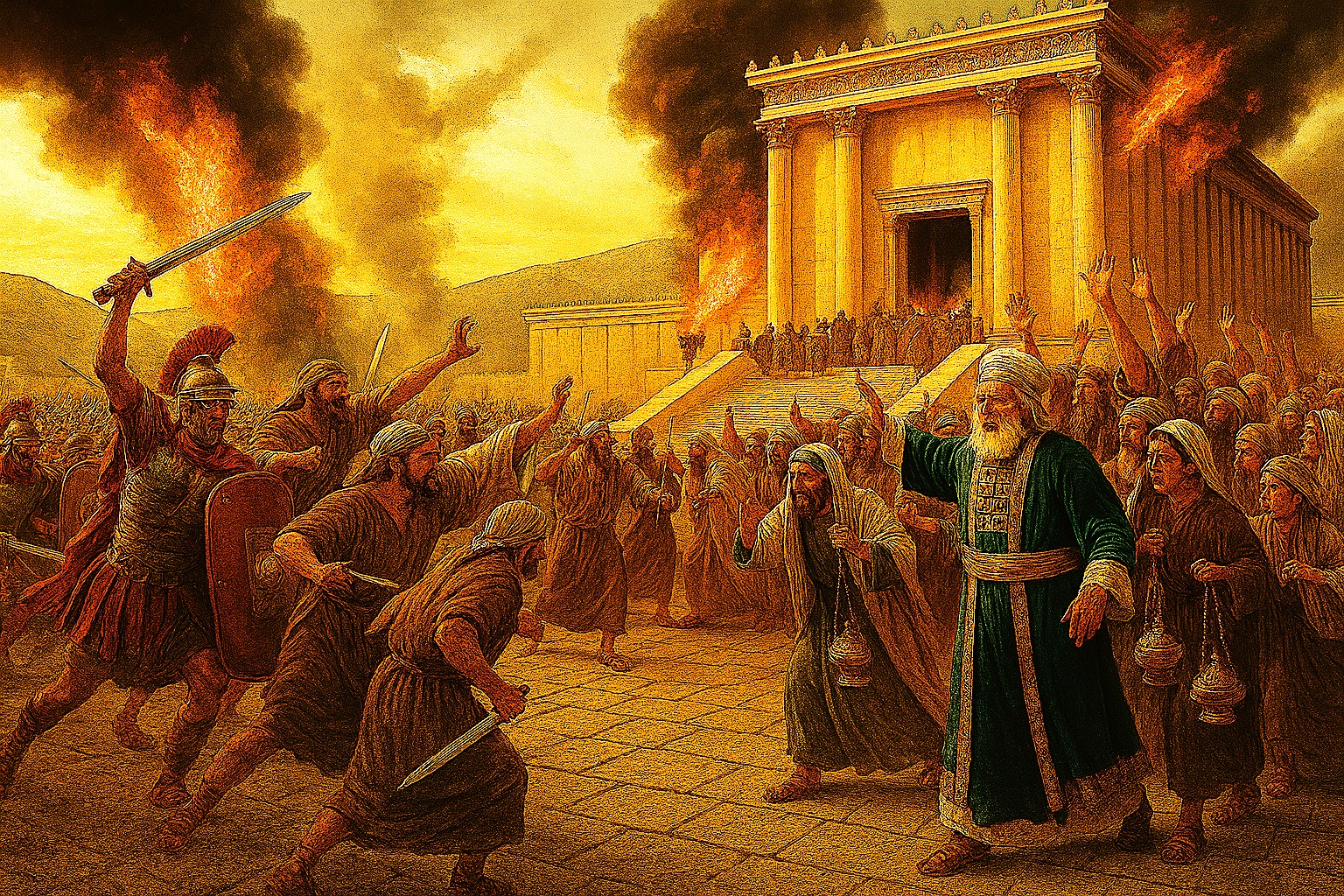
The Roman Attack on the Temple, seen protected by unarmed Rabbis, who were mercilessly killed. Original Photograph Conceptualised by Mrs V. Vawda January 2026
The Bottom Line
The Ark and Ten Commandments carry more than antiquarian interest: they instantiate a covenantal imagination that continues to inform public virtues, legal culture, interfaith relations, and social architecture across Judaism and Christianity, while Islamic covenant theology (mīthāq/ʿahd)[40] offers structurally parallel resources for peace and justice. Re‑centering covenantal peace in contemporary policy and civic life, truth‑telling, humane limits, restorative justice, treaty‑keeping—can convert ancient revelation into modern reconciliation. [cambridge.org], [crosstalk.ai], [explainthat.org]
While Dharmic religions do not possess a physical Ark nor a numerically bounded divine code, they maintain functional equivalents through:
- Sacred texts as repositories of divine truth (a “textual Ark”)
- Ethical systems that parallel Commandment‑style morality
- Societal embodiments of duty, justice, non‑violence, truth, and self‑discipline
Across Hinduism, Buddhism, Jainism, and Sikhism, these serve roles analogous to the Ark and Ten Commandments by:
- preserving sacred law,
- shaping identity,
- ordering society, and
- grounding moral life in transcendent principles.
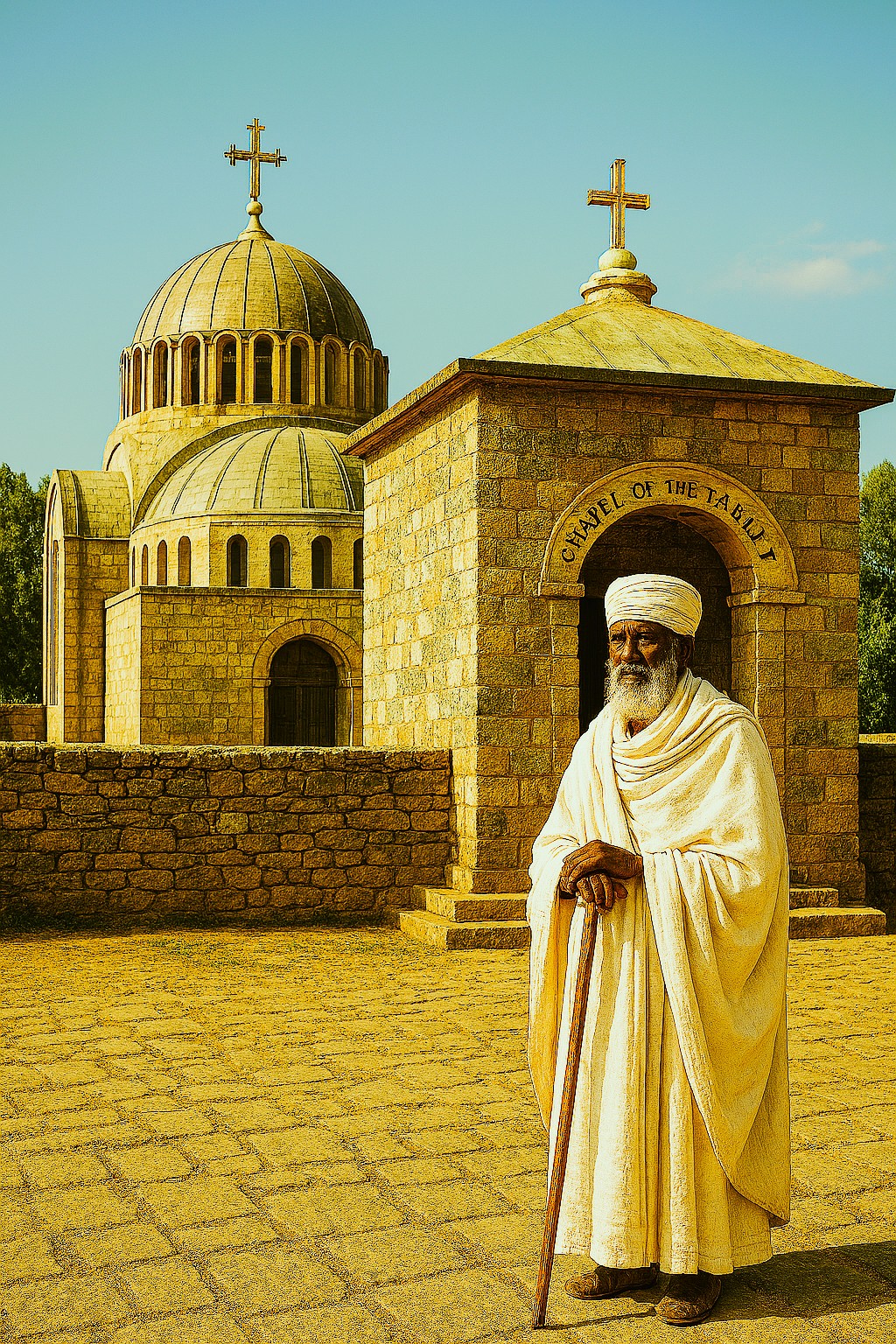
The Ethiopian Tradition (Christian): Memory, Pilgrimage, and Cultural Identity
The Ethiopian Orthodox Tewahedo Church maintains that the Ark was translated to Aksum and is housed near St. Mary of Zion (Chapel of the Tablet); every Ethiopian church contains a tabot, a consecrated tablet representing the Ark and covenantal presence, an enduring, society‑shaping liturgical practice. While this claim is not externally verified, it provides a potent cultural anchor and national sacred geography. [biblegateway.com], [biblehub.com]
Contemporary impact: annual feasts, processions, and the tabot principle cultivate common identity, pilgrimage economies, and public ethics centered on reverence, communal discipline, and duty; this tradition also mediates Ethiopia’s interregional diplomatic symbolism around heritage and faith. [matercare.org]
Original Photographs Conceptualised by Mrs V. Vawda January 2026
Global: + 27 82 291 4546
References:
[1] Personal Quote by author, January 2026
[2] https://www.bing.com/ck/a?!&&p=512816e78beba84d7f44038122518bb95990a9a9f99f79807dbdb2d1c124b53eJmltdHM9MTc2OTczMTIwMA&ptn=3&ver=2&hsh=4&fclid=37940f5c-820f-62a2-14ab-19c283916323&psq=decalogue+ten+commandments&u=a1aHR0cHM6Ly93d3cuYmlibGVpbmZvLmNvbS9lbi90b3BpY3MvdGVuLWNvbW1hbmRtZW50cy1saXN0
[3] https://www.bing.com/ck/a?!&&p=3a3ac2e57812714032ff639f4215263907e2a001b81ddd68225da8f5a99af9c8JmltdHM9MTc2OTczMTIwMA&ptn=3&ver=2&hsh=4&fclid=37940f5c-820f-62a2-14ab-19c283916323&u=a1aHR0cHM6Ly9kaWN0aW9uYXJ5LmNhbWJyaWRnZS5vcmcvZGljdGlvbmFyeS9lbmdsaXNoL2Fyay1vZi10aGUtY292ZW5hbnQ&ntb=1
[4] https://www.bing.com/ck/a?!&&p=742def80b25e5394d30d45e73001b994a3b4ebb5de86179ac55997985ce5a907JmltdHM9MTc2OTczMTIwMA&ptn=3&ver=2&hsh=4&fclid=37940f5c-820f-62a2-14ab-19c283916323&u=a1aHR0cHM6Ly9iaWJsZWh1Yi5jb20vdG9waWNhbC90L3RoZV9zeW1ib2xpc21fb2ZfdGhlX2Fyay5odG0&ntb=1
[5] https://www.bing.com/ck/a?!&&p=6102515ce036480813a15104dfa1110cfc1afc939e641fdac31fd401ab10f25eJmltdHM9MTc2OTczMTIwMA&ptn=3&ver=2&hsh=4&fclid=37940f5c-820f-62a2-14ab-19c283916323&u=a1L3NlYXJjaD9xPXN0YXIrb2YrZGF2aWQramV3aXNoJkZPUk09UVNSRTEz&ntb=1
[6] https://www.bing.com/ck/a?!&&p=8bc974d150c8b8f0d3499846685f88ec152eefaa578c3e8214b6c15ea1c8bfe3JmltdHM9MTc2OTczMTIwMA&ptn=3&ver=2&hsh=4&fclid=37940f5c-820f-62a2-14ab-19c283916323&psq=covenant+as+a+grammar+of+peace+pdf&u=a1aHR0cHM6Ly9pYTgwMTYwNi51cy5hcmNoaXZlLm9yZy8yMi9pdGVtcy9jb3ZlbmFudHBlYWNlYW4wMGJyYWlnb29nL2NvdmVuYW50cGVhY2VhbjAwYnJhaWdvb2cucGRm
[8] https://www.bing.com/ck/a?!&&p=e8f67f317e1835319e0fc151e8ff0779f19091be7bc1ddd69684afb3bfa22131JmltdHM9MTc2OTczMTIwMA&ptn=3&ver=2&hsh=4&fclid=37940f5c-820f-62a2-14ab-19c283916323&u=a1aHR0cHM6Ly93d3cuanN0b3Iub3JnL3N0YWJsZS9wZGYvMjc5MjQ5MjAucGRm&ntb=1
[9]https://www.bing.com/ck/a?!&&p=fd53f0b16bd182e674067c1d2f468c9d9b19ae2b1335ffb3d3518915203c2672JmltdHM9MTc2OTczMTIwMA&ptn=3&ver=2&hsh=4&fclid=37940f5c-820f-62a2-14ab-19c283916323&psq=%5bJERUSALEM…y+Timeline%5d+Fall+of+the+First+Temple&u=a1aHR0cHM6Ly9iaWJsZWh1Yi5jb20vdG9waWNhbC90dHQvdC90aGVfZmlyc3RfdGVtcGxlLS1jb21wbGV0ZV9kZXN0cnVjdGlvbl9vZixfcHJlZGljdGVkLmh0bQ
[10] https://www.bing.com/ck/a?!&&p=eac5233c3dedd22217dfdb7716a3049fa256074be18ff3aadb97ca341695405fJmltdHM9MTc2OTczMTIwMA&ptn=3&ver=2&hsh=4&fclid=37940f5c-820f-62a2-14ab-19c283916323&psq=%5bJERUSALEM…y+Timeline%5d+Fall+of+the+First+Temple&u=a1aHR0cHM6Ly93d3cuY2hhYmFkLm9yZy9saWJyYXJ5L2FydGljbGVfY2RvL2FpZC8xNDQ1NjkvamV3aXNoL1RoZS1GaXJzdC1UZW1wbGUuaHRt
[11] https://www.bing.com/ck/a?!&&p=662904e8a04a06141f94314168ba377006b3fe66caf5b99a2c2ec82d79edd964JmltdHM9MTc2OTczMTIwMA&ptn=3&ver=2&hsh=4&fclid=37940f5c-820f-62a2-14ab-19c283916323&psq=he+Ten+Commandments+and+Jewish+Ethical+Life&u=a1aHR0cHM6Ly9haXNoLmNvbS93aGF0LWFyZS10aGUtdGVuLWNvbW1hbmRtZW50cy8
[12] https://www.bing.com/ck/a?!&&p=0e9bfa7c4e11f8aa5f1b6466f9632b7f7c170ab361051d3d5fc042cde9839034JmltdHM9MTc2OTczMTIwMA&ptn=3&ver=2&hsh=4&fclid=37940f5c-820f-62a2-14ab-19c283916323&u=a1aHR0cHM6Ly93d3cuYW1lcmljYW5qZXdpc2hhcmNoaXZlcy5vcmcvd3AtY29udGVudC91cGxvYWRzL2ltcGFjdHNPZkNvbnRlbXBvcmFyeUxpZmVVcG9uSnVkYWlzbS5wZGY&ntb=1
[13] https://www.bing.com/ck/a?!&&p=c879b32c68d44f605fe52743f7655dc768f129f9b74569645fe3c06d9f0f59a6JmltdHM9MTc2OTczMTIwMA&ptn=3&ver=2&hsh=4&fclid=37940f5c-820f-62a2-14ab-19c283916323&u=a1aHR0cHM6Ly9hY2FkZW1pYy5vdXAuY29tL2VkaXRlZC12b2x1bWUvMzg2MjUvY2hhcHRlci8zMzUyMzE4NTI&ntb=1
[14] https://www.bing.com/ck/a?!&&p=c879b32c68d44f605fe52743f7655dc768f129f9b74569645fe3c06d9f0f59a6JmltdHM9MTc2OTczMTIwMA&ptn=3&ver=2&hsh=4&fclid=37940f5c-820f-62a2-14ab-19c283916323&u=a1aHR0cHM6Ly9hY2FkZW1pYy5vdXAuY29tL2VkaXRlZC12b2x1bWUvMzg2MjUvY2hhcHRlci8zMzUyMzE4NTI&ntb=1
[15] https://www.bing.com/ck/a?!&&p=772632e5ff7479b029fbe3122853f6ed3b089373395eae1876904eac34226693JmltdHM9MTc2OTczMTIwMA&ptn=3&ver=2&hsh=4&fclid=37940f5c-820f-62a2-14ab-19c283916323&psq=chabad+org+website&u=a1aHR0cHM6Ly93d3cuY2hhYmFkLm9yZy8
[16] https://www.bing.com/ck/a?!&&p=12ece2c9f7a6467ebd76ee10b3e2ad423edf23081e413b2e8116c70845ac3644JmltdHM9MTc2OTczMTIwMA&ptn=3&ver=2&hsh=4&fclid=37940f5c-820f-62a2-14ab-19c283916323&psq=%5bexplainthat.org%5d&u=a1aHR0cHM6Ly9leHBsYWludGhhdC5vcmcvcGFnZS8yLw
[17] https://www.bing.com/ck/a?!&&p=0f5c7132a7569954ba4ed006c76f30282e8f5894fbd1118794231fcfeda51744JmltdHM9MTc2OTczMTIwMA&ptn=3&ver=2&hsh=4&fclid=37940f5c-820f-62a2-14ab-19c283916323&psq=second+temple+of+jerusalem&u=a1aHR0cHM6Ly9lbi53aWtpcGVkaWEub3JnL3dpa2kvU2Vjb25kX1RlbXBsZQ
[18]https://www.bing.com/ck/a?!&&p=1d8aaff0e6d2c588d58034eec33a54d45a707fddfe258be1ce9a98957a158aebJmltdHM9MTc2OTczMTIwMA&ptn=3&ver=2&hsh=4&fclid=37940f5c-820f-62a2-14ab-19c283916323&psq=sefaria+or+hachaim&u=a1aHR0cHM6Ly93d3cuc2VmYXJpYS5vcmcvT3JfSGFDaGFpbV9vbl9HZW5lc2lz
[19] https://www.bing.com/ck/a?!&&p=5c55ec79c46d1c8633c2b148dea29329221ac67aa0b27178d3b67e6286727bbfJmltdHM9MTc2OTczMTIwMA&ptn=3&ver=2&hsh=4&fclid=37940f5c-820f-62a2-14ab-19c283916323&u=a1aHR0cHM6Ly9xdXJhbmdhbGxlcnkuYXBwL3RvcGljcy9hcmstb2YtdGhlLWNvdmVuYW50LXRhYnV0LWFsLWFoZC1pc2xhbS1xdXJhbg&ntb=1
[20] https://www.transcend.org/tms/2026/01/the-war-for-the-elusive-word-of-peace-a-search-for-common-ground-in-abrahamic-and-dharmic-hermeneutics-part-1/
[21] https://www.bing.com/ck/a?!&&p=cc89f4656a1fb00cb758547dfd96852e5087441316fb6391edac143f4578dff3JmltdHM9MTc2OTczMTIwMA&ptn=3&ver=2&hsh=4&fclid=37940f5c-820f-62a2-14ab-19c283916323&psq=%5bthomasfrank.us%5d&u=a1aHR0cHM6Ly93d3cueW91dHViZS5jb20vdGhvbWFzOTE5OTgvdmlkZW9z
[22] https://www.bing.com/ck/a?!&&p=69066cbb8f4cfdbb895161bd6f8a431e282aca42347f48be88901f119a4352c6JmltdHM9MTc2OTczMTIwMA&ptn=3&ver=2&hsh=4&fclid=37940f5c-820f-62a2-14ab-19c283916323&u=a1L3ZpZGVvcy9zZWFyY2g_cT1QYXJhbGxlbHMrQmV0d2Vlbit0aGUrQXJrJTJjK1RoZStUZW4rQ29tbWFuZG1lbnRzK2FuZCtEaGFybWljK0ZhaXRocyZxcHZ0PVBhcmFsbGVscytCZXR3ZWVuK3RoZStBcmslMmMrVGhlK1RlbitDb21tYW5kbWVudHMrYW5kK0RoYXJtaWMrRmFpdGhzJkZPUk09VkRSRQ
[23] https://www.bing.com/ck/a?!&&p=4a6a482fdd9371f7d1b2d699e793caefcfd96e977e138bfa1a600290a68cd7fbJmltdHM9MTc2OTczMTIwMA&ptn=3&ver=2&hsh=4&fclid=37940f5c-820f-62a2-14ab-19c283916323&psq=%5bijrah.com%5d&u=a1aHR0cHM6Ly93d3cuaWpyYWguY29tLw
[24] https://www.bing.com/ck/a?!&&p=292374cc1cb1670e25bc12d24fa4310f10752928b912850643f5e9e3fb072281JmltdHM9MTc2OTczMTIwMA&ptn=3&ver=2&hsh=4&fclid=37940f5c-820f-62a2-14ab-19c283916323&u=a1L3ZpZGVvcy9zZWFyY2g_cT1QYXJhbGxlbCt0byt0aGUrQXJrJTNhK0RoYXJtYStTaGFzdHJhcythcythKyVlMiU4MCU5Y1JlcG9zaXRvcnkrb2YrU2FjcmVkK0xhdyVlMiU4MCU5ZCZxcHZ0PVBhcmFsbGVsK3RvK3RoZStBcmslM2ErRGhhcm1hK1NoYXN0cmFzK2FzK2ErJWUyJTgwJTljUmVwb3NpdG9yeStvZitTYWNyZWQrTGF3JWUyJTgwJTlkJkZPUk09VkRSRQ
[25] https://www.bing.com/ck/a?!&&p=ba1f88aee18ebf8bf0e7d006146aadc28355811e9b6af417fcd4347c7ed34fa6JmltdHM9MTc2OTczMTIwMA&ptn=3&ver=2&hsh=4&fclid=37940f5c-820f-62a2-14ab-19c283916323&psq=ts+rules+expand+Ten+Commandments+like+prohibitions+into+hundreds+of+detailed+ethical+regulations.+%5bnoblechatter.com%5d&u=a1aHR0cHM6Ly9iaWJsZWh1Yi5jb20vdG9waWNhbC9tL21vcmFsX2FuZF9ldGhpY2FsX2xhd3MuaHRt
[26] https://www.bing.com/ck/a?!&&p=4efafabccea0a2f5b2c179e8399e53a88a18d1a53a3d295a99d3f7dcc9f6e981JmltdHM9MTc2OTczMTIwMA&ptn=3&ver=2&hsh=4&fclid=37940f5c-820f-62a2-14ab-19c283916323&psq=While+Buddhism+has+no+physical+Ark%2c+the+Vinaya+Pitaka+acts+as+a+structural+container+of+sacred+discipline%2c+preserving%2c+transmitting%2c+and+safeguarding+the+Dharma+in+the+monastic+community.&u=a1aHR0cHM6Ly9saWNlbnRpYXBvZXRpY2EuY29tL3ZpbmF5YS1waSVFMSVCOSVBRGFrYS1jODhlZTY5YTZlNDM
[27] https://www.bing.com/ck/a?!&&p=24df477f71c56197bc4b425dd8baebee795dda449bdd40796043b2748ccc7e83JmltdHM9MTc2OTczMTIwMA&ptn=3&ver=2&hsh=4&fclid=37940f5c-820f-62a2-14ab-19c283916323&u=a1aHR0cHM6Ly9lbmN5Y2xvcGVkaWFvZmphaW5pc20uY29tL3RoZS1kb2N0cmluZS1vZi1haGltc2EtMi8&ntb=1
[28] https://www.bing.com/ck/a?!&&p=abecd4677067850a0448ed5270f505629fc3ada2537463733c076df479dcfa0eJmltdHM9MTc2OTczMTIwMA&ptn=3&ver=2&hsh=4&fclid=37940f5c-820f-62a2-14ab-19c283916323&psq=Tirthankara+Teachings&u=a1aHR0cHM6Ly9lbi53aWtpcGVkaWEub3JnL3dpa2kvVGlydGhhbmthcmE
[29] https://www.transcend.org/tms/2025/09/the-unflinching-sentinel-guru-tegh-bahadur-in-the-pursuit-of-eternal-propagation-of-peace-justice-and-righteousness-part-2/
[30] https://www.bing.com/ck/a?!&&p=3dce95e1aca7e8eded187e4fbe9062b7b732bca591f02b7c7f5b7f30a1f81865JmltdHM9MTc2OTczMTIwMA&ptn=3&ver=2&hsh=4&fclid=37940f5c-820f-62a2-14ab-19c283916323&psq=Sikh+Rahit+Maryada&u=a1aHR0cHM6Ly93d3cuc2lraGl3aWtpLm9yZy9pbmRleC5waHAvUmVoYXRfTWFyeWFkYQ
[31] https://www.bing.com/ck/a?!&&p=8a5db78fde46f521334aede8c3c7b2125047a32781e03e8858c193bec486f003JmltdHM9MTc2OTczMTIwMA&ptn=3&ver=2&hsh=4&fclid=37940f5c-820f-62a2-14ab-19c283916323&psq=Societal+Impacts%3a+Ahimsa+and+the+Commandments+Today&u=a1aHR0cHM6Ly9hcGFtLW5hcGF0LmNvbS9haGltc2EtYW5kLXNvY2lhbC1qdXN0aWNlLw
[32] https://www.bing.com/ck/a?!&&p=08cb3737b6f819376ff3762235a493a39807f4fa7cf8b87bd8e237967da52448JmltdHM9MTc2OTczMTIwMA&ptn=3&ver=2&hsh=4&fclid=37940f5c-820f-62a2-14ab-19c283916323&psq=Influence+of+the+Ten+Commandments+on+Modern+Law&u=a1aHR0cHM6Ly9sYXdzaHVuLmNvbS9hcnRpY2xlL2RpZC1vdXItbGF3cy1jb21lLWZyb20tdGhlLXRlbi1jb21tYW5kbWVudHM
[33] https://www.bing.com/ck/a?!&&p=87f8e239c2e7ae1370b795af108fa58d50367103062dfda17c029ca26a272cd2JmltdHM9MTc2OTczMTIwMA&ptn=3&ver=2&hsh=4&fclid=37940f5c-820f-62a2-14ab-19c283916323&psq=influence+of+ahimsa+(non+violence)+on+modern+law+pdf&u=a1aHR0cHM6Ly93d3cucmVzZWFyY2hnYXRlLm5ldC9wdWJsaWNhdGlvbi8zMzY5MjEyMzJfQUhJTVNBX1BSSU5DSVBMRV9JTl9USEVfUkVMSUdJT1VTX0FORF9DVUxUVVJBTF9QUkFDVElDRVNfT0ZfQU5DSUVOVF9BTkRfQ09OVEVNUE9SQVJZX0lORElB
[34] https://www.bing.com/ck/a?!&&p=c995ba0f297fcabda18941116e6845f841ea03ff70d7569cd88ef6e509c2cfcfJmltdHM9MTc2OTczMTIwMA&ptn=3&ver=2&hsh=4&fclid=37940f5c-820f-62a2-14ab-19c283916323&psq=How+Ahimsa+Influences+Environmental+Law%3f&u=a1aHR0cHM6Ly9yZWFsaXR5cGF0aGluZy5jb20vZXhwbG9yaW5nLXRoZS1yb2xlLW9mLWFoaW1zYS1pbi1lbnZpcm9ubWVudGFsaXNtLw
[35] https://www.bing.com/ck/a?!&&p=398c2460f6d8eccfd096928e1212167c424a8a649715a203cc196576eb23eaa5JmltdHM9MTc2OTczMTIwMA&ptn=3&ver=2&hsh=4&fclid=37940f5c-820f-62a2-14ab-19c283916323&u=a1aHR0cHM6Ly93d3cuaGVkdW5hLmNvbS9oZWR1bmEvYWhpbXNhLXRoZS1lc3NlbmNlLW9mLW5vbi12aW9sZW5jZS10b3dhcmRzLW5hdHVyZQ&ntb=1
[36] https://www.bing.com/ck/a?!&&p=4bd205376fbf2f1f92b746ab44dbb4b49045b6af2c9f70f6b28efa9de01935b2JmltdHM9MTc2OTczMTIwMA&ptn=3&ver=2&hsh=4&fclid=37940f5c-820f-62a2-14ab-19c283916323&u=a1L3ZpZGVvcy9yaXZlcnZpZXcvcmVsYXRlZHZpZGVvP3E9QWhpbXNhK1NoYXBlcytFbnZpcm9ubWVudGFsK0xhdytUaHJvdWdoK0l0cytJbmZsdWVuY2Urb24rU29jaWFsK01vdmVtZW50cyZtaWQ9REYxOEI0MDJCQUFERUNDMjQ4RTFERjE4QjQwMkJBQURFQ0MyNDhFMSZGT1JNPVZJUkU
[37] https://www.bing.com/ck/a?!&&p=c4d2cdf712558d1c8f72b3e7fa66c6db2de8bb633667364b17b5e0fe1ce80d69JmltdHM9MTc2OTczMTIwMA&ptn=3&ver=2&hsh=4&fclid=37940f5c-820f-62a2-14ab-19c283916323&psq=Ahimsa%e2%80%99s+Influence+Compared+to+Western+Environmental+Law+Foundations&u=a1aHR0cHM6Ly9hcGFtLW5hcGF0LmNvbS9haGltc2EtYW5kLWVudmlyb25tZW50YWwtcHJvdGVjdGlvbi8
[38] https://www.bing.com/ck/a?!&&p=ba5fb85502fc41987e1e8be7fd01c1c66cb160800f8558c5ed6f88553fd6de25JmltdHM9MTc2OTczMTIwMA&ptn=3&ver=2&hsh=4&fclid=37940f5c-820f-62a2-14ab-19c283916323&psq=Yamas%e2%80%93Niyamas%2c&u=a1aHR0cHM6Ly92aWthc2EuY29tLzIwMjQvMTEvMTUvdW5kZXJzdGFuZGluZy10aGUteWFtYXMtYW5kLW5peWFtYXMtb2YteW9nYS8
[39] https://www.bing.com/ck/a?!&&p=d8462c0df1a10a2ea3ea7849e0fa80588fba583ef4097c01c5881791cfa57c55JmltdHM9MTc2OTczMTIwMA&ptn=3&ver=2&hsh=4&fclid=37940f5c-820f-62a2-14ab-19c283916323&psq=Vinaya&u=a1aHR0cHM6Ly9lbi53aWtpcGVkaWEub3JnL3dpa2kvVmluYXlh
[40] https://www.bing.com/ck/a?!&&p=8bb54c8476e6e6be809c7a53003a7b2752b9e0177e64bab0ed2c9a62776d5c31JmltdHM9MTc2OTczMTIwMA&ptn=3&ver=2&hsh=4&fclid=37940f5c-820f-62a2-14ab-19c283916323&psq=m%c4%abth%c4%81q%2f%ca%bfahd)&u=a1aHR0cHM6Ly93d3cubWRwaS5jb20vMjA3Ny0xNDQ0LzE0LzQvNTE0
______________________________________________
Professor G. Hoosen M. Vawda (Bsc; MBChB; PhD.Wits) is a member of the TRANSCEND Network for Peace Development Environment.
Director: Glastonbury Medical Research Centre; Community Health and Indigent Programme Services; Body Donor Foundation SA.
Principal Investigator: Multinational Clinical Trials
Consultant: Medical and General Research Ethics; Internal Medicine and Clinical Psychiatry:UKZN, Nelson R. Mandela School of Medicine
Executive Member: Inter Religious Council KZN SA
Public Liaison: Medical Misadventures
Activism: Justice for All
Email: vawda@ukzn.ac.za
Tags: Abrahamic, Ahimsa, Decalogue, Dharmic, Guru Grant, Jainism, Sikhism, Societal Impact, The Ten Commandments
This article originally appeared on Transcend Media Service (TMS) on 2 Feb 2026.
Anticopyright: Editorials and articles originated on TMS may be freely reprinted, disseminated, translated and used as background material, provided an acknowledgement and link to the source, TMS: Covenantal Abrahamic Peace and Dharmic Non Violence: Toward a Unified Framework for Global Harmony, is included. Thank you.
If you enjoyed this article, please donate to TMS to join the growing list of TMS Supporters.

This work is licensed under a CC BY-NC 4.0 License.
One Response to “Covenantal Abrahamic Peace and Dharmic Non Violence: Toward a Unified Framework for Global Harmony”
Write a comment to Hoosen Vawda
We welcome debate and dissent, but personal — ad hominem — attacks (on authors, other users or any individual), abuse and defamatory language will not be tolerated. Nor will we tolerate attempts to deliberately disrupt discussions. We aim to maintain an inviting space to focus on intelligent interactions and debates.
Latest follow up comments on the possible location of the Ark of the Covenant.
Following my publication, above on 02nd February 2026 by Professor Rosa as the Editor of TMS, a report has emerged by a former Central Intelligence Agency, staff, Major Dames, claiming that he knows where the Holy Ark is hidden, after it vanished from the Temple of Soloman just before the Babylonian attack. Major Dames told DailyMail.com that he recently used his Remote Viewing Skills (RVS) to track down the missing Ark, claiming he located it inside the Cave of the Patriarchs. This religious site is located in Hebron, West Bank. According to Jewish, Christian and Islamic traditions, it is thought to be the burial place of several key Biblical figures, including Prophets Abraham and Jacob.(PBUT) The Bible describes the Ark of the Covenant as a gold chest built by the Israelites shortly after they fled Egypt around the 13th century BC.
Baruch, the son of Neriah, is a key figure in the Book of Jeremiah, serving as Jeremiah’s scribe and faithfully recording his prophecies during a tumultuous period in Judah’s history.both Baruch and Jeremiah witnessed the Babylonian siege of Jerusalem in 587-586 BC..
Many archaeologists have spent their lives searching for the Ark of the Covenant, but a prophecy in a banned book of the Bible may reveal when it will be found.
The Apocalypse of Baruch, a two-part book written between the late first and early second centuries BC, is framed as Baruch receiving visions and revelations from God. Its themes include the fate of Israel, the end of times, and the coming of the Messiah.
The Book of Baruch 2, Chapter 6, states that he saw an angel remove the Ark from the Second Temple, allowing it to be ‘swallowed by the Earth’ before the Babylonian invasion, where it would remain hidden until Israel is restored. ,
Baruch ben Neriah, scribe to the prophet Jeremiah, has traditionally been credited as the author. Still, scholars believe he did not write the book as he lived centuries before the text was written.
Because the text is a pseudepigraphal work it was not considered canonical by the Jewish and Christian communities and omitted from the Bible. The mystery of the Biblical relic was renewed this week after a DailyMail.com article detailed how the CIA may have located it in the Middle East.
While the CIA never announced the finding, the omitted book of the Bible may provide details about why the artifact has remained lost for nearly 1,440 years.
Readers are respectfully invited to correspond further on the topic, with the author
Hoosen Vawda
Durban, South Africa
Dated Monday, 02nd February 2026