


Psychology of Resilience: The Structural Roots of the “Resistance Environment” in Lebanon
TRANSCEND MEMBERS, 30 Mar 2026
Vanessa Beeley – TRANSCEND Media Service
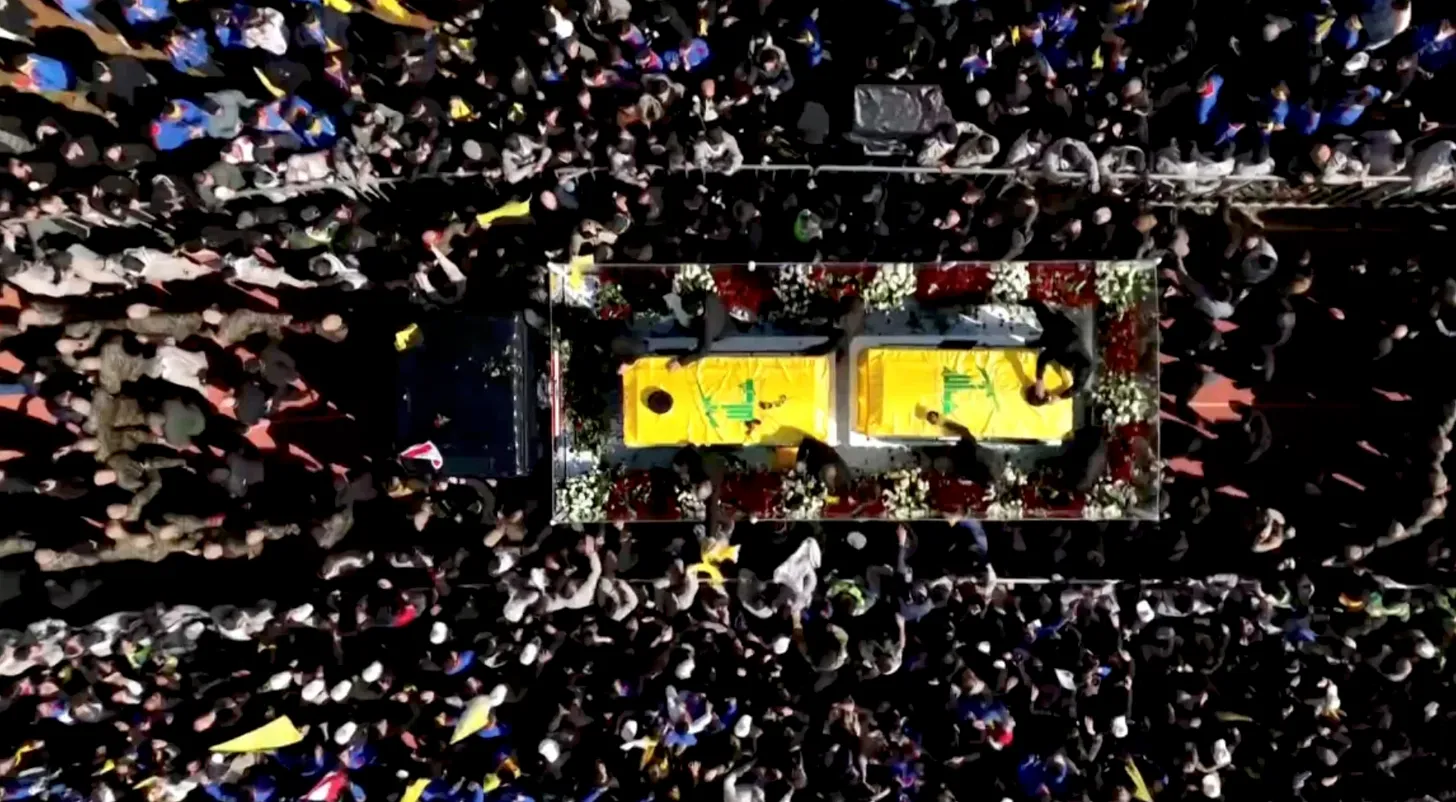
26 Mar 2026 – The following was sent to me by Lebanese journalist Sondoss Al Assad. Sondoss contributed to my latest article on the West Bekaa town of Sohmor that you can read here or on my Substack.
By Dr. Mohammad Aloush for Al-Akhbar Newspaper
“The “resistance environment” emerges in critical historical moments as a solid social bloc resistant to disintegration, raising questions for social psychologists that go beyond traditional material explanations. In the face of a destructive apparatus aimed at “brainwashing” and uprooting the community from its geographical and symbolic space, the resilience of this environment appears not as a fleeting emotional act but as a condition deeply embedded in collective consciousness.
This scenario calls for a rigorous epistemological approach that dissects the elements of this latent strength and probes the roots that make individuals in this environment a formidable barrier against even the harshest strategies of perception management and psychological intimidation. Key foundational questions arise: What factors shape the “readiness” for struggle in this environment? How does “collective identity” transform into a psychological shield protecting the individual from collapse? Why does material power fail to penetrate the “system of meaning” despite heavy fire? And is resilience here a matter of necessity or a form of “existential rationality”?
Firstly, this environment derives its solidity from “collective memory” and “historical experience,” honed through decades of direct confrontation. It is not a product of the moment but the offspring of accumulated values that have turned suffering into “struggle capital.”
The memory of victories following harsh periods of endurance has created a popular certainty that scenes of rubble are merely preludes to reconstruction, and that what has been destroyed will be rebuilt with greater dignity. This certainty rests on the “credibility of the resistance,” which has demonstrated, in prior instances, the truth of its slogans—particularly the promise that “it will return better than before.”
This slogan has transcended mere aspirational promise to become an “urban and psychological doctrine,” causing people to perceive destruction through the lens of “future” rather than “ruin.” This undermines the deterrent value of destruction and turns it into a motivator for deepening attachment to the land, where:
1. The act of “rebuilding” transforms from a technical operation into a continuation of resistance, constituting a moral defeat of the enemy’s displacement objectives.
2. Absolute trust in leadership promises serves as a psychological safety valve preventing the infiltration of doubt or anxiety over the value of sacrifice.
3. Returning to damaged villages and homes becomes a sacred act and moral duty, breaking the aura of superior material power and affirming sovereignty over place.
At deeper levels, “beliefs, spiritual, and value stocks” act as a core driver of this steadfastness. Individuals in this environment invoke the “Karbala model” as a reference and epistemological framework for understanding the conflict and transcending the ordeal of loss. Karbala here is not merely a memory of grief but a school teaching that victory emerges from the womb of oppression, and that blood possesses a symbolic power to triumph over the sword. This doctrinal dimension links to a “Mahdist” consciousness that views current suffering as part of a cosmic historical path toward comprehensive justice, shielding awareness from rapid discouragement:
1. “Pain” and “loss” are redefined as moral values bringing the individual closer to ethical perfection, stripping the enemy of the leverage of material suffering.
2. Martyrdom transforms from a biological loss into “symbolic capital,” granting the community existential pride and moral continuity.
3. Resilience becomes a ritualistic and spiritual act, fidelity to a prolonged spiritual legacy, making abandonment of it tantamount to betrayal of identity and doctrinal belonging.
Contrary to enemy expectations that intense military pressure would produce social disintegration, “war strengthens collective cohesion” and activates mechanisms of organic solidarity. In moments of existential threat, individuals merge into the collective, and society becomes a “single cell” governed by mutual support and care.
This cohesion prevents the emergence of a “psychological void” that could lead to despair, instead creating a state of “societal resistance” complementing military resistance, where:
1. Individual and class differences fade before unity of fate and the nobility of a shared cause.
2. “Social solidarity” emerges as a powerful tool against displacement and poverty, turning the host environment into an active partner in managing the struggle with patience.
3. A sense of “shared psychological security” arises; everyone is in the same boat, and this companionship in adversity reduces the intensity of individual suffering and increases endurance.
The dimensions of this legendary resilience can be summarized in five structural pillars granting this environment absolute psychological superiority:
1. Immunity to “perception management”: Hostile propaganda fails to penetrate collective consciousness thanks to a value-based and doctrinal “filter” classifying hostile messages as external noise without access to the fortified collective mind.
2. Centrality of “family” and “women”: The family serves as a solid nucleus reproducing values of steadfastness, and women act as essential drivers of psychological and educational resilience, preserving internal cohesion under extreme conditions.
3. Existential rationality: Popular awareness that the cost of surrender (humiliation, marginalization, loss of sovereignty) is far higher than the cost of confrontation, making resilience a rational, calculated decision rather than mere emotional reaction.
4. Identity transcending geography: People’s attachment to their homes and villages as an “ontological” value that cannot be uprooted by gunpowder; land is seen as “honor” and “dignity,” making the “idea of return” stronger than temporary displacement.
5. Moral superiority of humans over technology: A deep belief that “humans” are the source of power and the origin of victory, and that enemy technological superiority cannot settle a struggle of wills as long as humans decide not to break.
The resilience of the resistance environment is neither “accidental” nor temporary; it is the result of profound sociological and psychological construction, making humans on this land inseparable from the terrain of confrontation. It transforms “material weakness” into “historical potency” and proves that attempts to break willpower are mere “plowing the sea.”
The stark reality remains that this environment does not practice resilience as an act but embodies it in its highest human manifestation, where the distance between self, land, and cause disappears, and the entire human bloc becomes “a sacrifice” to the inevitable certainty of victory and survival.”
___________________________________________
 Vanessa Beeley is a member of the TRANSCEND Network for Peace Development Environment. “The pursuit of peace and progress, with its trials and its errors, its successes and its setbacks, can never be relaxed and never abandoned.”
Go to Original – beeley.substack.com
Tags: Invasion, Israel, Lebanon, Middle East
DISCLAIMER: The statements, views and opinions expressed in pieces republished here are solely those of the authors and do not necessarily represent those of TMS. In accordance with title 17 U.S.C. section 107, this material is distributed without profit to those who have expressed a prior interest in receiving the included information for research and educational purposes. TMS has no affiliation whatsoever with the originator of this article nor is TMS endorsed or sponsored by the originator. “GO TO ORIGINAL” links are provided as a convenience to our readers and allow for verification of authenticity. However, as originating pages are often updated by their originating host sites, the versions posted may not match the versions our readers view when clicking the “GO TO ORIGINAL” links. This site contains copyrighted material the use of which has not always been specifically authorized by the copyright owner. We are making such material available in our efforts to advance understanding of environmental, political, human rights, economic, democracy, scientific, and social justice issues, etc. We believe this constitutes a ‘fair use’ of any such copyrighted material as provided for in section 107 of the US Copyright Law. In accordance with Title 17 U.S.C. Section 107, the material on this site is distributed without profit to those who have expressed a prior interest in receiving the included information for research and educational purposes. For more information go to: http://www.law.cornell.edu/uscode/17/107.shtml. If you wish to use copyrighted material from this site for purposes of your own that go beyond ‘fair use’, you must obtain permission from the copyright owner.
Join the discussion!
We welcome debate and dissent, but personal — ad hominem — attacks (on authors, other users or any individual), abuse and defamatory language will not be tolerated. Nor will we tolerate attempts to deliberately disrupt discussions. We aim to maintain an inviting space to focus on intelligent interactions and debates.