
Will the ICJ Deliver Justice and Accountability for Myanmar’s Rohingyas?
ASIA-UPDATES ON MYANMAR ROHINGYA GENOCIDE, 19 Jan 2026
Zarni tells it like it is – TRANSCEND Media Service
As gratifying as it is to see the Rohingya people having their day at “the world’s court, the ICJ will not end the era of impunity for Myanmar junta and change Rohingya lives for better.
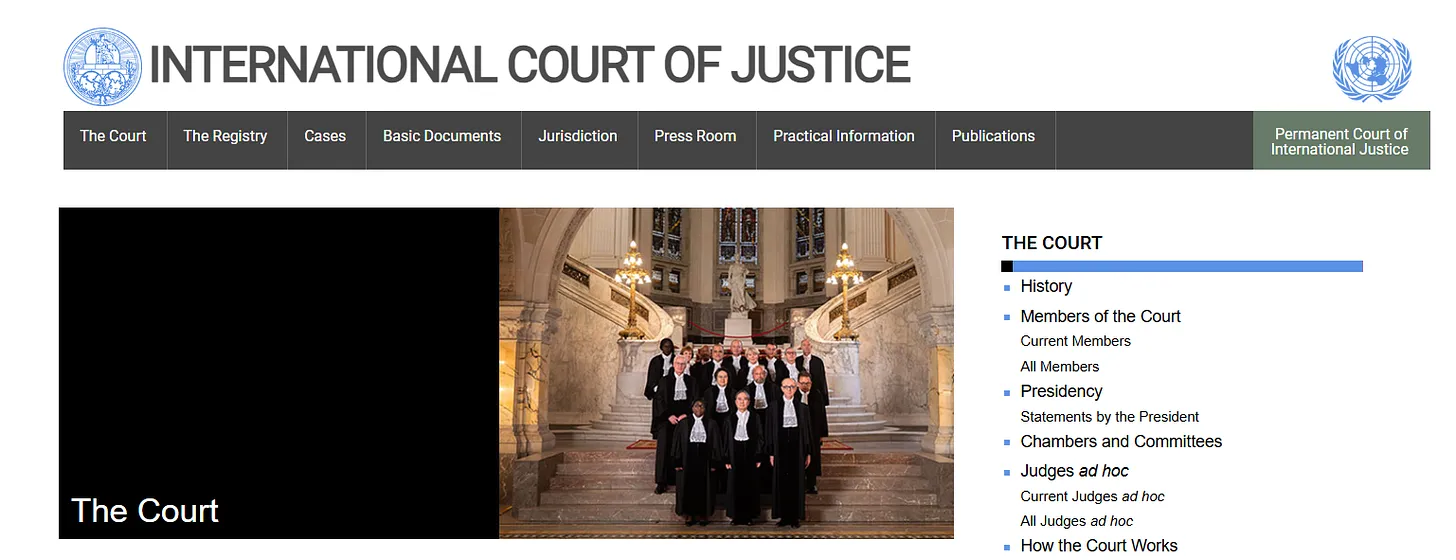
Today, 12 January, at the Palace of Peace, The Hague, the International Court of Justice kicked off its Merit Phase proceedings (evidence and counter-evidence presentations and examinations to support legal claims and counterclaims of genocide) in the Gambia vs. Myanmar case.
Six years ago, the small African state of Gambia filed the case against Myanmar alleging that the latter as a signatory state to the Genocide Convention is in breach of its legally binding treaty obligations under the Convention on the Prevention and Punishment of the Crime of Genocide against the country’s Rohingya ethnic group.
On the opening day of this Merit Phase proceedings, I joined the two distinguished professionals at the TRT World Newsmaker program to discuss the likely impact of the ICJ’s final verdict, whenever : Alain Pellet, former Chair of the International Law Commission and the Honorary President of the French Society for International Law and Lucky Karim, founder of Refugee Women for Peace and Justice (RWPJ) and Rohingya refugee fellow with Refugees International based in Washington DC.
Watch the 26-minutes program aired this evening here.
The discussion begins at 5 minutes. My main point is: the ICJ and international law should not become a source of “false hope” for the oppressed and the genocided, especially in the light of the fact that both powerful states such as the United States have pretty much destroyed the United Nations, its judicial organs and international law for them to make any real positive impact on the lives of those nations and communities that need the protection and support of these institutions and instruments.
___________________________________________
 A Buddhist humanist from Burma (Myanmar), Maung Zarni, nominated for the 2024 Nobel Peace Prize, is a member of the TRANSCEND Media Service Editorial Committee, of the TRANSCEND Network for Peace Development Environment, former Visiting Lecturer with Harvard Medical School, specializing in racism and violence in Burma and Sri Lanka, and Non-resident Scholar in Genocide Studies with Documentation Center – Cambodia. Zarni is the co-founder of FORSEA, a grass-roots organization of Southeast Asian human rights defenders, coordinator for Strategic Affairs for Free Rohingya Coalition, and an adviser to the European Centre for the Study of Extremism, Cambridge. Zarni holds a PhD (U Wisconsin at Madison) and a MA (U California), and has held various teaching, research and visiting fellowships at the universities in Asia, Europe and USA including Oxford, LSE, UCL Institute of Education, National-Louis, Malaya, and Brunei. He is the recipient of the “Cultivation of Harmony” award from the Parliament of the World’s Religions (2015). His analyses have appeared in leading newspapers including the New York Times, The Guardian and the Times. Among his academic publications on Rohingya genocide are The Slow-Burning Genocide of Myanmar’s Rohingyas (Pacific Rim Law and Policy Journal), An Evolution of Rohingya Persecution in Myanmar: From Strategic Embrace to Genocide, (Middle East Institute, American University), and Myanmar’s State-directed Persecution of Rohingyas and Other Muslims (Brown World Affairs Journal). He co-authored, with Natalie Brinham, Essays on Myanmar Genocide.
Go to Original – maungzarni.substack.com
Tags: Burma/Myanmar, Genocide, International Court of Justice ICJ, Rohingya
DISCLAIMER: The statements, views and opinions expressed in pieces republished here are solely those of the authors and do not necessarily represent those of TMS. In accordance with title 17 U.S.C. section 107, this material is distributed without profit to those who have expressed a prior interest in receiving the included information for research and educational purposes. TMS has no affiliation whatsoever with the originator of this article nor is TMS endorsed or sponsored by the originator. “GO TO ORIGINAL” links are provided as a convenience to our readers and allow for verification of authenticity. However, as originating pages are often updated by their originating host sites, the versions posted may not match the versions our readers view when clicking the “GO TO ORIGINAL” links. This site contains copyrighted material the use of which has not always been specifically authorized by the copyright owner. We are making such material available in our efforts to advance understanding of environmental, political, human rights, economic, democracy, scientific, and social justice issues, etc. We believe this constitutes a ‘fair use’ of any such copyrighted material as provided for in section 107 of the US Copyright Law. In accordance with Title 17 U.S.C. Section 107, the material on this site is distributed without profit to those who have expressed a prior interest in receiving the included information for research and educational purposes. For more information go to: http://www.law.cornell.edu/uscode/17/107.shtml. If you wish to use copyrighted material from this site for purposes of your own that go beyond ‘fair use’, you must obtain permission from the copyright owner.
Join the discussion!
We welcome debate and dissent, but personal — ad hominem — attacks (on authors, other users or any individual), abuse and defamatory language will not be tolerated. Nor will we tolerate attempts to deliberately disrupt discussions. We aim to maintain an inviting space to focus on intelligent interactions and debates.
Read more
Click here to go to the current weekly digest or pick another article:
ASIA-UPDATES ON MYANMAR ROHINGYA GENOCIDE: