


Freezing to Death in Gaza: How Cold Is Killing Displaced Babies
PALESTINE ISRAEL GAZA GENOCIDE, 19 Jan 2026
Yasmin Abu Shammala | Quds News Network - TRANSCEND Media Service
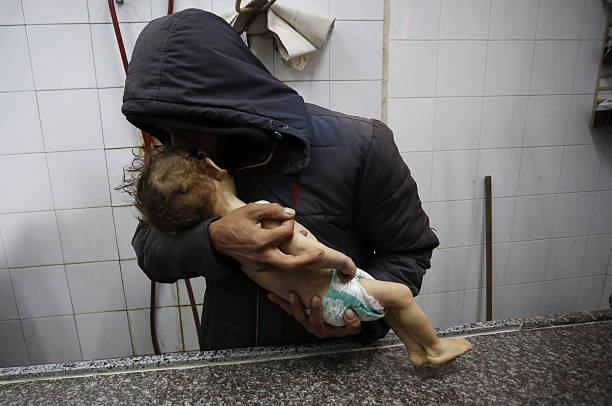
One-year-old Palestinian infant Mohammed Besyuni died as a result of severe cold weather in Deir al Balah, Gaza on 3 Jan 2026. The baby’s body was brought to Al-Aqsa Martyrs Hospital for funeral procedures as his family members mourn his death. (Photo by Stringer/Anadolu via Getty Images)
At least seven infants have died this winter in Gaza. Displaced babies freeze in soaked tents as Israel’s blockade blocks essential aid. This is how Israel is freezing Gaza’s babies to death.
“I started collecting strips of fabric and pieces of cloth until I managed to turn them into curtains. That’s how the tent was made.”
Doctors, parents, and authorities confirm that these deaths are not caused by rare illnesses or unavoidable medical complications, but by displacement, poverty, hunger, and life in makeshift shelters that offer no meaningful protection from wind, rain, or freezing temperatures.
At the center of this tragedy is Ahmad Tottah, a father who lost two children, each in a different year, to cold. His testimony, alongside statements from Gaza’s Ministry of Health and neonatal specialists at Nasser Hospital, paints a devastating picture of how survival itself has become fragile for the youngest and weakest.
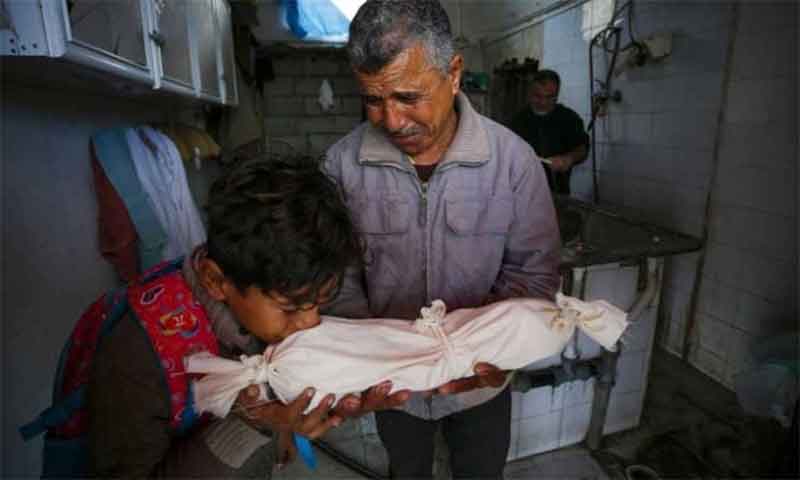
Gaza genocide: Babies freezing to death with Hypothermia. Jan 2026
A Life of Repeated Displacement
Speaking to Quds News Network (QNN), Ahmad Tottah described how his family’s descent into vulnerability began long before his children died.
After nine months of Israel’s genocidal war, Ahmad was forcibly displaced from Northern Gaza to the south. His journey followed a familiar pattern for thousands of families: first to Rafah, then to the al-Mawasi area of Khan Younis, near the sea.
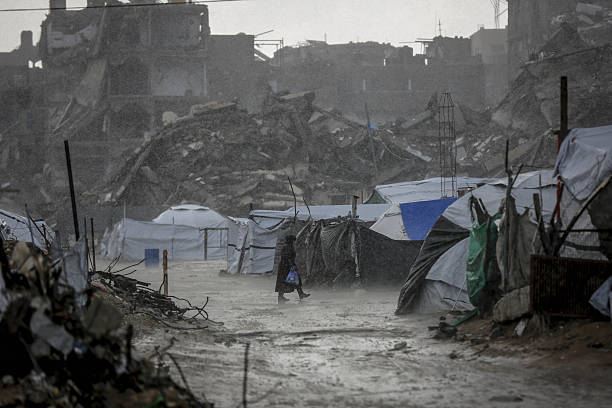
At the beginning, there was no tent.
“For a week, I lived under three pieces of wood and plastic,” Ahmad said. “I started collecting strips of fabric and pieces of cloth until I managed to turn them into curtains. That’s how the tent was made.”
That fragile shelter, stitched together from scraps, became home for more than a year.
When a second wave of forced displacement began, Ahmad fled again, this time with his wife, his son Ibrahim, and his infant daughter Misk, the twin sister of Mohammad, a baby boy who had already died from hypothermia.
The family spent a month on the Gaza seashore, where humidity soaked through the fabric of their tent and cold winds blew directly from the sea. Later, they moved again to Khan Younis, carrying little more than their children and what remained of their shelter.
The Loss of Mohammad
On September 29, 2024, Ahmad’s son Mohammad died. He was just two months old. Ahmad said doctors informed him that the cause of death was cold exposure. At the time, the family was living in a tent made entirely of curtains in al-Mawasi area of Khan Younis, with no insulation, no heating, and no protection from the elements.
Before his death, Mohammad had been vomiting and suffering from diarrhea. Ahmad took him to Nasser Hospital, where the baby remained for three days. Despite medical care, Mohammad did not survive.
“He was so small,” Ahmad said. “And the cold never left us.”
The family continued to live in the same conditions. There was nowhere else to go.
“She Died in My Arms”
One year later, Ahmad faced the same loss again, this time with his daughter Reda. She was two months old when she died during an intense cold spell that swept across Gaza. Ahmad said there were no warning signs.
“There was nothing wrong with her,” he said. “Her feeding was normal. Her crying was normal. Everything was normal.”
Reda died from cardiac and respiratory arrest.
“Losing one child is unbearable… Losing two, each in a different year, is something I can’t explain.”
That night, Ahmad held her close, fully aware that she had already passed. The thin curtains of their tent did nothing to keep out the cold, and the damp coastal air pressed in around them.
“She slept in my arms all night,” he said. “She was already gone, but I didn’t want to let her go.”
“I never expected to face a situation where my daughter would die in my arms, and I could do absolutely nothing,” he said. “I just held her, feeling a piece of myself die with her.”
“Losing one child is unbearable,” Ahmad added. “Losing two, each in a different year, is something I can’t explain. Imagine carrying two babies, and then, two months later, carrying only one.”
His testimony ended with a plea, not for comfort or luxury, but for basic humanity.
“We just want to live like any family in the world,” he said. “We’re not asking for anything special. We just want to live.”
Inside Gaza’s Neonatal Units
What happened to Ahmad’s children is being repeated inside Gaza’s hospitals.
Speaking to QNN, Dr. Hatem Dhaheer, Head of the Neonatal Intensive Care Unit at Nasser Hospital, offered a medical explanation for these deaths.
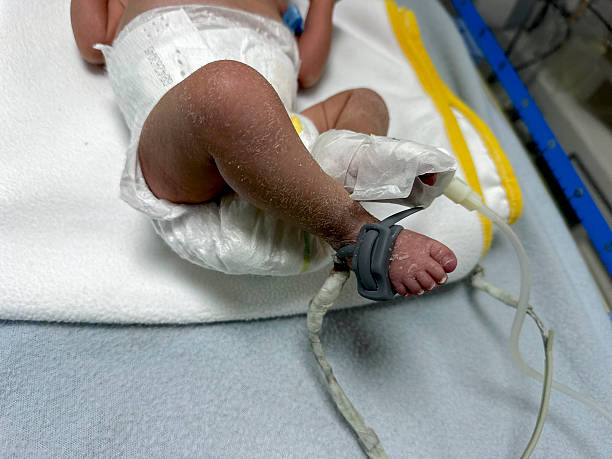
“Most of the infants who die suddenly from cold are premature babies or those weighing less than 2.5 kilograms,” he said. “Their bodies are extremely fragile, and even a small drop in temperature can have catastrophic consequences.”
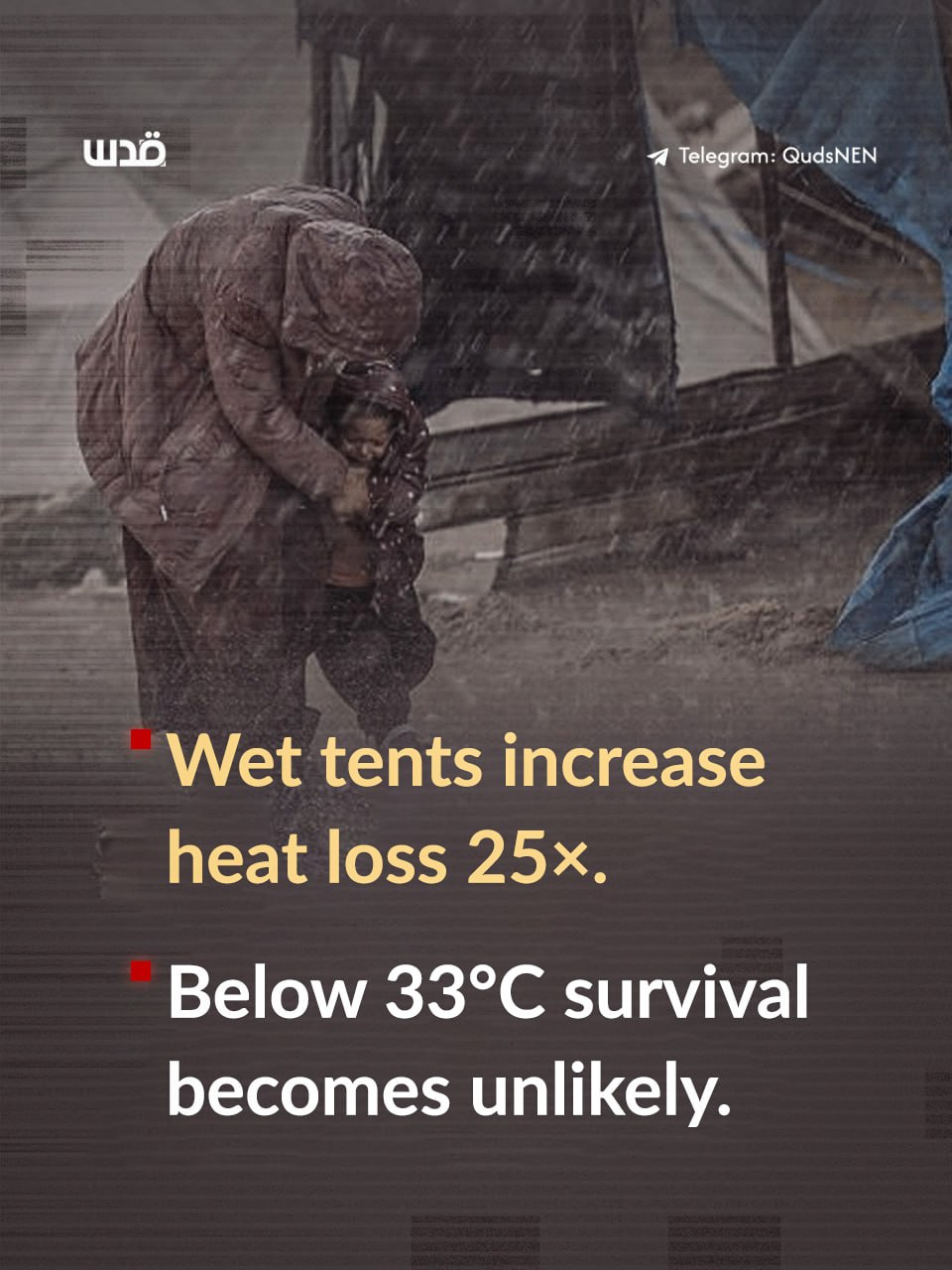
When an infant’s body temperature falls below 33 degrees Celsius, survival becomes unlikely. “At this level, hypothermia causes bleeding in the brain and sometimes the lungs,” Dr. Dhaheer explained. “It also triggers a severe drop in heart rate, and within hours the body stops responding, even to mechanical ventilation.”
Many of the deaths occurred among infants recently discharged from neonatal incubators.
“They left the hospital in relatively good condition,” he said. “But they were returned to environments that were neither suitable nor warm, tents exposed to sea winds. Tragically, they died shortly afterward.”
He recalled a premature infant who had spent a month in an incubator and had reached 1.8 kilograms at discharge. Two weeks later, she was brought back to the hospital dead from cold exposure.
“Each of these deaths is more than a number,” Dr. Dhaheer said. “They are tiny lives with families clinging to hope. When these children are sent back to tents, it is a struggle no infant should have to face.”
Babies at the Highest Risk
According to Zaher Al-Wahedi, Director of the Health Information Department at Gaza’s Ministry of Health, at least seven children have died from extreme cold exposure this season.
“Children are the most exposed to death from cold,” Al-Wahedi told QNN, particularly those born prematurely or with low birth weight.
Newborns lose heat far more quickly than adults due to their body composition. While such risks can be managed in stable environments, they become nearly impossible to control in Gaza’s overcrowded displacement camps.
“Most of the population is living in tents,” he said. “The wind cuts through them, rain soaks them, and the smallest children are left almost completely unshielded.”
Skin-to-skin contact with mothers can reduce risk, but even this is often not enough. Poor maternal nutrition, caused by chronic food shortages, has increased premature births, miscarriages, and fragile newborns.
Al-Wahedi noted that no adult deaths from cold were recorded during this period. The victims are overwhelmingly infants.
Cold That Kills Quietly
At 4°C, many of the body’s basic biological processes begin to slow, and prolonged exposure can quickly lead to hypothermia, organ failure, and death, especially in infants.
When exposed to cold, the body initially shivers to generate heat. In wet conditions, common in Gaza’s coastal camps, heat loss accelerates dramatically.
Infants are especially vulnerable. They cannot shiver effectively or regulate body temperature. They depend entirely on caregivers who are themselves cold, malnourished, and exhausted.
These deaths are preventable. A tent made of nylon and fabric cannot replace a home. An incubator cannot protect a child once that child is returned to freezing conditions. Medical knowledge exists. What is missing is shelter, warmth, food, and safety.
Freezing to death is not dramatic. For infants, it is silent.
For Ahmad Tottah, the loss is permanent.
“I just want my children to be seen,” he told us. “And I don’t want any other father to hold his baby all night, not knowing they are already gone.”
Tags: Anti Zionism, Ceasefire, Children, Collective Punishment, Colonialism, Colonization, Crimes against Humanity, Cultural violence, Direct violence, Ethnic Cleansing, Famine, Gaza, Genocide, Hunger, Israel, Israeli occupation, Palestine, Palestinian Holocaust, Sociocide, State Terrorism, Structural violence, USA, War crimes, Weather
JOIN THE BDS-BOYCOTT, DIVESTMENT, SANCTIONS CAMPAIGN TO PROTEST THE ISRAELI BARBARIC GENOCIDE OF PALESTINIANS IN GAZA.
DON'T BUY PRODUCTS WHOSE BARCODE STARTS WITH 729, WHICH INDICATES THAT IT IS PRODUCED IN ISRAEL. DO YOUR PART! MAKE A DIFFERENCE!
7 2 9: BOYCOTT FOR JUSTICE!
DISCLAIMER: The statements, views and opinions expressed in pieces republished here are solely those of the authors and do not necessarily represent those of TMS. In accordance with title 17 U.S.C. section 107, this material is distributed without profit to those who have expressed a prior interest in receiving the included information for research and educational purposes. TMS has no affiliation whatsoever with the originator of this article nor is TMS endorsed or sponsored by the originator. “GO TO ORIGINAL” links are provided as a convenience to our readers and allow for verification of authenticity. However, as originating pages are often updated by their originating host sites, the versions posted may not match the versions our readers view when clicking the “GO TO ORIGINAL” links. This site contains copyrighted material the use of which has not always been specifically authorized by the copyright owner. We are making such material available in our efforts to advance understanding of environmental, political, human rights, economic, democracy, scientific, and social justice issues, etc. We believe this constitutes a ‘fair use’ of any such copyrighted material as provided for in section 107 of the US Copyright Law. In accordance with Title 17 U.S.C. Section 107, the material on this site is distributed without profit to those who have expressed a prior interest in receiving the included information for research and educational purposes. For more information go to: http://www.law.cornell.edu/uscode/17/107.shtml. If you wish to use copyrighted material from this site for purposes of your own that go beyond ‘fair use’, you must obtain permission from the copyright owner.
Join the discussion!
We welcome debate and dissent, but personal — ad hominem — attacks (on authors, other users or any individual), abuse and defamatory language will not be tolerated. Nor will we tolerate attempts to deliberately disrupt discussions. We aim to maintain an inviting space to focus on intelligent interactions and debates.
Read more
Click here to go to the current weekly digest or pick another article:
PALESTINE ISRAEL GAZA GENOCIDE: