
Citizen Vigilantes: When Fiction Becomes Uncomfortable Reality
IN FOCUS, 13 Jul 2026
Diran Noubar – TRANSCEND Media Service
12 Jul 2026 – In the pantheon of cinematic justice, the vigilante archetype has long served as a cathartic outlet for audiences weary of institutional failure. From the gritty streets of 1970s New York in Death Wish to the precise, almost surgical retribution delivered by Denzel Washington’s Robert McCall in The Equalizer series, these stories thrive because they tap into a universal frustration: what happens when the systems meant to protect us falter?
One version of this fantasy has proven entirely palatable. A highly skilled Black operative systematically dismantles white criminals—Russian mobsters, Italian syndicates, or corrupt elites—with minimal hand-wringing from critics or censors. It remains fiction, empowering and entertaining, and faces no serious calls for suppression.
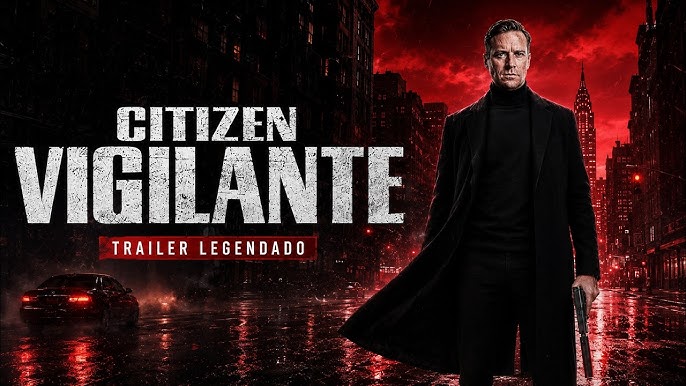
Yet when the mirror is held up to contemporary Europe, the reaction shifts dramatically.
Uwe Boll’s 2026 independent thriller Citizen Vigilante, starring Armie Hammer as Michael Sanders, an American veteran turned self-appointed avenger in an unnamed European city, has ignited precisely this tension. Sanders, disillusioned by the erosion of law and order, begins targeting those he sees as exploiting the continent’s open borders and lenient justice systems—primarily criminal elements among recent migrant populations, alongside the officials and police he views as complicit enablers. The film culminates in stark, unflinching scenes that have fueled both viral clips and vehement debate.
What makes Citizen Vigilante so provocative is not merely its violence—plenty of films traffic in far more graphic fare—but its timing and thematic proximity to documented realities. Across Europe, public concern over migration-linked crime has grown amid statistics showing disproportionate involvement in certain offenses, from sexual assaults to gang violence, in countries like Germany, Sweden, and the United Kingdom. Riots in Belfast and elsewhere have underscored the raw social fractures. The film does not invent these tensions; it dramatizes them in the tradition of vigilante cinema, asking what happens when citizens conclude that authorities have abdicated their core responsibility.
European regulators, however, were not amused. In Germany, the film was initially denied an age rating by the FSK, effectively barring it from theaters, advertising, and mainstream distribution. Officials framed the decision around concerns of inciting violence against migrants. Director Uwe Boll has publicly argued that “youth protection” served as a convenient pretext for suppressing uncomfortable truths about migration and crime. Only after a third review did it receive an 18 rating, allowing limited release.
Here lies the hypocrisy, delivered with exquisite European irony. Cinematic fantasies of extrajudicial justice against white antagonists pass without regulatory outrage. Yet a low-budget, independent production daring to depict a vigilante confronting the very migrant criminality that dominates headlines and dinner-table conversations across the continent is treated as a threat to social cohesion. One wonders whether the offense lies in the film’s content or in its refusal to maintain the polite fiction that all is well with Europe’s grand experiment in mass, largely uncontrolled immigration.
Enter Elon Musk and the platform formerly known as Twitter. In a move that exemplifies the value of open discourse over curated narratives, Musk promoted Citizen Vigilantewidely on X and made the full film available to stream for free for 48 hours. Millions watched. The movie climbed charts in North America. Debate—sometimes heated, sometimes illuminating—erupted into the open rather than festering in suppressed corners. For those who believe sunlight remains the best disinfectant, this was a welcome intervention against soft censorship dressed as safeguarding.
Citizen Vigilante is not a policy paper, nor does it endorse real-world vigilantism. The rule of law, however imperfect, remains civilization’s essential safeguard; citizens taking matters into their own hands carries profound risks of error, escalation, and injustice. What the film does effectively—perhaps too effectively for some—is dramatize the corrosive effects of elite denial. When institutions appear more invested in managing optics than addressing root causes—failed integration, cultural incompatibilities, and the human toll of policies that prioritize volume over vetting—frustration finds outlets. Art that explores this territory deserves scrutiny, not suppression.
The broader “citizen vigilante” phenomenon, both on screen and in whispered public sentiment, reflects a deeper malaise: a growing sense in parts of Europe that the social contract has been renegotiated without consent. Crime statistics, integration failures, and episodic outbreaks of violence have tested the limits of official narratives. Suppressing artistic expressions of that discontent does not resolve the underlying issues; it merely confirms to skeptics that certain truths are too dangerous for open examination.
Citizen Vigilante may be flawed, provocative, and deliberately confrontational. It may not be everyone’s idea of entertainment. But in an age when European governments have shown a troubling eagerness to police speech and imagery that challenges prevailing orthodoxies on immigration, the film stands as a reminder that honest art often discomforts before it enlightens. Thanks to platforms committed to free expression, its message—and the conversation it provokes—could not be easily silenced.
Sometimes the most dangerous idea is simply telling the story that too many prefer to ignore.
_____________________________________________
 Diran Noubar, an Italian-Armenian born in France, has lived in 11 countries until he moved to Armenia. He is a world-renowned, critically-acclaimed documentary filmmaker and war reporter. Starting in the early 2000’s in New York City, Diran produced and directed over 20 full-length documentary films. He is also a singer/songwriter and guitarist in his own band and runs a nonprofit charity organization, wearemenia.org.
This article originally appeared on Transcend Media Service (TMS) on 13 Jul 2026.
Anticopyright: Editorials and articles originated on TMS may be freely reprinted, disseminated, translated and used as background material, provided an acknowledgement and link to the source, TMS: Citizen Vigilantes: When Fiction Becomes Uncomfortable Reality, is included. Thank you.
If you enjoyed this article, please donate to TMS to join the growing list of TMS Supporters.

This work is licensed under a CC BY-NC 4.0 License.
Join the discussion!
We welcome debate and dissent, but personal — ad hominem — attacks (on authors, other users or any individual), abuse and defamatory language will not be tolerated. Nor will we tolerate attempts to deliberately disrupt discussions. We aim to maintain an inviting space to focus on intelligent interactions and debates.