


Jacques Baud and the EU/NATO Censorship Architecture ⛔
TRANSCEND MEMBERS, 29 Dec 2025
Jan Oberg, Ph.D. | Transnational Foundation – TRANSCEND Media Service
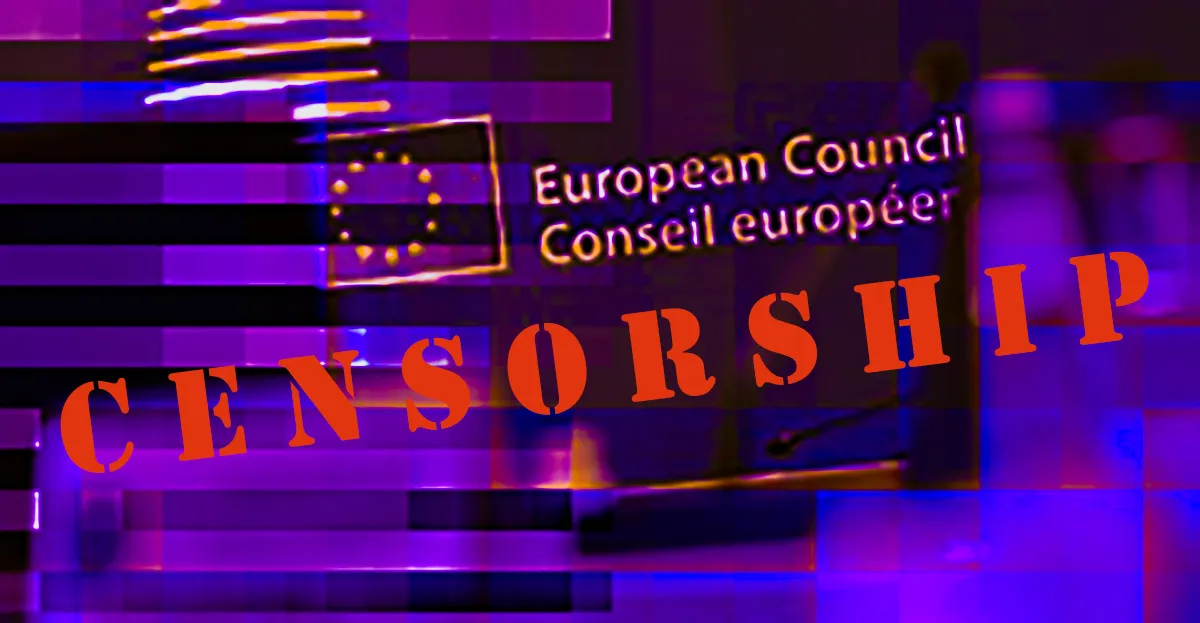
If Baud, then we are all potential targets now!

The West, once proud of its values, now erodes them and thrives on security political disinformative narratives hoping you shall not know…
27 Dec 2025 – Jacques Baud’s case is mind-boggling. A Swiss citizen, a former NATO-, OSCE and UN-related and author who relies mainly on Western sources, has been sanctioned by the European Union. There is no evidence that he worked with or for Russia. His “crime” is interpretation: offering analyses that diverge from the official NATO/EU narrative. There is also no legal process.
This is not an anomaly—it is a window into how censorship now operates in Europe. Baud’s exclusion reveals a hidden architecture of narrative discipline, one that citizens must urgently understand if democracy is to survive.
A Watershed Case
Traditionally, sanctions targeted material support for war: arms, trade, finance. Baud’s case shows a shift toward punishing speech itself. If someone with his credentials can be sanctioned, then anyone who challenges official narratives could be next.
This is why his case matters: it demonstrates that censorship is no longer about silencing hostile propaganda, but about disciplining dissent inside the Western cultural sphere. It is a precedent that should alarm anyone who values democracy and human rights – and you will not read about this case in the West’s politically correct mainstream media.
The Three-Layer Mechanism
Censorship today is not carried out by a “Ministry of Truth.” It is organised through a layered system of hard tools, institutional guidance, and soft persuasion. Together, these layers create what amounts to a shadow-blacklist.
Layer 1: Hard Tools (Law and Sanctions)
At the core are binding instruments. The EU’s Digital Services Act obliges platforms and broadcasters to remove “systemic risks” such as disinformation. The EU Council’s sanctions regime bans individuals and outlets outright. These measures are legal, enforceable, and set the boundaries of permissible speech.
Layer 2: Institutional Guidance (Framing and Analysis)
Around this core are institutions that provide narrative framing. NATO’s StratCom Centre of Excellence in Riga produces reports and “best practices” on hybrid threats. The EU’s East StratCom Task Force runs EUvsDisinfo, labelling certain narratives as disinformation. The European Democracy Shield and the European Centre for Digital Resilience coordinate resilience strategies across member states. These bodies do not censor directly; they stigmatise themes and voices, guiding editors toward conformity.
Layer 3: Soft Tools (Persuasion and Incentives)
Finally, there are soft mechanisms. EU grants and media support programs fund projects that promote “resilience.” Journalists are invited to NATO/EU workshops where they absorb the official vocabulary. Editors who align with guidance gain privileged access to officials and insider briefings. Peer pressure within the European Broadcasting Union reinforces reputational norms. No one is ordered to exclude dissenting voices—but the incentives make it the rational choice.
Be aware that when you see someone analysing or pointing to “Russian disinformation,” this is not an objective activity; it is part of the EU-NATO counter-disinformation by the above-mentioned units. It’s psycho-political projection generated from their own constructed images and narratives.
Have you ever wondered how totally homogenised it is everywhere to call Russia’s invasion of Ukraine ‘unprovoked’ and ‘full-scale’ because it was neither?
Together, these layers form a system in which dissenting analysts are excluded from mainstream coverage. No list is published, but editors act as if one exists. This is the shadow-blacklist effect. We are many – and counting by the day – who know exactly how this works today and has worked for about two decades.
Circumventing Human Rights
What makes this system especially troubling is that it circumvents international human rights law. Article 19 of the International Covenant on Civil and Political Rights guarantees freedom of expression. Restrictions are permitted only if they are necessary and proportionate.
The UN Human Rights Committee has repeatedly ruled that criticism of governments—even sharp criticism—is protected speech. Blanket bans and sanctions on individuals are not proportionate.
Yet by framing dissent as a “security threat,” EU and NATO institutions sidestep these obligations. The protective clause becomes a license for censorship. Baud’s case illustrates this sleight of hand: his writings are treated not as analysis but as hybrid warfare. In reality, this is a human rights violation disguised as security policy.
Weakness and Decline
When criticism is excluded, and international discourse is narrowed down to constructed pro-NATO and pro-EU narratives, it reveals not strength but weakness. A confident system welcomes scrutiny; a fragile one fears it. By silencing dissent, Western institutions admit—without saying so—that they are unsure whether their policies can withstand democratic debate.
This is not the posture of resilience or moral strength. It signals insecurity and is aggravated by mantras and repeated self-aggrandisement and groupthink: We cannot be wrong here in the EU and NATO!
And it fits a larger pattern. The West, once proud of its values, now erodes them in practice. Freedom of expression is curtailed, pluralism sacrificed, and human rights circumvented under the banner of “security.”
Such developments are fully compatible with a civilisation in moral and value decay, struggling to maintain legitimacy while other actors present more attractive modes of operation because they devote their resources and creativity to something more constructive.
The narrowing of discourse is not only censorship—it is a symptom of decline. Citizens must recognise this because the silence imposed on dissenting voices is also the silence of a system unsure of itself.
Why Citizens Must Be Aware
Most citizens believe they are informed because they consume respected outlets. In reality, they are misled by these media’s fabrications and omissions, at least in the fields of foreign and security policy – not to mention the now-unmentionable peace-political field.
Critical perspectives are systematically filtered out. Public service media – mostly state-financed but unmentioned – once guardians of pluralism, now operate within this layered system. Editors self-censor to protect their legitimacy, funding, and access. The result is a narrowing of debate that leaves citizens with curated narratives masquerading as truth.
Baud’s sanctioning proves the apparatus can target anyone, even insiders. If he can be excluded, so can you. And we. Awareness is therefore crucial. Without it, citizens mistake narrative discipline for democratic pluralism.
What is needed now is a “Pravda Moment” – that mainstream media consumers wake up and find, like in the Soviet Union, that most of what they were told was stories, fake, omission and anything but the journalism-produced truth.
I would personally add that the largest single impediment to understanding our world is the mainstream media sector of our societies. Until you stop believing in them…
How to Get Around It
The only way to resist being fooled is to break the habit of consuming only Western mainstream media. Diversify your sources. Read independent think tanks, peace research institutes, and investigative platforms and blogs. Compare coverage of the same event across Western and non-Western outlets. Seek primary sources—UN reports, official documents—rather than mediated summaries. Follow independent analysts who rely on open sources but are excluded from mainstream debate. This is not about trusting Russia or China. It is about breaking away from the monopoly of Western framing.
Conclusion
Jacques Baud’s case is not just about one man; there are now 58 others and 17 ‘entities’ banned by the EU’s politically biased and loose formulations. The way the EU operates, anything can now be labelled “Russian disinformation” if it does not adhere to “Western disinformation.”
There is no legal process, no way to defend yourself – you are banned. Sanctioned. Restricted in movement. Punished. You may not be able to travel, and your funds can be confiscated.
In summary, It is about the architecture of censorship now operating in Europe. The three-layer mechanism—hard tools, institutional guidance, and soft persuasion—creates a shadow-blacklist that narrows debate and excludes dissent. By rebranding criticism as a security threat, EU and NATO institutions circumvent human rights law. Citizens must be aware of this system, because it fools them by omission. To resist, they must read and watch broadly, compare critically, and reclaim pluralism. Use your own common sense.
Only then can democracy survive the shadow-blacklists of today’s panicking kakistocratic militarists.
Essential EU documentation here, here and here.
Recommended reading and watching:
Glenn Diesen’s and Pascal Lottaz’ conversation.
One of many YouTube conversations with Jacques Baud.
More to be added as they come…
__________________________________________
 Prof. Jan Oberg, Ph.D. is director of the independent Transnational Foundation for Peace & Future Research-TFF in Sweden and a member of the TRANSCEND Network for Peace Development Environment. CV: https://transnational.live/jan-oberg
https://transnational.live.
Go to Original – thetransnational.substack.com
Tags: Censorship, European Union, Jacques Baud, NATO, Values System, West
DISCLAIMER: The statements, views and opinions expressed in pieces republished here are solely those of the authors and do not necessarily represent those of TMS. In accordance with title 17 U.S.C. section 107, this material is distributed without profit to those who have expressed a prior interest in receiving the included information for research and educational purposes. TMS has no affiliation whatsoever with the originator of this article nor is TMS endorsed or sponsored by the originator. “GO TO ORIGINAL” links are provided as a convenience to our readers and allow for verification of authenticity. However, as originating pages are often updated by their originating host sites, the versions posted may not match the versions our readers view when clicking the “GO TO ORIGINAL” links. This site contains copyrighted material the use of which has not always been specifically authorized by the copyright owner. We are making such material available in our efforts to advance understanding of environmental, political, human rights, economic, democracy, scientific, and social justice issues, etc. We believe this constitutes a ‘fair use’ of any such copyrighted material as provided for in section 107 of the US Copyright Law. In accordance with Title 17 U.S.C. Section 107, the material on this site is distributed without profit to those who have expressed a prior interest in receiving the included information for research and educational purposes. For more information go to: http://www.law.cornell.edu/uscode/17/107.shtml. If you wish to use copyrighted material from this site for purposes of your own that go beyond ‘fair use’, you must obtain permission from the copyright owner.
Join the discussion!
We welcome debate and dissent, but personal — ad hominem — attacks (on authors, other users or any individual), abuse and defamatory language will not be tolerated. Nor will we tolerate attempts to deliberately disrupt discussions. We aim to maintain an inviting space to focus on intelligent interactions and debates.