


Whither World Order: The Lamentable Present, the Unknowable Future
TRANSCEND MEMBERS, 23 Feb 2026
Richard Falk | Global Justice in the 21st Century – TRANSCEND Media Service
20 Feb 2026 – My responses to Egyptian journalist, Muhamed Abd Elaziz on international law, Gaza, personal experience, and many other topics.
1- Throughout your long career in international law, what was the moment when you felt your work made a real difference?
It is hard to say what qualifies as ‘a real difference.’ In my opposition to the Vietnam War as a scholar of international law I think that I made some difference in the public discourse, especially after years of unexpected resistance by the Vietnamese people inspired by their charismatic leader, Ho Chi Minh. On my return to the USA from my first of two wartime visits to North Vietnam in 1968, I conveyed to the US Government peace proposals more favorable to US interests than what was negotiated by Henry Kissinger several years later. The media gave my trip and proposals prominent attention.
Similarly with respect to the Iranian Revolution of 1978-79 that brought the Islamic Republic of Iran into power, especially as a result of media quotations of my generally supportive opinion of the popularity and legitimacy of the anti-Shah movement.
After I became active in promoting solidarity with the Palestinian struggle for their basic rights my views were excluded from mainstream thinking in the media, Congress, and even in academic circles, although it did not prevent me from being active on oppositional media platforms and among peace/justice civil society groups. My activism climaxed with an unexpected appointment by the UN Human Rights Council to be the Special Rapporteur for Occupied Palestine (2008-2014), which gave me an important venue to advance my views, although it was accompanied by defamatory campaigns to discredit my role as an independent expert reporting on Israel’s systemic violations of International Humanitarian Law and commission of Crimes Against Humanity.
I continued to write books and opinion pieces that expressed my commitment to progressive causes within the US and the world, with abiding efforts to promote denuclearization of international relations, ecological resilience, and anti-colonial/anti-imperial geopolitics, as well as the promotion of US foreign policy position more compatible with the global public good and greater sensitivity to moral imperatives.
2- Which international conflicts do you think were mishandled?
This is a big topic, and I can only give a short response. In my view the peace diplomacy in 1945 and after the Vietnam War, the Cold War, the 9/11 attacks, the Ukraine War, and the October 7 Palestinian attack on Israel’s villages close to the Gaza border were handled particularly poorly from the perspective of sustainable peace, human rights, and the pursuit of world order and global governance reform..
After 1945, the US gave up on a crucial treaty effort to rid the world of nuclear weapons, it oversaw the design of the UN in ways that kept the management of global security under the control of geopolitics rather than Rule of Law, and at first took a non-committal stand against European colonialism. After the Vietnam War, it failed to appreciate that in most instances the legitimacy of anti-colonial warfare prevails in wars overcoming the possession of military superiority by the colonial side and its allies. Its foreign policy elites dedicated themselves to eliminating the ‘Vietnam Syndrome’ by which public opinion in the US opposed intervention and wars fought with no perceived or convincing national security justification; it is generally believed that the Vietnam Syndrome was overcome by the rapid, casualty-light and inexpensive Iraq War of 1991.
After 1945, the Global West, led by the US was far more concerned with preparing for conflict with the Soviet Union than it was with creating a world order respectful of international law and devoted to the global public good. The result was to identify national interests with militarized geopolitics, an expensive and risky arms race, an ideological conflict between market economics and socialism, and producing internal repression of political dissent. After the Cold War, positive modifications with respect to nuclear weapons, climate change, UN reform could have been undertaken, but was effectively resisted by Kissingerian realism premised on beliefs associated with hard power historical agency,
After 9/11 the US without any consideration opted for a global war of terror rather than seeking a more stable framework resting on respect for the sovereignty of states in the Global South, a stronger UN, and cooperative frameworks for the enforcement of criminal law. Instead the US resorted to high tech tactics killing many innocent civilians, displaying no respect for territorial sovereignty in its reliance on drones, shock and awe tactics, with the goal of stricter management of security subject to US global dominance of a unipolar world order.
After the Ukraine War, rather than recourse to diplomacy and a negotiated compromise, to which Russia was receptive, the US-NATO led response chose to wage a geopolitical war against Moscow at the expense of Ukraine and its people. Now four years later the various parties seem unwilling to negotiate in good faith, allowing the killing to continue. It seems likely the war will end as it might have four years earlier by an exchange of negotiated concessions and security reassurances.
After the October 7 attack on Israel launched from Gaza, Israel initiated a genocidal assault with the backing of leading Western countries, with spillovers to the West Bank and region. The genocidal strikes continued killing at least 80,000 Palestinians and were implicitly linked to the Israeli quest for ‘Greater Israel’ that called for the erasure of any Palestinian resistance, either by ethnic cleansing or total victimization. The nature of the alignments on either side of this conflict exposed the Islamophobic reflex of the leading Western liberal democracies and the heartless quest for Jewish primacy in Israel even if meant institutionalizing a harsh version of apartheid.
3- How do you see the state of human rights internationally today?
The observance of human rights has declined in recent years, especially in the liberal democracies of the West, but also reflecting authoritarian and xenophobic trends throughout the world, and in virtually all leading sovereign states. The voluntary adherence to the norms of international law with respect to human rights has also been negatively affected by the failure to address Israeli apartheid and genocide, and the widespread repression of pro-Palestinian solidarity protests and policy initiatives. The internal curtailments of human rights in the leading liberal democracies has also set back all efforts to increase compliance with human rights legal standards.
4- How would you assess the current role of the United Nations in resolving existing conflicts, such as those in the Middle East or Palestine?
The UN is weaker than it has ever been since ir was established in 1945. This partially the result of the UN’s inability to protect the Palestinian people, and others, from Israel’s defiance of international law, highlighted by the refusal to respect Palestinian basic rights, above all, the right of self-determination, related rights of resistance to its denial in this kind of settler colonial context, and reaction to Israeli uses of force against several neighboring countries. This has been dramatized by allowing Israel and the United States to oversee in a manipulative manner the current ceasefire arrangements and control the future of Gaza, institutionalized in the shameful Board of Peace, which rewards the perpetrators of genocide and severely punishes its victims.
5- If you could change one previous international decision, which one would it be and why?
It was the decision back in 1945 to entrust the management of global security to non-accountable geopolitical actors, accorded an exemption from a legal duty to comply with the UN Charter. A closely related decision, important symbolically and substantively, was to impose accountability for war crimes only on civilian, military, and corporate leaders of the losers in World War II, coupled with the refusal to allow legal scrutiny of the crimes of the winners. The winners were expected by the American prosecutor, Justice Jackson to adhere in the future to the standards imposed on the losers at Nuremberg but consistently failed to do so with impunity.
6- Is it possible for the Iran nuclear deal to be revived and for Iran, the US, and Israel to live in peace?
It seems doubtful so long as the US steadfastly supports Israel’s patterns of hegemonic security policies applied not only to the Palestinian people, but to neighbors that either are sympathetic with the Palestinian ordeal, most notably Iran, or are perceived by Israel’s leaders to pose future obstacles to its goals of hegemonic regionalism. Peace in the region also depends on the West giving up its ideas about prevailing in an inter-civilizational struggle between the Islamic Middle East and the Christian West, a current struggle whose deep psycho-political and economistic roots can be traced back to the Christian Crusades of earlier centuries.
For regional peace to prevail in the Middle East to six interrelated steps must be taken: self-determination for Palestine, Israeli renunciation or drastic revision of Zionist ideology seeking ‘Greater Israel’ and regional hegemony; ending all US sanctions imposed on Iran; Israel’s giving up its nuclear weapons capability coupled with a monitored treaty to make the Middle East a nuclear free zone; the establishment of a Truth and Reconciliation Commission that critically examines the various versions of the Israeli and Palestinian narratives from the time of the Balfour Declaration in 1917 forward to the present; s negotiated cap on military spending and sales by Israel; a Declaration of Coexistence based on ethnic equality, and signed by both Heads of State and reinforced by a pledge of Permanent Members of the Security Council to suspend. any use of the veto in connection with any recurrences of the Israel/Palestine conflict.
7- In your opinion, did the US and Israeli strikes succeed in destroying Iran’s nuclear facilities?
Of course, it is impossible to know with any precision, but all signs suggest that Iran has restored its enrichment facilities, which may both enhance its defensive capabilities and make it more vulnerable to further (unlawful) attacks by Israel and/or the United States. There is no justification in contemporary international law with respect to preventive war, including to prevent the proliferation of nuclear weaponry.
8- Do you think the current Iranian regime is facing an existential challenge, and how do you see the future of the Islamic Republic?
The Islamic Republic has proved remarkably successful over the decades in opposing external and internal opposition to the stability of national governance and to the protection of its rights as a sovereign state. Iran has been unfairly dealt with respecting its nuclear program, given Israel’s and the US hostility, threats, and uses of force since 1979. It is the core example of the doctrinal application of the clash of civilizations hypothesis that assumed policy relevance throughout Atlanticist region in the post-Cold War global setting. Trump’s pro-Israeli diplomacy has intensified the challenge of military attack and regime-changing interventions, but his transactualism could also lead to some kind of pragmatic agreements that would include a long-deferred normalization of relations with the Islamic Republic. Trump’s brand of narcissistic geopolitics includes a willingness to make abrupt and unexpected policy shifts.
9- Did the IAEA play a secret role in revealing the uranium enrichment levels to Israel and the US?
It seems the IAEA was the victim of Western geopolitical manipulations, but it is difficult to set forth reliably the fully story without access to the classified inner activity that led to these irresponsible IAEA reports on the restoration of Iranian enrichment capabilities.
10- What do “ICC” and “ICJ” need to have stronger enforcement mechanisms?
The ICJ to be stronger at the stage of enforcement would benefit from a curtailment of the P5 right of veto in all instances where the issue is one of ICJ enforcement. The GA could also urge compliance or even the imposition of sanctions, not with the force of a legal obligation, but as a moral duty.
The ICC, which unlike the ICJ, is not part of the UN System and relies on the treaty framework of the Rome Statute for its operations has currently no means of enforcement beyond the voluntary compliance of non-parties, which include the three leading geopolitical actors of our time, Russia, China, and the United States. A strong GA resolution might produce various kinds of pushback by sovereign governments and civil society actors that could increase pressure for both compliance and success. An alternative would be a UN Charter amendment giving the GA authority to enforce the judgments of both international tribunals. Such an innovation would depend on the P5 to recommend unanimously that such an amendment be adopted..
In the end, the political will of major states would be decisive in many instances, either to induce compliance or to support non-compliance. At present, most governments are resistant to obligations that encroach on national sovereignty, but in this setting of enforcing ICJ (including Advisory Opinions) and ICC decisions have a greater formal claim if the state in question is a member of the UN or a party to the Rome Statute.
11- Did Israel try to win you over to its side during your time as the UN Special Rapporteur on the situation of human rights in Palestine?
No, they made no attempt after losing their opposition to my appointment as Special Rapporteur at the Human Rights Council. Their entire effort during the six years I served as an unpaid UN appointee was to discredit me as an objective observer, accusing me of ethnic bias in repeated defamatory smears. Sadly, the UN exhibited little support even when I was detained in an Israeli airport prison facility while on a UN mission seemingly responsive to inflammatory comments from UN Watch, an NGO that devotes its energies and resources to the aggressive and often unscrupulous defense of Israel against critics, resorting to lies and insults. It is a sign of UN weakness that UNW is neither disciplined in its behavior or more appropriately delisted by the UNOSOC as possessing UN representational credentials.
12- How do you see the changes in Gaza and the entire Middle East since 7 October?
Although the future is unknowable, especially given a variety of factors, and hopeful possibilities should not be excluded from the political imagination although the present circumstances make the near future looks dark from perspectives that favor constructive responses to Palestinian grievances, greatly aggravated by Israel’s recourse to genocide for more than two years, flagrantly violating the Genocide Convention. The entire world witnessed in real time the horrifying daily images of the cruelty of the genocide, as well as Israel’s defiant posture, and the shocking civilizational support Israel received from the white Christian world on the first few months after October 7. At the same time, Trump is mercurial leader capable of making abrupt changes in the US role, already somewhat evident clinging to a two-state solution contrary to Israel’s wishes, although vaguely promised, and then only to be realized at some distant point in the future. It does appear to counter Israel’s present drive to establish Greater Israel as soon as possible. However, such a pledge is not without its contradictions. These are mainly shown by the absence of US criticism of Israel’s indulgence, if not encouragement of settler violence in the West Bank, an approach more consistent with de facto annexation than of any serious effort to demand that Israel policies meet the preconditions for establishing a viable Palestinian state. At present, without even the courtesies of deception, Israel seems more determined than ever to make any form of Palestinian statehood less and less feasible or desirable.
Besides this, Israel and the US pay no attention to the 2024 ICJ Advisory Opinion clearly obligating to withdraw from all three Occupied Palestinian Territories, a judicial outcome endorsed overwhelmingly by a GA resolution.
13- Do you see President Trump’s plan as an US occupation of Gaza?
It is a somewhat original joint colonizing vision to be implemented by a multi-state ‘Board of Peace, advantageous for Israel, punitive for the Palestinians, and under the uncontested partisan leadership of Donald Trump. It is in my view a disgrace that the UN Security Council unanimously endorsed the Trump Plan in SC Res 1803, which is a symbolic vindication of Israel’s genocide and a further punitive framework for the indefinite subjugation of Palestinians to a blend of ethnic cleansing and a harsh version of apartheid. Whether the outrageous Trump idea of supervising the reconstruction of Gaza to be the Riviera of the Middle East is situated somewhere on a policy spectrum linking predatory disaster capitalism to imperial geopolitics, and hopefully it is the imperial fantasy of a displaced realtor, and like many such flights of fancy, never to be realized.
14- During your meeting with Ayatollah Khomeini, what exactly took place between you? How would you describe the impact of that encounter on you?
In January 1979 I was accompanied by Ramsey Clark, former US Attorney General, and Donald Luce, an anti-war religious leader, accepting an invitation from Mehdi Bazargan, the Interim President of the Islamic Republic, asking me to form a small delegation to visit Iran so as to have direct contact with the revolution and its leaders during the climactic days that were on the verge of producing victory for the popular movement of opposition to the Shah. During our time in Iran the Shah abdicated as his downfall as Iran’s leader became the only unfinished business of the victorious revolution. It was a perfect moment to have this conversation with symbolic leader of this revolution that surprised the world by its successful resistance to the Shah’s repressive apparatus.
While we were still in Iran, just prior to Ayatollah Khomeini’s return to Iran, we were told that because our visit was viewed as a success we were told that as a surprise reward we were being offered the opportunity to meet with Ayatollah Khomeini on our way back to the United States at his exile residence in a suburb of Paris/.
We had rhe meeting sitting in a circle within a large tent on the lawn of his residence. We covered many topic of lasting significance, but the one that remains uppermost in my memory was Ayatollah Khomeini’s initial questions to us as to whether, unlike in 1953, the United States would accept the will of the Iranian people and be open to normal diplomatic relations, which was his preferred future provided it was not a ruse to induce the new leadership to drop its guard.
We also inquired about the wellbeing of the Jewish minority, and his response was reassuring: “Judaism is an authentic religion, and if Jews do not involve themselves as agents of Israel, it would be a tragedy for us if they left Iran.” I came away from our several hours sitting on the ground in the tent with the distinct impression that Ayatollah Khomeini’s had a distinct preference for a peaceful diplomatic future with the West. Unfortunately, due to a number of factors, this has remained ‘the road not taken’ and to quote the renowned American poet, Robert Frost’s final line of the poem,.’and that has made all the difference.’
There is much else of interest that transpired at that meeting, including our impressions of this charismatic historic religious leader, but that would unduly lengthen my response, and will be saved for another occasion.
15- Why did you receive death threats for several years after your New York Times article titled “Trusting Khomeini,” and how did you deal with it?
Of course, I do not know the true motivations of those who transmitted death threats. It was more than disagreement with my assessments. I suspect it was to make me fear the consequences if I did not remain silent in the future. These threats did not alter my strong conviction that the US Government should at least test the willingness of Iran’s new leadership to act in accord with this stated desire for normal diplomatic relations based on mutual respect and shared benefits. It was an opportunity missed to demonstrate that the US was ready to grant legitimacy to the outcome of internal national struggles to shape the political identity of a sovereign state, an essential feature of the right of self-determination.
Because the road taken by all US leaders was one of confrontation and hostility toward the Islamic Republic, not in keeping with a rational assessment of US national interests,, it challenged the new leadership in Iran to give the highest priority to regime security and territorial defense. Whether these preoccupations were responsible for the harsh and seemingly intolerant policies of theocratic governance is impossible to discern. Interpreting whether the decades that followed might have been different if the US and Israel had not constantly Iranian historical anxieties about the past is a matter of pure speculation. Perhaps, a more convincing picture will emerge if Iranian policy insiders offer a careful analysis of how the security threats and destabilizing policies spearheaded by Israel, backed by the main members of the Atlanticist political community that emerged after World War II, turned governance into an understandable obsession with national security and regime stability.
16- Do you believe the George W. Bush administration was complicit in the 9/11 attacks? Do you possess any information that you haven’t previously published?
I am not an expert on the ongoing debates about what really happened on 9/11, but I do know that there are many loose ends and unanswered questions in the official version of the alleged Al Qaeda attacks. There is no present receptivity in Washington to opening the issue to objective scrutiny by an independent international commission of inquiry.
I have not seen any convincing evidence of active complicity by George W. Bush beyond the well-established facts of complacency in the face of warnings of some kind of terrorist attack. The immediate launch of the Great Terror War was a regressive response, but consistent with the policy impulses of the ‘foreign policy elites’ that control the shaping of US national interests. An additional source of suspicion arose because the US was being pushed by Israel to adopt an anti-Iraq position in the Middle East. It is doubtful that the 2003 Iraq War would have been launched without the camouflage of the 9/11 attacks, which provided a falsely constructed rationale for engaging aggressively against any adversary of the United States, especially in the Middle East. It is worth revisiting ‘the clean break’ neocon manifesto drawn up with encouragement from Israeli leaders in the 1990s.
__________________________________________
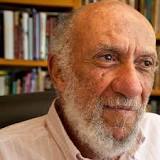 Prof. Richard Falk is a member of the TRANSCEND Network, of the TRANSCEND Media Service Editorial Committee, Albert G. Milbank Professor Emeritus of International Law at Princeton University, Chair of Global Law, Faculty of Law, at Queen Mary University London, Research Associate the Orfalea Center of Global Studies at the University of California, Santa Barbara, and Fellow of the Tellus Institute. He directed the project on Global Climate Change, Human Security, and Democracy at UCSB and formerly served as director the North American group in the World Order Models Project. He also is a member of the editorial board of the magazine The Nation. Between 2008 and 2014, Falk served as UN Special Rapporteur on Human Rights in Occupied Palestine. His book, (Re)Imagining Humane Global Governance (2014), proposes a value-oriented assessment of world order and future trends. His most recent books are Power Shift (2016); Revisiting the Vietnam War (2017); On Nuclear Weapons: Denuclearization, Demilitarization and Disarmament (2019); and On Public Imagination: A Political & Ethical Imperative, ed. with Victor Faessel & Michael Curtin (2019). He is the author or coauthor of other books, including Religion and Humane Global Governance (2001), Explorations at the Edge of Time (1993), Revolutionaries and Functionaries (1988), The Promise of World Order (1988), Indefensible Weapons (with Robert Jay Lifton, 1983), A Study of Future Worlds (1975), and This Endangered Planet (1972). His memoir, Public Intellectual: The Life of a Citizen Pilgrim was published in March 2021 and received an award from Global Policy Institute at Loyala Marymount University as ‘the best book of 2021.’ He has been nominated frequently for the Nobel Peace Prize since 2009.
Go to Original – richardfalk.org
Tags: Conflict Analysis, Gaza, Genocide, George Bush II, Human Rights, International Court of Justice ICJ, International Criminal Court ICC, International Law, Iran, Israel, Palestine, Trump, USA, United Nations, World, World Order
DISCLAIMER: The statements, views and opinions expressed in pieces republished here are solely those of the authors and do not necessarily represent those of TMS. In accordance with title 17 U.S.C. section 107, this material is distributed without profit to those who have expressed a prior interest in receiving the included information for research and educational purposes. TMS has no affiliation whatsoever with the originator of this article nor is TMS endorsed or sponsored by the originator. “GO TO ORIGINAL” links are provided as a convenience to our readers and allow for verification of authenticity. However, as originating pages are often updated by their originating host sites, the versions posted may not match the versions our readers view when clicking the “GO TO ORIGINAL” links. This site contains copyrighted material the use of which has not always been specifically authorized by the copyright owner. We are making such material available in our efforts to advance understanding of environmental, political, human rights, economic, democracy, scientific, and social justice issues, etc. We believe this constitutes a ‘fair use’ of any such copyrighted material as provided for in section 107 of the US Copyright Law. In accordance with Title 17 U.S.C. Section 107, the material on this site is distributed without profit to those who have expressed a prior interest in receiving the included information for research and educational purposes. For more information go to: http://www.law.cornell.edu/uscode/17/107.shtml. If you wish to use copyrighted material from this site for purposes of your own that go beyond ‘fair use’, you must obtain permission from the copyright owner.
Join the discussion!
We welcome debate and dissent, but personal — ad hominem — attacks (on authors, other users or any individual), abuse and defamatory language will not be tolerated. Nor will we tolerate attempts to deliberately disrupt discussions. We aim to maintain an inviting space to focus on intelligent interactions and debates.