



Interrogating the Iran War as a ‘War of Choice’: Political Realism vs Peace Journalism
EDITORIAL, 23 Mar 2026
#943 | Prof. Richard Falk – TRANSCEND Media Service
In reporting on the Iran War as ‘the ultimate war of choice,’ the New York Times spoke, as usual in the language of political realism, which is the lingua franca of the foreign policy elite in the Atlanticist alliance consisting of the self-anointed ‘liberal democracies.’ It is definitely a more refined and less objectionable manner of labeling an unprovoked ‘war of aggression’ than the utterances of the U.S. president, Donald Trump, who has even had the audacity to trivialize the bloodshed and devastation traumatizing Iran’s innocent population as ‘an excursion.’ His language is so ill-suited to wartime by the political leadership of a sovereign country putting its own citizens, including members of the armed service, at uncertain risk. It not only demeans whatever policies are being advocated, such formulations bordering on the jovial convey an impression of unstable pathology, an attitude of extreme insensitivity to human suffering or ecological disruption in an adversary sovereign state.
If there had been lofty goals of the Iran War they would be discredited by these words: “We took a little excursion because we had to, to get rid of some evil, and I think it is going to be in a short-term excursion.” Even if the U.S. stops attacking today, there is no assurance that Israel will not persist, but even if both countries were to stop immediately, the aftermath of this war will leave many burning embers afflicting the lives of the Iranian people, and even their Middle East neighbors. Such a partial discrediting of this constitutionally unauthorized and internationally unlawful war that due its secondary effects on the poor and vulnerable has already spread lethal harm far beyond the borders of Iran, indeed, throughout the world.
Trump’s War in Iran
Trump initially rationalized the unprovoked war against Iran as justified by the alleged repression of the Iranian people by the governing theocracy, using missiles and bombs while urging the Iranian people to take the country back as if he cared.
He secondarily cited Iran’s engagement in arming and funding Islamic terrorism, which public opinion even in the West increasingly regards not as terrorism but as legally justified collective resistance to the violent encroachment of the U.S. and Israel upon the sovereignty of Middle Eastern countries, and especially of partnering with Israel, aborting the rights of the Palestinian people while championing Israel’s project of territorial expansion and state terrorism. sustained by apartheid rule and recourse to genocidal tactics, and additional aggressive moves against such helpless adversaries as Lebanon and Syria. Thirdly he voiced concern about Iran’s nuclear program that was supposedly obliterated in the US/Israeli war a year earlier but somehow in the short interim not only revived but was augmented by sophisticated missile capabilities.
In essence, Trump without bothering to address nuances, is speaking the same language as Washington’s foreign policy elites in and out of government that control the political discourse of the U.S. State Department, and the Potomac River security-minded Washington think tanks. These foreign policy professionals purport to proffer objective advice on how to promote national interests, while hiding their affinities with and loyalties to CIA/Pentagon/Private Sector arms dealers/Israeli ambitions. While Trump’s narcissistic geopolitics is polarizing even in America, political realists have deep roots in the bipartisan political consciousness of the two major political parties. In my judgment both of these political parties bear responsibility for their deep failure to realize that the U.S. deep engagement with the world is contributing to apocalyptic dangers that could and should be mitigated with a sense of urgency.
Trump highlights these dangers by his mercurial petulant style that frightens more rational and humane political actors, both among rivals and allies, into submission as illustrated by bullying even the UN Security Council into lending its unanimous support for his Board of Peace while remaining silent during the prolonged Israeli genocide in Gaza and about the two wars of aggression against Iran. [see S/Res/1803, 13-0-2, Nov 17, 2024] And as shockingly, a similarly unanimous resolution, with the astonishing abstentions of Russia and China, that condemns Iran’s retaliatory strikes at American military assets in the region, while rejecting a separate resolution condemning the U.S./Israel attack. [S/Res/2817, 13-0-2, Mar 11, 2026]
Never before have the political organs of the UN given such support to a flagrant violator of the most basic of human rights or of its core prohibition of aggression in the UN Charter, and given it by a consensus that included countries of the Global South, including regional Islamic neighbors of Israel and Iran, even inducing geopolitical rivals, Russia and China, to withhold their right of veto by abstaining in circumstances that might have lessened the damage to the UN reputation and even its legitimacy. It stretches the political imagination beyond its breaking point to anticipate U.S. geopolitical forbearance at the UN in response to comparable transgressions by Russia or China.
Washington ‘Political Realism’: Special Interests Dominate
Political realists shift their less professional discourse away from ‘wars of choice’ by a reliance on the terminology of national interests. In effect, this is an implicit endorsement of ‘wars of choice’ as a viable option for US foreign policy in the aftermath of the Cold War. That such a rationalization persists in the post-colonial world where nationalist mobilizations have since the Vietnam War achieved a record of political victories for militarily inferior adversaries seems inattentive to changes in ‘reality,’ particularly the decline in the agency of military superiority to determine the political outcomes of international conflicts. To be sure these ‘victories’ by the military underdog often couple the defeat of the US foreign policy with the lasting effects of massive human suffering and widespread devastation for the political victor, producing national destinies of chaos and internal strife as has been the experience in Libya, Afghanistan, Iraq, and Yemen.
National Interest ‘Political Realism’
Despite the claims of realism, this dominant ideology of imperial foreign policy, drawing on the political unity of the anti-Fascist struggle in World War II and the Cold War, rigidly excludes even the most eminent of self-styled ‘political realists’ who adopt dissenting views about the priorities of national interests. For instance, academic personalities who reflect the policy views of liberals in North America such as John Mearsheimer and Stephen Walt who have among the hard-core political realist credential of high repute are excluded from the inner circle of foreign policy elites, while neocon extremists and even lobbyists are welcome. These two stalwart international relations experts, in contrast, were national interest theorists oblivious to subservience to special interests, with the consequence of excluding themselves from the main lines of foreign policy debate by Washington insiders.
Their defining act of policy defiance was to author a book almost two decades ago arguing that the unconditional support of Israel was contrary to U.S. national interests, a realist messaging that Washington definitely was not prepared then or now to hear despite the mounting evidence despite the rising public criticism of Israel’s behavior, including the dramatic decline of Jewish support. [See Mearsheimer & Walt, The Israel Lobby and U.S. Foreign Policy (2007)] Stephen Walt has a lead article in the current issue of the influential journal of the Council of Foreign Policy, Foreign Affairs, that criticizes from realist perspectives the U.S./Israel partnership in the Middle East as courting future disaster by its recent patterns of behavior that he labels as ‘predatory hegemon.’
Walt concedes that such a foreign policy orientation may have short-term benefits for the U.S. in terms of wealth and power, and capacity to induce fear, but from a longer view of national interests is costly so far as legitimacy, reputation, stability, and effective promotion of national interests is concerned as measured by domestic as well as internationalist benefits. [Walt, “The Predatory Hegemon: How Trump Wields American Power,” Foreign Affairs, March/April 2026]. It is relevant to note that the Council on Foreign Relations, headquartered in New York, is also constituted by an elite membership adhering to a version of political realism that is midway between the special interest realists of Washington and the critical realists of the Walt/Mearsheimer mold that produce a more objective account of a preferred national interest approach to foreign policy. From my ‘realist’ it also falls short by its relative inattention to the global agenda of systemic challenges, ranging from nuclearism to global warming, that is, in the failure to emphasize sufficiently the imperatives of cooperative geopolitical relations that presuppose respect for international law even in relation to the management of global security.
The Invention of ‘Wars of Choice’ as Political Realism of Extremism
The language of wars of choice is useful to those favoring controversial foreign policy initiatives. This language excludes any serious consideration of the relevance of international law and morality in the process of operationalizing national interests. Its effect is to make wars seeking control of energy resources or the overthrow of governments, even if democratically elected, that dare pursue policies dictated by the imperatives of economic nationalism, rational targets of regime changing coups and alleged promotion of democratizing state-building exercises. Wars as with Iran, allegedly to prevent the proliferation of nuclear weapons to countries perceived as hostile, winks at the covert acquisition of nuclear capabilities of partners such as Israel. For almost a century, aggressive war has been declared unlawful in the Pact of Paris (1928), a legal guidelines relied upon by the victors in World War II to prosecute and punish surviving German and Japanese military commanders and political officials, and codified in the Nuremberg Principles as Crimes against Peace.
Normatively Conditioned Political Realism: Law, Morality, and Universality
Shifting perspectives, what would political realism look like if guided by the ethos of law and morality used to appraise the behavior of the losers in World War II? It would give priority to responsible statecraft by the victors in an era of interdependence, ecological fragility, nuclear weaponry, and a variety of technological innovations that pose shared global challenges, which if not addressed, risk catastrophic occurrences. Such an understanding of contemporary reality should have led the architects of the UN Charter to draft better guidance of global governance.
It was a serious mistake of the winners in the war to leave geopolitical actors unregulated in their discretionary pursuit of strategic ambitions beneath the legitimating umbrella of national interests. This facilitated acquisition of wealth, the promotion of trade and finance, and the manipulation of the internal politics of other countries, but by neglecting reliable means to promote the global public good it cast a dark shadow of the prospects of future generations.
__________________________________________
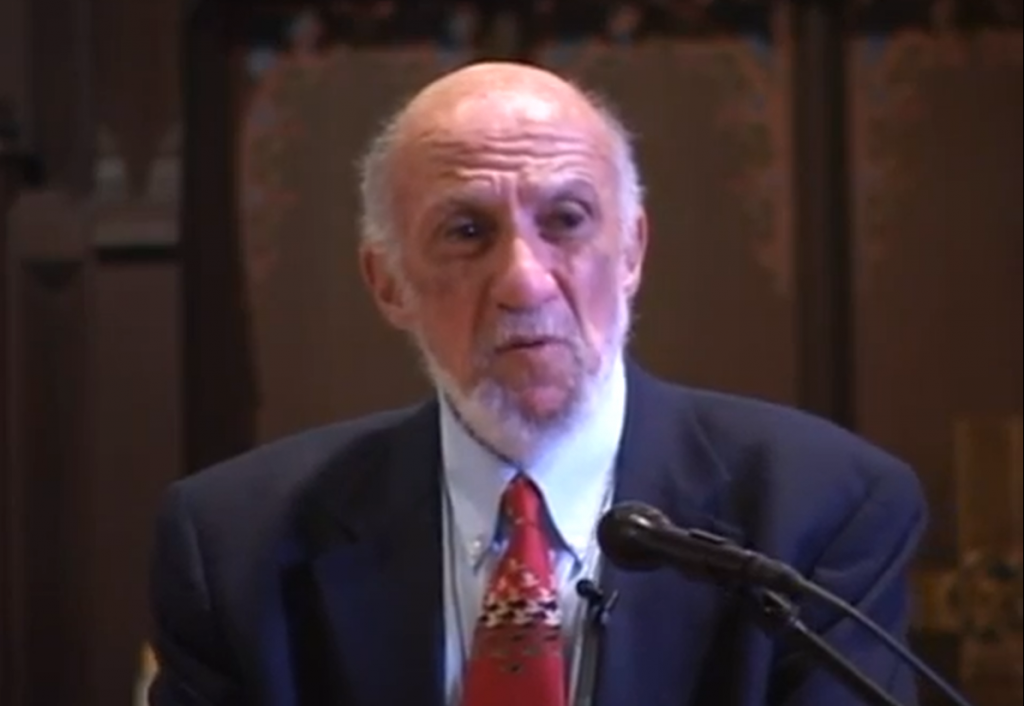 Prof. Richard Falk is a member of the TRANSCEND Network, of the TRANSCEND Media Service Editorial Committee, Albert G. Milbank Professor Emeritus of International Law at Princeton University, Chair of Global Law, Faculty of Law, at Queen Mary University London, Research Associate the Orfalea Center of Global Studies at the University of California, Santa Barbara, and Fellow of the Tellus Institute. He directed the project on Global Climate Change, Human Security, and Democracy at UCSB and formerly served as director the North American group in the World Order Models Project. He also is a member of the editorial board of the magazine The Nation. Between 2008 and 2014, Falk served as UN Special Rapporteur on Human Rights in Occupied Palestine. His book, (Re)Imagining Humane Global Governance (2014), proposes a value-oriented assessment of world order and future trends. His most recent books are Power Shift (2016); Revisiting the Vietnam War (2017); On Nuclear Weapons: Denuclearization, Demilitarization and Disarmament (2019); and On Public Imagination: A Political & Ethical Imperative, ed. with Victor Faessel & Michael Curtin (2019). He is the author or coauthor of other books, including Religion and Humane Global Governance (2001), Explorations at the Edge of Time (1993), Revolutionaries and Functionaries (1988), The Promise of World Order (1988), Indefensible Weapons (with Robert Jay Lifton, 1983), A Study of Future Worlds (1975), and This Endangered Planet (1972). His memoir, Public Intellectual: The Life of a Citizen Pilgrim was published in March 2021 and received an award from Global Policy Institute at Loyala Marymount University as ‘the best book of 2021.’ He has been nominated frequently for the Nobel Peace Prize since 2009.
Tags: Bullying, Direct violence, Evil empire, Invasion, Iran, Israel, Khamenei, Middle East, Netanyahu, Official Lies and Narratives, Peace Hoax, Proxy War, Regime Change, Rogue states, State Terrorism, Structural violence, Trump, US empire, USA, Warfare, Zionism
This article originally appeared on Transcend Media Service (TMS) on 23 Mar 2026.
Anticopyright: Editorials and articles originated on TMS may be freely reprinted, disseminated, translated and used as background material, provided an acknowledgement and link to the source, TMS: Interrogating the Iran War as a ‘War of Choice’: Political Realism vs Peace Journalism, is included. Thank you.
If you enjoyed this article, please donate to TMS to join the growing list of TMS Supporters.

This work is licensed under a CC BY-NC 4.0 License.
6 Responses to “Interrogating the Iran War as a ‘War of Choice’: Political Realism vs Peace Journalism”
Write a comment to Alberto Portugheis
We welcome debate and dissent, but personal — ad hominem — attacks (on authors, other users or any individual), abuse and defamatory language will not be tolerated. Nor will we tolerate attempts to deliberately disrupt discussions. We aim to maintain an inviting space to focus on intelligent interactions and debates.
Richard,
noticed
I am shocked to read “Never before”. To me it is simply you “never before” noticed, as you do now, that the political organs of the UN always give “such” support to flagrant violators of the most basic of human rights.
And the most basic Human Right is the Right to LIFE. This is why if today you kill your neighbour, the Police arrests you, takes you to Court and the Court sends you to prison. You’re considered a criminal.
But te UN Mafia accepts the Armed Forces, large groups of men and women who governments have the right to train in the Art of fighting, torturing, killing, destroying families, societies, buildings, Nature, infrastructure and the economy.
This sinister organisation, UNO, that I call International War Club, appoints for the top job a “Secretary”. What do secretaries do? everything that will keep their employer happy. That is the secretary has to ensure his paymasters fulfill their projects, war projects included.
If the UN REALLY wanted to prohibit aggressions, as they write in the UN Charter, they would prohibit the Armed Forces and the war Industry.
As the late Maj. Gen. Smedley D. Butler said “War is a Racket”; it is the industry of Death and Destruction.
ONLY he Universal Abolition of of Militarism.
I correct and complete the end of my message
As the late Maj. Gen. Smedley D. Butler said “War is a Racket”; it is the industry of Death and Destruction. And LEGAL!!!!!
ONLY the Universal Abolition of Militarism will validate the UN Charter and the UN Declaration of Human Rights
[…] Interrogating the Iran War as a ‘War of Choice’: Political Realism vs Peace Journalism […]
Dear, Respected, Senior Professor Richard Falk, may I respectfully respond to your editorial in TMS, The Solutions Orientated Peace Journalism
A Spiritually Elevated Biophotonic Reflection on Professor Richard Falk’s Analysis of the Iran War
Professor Richard Falk’s sober examination of the ongoing Iran War, framed as a “WAR OF CHOICE” concealed beneath the rhetoric of “political realism”, reveals once again how the engines of militarism cloak aggression in diplomatic language. He notes that the war has been trivialized at the highest levels of U.S. leadership, described even as an “excursion,” despite causing widespread devastation for the Iranian people and igniting secondary harms across the region and the world.
Such minimisation of suffering represents not only a political failure, but a spiritual rupture.
The Biophotonic Truth of Human Existence
Across spiritual traditions, humanity is understood not merely as biological matter, but as beings of light, both metaphorically and scientifically. Our biophotonic coherence reflects the degree of harmony within the human soul and across human society. When communities resonate with compassion, unity, and justice, their light intensifies and synchronizes.
Violence, however, especially violence launched under false pretenses, fractures this coherence.
Professor Falk identifies precisely such fractures when he highlights that this war was neither defensive nor compelled by imminent threat, but rather an unprovoked act rationalized through the narrowed lens of strategic self interest. With this recognition, he exposes the moral deafness that accompanies modern militarism.
War as a Darkness That Obscures the Human Light
When powerful states choose war over diplomacy, and when international institutions such as the United Nations fail to intervene with clarity or conviction, an ancient and familiar shadow descends. This shadow is not merely geopolitical, it is ontological.
War produces biophotonic decoherence:
• The intrinsic light within individuals becomes dimmed.
• The collective moral field becomes disturbed.
• Nations lose their capacity to perceive one another as reflections of the same divine source.
Professor Falk’s warnings about the spread of harm far beyond Iran’s borders, affecting the poor, the vulnerable, and entire interconnected societies, serve as reminders of how darkness radiates outward when destructive choices are made by those in positions of overwhelming power.
The UN’s Silence: A Fracture in the Global Moral Lattice
When the very institutions entrusted to uphold peace remain inert in the face of escalating aggression, the moral lattice that binds humanity becomes weakened. Such paralysis enables war to metastasize and deepens human suffering.
Other contemporary analyses corroborate Professor Falk’s concerns, noting the immense civilian casualties, the destabilizing economic consequences, and the absence of genuine legal or moral justification for the war, effects that continue multiplying with little restraint.
This institutional silence is not only a political failing; it is a sign of moral desynchronization within the global community.
Restoring the Light: A Peace Propagator’s Invocation
From an elevated spiritual vantage, the pathway forward requires more than ceasefires or diplomatic strategies. It requires a re illumination of the human spirit.
Let humanity remember:
• We are beings of coherent light, created for empathy, resonance, and unity.
• War is a deliberate distortion of our divine architecture.
• Peace is the natural frequency of the human soul, where our inner photons align, our consciousness expands, and our compassion flows unimpeded.
Thus, Professor Falk’s critique is not merely a geopolitical analysis; it is a call to repair the cosmic fabric.
It is a call to:
• Resist narratives that normalize aggression.
• Reassert the sanctity of human life over the calculus of power.
• Rekindle the biophotonic luminosity that resides within every human being.
Wherever injustice, militarism, and suffering dominate, our work as peace propagators is to restore coherence, re harmonize the moral field, and illuminate a path toward healing, all peoples, all nations, all traditions, one shared light.
Closing Benediction
• May humanity rediscover its inner radiance.
• May the light within each soul grow strong enough to dissolve the shadows of war.
• May we, as one human family, return to the sacred frequency of peace.
In spiritual solidarity, biophotonic coherence, and the eternal pursuit of peace,
Respectfully submitted by Hoosen Vawda: UKZN, Nelson, R. Mandela School of Medicine, Peace Propagator, Durban, South Africa.
https://www.transcend.org/tms/2025/08/light-of-life-the-synchronised-biophotons-and-photobionts-a-novel-hypothesis-part-2/
TRANSCEND MEDIA SERVICE » The Lord of the Dances, a Sanctuary of Motion
Dear Professor Richard Falk as a senior, highly respected, member of the Transcend Network, senior professorial member of numerous tertiary institutes and of the Transcend Media Service, Editorial Committee, I write to you in my humble capacity, to propose that a special memorandum be sent to the United National by the collective membership of the Board, contributors and readers of the Transcend Media Journal, to submit an appeal, as I have taken the liberty to draft and respectfully submit for your consideration and call to action by TMS.
United Nations Humanitarian and Peace Appeal
Draft Memorandum for Consideration by The Transcend Media Service Executive Committee
Dated: 23rd March 2026
Draft prepared by: Hoosen Vawda (Peace Propagator), for consideration by TMS
I. Rationale and Purpose of this Memorandum
This memorandum seeks TMS Executive Committee approval to submit an urgent humanitarian appeal to the United Nations (UN) calling for immediate executive action to prevent further escalation of the Iran War of 2026, which multiple scholarly analyses, including that of Professor Richard Falk, identify as a “war of choice” rather than necessity (Falk, 2026).
The war threatens:
• regional and global stability,
• the safety of millions of civilians,
• and international peace under the UN Charter.
II. Basis for the Appeal
1. The War Lacks Legal Justification
Independent analyses affirm the absence of an imminent threat from Iran prior to the conflict:
• Intelligence assessments and expert commentary reveal that Iran had neither initiated nor prepared attacks warranting pre emptive force (Gillespie, 2026).
• This places the conflict in violation of UN Charter Articles 2(4) and 51, as highlighted by Professor Falk (2026).
2. Severe Humanitarian Catastrophe
Reliable assessments document:
• hundreds of civilian deaths, including children,
• destruction of hospitals, schools, and critical infrastructure,
• mass displacement and community collapse (Center for American Progress, 2026).
The UN has a statutory obligation to protect civilian populations from unnecessary suffering.
3. Escalating Regional Instability
Studies show that the war has:
• destabilised the Gulf region,
• triggered proxy escalations,
• endangered neighbouring states,
• disrupted the Strait of Hormuz, through which 20% of global oil flows (Al Jazeera, 2026).
4. Global Economic Shockwaves
The Atlantic Council warns of:
• unprecedented market volatility,
• energy price surges,
• global supply-chain disruptions,
• heightened risk of recession (Kroenig, 2026).
This war is no longer a regional conflict, it is a global humanitarian crisis.
III. Why the United Nations must act now
1. The UN’s Mandate Under the Charter
The UN was established to “save succeeding generations from the scourge of war.”
Failure to act undermines:
• international security,
• global confidence in collective governance,
• and the credibility of the global peace architecture.
2. Historical Precedent of Failure
As seen in Iraq (2003), Gaza (2023–2025), and Syria, Security Council paralysis has repeatedly enabled humanitarian disasters. The current Iran War replicates this pattern.
3. The Nuclear Shadow
With three heavily armed states engaged, Israel, Iran, and the United States, the risk of miscalculation is non trivial.
Unchecked escalation could make the 2026 Doomsday Clock move dangerously closer to midnight.
IV. Recommended actions for The United Nations
The memorandum requests that the UN pursue the following six urgent measures:
1. Emergency Special Session of the UN General Assembly
Convene under the Uniting for Peace Resolution (1950) when the Security Council is deadlocked.
2. Immediate Ceasefire AND Humanitarian Corridors
To allow:
• medical relief,
• civilian evacuation,
• infrastructure repair.
3. Appointment of a UN Special Envoy or Rapporteur
To investigate:
• legality of the war,
• civilian casualties,
• potential war crimes.
4. UN Supervised Peace Negotiations
Engage:
• Iran,
• the United States,
• Israel,
• Gulf Cooperation Council (GCC) members,
• neutral mediators.
5. Stabilisation of Global Energy Supply
Coordination with OPEC, EU, AU, and ASEAN to prevent global economic collapse.
6. Investigation of Arms Industry Influence
Given evidence that the war benefits U.S. military-industrial corporations (Center for American Progress, 2026), the UN must examine the role of weapons profiteering.
V. Ethical and Spiritual Basis of The Appeal
Ubuntu Philosophy
Ubuntu teaches: “I am because you are.”
A war of choice violates the core of our shared humanity.
Harm to one nation becomes harm to all.
Biophotonic Coherence Framework
Conflict fractures the innate moral and luminous field binding human beings.
Peace restores coherence, dignity, and spiritual integrity.
Universal Religious Teachings
All major traditions affirm:
• sanctity of life,
• prohibition of unjust war,
• accountability of leaders,
• duty to protect the vulnerable.
The war violates these universal moral principles.
VI. Recommendation to the TMS Executive Committee
It is recommended that:
A. TMS endorses the memorandum as a collective institutional position
This amplifies moral weight and academic authority.
B. The memorandum be submitted jointly by:
• TMS Founder Prof. Johan Galtung (if possible),
• Prof. Richard Falk,
• the TMS Editorial Board,
• and TMS Peace Scholars.
C. The memorandum be dispatched to:
• The UN Secretary General,
• President of the UN General Assembly,
• UN Office for the Coordination of Humanitarian Affairs (OCHA),
• UN Human Rights Council (UNHRC),
• Non Aligned Movement (NAM) leadership.
VII. Conclusion
This memorandum urges the United Nations to fulfil its founding purpose.
The 2026 Iran War is a preventable catastrophe.
Without immediate intervention:
• civilian deaths will continue,
• regional escalation is likely,
• global markets may collapse,
• the nuclear threshold could be crossed.
The moral responsibility now lies with the global community to act decisively.
Prepared for TMS Executive Consideration
With humility, respect, and devotion to global peace.
Hoosen Vawda
Peace Propagator
Contributor To Transcend Media Service, Solutions Orientated Peace Journalism
UKZN, Nelson R. Mandela School of Medicine
Durban, South Africa
Dear Professor Richard Falk,
Thank you very much for your wonderful and insightful essay. It inspires me very much, but at the same time I find it rather difficult for me to follow exactly your reasoning and grasp the essence of the paper. You point out that the words uttered by the U.S. president Donald Trump such as ‘a short time excursion’ are supported by Washington’s foreign policy elites in and out of government. But I doubt they really accept such extremely insensitive utterances of the U.S. president.
I understand that your ‘realist’ is based on law, morality, and universality. But how can it be realized?
You seem to be finding the answer in the history of World WarⅡ insisting that it was a serious mistake of the winners in the war to leave geopolitical actors unregulated. As a Japanese I would like to add losers in the war to the statement above. And my answer to the question: Undo the serious mistakes of the winners and losers did to the world all along after the war was over.