



The Foundations of Communal Peace: Sustaining Threatened Languages as Peace Infrastructure Part 1
TRANSCEND MEMBERS, 9 Mar 2026
Prof Hoosen Vawda – TRANSCEND Media Service
“When languages shine, hearts resonate and peace becomes coherent.”[1]
“Peace speaks many languages, but it is heard most clearly in the mother tongue.”[2]
This publication is suitable for general readership. Parental guidance is recommended for minors who may use this research paper, as a resource material, for projects.
The author invites and welcomes any comments or discussions, by the readership. (vawda@ukzn.ac.za)
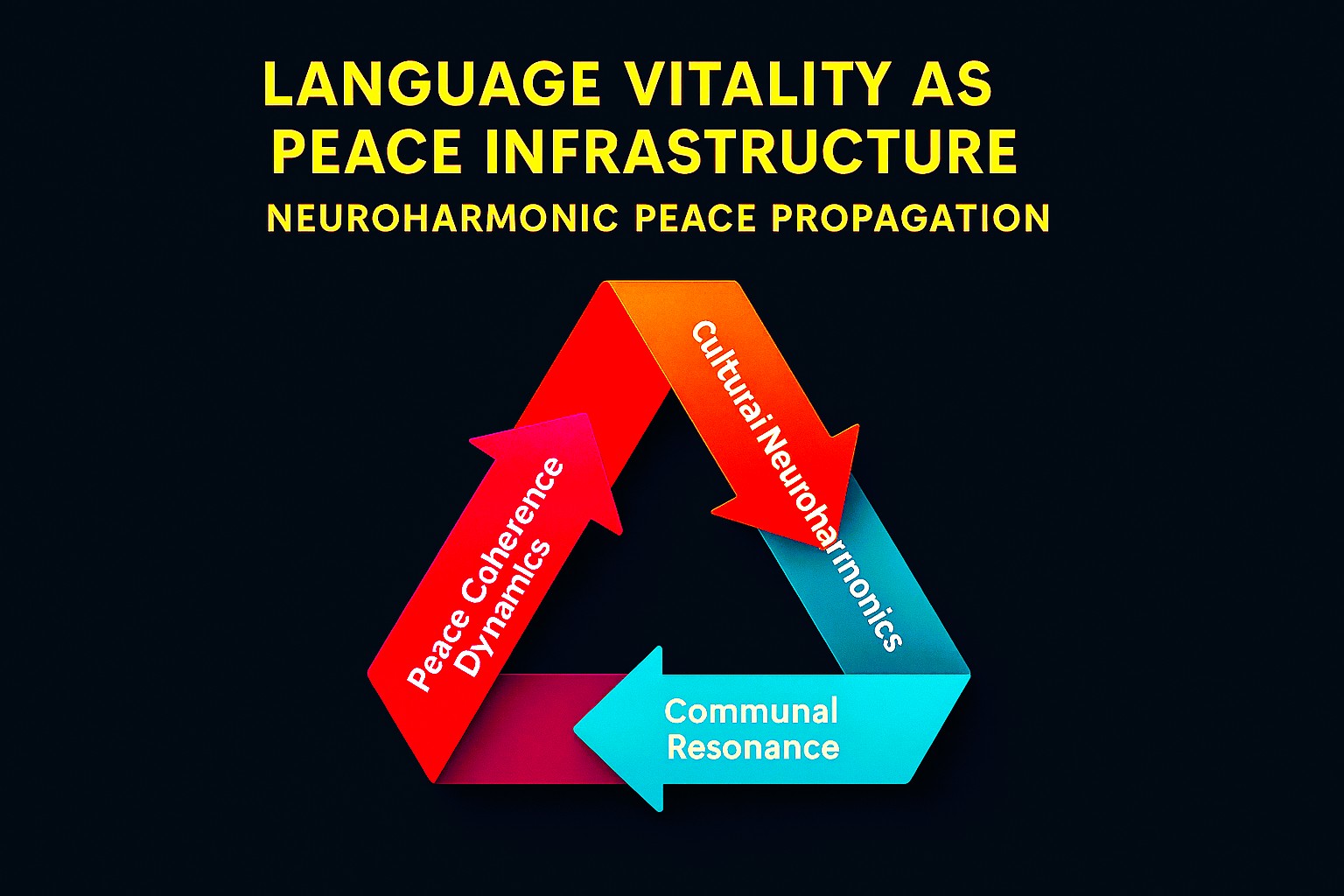
Language vitality strengthens social harmony, for no community stays peaceful when its voice fades. Peace grows where languages meet, because each language teaches us how to recognise the other as fully human. Original Graphic Conceptualised by Mrs V. Vawda, March 2026
Prologue: “A Lamp for the Road”, The first episode in the Trilogy
Every enduring peace begins long before a treaty is signed. It begins in the words a child first hears, in the proverbs a grandparent treasures, in the rhythm of prayer and poetry that teach a people how to speak gently, even when they disagree. This Trilogy sets out a simple, civilisational claim languages are not only instruments of communication; they are instruments of recognition of diverse cultures, a respect for their millennia old traditions and religions. This “Trilogy of Trinity” will present the topic of languages in three parts, as follows:
- Part I establishes the foundation: threatened languages, Urdu, Telugu, Hindi, and the African, Nguni cluster, as peace infrastructure because they house shared meanings, ethical grammars, and intergenerational bridges.
- Part II turns to the heart of the matter: the Mandela–Ubuntu–Language hinge, where mother‑tongue recognition becomes the moral grammar of dignity, umuntu ngumuntu ngabantu.
- Part III descends from principle to practice, proposing the Neuroharmonic Peace Propagation (NPP) study to measure how language vitality fosters recognition, trust, and Peace Sustainability, so that policy, pedagogy, and community work can be guided by solid evidence-based documentation, not emotional nostalgia.
This is an odyssey toward a multilingual future in which rights, resources, and rituals move in concert, and where communities are held together by the most human of bonds: language that speaks to the heart without forsaking the mind.
The author has written extensively about Peace Propagation and formulated the concept of Endogenous[3] and Exogenous Peace[4] as well as proposed new theories about propagative peace.[5],[6],[7], [8], [9]. He has also incorporated the uniquely South African concept of Ubuntu Peace philosophy, the Vawdaian peace theory and the Emeritus, late Professor Johan Galtung’s peace presentations to counteract global belligerism [10] across continents, by peace disrupting governments, in recent months. The author has concertedly attempted to embark on this project as a Peace Protagonists,[11] Human aggression comes from biophotonic disruption and reptilian-brain dominance. The Human Proclivity towards Peace, underlines the neuro-psychological evolution of the human consciousness itself.[12]
- Introduction
Peace is not merely the absence of open conflict; it is the durable presence of shared meanings, ethical vocabularies, and intergenerational bonds that allow diverse people to live together with dignity. In culturally plural societies, these conditions are cultivated as much in households, mosques, temples, schools, and community halls as in parliaments or courts. At the heart of this everyday cultivation lies language. Heritage and indigenous languages carry the idioms of care, the rituals of remembrance, and the metaphors of moral life that communities use to recognise one another and negotiate difference. When these languages erode, what diminishes is not simply a code of communication but a living archive of belonging. Recent commentary on Urdu captures this poignantly, describing it as a “vessel carrying centuries of tradition, literature and artistic expression” and warning of a “creeping threat” of attrition among youth, as English becomes the dominant language of aspiration and urban life.[13] South Africa’s own experience reinforces the structural stakes: its Constitution explicitly recognises the historically diminished use of indigenous languages and mandates “practical and positive measures” to elevate their status and advance their use, an admission that linguistic decline is neither natural nor harmless, and that redress is a constitutional obligation, not a luxury.[14]
This Part I of our trilogy advances a tempered but vital thesis: sustaining threatened languages, Urdu, Telugu, Hindi in the South African diaspora and the Nguni cluster (isiZulu, isiXhosa, siSwati, isiNdebele) among indigenous communities, functions as peace infrastructure. By peace infrastructure we mean those cultural systems that encode empathy, restraint, recognition, and trust in the ordinary conduct of life. The argument is neither nostalgic nor purist. It is evidence‑led and context‑aware: widespread analyses note that, despite South Africa’s multilingual legal framework, English still dominates high‑status domains such as schooling, administration, and media, leaving indigenous languages with less institutional oxygen than their official status implies; the effect is a gap between rights on paper and practice on the ground.³ Meanwhile, in diasporic settings, heritage languages like Urdu face transmission challenges as younger generations gravitate to English for education, employment, and social media, trends that analysts have flagged as urgent for communities seeking to maintain cultural coherence without rejecting cosmopolitan opportunities.[15]
The historical record shows that robust language ecologies do more than preserve words; they seed publics capable of subtle moral reasoning, ironic critique, and plural coexistence. Urdu’s formation, rooted in a Khariboli substrate[16] and infused over centuries with Persian, Arabic, and Turkic, illustrates how contact, translation, and patronage can generate a bridge language that mediates across strata and faiths.[17] Under the Mughals, translation bureaus, courtly and urban literary circuits, and Sufi networks enabled a golden period of Urdu poetry (18th -19th centuries), especially in Delhi and Lucknow. The ghazal, qasida, and masnavi did more than ornament elite life; they cultivated a shared repertoire through which love, loss, metaphysics, satire, and ethics could be debated, a civic imagination that normalised difference without dissolving into discord.[18] Complementing this, the Nguni languages of Southern Africa, while distinct, constitute a closely related cluster with significant mutual intelligibility, an internal pluriverse that historically enhanced social intelligibility across communities.[19] This built‑in cross‑comprehension is not trivial; it is a linguistic resource for practical Ubuntu, making the everyday work of understanding “the other” less effortful and less fragile.
Yet late‑modern pressures place these ecologies under strain. Global prestige economies, assessment regimes, and digital attention markets concentrate rewards around a handful of lingua francas. In South Africa, scholarship tracking the path from apartheid‑era language oppression to the democratic multilingual settlement shows that, despite constitutional ambition, implementation hurdles persist and English remains structurally ascendant, especially in schools and media.[20] This matters for peace because domain loss, when indigenous or heritage languages retreat from education, administration, or expressive culture, erodes the very channels through which communities practise recognition and transmit norms of restraint. The concern is not opposition to English or multilingual mobility; rather, it is the attenuation of heart‑languages that carry the inherited etiquette, proverbs, blessings, and idioms through which people feel seen and understood.[21],[22]
To set the conceptual stage for the trilogy, Part I consolidates three foundational claims:
- Language vitality underwrites communal cohesion. When mother‑tongue use remains active across home, worship, education, and cultural events, communities maintain shared meaning systems that stabilise trust and intergenerational reciprocity. This is consistent with South Africa’s policy logic (elevate and advance indigenous languages for equitable participation) and with institutional efforts, such as the University of KwaZulu‑Natal’s policy to intellectualise isiZulu alongside English, demonstrating concrete routes for status planning and corpus development.² [23], [24]
- Historical flourishing models plural peace. Urdu’s Mughal‑era literary expansion (and later golden period) shows how translation, patronage, and public poetics build cultural refinement and civic capacity; Nguni mutual intelligibility shows how internal multilingual proximity lowers barriers to everyday understanding, both mechanisms that matter for social harmony.[25], [26]
- Contemporary erosion is peace‑relevant. Where indigenous languages are under‑implemented despite official status, and where heritage languages like Urdu lose intergenerational purchase, the soft tissues of peace (recognition, empathy, and dignity in interaction) thin out. The result is not immediate conflict but fragility: a higher likelihood of misunderstanding, a weaker sense of “we‑ness,” and less resilience when stressors arrive.[27],[28]
Methodologically, this Part I provides the historical, cultural, and policy groundwork for the trilogy. Part II will develop the philosophical hinge by bringing together Mandela’s language ethos, that mother‑tongue address reaches the heart, and Ubuntu’s [29]relational anthropology, articulating a normative case for linguistic recognition as a precondition of dignified coexistence. (The literature on the so‑called Mandela quote shows how he operationalised the principle in practice, including his deliberate use of Afrikaans to build trust, an applied ethics of linguistic recognition.) [30], [31] Part III then translates these insights into an empirical design, the Neuroharmonic Peace Propagation[32] (NPP) framework, testing the pathway Language Vitality [33] → Shared Meaning/Recognition → Trust/Empathy → Peace Sustainability, with instruments tailored to South African conditions and diasporic realities.
In sum, Part I argues that sustaining threatened languages is a forward‑looking peace strategy. It does not deny the pragmatic value of global lingua francas[34]; it refuses the false choice between cosmopolitan participation and cultural continuity. Instead, it frames language revival, Urdu, Telugu, Hindi in diaspora; Nguni languages at home, as peace work: the maintenance of the cultural circuits through which people feel known, obligations are humanised, and difference is negotiated without humiliation. As South Africa’s constitutional architecture insists, multilingualism is a matter of equity and dignity; as Urdu’s literary history shows, it is also a matter of imagination and grace.[35], [36]
- Theoretical Background: Language as Cultural and Ethical Infrastructure
Understanding why threatened languages matter for peace requires moving beyond conventional definitions of language as a neutral tool of communication. Languages are not interchangeable codes. They are cultural infrastructures: repositories of memory, carriers of ethical sensibilities, containers of emotion, and channels of recognition. When they weaken, the socio‑cultural scaffolding that supports communal trust and belonging weakens with them.
2.1 Language as a Repository of Memory and Identity
Heritage and indigenous languages encode the stories, metaphors, idioms, proverbs, and moral lessons through which communities transmit their cosmologies and self‑understandings. Analyses of Urdu demonstrate this vividly: Urdu is described as a “vessel carrying centuries of tradition, literature and artistic expression”, with its decline reflecting not just linguistic loss but the erosion of cultural continuity and emotional vocabulary among younger generations.
The Nguni linguistic continuum[37] (isiZulu, isiXhosa, siSwati, isiNdebele) illustrates another dimension of linguistic memory: mutual intelligibility embedded across related languages. This continuum, documented as a connected group with shared morphological systems and high cross‑comprehension, functions as a regional archive of interconnected identities, making intergroup communication smoother and less prone to fragmentation.
In both cases, language operates as an intergenerational bridge. When it weakens, individuals may remain proficient in global languages but become estranged from the symbolic universe of their ancestry.
2.2 Language as Ethical Grammar and Communal Orientation[38]
Languages carry culturally specific norms of politeness, kinship etiquette, conflict‑avoidance, and modes of respectful address. In South Africa, the philosophical system of Ubuntu, rooted in Nguni linguistic and moral traditions, articulates a worldview in which personhood is realised through communal relations: umuntu ngumuntu ngabantu (“a person is a person through other persons”) . Ubuntu scholarship highlights its emphasis on communalism, shared values, and interconnectedness, framing social harmony not as coincidence but as an inherited ethical practice preserved through language, proverb, and narrative .
Thus, language becomes a moral medium: it carries principles of reciprocity, humility, hospitality, and restraint. As Ubuntu philosophers note, ethical obligations are not abstract rules but are embedded in everyday ways of speaking and relating. When indigenous or heritage languages recede from public and family life, these ethical grammars lose their natural channels of transmission.
2.3 Language, Emotion, and Recognition
A growing body of linguistic and cognitive research affirms that emotional resonance is strongest in one’s mother tongue. This aligns with the well‑documented observation that the affective salience of native‑language expressions surpasses that of foreign‑language equivalents. Analyses of Mandela’s linguistic approach, particularly his use of Afrikaans to build rapport in contexts of severe power asymmetry, underscore the heart–mind distinction: speaking in another’s mother tongue generates trust, recognition, and empathic opening in a way that second‑language address rarely accomplishes .
This relational dynamic is critical for peace. A language is not merely a means of conveying information; it is a means of conveying acknowledgement. When communities feel linguistically recognised, they experience social dignity and inclusion. Conversely, when their languages are marginalised, so too is their sense of belonging.
2.4 Language Vitality as a Predictor of Social Cohesion
Ethnolinguistic vitality theory holds that languages with strong institutional support, intergenerational transmission, and high cultural valuation tend to sustain group cohesion. Where institutional support is weak, as scholars of South African language policy repeatedly observe, indigenous languages remain symbolically recognised but practically marginalised in education, administration, and the media. This disconnect creates space for social alienation, linguistic insecurity, and the weakening of communal ties.
In contrast, revitalisation efforts such as the emerging isiZulu linguistic renaissance, fuelled by media visibility and community pride, demonstrate that intentional valuation and active use can reverse decline and invigorate communal belonging.
These cases show that language vitality is not an aesthetic goal; it is a structural condition for sustained social cohesion.
2.5 Language as Peace Infrastructure: Conceptualising the Link
The concept of peace infrastructure traditionally refers to civic institutions, regulatory frameworks, and social mechanisms that reduce conflict vulnerability. Expanding this definition, we propose that languages operate as cultural peace infrastructure, enabling:
- Shared meaning, which reduces misunderstanding.
- Recognition and dignity, which reduce resentment.
- Cross‑generational coherence, which reduces cultural drift.
- Ethical continuity, which sustains norms of restraint and respect.
- Communal empathy, the emotional substrate of peaceful coexistence.
This framing aligns with South Africa’s constitutional logic: by mandating measures to elevate historically marginalised indigenous languages, the Constitution implicitly positions linguistic equality as foundational to democratic harmony and equitable participation in public life.
Similarly, the University of KwaZulu‑Natal’s policy to intellectualise isiZulu[39] demonstrates an institutional recognition that linguistic empowerment strengthens not only academic access but community dignity and cohesion.
2.6 Summary: Why This Theoretical Background Matters
The theoretical argument can be distilled into three claims:
- Languages are cultural repositories, encoding memory, identity, and inherited ethical sensibilities.
- Languages structure recognition, shaping how individuals and communities experience dignity and belonging.
- Language vitality directly influences peace, because weakened languages fracture the moral and emotional fabric that sustains communal harmony.
These claims form the conceptual foundation on which Parts II and III will build.
Part II develops a philosophical–ethical lens (Mandela + Ubuntu), while Part III formalises the empirical model (NPP) that tests the causal pathway:
Language Vitality → Shared Meaning → Empathy and Trust → Peace Sustainability.
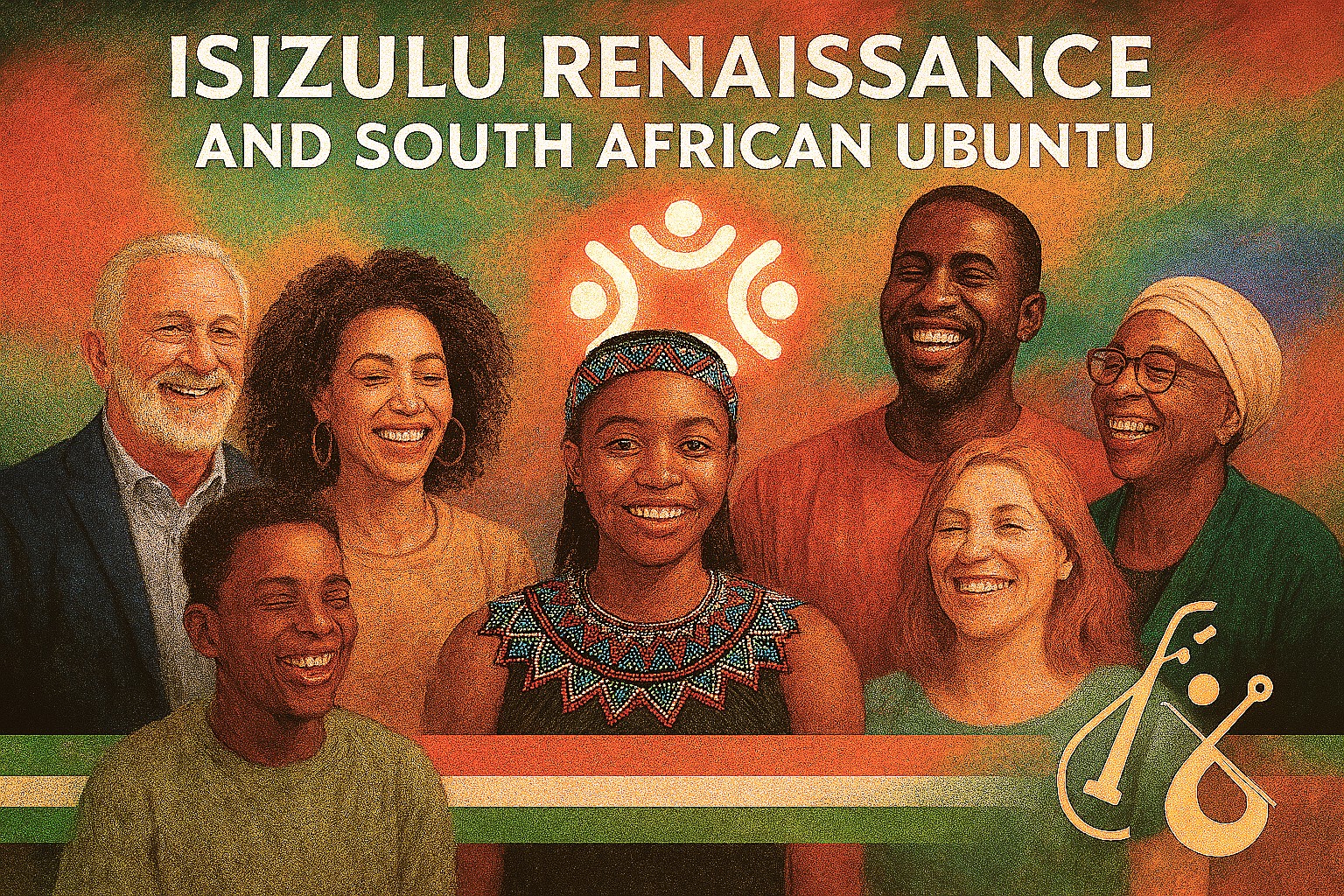
Three harmonies meet here, Ubuntu, cultural resurgence, and linguistic vitality, forming the triad that anchors South Africa’s enduring peace. Through the fusion of indigenous symbolism, languages and heritage artistry, South Africa reaffirms its Rainbow Nation ideal: unity forged through linguistic and cultural coexistence, ensuring sustained communal Peace.
Original Graphic Conceptualised by Mrs V. Vawda, March 2026
- Historical Foundations: How Strong Language Ecologies Foster Peace
This section traces how Urdu emerged and flourished within multilingual polities, and how the Nguni cluster’s internal mutual intelligibility historically lowered barriers to everyday understanding. Together, these histories illustrate the civilisational conditions under which language ecologies become incubators of cultural refinement, education, and peaceful coexistence.
3.1 Urdu’s Composite Formation: Contact, Translation, and Civic Imagination
Urdu’s origins lie in sustained contact among Indo‑Aryan vernaculars (notably Khariboli) and Persian, Arabic, and Turkic at military, commercial, courtly, and Sufi interfaces from the Delhi Sultanate onward; the language consolidated as a cosmopolitan bridge in North India during the Mughal era. Its very name, from the Turkic ordu (“camp”), encodes this intermingling, an idiom capable of speaking across ranks and communities while retaining Indic syntax and absorbing Perso‑Arabic lexicon and script.
Under the Mughals, translation bureaus and courtly literary cultures fostered a multilingual ecology where Persian (administrative, elite), Sanskrit (learned/religious), and emerging Urdu interacted productively. The state sponsored inter‑literary translation (e.g., Persian renderings of Sanskrit epics), while Sufi networks and urban markets diffused shared forms and metaphors. Such infrastructural and devotional circuits created “publics of sentiment,” wherein ethical and metaphysical discourse circulated in accessible registers.
By the 18th-19th centuries, as imperial power waned, Delhi and Lucknow crystallised a “golden period” of Urdu poetry. Genres such as the ghazal, qasida, and masnavi matured in diction and philosophical reach; poets, Mir Taqi Mir, Ghalib, Sauda, Nazir, and later Iqbal, refined an aesthetics of irony, self‑interrogation, and spiritual longing that ordinary listeners could recognise as their own moral struggle. Patronage, salons (mushāʿira), and print enabled a civic imagination that normalised disagreement without rupture, a subtle peace dividend of a rich language ecology.
Crucially, Urdu’s growth depended not only on courtly sponsorship but on patron–poet networks spanning Deccan and North India, from Mohammad Quli Qutb Shah in Golconda[40] to Bahadur Shah Zafar in Delhi[41]; the tradition linked brilliant figures from Amir Khusrau to Ghalib, creating a trans‑regional literary economy that rewarded nuance, satire, and ethical critique. These networks mapped culture onto everyday life, giving communities a shared figurative repertoire for negotiating status, love, grief, and power, social resources that temper conflict.
3.2 Education, Refinement, and Urbanity in the Urdu Sphere
The Mughal milieu catalysed curricular and pedagogical developments (madrasas, maktabs, private tutelage) where Persian and Urdu anchored literacy, correspondence, and belles‑lettres. Court histories, didactic prose, and Persian–Urdu translations enriched a common bookshelf. This literary pluralism, Persian for administration and high scholarship; Urdu for wider urban communication, paralleled the growth of urban civility: conventions of address, etiquette (adab), and dialogic performance that trained citizens in verbal restraint and mutual recognition.
These refinements mattered for peaceful coexistence. When communal life is saturated with shared proverbs, meters, and tropes, disagreements tend to remain discursively contained, argued within a familiar rhetorical house rather than on the street. The ordinary person could contest authority with wit, allusion, and intertextual appeal, turning potential agon into regulated agonistics.
3.3 The Nguni Linguistic Continuum: Mutual Intelligibility as Social Capital
In Southern Africa, the Nguni languages, isiZulu, isiXhosa, siSwati, isiNdebele, form a closely related dialect continuum. Their shared Bantu morphology (notably the noun‑class system), overlapping lexicons, and historically convergent phonologies generate high degrees of mutual comprehension, often enabling cross‑variety conversation without formal instruction. Scholars regularly describe the cluster as both a genetic subgroup and a typological continuum, helping to explain why many speakers understand one another’s forms with relative ease.
This proximity functions as social capital. Where neighbouring communities can intuit each other’s utterances, transaction costs of misunderstanding drop, and intergroup recognition becomes habitual. In contemporary sociolinguistics, studies also note that even within high mutual intelligibility, false friends and semantic drift can create friction; nevertheless, proficiency and exposure reduce miscommunication, reinforcing the need for continued language development and education that respect intra‑Nguni diversity while leveraging overlap.
Historically, such intelligibility supported inter‑clan diplomacy, trade, and shared ritual life, with click incorporations and tonal systems marking contact and adaptation. The cumulative effect: a communicative ecology in which Ubuntu, the ethic that personhood is realised through others, could find natural linguistic expression.
3.4 Institutionalisation, Policy, and the Modern Turn
The 20th-2ist centuries introduced dramatic changes to both ecologies. For Urdu, colonial language policies, print capitalism, and later post‑colonial nationalisms reconfigured domains of use; yet the older cosmopolitan habitus, translation across traditions, public poetry, and dialogic civility, remains a resource communities can still draw upon. Surveys and essays today warn that without active cultivation, youth shift to English can erode this resource, weakening intergenerational bridges.
For Nguni languages, South Africa’s 1996 Constitution formally recognised indigenous languages and mandated practical measures to elevate their status; subsequent policies (e.g., UKZN’s intellectualisation of isiZulu) aim to expand use in higher education and public administration. Nonetheless, scholarship documents implementation gaps and the de facto dominance of English in school and media, highlighting the difference between rights on paper and use in practice.
Encouragingly, recent reporting points to an isiZulu renaissance in cultural industries and media, a reminder that visibility + valuation + use can measurably raise ethnolinguistic vitality when communities and institutions align.
3.5 Synthesis: From Historical Flourishing to Peace‑Relevant Capacity
Across these histories, three comparative insights emerge:
- Composite Formation Breeds Plural Competence. Urdu’s contact‑born structure and Mughal translation cultures generated a habit of plurality: citizens learned to navigate difference with literary tact and shared reference; Nguni proximity cultivated daily cross‑understanding within a single civilisational field.
- Patronage + Publics = Refinement. Urdu’s poetic circuits show how patron–poet ecosystems produce publics skilled in ethical disagreement; Nguni’s shared morphology and intelligibility underwrote regional conviviality. Both histories show language ecologies as civic training grounds for moderated contestation and mutual respect.
- Institutional Scaffolding Matters. Where policy, schooling, and media stabilise domains of use, vitality rises; where they do not, domain loss accelerates and peace‑relevant capacities (recognition, restraint, empathy) thin out. South Africa’s legal framework and university policies provide levers; community practice and cultural industries supply momentum.
These insights ground our claim that language vitality is a form of peace infrastructure. Having established the civilisational preconditions under which languages grow into vehicles of cultural refinement, education, and coexistence, we now move, in Part II, to the Mandela–Ubuntu hinge: the ethics of linguistic recognition and the heart–mind distinction that animates mother‑tongue address. Thereafter, Part III translates this synthesis into an empirical design capable of testing whether revitalising threatened languages strengthens trust, empathy, and Peace Sustainability in contemporary South Africa.
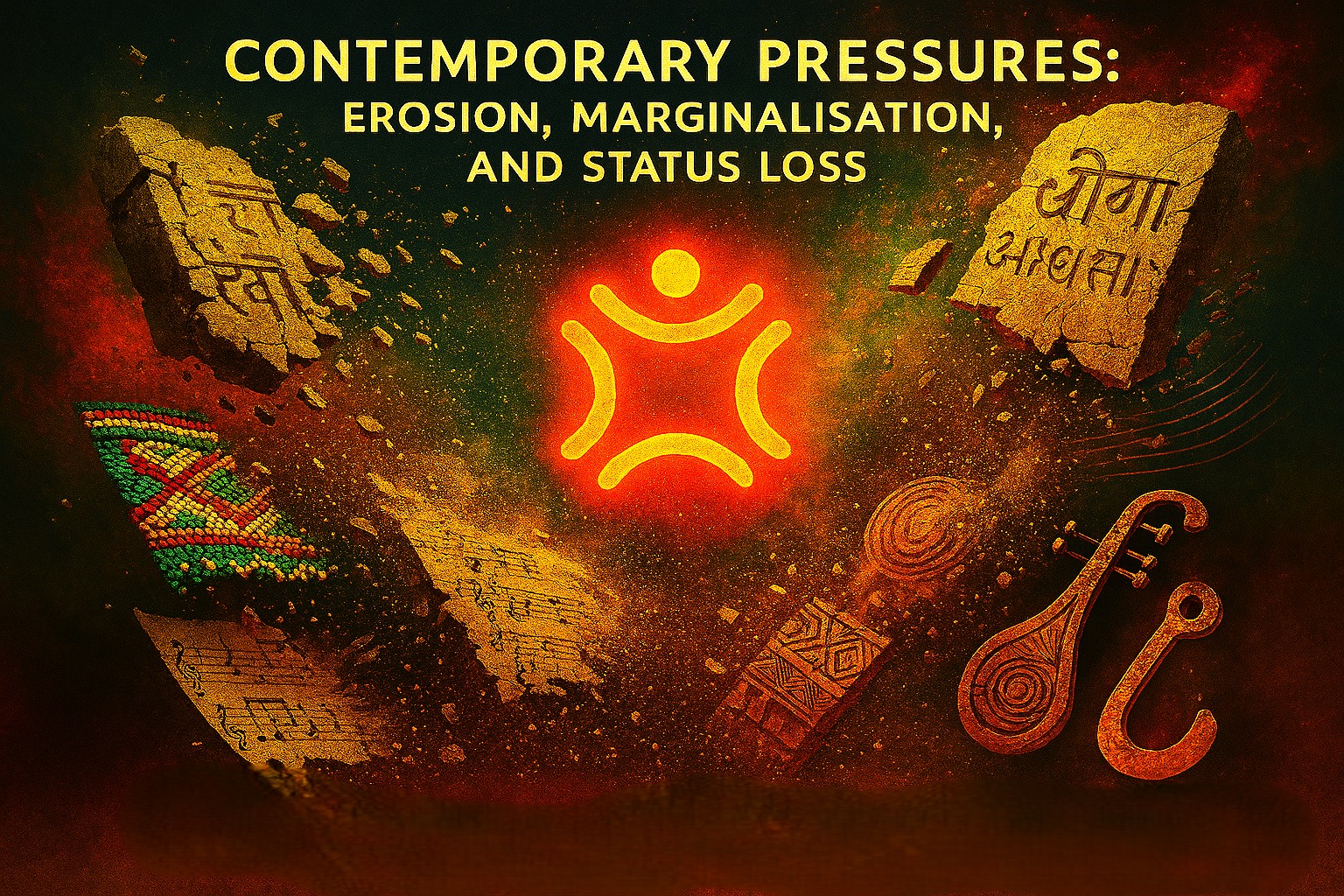
Contemporary societal pressures: erosion, marginalisation, and status loss, fracture the cultural foundations on which indigenous languages stand, threatening the continuity of collective memory and identity. The cosmic cultural‑collage concept is dramatic, symbolic, and holistically representing the forces that erode indigenous languages: Fragmenting stone tablets → loss of ancient scripts. Dissolving cultural motifs → fading traditions. Scattered musical notation → vanishing oral and musical heritage. Ubuntu core glowing at centre → the moral imperative to preserve. Veena silhouette → multilingual cultural synergy. Swirling dust and cosmic gradient → the vastness of history and the fragility of memory, with eventual Peace Disruption.
Original Graphic Conceptualised by Mrs V. Vawda, March 2026
- Contemporary Pressures: Erosion, Marginalisation, and Status Loss
The vitality of heritage and indigenous languages today is shaped by prestige economies, policy implementation gaps, and shifting intergenerational practices. For diasporic South Asian languages (Urdu, Telugu, Hindi) and for Nguni languages (isiZulu, isiXhosa, siSwati, isiNdebele), the key pressures can be grouped under (i) domain competition with English, (ii) weakened transmission and altered language attitudes, and (iii) uneven institutional scaffolding.
4.1 Diasporic South Asian Languages in South Africa: Erosion under English Dominance[42]
Within South African Indian communities, English has become the default medium in schooling, professional life, and digital media, re‑ranking heritage languages in the home domain or in ritual peripheries. Analyses of Urdu’s situation capture this with unusual clarity: Urdu is described as “not just a language” but a vessel of tradition and emotion that is undergoing a “creeping threat” of decline among youth, who increasingly pursue English for mobility and prestige. This shift is associated with the waning of intergenerational transmission and reduced public reinforcement of Urdu’s literary and cultural repertoire.
The dynamics flagged for Urdu generalise to other South Asian heritage languages. Where family transmission thins and community institutions (weekend classes, literary circles, media) are limited, heritage languages lose functional relevance. This creates a feedback loop in which domain loss (education, media, civic life) fosters attitude shift, which in turn accelerates use decline, a widely observed pattern in global urban diasporas and consistent with South Africa’s broader multilingual environment, where English’s high status shapes aspirations and public life.
4.2 Indigenous Languages: Rights on Paper vs. Practice on the Ground
Post‑1994, South Africa’s multilingual settlement formally recognised indigenous languages and mandated “practical and positive measures” to elevate their status and advance their use across the state and public institutions. This constitutional logic, reinforced through the Pan South African Language Board’s policy framework, seeks parity of esteem and equitable treatment of all official languages. Yet policy analyses and sector reviews consistently show that, despite this robust normative architecture, English remains structurally ascendant in education, administration, and the media, leaving indigenous languages with constrained high‑status domains.
The gap between rights and reality is evident in schooling and higher education, where English persists as the main language of learning and of professional advancement. While statutory frameworks and sectoral policies exist to promote indigenous languages, the implementation deficits, insufficient resources, teacher preparation, curricula, terminology development, and institutional incentives, limit the practical reach of multilingualism. This generates symbolic inclusion without functional inclusion, undermining daily opportunities for Ubuntu‑inflected recognition and for the routine practice of linguistic dignity.
4.3 isiZulu’s Emerging Renaissance: Visibility, Pride, and Vitality
Despite systemic headwinds, isiZulu illustrates how targeted cultural and institutional efforts can raise ethnolinguistic vitality. Reports highlight a linguistic renaissance driven by media presence, entertainment industries, and community pride, factors that increase perceived relevance among youth. The sociolinguistic lesson is straightforward: languages “die when they lose relevance but survive when communities actively value and integrate them into their identities and systems.” Visibility across popular culture, coupled with intentional language maintenance, counters the gravitational pull of English monolingualism.
At the institutional level, the University of KwaZulu‑Natal (UKZN) offers a concrete policy model: a bilingual framework that intellectualises isiZulu (terminology development, corpus building, academic use) alongside English. By treating isiZulu as a language of learning, research, and administration, UKZN demonstrates how status planning and resource allocation can translate constitutional aspirations into day‑to‑day academic practice.
4.4 Mutual Intelligibility within the Nguni Cluster: Opportunity and Subtle Frictions
The Nguni dialect continuum (isiZulu, isiXhosa, siSwati, isiNdebele) gives Southern Africa a built‑in communicative advantage: high mutual intelligibility supports intercommunity understanding and exchange. This proximity, however, does not eliminate all friction; qualitative studies note the presence of “false friends” and semantic drift that can momentarily impede comprehension, particularly among speakers with lower proficiency in their neighbouring varieties. The implication for policy is two‑fold: leverage the shared core to expand regional communication and education, while addressing subtle divergences through pedagogy and materials.
4.5 Attitudes, Aspirations, and the Prestige Economy of English
Even with constitutional guarantees, the prestige economy that privileges English remains powerful. Families and learners correctly perceive that English is the language of high‑stakes testing, national administration, and global commerce. Absent strong, visible pathways that reward indigenous/heritage language competence (e.g., scholarships, accredited courses, professional recognition), rational actors will de‑prioritise local languages. This structural pull helps explain why indigenous languages, though official, can remain functionally marginal; and why heritage languages in diaspora, without institutional reinforcement, drift toward symbolic rather than living use.
A countervailing strategy links policy with incentive: curricular credits, bilingual credentials, public‑service language requirements, and funding for creative industries in indigenous languages. Combined with community initiatives (poetry salons, storytelling circles, weekend schools), such measures can re‑align perceived opportunity with language vitality, thereby strengthening the social channels through which recognition and dignity are transmitted.
4.6 The Peace Relevance of Contemporary Pressures
From a peace‑studies perspective, the risks are subtle but real. Domain loss and intergenerational transmission gaps thin the everyday practice of recognition, reducing the frequency of mother‑tongue encounters that “speak to the heart.” Where languages recede from public life, communities lose shared metaphors, etiquette registers, and the emotional vocabularies that help contain disagreement within familiar discursive houses. The result is not immediate conflict, but fragility, a diminished capacity to negotiate difference with grace. This pattern is exactly what South Africa’s constitutional settlement seeks to prevent (by elevating indigenous languages) and what community‑level revitalisation (e.g., isiZulu’s media‑led visibility) actively counters.
For the diasporic case, analyses warning about Urdu’s youth disengagement reveal how quickly a rich literary‑ethical archive can slide into passive heritage if public reinforcement and daily use are not cultivated. In both contexts, the contemporary pressures underscore the central claim of this Part: language vitality is peace infrastructure, and where it declines, the soft tissues of communal harmony are stretched thin.
- Why Language Loss Threatens Communal Peace[43]
Language loss is not merely a cultural or aesthetic diminishing; it is a peace‑relevant disruption that weakens the ethical, emotional, and relational capacities through which communities sustain social harmony. When heritage or indigenous languages decline, the effects ripple outward, undermining recognition, dignity, empathy, intergenerational cohesion, and the symbolic foundations of communal trust. This section synthesises insights from sociolinguistics, constitutional multilingualism, and diaspora language decline to illustrate why language vitality is inseparable from Peace Sustainability.
5.1 Loss of Shared Meaning Systems and Cultural Memory
Languages act as containers of shared meaning, carrying the proverbs, metaphors, idioms, and ethical narratives that help communities interpret the world in coherent ways. Analyses of Urdu emphasise that it functions not as a mere communicative code but as a “vessel carrying centuries of tradition, literature and artistic expression”, with its erosion signalling a weakening of cultural memory among younger generations.
Similarly, the Nguni languages, isiZulu, isiXhosa, siSwati, isiNdebele, constitute a dialect continuum where high mutual intelligibility historically facilitated cross‑community understanding; weakening any segment of this continuum disrupts the shared semantic universe that underpins communicative ease and regional cultural cohesion.
When shared meaning systems erode, communities lose their internal referencing mechanisms, the metaphors of restraint, the proverbs of counsel, the idioms of reconciliation, that help them regulate conflict and maintain civic grace.
5.2 Diminished Recognition and Linguistic Dignity
Communal peace relies heavily on recognition, the sense that one’s identity, history, and way of speaking are acknowledged by others. Language loss undermines this recognition at both structural and interpersonal levels.
South Africa’s constitutional multilingual settlement explicitly acknowledges that indigenous African languages suffered “historically diminished use and status”, mandating positive measures to elevate and advance their use. Despite this, policy analyses reveal persistent implementation gaps, English continues to dominate education, government, and media, leaving indigenous languages symbolically recognised but functionally marginalised.
Marginalisation of a community’s language is marginalisation of its dignity. Heritage speakers internalise this diminished status; over time, the inability to use one’s mother tongue in public or respected domains signals a form of social erasure. This erasure corrodes trust and inhibits the emotional openness required for peaceful coexistence.
5.3 Erosion of Intergenerational Cohesion
Languages are the bridges across which generations share stories, humour, ethics, blessings, rituals, and emotional vocabulary. When these bridges weaken, generational continuity fractures.
In diasporic South Asian communities, especially in the case of Urdu, scholars warn of a youth shift toward English linked to reduced intergenerational transmission. The decline of Urdu among younger speakers reflects a wider cultural trend where the language is increasingly relegated to ceremonial rather than living use.
Similarly, although Nguni languages retain millions of speakers, English‑dominant schooling and media have caused a growing to disconnect between older and younger speakers, threatening the continuity of Ubuntu‑infused linguistic practices. Ubuntu philosophy stresses that identity is realised through relations, umuntu ngumuntu ngabantu, but this relational bond weakens when youth lose fluency in the linguistic channels through which these values are taught.
Thus, intergenerational harmony, a major pillar of Peace Sustainability, is directly weakened by language loss.
5.4 Increased Barriers to Empathy and Communal Trust
Languages encode the emotional grammars through which people understand vulnerability, express sorrow, seek forgiveness, or offer reassurance. Cognitive and pragmatic analyses of Mandela’s linguistic choices reveal that speaking to someone in their mother tongue fosters deeper trust, reaching the “heart,” not merely the “mind”, because native languages activate emotional resonance and recognition in ways foreign languages do not.
When communities lose their mother tongues, they lose access to these emotional channels. Interpersonal encounters become cooler, thinner, more transactional. The loss of native-language emotional nuance makes it harder to transmit empathy and compassion, values central to both peaceful societies and Ubuntu ethics of communal interdependence.
Without linguistic vehicles that naturally communicate respect, affection, humour, and humility, communities become more fragile and more susceptible to misunderstanding or mistrust.
5.5 Domain Loss and Social Inequality
Language loss rarely happens in a vacuum; it is almost always a symptom of unequal linguistic economies. Even with multilingual constitutional recognition, English dominates high‑status domains in South Africa, education, administration, professional life, while indigenous languages struggle to achieve functional parity.
This creates a two‑tier linguistic order:
- English for advancement, prestige, and opportunity
- Indigenous and heritage languages for home, ritual, or nostalgia
Such stratification reinforces social inequality and undermines the equity‑based foundations of communal peace. Even well‑intentioned multilingual policies risk becoming symbolic if indigenous languages are not granted the institutional resources, such as those seen in the University of KwaZulu‑Natal’s efforts to intellectualise isiZulu, that allow them to function robustly in public life.
An unequal linguistic order produces unequal social recognition, and unequal recognition is incompatible with sustainable peace.
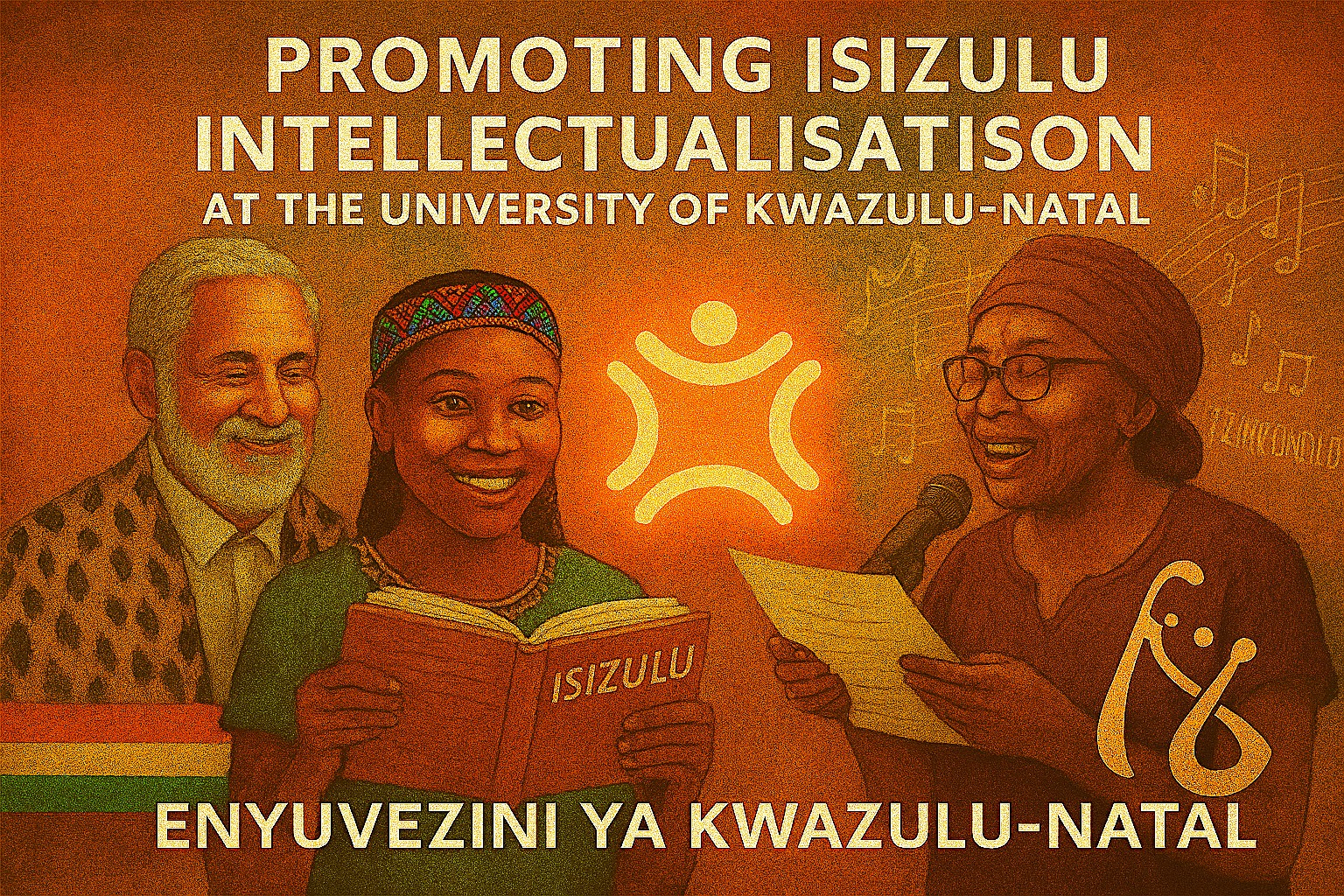
By investing in the intellectualisation of isiZulu, UKZN reinforces the Ubuntu principle that linguistic recognition is foundational to dignity, inclusion, and shared knowledge production in South Africa’s multilingual society. “This initiative demonstrates UKZN’s commitment to developing isiZulu into an academically robust language through terminology expansion, corpus development, scholarly publication, and institutional support, ensuring its effective use in higher education and broader public life.
Original Photograph Conceptualised by Mrs V. Vawda, March 2026
5.6 Weakening of Cultural Resilience and Conflict‑Mitigation Mechanisms
In multilingual societies, linguistic resilience is closely tied to communal resilience. When a community’s language declines, its ability to respond to stress, economic, political, intergroup tensions, declines with it. Languages house cultural templates for managing conflict: proverbs, rituals of reconciliation, conventions of respectful disagreement, and narrative frames that support forbearance.
South Africa’s linguistic renaissance in isiZulu, driven in part by media visibility and community pride, shows how raising a language’s vitality strengthens collective identity and social resilience. Conversely, where languages lose relevance, scholars note that communities may abandon the ethical scaffolding embedded in their linguistic traditions, leaving them more exposed to corrosive forces like individualism, mistrust, or alienation.
5.7 Summary: Language Loss as a Peace‑Relevant Disruption
To summarise, language loss threatens communal peace because it:
- erodes shared meaning systems central to cultural memory (Urdu, Nguni)
- undermines recognition and dignity, especially where policy implementation lags (indigenous SA languages)
- fractures intergenerational cohesion (Urdu youth shift; English schooling gaps)
- diminishes empathy and emotional trust (Mandela heart–mind principle)
- entrenches linguistic inequality, which mirrors and reproduces social inequality
- weakens cultural and conflict‑mitigation capacities, reducing communal resilience
These patterns directly support the claim that language vitality is peace infrastructure, a thesis that Part I establishes historically and theoretically, Part II deepens ethically through Mandela–Ubuntu analysis, and Part III tests empirically through the Neuroharmonic Peace Propagation (NPP) research design.
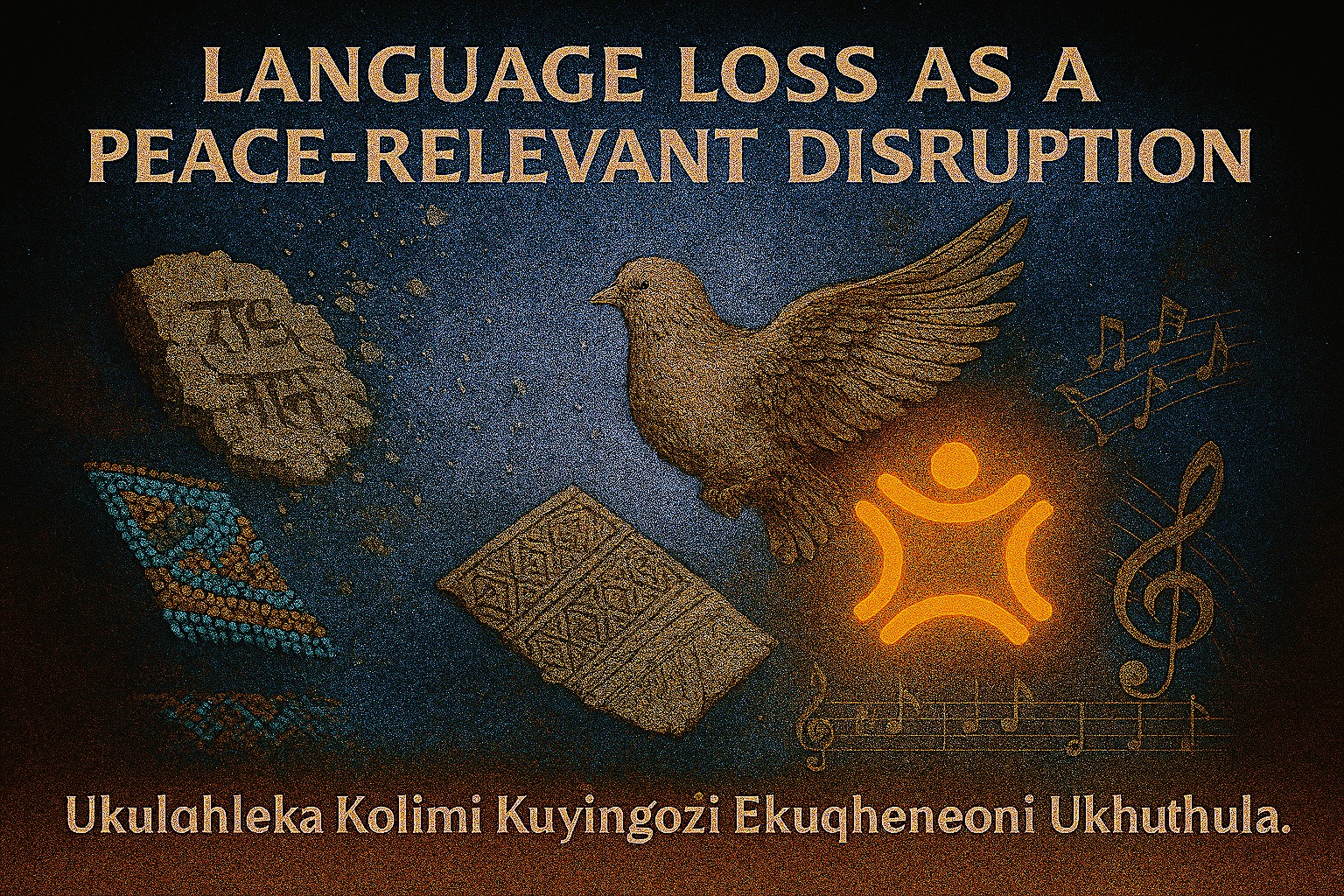
Under a cold moon, shattered scripts, fractured beadwork, and fading musical staves drift toward silence, while a ruffled peace‑dove hovers unsteadily, signalling that peace itself is disturbed. At the centre, a subdued Ubuntu glow persists, reminding us that revitalizing languages restores recognition, empathy, and trust. The isiZulu line below states plainly that language loss is a danger to sustaining peace, turning this tableau into a warning and a call to stewardship. The symbolic elements include: Crumbling stone tablets: the erosion of historical memory encoded in language. Fragmented beadwork panel: the fraying of everyday cultural practice and social etiquette. Fading musical notation: the silencing of oral and performative traditions. Ruffled peace dove: peace under strain amid linguistic decline. Subdued Ubuntu emblem: the relational ethic that must be rekindled through language vitality. Moonlit palette: a visual metaphor for civilizational dusk, and the urgency of renewal.
“And yet, dawn is possible wherever a community chooses to speak, teach, and sing its mother‑tongue again.”
isiZulu rendering
“Kodwa kukhona ukusa: lapho umphakathi ukhetha ukukhuluma, ukufundisa nokucula ulimi lwawo lwenkaba futhi, kuthula kuyavuka.”
Original Photograph Conceptualised by Mrs V. Vawda, March 2026
- Language as Peace Infrastructure[44]
Peace infrastructure is often imagined as formal institutions, courts, police, treaties, development programs. Yet the everyday infrastructure that sustains peace is cultural: the living systems that generate shared meaning, dignity, empathy, and trust. This section argues that language vitality, for Urdu, Telugu, and Hindi in South Africa’s diaspora, and for the Nguni cluster (isiZulu, isiXhosa, siSwati, isiNdebele), is a foundational component of that infrastructure. Where languages flourish, communities preserve the ethical grammars, emotional vocabularies, and intergenerational bridges that stabilise social harmony; where they decline, those “soft tissues” thin and societal resilience weakens. This is precisely why South Africa’s constitutional framework mandates “practical and positive measures” to elevate indigenous languages and to ensure parity of esteem and equitable treatment across the public sphere.
At the same time, analyses warn that heritage languages like Urdu face a “creeping threat” among urban youth, with profound implications for cultural memory and identity, reminding us that recognition must be practised, not presumed. In South Africa, policy ambitions have too often outrun practice, with English retaining dominance in education, administration, and media, an implementation gap that undercuts functional multilingualism on the ground.
6.1 A Model of Cultural Peace Infrastructure[45]
We formalise the claim through a four‑link chain that will be empirically tested in Part III:
- Language Vitality → Shared Meaning
Active use across home, school, worship, and culture preserves proverbs, metaphors, etiquette, and ritual vocabularies, the “semantic commons” of a community. (Urdu’s literary archive; Nguni’s mutual intelligibility). - Shared Meaning → Recognition and Dignity
When people hear and use their mother tongue in valued domains, they feel seen; the state’s constitutional duty to elevate historically diminished languages is, at root, a dignity policy. - Recognition and Dignity → Empathy and Trust
Mandela’s praxis and cognitive studies converge: mother‑tongue address reaches the “heart,” deepening trust and lowering social distance; foreign‑language interaction often attenuates affect, cools decision‑making, and can weaken empathic resonance. - Empathy and Trust → Peace Sustainability
Communities with stable channels of recognition and shared meaning show greater cohesion and conflict‑avoidant norms; conversely, domain loss and transmission gaps heighten fragility. Policy literature confirms that implementation (not just recognition) determines whether indigenous languages function as living instruments of social equity.
6.2 Policy Levers: From Rights to Function
To convert constitutional intent into lived multilingualism, three policy levers are pivotal:
- Status Planning (Law and Governance).
Enforceable standards for the use of indigenous languages in government communication, service delivery, and public‑facing interfaces, as envisaged by PanSALB’s policy framework[46]. This honours parity of esteem and normalises multilingual encounters that convey recognition.
- Corpus and Capacity Building (Education and Knowledge).
Invest in terminology development, corpus expansion, and teacher training so that indigenous languages can operate at high academic and technical levels, the approach UKZN has adopted to intellectualise isiZulu as a language of learning, teaching, research, and administration.
- Prestige and Incentives (Media and Markets).
Link language use to visible opportunities, scholarships, certification, public‑service language requirements, and creative‑industry funding, to counter the prestige economy that otherwise favours English alone. Evidence of an isiZulu renaissance in media shows how visibility and valuation raise ethnolinguistic vitality.
6.3 Community Programs: Where Peace Is Practised
While policy sets the stage, community practice fills it:
- Intergenerational Story and Poem Circles (Urdu mushā‘ira, Telugu/Hindi poetry evenings; isiZulu/isiXhosa izaga/izaci workshops). These revive the moral‑aesthetic repertoires through which restraint, humility, and empathy are learned. (Urdu’s literary public sphere; Nguni proverb cultures).
- Bilingual School Partnerships.
Pair English with isiZulu (and voluntary heritage clubs for Urdu/Telugu/Hindi), using UKZN’s intellectualisation efforts as a model for terminology and curriculum support. - Faith and Civic Multilingualism.
Encourage parallel‑language bulletins, announcements, and counseling spaces in mosques, temples, and community halls, operationalising Ubuntu as everyday linguistic recognition (personhood through persons). - Digital Humanities and Youth Micro‑Credentials.
Archive elders’ stories, produce short‑form bilingual media, and award badges for heritage‑language milestones, shifting youth incentives toward pride and participation. The isiZulu media‑visibility case signals how digital culture can move vitality metrics.
6.4 Measurement: Making Peace Infrastructure Legible
To guide investment and accountability, we translate the model into indicators (built in Part III):
- Language Vitality Index (LVI): home use, school presence, cultural participation, media hours, capturing whether a language is lived across domains. (Design aligns with vitality literature and current South African policy ambitions).
- Shared Meaning and Ubuntu Recognition Scale (SMURS): perceived dignity and closeness when addressed in one’s language; perceived reduction of social distance in multilingual encounters, operationalising Ubuntu’s ethic of relational personhood.
- Peace Sustainability Index (PSI): trust, intergenerational contact, conflict‑avoidant norms, and cultural continuity, reflecting constitutional aims to elevate indigenous languages as a route to equitable social participation.
- Cultural Neuroharmonics Scale[47] (CNS): identity‑affect alignment (ease of expressing grief/joy, ritual resonance) to test the proposed neuroharmonic link between language and psychosocial coherence. (Mechanisms consistent with the “heart–mind” distinction and foreign‑language effect).
6.5 The Diaspora-Indigenous Bridge: Urdu and Nguni Together[48]
Treating Urdu (and Telugu/Hindi) alongside Nguni languages is not an eclectic add‑on; it is a strategic bridge. Urdu’s Mughal‑era cosmopolitanism demonstrates how translation, patronage, and public poetry can cultivate a civic imagination of coexistence; Nguni’s dialect continuum demonstrates how structural intelligibility lowers friction in daily life. Together they model two complementary paths to peace infrastructure: contact‑built plurality and kinship‑built proximity.
In the present, both face pressures of status competition with English. Policy (PanSALB, education, media) and community practice (poetry, proverbs, storytelling) therefore become joint levers for sustaining the shared meanings and recognitions that hold plural societies together.
6.6 From Concept to Action: A Peace‑First Language Agenda[49]
A peace‑first language agenda aligns rights, resources, and rituals:
- Rights: enforce multilingual standards in state services and public institutions (PanSALB framework).
- Resources: fund corpus development, teacher pipelines, and bilingual curricula that put isiZulu (and other indigenous languages) on equal academic footing (UKZN pathway).
- Rituals: normalise mother‑tongue encounter in civic life, festivals, councils, worship, schools, clinics, because recognition practiced regularly becomes trust institutionalised. (Mandela’s relational insight; Ubuntu’s ethic).
When these elements move in concert, languages cease to be nostalgic emblems and become operational infrastructures of peace. The evidence from isiZulu’s recent cultural visibility shows that relevance grows with use, and use grows with valued presence in education, media, and civic spaces.
Section Summary and Forward Link
Section 6 has argued that language vitality = peace infrastructure, specifying the policy levers, community programs, and metrics that make this claim actionable. Part II will now articulate the ethical grammar of this agenda, Mandela–Ubuntu–Language interactivity, showing why mother‑tongue recognition is a moral precondition for dignified coexistence. Part III then operationalises the model through the NPP study design, testing whether raising LVI measurably improves SMURS, PSI, and CNS in South African settings shaped by both indigenous multilingualism and diasporic heritage.
Epilogue (for the Trilogy)
If peace has a grammar, communities learn it in their mother tongues. If dignity has a temperature, it is warmed by recognition. The Trilogy of Trinity traces a path from history to ethics to evidence: from the flourishing language ecologies that once refined civic imagination, to the Ubuntu insight that we become fully human in relationship, to a field‑ready design for rebuilding resilience through living languages.
These pages do not ask us to choose between global fluency and local belonging. They offer a more generous invitation: to stand in both, with grace, to keep English as a bridge to the world while keeping our heritage and indigenous languages as bridges to one another. Peace, then, is neither silence nor surrender; it is the music of many tongues tuned to a shared humanity.
Bottom Line
Part I: “What We Now Know”
- Language vitality is peace infrastructure.
When languages are alive across home, school, worship, and culture, communities retain shared meaning systems that stabilise trust, empathy, and restraint. - Loss of language is loss of recognition.
Marginalised languages signal marginalised people. Recognition must be practised, in public services, schools, and media, not merely proclaimed. - Intergenerational continuity is a peace asset.
Mother‑tongue transmission carries memory, etiquette, and emotional vocabulary. When those bridges fail, societies become more brittle. - Policy requires practice.
Constitutional ideals and institutional commitments matter, but implementation, terminology development, teacher training, bilingual curricula, public‑service standards, and cultural production, turns ideals into everyday multilingual encounters.
- Two pathways, one peace dividend.
- Urdu’s cosmopolitan arc[50] (contact, translation, patronage) shows how pluralism is cultivated.
- Nguni’s mutual intelligibility shows how kinship within diversity lowers friction in daily life.
Together, they model complementary routes to communal harmony.
Part 2: The Path Forward: Gentle Descent into Part 2
As Part I closes, we stand at the threshold between what languages do and why that doing dignifies us. The next movement, the heart of the Trilogy, asks us to linger with two guiding lights:
- Mandela’s linguistic ethic: that mother‑tongue address reaches the heart, lowering walls that reason alone cannot breach. This is not a romantic flourish; it is a practical politics of recognition.
- Ubuntu’s moral anthropology: that personhood is relational, we become ourselves by making space for one another’s voices. Language is where this ethics is rehearsed daily: in greetings, in proverbs, in the tender grammar of asking and forgiving.
Part 2 will braid these lights into a single cord. It will explore how Mandela’s praxis and Ubuntu’s philosophy converge into a linguistic ethics of recognition, and why heritage and indigenous languages, far from being ornamental, are obligations of care in a plural democracy. We will refine the heart–mind distinction, draw out its implications for schooling, leadership, and intergroup dialogue, and sketch the normative claims that justify investing in language vitality as an act of public dignity.
Part 3: From there, the Trilogy will descend to Part 3, where ideas become instruments and hope becomes a research plan: the NPP framework, its indices (LVI, SMURS, PSI, CNS), its mixed‑methods design, and its community interventions, so that the music of many tongues can be heard not only in memory, but in the measurable life of our neighbourhoods.
Between here and there, the lamp stays lit. Episode I has mapped the terrain; Episode II will give us the compass of ethics; Episode III will put the path under our feet.
Comments and discussion are invited by e-mail: vawda@ukzn.ac.za
Global: + 27 82 291 4546
References:
[1] https://www.transcend.org/tms/2025/11/valmiki-the-silent-seer-of-resonant-endogenous-and-global-peace/
[2] Personal Quote by author, February 2026
[3] TRANSCEND MEDIA SERVICE » The Attainment of Sustained, Endogenous Peace: Sacred Postures for a Fractured World
[4] https://www.bing.com/ck/a?!andandp=9f95cdaa204fea30ad3af679f1ab7b313b2ebb746c5aa1c08d3c8cbfb7972831JmltdHM9MTc3MTAyNzIwMAandptn=3andver=2andhsh=4andfclid=37940f5c-820f-62a2-14ab-19c283916323andpsq=Exogenous+Peace+vawdaandu=a1aHR0cHM6Ly93d3cudHJhbnNjZW5kLm9yZy90bXMvMjAyNS8wOC90aGUtYXR0YWlubWVudC1vZi1wZWFjZS1hLW11bHRpZGltZW5zaW9uYWwtcGVyc3BlY3RpdmUv
[5] https://www.bing.com/ck/a?!andandp=034fe75ec36f056696e725d9b4ea3087c4af0fd5f0ddc4f1d0bdf6962d90e2baJmltdHM9MTc3MTAyNzIwMAandptn=3andver=2andhsh=4andfclid=37940f5c-820f-62a2-14ab-19c283916323andpsq=Peace+Protagonists%2c+hoosen+vawdaandu=a1aHR0cHM6Ly93d3cudHJhbnNjZW5kLm9yZy90bXMvMjAyNC8wMy9wZWFjZS1wcm9wYWdhdGlvbi1odW1hbi1yaWdodHMtZGF5LXBvc3QtbGliZXJhdGlvbi0xOTk0LXNvdXRoLWFmcmljYS1wYXJ0LTEv
[6] https://www.bing.com/ck/a?!andandp=6c5b0459700ca20bc6eb6bae97ab2f646b024e95bec3fde1de985dd245591412JmltdHM9MTc3MTAyNzIwMAandptn=3andver=2andhsh=4andfclid=37940f5c-820f-62a2-14ab-19c283916323andpsq=Peace+Protagonists%2c+hoosen+vawdaandu=a1aHR0cHM6Ly93d3cudHJhbnNjZW5kLm9yZy90bXMvMjAyNC8wMS9nbG9iYWwtd2ViaW5hci1zZXJpZXMtb3BwcmVzc29ycy1hbmQtcGVhY2UtZGlzcnVwdG9ycy8
[7]https://www.bing.com/ck/a?!andandp=aa0956c0af4996fbf6d678010420158779bb6262010036c2d54366c25ccf0e3eJmltdHM9MTc3MTAyNzIwMAandptn=3andver=2andhsh=4andfclid=37940f5c-820f-62a2-14ab-19c283916323andpsq=Peace+Protagonists%2c+hoosen+vawdaandu=a1aHR0cHM6Ly93d3cudHJhbnNjZW5kLm9yZy90bXMvdGFnL2FwYXJ0aGVpZC1tYXJ0eXJzLw
[8] https://www.bing.com/ck/a?!andandp=a8abb7e9791d7d6db751a036519a953d09cfbf6acccee42d5f41af52cb22e89bJmltdHM9MTc3MTAyNzIwMAandptn=3andver=2andhsh=4andfclid=37940f5c-820f-62a2-14ab-19c283916323andpsq=Peace+Protagonists%2c+hoosen+vawdaandu=a1aHR0cHM6Ly93d3cuZmFjZWJvb2suY29tL3RyYW5zY2VuZGludGVybmF0aW9uYWwvcG9zdHMvdGhlLWFjcmltb25pb3VzLWFuZC10YXJnZXRlZC1kZXN0cnVjdGlvbi1vZi1ob3VzZXMtb2YtZ29kLWNsaW1heC1vZi1yZWxpZ2lvcGhvYmkvNTgxMjQzMzUwODEyOTc0Lw
[9] https://www.bing.com/ck/a?!andandp=f5fa6cf0c30fedf6280c2077cc79a61a319559181440d3bd4b2ef9cbaf9b9b6bJmltdHM9MTc3MTAyNzIwMAandptn=3andver=2andhsh=4andfclid=37940f5c-820f-62a2-14ab-19c283916323andpsq=Peace+Protagonists%2c+hoosen+vawdaandu=a1aHR0cHM6Ly90aGVtYWpsaXMuY28uemEvYXJ0aWNsZXMvYWwtaGFxL3BhbGVzdGluZS10aGUtYXRoYWFiLW9mLWFsbGFoLXRhYWxhLw
[10] https://www.bing.com/ck/a?!andandp=2a93b8d170338938a01924b2afa33109c40a607366470f76f94c737806bee774JmltdHM9MTc3MTAyNzIwMAandptn=3andver=2andhsh=4andfclid=37940f5c-820f-62a2-14ab-19c283916323andpsq=belligerism+vawdaandu=a1aHR0cHM6Ly93d3cudHJhbnNjZW5kLm9yZy90bXMvMjAyNi8wMS91YnVudHUtcmlzaW5nLWEtcGVhY2UtZm9yY2UtYWdhaW5zdC1nbG9iYWwtYmVsbGlnZXJpc20v
[11] https://www.bing.com/ck/a?!andandp=bfa48f1dff587216ab251a4e4a7460075fca00e706b246ceac9fbd919cf3584aJmltdHM9MTc3MTAyNzIwMAandptn=3andver=2andhsh=4andfclid=37940f5c-820f-62a2-14ab-19c283916323andpsq=Peace+Protagonists%2c+hoosen+vawdaandu=a1aHR0cHM6Ly91bmJvdW5kZWRhY2FkZW15Lm9yZy90cmFuc2NlbmQtbWVkaWEtc2VydmljZS8
[12] Personal Quote by author, February 2026
[13] “Urdu, not just a language.” The News International (Special Report). Analysis of Urdu’s emotional‑cultural role and contemporary decline among youth; argues for preservation and promotion to counter erosion.
[14] Pan South African Language Board (PanSALB) Language Policy (2024) summarises constitutional provisions (Sections 6, 9, 30) requiring practical measures to elevate indigenous languages and ensure parity/equity.
[15] “Urdu, not just a language.” The News International (Special Report). Analysis of Urdu’s emotional‑cultural role and contemporary decline among youth; argues for preservation and promotion to counter erosion.
[16] https://www.bing.com/ck/a?!&&p=7edeb7e65c19ae2c7080783b2602cd5f088c7b5495d726c3f27867b8f85823d9JmltdHM9MTc3MjU4MjQwMA&ptn=3&ver=2&hsh=4&fclid=37940f5c-820f-62a2-14ab-19c283916323&u=a1aHR0cHM6Ly93d3cuaW5kaWFuZXR6b25lLmNvbS9raGFyaWJvbGk&ntb=1
[17] “The History and Evolution of the Urdu Language: From Mughal Era to Today.” Urduling. Overview of Urdu’s Khariboli base and Persian/Arabic/Turkic influences; emergence as a bridge language.
[18]“The Development of Literature During the Mughal Empire.” The Muslim Vibe (2023). Documents patronage, translation culture, and the 18th-19th‑century golden period of Urdu poetry in Delhi and Lucknow.
[19] “Nguni languages.” Wikipedia overview of the Nguni cluster as a closely related group/dialect continuum with significant mutual intelligibility (isiZulu, isiXhosa, siSwati, isiNdebele).
[20] “Language Policy and the Struggle for Linguistic Equality in South Africa.” In The Palgrave Handbook of Language Policies in Africa (2024). Reviews colonial/apartheid legacies and post‑1996 implementation gaps; English’s continuing dominance.
[21] “Urdu, not just a language.” The News International (Special Report). Analysis of Urdu’s emotional‑cultural role and contemporary decline among youth; argues for preservation and promotion to counter erosion.
[22] “Language Policy and the Struggle for Linguistic Equality in South Africa.” In The Palgrave Handbook of Language Policies in Africa (2024). Reviews colonial/apartheid legacies and post‑1996 implementation gaps; English’s continuing dominance.
[23] Pan South African Language Board (PanSALB) Language Policy (2024) — summarises constitutional provisions (Sections 6, 9, 30) requiring practical measures to elevate indigenous languages and ensure parity/equity.
[24] University of KwaZulu‑Natal Language Policy (2014, revised). Calls for bilingual proficiency and the intellectualisation of isiZulu as a language of learning, teaching, research, and administration.
[25] “The Development of Literature During the Mughal Empire.” The Muslim Vibe (2023). Documents patronage, translation culture, and the 18th–19th‑century golden period of Urdu poetry in Delhi and Lucknow.
[26] “Nguni languages.” Wikipedia overview of the Nguni cluster as a closely related group/dialect continuum with significant mutual intelligibility (isiZulu, isiXhosa, siSwati, isiNdebele).
[27] “Urdu, not just a language.” The News International (Special Report). Analysis of Urdu’s emotional‑cultural role and contemporary decline among youth; argues for preservation and promotion to counter erosion.
[28] “Language Policy and the Struggle for Linguistic Equality in South Africa.” In The Palgrave Handbook of Language Policies in Africa (2024). Reviews colonial/apartheid legacies and post‑1996 implementation gaps; English’s continuing dominance.
[29] https://www.bing.com/ck/a?!&&p=fd4224ed04acbd421bf050d8218faa8fd517367233965f7a351418e933de21caJmltdHM9MTc3MjU4MjQwMA&ptn=3&ver=2&hsh=4&fclid=37940f5c-820f-62a2-14ab-19c283916323&psq=Ubuntu%e2%80%99s&u=a1aHR0cHM6Ly9lbi53aWtpcGVkaWEub3JnL3dpa2kvVWJ1bnR1
[30] Mission Forward- “Fact Check.” Traces the provenance of the famous Mandela “heart–mind” line; clarifies contextual wording and intent (Afrikaans, recognition, power asymmetries).
[31] Mapping Ignorance – “Mandela was right: the Foreign Language Effect.” Discusses cognitive/affective differences when operating in a foreign vs. native language, reinforcing the heart–mind distinction.
[32] https://www.bing.com/ck/a?!&&p=d9e059be95dd43b80cccef56c267e6bc170fccc47d9c36b7a06a94484d4024dcJmltdHM9MTc3MjU4MjQwMA&ptn=3&ver=2&hsh=4&fclid=37940f5c-820f-62a2-14ab-19c283916323&psq=Neuroharmonic+Peace+Propagation&u=a1aHR0cHM6Ly93d3cudHJhbnNjZW5kLm9yZy90bXMvMjAyNS8xMS92YWxtaWtpLXRoZS1zaWxlbnQtc2Vlci1vZi1yZXNvbmFudC1lbmRvZ2Vub3VzLWFuZC1nbG9iYWwtcGVhY2Uv
[33] https://www.bing.com/ck/a?!&&p=04540a643a7bfff126ff70a91a878f8586f1859d7b418853c2767f5a18537347JmltdHM9MTc3MjU4MjQwMA&ptn=3&ver=2&hsh=4&fclid=37940f5c-820f-62a2-14ab-19c283916323&u=a1aHR0cHM6Ly93d3cuc2lsLm9yZy9sYW5ndWFnZS1hc3Nlc3NtZW50L2xhbmd1YWdlLXZpdGFsaXR5&ntb=1
[34] https://www.bing.com/ck/a?!&&p=417ce3069b8a06c6166b317e16cdeafe041a0d367788aeb40212423ae305930dJmltdHM9MTc3MjU4MjQwMA&ptn=3&ver=2&hsh=4&fclid=37940f5c-820f-62a2-14ab-19c283916323&psq=lingua+francas+meaning&u=a1aHR0cHM6Ly9lbi53aWtpcGVkaWEub3JnL3dpa2kvTGluZ3VhX2ZyYW5jYQ
[35] Pan South African Language Board (PanSALB) Language Policy (2024) — summarises constitutional provisions (Sections 6, 9, 30) requiring practical measures to elevate indigenous languages and ensure parity/equity.
[36] “The Development of Literature During the Mughal Empire.” The Muslim Vibe (2023). Documents patronage, translation culture, and the 18th–19th‑century golden period of Urdu poetry in Delhi and Lucknow.
[37] https://www.bing.com/ck/a?!&&p=bd180ec60d59827b5d85f0527e357aefe9231639422c7ea528ebf0cb3c5966fbJmltdHM9MTc3MjU4MjQwMA&ptn=3&ver=2&hsh=4&fclid=37940f5c-820f-62a2-14ab-19c283916323&psq=Nguni+linguistic+continuum&u=a1aHR0cHM6Ly9lbi53aWtpcGVkaWEub3JnL3dpa2kvTmd1bmlfbGFuZ3VhZ2Vz
[38] https://www.bing.com/ck/a?!&&p=7e3b19a73f9f20fb9e757f62a00f090f6b4268406a70dc39174de13fe36e9225JmltdHM9MTc3MjU4MjQwMA&ptn=3&ver=2&hsh=4&fclid=37940f5c-820f-62a2-14ab-19c283916323&psq=Language+as+Ethical+Grammar+and+Communal+Orientation&u=a1aHR0cHM6Ly93d3cuaWpmbXIuY29tL3BhcGVycy8yMDI1LzYvNjAzMTUucGRm
[39] https://www.bing.com/ck/a?!&&p=8ebc3ef87109186f6e7b1244ba538892b8f27e0fe5c8ad438e03591ee5bbd03dJmltdHM9MTc3MjU4MjQwMA&ptn=3&ver=2&hsh=4&fclid=37940f5c-820f-62a2-14ab-19c283916323&u=a1aHR0cHM6Ly9hbHRlcm5hdGlvbi51a3puLmFjLnphL3dwLWNvbnRlbnQvdXBsb2Fkcy8yMDI1LzEwLzA2LXQtenVuZ3UtbWluLnBkZg&ntb=1
[40] https://www.bing.com/ck/a?!&&p=579835c9326cf43b0faea75ded0aed501d246bd78228eb8fd07fbf4418859ba6JmltdHM9MTc3MjU4MjQwMA&ptn=3&ver=2&hsh=4&fclid=37940f5c-820f-62a2-14ab-19c283916323&u=a1aHR0cHM6Ly9lbi53aWtpcGVkaWEub3JnL3dpa2kvTXVoYW1tYWRfUXVsaV9RdXRiX1NoYWg&ntb=1
[41] https://www.bing.com/ck/a?!&&p=23a9198801d0a33f3dc51889bd281b8d6ad1f068ed6a8d1c5bc39e6aeceda181JmltdHM9MTc3MjU4MjQwMA&ptn=3&ver=2&hsh=4&fclid=37940f5c-820f-62a2-14ab-19c283916323&psq=bahadur+shah+zafar+india&u=a1aHR0cHM6Ly92YWppcmFtYW5kcmF2aS5jb20vY3VycmVudC1hZmZhaXJzL2JhaGFkdXItc2hhaC16YWZhci8
[42]https://www.bing.com/ck/a?!&&p=185919506d36912c3d87e994ac4af3aeba731fb1cff4c90a23a6b9cc6242442fJmltdHM9MTc3MjU4MjQwMA&ptn=3&ver=2&hsh=4&fclid=37940f5c-820f-62a2-14ab-19c283916323&psq=Diasporic+South+Asian+Languages+in+South+Africa%3a+Erosion+under+English+Dominance&u=a1aHR0cHM6Ly9zY2llbG8ub3JnLnphL3NjaWVsby5waHA_c2NyaXB0PXNjaV9hcnR0ZXh0JnBpZD1TMjIyNS03MTYwMjAyMTAwMDEwMDAxOA
[43] https://www.bing.com/ck/a?!&&p=21d7646862835fb94788691dd331ffa21014d762ca1585e5110714e489c26d97JmltdHM9MTc3MjU4MjQwMA&ptn=3&ver=2&hsh=4&fclid=37940f5c-820f-62a2-14ab-19c283916323&u=a1aHR0cHM6Ly93d3cubnVtYmVyYW5hbHl0aWNzLmNvbS9ibG9nL2ltcGFjdC1sYW5ndWFnZS1sb3NzLWluZGl2aWR1YWxzLWNvbW11bml0aWVz&ntb=1
[44] https://www.bing.com/ck/a?!&&p=66c44b5b5e7c7944faaa98dc2871ba4cc3faa6f66ff31638a473540298ac733cJmltdHM9MTc3MjU4MjQwMA&ptn=3&ver=2&hsh=4&fclid=37940f5c-820f-62a2-14ab-19c283916323&u=a1aHR0cHM6Ly93d3cuY2VudHJlcGVhY2Vjb25mbGljdHN0dWRpZXMub3JnL3doYXQtYXJlLXBlYWNlLWluZnJhc3RydWN0dXJlcy8&ntb=1
[45] https://www.bing.com/ck/a?!&&p=19d3b197f79f128625cd360cf1d378d9806f9e69c852048469858e9155d909ebJmltdHM9MTc3MjU4MjQwMA&ptn=3&ver=2&hsh=4&fclid=37940f5c-820f-62a2-14ab-19c283916323&psq=a+model+of+cultural+peace+infrastructure+definition&u=a1aHR0cHM6Ly93d3cuY2VudHJlcGVhY2Vjb25mbGljdHN0dWRpZXMub3JnL3doYXQtYXJlLXBlYWNlLWluZnJhc3RydWN0dXJlcy8
[46] https://www.bing.com/ck/a?!&&p=73f6394203c7ba7ba54da1540fea99225a0c85f2c19919a369acc5dde4dca781JmltdHM9MTc3MjU4MjQwMA&ptn=3&ver=2&hsh=4&fclid=37940f5c-820f-62a2-14ab-19c283916323&u=a1aHR0cHM6Ly93d3cuZ292LnphL3NpdGVzL2RlZmF1bHQvZmlsZXMvZ2Npc19kb2N1bWVudC8yMDI0MDgvNTEwNTBibjY0NS5wZGY&ntb=1
[47] https://www.bing.com/ck/a?!&&p=2513a3804cdefdb7f2b8e1fb37c683b3addb0909742bbe4da651674d899c7a1bJmltdHM9MTc3MjU4MjQwMA&ptn=3&ver=2&hsh=4&fclid=37940f5c-820f-62a2-14ab-19c283916323&psq=%e2%80%a2%09Cultural+Neuroharmonics+Scale&u=a1aHR0cHM6Ly9wbWMubmNiaS5ubG0ubmloLmdvdi9hcnRpY2xlcy9QTUM3ODA2MTc5Lw
[48] https://www.bing.com/ck/a?!&&p=7e62714ea65dc65d8e3a44c823b4b9299806190cf3a60e4582a6422fe7a6e827JmltdHM9MTc3MjU4MjQwMA&ptn=3&ver=2&hsh=4&fclid=37940f5c-820f-62a2-14ab-19c283916323&psq=The+Diaspora-Indigenous+Bridge%3a+Urdu+and+Nguni+Together&u=a1aHR0cHM6Ly93d3cuaW5kaWdlbm91c2JyaWRnZXMuY29tLw
[49] https://www.bing.com/ck/a?!&&p=19f04264fd6a68c474a1529de32934669cb17001c38e7915b58b82feb7d8f151JmltdHM9MTc3MjU4MjQwMA&ptn=3&ver=2&hsh=4&fclid=37940f5c-820f-62a2-14ab-19c283916323&psq=rom+Concept+to+Action%3a+A+Peace+First+Language+Agenda&u=a1aHR0cHM6Ly9lYWpvdXJuYWxzLm9yZy9pamFzY3Qvd3AtY29udGVudC91cGxvYWRzL3NpdGVzLzM4LzIwMjQvMDkvUm9sZS1vZi1MYW5ndWFnZS5wZGY
[50] https://www.bing.com/ck/a?!&&p=e3555688b82cad5092ad629f245755df21708e1119d705d5b192fcee7796e561JmltdHM9MTc3MjU4MjQwMA&ptn=3&ver=2&hsh=4&fclid=37940f5c-820f-62a2-14ab-19c283916323&u=a1aHR0cHM6Ly9icmlsbC5jb20vdmlldy9qb3VybmFscy91cmRzLzEvMS9hcnRpY2xlLXAxMzRfOC54bWw&ntb=1
____________________________________________
Professor G. Hoosen M. Vawda (Bsc; MBChB; PhD.Wits) is a member of the TRANSCEND Network for Peace Development Environment.
Director: Glastonbury Medical Research Centre; Community Health and Indigent Programme Services; Body Donor Foundation SA.
Principal Investigator: Multinational Clinical Trials
Consultant: Medical and General Research Ethics; Internal Medicine and Clinical Psychiatry:UKZN, Nelson R. Mandela School of Medicine
Executive Member: Inter Religious Council KZN SA
Public Liaison: Medical Misadventures
Activism: Justice for All
Email: vawda@ukzn.ac.za
Tags: Biophoton, Endogenous and Exogenous Peace, Galtung’s Peace Triangle, Global belligerism, Harmonism, Language Vitality, Madam Vawda’s Peace Triangle, Neuroharmonic Peace Propagation, Neuroharmonics, Nguni, Peace Crusade, Peace Mandala, Peace Propagation, Peace Propagators, Photobionts, Ubuntu Peace Philosophy, Urdu, Vawdain, cyber-harmonics
This article originally appeared on Transcend Media Service (TMS) on 9 Mar 2026.
Anticopyright: Editorials and articles originated on TMS may be freely reprinted, disseminated, translated and used as background material, provided an acknowledgement and link to the source, TMS: The Foundations of Communal Peace: Sustaining Threatened Languages as Peace Infrastructure Part 1, is included. Thank you.
If you enjoyed this article, please donate to TMS to join the growing list of TMS Supporters.

This work is licensed under a CC BY-NC 4.0 License.
Join the discussion!
We welcome debate and dissent, but personal — ad hominem — attacks (on authors, other users or any individual), abuse and defamatory language will not be tolerated. Nor will we tolerate attempts to deliberately disrupt discussions. We aim to maintain an inviting space to focus on intelligent interactions and debates.