


The Genocide Supply Chain: Open for Business
TRANSCEND MEMBERS, 27 Apr 2026
Raïs Neza Boneza – TRANSCEND Media Service
22 Apr 2026 – Let’s stop hiding behind language that has outlived its usefulness. Those familiar phrases—recycled, polished, and repeated—don’t clarify anything anymore; they blur responsibility.
There is nothing inherently confusing here, nothing so complicated that it escapes understanding. Calling it “complex” or labeling regions as “fragile” doesn’t explain reality—it softens it. It creates distance. It turns something concrete and accountable into something vague and untouchable.
And above all, this is not one of those carefully crafted diplomatic stories designed to comfort audiences and preserve appearances. It’s not meant to reassure—it’s meant to be seen clearly, without the cushion of euphemisms.
This is logistics. A system. A pipeline. A supply chain.
Efficient. Streamlined. Globalized. Raw materials go in. Bodies come out.
Profits circulate.
And somewhere in the middle—air-conditioned, well-dressed, fluent in the language of “diplomacy”—sit the people who made it all possible, issuing statements while quietly billing genocide as a line item.
Start in Sudan.
The RSF didn’t wake up one day and decide to industrialize atrocity for fun. They were enabled. Armed. Funded. Enter the UAE—a country that has somehow perfected the rare trick of being both a five-star vacation spot and the FedEx of other people’s wars.
The arrangement was almost beautiful in its ugliness:
- Weapons, cash, logistics go in.
- Gold comes out of RSF-controlled mines.
- That gold gets refined, monetized, and politely rebranded somewhere far from the screaming.
Seventy percent of Sudan’s gold. Traveling first-class through this pipeline. refined, sanitized, and reborn in global markets where no one asks inconvenient questions about fingerprints.
If you’ve ever wondered what genocide looks like when run through Excel, this is it: clean columns, upward trends, and absolutely no mention of mass graves. Then geopolitics did what geopolitics always does: got bored and wandered off.
February 28. Iran and Israel start exchanging missiles like toxic Valentine’s Day gifts. Suddenly the UAE has bigger worries than its Sudanese investment portfolio. Supply lines dry up. Battlefields shift. And we are all reminded of a simple truth: even genocide depends on good logistics and financial pipelines: No trucks, no bullets. No bullets, no “complex conflict.”
But Sudan isn’t just about gold. It’s geography.
A corridor. A choke point. A place where you can watch, intercept, or quietly reroute whatever flows between Iran, Gaza, and everywhere else.
Which explains the obsession with alignment. With “stability.” With making sure Sudan fits neatly into the expanding architecture of normalized relationships. Therefore, a Sudan waving the Abraham Accords flag—was so desirable.
Indeed! The Abraham Accords brought to you by the United States in 2020. Marketed as “peace.” Delivered as a clearance sale. Fine print included.
The deal was simple: Arab states normalize with Israel. Israel gets legitimacy, spies, and weapons markets. The UAE gets shiny military tech and Western approval stamps. And Palestine? Palestine gets a beautifully illustrated pamphlet about coexistence—printed while homes are demolished in real time.
Before the Accords, Arab opposition—inconsistent as it was—gave Palestinians some leverage. After? That leverage disappeared faster than a press release following a bombing.
Peace is very profitable when you remove the people it’s supposed to protect.
Now zoom out. Because the architecture scales.
Welcome to the Congo. Same script. Different cast:
- Rwanda backs it proxy the M23 armed group and it satellites secure mineral-rich land, from the Rubaya area for example…
· Civilians absorb the cost—rape, displacement, the usual vocabulary politely filed under “humanitarian concern.”
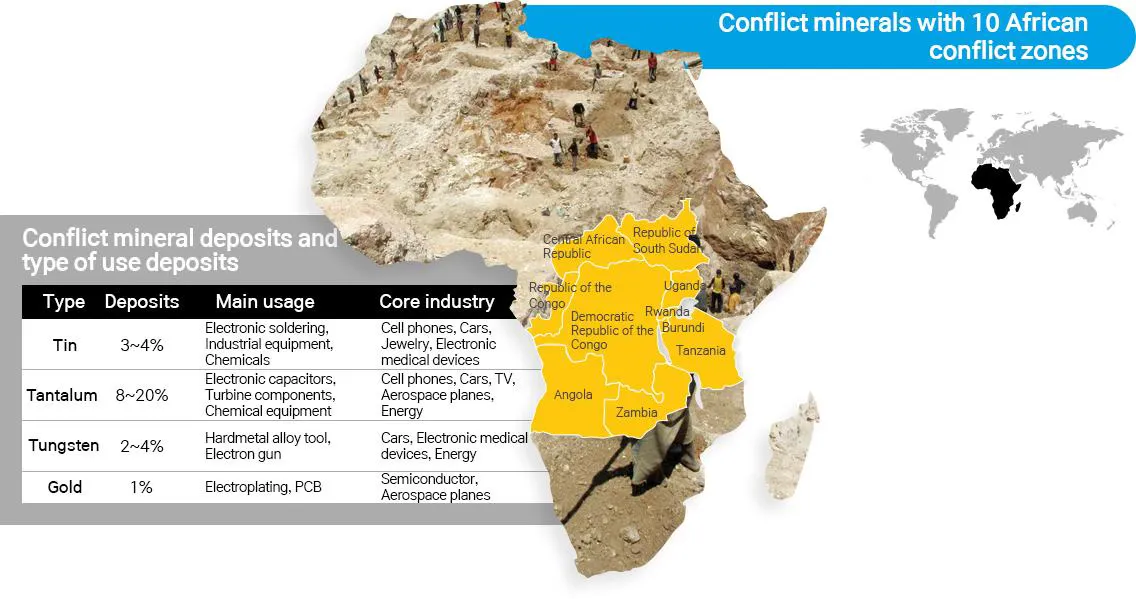
- And beneath the chaos: coltan, cobalt, Litium, gold or nobium… the minerals humming the heart of your phone, your laptop, your entire technological power, your digital existence and your entire green revolution—get extracted.
And then? Laundered through Rwanda. Exported to the UAE, to Asia, the US and Europe. Why disrupt a functioning business model?
Just when you think the moral floor couldn’t possibly sink lower, someone proposes a “peace deal.” Enter Donald Trump, brokering what can only be described as a minerals-for-peace arrangement. Diplomatic code for: “We will pressure the perpetrators—lightly, with a feather—while ensuring the extraction continues smoothly.”
Rwanda President Kagame´s soldiers despite well documented links to atrocities and high scale massacres of Congolese civilians, walks away not as a suspect but as a partner. A peace partner.
That phrase deserves its own wing in the Museum of Audacious Euphemisms.
So, let’s connect the dots, since that’s apparently still controversial.
The same network: Arms Sudan’s RSF, Profits from Sudanese gold, Buys Israeli weapons, Benefits from the political architecture that sidelines Palestine, Launders Congolese minerals extracted through blood for their green shift.
Different continents. Same spreadsheet. A loop. A franchise. With regional managers. This is not coincidence . it is design
And then, inevitably, someone raises a hand and says:
“But what about the Conflict in Nigeria?” or the Niger, or Mali …in Mozambique? Venezuela? or Cuba ? “But what about the Christians?” “But what about—”
As if these are separate conversations. As if the world is not one interconnected marketplace where suffering is simply categorized by region for easier inventory management.
Here’s the uncomfortable truth: these are not competing tragedies. They are coordinated outcomes. So, when people say “Free Palestine,” it’s not a slogan floating in isolation. It’s a pressure point too. Because Palestine sits at the symbolic and political center of this machine as well—the place where normalization, militarization, and profit have been most aggressively fused and publicly justified.
Pull that thread. Really pull it. The rest starts to unravel. The deals. The alliances. The convenient silences. And suddenly the supply chain doesn’t look so stable anymore.
But of course, that would require something radical. Not another summit. Not another carefully worded statement about “deep concern.” Just one simple act:
Calling the system by its name.
And refusing—collectively, stubbornly—to keep buying what it sells. And never to be its customer again. Cancel the subscription. Permanently.
 ____________________________________________
 Raïs Neza Boneza is the author of fiction as well as non-fiction, poetry books and articles. He was born in the Katanga province of the Democratic Republic of Congo (Former Zaïre). He is also an activist and peace practitioner. Raïs is a member of the TRANSCEND Media Service Editorial Committee and a convener of the TRANSCEND Network for Peace Development Environment for Central and African Great Lakes. He uses his work to promote artistic expressions as a means to deal with conflicts and maintaining mental wellbeing, spiritual growth and healing. Raïs has travelled extensively in Africa and around the world as a lecturer, educator and consultant for various NGOs and institutions. His work is premised on art, healing, solidarity, peace, conflict transformation and human dignity issues and works also as freelance journalist. You can reach him at rais.boneza@gmail.com – http://www.raisnezaboneza.no
Tags: Africa, Cuba, Genocide, Niger, Nigeria, Palestine, Rwanda, South Sudan, Sudan
DISCLAIMER: The statements, views and opinions expressed in pieces republished here are solely those of the authors and do not necessarily represent those of TMS. In accordance with title 17 U.S.C. section 107, this material is distributed without profit to those who have expressed a prior interest in receiving the included information for research and educational purposes. TMS has no affiliation whatsoever with the originator of this article nor is TMS endorsed or sponsored by the originator. “GO TO ORIGINAL” links are provided as a convenience to our readers and allow for verification of authenticity. However, as originating pages are often updated by their originating host sites, the versions posted may not match the versions our readers view when clicking the “GO TO ORIGINAL” links. This site contains copyrighted material the use of which has not always been specifically authorized by the copyright owner. We are making such material available in our efforts to advance understanding of environmental, political, human rights, economic, democracy, scientific, and social justice issues, etc. We believe this constitutes a ‘fair use’ of any such copyrighted material as provided for in section 107 of the US Copyright Law. In accordance with Title 17 U.S.C. Section 107, the material on this site is distributed without profit to those who have expressed a prior interest in receiving the included information for research and educational purposes. For more information go to: http://www.law.cornell.edu/uscode/17/107.shtml. If you wish to use copyrighted material from this site for purposes of your own that go beyond ‘fair use’, you must obtain permission from the copyright owner.
Join the discussion!
We welcome debate and dissent, but personal — ad hominem — attacks (on authors, other users or any individual), abuse and defamatory language will not be tolerated. Nor will we tolerate attempts to deliberately disrupt discussions. We aim to maintain an inviting space to focus on intelligent interactions and debates.