
“Mali Did Not Wake Up to an Attack–It Woke Up to a Message”
TRANSCEND MEMBERS, 4 May 2026
Raïs Neza Boneza – TRANSCEND Media Service
On Sovereignty, Performance, and the Ritual of International Observation
30 Apr 2026 – On April 25, 2026, Mali did not wake up to an attack. It woke up to a message.
At dawn, Bamako, Kati, Gao, Sévaré, Mopti, and Kidal were hit almost simultaneously. Explosions. Sustained gunfire. Military positions targeted. Air traffic disrupted. Social media flooding in real time while official statements attempted to stabilize the narrative.
The government reported limited damage and 16 injured, insisting the situation was under control. Meanwhile, armed groups—including the JNIM (linked to Al-Qaeda) and the Front for the Liberation of Azawad—were associated with or claimed responsibility for a level of coordinated violence not seen in years.
And somewhere, in a well-lit diplomatic office, someone must have drafted the now ritual sentence: “We are closely monitoring the situation.”
Of course you are.
The country is under coordinated assault—but don’t worry, the world is watching. Attentively. Possibly even with concern. The highest form of international solidarity: observation.
But what makes this moment significant is not just the violence. It is the performance.
Groups with supposedly different ideologies—jihadist networks and separatist movements—managed to strike across hundreds of kilometers, in synchronized fashion, targeting complementary strategic points. This is not improvisation. This is not chaos. This is planning, intelligence-sharing, logistical depth.
This is structure. Which leads to an uncomfortable question:
Who benefits from that structure?
Because wars like this do not run on ideology alone. They run on fuel, supply chains, weapons flows, communication networks, financing channels, and—most importantly—permission. Not formal permission, of course. That would be too obvious. But the kind of permission that lives in blind spots, in selective outrage, in borders that open just enough, in intelligence that arrives too late—or not at all.
Mali is not just facing a military threat. It is facing a multi-layered war. A military war—attacks, ambushes, territorial pressure. An economic war—blockades, disrupted supply chains, pressure on gold exports and logistics. A psychological war—eroding public confidence, projecting vulnerability at the heart of the state. And a narrative war—where language itself becomes a weapon.
Because words matter.
When armed groups attack a Western country, the vocabulary is immediate, sharp, unapologetic: terrorism.
When similar violence hits an African state—especially one that has distanced itself from Western influence—the language suddenly becomes… nuanced. We hear about “insurgents,” “rebels,” “armed groups,” “separatists.” Precision becomes hesitation. Clarity becomes diplomacy.
Mali is paying a double price: being attacked—and then being explained. Since breaking with France, ending Operation Barkhane, pushing out MINUSMA(UN mission), and turning toward new partnerships—including Russia—the country has become something more than a conflict zone. It has become a test case.
A question dressed as a battlefield:
Can an African state attempt sovereignty—and survive it?
Because the pattern is hard to ignore. Governments in Mali, Burkina Faso, and Niger shift course, asserting independence, renegotiating alliances, speaking the language of sovereignty—and almost immediately, the security landscape deteriorates sharply. Armed groups become more active, more coordinated, better equipped.
Coincidence? Possibly.
But a very consistent one.
This does not mean everything is controlled from Paris, Washington, Moscow, or anywhere else. That would be too simple—and reality is rarely that generous. The Sahel’s crisis has deep internal roots: historical marginalization of northern regions, fragile state structures, ethnic tensions, trafficking economies, corruption, the long shadow of Libya’s collapse in 2011, and the proliferation of weapons across porous borders. But ignoring external interests would be just as naïve.
After the fall of Muammar Gaddafi—an intervention led by the West, Nato and backed by its allies in the middle east —Libya’s arsenals spilled across the region. Fighters dispersed. Weapons flowed. Entire conflict ecosystems were born in that vacuum. A decade later, the same actors express concern about instability—without quite acknowledging the architecture they helped dismantle.
It’s a bit like knocking down a wall and then offering consultancy on how to deal with the wind.
What the April 25 attacks reveal is not just a security breach. It is a strategic
message.
Striking near Bamako, and killing Mali´s popular defense minister is not only about military impact. It is symbolic. It says: your capital is reachable. Your state is penetrable. Your sovereignty is fragile.
And beyond Mali, the message travels:
To Burkina Faso.
To Niger.
To any country considering stepping out of the geopolitical script.
This is how low-intensity warfare works. It doesn’t always aim to win quickly. It aims to exhaust. To force governments to redirect budgets from schools to soldiers, from hospitals to helicopters. To make development stall—and then blame leadership for the stagnation. Burn the house slowly, then criticize the owner for poor maintenance.
Mali is not beyond criticism. No state at war is. Governance, human rights, political transition—these questions remain valid and necessary. But reducing Mali’s situation to “a struggling junta” is intellectual laziness.
This is not a simple internal crisis. This is a layered conflict—local, regional, and global—where non-state actors operate within systems that are anything but accidental. And while Mali fights, the world reacts in familiar ways:
The United States condemns.
The European Union observes.
France follows developments.
Russia expresses concern and signals support.
China reports, carefully.
The UN calls for restraint.
Everyone plays their part.
Everyone speaks.
Few act.
Because in a multipolar world, crises like Mali are not just tragedies—they are tests. Observed, measured, quietly analyzed.
Will this government hold? Will this strategy work? Will sovereignty survive pressure?
Meanwhile, on the ground, Mali does not have the luxury of analysis. It has to endure. And perhaps that is the real discomfort in all of this: Not that Mali is unstable. But that Mali is trying—against pressure, against precedent, against a long history of managed dependence—to refuse to collapse. Not quietly. Not politely. But visibly.
And that, more than anything, makes some powers more nervous.
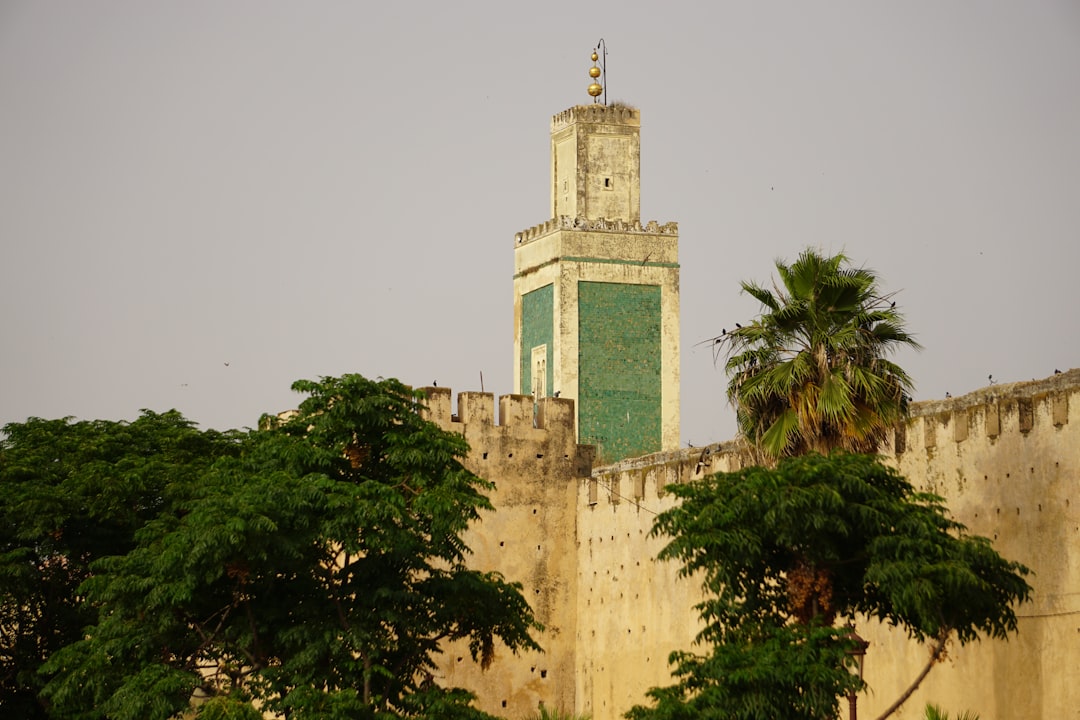
Photo by Kateryna Kulakova on Unsplash
____________________________________________
 Raïs Neza Boneza is the author of fiction as well as non-fiction, poetry books and articles. He was born in the Katanga province of the Democratic Republic of Congo (Former Zaïre). He is also an activist and peace practitioner. Raïs is a member of the TRANSCEND Media Service Editorial Committee and a convener of the TRANSCEND Network for Peace Development Environment for Central and African Great Lakes. He uses his work to promote artistic expressions as a means to deal with conflicts and maintaining mental wellbeing, spiritual growth and healing. Raïs has travelled extensively in Africa and around the world as a lecturer, educator and consultant for various NGOs and institutions. His work is premised on art, healing, solidarity, peace, conflict transformation and human dignity issues and works also as freelance journalist. You can reach him at rais.boneza@gmail.com – http://www.raisnezaboneza.no
Go to Original – rboneza.substack.com
Tags: Africa, France, Mali, Terrorism
DISCLAIMER: The statements, views and opinions expressed in pieces republished here are solely those of the authors and do not necessarily represent those of TMS. In accordance with title 17 U.S.C. section 107, this material is distributed without profit to those who have expressed a prior interest in receiving the included information for research and educational purposes. TMS has no affiliation whatsoever with the originator of this article nor is TMS endorsed or sponsored by the originator. “GO TO ORIGINAL” links are provided as a convenience to our readers and allow for verification of authenticity. However, as originating pages are often updated by their originating host sites, the versions posted may not match the versions our readers view when clicking the “GO TO ORIGINAL” links. This site contains copyrighted material the use of which has not always been specifically authorized by the copyright owner. We are making such material available in our efforts to advance understanding of environmental, political, human rights, economic, democracy, scientific, and social justice issues, etc. We believe this constitutes a ‘fair use’ of any such copyrighted material as provided for in section 107 of the US Copyright Law. In accordance with Title 17 U.S.C. Section 107, the material on this site is distributed without profit to those who have expressed a prior interest in receiving the included information for research and educational purposes. For more information go to: http://www.law.cornell.edu/uscode/17/107.shtml. If you wish to use copyrighted material from this site for purposes of your own that go beyond ‘fair use’, you must obtain permission from the copyright owner.
Join the discussion!
We welcome debate and dissent, but personal — ad hominem — attacks (on authors, other users or any individual), abuse and defamatory language will not be tolerated. Nor will we tolerate attempts to deliberately disrupt discussions. We aim to maintain an inviting space to focus on intelligent interactions and debates.