
Justice M. M. Qazi and His Idea of Justice
TRANSCEND MEMBERS, 6 Jul 2026
Moin Qazi - TRANSCEND Media Service
- You who believe! Be steadfast in justice, witnesses for Allah, even if the hatred of a people causes you to swerve from justice. Be just; that is nearer to righteousness.
— Qur’an 5:8 (Surah Al-Mā’idah) - What moves us, reasonably enough, is not the realisation that the world falls short of being completely— which few of us expect— but that there are clearly remediable injustices around us which we want to eliminate–Amartya Sen. The Idea of Justice. London: Penguin Books, 2009.Chapter 1: “The Discipline of Justice”).
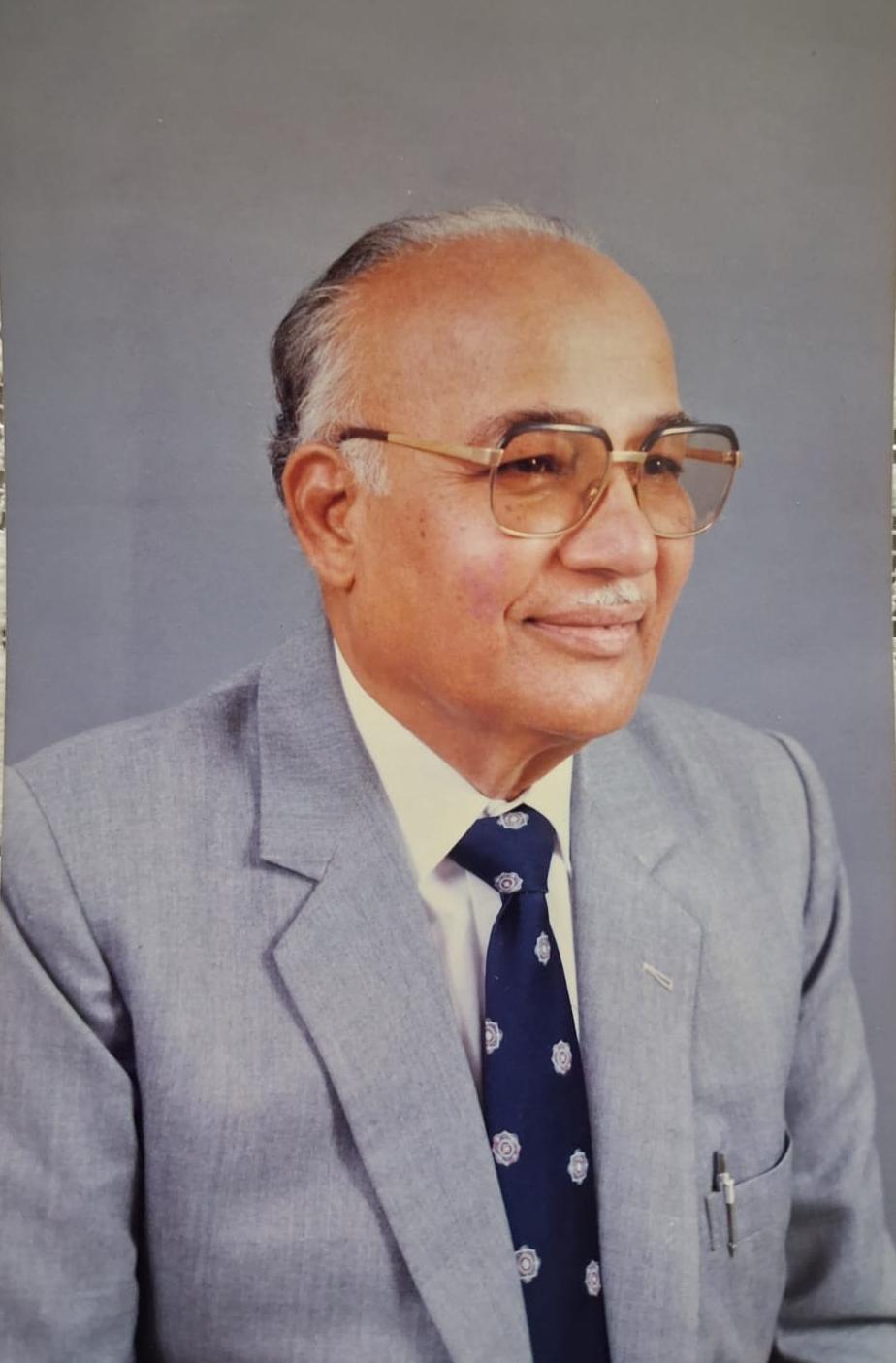
Justice M. M. Qazi
3 Jul 2026 – In The Idea of Justice, Amartya Sen challenges the traditional approach of searching for an ideal perfectly just society before addressing injustice. He argues that human beings do not need to agree on a complete theory of perfect justice to identify and remove obvious wrongs. His approach focuses on comparative justice — examining real situations and asking whether a particular injustice can be reduced or eliminated.
This philosophy of justice resonates with the judicial vision and ethical commitments of Justice Mohd Mujibuddin (February 18, 1930—May 26, 2007), a distinguished former senior judge of the Bombay High Court and a respected figure in the legal and intellectual history of Nagpur and Vidarbha. His understanding of justice was not confined merely to legal procedure but extended to fairness, human dignity, and moral responsibility.
In Sen’s words, justice is not only about imagining a perfectly just world; it is about confronting and removing the injustices that are visible before us. The lasting measure of any legacy, therefore, lies not only in the words spoken about a person, but in the justice practised in their name.
Justice Qazi’s guiding philosophy was beautifully captured in the profound and enduring words of Lord Atkin, whose celebrated dissenting judgment in the landmark House of Lords decision in Liversidge v. Anderson remains a monumental affirmation of the supremacy of the rule of law:
“In this country, amid the clash of arms, the laws are not silent. They may be changed, but they speak the same language in war as in peace.”
These words embody a timeless constitutional truth — that the authority of law does not diminish in moments of crisis, conflict, or uncertainty. Rather, it is during such difficult periods that the true strength of justice is tested. Lord Atkin’s courageous dissent serves as a lasting reminder that liberty, fairness, and legal accountability must remain protected even when the pressures of the State are at their highest.
His philosophy was rooted in the conviction that the law must never become a silent spectator to the suffering of individuals, and that the dignity of the human person remains the ultimate measure of a just society.
Justice Qazi’s Relevance in the Twenty-First Century
The life and thought of Justice Qazi possess a significance that extends well beyond the judicial and political circumstances of his own time. In an era marked by rapid technological change, global migration, religious polarisation, ideological extremism, constitutional debates, and growing tensions between identity and citizenship, his jurisprudential philosophy offers a framework of enduring relevance. His legacy reminds us that justice cannot survive merely as an institutional mechanism; it must remain rooted in moral conviction, ethical responsibility, and an unwavering respect for the dignity of every human being.
Justice Qazi understood that the strength of a constitutional democracy lies not only in the text of its laws but also in the moral character of those entrusted with interpreting and administering them. He believed that judges, lawyers, legislators, and public officials are custodians of justice rather than mere functionaries of legal procedure. Law derives its legitimacy not from coercive authority alone but from the confidence that citizens place in its fairness, impartiality, and humanity.
His understanding of Islamic jurisprudence further reinforces this contemporary relevance. By interpreting the Maqāṣid al-Sharī’ah as a moral philosophy centred upon justice, compassion, public welfare, and the prevention of harm, Justice Qazi demonstrated that religious traditions possess the intellectual resources to engage constructively with modern constitutional democracies. His approach rejected the false choice between fidelity to faith and commitment to constitutional values. Instead, he showed that both traditions ultimately converge upon the protection of human dignity, accountability, and the common good.
Equally remarkable was his appreciation of India’s legal pluralism. He recognised that the coexistence of multiple religious, cultural, and legal traditions need not weaken national unity. On the contrary, diversity, when governed by constitutional principles, enriches democratic life. The Constitution provides the common civic foundation upon which differing identities may flourish without sacrificing equality before the law. In Justice Qazi’s vision, legal pluralism was not an obstacle to justice. Still, one of its most profound expressions was that every legal tradition remained consistent with the constitutional guarantees of liberty, equality, and human dignity.
Justice Qazi’s intellectual horizons were exceptionally broad. His mind was never imprisoned within sectarian or ideological boundaries. While remaining firmly anchored in the ethical and spiritual traditions of Islam, his mental windows remained open to the winds that blew from every direction. He welcomed engagement with Muslims, Christians, Hindus, Buddhists, Jews, Sikhs, Jains, Zoroastrians, Bahá’ís, and followers of other faith traditions; equally, he remained intellectually receptive to neo-spiritualists, humanists, rationalists, naturalists, agnostics, atheists, secular thinkers, liberals, conservatives, socialists, communists, constitutionalists, and the many philosophical and ideological schools of thought that have shaped human civilisation. His openness reflected not uncertainty about his own convictions, but confidence that wisdom may be encountered across traditions and that sincere dialogue enlarges rather than diminishes human understanding.
His outlook echoed Mahatma Gandhi’s celebrated aspiration: “I do not want my house to be walled in on all sides and my windows to be stuffed. I want the cultures of all lands to be blown about my house as freely as possible.” Justice Qazi embodied that ideal throughout his life. He welcomed the free exchange of ideas and the accumulated wisdom of diverse civilisations without ever losing his own moral and spiritual anchorage. Deeply rooted in the ethical and spiritual traditions of Islam, he nevertheless believed that wisdom was not the exclusive preserve of any single faith, philosophy, ideology, or civilisation. He welcomed dialogue across religious, philosophical, intellectual, and ideological boundaries, convinced that truth is enriched through sincere engagement rather than diminished by it.
In an age when religious differences, political ideologies, and competing worldviews are too often exploited to generate fear, hostility, and division, Justice Qazi’s philosophy reminds us that authentic spirituality and constitutional democracy both flourish through openness, humility, and mutual respect. He believed that dialogue among religions, philosophies, and ideologies does not require abandoning deeply held convictions. Rather, it enables societies to pursue justice through reason, compassion, constitutional fidelity, and a shared commitment to the common good. Constitutional morality and religious ethics, properly understood, need not exist in opposition. Both seek to restrain arbitrary power, uphold justice, protect the vulnerable, preserve liberty, and affirm the equal dignity of every human being.
Justice Qazi’s legacy therefore transcends the boundaries of biography. It represents a model of ethical leadership in which judicial independence is guided by conscience, constitutional interpretation is informed by moral responsibility, and religious conviction coexists harmoniously with democratic pluralism. His life demonstrates that justice is not merely a legal ideal but a civilisational value capable of uniting people across differences of religion, philosophy, culture, language, ideology, and political belief.
In the final analysis, Justice Qazi belongs to that distinguished tradition of jurists who understood that the law reaches its highest purpose only when it serves humanity. His legacy reminds us that courts may interpret statutes, legislatures may enact laws, and governments may exercise authority. Still, the true measure of civilisation lies in the extent to which justice protects the weak, restrains the powerful, respects diversity, safeguards freedom of conscience, and affirms the equal dignity of every member of the human family. That vision remains as relevant today as it was during his own lifetime and will continue to illuminate the path of constitutional democracy for generations to come.

BOMBAY HIGH COURT
A Journey of Resilience, Character and Moral Conviction
Justice Qazi’s own life was further enriched by the presence of a remarkable life partner—his wife, Khaleda Sultana, an erudite scholar in her own right. A triple postgraduate, she holds a Master’s degree in Philosophy from Osmania University and was a profound authority on the great philosopher-poet Muhammad Iqbal. Their companionship was not only one of hearts, but also of minds deeply engaged in the pursuit of knowledge, wisdom, and truth. Her intellectual engagement with Iqbal’s philosophy reflected a deep appreciation of his ideas on spirituality, selfhood, ethics, and the renewal of human consciousness. The Qur’an became both his anchor and his compass, shaping his thoughts and decisions in every sphere of life. His knowledge of the Qur’an was encyclopedic. He had studied almost all the major commentators and scholars, and applied that knowledge to his worldly assignments with an unwavering moral compass.
Whether serving as a judge, leading tribunals, arbitrating disputes, or heading official commissions of enquiry, he was guided by the divine principles he had made his own. Upon his retirement from the Bombay High Court, The Hitavada, a reputed newspaper, hailed him as one belonging to “a fast vanishing breed of gentleman judges” who Justice Qazi: Islamic Jurisprudence, Constitutionalism, and the Ethics of Human Dignity.
Justice Mohammed Mujibuddin Qazi’s engagement with Islamic jurisprudence reflected a profound understanding of law not merely as a collection of legal rules, but as a moral discipline founded upon justice, fairness, compassion, and respect for human dignity. He approached Islamic legal thought as a living intellectual tradition in which reason, ethical responsibility, and public welfare were inseparable from the administration of justice.
His understanding closely aligned with the higher objectives of Islamic law (Maqāṣid al-Sharī’ah), which aim to preserve justice, protect human dignity, prevent harm, and promote the common good. Rather than confining Islamic jurisprudence to narrow or literal interpretations, Justice Qazi appreciated its enduring philosophical spirit and its capacity to respond thoughtfully to the complexities of modern society. In his outlook, faith and reason were not competing forces but complementary sources of wisdom, each enriching the other in the pursuit of justice.
The classical jurists of Islam never regarded law as an isolated technical discipline. They viewed it as an ethical framework governing the relationship between individual rights and collective responsibilities, public authority and accountability, justice and mercy. Their scholarship addressed not only legal doctrine but also governance, social welfare, equity, and the moral responsibilities of those entrusted with power. Justice Qazi’s legal philosophy reflected this broader intellectual inheritance. For him, the legitimacy of law ultimately rested upon its ability to secure fairness, preserve dignity, and protect the vulnerable.
This understanding naturally harmonised with India’s constitutional vision. Justice Qazi recognised that constitutionalism and Islamic jurisprudence shared fundamental ethical aspirations: respect for human dignity, equality before the law, accountability of authority, and protection against arbitrary power. He consistently affirmed that legal procedure derives its legitimacy from substantive justice. Rights cannot exist without corresponding duties; authority cannot command obedience without accountability; and legal institutions fulfil their highest purpose only when they safeguard the dignity of every individual.
His judicial philosophy also reflected the distinctive character of India’s legal pluralism. India’s constitutional order accommodates diverse religious, cultural, and intellectual traditions while remaining firmly anchored in the principles of equality, liberty, and justice. Justice Qazi understood that this pluralism was not a constitutional weakness but one of India’s greatest strengths. Personal laws, cultural traditions, and religious identities could coexist harmoniously within the overarching framework of constitutional morality, provided they remained consistent with the values of justice and human dignity.
Equally significant was his understanding of religion itself. Justice Qazi believed that the true measure of faith was not found in sectarian identity or ritual exclusivity, but in the pursuit of justice, compassion, integrity, and service to humanity. Deeply rooted in the ethical traditions of Islam, he nevertheless rejected the notion that religion should become a barrier separating communities. Instead, he regarded faith as a moral force that inspires responsibility towards all human beings, irrespective of their religious or social identity.
Throughout his judicial and public life, Justice Qazi demonstrated that genuine spirituality transcends labels while remaining faithful to one’s own convictions. He dispensed justice with fairness and impartiality, recognising that the rule of law derives its moral authority from the equal dignity of every citizen, regardless of religion, caste, language, or social background. His life reflected the Qur’anic vision that humanity was created in diverse nations and communities so that people might know one another, cooperate in righteousness, and build a just society founded upon mutual respect.
His outlook naturally extended to the ideals of interfaith dialogue. For Justice Qazi, dialogue did not require diluting religious identity or abandoning deeply held convictions. Rather, it required intellectual humility, mutual respect, and the recognition that every authentic religious tradition seeks, in its own way, to cultivate virtue, justice, compassion, and moral responsibility. Differences in doctrine need not become barriers to cooperation in advancing the common good. Indeed, he believed that societies become stronger when diverse communities engage in reasoned dialogue rather than suspicion or hostility.
In an age increasingly marked by religious polarisation, ideological conflict, and social fragmentation, Justice Qazi’s vision remains. His life demonstrates that constitutional values and religious ethics need not exist in opposition. When properly understood, both aspire to protect human dignity, promote justice, and cultivate peaceful coexistence. Diversity, in this vision, is not a source of division but an opportunity for mutual enrichment and collective progress.
The enduring legacy of Justice Mohammed Mujibuddin Qazi therefore lies not merely in his judicial decisions but in the moral philosophy that informed them. He exemplified a model of jurisprudence in which law remained inseparable from ethics, authority remained accountable to justice, and constitutional governance remained anchored in the inviolable dignity of every human being. His life stands as a reminder that the highest purpose of law is not simply to regulate society but to elevate it—by protecting liberty, preserving justice, fostering harmony, and affirming the equal worth of every member of the human family.
A Landmark Contribution to Human Rights Jurisprudence
One of the landmark judgments of Justice Mohd. Mujibuddin Qazi was delivered in a public interest litigation matter in which he took suo motu cognisance of a report published in a local newspaper concerning the moral and social conscience of society. This intervention came to be regarded as a significant milestone in the evolution of public interest litigation, reflecting the judiciary’s expanding role in protecting human dignity and addressing issues affecting the public at large.
His abiding passion, both as a Judge of the High Court and later as a Member of the Minorities Commission, was his unwavering commitment to human rights, social justice, and the protection of vulnerable sections of society. He believed that the law was not merely an instrument for resolving disputes but also a means to uphold constitutional values, fairness, and accountability.
His judicial contributions extended to important questions involving human rights, governance, and the interpretation and implementation of land and revenue laws of the Government of Maharashtra. Through his work, he consistently emphasised that administrative action must remain guided by justice, equity, and constitutional principles.
Justice, Faith and a Vision for Society
Every week, Justice Qazi would lead the Dars-e-Qur’an — a gathering where scholars, students, and seekers would delve into the Book under his mentorship. There, he brought together the realms of divine scripture and the lessons of worldly experience, illuminating the practical wisdom embedded in the Qur’an.
His intellect and eloquence earned him national recognition, and he was invited to address a distinguished gathering at the Rashtrapati Bhavan — where ambassadors, high commissioners, and national dignitaries gathered to hear him speak on the life and message of Prophet Muhammad ﷺ.
In that august setting, Justice Qazi proclaimed that the Prophet’s life was the living embodiment of the Qur’an — each word, each action a reflection of divine revelation. At every forum, Justice Qazi reiterated that the Prophet ﷺ was the ideal human being, an exemplar of a life rooted in Qur’anic principles.
He constantly called upon his community to rid itself of internal decay — social evils, moral indifference, and spiritual complacency — so that Islam could be restored to its original purity and grace. Justice Qazi was among the distinguished guests from around the world invited by Ayatollah Khomeini to Iran to witness firsthand the transformative aftermath of the Islamic Revolution.
Justice Qazi’s mind was never confined within the narrow boundaries of sectarian thought. His mental windows remained open to the winds that blew from every direction—to Muslims, Christians, Buddhists, Hindus, Jews, Sikhs, Jains, Zoroastrians, Bahá’ís, Marxists, capitalists, communists, neo-spiritualists, agnostics, atheists, naturalists, and countless other streams of human thought. In this respect, his outlook echoed Mahatma Gandhi’s celebrated aspiration: “I do not want my house to be walled in on all sides and my windows to be stuffed. I want the cultures of all lands to be blown about my house as freely as possible.”
Justice Qazi welcomed the free exchange of ideas and the wisdom of diverse civilisations without ever losing his own moral and spiritual anchorage. Deeply rooted in the ethical and spiritual traditions of Islam, he nevertheless believed that wisdom was not the exclusive preserve of any single faith or philosophy. He welcomed dialogue across religious and intellectual boundaries, convinced that truth is enriched through sincere engagement rather than diminished by it.
Institution Building, Educational Reform and Public Service
When the historic Anjuman Hami-e-Islam was plagued by misgovernance and corruption, the executive body was suspended, and Justice Qazi was entrusted with its stewardship. He accepted the challenge with characteristic resolve. Under his leadership, the entire institution underwent a renaissance. He reoriented its operations in line with Islamic cultural values and reformed its academic system from the ground up. He oversaw the construction of a magnificent building for the engineering college. This structure stood not only as an academic edifice but as a beacon of Saracenic grandeur and Islamic architectural beauty.
Among the many responsibilities he shouldered with distinction, one of the most impactful was his role in restoring integrity to higher education. Justice Qazi was entrusted with the responsibility of leading a one-person inquiry commission to investigate the infamous degree scam at Nagpur University.
His incisive and uncompromising report not only laid bare the extent of academic malpractice but also marked a watershed moment in the history of examination reforms. His recommendations became a benchmark for integrity and accountability in academic institutions, reaffirming his commitment to justice and educational excellence. Justice Qazi maintained a deep and enduring connection with the academic world. He was associated with several prestigious universities and academic institutions throughout his career.
Notably, he served as the Chancellor’s nominee on the Board of Management of Amravati University, where he contributed significantly to advancing higher education and academic governance. He travelled extensively across Europe and had the distinguished honour of addressing the law faculties of several renowned European universities, where he shared his insights on jurisprudence and comparative legal thought.
Justice Qazi was also a connoisseur of both classical and modern literature. A gifted orator, his speeches sparkled with verses from renowned poets and profound insights from the writings of philosophers. His audiences would often find themselves moved — intellectually stirred and spiritually uplifted.
Judicial Philosophy, Constitutional Vision and Lasting Legacy
Justice Qazi’s philosophy of justice — rooted in empathy, fairness, and incorruptibility — remains relevant today. He believed that a good judge must possess wisdom, patience, firmness, alertness, and above all, a sense of justice that emanates from a sincere heart.
Justice Qazi was a proud Indian who upheld the ideals of secularism and national unity. Yet, he opposed the imposition of a Uniform Civil Code. He saw India not as a monolith but as a mosaic — where each religion and culture was a tributary enriching the vast ocean of Indian civilisation.
In his view, enforcing uniformity in matters of personal law would undermine the very essence of Indian secularism, which had always respected religious diversity in areas such as marriage, divorce, inheritance, and property rights. He believed that any reform of personal laws must be undertaken through consensus, not compulsion.
His scholarship challenged simplistic understandings of Muslim law by highlighting its diversity, historical evolution, and varied interpretations across societies. He emphasised that Islamic legal traditions contain mechanisms for adaptation and reform, and that contemporary debates must move beyond stereotypes and political narratives.
His enduring contribution lies in bringing Muslim personal law into serious academic and constitutional discourse. His opinions compelled jurists, policymakers, and society to engage more deeply with the complex relationship between tradition and reform.
His deep engagement with Islamic scholarship extended beyond legal and political realms. His writings on the life of the Prophet Muhammad ﷺ explored broader Islamic themes, including gender equity, interfaith understanding, and philosophical inquiries into morality. He sought to present Islam as a living, breathing faith capable of addressing the complex questions of modern times.
In his scholarly work, he showed how the Prophet’s ﷺ teachings could illuminate the moral and social dilemmas of contemporary society. He highlighted the Prophet’s ﷺ mission as one of peace, justice, and spiritual enlightenment — principles that he believed the world still desperately needed.
Justice Qazi is affectionately remembered by his well-wishers and by all those who had the privilege of knowing him as an individual whose life bridged tradition and modernity, reason and revelation, law and compassion. His legacy is meant for the seeker, the student, the reformer, and every reader who believes that the noblest inheritance is not wealth or fame, but character.
Justice Qazi’s life was not merely a record of professional achievement; it was a rare synthesis of intellect, faith, and service. He stood at the meeting point of revelation and reason, tradition and modernity, law and compassion. In the courtroom, he pursued justice not as a technical exercise but as a sacred responsibility; in scholarship, he approached the Qur’an not.
His journey from a young seeker of knowledge to a High Court judge, educator, reformer, and interpreter of Islamic thought represents the highest ideals of Indian Muslim intellectual heritage. The true measure of his legacy lies not only in the judgments he delivered or the institutions he strengthened, but in the moral imagination he awakened — a vision of a society where faith deepens character, knowledge serves humanity. Justice becomes the bridge that unites diverse communities.
____________________________________________
 Moin Qazi, PhD Economics, PhD English, is a member of the TRANSCEND Network for Peace Development Environment and a member of NITI Aayog’s National Committee on Financial Literacy and Inclusion for Women. He is the author of the bestselling book, Village Diary of a Heretic Banker. He has worked in the development finance sector for almost four decades in India and can be reached at moinqazi123@gmail.com.
Tags: Justice
This article originally appeared on Transcend Media Service (TMS) on 6 Jul 2026.
Anticopyright: Editorials and articles originated on TMS may be freely reprinted, disseminated, translated and used as background material, provided an acknowledgement and link to the source, TMS: Justice M. M. Qazi and His Idea of Justice, is included. Thank you.
If you enjoyed this article, please donate to TMS to join the growing list of TMS Supporters.

This work is licensed under a CC BY-NC 4.0 License.
Join the discussion!
We welcome debate and dissent, but personal — ad hominem — attacks (on authors, other users or any individual), abuse and defamatory language will not be tolerated. Nor will we tolerate attempts to deliberately disrupt discussions. We aim to maintain an inviting space to focus on intelligent interactions and debates.