


Confessions of a Healthcare Hitman
EXPOSURES - EXPOSÉS, 3 Aug 2026
Loubna N Morris | Academia - TRANSCEND Media Service
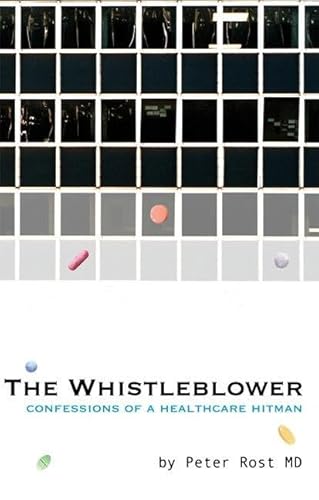
In his book, The Whistleblower: Confessions of a Healthcare Hitman(2006), Peter Rost argues and reveals a big number of the fraudulent practices, the violations of the laws that govern the pharmaceutical industry, and the injustice he witnessed during his work with pharmaceutical companies Wyeth, Pharmacia, and Pfizer. He explains how his experience as a whistleblower has started with each company and why he thinks is it fundamental to comply with the laws in pharmaceutical industry. He believes that if you work in this field, you accept that “business only has one purpose: to make money. But when you are in the business of saving lives, you also have to consider your bigger obligation to humanity.” (p164)
During his work with Wyeth, as Head of the International Marketing Department, he discovered the fraudulent practices related to payment that allowed the underreporting of taxes in a number of foreign countries. The senior executives who work for Wyeth were not paying taxes which led to a lawsuit against the company launched by Peter Rost. As a result of the whistleblower lawsuit filed by Peter against the company, employees who engaged in that were forced to pay taxes of their earnings during almost 10 years from their work. They lost everything and they were bankrupt; but a number of them committed suicide 1 . He explains the consequences of violating the laws and avoiding accurate tax claims that occurred in his first employer company Wyeth.
His second professional position was with the company Pharmacia since he worked as a Vice President of Marketing of the Department of Endocrine Care. He describes his performance during that period as excellent since with the help of his team the company reached high sales numbers and profit. However, Peter kept working while keeping a critical eye in all elements that may indicate fraud or abuse. He communicated to the legal department all the alarming issues that require for them to intervene. He informed them about the illegal marketing and sales method of the antiaging drugs. According to him, the violations of laws were about “how Pharmacia treated doctors lavishly in order to generate sales” (p156).
The abuse of laws continued until the period after Pharmacia was sold to Pfizer, he studied the numbers of sales in every country and how these numbers reflect the market trends. Peter again discovers alarming problems related to that fact that Pharmacia did not give accurate inventory numbers to Pfizer that bought the company based on that. He also explains how Pharmacia pays doctors to author articles in medical journals that were actually written by marketing farms. Pharmacia after sold to Pfizer warned Peter from communicating any information about the fraud to the new company without the approval of their legal department.
Peter Rost continues his story as a whistleblower after Pfizer took control of Pharmacia and played all sophisticated games of firing employees of Pharmacia. Pfizer provided to the leaders a “course in emotional manipulation, with the objective of getting rid of people without causing a scene” (p23) and clear instructions for not giving any references letters to them. Pfizer continued promoting the growth hormone Genotropin illegally for off-label use which resulted in big amount of money of overpayments by the federal Medicare and Medicaid health programs 2 . Peter explains how he continued to have the same position he had in Pharmacia, and he listed a timeline of events that summarizes how Pfizer treated him, how they ignored all the facts he provided to them.
Pfizer violated a big number of laws at all levels as Peter illustrates in his book. He explains how they denied him the right to have a real job and be productive as a talented professional Head of the Department of Endocrine Care. He respected all the ethics and laws to inform them about all the violations and the repercussions that will result from that. He explains how he discovers the ethical problems in Pfizer and how the employees at executive’s level have sexual affairs with their subordinates. Those sexual relations influence promotions as Peter said that it is “not about sex, but about corruption and a management willing to violate basic company guidelines” (p71). Peter states in his book all the retaliation practices that Pfizer exercised on him as well as how they violated the New Jersey’s Whistleblower protection Act.
Pfizer put Peter under surveillance by screening all his calls and accessing his emails, and warned him from contributing in public conferences, political rallies, and television shows about any subject related to the pharmaceutical field. Despite all these factors, Peter continue to blow the whistle and warn them and advise them through the legal firm they hire to avoid repercussions of violations and to comply with laws. At the end he decided to report the documents and the case to the SEC (Securities and Exchange Commission) that opened an investigation within 24 hours 3 . In addition to that, he decided to voice publicly his ideas and went to a conference and speaks about drug reimportation policy in Europe and the US closed market.
He participated in all opportunities to voice his cause about reimportation of drugs and provide vulnerable Americans the drugs they need and cannot afford. He spoke in TV shows, before congress, and contacted FBI, FDA, New York Attorney General. Peter was fighting for his rights and for the Americans rights as well, either against fraud or against those who oppose the reimportation of drugs. The battle between Peter and Pfizer is continuous even though they fired him in 2005 breaking all laws and violating his rights as a whistleblower.
In this book, a number of serious laws violations were discussed and unethical complex practices were performed boldly in pharmaceutical drug market and against Peter Rost. The company Wyeth accepted that their employee abuse tax payment in a number of countries around the world, they also retaliate against Peter as whistleblower and went to court as well give his private documents to Pharmacia that used them later to ruin his carrier and affect his credibility. Not only Wyeth broke the laws, Pharmacia and Pfizer also did.
Pharmacia Company violated the anti-kickback statute by paying luxury trips for doctors to promote illegally the anti-aging hormone drugs. The company violation was about Genotropin marketing and contacts with physicians. They also make them “author medical journal articles that were actually written by a medical-marketing firm” (p 142) to empower the marketing and reputation of their drugs, influence the consumers, and improve the sales and profits. Pharmacia also violate the Sarbanes Oxley Act of 2002 because the warned him from informing Pfizer without their consent, they give all his documents to Pfizer to use them against him. Peter said that they violated his right as whistleblower under the Sarbanes Oxley Act that “not only gave financial Whistleblowers protection, it also made retaliation against certain whistleblowers a felony” (p92).
Pfizer violated a number of laws and ethics including the Anti-kickback, Sarbanes Oxley Act, and the False Claims Act. Pfizer violated the Anti-kickback statute by adopting the same fraudulent policy of Pharmacia of sales and marketing strategies. They violated the False Claims Act because they continued to promote the growth hormone Genotropin illegally for off- label use which resulted in big amount of money of overpayments by the federal Medicare and Medicaid health programs. They violated the Sarbanes Oxley Act because they did not respect his rights to not be retaliated because he is a witness and who ever retaliate against him can go to a period not more than 10 years prison. Retaliation against him as a whistleblower encompasses not offering him a job, preventing him from receiving bonus, cancelling his credit card and denying him access to his corporate phone and email, and firing him.
The future of the pharmaceutical and the health care fields in general are conditioned with how the companies and the bodies involved comply with the laws and regulations that govern and regulate this field. Rost in his book mentions that “during the last 5 years more than half of the large drug companies have paid criminal and civil fines, amounting to billions of dollars” (p139) despite the fact a number of these companies like TAP, Pfizer, Bayer, Wyeth, and others signed corporate integrity agreement to settle liabilities of the False Claims Act for “filing false and fraudulent claims with the Medicare and the Medicaid programs” (p140), or because they “alleged to have made Kickbacks and payment to doctors in form of trips … as an inducement for them to give speeches promoting the off-label use of drugs” (p142). These illegal practices should stop and the Government should apply more restrictions in this field to gain more control to ensure the total compliance with the laws.
Peter Rost mentioned a number of critical problems that should be addressed for more transparency. The pharmaceutical industry should stop sponsoring elections and candidates should stop funding their rallies and campaigns from companies they will have authority upon when they govern. The FDA standards of good manufacturing and price regulations should be respected by all drug companies. In order to ensure that, the FDA as a governmental agency that should ensure the safety of the drugs prescribed by the doctors and sold in the market should not engage in fraud and bribery with pharmaceutical companies. According to Rost, the FDA whistleblower explains how the FDA “was reluctant to remove Vioxx from the market” (p153) and how he was “intimidated by FDA officials after a study he conducted showed Vioxx increased the risk of heart attack” (p153).
In order to guarantee compliance and transparency, the governmental agencies, congress, and the elected representatives of citizens should play their role to ensure that fraud and abuse cannot be in place in a country where democracy and freedom should reign. The corporate companies in the health care and pharmaceutical fields should it is a business where they profit but as Rost said: “You cannot maintain your profits if you do not care about the health of your patients” (p164). Another important factor to fix the violations in this field is about the existing culture as mentioned in this book about whistleblowers as losers that should stop and the Media should promote and construct a new culture of integrity that blowing the whistle when needed makes us good contributing citizens.
____________________________________________
 Peter Rost is an US former drug marketing executive who is most known for taking public stances critical of the pharmaceutical industry as an “insider” and whistleblower. He sued his last two pharmaceutical employers, Wyeth and Pfizer, the latter of which fired him in 2005. At Wyeth, he uncovered tax evasion practices, and after informing senior company executives, was transferred from Sweden to a post in New Jersey. Rost sued the company, saying that the transfer was a retaliatory demotion, though the company said it was a promotion. Rost settled with Wyeth for an undisclosed amount in 2003. At Pfizer, Rost filed a qui tam suit disclosing off-label marketing of Genotropin at Pharmacia prior to its purchase by Pfizer. The U.S. Department of Justice declined to join in Rost’s suit as the marketing violations had already been disclosed to the Department by Pfizer. Rost was eventually fired by Pfizer, and sued for wrongful dismissal. In 2013 Pfizer, the Department of Justice, and Rost settled on undisclosed terms. Rost then worked as a public speaker, author, and litigation consultant.
Loubna N Morris – Oklahoma State University, Health Care Administration, Graduate Student – Université Mohammad V – Souissi, English, Graduate Student
Tags: Big Pharma, Corruption, Exposé, Health Care, Literature, Medical Industrial Complex, Monopoly Capitalism, Predatory Capitalism, Profits, Public Health, Whistle Blower, Whistleblowing
DISCLAIMER: The statements, views and opinions expressed in pieces republished here are solely those of the authors and do not necessarily represent those of TMS. In accordance with title 17 U.S.C. section 107, this material is distributed without profit to those who have expressed a prior interest in receiving the included information for research and educational purposes. TMS has no affiliation whatsoever with the originator of this article nor is TMS endorsed or sponsored by the originator. “GO TO ORIGINAL” links are provided as a convenience to our readers and allow for verification of authenticity. However, as originating pages are often updated by their originating host sites, the versions posted may not match the versions our readers view when clicking the “GO TO ORIGINAL” links. This site contains copyrighted material the use of which has not always been specifically authorized by the copyright owner. We are making such material available in our efforts to advance understanding of environmental, political, human rights, economic, democracy, scientific, and social justice issues, etc. We believe this constitutes a ‘fair use’ of any such copyrighted material as provided for in section 107 of the US Copyright Law. In accordance with Title 17 U.S.C. Section 107, the material on this site is distributed without profit to those who have expressed a prior interest in receiving the included information for research and educational purposes. For more information go to: http://www.law.cornell.edu/uscode/17/107.shtml. If you wish to use copyrighted material from this site for purposes of your own that go beyond ‘fair use’, you must obtain permission from the copyright owner.
Join the discussion!
We welcome debate and dissent, but personal — ad hominem — attacks (on authors, other users or any individual), abuse and defamatory language will not be tolerated. Nor will we tolerate attempts to deliberately disrupt discussions. We aim to maintain an inviting space to focus on intelligent interactions and debates.
Read more
Click here to go to the current weekly digest or pick another article:
EXPOSURES - EXPOSÉS: