


Can Israel Win Back the World’s Trust?
PALESTINE ISRAEL GAZA GENOCIDE, 15 Jun 2026
Shira Efron | The New York Times - TRANSCEND Media Service
**********************************
DISCLAIMER: Publication of articles on TMS does not mean that we subscribe, agree or support their content. Our aim is to inform and present facts and opinions from diverse angles and perspectives so that our readers may form educated, intelligent opinions and act likewise.
**********************************
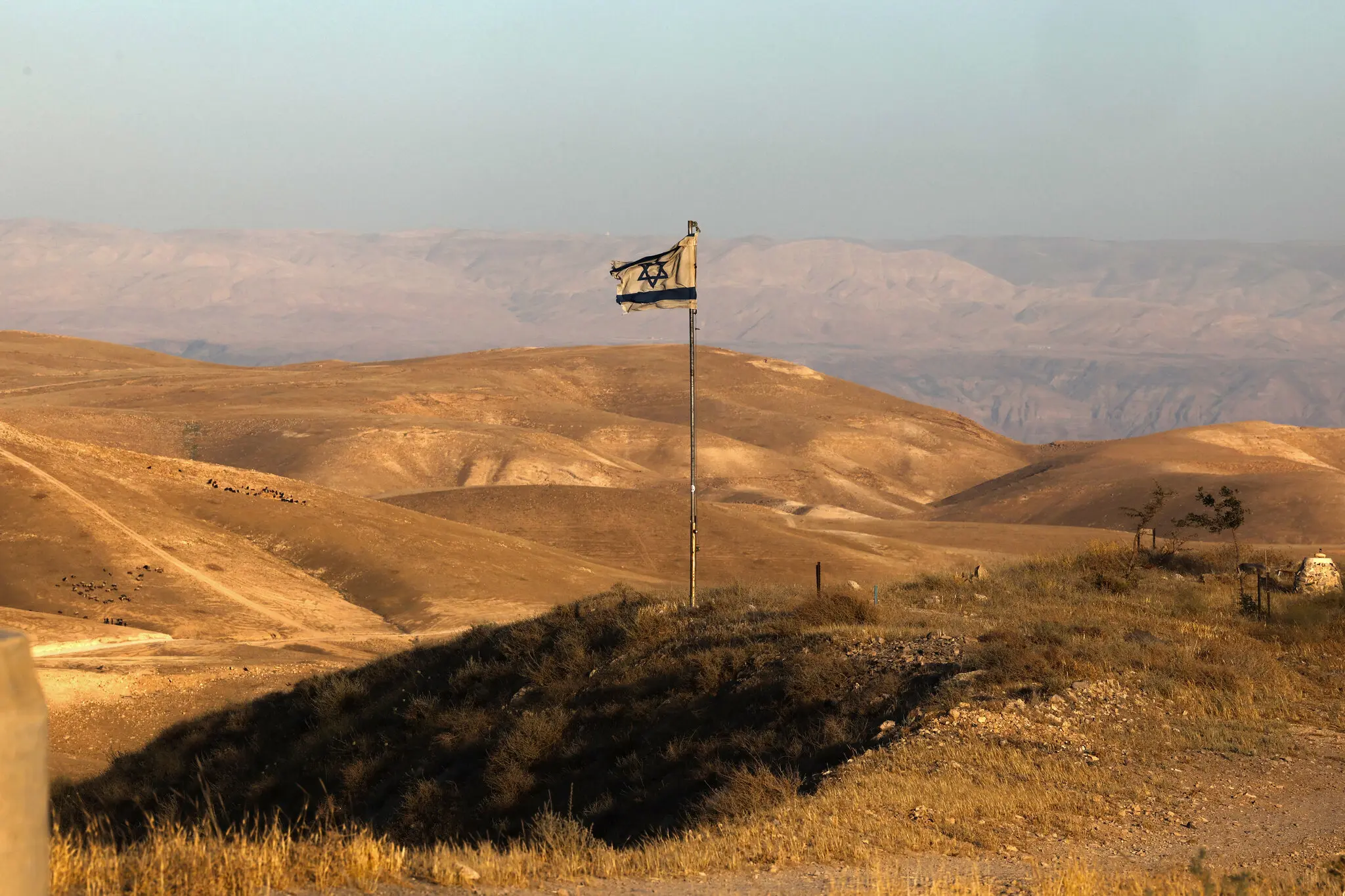
Credit…Ahmad Gharabli/Agence France-Presse
Polls, social media, and growing boycotts suggest that Israel’s international isolation is worsening. Although some of this stems from forces beyond Israel’s control, the country could take steps to stop the slide, especially with elections around the corner.
31 May 2026 – At the Eurovision song contest, Israel drew protesters as well as boycotts by Ireland, Spain, the Netherlands, Iceland and Slovenia. Days later, Israel’s finance minister, Bezalel Smotrich, announced that the prosecutor of the International Criminal Court is seeking an arrest warrant for him, and France and Poland barred another cabinet member, the national security minister Itamar Ben-Gvir, from entering their countries. All of this was in the past month alone.
Israel’s international isolation is deepening fast — a fact showing up in polls, social media, widening boycotts and the way a new generation around the world has come to instinctively view Israel mainly as part of a story about occupation and Palestinian suffering. It is increasingly apparent that the longstanding cushions of a bipartisan safety net in Washington and cordial, if cautious, relations in Europe are dissipating.
What can stop this slide?
Parliamentary elections expected in the fall offer the clearest opportunity for change. Depending on the outcome, they can buy a short-lived grace period to create room for pragmatic change. A new governing coalition could signal that Israel intends to answer its global critics by curbing settler violence, halting de facto annexation of West Bank land, facilitating a plan to reconstruct Gaza, restoring workable ties with Palestinian institutions and re-establishing predictable, democratic governance. That combination of assuring Israelis at home while offering concrete gestures abroad is the only realistic path to halt the drift into deep isolation, a dangerous state from which Israel will find it extraordinarily difficult to recover.
Surveys show just how profound Israel’s isolation has become. A Pew Research Center survey from March found that 60 percent of Americans now hold an unfavorable view of Israel, compared with 42 percent in 2022. Especially worrisome is the age breakdown. Among Americans aged 18 to 49, nearly three-quarters view Israel unfavorably, including nearly 60 percent of young Republicans, the very demographic many Israelis still assume supports the Jewish state. It is, in short, next to impossible to find a young cohort in America that looks at Israel and likes what it sees.
The picture elsewhere is growing worse too. In a Pew survey last year, majorities in 20 of 24 countries held negative views of Israel; in Australia, Greece, Indonesia, Japan, the Netherlands, Spain, Sweden and Turkey the figure was close to or above three-quarters. This has clear policy implications. European Union foreign ministers this month approved sanctions on violent settlers and their backers; the E.U.-Israel Association Agreement was nearly suspended; several European states are pushing to ban imports of goods made in settlements in the occupied territories. Last year, the European Commission concluded there are breaches of Israel’s human-rights obligations under the E.U.-Israel Association Agreement.
The fraying support matters because Israel’s security and economy are tethered to the United States and Europe. The United States supplies advanced weapons and intelligence that underpin Israeli deterrence and gives the state diplomatic support in the United Nations and elsewhere. Europe provides markets, partnerships, investments and funding that is a lifeline for Israeli research and development and academia. Losing public support abroad narrows Israel’s strategic options and makes its long-term security harder to sustain.
Some of the isolation results from forces beyond Israel’s control. American voters tend to put a priority on domestic and economic matters, with Israel rarely figuring as a positive mobilizing issue. Other polls show declining support for Israel relative to the Palestinians. Young Americans put a priority on human rights and are less likely to be religiously affiliated, factors that make them less responsive to traditional pro-Israel appeals. Many younger American Jews, especially among Democrats, have decoupled their cultural or religious identity from automatic political defense of Israel and are weakening connections to the civic networks and institutions that once translated sympathy for Israel into durable political backing.
The Israeli government and its supporters prefer to file some of the declining support under antisemitism, and some of it is. The Anti-Defamation League recorded 6,274 antisemitic incidents in the United States last year, more than double what it counted in 2021, and five times as high as a decade ago. Around the world, antisemitic violence in 2025 killed the highest number of Jews in 30 years, according to a report from Tel Aviv University. The murders of two Israeli Embassy staff members outside the Capital Jewish Museum in Washington, the fatal injuries sustained by an elderly woman in Boulder, Colo., who was marching for the release of Israeli hostages from Gaza and the firebombing of Gov. Josh Shapiro’s residence in Pennsylvania on Passover while his family was home, all last year, are among the grim indicators that hostility surrounding Israel can spill into violence against Jews.
But Israelis make a big mistake in treating every new critic as an antisemite. Much criticism stems from Israel’s behavior: In addition to images of devastation and hungry children in Gaza, as part of Israel’s brutal response to the Hamas massacre of Oct. 7, 2023, the world now often sees footage of settlers torching Palestinian homes in the West Bank and reads about Israeli soldiers looting living rooms in Lebanon. Although these incidents represent a small fraction of Israeli conduct, they are framed through a social justice lens and amplified by social media.
These are images and stories that have lodged themselves in the collective imagination, and they will not be undone by Israeli denials.
There is, however, potential for change. Mr. Ben-Gvir and Mr. Smotrich — the most polarizing figures in Israeli politics — are unlikely to be part of the next coalition government, polls indicate.
Israeli elections can be unruly and this round will be unpredictable, with over a dozen parties in contention and a sharply divided electorate. Yet a change in government could lead other nations and their publics and news media to give a new coalition the benefit of the doubt. Any grace period will be short, and Israel’s next leaders will need to present a different vision quickly.
If a new government’s policies look more or less like the old ones in better tailoring, the good will may very well rapidly burn off and the impression abroad — that Israel’s problem is not a particular set of leaders, but Israel itself — will harden into common sense.
Leaders abroad who hope that a different government will revive the peace process should calibrate their expectations. No government in the near future will deliver Palestinian statehood — and probably will not even come close, given the enduring security threats from Hamas, Hezbollah, the Houthis and Iran, and the lingering trauma of Oct. 7.
But a new government could pave the way toward peace. Instead of actively weakening the Palestinian Authority, as the current coalition is doing, it could restore the basic administrative and economic functions that keep Palestinian institutions afloat, releasing part of the funds owed to the Authority and easing bureaucratic constraints on trade, movement and economic development in the West Bank. It could allow the authority to expand civilian and security control in areas that will remain under the Palestinians in a future arrangement. It could support, rather than stall, President Trump’s peace plan for Gaza, and pursue calibrated steps of gradual withdrawal from the buffer zones in Lebanon and Syria while advancing serious diplomacy instead.
A new coalition can treat settler violence as a crime, and not provide it with the de facto impunity it now enjoys. It can halt the de facto annexation of West Bank territory. That would demonstrate to the world that Israel does not intend to occupy Palestinian land in perpetuity.
Tone matters as much as policy. A government that speaks honestly about mistakes, commits to transparent investigations of abuses and reasserts the norms of democratic governance will buy time and restore some trust in the world.
The task ahead is twofold: to protect Israelis from real dangers, and to persuade the wider world that Israel’s security and its democratic character are not mutually exclusive. The coming elections may not answer everything the international community asks for, but they can stop the slide into isolation, rebuild some trust and allow pragmatic steps that make Israel less alone, and more secure.
___________________________________________________
Dr. Shira Efron is the Israel policy chair and a senior fellow at RAND. She wrote from Tel Aviv.
A version of this article appears in print on 31 May 2026, Section SR, Page 4 of the New York edition with the headline: Can Israel Win Back the World’s Trust?
Tags: Crimes against Humanity, Ethnic Cleansing, Gaza, Genocide, IDF, Israel, Jewish Settlers, Jews, Muslims, Nakba, Palestine, Palestinian Holocaust, Palestinian Rights, Pariah State, Racism, Rogue states, Torture, War crimes, West Bank, Zionism
JOIN THE BDS-BOYCOTT, DIVESTMENT, SANCTIONS CAMPAIGN TO PROTEST THE ISRAELI BARBARIC GENOCIDE OF PALESTINIANS IN GAZA.
DON'T BUY PRODUCTS WHOSE BARCODE STARTS WITH 729, WHICH INDICATES THAT IT IS PRODUCED IN ISRAEL. DO YOUR PART! MAKE A DIFFERENCE!
7 2 9: BOYCOTT FOR JUSTICE!
DISCLAIMER: The statements, views and opinions expressed in pieces republished here are solely those of the authors and do not necessarily represent those of TMS. In accordance with title 17 U.S.C. section 107, this material is distributed without profit to those who have expressed a prior interest in receiving the included information for research and educational purposes. TMS has no affiliation whatsoever with the originator of this article nor is TMS endorsed or sponsored by the originator. “GO TO ORIGINAL” links are provided as a convenience to our readers and allow for verification of authenticity. However, as originating pages are often updated by their originating host sites, the versions posted may not match the versions our readers view when clicking the “GO TO ORIGINAL” links. This site contains copyrighted material the use of which has not always been specifically authorized by the copyright owner. We are making such material available in our efforts to advance understanding of environmental, political, human rights, economic, democracy, scientific, and social justice issues, etc. We believe this constitutes a ‘fair use’ of any such copyrighted material as provided for in section 107 of the US Copyright Law. In accordance with Title 17 U.S.C. Section 107, the material on this site is distributed without profit to those who have expressed a prior interest in receiving the included information for research and educational purposes. For more information go to: http://www.law.cornell.edu/uscode/17/107.shtml. If you wish to use copyrighted material from this site for purposes of your own that go beyond ‘fair use’, you must obtain permission from the copyright owner.
Join the discussion!
We welcome debate and dissent, but personal — ad hominem — attacks (on authors, other users or any individual), abuse and defamatory language will not be tolerated. Nor will we tolerate attempts to deliberately disrupt discussions. We aim to maintain an inviting space to focus on intelligent interactions and debates.
Read more
Click here to go to the current weekly digest or pick another article:
PALESTINE ISRAEL GAZA GENOCIDE: