


Africa Is Finally Refining Its Oil–Naturally, the Adults Are Concerned
TRANSCEND MEMBERS, 15 Jun 2026
Raïs Neza Boneza – TRANSCEND Media Service
9 Jun 2026 – We are at one of those moments in history when the mask slips. Not dramatically. Not with thunder, flags, or villain music. Just a polite report, a market recommendation, a few words like competition, efficiency, liberalization — and suddenly the old colonial script walks back on stage wearing a World Bank tie.
The latest controversy around the Dangote refinery is one of those moments. Nigeria, after decades of exporting crude oil like a man selling raw cassava and buying back imported chips at luxury prices, finally builds a refinery capable of processing 650,000 barrels a day. A $20 billion project. African capital. African banks. African ambition. African value staying, scandalously, in Africa.
And what happens? The World Bank reportedly recommends reopening fuel imports to “increase competition.” Of course. Because nothing terrifies the guardians of global poverty management more than an African economy discovering the dangerous habit of keeping its own value.
Let us pause and admire the elegance of the operation. Nobody says, “Please remain dependent.” That would be vulgar. Nobody says, “Continue exporting raw materials and buying back finished goods like a well-trained colony.” That would be too honest. Instead, we hear: “Open the market.” “Avoid monopoly.” “Protect consumers.” “Encourage competition.” Beautiful words. Clean words. Words with polished shoes. But behind them sits the same old machinery: keep Africa raw, keep Africa importing, keep Africa grateful, keep Africa calling dependency “partnership.”
A few months ago, Europe rejected a shipment of refined fuel from Africa’s largest refinery. It did not meet their standards, they said. The sulfur content was too high, they said. Such concern. Such delicate nostrils. One could almost hear Brussels coughing into a silk handkerchief. They sent it back.
Then history, with its wicked sense of humour, entered the room. Following the escalation between the United States, Israel, and Iran, the global oil market began to tremble. Iran responded by threatening one of the most critical waterways on earth. Suddenly, a quarter of the world’s seaborne oil and a significant share of liquefied natural gas stood at risk. Europe panicked. The same continent that had sniffed at African fuel as if it were a suspicious stew at a colonial dinner table suddenly found itself counting jet fuel reserves like a man checking the last cigarettes during a siege. And where did Europe turn? Nigeria.
My, how the tables have turned. And what a charming little table it is — polished in hypocrisy, varnished with desperation, and imported, probably, at a premium. What Europe called a quality problem was never merely a quality problem. It was also a business problem. A control problem. A who-gets-to-refine problem. A who-gets-to-profit problem.
Because the Dangote refinery does not simply produce fuel. It threatens a whole historical arrangement. For decades, Europe bought Nigerian crude cheaply, refined it on European soil, added value, added margins, added invoices, added lectures, and then sold the finished product back to Africa at a premium. Africa pumped. Europe refined. Africa paid. Europe explained. This was called trade.
Nigeria’s Bonny Light crude is among the finest grades on the planet — a sweet crude highly valued in global markets. Europe knew exactly what it was dealing with. The issue was never that Africa had nothing to offer. The issue was that Africa had begun offering too much in finished form. That is when the adults become concerned.
The Dangote refinery is not just an industrial project. It is an insult to the established order. For decades, Nigeria exported crude oil, watched others refine it, then imported the finished product at inflated prices. This was called normal. Sensible, even. The sort of economic arrangement that makes perfect sense if one has completely given up on dignity.
Then came Aliko Dangote, with all his contradictions, ambitions, billionaire swagger, and inconvenient infrastructure. He built the thing. Not a policy paper. Not a conference panel. Not a donor-funded “capacity-building workshop” with coffee breaks, bottled water, and recycled PowerPoint slides. An actual refinery.
Naturally, the experts became nervous. Because Africa is allowed to have potential. Potential is charming. Potential gets applause at summits. Potential receives development grants, strategy documents, and smiling photographs with ambassadors. But actual capacity? That is different. Actual capacity threatens supply chains. Actual capacity disturbs old profit routes. Actual capacity asks the forbidden question: what if Africa does not need to remain the world’s warehouse of unfinished things?
For centuries, the world told Africa the same lie: take your oil from the ground, ship it to us, let us refine it, then buy it back from us — and be grateful for the arrangement. Africa pumped. Europe profited. But not anymore. Today, African refined fuel is helping keep European planes in the sky. The irony is thick enough to bottle and export, though one suspects someone in Geneva would recommend liberalizing the irony sector first.
And now Dangote wants to replicate the model in East Africa. A massive refinery serving Kenya, Tanzania, Uganda, South Sudan, the DRC, and beyond. Local crude processed locally. Regional states taking equity. Pipelines, ports, fuel security, industrial strategy. In other words: the sort of thing every rich country did before lecturing poor countries not to do it.
The United States protected its infant industries. Europe protected its agriculture. Japan and South Korea built industrial power behind state planning, tariffs, subsidies, and strategic discipline. They did not become rich by leaving their economies naked in the rain while foreign competitors danced around them with cheaper products and better financing. But when Africa tries the same, suddenly everyone remembers the sacred gospel of competition. How touching. One almost expects a choir of consultants to descend from the heavens singing: Thou shalt liberalize, for the market is merciful.
Except the market has never been merciful. The market has been managed, protected, subsidized, armed, insured, sanctioned, and diplomatically escorted whenever powerful nations needed it. Free markets, historically, are often what rich countries recommend after they have already climbed the ladder — and then quietly pull it up behind them. The hypocrisy would be funny if it had not destroyed entire economies.
From the 1980s onward, structural adjustment programs came to Africa wrapped in the language of rescue. Privatization. Cuts to public spending. Removal of subsidies. Currency devaluation. Trade liberalization. Open your markets. Shrink your state. Trust the invisible hand. The invisible hand, as usual, turned out to be very visible when it came to collecting debt repayments. Schools suffered. Hospitals suffered. Farmers suffered. Local industries collapsed under imported competition. Public capacity was dismantled in the name of efficiency. And when the promised prosperity did not arrive, Africa was told it had failed to implement the reforms properly. This is the genius of the system: if the medicine poisons you, the doctor blames your body.
The Dangote refinery disrupts this theology. It says value addition matters. Industrial sovereignty matters. Energy security matters. A continent cannot eat comparative advantage forever. You cannot build nations by exporting soil, crude, cobalt, cocoa, copper, and young people — then importing everything from petrol to toothpicks. At some point, a country must produce. Refine. Manufacture. Protect. Coordinate. Plan.
Yes, monopolies are a real concern. Yes, Dangote is not a saint. No billionaire is. If you find one, check the accounting again. African states must regulate him, tax him, discipline him, and prevent private power from becoming public hostage-taking. But let us not pretend the sudden international panic is primarily about Nigerian consumers. Where was this passionate concern when African markets were flooded with imports that destroyed local industries? Where was the World Bank’s tender heart when structural adjustment gutted public services? Where were the hymns to fairness when African countries were forced into commodity dependency for generation after generation?
Apparently, monopoly is only dangerous when the monopolist is African. When Western corporations dominate strategic sectors, we call it investment. When African capital tries to control part of its own value chain, we call it a threat. The issue is not whether Africa should have competition. It should. The issue is whether Africa is allowed to build the industrial base from which real competition can emerge. You cannot ask a newborn factory to compete against global giants already fattened by decades of state protection and then call the result “fair trade.” That is not economics. That is ritual sacrifice with spreadsheets.
The real question is simple: does Africa have the right to do what today’s rich countries did to become rich? Does it have the right to protect strategic sectors? To refine its own oil? To build regional industrial policy? To use tariffs temporarily? To support local producers? To stop exporting raw wealth and importing refined dependency? Or must Africa remain forever “open” — open like a wound, open like a mine, open like a mouth waiting for instructions?
Because Africa was never the problem. It was always the answer. Colonizers did not come to Africa because Africa had nothing. They came because Africa had everything. Gold. Copper. Rubber. Oil. Cobalt. Land. Labor. Futures. And, most dangerously, possibilities. That has not changed.
What must change is the direction of the benefit. African resources must benefit African people. African oil must power African industry. African minerals must build African factories. African agriculture must feed African children before feeding foreign balance sheets. African labor must create African prosperity, not merely foreign dividends with a local accent. This is not nationalism as decoration. It is survival as policy.
Africa does not need another sermon on openness from economies built behind walls. It does not need another development report that mistakes dependency for discipline. It does not need another consultant explaining that the wound would heal faster if only the patient remained open. The answer will not be found in polite reports. It will be found in political courage.
African states must stop treating industrial sovereignty as a dangerous dream. They must negotiate harder, coordinate regionally, finance each other, regulate their own champions, and stop confusing donor approval with development. Because the future will not be donated. It will be built, defended, refined — and, when necessary, protected from the very people who arrive smiling with advice.
The Dangote may not be perfect. Good. History isn’t made by flawless actors—it’s made by those who reshape the land. And if one African refinery can cause this much discomfort in the temples of global economic management, perhaps the continent should build ten more. For competition, of course.
And if you did not know, now you know.
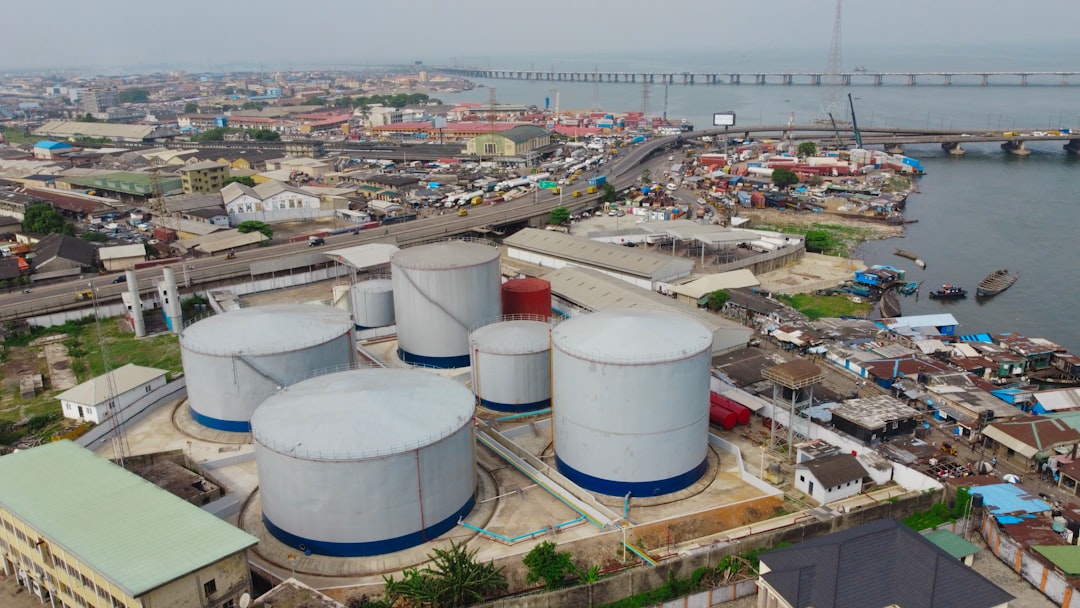
Photo by Vitalis Nwenyi on Unsplash
____________________________________________
 Raïs Neza Boneza is the author of fiction as well as non-fiction, poetry books and articles. He was born in the Katanga province of the Democratic Republic of Congo (Former Zaïre). He is also an activist and peace practitioner. Raïs is a member of the TRANSCEND Media Service Editorial Committee and a convener of the TRANSCEND Network for Peace Development Environment for Central and African Great Lakes. He uses his work to promote artistic expressions as a means to deal with conflicts and maintaining mental wellbeing, spiritual growth and healing. Raïs has travelled extensively in Africa and around the world as a lecturer, educator and consultant for various NGOs and institutions. His work is premised on art, healing, solidarity, peace, conflict transformation and human dignity issues and works also as freelance journalist. You can reach him at rais.boneza@gmail.com – http://www.raisnezaboneza.no
Go to Original – rboneza.substack.com
Tags: Africa, Big Oil, Colonialism, Colonization, Nigeria, Sovereignty, West, World Bank
DISCLAIMER: The statements, views and opinions expressed in pieces republished here are solely those of the authors and do not necessarily represent those of TMS. In accordance with title 17 U.S.C. section 107, this material is distributed without profit to those who have expressed a prior interest in receiving the included information for research and educational purposes. TMS has no affiliation whatsoever with the originator of this article nor is TMS endorsed or sponsored by the originator. “GO TO ORIGINAL” links are provided as a convenience to our readers and allow for verification of authenticity. However, as originating pages are often updated by their originating host sites, the versions posted may not match the versions our readers view when clicking the “GO TO ORIGINAL” links. This site contains copyrighted material the use of which has not always been specifically authorized by the copyright owner. We are making such material available in our efforts to advance understanding of environmental, political, human rights, economic, democracy, scientific, and social justice issues, etc. We believe this constitutes a ‘fair use’ of any such copyrighted material as provided for in section 107 of the US Copyright Law. In accordance with Title 17 U.S.C. Section 107, the material on this site is distributed without profit to those who have expressed a prior interest in receiving the included information for research and educational purposes. For more information go to: http://www.law.cornell.edu/uscode/17/107.shtml. If you wish to use copyrighted material from this site for purposes of your own that go beyond ‘fair use’, you must obtain permission from the copyright owner.
Join the discussion!
We welcome debate and dissent, but personal — ad hominem — attacks (on authors, other users or any individual), abuse and defamatory language will not be tolerated. Nor will we tolerate attempts to deliberately disrupt discussions. We aim to maintain an inviting space to focus on intelligent interactions and debates.