


3 Alarming Signs Elon Musk Wealth Marks a New Era of Corporate Tech Fascism
CAPITALISM, 15 Jun 2026
teleSUR - TRANSCEND Media Service
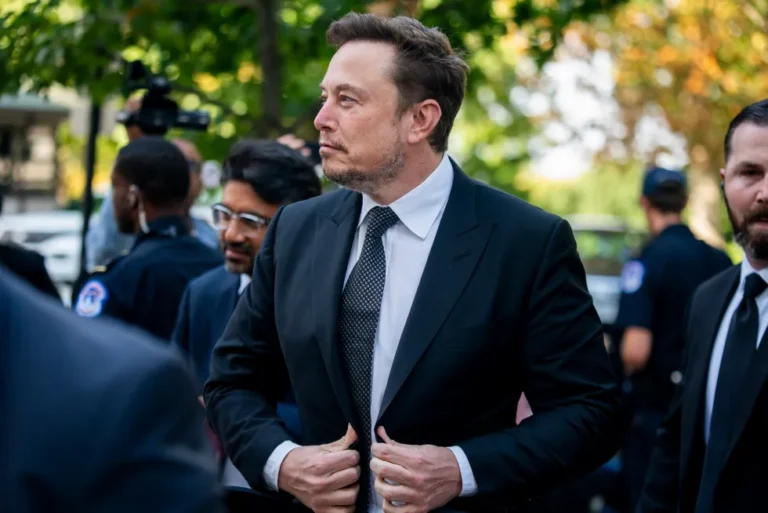
Elon Musk’s wealth reached a historic milestone as SpaceX’s Nasdaq debut highlighted extreme inequality and corporate power.
Elon Musk wealth has made him the first trillionaire, after SpaceX’s Nasdaq debut exposed extreme inequality, speculative finance, and corporate power.
14 Jun 2026 – Elon Musk wealth reached a historic and troubling milestone after SpaceX debuted on the Nasdaq at a share price of $135, making Musk the first person in history to be described as a trillionaire in dollar terms. The listing was presented as a financial achievement, but it also exposed the extreme concentration of wealth in the global economy.
Elon Musk wealth and the SpaceX listing
The aerospace corporation SpaceX entered the stock market with a valuation that pushed Musk’s fortune beyond the combined wealth of nearly half the world’s population. That level of accumulation highlights a global economic order in which a single individual can control resources on a scale once associated only with states. The report argues that such concentration should be seen not as normal success, but as a warning sign.
To grasp the scale of the imbalance, the article notes that a middle-class salaried worker in the United States would need to work for more than 14 million continuous years to match that capital. The comparison is meant to show how far elite financial power has moved away from real productive labor. It also exposes the widening gap between wage earners and the ultra-rich.
SpaceX’s public offering underscores the distance between financial speculation and the real economy. The company’s market value was said to exceed its actual annual revenue by 94 times, a disparity that analysts attribute to narrative-driven stock pricing rather than measurable productive capacity. The result is a market built more on expectations than on tangible output.
The Nasdaq, according to the article, changed its own rules to allow the company’s listing even though it had not demonstrated prior real profits. That move enabled index funds to buy artificially inflated shares, shifting the risk of a possible collapse toward workers’ retirement funds. What appears as innovation, the piece suggests, may actually be a transfer of risk upward and losses downward.
Elon Musk wealth, inequality, and political power
This extreme concentration of wealth has alarmed scholars such as Thomas Piketty and Gabriel Zucman, who argue that capital accumulation without progressive taxation damages the social fabric. Their concern is not only about inequality, but about what such inequality does to democracy itself. When private wealth grows beyond the scale of public institutions, public power weakens.
The article argues that individual fortunes larger than the GDP of several states erode sovereignty and reshape democratic representation. Large private fortunes can influence elections, party systems, and policy agendas through massive campaign donations and lobbying pressure. In that environment, the vote of ordinary citizens begins to compete with the power of concentrated capital.
Musk’s political role is also central to the critique. The text says his financial support for Donald Trump’s campaign was later repaid through deregulation, tax leniency, and environmental rollbacks. That pattern, the article suggests, reflects a system in which billionaires do not merely influence politics from outside; they help design the rules under which they operate.
The phrase “corporate technofascism” is used to describe this fusion of private wealth, political influence, and technological control. The concern is that modern platforms and industrial empires can shape public life while remaining above democratic accountability. In that sense, Musk becomes not only a symbol of wealth, but also of a broader political model.
Geopolitical context
Elon Musk wealth has implications far beyond one businessman or one company. It reflects a global system in which digital platforms, aerospace contracts, electric vehicles, and political donations are fused into a single model of power. That model affects labor, taxation, democracy, and even how states define technological sovereignty.
The issue also matters because extreme private fortunes can rival state capacity. When a single figure can influence communications networks, transport systems, space infrastructure, and election narratives, the line between corporate leadership and geopolitical leverage becomes blurred. That is why the article frames Musk’s rise as more than a personal success story.
At the international level, this kind of wealth concentration feeds deeper concerns about post-democratic capitalism. If financial markets reward speculative scale over social value, the result is a world where wealth becomes self-reproducing and political power becomes increasingly privatized. The SpaceX listing is therefore presented as a warning about the future of global capitalism.
Related: Elon Musk Found Guilty of Misleading Shareholders in Twitter Deal
Go to Original – telesurenglish.net
Tags: Casino Capitalism, Catastrophe Capitalism, Elon Musk, Fascism, Inequality, Military Capitalism, Monopoly Capitalism, Organized crime, Privilege, SpaceX, Super rich, Trillionaires, White privilege
DISCLAIMER: The statements, views and opinions expressed in pieces republished here are solely those of the authors and do not necessarily represent those of TMS. In accordance with title 17 U.S.C. section 107, this material is distributed without profit to those who have expressed a prior interest in receiving the included information for research and educational purposes. TMS has no affiliation whatsoever with the originator of this article nor is TMS endorsed or sponsored by the originator. “GO TO ORIGINAL” links are provided as a convenience to our readers and allow for verification of authenticity. However, as originating pages are often updated by their originating host sites, the versions posted may not match the versions our readers view when clicking the “GO TO ORIGINAL” links. This site contains copyrighted material the use of which has not always been specifically authorized by the copyright owner. We are making such material available in our efforts to advance understanding of environmental, political, human rights, economic, democracy, scientific, and social justice issues, etc. We believe this constitutes a ‘fair use’ of any such copyrighted material as provided for in section 107 of the US Copyright Law. In accordance with Title 17 U.S.C. Section 107, the material on this site is distributed without profit to those who have expressed a prior interest in receiving the included information for research and educational purposes. For more information go to: http://www.law.cornell.edu/uscode/17/107.shtml. If you wish to use copyrighted material from this site for purposes of your own that go beyond ‘fair use’, you must obtain permission from the copyright owner.
Join the discussion!
We welcome debate and dissent, but personal — ad hominem — attacks (on authors, other users or any individual), abuse and defamatory language will not be tolerated. Nor will we tolerate attempts to deliberately disrupt discussions. We aim to maintain an inviting space to focus on intelligent interactions and debates.