
The World We Have Known Ends This July–a New One Begins
SPECIAL FEATURE, 29 Jun 2026
Mark A. Shryock - TRANSCEND Media Service
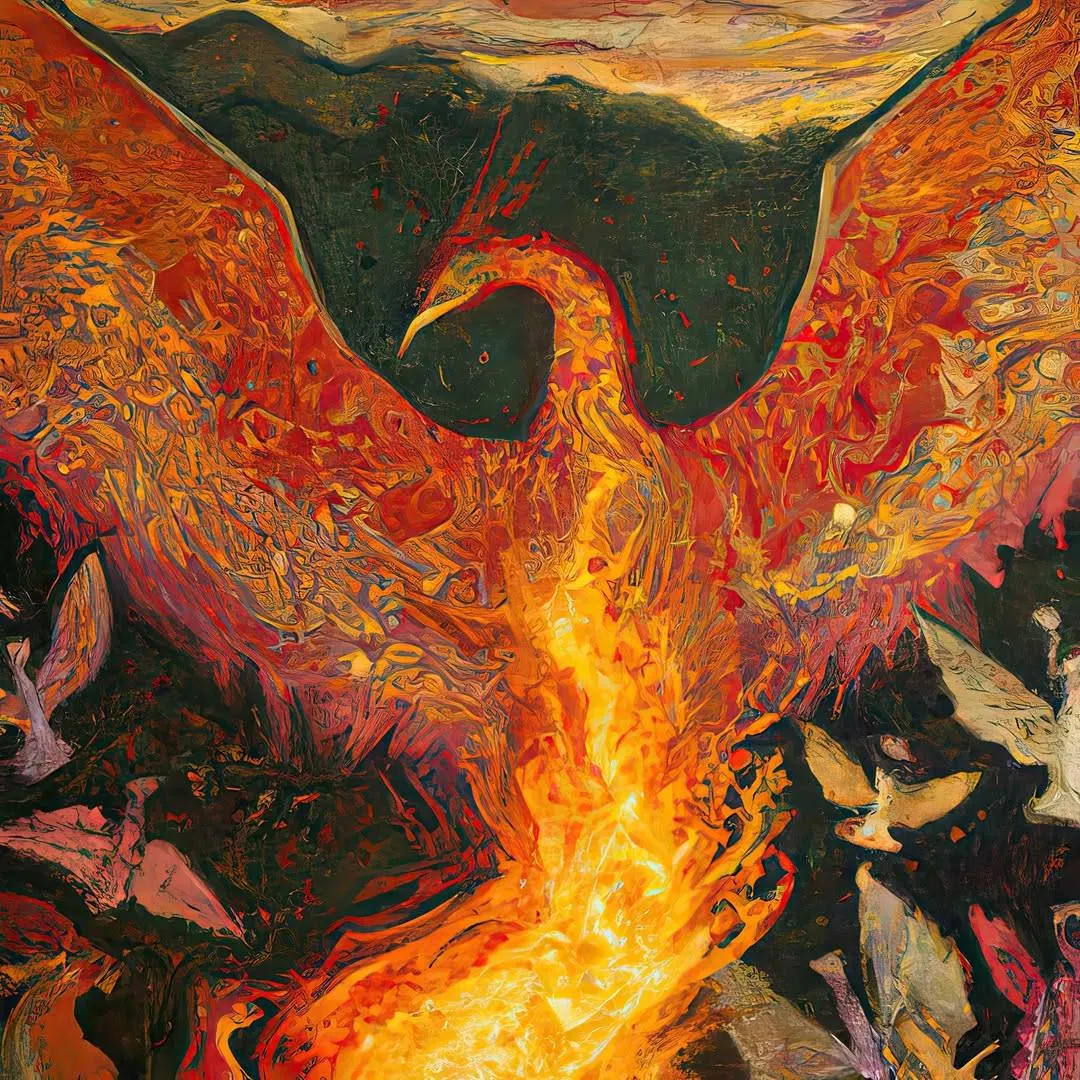
The Barbault Basket
22 Jun 2026 – In July 2026, five planets will lock into a geometric pattern that a French astrologer named André Barbault spent his entire life trying to understand. He called it a basket. It is a rare alignment where the slow outer planets cluster in one section of the zodiac wheel while one planet sits apart, like a handle on a basket. Barbault believed this formation marks periods when civilizations reorganize themselves, when the old order breaks apart and something new tries to take its place. He died in 2019, three months before COVID-19 proved one of his predictions correct. He had forecast a pandemic for 2020. He was 89 years old when he wrote it, working from decades of cycle data and historical correlation. This July, the basket he theorized will appear for the first time in the 21st century.
André-Lucien Barbault was born on October 1, 1921, in Champignelles, a village in the Yonne department of France. His father was a blacksmith. His mother would outlive him. His older brother Armand was fifteen years his senior and introduced André to astrology in 1936. André was fifteen years old. This was not a hobby. He joined the Centre International d’Astrologie in Paris in 1946, two years after the city was liberated. He became vice president in 1953 and held that post until 1967. In 1968 he founded the journal L’Astrologue and edited it for more than forty years. He wrote nearly fifty books. His Traité pratique d’astrologie sold 150,000 copies. He produced a twelve-volume series called Zodiaque for Éditions du Seuil in 1957. He was not an outsider in French intellectual life. He was a known figure who treated astrology as a discipline requiring the same rigor as history or astronomy.
What separated Barbault from other astrologers was his method. He did not read charts intuitively. He computed. He tracked the positions of the five slow planets, Jupiter, Saturn, Uranus, Neptune, and Pluto, across centuries of ephemerides. He compared their geometric relationships to wars, plagues, economic collapses, and political revolutions. He developed a tool called the Cyclic Index, originally created by a French astrologer named Henri-Joseph Gouchon in the 1930s and 1940s. The calculation is simple. Take the ten shortest angular distances between every possible pair of the five outer planets. Add them together. The result is a single number. When that number is low, the planets are clustered on one side of the zodiac. When it is high, they are spread out. Barbault found that low numbers coincided with collective crisis. High numbers coincided with stability and recovery.
The physics behind this is real. When the four giant planets, Jupiter, Saturn, Uranus, and Neptune, gather on one side of the Sun, the solar system’s center of mass shifts. NASA calls this the solar system barycenter. It can move more than 800,000 kilometers from the Sun’s center. That is over one solar radius outside the Sun’s surface. Jupiter accounts for most of this pull. Jupiter is two and a half times the mass of all other planets combined. The barycenter is not theoretical. NASA uses it for deep space navigation. The International Celestial Reference System is barycentric. In 2024, researchers using NANOGrav pulsar timing data pinpointed the barycenter to within 330 feet above the Sun’s surface. The lopsidedness is measurable. Barbault’s claim was that this physical lopsidedness correlates with human events. He did not claim to know the mechanism. He claimed the correlation was robust across centuries.
Barbault identified the Black Death in 1347, the Great Plague of London in 1665, the Spanish Flu in 1918, and the COVID-19 pandemic in 2020 as all occurring during periods of low Cyclic Index values. In 1347, Jupiter, Pluto, and Uranus formed a triple conjunction in Aries while Saturn and Neptune sat nearby in Pisces and Aquarius. Only 73 degrees separated the outermost framing planets. In January 2020, Saturn and Pluto conjoined in Capricorn with Jupiter close by. All five slow planets gathered within about 100 degrees. Barbault had predicted this in 2011. He wrote in L’Astrologue that the period 2020 to 2022 could accompany a pandemic based on the lowest cyclical reading of the 21st century. He died on October 7, 2019. He did not live to see the prediction fulfilled.
The Barbault Basket is not the same thing as the Cyclic Index. This distinction is critical and most people get it wrong. The Cyclic Index is a continuous curve. You can calculate it for any date across decades. The Basket is a specific geometric configuration lasting roughly 72 hours. It sits inside the broader 2026 to 2028 ascent of the index. Think of the index as the barometric pressure record and the basket as one sharp reading inside it, the loudest moment in a longer window.
The exact configuration peaks July 19 to 21, 2026. The five outer planets align at approximately 4 degrees of their respective signs. Jupiter sits at 4 degrees Leo. Pluto sits at 4 degrees Aquarius, opposite Jupiter. Neptune sits at 4 degrees Aries, trine to Jupiter. Uranus sits at 4 degrees Gemini, sextile to Jupiter and trine to Pluto. Saturn sits at 14 degrees Aries, having conjoined Neptune on February 20, 2026, slowing ahead of its retrograde station and leaving a 10-degree separation from Neptune’s anchor at 4 degrees Aries, sextile to both Pluto and Uranus. This creates what astrologers call a Minor Grand Trine among Pluto, Neptune, and Uranus, two trines and two sextiles, with Jupiter activating the figure from Leo through opposition to Pluto and trine to Neptune. The result is a cradle or basket pattern. An opposition at the top. A cluster of supportive aspects beneath it. The shape of a basket.
The 4 degree mark matters. In astrology, 4 degrees is the first decanate of any sign, the most raw and emergent expression of that sign’s energy. It is also the degree of Uranus, the planet of sudden change and technological breakthrough. In the Tarot, the number 4 is the Emperor, architectural order, structure, authority, the imposition of will upon chaos. All five outer planets converging at this degree creates what some astrologers have called a cosmic pivot point.
The basket is momentous because it activates three great outer planet cycles simultaneously. The Neptune-Pluto sextile, a roughly 492 year cycle, began with the Neptune-Pluto conjunctions of 1891 to 1892. This cycle represents the deep unconscious transformation of collective belief systems, the eruption of spiritual and psychological depths into cultural expression. The Pluto-Uranus trine, a 113 to 141 year cycle, began with the Pluto-Uranus conjunctions of 1965 to 1966, the counterculture, civil rights, space exploration, the birth of the digital age. The Uranus-Neptune sextile, a roughly 170 year cycle, began with the Uranus-Neptune conjunctions of 1993, the World Wide Web, the end of the Cold War’s final chapter, the globalization of consciousness. When all three cycles express harmonious aspects at once, and Jupiter amplifies the entire configuration, Barbault identified it as the most beautiful configuration of the 21st century.
Barbault’s own words on this period were specific. In his 2014 book The Value of Astrology, translated into English by Kate Johnston and Roy Gillett of the Astrological Association, he wrote that the Saturn-Neptune conjunction of 2026 is the most benefic configuration of the century and its interplanetary partnership will work for the best in a splendid re-launch of civilization. He wrote that it contains a harmonious relationship between primordial polar opposites, the coming together of the external and internal, rational and spiritual mind and soul and human beings surpassing themselves while experiencing life on a higher level. In his broader analysis of the 2026 to 2028 period, he described the new world civilization, the beginnings of which appeared around the year 2000, as being in full flight. He wrote that this entry into the second quarter of the century bears the stamp of the achievement of a new age of humanity. He specified that the central and harmonic position of the Saturn-Neptune conjunction is especially expressive of a promotion of the lower strata of the world population, a significant rise in the standard of living of the poor, a victory over misery won in unprecedented solidarity.
He was not naive. He expected severe political challenges, major shifts in leadership, and a reality check around the time Uranus entered Gemini in July 2025. He thought rebuilding would be difficult. But he believed, based on decades of cycle analysis, that the geometry of 2026 represented a genuine turning point, the end of the chaotic cycle begun in 2020 and the beginning of a more constructive era.
Historical precedents for this exact configuration are limited. The 1524 alignment often cited was a conjunction of multiple planets in Pisces, not a basket with harmonious trines and sextiles. It was associated with mass apocalyptic panic and flooding prophecies across Europe and China. It was a concentration, not a basket. The 1524 event was fear-inducing. The 2026 event is harmonious by geometric definition. The closest parallel researcher Robert Doolaard identified was October 1306, when Jupiter, Saturn, Uranus, and Neptune gathered within 7 degrees in Scorpio, followed by the Uranus-Neptune conjunction two years later. This was the collapse of the High Middle Ages, the period before the Black Death. But again, this was a conjunction cluster, not a basket with supportive aspects. Barbault himself pointed to 1989 as pivotal. In his 1967 book Les Astres et l’Histoire, he wrote that the Saturn-Uranus-Neptune triple conjunction at the beginning of Capricorn in 1988 to 1989, with Jupiter’s triple opposition, was where the fate of humanity for the entire 21st century could be fixed. He saw the two superpowers arriving at the end of the race at the same point and at the same time, as though to melt into one single current. The fall of the Berlin Wall followed. This was not a basket configuration, but it demonstrated his method. Identify when outer planet geometry coincides with historical inflection points.
What makes July 2026 genuinely unique is the combination. All five outer planets in harmonious aspect simultaneously. Activation at the same degree across four different signs. Occurring within the first decanate of signs. Following the Saturn-Neptune conjunction on February 20, 2026, at the very first degree of Aries, the very first degree of the zodiac, a cosmic new beginning. Nested within the 200 year air cycle of Jupiter-Saturn conjunctions that began in 2020, marking the shift from earth element empires to air element information networks. No recorded historical precedent matches this exact geometric signature. The last time Neptune was at the midpoint of a similar configuration was 1504, over 500 years ago.
The scientific correlations are real but the mechanism is unproven. The solar system barycenter shifts measurably when the giant planets align. This is observational astrophysics. Whether this physical lopsidedness influences human behavior is the Barbault hypothesis. It is not proven. It may never be proven by current scientific standards. But the correlation is what interested him. When the SSB drifts far from the Sun’s center, the solar system is physically lopsided. Barbault found this coincided with war, pandemic, and economic collapse. When the outer planets distribute harmoniously and the SSB stabilizes, civilization enters periods of reconstruction. The 2026 basket occurs during the ascent of the Cyclic Index, the climb out of the 2020 to 2022 trough. This is why Barbault read it not as another crisis peak, but as the beginning of recovery.
On the collective level, astrologers interpreting the basket emphasize several themes. The end of the crisis period. The 2020 Saturn-Pluto-Jupiter conjunction in Capricorn initiated what Barbault called a world crisis. The 2026 basket marks its resolution phase, not the absence of difficulty, but the pivot toward rebuilding. Civilizational reset. The Saturn-Neptune conjunction at 0 degrees Aries in February 2026 is the pure potential seed. The basket in July is its activation. This is the threshold to the new world. Once we pass through it, there will be no return to the way it was. Promotion of the lower strata. Barbault specifically predicted that the Saturn-Neptune conjunction would bring a significant rise in the standard of living of the poor, a victory over misery won in unprecedented solidarity. Technological spiritual paradox. The configuration presents a significant choice point. Whether humanity will follow the invisible and mysterious stream of spiritual evolution or the denser reality of technological expansion. The question of whether these can harmonize is, in Barbault’s view, the foremost existential question of the new era.
On the individual level, the basket’s influence filters through natal chart contacts. Those with planets or angles at 0 to 10 degrees of Leo, Aquarius, Gemini, or Aries will experience the most direct activation. Jupiter in Leo means radical authenticity, creative renaissance, the reclamation of joy and self-expression from collective trauma. Pluto in Aquarius means the dismantling of collective power structures, the exposure of oligarchic control, the people’s reclamation of sovereignty. Uranus in Gemini means the rewiring of the collective mind, breakthroughs in communication technology, the shattering of obsolete information architectures. Neptune in Aries means the spiritualization of action, the softening of might is right warrior postures, the dream of individual and collective initiation.
Critical perspectives exist. Astrology has no universally accepted causal mechanism. The barycenter hypothesis, while physically real, has not been demonstrated to influence human affairs through any known force. Correlations between planetary positions and historical events may reflect apophenia, the human tendency to find patterns in random data, or retroactive selection bias, where astrologers highlight hits and ignore misses. Barbault’s predictions, while impressive, must be weighed against the volume of astrological predictions made annually. He predicted the pandemic, but so did many epidemiologists. He predicted the Soviet collapse, but so did many political scientists. The question is whether astrology adds predictive value beyond conventional analysis, and this remains unproven.
Even within astrology, some classical astrologers caution that soft aspects, trines and sextiles, are not automatically benevolent. They can indicate complacency, escapism, and the smooth continuation of harmful patterns because they lack the friction that forces change. A basket full of trines and sextiles might mean the new civilization arrives so gradually that its harms are invisible, or that the old order dissolves into a pleasant dream rather than a true awakening.
Much online discourse conflates the Cyclic Index with the Basket, treats the 72 hour window as a magical date rather than a peak in a multi-year process, and ignores Barbault’s own emphasis on the difficulty of the transition period. Barbault was not a love and light astrologer. He was a rigorous historian of catastrophe who believed that cycles turn slowly and that rebuilding requires conscious effort.
One detail often missed. Astrologer S.J. Anderson identified a second basket configuration forming in June 2027. This involves Ceres at 6 to 7 degrees Leo opposing Pluto at 6 degrees Aquarius, as Uranus in Gemini and Neptune in Aries form flowing aspects to Pluto at the same degree. This suggests that the 2026 to 2027 period is not a single moment but a two year gateway, with the first basket in July 2026 initiating the threshold and the second in June 2027 deepening the transformation through feminine and matriarchal archetypes and the regeneration of the world from broken pieces.
The Barbault Basket is an astronomical fact. A real, verifiable configuration of five outer planets in specific geometric relationships, peaking July 19 to 21, 2026. It is a mathematical derivative, a specific point in the broader Cyclic Index curve. It is a historical hypothesis, Barbault’s claim tested against centuries of data. It is a symbolic narrative, the astrological interpretation of these geometries as representing a splendid relaunch of civilization, the potential for collective renewal after the crises of 2020 to 2025. It is a choice point, not a deterministic prophecy but a description of conditions. The harmonious aspects offer opportunity, not guarantee. The new civilization requires conscious participation. It is a compressed moment in a longer wave, sitting within the 2026 to 2028 ascent of the Cyclic Index, within the 2020 to 2040 air cycle of Jupiter-Saturn, and within the 500 year Neptune midpoint epoch. It is a crescendo, not an isolated event.
Barbault’s own final words on the subject, translated from his 2014 writing, capture the essence without sentimentality. The new world civilisation is in full flight here. This entry into the second quarter of the century bears the stamp of the achievement of a new age of humanity.
Whether this achievement manifests as liberation or as a more subtle form of control, as spiritual awakening or technological sedation, as solidarity or fragmentation, the geometry does not dictate. It describes the field of possibility. The rest is human choice.
AUTHOR’S NOTE
Three corrections were made to the original piece after publication of the first draft.
First, Saturn’s position during the July 2026 basket was corrected. The original text incorrectly clustered Saturn near 4 degrees Aries with the other outer planets. Verification of the ephemeris confirms Saturn has advanced to 14 degrees Aries on July 19, 2026, slowing down ahead of its retrograde station and leaving a 10-degree separation from Neptune’s anchor at 4 degrees.
Second, the Saturn-Neptune conjunction date was specified. The original said “in February 2026.” The correct date is February 20, 2026, when they form an exact conjunction at 0 degrees Aries.
Third, the June 2027 second basket description was corrected. The original stated Ceres was at 6 degrees Cancer opposing Pluto at 6 degrees Aquarius. Cancer and Aquarius do not oppose each other. The corrected version fixes Ceres at 6 to 7 degrees Leo, where it forms an exact geometric opposition to Pluto at 6 degrees Aquarius, as Uranus in Gemini and Neptune in Aries form flowing aspects to Pluto at the same degree.
SOURCES:
Barbault, André. Planetary Cycles: Mundane Astrology. Translated by Kate Johnston, edited by Roy Gillett. Astrological Association, 2016.
Barbault, André. The Value of Astrology. Translated by Kate Johnston and Roy Gillett. Astrological Association, 2014.
Barbault, André. “An Overview of Pandemics.” L’Astrologue, 2011. Republished in The Astrological Journal, May/June 2020.
Bell, Lynn. “André Barbault — At the Crossroads of Time.” 2018.
Doolaard, Robert D. “André Barbault, Pandemics and Wars.” NVWOA, 2021.
Gillett, Roy. “Astrologer Predicted Global Pandemic.” The Mountain Astrologer, 2021.
Harvey, Charles, Michael Baigent, Nick Campion. Mundane Astrology: Introduction to the Astrology of Nations and Groups. 1984.
NASA SpacePlace. “What Is a Barycenter?”
Taylor, Stephen, et al. “Probing the Solar System Barycenter.” The Astrophysical Journal, 2024.
________________________________________________
 Based in Clayton, GA, Mark A. Shryock is an artist and writer. Previously an international professor and PhD fellow in India, he studied spirituality, Tagore, and cultural studies. He holds an Honorary Professorship at the School of Ancient Wisdom.
Go to Original – markashryock.substack.com
Submitted by TR Member Anthony Judge
Tags: Astrology, The Barbault Basket
DISCLAIMER: The statements, views and opinions expressed in pieces republished here are solely those of the authors and do not necessarily represent those of TMS. In accordance with title 17 U.S.C. section 107, this material is distributed without profit to those who have expressed a prior interest in receiving the included information for research and educational purposes. TMS has no affiliation whatsoever with the originator of this article nor is TMS endorsed or sponsored by the originator. “GO TO ORIGINAL” links are provided as a convenience to our readers and allow for verification of authenticity. However, as originating pages are often updated by their originating host sites, the versions posted may not match the versions our readers view when clicking the “GO TO ORIGINAL” links. This site contains copyrighted material the use of which has not always been specifically authorized by the copyright owner. We are making such material available in our efforts to advance understanding of environmental, political, human rights, economic, democracy, scientific, and social justice issues, etc. We believe this constitutes a ‘fair use’ of any such copyrighted material as provided for in section 107 of the US Copyright Law. In accordance with Title 17 U.S.C. Section 107, the material on this site is distributed without profit to those who have expressed a prior interest in receiving the included information for research and educational purposes. For more information go to: http://www.law.cornell.edu/uscode/17/107.shtml. If you wish to use copyrighted material from this site for purposes of your own that go beyond ‘fair use’, you must obtain permission from the copyright owner.
One Response to “The World We Have Known Ends This July–a New One Begins”
Join the discussion!
We welcome debate and dissent, but personal — ad hominem — attacks (on authors, other users or any individual), abuse and defamatory language will not be tolerated. Nor will we tolerate attempts to deliberately disrupt discussions. We aim to maintain an inviting space to focus on intelligent interactions and debates.
[…] Barbault’s Basket is a rare and intricate configuration involving four outer planets: Pluto in Aquarius, Jupiter in Leo, Neptune in Aries, and Uranus in Gemini. In July 2026, all four planets will occupy the fourth degree of their respective signs, creating a remarkable alignment of near-perfect symmetry. […]