
From Imperial Tsars to Digital Sovereigns
TRANSCEND MEMBERS, 11 May 2026
Prof Hoosen Vawda – TRANSCEND Media Service
An odyssey of Structural Violence, Peace Disruption, and the Preventable Failure of Galtung’s Positive Peace from the 20th to the 21st Century
“The 21st Century is characterised by the emergence of “Neo-Tsars” epitomised by Power, without Crown” [1]
*********************
The author has compiled this paper knowing the full history of the extravagances of the Romanovs and expresses a word of caution for similar mistakes must not be repeated causing peace disruption. In the 21st century, today, many Russians, including Vladimir Putin, have rehabilitated the Romanovs, and there is nostalgia for the Tsarist past.
Readers are invited to discuss any statements, perceived as biased and prejudiced, with the author.
This publication is not suitable for general readership, as it contains original, historical graphics and text which may be disturbing to some readers. Parental and Reader discretion is advised if this paper is used as a resource material for school projects.
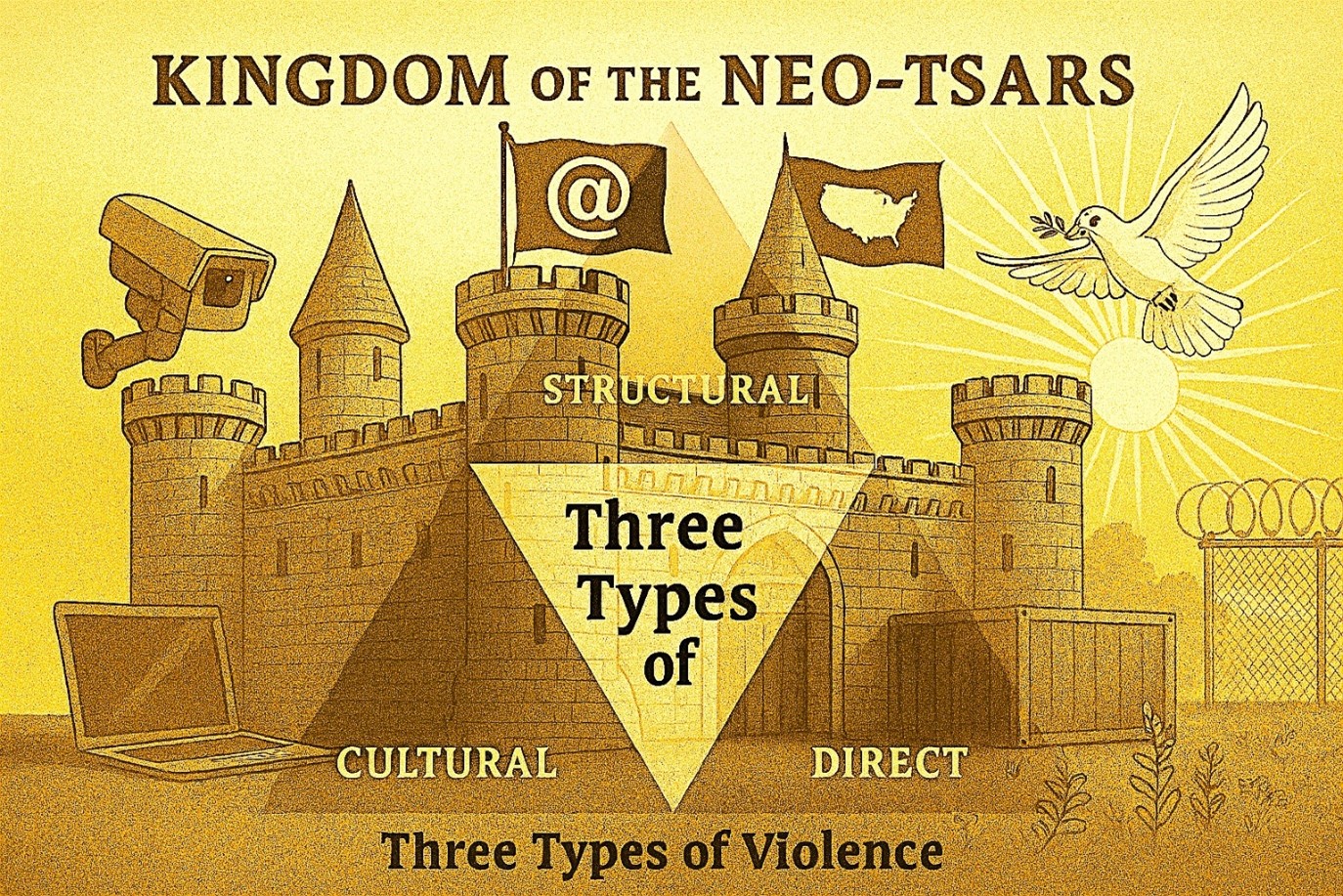
A graphic representing the Kingdom of the ‘Neo Tsars” in the 21st century and the positive Peace Propagation these Mega Cyber Kingdoms can make.
Original Graphic Conceptualised b y Mrs V. Vawda May 2026
This publication, highlights the political power of Tech Titans in “Trumpean America”[2]. In the 21st century, the rise of technology giants such as Google, Amazon, Facebook (now Meta), Apple, and Microsoft has reshaped the global economy, supremacy of a nation, ethics, culture, and politics. These corporations, collectively, are often referred to as “Big Tech”[3],” wielding unprecedented influence over public discourse, data privacy, and even government policies. Their unbridled power and limitless influence in corridors of government, has drawn comparisons to modern-day “Neo Tsars[4]“, the unelected rulers who dominate their domains with little accountability. This paper explores the political implications of Big Tech’s dominance, examining their influence on democracy, regulation, societal norms, and argues that the current situation necessitates urgent reforms to balance power and protect public interest. However, on the aspect of transition and contributions to Peace Propagation. These Kingdoms can make enormous contributions to exogenous Peace Propagation.
The Neo Tsars: A Modern Autocratic Paradigm[5]
Definition:
The author has coined a neologism: “The Neo Tsars[6]“, which encapsulates a uniquely Northern Hemisphere’s form of autocratic leadership, blending populism, nationalism, and personalist rule under the guise of democracy. Unlike traditional Tsars, the “ Neo Tsars” wield power in a manner reminiscent of monarchs, consolidating authority, sidelining institutions, and fostering a cult of personality. These para-governmental entities often portray themselves as the sole protector of national identity, framing political opposition as treasonous and undermining checks and balances.
Defining “TSARS”:
From the Romanov Dynasty to Contemporary NEO‑TSARS
(A Peace‑Analytical Definition)
- Classical Definition: Tsars as Dynastic Sovereigns
Historically, the title “Tsar” (derived from Caesar) referred to the supreme ruler of Russia, an autocrat whose authority was hereditary, territorially absolute, and culturally sanctified. Under the Romanov dynasty (1613–1917), tsarism fused political power, religious legitimacy, and social hierarchy into a single sovereign order. Subjects were ruled, not represented; obedience was moralised as virtue; inequality was justified as destiny.
From a peace‑studies perspective, classical tsarism embodied:
- Structural violence through rigid class stratification
- Cultural violence via divine‑right ideology
- Eventual direct violence when peaceful transformation became impossible
The Romanov Tsars thus represent the archetypal model of unaccountable authority that disrupts positive peace long before violence erupts.
- Functional Re‑Definition: Tsars as Unaccountable Power Holders
In contemporary peace analysis, “Tsar” must be understood functionally rather than nominally. A Tsar is no longer defined by crown, bloodline, or empire, but by the concentration of decisive power beyond meaningful accountability, especially where such power:
- Shapes the life chances of large populations
- Operates above or outside democratic oversight
- Normalises inequality and exclusion
- Is culturally legitimised as necessary, inevitable, or exceptional
This functional re‑definition allows peace studies to analyse new power formations without false equivalence, while preserving analytical rigor.
- NEO‑TSARS: Power without Crown in the 21st Century
NEO‑TSARS are contemporary actors or systems that exercise tsar‑like authority within modern democratic, economic, and technological contexts. They do not rule by decree, yet they govern outcomes.
Core Characteristics of NEO‑TSARS
A NEO‑TSAR typically exhibits the following traits:
- Structural Dominance
Control over critical infrastructures (information, borders, markets, data, security). - Accountability Deficit
Decisions with vast social impact are insulated from democratic correction. - Cultural Legitimation
Power is justified through narratives of innovation, security, efficiency, or inevitability. - Peace Disruption Capacity
The ability to erode positive peace, justice, participation, dignity, without overt violence.
- Typology of NEO‑TSARS (Peace‑Analytical)
- a) Digital / Tech NEO‑TSARS
Actors exercising sovereign‑like authority over information, communication, identity formation, and behavioural nudging.
- Power is structural and cultural, not coercive
- Violence is indirect: polarisation, manipulation, exclusion, epistemic harm
- Peace is disrupted by information asymmetry and algorithmic control
- b) Border / Security NEO‑TSARS
Actors exercising decisive control over human mobility and territorial access.
- Power blends structural and direct violence
- Borders become instruments of sorting, deterrence, and exclusion
- Migrants experience peace disruption as loss of dignity, safety, and rights
- c) Economic / Corporate NEO‑TSARS
Actors whose economic concentration enables state capture and policy distortion.
- Peace disruption arises from extreme inequality
- Structural violence is normalised through market logic
- Social injustice is rendered invisible as “economic necessity”
- Tsars and Galtung’s Peace Triangle
Across both classical and neo‑tsar forms, a persistent pattern emerges:
| Galtung Dimension | Tsaric Expression |
| Structural Violence | Inequality, exclusion, blocked reform |
| Cultural Violence | Ideologies legitimising domination |
| Direct Violence | Emerges when peace disruption matures |
The Romanovs illustrate the historical endpoint of this triangle. NEO‑TSARS illustrate its contemporary, unfinished trajectories.
- From Inevitable Collapse to Preventable Outcomes
A critical contribution of peace theory is the rejection of historical fatalism. Tsars, old or new, do not fall because collapse is inevitable; they fall because peace propagation is neglected.
What distinguishes NEO‑TSARS from their imperial predecessors is not moral superiority, but historical opportunity:
- The tools of accountability exist
- Early warning signs are visible
- Peace disruption is measurable
This makes the persistence of NEO‑TSARISM ethically more serious, not less.
- Peace‑Theoretical Definition
TSARS, in peace‑analytical terms, are power formations, dynastic or functional, that concentrate decisive authority, evade accountability, legitimise inequality, and thereby disrupt positive peace.
NEO‑TSARS represent the modern evolution of this pattern: ruling not through crowns or armies, but through structures, systems, narratives, and exclusions, until violence appears as consequence rather than cause.
Closing Peace Reflection
History teaches that tsars rarely recognise themselves as such.
Peace theory exists to make power visible before tragedy completes the lesson.
NEO‑TSARS Explained
Power without Crowns in the 21st Century (with Illustrative Examples)
- What Makes a NEO‑TSAR Different from a Classical Tsar?
A NEO‑TSAR is not a monarch, president, or emperor. Rather, it is a power formation that exercises tsar‑like authority functionally rather than formally. Where classical tsars ruled through crowns, armies, and divine legitimacy, NEO‑TSARS rule through systems, infrastructures, and delegated authority that shape everyday life while remaining insulated from effective democratic accountability.
In peace‑studies terms, NEO‑TSARS are distinguished by their capacity to disrupt positive peace, justice, inclusion, dignity, participation, without necessarily resorting to overt violence.
- Core Types of NEO‑TSARS
- Digital / Tech NEO‑TSARS
(Sovereignty over Information, Attention, and Behaviour)
What they are:
Large technology platforms and digital infrastructures that control:
- Information flows
- Social interaction
- Visibility and invisibility of voices
- Behavioural nudging via algorithms
How Tsar‑like power operates:
- Decisions affecting millions are made privately and at scale
- Algorithms act as invisible governors of perception
- Users become subjects of systems they cannot meaningfully contest
Peace Disruption Example:
At the local level, communities experience polarisation, erosion of trust, and mental health stress.
At the global level, information asymmetry reinforces North–South inequality, enables disinformation in fragile societies, and amplifies conflict narratives.
Galtung Mapping:
- Structural violence: information inequality, digital exclusion
- Cultural violence: “technology is neutral / inevitable” narratives
- Direct violence: indirect enabling of social unrest and conflict escalation
- Border / Security NEO‑TSARS
(Sovereignty over Human Mobility and Territorial Access)
What they are:
Highly centralised border, migration, and security governance structures vested with exceptional discretionary authority.
How Tsar‑like power operates:
- Borders function as moral filters, not just geographic lines
- Decisions over entry, detention, deportation, and asylum occur far from public scrutiny
- Human rights norms are frequently subordinated to security imperatives
Peace Disruption Example:
At the local level, border zones become militarised, and migrants experience dehumanisation and cumulative trauma.
At the global level, structural causes of migration (war, poverty, climate change) are displaced rather than addressed, exporting instability back to vulnerable regions.
Galtung Mapping:
- Structural violence: forced immobility, exclusion from rights
- Cultural violence: securitisation of migration, fear narratives
- Direct violence: detention regimes, family separation, border deaths
- Economic / Corporate NEO‑TSARS
(Sovereignty over Markets, Labour, and Policy Influence)
What they are:
Highly concentrated corporate and financial actors with the capacity to influence public policy, labour conditions, and state decisions.
How tsar‑like power operates:
- Wealth concentration translates into political leverage
- Market logic overrides social justice considerations
- Economic “necessity” becomes a moral justification for inequality
Peace Disruption Example:
At the local level, communities experience precarity, working poverty, and diminished social mobility.
At the global level, extractive economic arrangements perpetuate dependency, debt, and underdevelopment.
Galtung Mapping:
- Structural violence: systemic inequality, blocked life chances
- Cultural violence: meritocracy myths, market inevitability
- Direct violence: social unrest when inequality destabilises societies
- Administrative / Crisis NEO‑TSARS
(Exceptional Authority in the Name of Efficiency or Emergency)
What they are:
Specially appointed or emergent authorities granted wide powers during crises (health, security, migration, disaster).
How tsar‑like power operates:
- Normal checks and balances are suspended “temporarily”
- Emergency measures become normalised
- Public participation is reduced in the name of urgency
Peace Disruption Example:
At the local level, communities accept rights restrictions without deliberation.
At the global level, emergency governance weakens democratic norms and sets transferable precedents.
Galtung Mapping:
- Structural violence: exclusion from decision‑making
- Cultural violence: “crisis justifies suspension of rights”
- Direct violence: enforcement actions and repression
- What All NEO‑TSARS Have in Common
Across these examples, NEO‑TSARS share five defining features:
- Concentrated decisional power
- Weak or delayed accountability
- Cultural legitimation of dominance
- Disruption of positive peace before violence appears
- Global spill‑over effects from local decisions
They govern outcomes, shape destinies, and structure inequalities while often remaining invisible as political actors.
- Why NEO‑TSARS Matter for Peace Propagation
The Romanov Tsars reveal the endpoint of peace neglect.
NEO‑TSARS reveal the early stages.
The danger is not sudden tyranny, but normalised peace erosion that feels administrative, technical, or inevitable. Peace theory exists precisely to name these patterns before direct violence completes the cycle.
- Peace‑Theoretical Definition
NEO‑TSARS are contemporary power formations that exercise sovereign‑like authority over critical dimensions of human life, information, mobility, economy, and security, without corresponding democratic accountability, thereby disrupting positive peace at local and global levels.
Thought for Reflection
The absence of crowns does not mean the absence of tsarism.
In the 21st century, power rules more quietly, but its impact on peace is no less profound.
Anonymised Case‑Study Vignettes
NEO‑TSARS in Practice: Early Warnings of Peace Disruption
Vignette 1: The Algorithmic Governor
(Digital / Tech NEO‑TSAR)
Context
A global digital platform modifies its recommendation systems to optimise “engagement.” The changes are proprietary, automated, and opaque. No public authority reviews the decision.
Local Peace Impact
- Communities experience heightened polarisation
- Misinformation spreads faster than correction
- Public trust in institutions erodes
Global Peace Impact
- Conflict‑prone regions see amplified extremist narratives
- Democratic processes abroad are indirectly influenced
- Information asymmetry widens between global centres and peripheries
Galtung Mapping
- Structural violence: unequal access to truthful information
- Cultural violence: belief that algorithms are neutral and inevitable
- Direct violence: indirect escalation of social unrest and conflict
Peace Insight
Power governs perception without formal rule. Peace is disrupted invisibly, long before harm is recognised.
Vignette 2: The Border Without Frames
(Border / Security NEO‑TSAR)
Context
A national authority centralises border enforcement under a special executive mandate. Emergency powers become routine. Legal reviews are delayed or inaccessible.
Local Peace Impact
- Families are separated for prolonged periods
- Border communities become militarised
- Moral injury affects both migrants and officials
Global Peace Impact
- Forced migration flows are redirected, not resolved
- Violence and poverty are externalised to neighbouring regions
- International humanitarian norms weaken through precedent
Galtung Mapping
- Structural violence: exclusion from legal protection
- Cultural violence: narratives equating migration with threat
- Direct violence: detention, pushbacks, deaths at borders
Peace Insight
When borders replace diplomacy, violence is outsourced rather than prevented.
Vignette 3: The Market Decider
(Economic / Corporate NEO‑TSAR)
Context
A dominant multinational firm restructures supply chains to maximise shareholder value. Entire communities lose employment. Decisions are legally compliant but ethically unchallenged.
Local Peace Impact
- Sudden unemployment and loss of dignity
- Increased mental health stress
- Rising domestic and social conflict
Global Peace Impact
- Extractive economic patterns deepen North–South inequality
- Labour protections erode across regions due to competitive pressure
- Economic grievance fuels political instability
Galtung Mapping
- Structural violence: blocked life chances
- Cultural violence: myth of market inevitability
- Direct violence: unrest when inequality becomes intolerable
Peace Insight
Economic decisions that ignore justice quietly dismantle peace from below.
Vignette 4: The Permanent Emergency
(Administrative / Crisis NEO‑TSAR)
Context
During a declared crisis, health, security, or environmental, an exceptional authority bypasses standard consultation processes. Temporary restrictions persist indefinitely.
Local Peace Impact
- Civil liberties reduced without deliberation
- Public disengagement from governance
- Normalisation of surveillance and control
Global Peace Impact
- Emergency governance models spread transnationally
- Democratic norms weaken by imitation
- Crisis governance becomes the new baseline
Galtung Mapping
- Structural violence: exclusion from decision‑making
- Cultural violence: “urgency over rights” logic
- Direct violence: enforcement against dissent
Peace Insight
Emergency without sunset clauses is peace disruption institutionalised.
Cross‑Vignette Analysis: What These Cases Reveal
Across all four vignettes:
- No crown, throne, or title is required
- Power operates through systems, not symbols
- Peace erodes first through structures and narratives
- Violence appears later and is then mislabelled “sudden”
These cases illustrate how NEO‑TSARS govern outcomes rather than territories, shaping lives through invisibility and normalisation rather than decree.
Integrative Peace Reflection
These anonymised vignettes show that peace disruption in the 21st century rarely announces itself as tyranny. It arrives instead as management, efficiency, and necessity, until the space for peaceful correction has quietly disappeared.
The Practical Significance of these Vignettes
- Make abstract peace theory tangible
- Preserve ethical neutrality and anonymity
- Demonstrate local, global peace feedback loops
- Reinforce prevention over hindsight
- Suitable for peace education, journalism, and policy dialogue
Characteristics of an American Neo-Tsar:
- Cult of Personality – The leader commands near-fanatical devotion from supporters, often portraying themselves as divinely chosen or uniquely qualified to “save” the nation.
- Populist Nationalism [7]– Appeals to a nostalgic, often exclusionary vision of the country, emphasizing the restoration of past “greatness.”
- Undermining Institutions – Challenges the judiciary, legislature, and media, labeling them corrupt or disloyal when they act against personal interests.
- Strongman Diplomacy – Prefers unilateral action over alliances, admires autocrats, and views global politics as a zero-sum game.
- Dynastic Aspirations – Either hints at extending their rule beyond the scope of term limits or seeks to establish a political dynasty through family members.
- Weaponisation of Law – Uses law enforcement to punish opponents while ensuring personal legal immunity.
Contrast: The American Neo Tsar versus The Last Russian Tsar: Nicholas II[8]
| Feature | American Tsar (Contemporary) | Russian Tsar Nicholas II (Historical) |
| Source of Power | Elected but undermines democracy to expand control. | Absolute hereditary monarchy, ruled by divine right. |
| Governance Style | Strongman populism, media manipulation, and legal warfare. | Traditional autocracy with rigid class hierarchy. |
| Public Appeal | Uses mass rallies, social media, and conspiracy theories to energize supporters. | Depended on aristocracy, Orthodox Church, and military elite. |
| Reaction to Crisis | Blames external enemies, suppresses opposition, and undermines institutions. | Relied on brutal crackdowns (e.g., Bloody Sunday) but lacked control over revolutionary movements. |
| Foreign Policy | Isolationist or transactional, prefers deals over diplomacy. | Expansionist but outmanoeuvred in WWI, leading to collapse. |
| Endgame | Could lead to democratic backsliding or authoritarian rule. | Deposed and executed after losing control during the Russian Revolution. |
The Tsar in a current political context[9]
The “American Neo Tsar” is a paradox, a democratically elected figure who governs like an autocrat, eroding the very system that legitimised their rise. Unlike Nicholas II, who was a fading remnant of a bygone age, the American Tsar is a modern creation, fueled by media, populism, and the vulnerabilities of democratic institutions. However, as history has shown, even tsars, whether Russian or American, are not invincible to the forces of change.
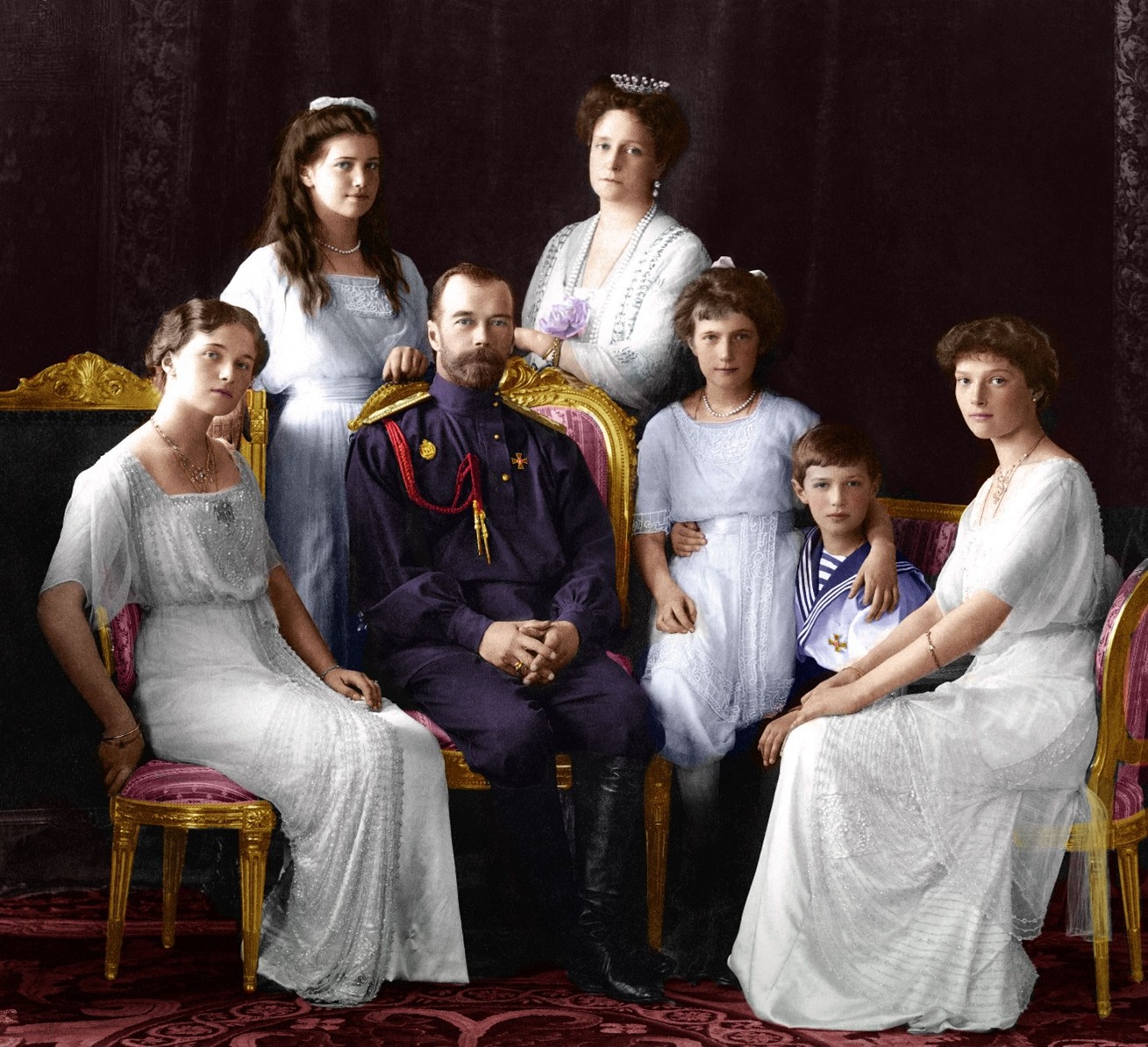
Colourised Picture of the last Romanov Family taken on 03 June 1913. Emperor Tsar Nicholas 11 is seen posing with his wife, Empress Tsarina, Alexandra Feodorovna, his four daughters, collectively nicknamed OTMA:Princesses Olga, Tatiana, Marie, Anastasia, in the order they were born and haemophiliac son: Tsarevich (heir apparent) Alexei Nikolaevich
Photo Credit: https://www.bing.com/ck/a?!andandp=57107729a18b7f0255bdcfbb563d4a419d85f01578f172cc796b92241254b229JmltdHM9MTc0MDE4MjQwMAandptn=3andver=2andhsh=4andfclid=19bf7366-9926-65b9-0269-601d982664b6andpsq=tsar%27s+son%27s+nameandu=a1aHR0cHM6Ly9lbi53aWtpcGVkaWEub3JnL3dpa2kvQWxleGVpX05pa29sYWV2aWNoLF9Uc2FyZXZpY2hfb2ZfUnVzc2lhandntb=1
Why was the Russian Dynastic, Tsar Nicholas II Executed?[10]
It is relevant to go back in history and relate the sad saga of Tsar Nicholas 11 to remind the 21st century not to make the same mistakes in governance. The single most important reason for the execution of Tsar Nicholas II and his family on July 17, 1918, was the Bolsheviks’[11] fear that the Romanovs could become a rallying symbol for counterrevolutionary forces.
By mid-1918, Russia was in the throes of a brutal civil war between the Bolsheviks (Red Army) and the anti-communist White Army, which included monarchist factions. The White Army was advancing toward Ekaterinburg,[12] where the Tsar and his family were imprisoned. The Bolsheviks could not risk the possibility of the Romanovs being rescued and used as a legitimising figurehead for the counterrevolution.
Thus, Lenin and the Bolsheviks made a ruthless decision: eliminate the monarchy completely to prevent any chance of restoration. The execution, carried out in the basement of the Ipatiev House (not the Winter Palace), was brutal, under the pretext of moving the family to a safer location. The massacre ensured that no living Romanov could become a political symbol against Bolshevik rule. The basement of the Ipatiev House [13]in Yekaterinburg is a site of profound historical significance, marking the brutal end of the Romanov dynasty. The Ipatiev House, also known as the “House of Special Purpose,” was a two-story merchant’s house in Yekaterinburg, a city in the Ural Mountains. The basement where the Romanovs were executed was a small, cramped room measuring approximately 6 by 5 meters (20 by 16 feet). It had a single window, which was barred, and was chosen for its relative isolation and ease of securing.
The decision to execute the family there, rather than in the Winter Palace or another location, was driven by strategic, logistical, and symbolic considerations. The Bolsheviks sought to eliminate the Romanovs as quietly and definitively as possible, ensuring that their deaths would not inspire a monarchist resurgence, the Romanovs were assassinated in the basement of the Ipatiev House. Today, the site serves as a somber reminder of the human cost of revolution and the fragility of power.
The Execution: July 17, 1918
On the night of July 16-17, 1918, the Romanovs were awakened and told to dress under the pretext that they were being moved to a safer location due to advancing White Army forces. They were led to a small basement room in the Ipatiev House, where they were told to wait.
The Romanov Execution Squad[14]
The execution was carried out by a squad of Bolshevik guards led by Yakov Yurovsky[15], the commandant of the Ipatiev House. The squad included local Bolshevik militants and members of the Cheka (the Soviet secret police).[16]
The Killing
- Yurovsky read a brief statement declaring that the Romanovs were to be executed.
- Nicholas II reportedly had time to utter a confused “What?” before the firing squad opened fire.
- The initial volley killed Nicholas and several others, but the bullets ricocheted off the jewels sewn into the clothing of the Tsarina and her daughters, prolonging their suffering.
- The executioners then used bayonets and gunfire to finish off the survivors.
Alexei’s haemophilia,[17] a genetic disorder that impairs blood clotting, played a significant role in the Romanov family’s history. His condition was a source of immense stress for his parents, particularly his mother, Alexandra, who sought help from controversial figures like Grigori Rasputin. However, on the night of the execution, Alexei’s illness did not spare him from the brutality of the Bolsheviks. Despite his frailty, he was shot multiple times and ultimately killed in the same manner as the rest of his family and like the rest, his body was also mutilated by the frenzied Bolshevik, murderous mob. Any of the Romanovs, who were found breathing following the shooting, were bayonetted, to put a final end to the Romanov dynasty, after 300 years.
Tsarevich Alexei[18], who was only 13 years old and suffering from haemophilia, was shot multiple times but initially survived. He was later killed by two point-blank shots to the head.
The entire family, along with their doctor and three servants, were murdered in cold blood. The execution took approximately 20 minutes.
- Disposal of the Bodies
The disposal of the Romanovs’ bodies was carried out in secret to prevent their remains from becoming a rallying point for monarchist sympathizers. The process was chaotic and gruesome.
Initial Attempts
- The bodies were loaded onto a truck and taken to a nearby forest.
- The executioners initially planned to burn the bodies, but this proved difficult due to the lack of proper materials and time.
- They then decided to bury the bodies, but the shallow grave they dug was insufficient to conceal all the remains.
The Mine Shaft at Ganina Yama[19]
- The bodies were taken to an abandoned mine shaft called Ganina Yama, about 12 miles from Yekaterinburg.
- Acid was poured on the bodies to disfigure them and make identification difficult.
- The remains were then partially burned and thrown into the mine shaft.
Relocation and Final Burial
- Fearing that the bodies might be discovered, Yurovsky ordered them to be moved to a more secure location a few days later.
- The remains were reburied in a shallow grave along the Koptiaki Road, [20] where they were covered with soil and brushwood.
- To further obscure the site, the executioners drove over the grave with a truck and placed railroad ties on top.
Initially, not all the Romanovs’ remains were found together. This led to decades of speculation and conspiracy theories, including claims that some family members had survived. Alexei and Maria: In 2007, a second grave was discovered near the first, containing the remains of Alexei and one of his sisters (likely Maria). DNA testing confirmed their identities. Final Burial: The remains of the Romanov family were interred in the Peter and Paul Cathedral in St. Petersburg [21]in 1998, following extensive forensic analysis and a formal ceremony. Alexei and Maria’s remains were buried there in 2015.
No discourse on the Romanovs would be complete without a brief reference to the Faberge Eggs. Which are masterpieces of art and craftsmanship, with 43 of the 50 Imperial Eggs accounted for today. The lost eggs remain some of the most sought-after treasures in the world, symbolising the opulence and tragedy of the Romanov era. An ultimate symbol of opulence: The Faberge eggs, crafted by Peter Carl Faberge[22], symbolised the wealth, unbridled fiscal expenditure and artistry of the Romanov dynasty. These eggs became iconic representations of Russian imperial luxury, while the mass peasantry were deprived of basic living necessities.
Hypothetically, could this fate apply to an “American Neo Tsar”?
The answer to this hypothetical question is an unequivocal “no”. While the U.S. operates under vastly different political conditions, of established democratic institutions, a robust military, and media pluralism, history has shown that autocratic leaders, even those who once thrived on populist support, can meet violent or humiliating ends, as it has happened in Iraq and Libya, where the leaders met with an ignominious end to their long odyssey of local ‘Tsarism”
If an “American Neo Tsar” were to emerge and push the country into prolonged political instability, civil unrest, or even a second civil war, the risk of a violent downfall would increase. The key historical lessons include:
- The Elite Will Abandon a Weak Strongman – Nicholas II was betrayed by his own generals and aristocracy when he became a liability. Similarly, an American strongman could lose institutional backing if their rule became unsustainable.
- The People Can Turn on a Leader They Once Worshipped – Revolutionary fervour in Russia turned a once-revered Tsar into a hated figure. If an American Tsar’s populist promises fail or they become excessively oppressive, their base could revolt.
- Exile is More Likely in a Modern Context – While a violent coup remains unlikely in a constitutional democracy, political exiles (like Napoleon or Chile’s Pinochet) offer a more probable parallel for an American leader who overplays their hand.
Reality Take: A Tsar’s Fall Is Always Brutal
Whether Russian or American, history suggests that authoritarian rulers who overreach rarely retire peacefully. While the execution of Nicholas II was driven by the specific conditions of the Russian Civil War, an American Tsar’s downfall would likely manifest through political isolation, legal persecution, incarceration, or forced exile rather than outright execution.
It is important to note that if political polarisation in the U.S. escalates into full-scale civil conflict, the possibility of more extreme outcomes cannot be entirely ruled out. As history proves, when institutions collapse and power becomes a zero-sum game, even the most powerful rulers can meet sudden, brutal and shocking ends.
The Fate of Fallen Autocrats: Lessons for an “American Neo Tsar”
History is littered with once-powerful rulers who met violent, humiliating, or unexpected ends. While the execution of Tsar Nicholas II was driven by civil war and revolutionary fervor, similar patterns emerge when authoritarian rulers overreach, lose elite support, or provoke mass uprisings. Below are key historical parallels that could inform the potential fate of an “American Tsar.”
The Sad fates of Historical Tsars
- Benito Mussolini (Italy, 1945) [23]– From Cult Leader to Humiliation
Mussolini ruled Italy with an iron grip from 1922 but fell in 1943 when Italy’s elites and military turned against him. After a failed attempt to escape, he was captured, executed, and his corpse was hung upside down in a public square as Italians took revenge on their former fascist ruler.
Lesson for an American Neo Tsar:
Even strongman cults can disintegrate overnight when war, economic collapse, or elite betrayal intervene. An American Tsar relying on an authoritarian, personality-driven rule may find their fate sealed once institutional support crumbles, turning from feared leader to public scapegoat.
- Nicolae Ceaușescu (Romania, 1989) [24]– Overconfidence in Power
What Happened?
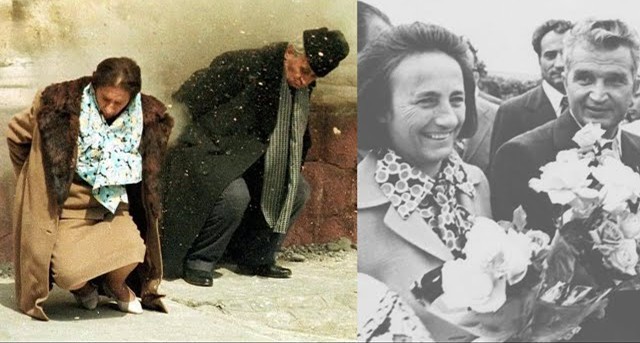
A brutal and sad end to the Presidential Couple in Romania
Photo Left: Nicolae Ceausescu and his wife Elena Ceausescu shown exactly as the firing squad bullets penetrate their mortal bodies and they crumble to the floor at the barracks on Christmas Day 25th December 1989. Note the dust bellowing from the bullets striking the plaster wall, behind.
Photo Right: The Presidential couple in happier times
Photo Credit: https://mediaclip.ina.fr/en/catalogue/history/5102-romanian-revolution.html
Ceausescu, the communist dictator of Romania, miscalculated the loyalty of his people. In December 1989, he gave a speech expecting applause but was booed on live television. Within days, he and his wife were captured, given a sham trial, and executed by firing squad as the regime collapsed.
Lesson for an American Neo Tsar: “The Domino Effect”
Even the most powerful can become powerless overnight when mass discontent explodes. If an American strongman underestimates public outrage or misreads political reality, they could find themselves suddenly abandoned, facing trials, imprisonment, or worse.
- Saddam Hussein (Iraq, 2006) [25]– The Inevitable Reckoning
What Happened?
After ruling Iraq for decades with brutal oppression, Saddam was toppled by a U.S.-led invasion in 2003. It was a case of “pulling the carpet from beneath his feet”, after Saddam’s invasion of Kuwait, for which he was “let go”, because of vested interests of the West. He went into hiding but was eventually captured, tried, and hanged in 2006 his execution filmed and circulated worldwide.
Lesson for an American Neo Tsar:
Foreign intervention or legal prosecution can bring even the most brutal, once-untouchable rulers to justice. If an American Tsar engages in widespread suppression, corruption, or war crimes, their end may come through courts, or extrajudicial justice by political enemies.
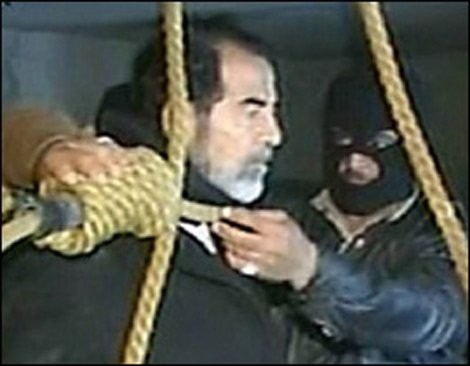
The execution of Saddam Hussein of Iraq, 30th December 2006
Photo credit: https://www.bing.com/ck/a?!andandp=0f43756d8ac86694ce4da926c31bd721c8a781bcabd87676c8b9cb8e0afdf3fbJmltdHM9MTc0MDE4MjQwMAandptn=3andver=2andhsh=4andfclid=19bf7366-9926-65b9-0269-601d982664b6andpsq=when+was+saddam+executedandu=a1aHR0cHM6Ly9lbi53aWtpcGVkaWEub3JnL3dpa2kvRXhlY3V0aW9uX29mX1NhZGRhbV9IdXNzZWluandntb=1
- Muammar Gaddafi (Libya, 2011) [26]– No Escape When the People Turn
What Happened?
For decades, Gaddafi kept power through oil wealth, brutality, and propaganda. When protests erupted in 2011, he vowed to crush dissent. But as NATO-backed rebels advanced, he was dragged from a drainage pipe, beaten, and executed on camera.
Lesson for an American Neo Tsar:
Leaders who fail to recognise when their rule is unsustainable risk violent ends. If an American strongman clings to power beyond all reason, they may find no refuge, no escape, and no allies left when the tide turns.
- Napoleon Bonaparte (France, 1815) [27]– Exiled, Not Executed
What Happened?
Napoleon’s military genius made him Emperor of France, but after his disastrous war campaigns, he was exiled to Elba in 1814. He escaped and briefly returned to power in 1815, only to be defeated at Waterloo and permanently exiled to the island of St. Helena, where he died.
Lesson for an American Neo Tsar:
If an authoritarian leader isn’t executed or jailed, they may face a humiliating exile. An American Tsar who loses power but remains a significant figure may spend their final years banished from political life, writing memoirs in bitter isolation.
- Richard Nixon (USA, 1974) [28]– Resignation as an Escape Route
What Happened?
Nixon was not a dictator, but his abuse of power in Watergate led to near-certain impeachment. Facing removal, he resigned in disgrace in 1974 and was later pardoned by Gerald Ford, avoiding prosecution.
Lesson for an American Neo Tsar:
Unlike outright autocrats, a U.S. leader with dictatorial tendencies may escape execution or exile if they step down strategically. If an American Tsar knows when to cut their losses, they might retain wealth, legacy, and even partial political rehabilitation.
The Fate of the Last Shah of Iran[29]: The “Iranian Tsar”
The last Shah of Iran, Mohammad Reza Pahlavi, ruled from 1941 to 1979 before being overthrown in the Iranian Revolution led by Ayatollah Khomeini. His downfall was marked by mass protests, violent crackdowns, and eventual exile, a fate similar to other deposed monarchs, including Tsar Nicholas II.
- The Shah’s Full Dynastic Name and Rule
- Full Name: Mohammad Reza Shah Pahlavi, Aryamehr, Shahanshah of Iran.
- Dynasty: Pahlavi Dynasty (Founded by his father, Reza Shah Pahlavi, in 1925)
- Reign: 16 September 1941 – 11 February 1979 (37 years)
His title, Shahanshah (“King of Kings”), mirrored the grandeur of Persian rulers, making him comparable to a modern “Iranian Tsar.”
- The Shah ruled with an iron fist, using SAVAK, a CIA-trained secret police force, to imprison, torture, and execute dissidents.
- Political parties were banned, and opposition voices, especially Islamic clerics like Khomeini, were crushed.
- The White Revolution and Alienation of Clergy
- In the 1960s, the Shah launched the White Revolution[32], a modernization plan that:
Gave women more rights - Pushed land reforms
- Increased Western influence
- However, this angered religious leaders and the rural poor, who saw it as an attack on Islam and Iranian traditions.
- Oil Wealth and Corruption
- Iran’s oil boom in the 1970s made the Shah extraordinarily rich, but ordinary Iranians saw little benefit.
- His lavish spending, including a $100 million party in Persepolis (1971) to celebrate 2,500 years of Persian monarchy, fueled resentment.
- Alliance with the West and US Puppet Image
- The Shah was a key US ally and positioned Iran as a pro-Western state.
- The 1953 CIA-backed coup (Operation Ajax) that overthrew Iran’s Prime Minister, Mohammad Mossadegh, increased anti-Shah and anti-American sentiment.
- Many Iranians viewed him as a Western puppet, making him hated by Islamists, nationalists, and communists alike.
- The Rise of Ayatollah Khomeini[33]
- Exiled cleric Ayatollah Ruhollah Khomeini used tapes and underground networks to spread anti-Shah messages.
- By 1978, massive protests broke out, leading to a full-scale revolution.
- The Shah’s Escape and The Fall of the Iranian Monarchy
By January 16, 1979, the Shah realized his regime was collapsing.
- The “Flight into Exile”
- He fled Iran on a plane with his wife, Empress Farah Pahlavi, and $1 billion in gold and cash, including the legendary Peacock Throne (a symbol of Persian royalty).
- Initially, he sought asylum in Egypt under Anwar Sadat, before moving to Morocco, the Bahamas, and then Mexico.
- The US hesitated to take him in, fearing reprisals from Iran’s new Islamist government.
- The Brutal Fate of the Shah’s Generals[34]
- The new Islamic regime, under Khomeini, purged the Shah’s military leaders.
- Many of his top generals, including General Nematollah Nasiri (SAVAK chief) and General Amir Hossein Rabiei, were publicly executed.
- Shocking photos of their corpses circulated worldwide, showing the brutality of the new regime.
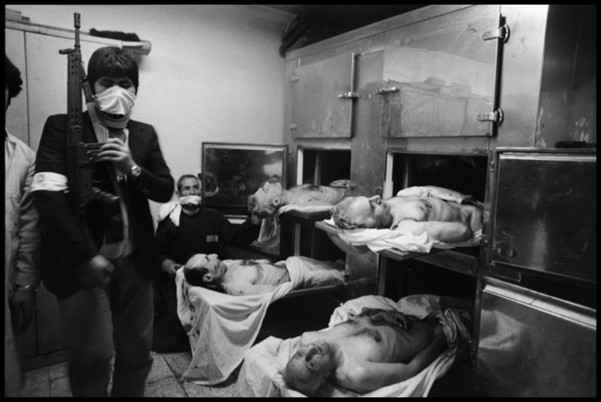
The bodies of four generals, executed after a secret trial held at Ayatollah Khomeini’s headquarters, at the Refa girls’ school. Their bodies lie at the morgue. Top left General Khosrowdad, top right General Rahimi, bottom left General Naji, bottom right General Nassiri (ex chief of the Savak secret police). Tehran, Iran. February 15, 1979.
Photo Credit:© Abbas | Magnum Photos
- US Refuge and the Shah’s Death
- Eventually, the Shah was granted asylum in the US, but only for medical treatment (he had terminal cancer).
- The US refusal to extradite him led to Iranian radicals storming the US embassy in Tehran, triggering the 1979 Iran Hostage Crisis.
- The Shah died in exile in Cairo, Egypt, on July 27, 1980, at age 60.
- What Happened to His Peacock Throne?
- The Peacock Throne, originally from Mughal India, was a symbol of Persian imperial power.
- Some reports claim the Shah took a replica with him into exile, while the real one was left behind in Iran and remains in Tehran’s National Jewelry Museum.
- Key Historical Parallels to Other “Tsars”
| Monarch | Overthrow | Fate | Execution |
| Nicholas II (Russia, 1917) | Bolshevik Revolution | Shot in Ipatiev House | Entire family killed |
| Mohammad Reza Shah (Iran, 1979) | Iranian Revolution | Exiled, died in Egypt | Military leaders executed |
| Louis XVI (France, 1793)[35] | French Revolution | Guillotined | Entire monarchy abolished |
| Haile Selassie (Ethiopia, 1974)[36] | Communist coup | Smothered to death | Royal family persecuted |
Did the US play a role in propping up the Shah prior to the revolution, for oil interests?
The United States played a central role in propping up the Shah of Iran before the 1979 revolution, primarily to secure its oil interests and maintain Iran as a strategic Cold War ally against the Soviet Union.
- The 1953 CIA Coup: Operation Ajax[37]
The single most important intervention by the U.S. was the 1953 coup d’état that overthrew Iran’s democratically elected Prime Minister, Mohammad Mossadegh[38], and reinstalled the Shah as an absolute monarch.
🔹 Why was Mossadegh overthrown?
- He had nationalized Iran’s oil industry in 1951, kicking out the Anglo-Iranian Oil Company (AIOC) (now BP).
- Britain and the U.S. feared this would inspire other countries to take control of their own oil resources.
- The Cold War was intensifying, and the U.S. saw Mossadegh’s policies as too close to socialism, fearing he might align with the Soviet Union.
🔹 How did the U.S. pull off the coup?
- CIA and MI6 orchestrated Operation Ajax, bribing Iranian generals, religious leaders, and newspapers to turn against Mossadegh.
- Fake protests and riots were engineered to make Mossadegh look weak.
- In August 1953, Iranian military forces, backed by the CIA, toppled Mossadegh, and the Shah was flown back from exile in Rome to take full control.
- The Shah’s Regime: A U.S.-Backed Dictatorship
After 1953, the Shah became a puppet of the U.S., ruling as an authoritarian monarch and allowing Western oil companies to dominate Iran’s oil sector.
- Oil Deals and U.S. Corporate Interests
- After the coup, Iran’s oil wealth was divided among Western powers:
40% to U.S. oil companies (Chevron, Exxon, Mobil, etc.)
40% to British firms
20% to other Western companies. - The Shah ensured that Iranian oil flowed cheaply to the U.S. and its allies.
- The Shah’s Military and Economic Dependence on the U.S.
- The U.S. poured billions into modernizing the Shah’s military, making Iran the 5th most powerful military in the world by the 1970s.
- The Pentagon saw Iran as a key “policeman” in the Persian Gulf, crucial for securing oil supply routes.
- U.S. Support for SAVAK (Iran’s Secret Police)
- To crush dissent, the U.S. helped create and train SAVAK, the Shah’s brutal secret police.
- Torture, assassinations, and disappearances became common, as opposition to the Shah was brutally suppressed.
- Amnesty International reported that SAVAK held up to 100,000 political prisoners before the revolution.
- The 1970s: The Shah’s Decline and U.S. Miscalculations
By the 1970s, despite the oil boom, Iran was boiling with unrest:
- Corruption and Wealth Gap → The Shah and elites lived in unimaginable luxury, while millions of Iranians suffered poverty.
- Rising Islamic Opposition → Ayatollah Khomeini, in exile, gained massive support, calling the Shah a Western puppet.
- 1978-1979 Protests → Mass protests, strikes, and violence escalated, forcing the Shah to flee in January 1979.
The U.S. miscalculated, believing the Shah could hold on to power, but by the time President Jimmy Carter reacted, it was too late.
- U.S. Abandonment and Fallout
- The U.S. hesitated to give the Shah asylum after the revolution, fearing Khomeini’s wrath.
- However, in October 1979, the U.S. admitted the Shah for medical treatment, enraging Iran’s new Islamic regime.
- This triggered the Iran Hostage Crisis, where 52 Americans were held hostage for 444 days.
- Conclusion: U.S. Oil Interests Backfired
The U.S. propped up the Shah to control Iran’s oil and keep it as a strategic Cold War ally, but its heavy-handed interference led to massive resentment.
The 1979 Iranian Revolution marked the collapse of U.S. influence in Iran and ushered in decades of hostility between Iran and the West.
The Shah of Iran’s final escape was a long and humiliating journey through multiple countries before his eventual death in exile. The correct sequence of events:
- 1. The Shah’s Escape from Iran (January 16, 1979)
With mass protests escalating and his government collapsing, the Shah fled Iran with his wife, Empress Farah Pahlavi, on January 16, 1979. His first stop was Egypt, where he was welcomed by President Anwar Sadat.
- A Desperate Search for Asylum
After leaving Egypt, the Shah wandered between different countries as most governments refused to grant him long-term asylum:
Morocco (January 1979) – Hosted by King Hassan II but stayed only a few weeks.
The Bahamas (March 1979) – The Shah moved there under U.S. influence but found the conditions poor.
Mexico (June 1979) – He stayed in Cuernavaca but needed urgent medical care.
United States (October 1979) – Admitted for cancer treatment at a New York hospital.
Panama (December 1979) – Under U.S. pressure, he was sent there, but Khomeini’s regime demanded his extradition.
Egypt (Final Stop, March 1980) – President Anwar Sadat welcomed him again, where the Shah spent his last days in exile.
- Death in Egypt (July 27, 1980)
The Shah died from non-Hodgkin’s lymphoma in Cairo, Egypt, on July 27, 1980. He was buried with full honors in the Al Rifa’i Mosque, where King Farouk of Egypt is also interred.
- What Happened to the Golden Peacock Throne?
The Peacock Throne was a symbol of Persian monarchy, originally commissioned by Shah Jahan of India in the 17th century.
The Shah’s version of the Peacock Throne, decorated with gold, emeralds, and rubies, remained in Iran after his exile.
What happened after the revolution?
- The Islamic Republic did NOT destroy the throne but kept it in Iran as part of the national treasure collection.
- It is believed to be stored in the Central Bank of Iran, which houses Iran’s crown jewels.
- Key Takeaways
- The Shah did NOT escape to the U.S. permanently; he was only briefly admitted for cancer treatment.
- His final exile was in Egypt, where he died.
- The Peacock Throne was not taken with him; it remains in Iran as part of the national treasures.
Final Thoughts: What Could Happen to an American Neo Tsar?
If an “American Tsar” rose to power and undermined democracy, weaponized institutions, or incited mass unrest, their fate could mirror the leaders above:
- Best-Case Scenario: Like Napoleon or Nixon, they flee into exile or resign in disgrace, escaping harsher punishment.
- Moderate-Case Scenario: Like Saddam or Ceaușescu, they face trial and imprisonment as a defeated leader.
- Worst-Case Scenario: Like Mussolini or Gaddafi, they suffer violent retribution at the hands of the people.
In a polarised America, an “American Neo Tsar” who overplays their hand could find themselves in a very personal confrontation with history’s brutal lessons.
Origins of the Term “American Tsars”
The term “American Neo Tsars” became more widely used in political discourse after the re-election of President Donal Trump as the 47th President of the United States on 20th January 2025. His open support of the Tech Titans and acknowledgement of their contributions to the Trump Administration, where the privatization processes and state transitions led to a concentration of power in the hands of a few oligarchs and businesses, sidelining the public interest.
Tech Titans and “State Capture” Under Trump[39]
Tech Titans, like Amazon, Facebook (Meta), Google (Alphabet), Apple, and Microsoft, have become powerful players in the global economy. These companies not only control vast swaths of the digital world but also possess incredible financial and political influence. The author has written about this political influence of non-administration individuals under a Trumpean political environment, is intriguing because it ties together several key factors: the growing influence of tech companies, their involvement in political campaigns, and how these relationships might influence public policy. These American Tsars, as described by the author, demonstrates significant, exercise of power over state mechanisms and governance.
The Rise of the American Tsars
The term “tsar” historically refers to autocratic rulers who held absolute power. In the context of Big Tech, the analogy highlights the unchecked authority these companies exercise over digital spaces and beyond.
- Economic Dominance: Tech giants control vast portions of the global economy, with market capitalizations exceeding the GDP of many nations.
- Data Control: They amass and monetize user data, giving them unparalleled insights into human behavior and preferences.
- Cultural Influence: Through social media platforms, search engines, and streaming services, they shape public opinion and cultural trends.
This concentration of power has led to concerns about monopolistic practices and the erosion of competition.
- Big Tech and Political Influence
Tech giants have become key players in the political arena, leveraging their resources to shape policy and public opinion.
- Lobbying Efforts: Companies like Google and Amazon spend millions on lobbying to influence legislation in their favor.
- Election Interference: Social media platforms have been criticized for enabling misinformation and foreign interference in elections.
- Partisan Bias: Allegations of censorship and favoritism have raised questions about the neutrality of these platforms.
The intersection of technology and politics has created a new power dynamic, where private corporations can sway democratic processes.
- Regulatory Challenges and Government Response
Governments worldwide are grappling with how to regulate Big Tech without stifling innovation.
- Antitrust Investigations: The U.S. government and the European Union have launched antitrust cases against companies like Google and Facebook, accusing them of anti-competitive practices.
- Data Privacy Laws: Regulations like the General Data Protection Regulation (GDPR) in Europe aim to protect user data, but enforcement remains inconsistent.
- Section 230 Debate: In the U.S., the legal immunity granted to tech platforms under Section 230 of the Communications Decency Act is under scrutiny, with calls for reform to hold companies accountable for harmful content.
Despite these efforts, regulatory frameworks often lag behind the rapid pace of technological advancement.
- The Ethical Dilemma: Balancing Power and Innovation
The dominance of Big Tech raises ethical questions about the role of corporations in society.
- Surveillance Capitalism: The business model of monetizing user data has been criticized for exploiting privacy and perpetuating inequality.
- Worker Exploitation: Reports of poor working conditions in Amazon warehouses and controversies over gig economy practices highlight labor concerns.
- Global Impact: Tech giants’ operations in developing countries often exacerbate issues like environmental degradation and economic dependency.
These ethical challenges underscore the need for a more equitable and sustainable approach to technology development.
- The Path Forward: Reimagining Tech Governance
To address the power imbalance, a multi-stakeholder approach is necessary.
- Strengthening Antitrust Laws: Breaking up monopolies and promoting competition could curb the dominance of Big Tech.
- Transparency and Accountability: Mandating transparency in algorithms and content moderation practices could restore public trust.
- Public-Private Partnerships: Collaborations between governments, tech companies, and civil society could foster innovation while safeguarding public interest.
- Global Cooperation: International agreements on data privacy and tech regulation could create a more level playing field.
The goal should be to harness the benefits of technology while minimizing its harms.
Public Opinion of the “American Neo Tsars”
Public opinion about Big Tech is deeply polarized, shaped by their immense influence over daily life, the economy, and politics. Here’s an overview:
- Positive Perceptions
- Innovation and Convenience: Many people admire Big Tech for revolutionizing communication, commerce, and entertainment. Companies like Apple, Google, and Amazon are seen as pioneers that have made life more convenient and connected.
- Economic Contributions: Tech giants are major drivers of economic growth, creating jobs, and fostering innovation ecosystems.
- Philanthropy: Executives like Bill Gates (Microsoft) and Mark Zuckerberg (Meta) are known for their philanthropic efforts, which have improved their public image.
- Negative Perceptions
- Monopoly Power: There is growing concern about the monopolistic practices of Big Tech, which stifle competition and harm smaller businesses.
- Privacy Violations: Scandals like Facebook’s Cambridge Analytica incident have eroded trust in how tech companies handle user data.
- Political Influence: Many view Big Tech’s lobbying efforts and control over information as a threat to democracy.
- Labor Practices: Companies like Amazon have faced criticism for poor working conditions and anti-union practices.
- Cultural Impact: Critics argue that social media platforms contribute to polarization, misinformation, and mental health issues, especially among young people.
- Generational Divide
- Younger generations, who have grown up with these technologies, tend to be more accepting of Big Tech, though they are increasingly critical of issues like data privacy and misinformation.
- Older generations are often more skeptical, viewing tech giants as overly powerful and disconnected from societal values.
- Public Opinion of the Original Tsar Dynasty
The Romanov dynasty, which ruled Russia for over 300 years, also elicited mixed public opinion, though the context was vastly different. Here’s a breakdown:
- Positive Perceptions (Early Reign)
- Stability and Tradition: For much of their rule, the Romanovs were seen as symbols of stability and continuity in a vast and diverse empire.
- Cultural Patronage: Tsars like Catherine the Great were known for their support of the arts, education, and architecture, which enhanced their legacy.
- Religious Authority: The Tsars were seen as divinely appointed rulers, which lent them a sense of legitimacy and reverence among the deeply religious Russian population.
- Negative Perceptions (Late Reign, Especially Nicholas II)
- Autocracy and Oppression: By the early 20th century, the Tsars were widely viewed as out of touch and oppressive, clinging to absolute power in a rapidly changing world.
- Economic Inequality: The vast gap between the aristocracy and the peasantry fueled resentment and calls for reform.
- Military Failures: Nicholas II’s mishandling of World War I and the Russo-Japanese War eroded public confidence in his leadership.
- Resistance to Reform: The Tsars’ refusal to embrace meaningful political and social reforms alienated both the working class and the intelligentsia.
- Revolutionary Backlash
By 1917, public opinion had turned decisively against the Romanovs. The February Revolution forced Nicholas II to abdicate, and the Bolsheviks’ execution of the royal family in 1918 was met with little public outcry, reflecting the widespread disillusionment with the monarchy.
Comparing and Contrasting Public Opinion of Tsars: Past and Present
Similarities
- Concentration of Power: Both the Tsars and Big Tech executives wield(ed) immense power, often with limited accountability.
- Public Resentment: In both cases, public opinion turned negative when this power was perceived as exploitative or out of touch with societal needs.
- Symbolism: The Tsars symbolized autocracy and tradition, while Big Tech symbolizes innovation and modernity. Both have become lightning rods for broader societal anxieties.
Differences
- Nature of Power: The Tsars’ power was political and hereditary, rooted in tradition and religion. Big Tech’s power is economic and technological, rooted in innovation and market dominance.
- Public Engagement: The Tsars were distant figures, often isolated from the populace. Big Tech executives, while powerful, are more visible and engage directly with the public through media and philanthropy.
- Mechanisms of Change: The backlash against the Tsars culminated in violent revolution. The backlash against Big Tech is more likely to result in regulatory reforms, legal challenges, and market competition.
- Global Reach: While the Tsars ruled a single empire, Big Tech’s influence is global, affecting billions of people across borders.
Defining the Original Tsar
The term “Tsar” (also spelled “Czar”) originates from the Latin word Caesar and was historically used to denote the supreme rulers of Russia. The Tsars were autocratic monarchs who wielded absolute power over their domains, often with little accountability to the people or governing institutions. Key characteristics of a Tsar include:
- Centralized Power: Tsars held ultimate authority over political, economic, and social life.
- Lack of Accountability: They were not subject to democratic checks and balances, ruling by decree.
- Cultural and Symbolic Dominance: Tsars were often seen as quasi-divine figures, embodying the state and its values.
- Resistance to Reform: Many Tsars resisted efforts to limit their power, leading to stagnation and eventual upheaval (e.g., the Russian Revolution of 1917).
The term has since been used metaphorically to describe individuals or entities that exercise disproportionate, unchecked power in a particular domain.
Why Use “American Neo Tsar” for Tech Giants?
The term “American Tsar” is a provocative and fitting analogy for Big Tech companies in the modern era. Here’s why:
- Unchecked Power: Like Tsars, tech giants operate with minimal oversight, dominating their industries and influencing global markets.
- Lack of Accountability: Despite their immense influence, these companies are not democratically elected or directly accountable to the public.
- Control Over Information: Just as Tsars controlled narratives through state media, tech giants control the flow of information through algorithms, social media platforms, and search engines.
- Resistance to Regulation: Big Tech has consistently lobbied against regulations that would limit their power, much like Tsars resisted reforms.
The term “American Tsar” underscores the autocratic nature of their influence, even within a democratic society.
- What Does the Rise of “American Tsars” Hold as a Death Knell for Democracy?
The concentration of power in the hands of a few tech giants poses significant threats to democratic principles. Here’s how:
- Erosion of Democratic Institutions
- Influence Over Elections: Tech platforms have been weaponized to spread misinformation, manipulate public opinion, and interfere in elections (e.g., the 2016 U.S. presidential election and Brexit referendum).
- Undermining Trust: The spread of fake news and conspiracy theories erodes trust in democratic institutions, media, and even science.
- Privatization of Public Discourse: By controlling the digital public square, tech companies can silence or amplify voices, effectively privatizing free speech.
- Surveillance and Loss of Privacy
- Data Exploitation: The business model of Big Tech relies on harvesting and monetizing user data, creating a surveillance economy that undermines individual privacy.
- Chilling Effect: The knowledge that one’s online activities are constantly monitored can discourage free expression and dissent, key pillars of democracy.
- Economic Inequality and Monopoly Power
- Wealth Concentration: Tech giants amass vast wealth, exacerbating economic inequality and reducing the economic mobility of smaller businesses and individuals.
- Monopolistic Practices: By stifling competition, Big Tech limits innovation and consumer choice, creating a stagnant and unequal economic landscape.
- Lack of Accountability and Transparency
- Opaque Algorithms: The algorithms that govern content distribution, search results, and advertising are often proprietary and lack transparency, making it difficult to hold companies accountable for bias or harm.
- Regulatory Capture: Through lobbying and political donations, tech giants influence policymakers, effectively writing the rules that govern themselves.
- Global Implications
- Exporting Authoritarianism: Tech platforms developed in democratic countries are often used by authoritarian regimes to surveil and suppress dissent, undermining global democracy.
- Digital Colonialism: Big Tech’s dominance in developing nations can lead to economic dependency and cultural homogenization, further eroding local democratic practices.
The Death Knell for Democracy[40]
The rise of “American Tsars” represents a fundamental shift in the balance of power, where unelected corporations wield more influence than governments or citizens. This concentration of power threatens to:
- Undermine Sovereignty: By controlling data and infrastructure, tech giants can bypass national laws and regulations, weakening the authority of democratic governments.
- Polarize Societies: Algorithms designed to maximize engagement often amplify divisive content, deepening societal divides and making consensus-building more difficult.
- Disempower Citizens: When a handful of corporations control the flow of information and the tools of communication, individual agency and collective action are diminished.
In essence, the unchecked power of “American Tsars” risks transforming democracy into a façade, where the will of the people is subordinated to the interests of a few tech oligarchs.
The Bottom-Line
The Bottom Line is that the prospects of these American Tsars wield sufficient power and influence in the Trumpean America, to bring about significant policy changes which may not benefit the American citizenry, at large, and will sow seeds of dissension and cause significant peace disruption. The process has already commenced with Supreme Court actions[41], generating counter actions, by differing parties and organisations. The public opinion of the “American Tsars” reflects a mix of admiration and apprehension, mirroring the complex legacy of the original Tsars. While both wield(ed) immense power, the contexts and consequences of their rule are vastly different. The Romanovs’ downfall was marked by violent revolution and the collapse of an autocratic system, while the challenges facing Big Tech are more likely to be addressed through democratic processes and market dynamics. However, the parallels serve as a cautionary tale: unchecked power, whether political or economic, risks alienating the public and provoking a backlash. The future of Big Tech will depend on its ability to adapt to societal demands for accountability, transparency, and fairness, lessons that the Tsars failed to heed.
References:
[1] Personal quote by the author, May 2026
[2] Neo-logism coined by the author to collectively describe the President Donald J, Trumps style of governmental administration
[3] https://www.bing.com/ck/a?!&&p=3582b894db3ca1ea1efd8e0481b2704325f49ec7b064824d93dbfd6e0cfa1d58JmltdHM9MTc0MDE4MjQwMA&ptn=3&ver=2&hsh=4&fclid=19bf7366-9926-65b9-0269-601d982664b6&psq=big+tech+us+companies&u=a1aHR0cHM6Ly9lbi53aWtpcGVkaWEub3JnL3dpa2kvQmlnX1RlY2g&ntb=1
[4] https://www.bing.com/ck/a?!&&p=293e6856d8838e4ee20ebbc74bb11fbd15b6a3926ebebae7bcc211c29e58f70cJmltdHM9MTc0MDE4MjQwMA&ptn=3&ver=2&hsh=4&fclid=19bf7366-9926-65b9-0269-601d982664b6&psq=modern-day+tsars&u=a1aHR0cHM6Ly93d3cuYmJjLmNvbS9uZXdzL3dvcmxkLWV1cm9wZS02ODk2NDY3Nw&ntb=1
[5] https://www.bing.com/ck/a?!&&p=d60994dfde4f7dba131430bd2e7f61a324b37691890d1e9ea0e3e4880edc8ec6JmltdHM9MTc0MDE4MjQwMA&ptn=3&ver=2&hsh=4&fclid=19bf7366-9926-65b9-0269-601d982664b6&psq=autocratic+paradigm+shift&u=a1aHR0cHM6Ly93d3cucmVzZWFyY2hnYXRlLm5ldC9wdWJsaWNhdGlvbi8zNDEzNDUzNTRfVGhlX1BhcmFkaWdtX1NoaWZ0X2Zyb21fVGhlb2NyYXRpY190b19BdXRvY3JhdGljX0xlYWRlcnNoaXA&ntb=1
[6] https://www.theatlantic.com/ideas/archive/2025/02/trump-competitive-authoritarian/681609/
[7] https://www.bing.com/ck/a?!&&p=b0a2b5cad92502232e18b719b9b346be89991d79a8bb9041ac1c2fef91d3c791JmltdHM9MTc0MDE4MjQwMA&ptn=3&ver=2&hsh=4&fclid=19bf7366-9926-65b9-0269-601d982664b6&psq=difference+between+populism+and+nationalism&u=a1aHR0cHM6Ly93d3cubGliZXJ0aWVzLmV1L2VuL3N0b3JpZXMvbmF0aW9uYWxpc20tYW5kLXBvcHVsaXNtLzQzNzE3&ntb=1
[8] https://www.bing.com/images/search?view=detailV2&thid=OIP.VXb2P5wMbutisBwdfT15bQHaKN&mediaurl=https%3A%2F%2Fth.bing.com%2Fth%2Fid%2FR.5576f63f9c0c6eeb62b01c1d7d3d796d%3Frik%3DUX3E%252bpAiD%252f9H%252fQ%26riu%3Dhttp%253a%252f%252fupload.wikimedia.org%252fwikipedia%252fen%252f3%252f3d%252fTsar_Nicholas_II_-1898.JPG%26ehk%3DwTGbOF81bhfPGuGmGN%252fmm8ZGyQLpXDd52MxZYnZhD0A%253d%26risl%3D%26pid%3DImgRaw%26r%3D0&exph=2604&expw=1890&q=nicholas+ii&form=IRPRST&selectedindex=3&cbid=OSK.HERO0994PTCQeVonNBoMKpuJ2UNMaXf5KW8m5XGeFuynNBw&cbn=KnowledgeCard&itb=0&ajaxhist=0&ajaxserp=0&id=0E365D8617C2E1BE72E9FD47FF0F2290FAC47D51&ccid=VXb2P5wM&simid=608003560085402503&ck=4200B9C85D02EC0A1499A74A585C9F28&vt=0&sim=11

[9] https://www.bing.com/ck/a?!&&p=fe832be95992ca8d09da725c6cf90bc8b32d94a2db9d8a2441e0404b16577e29JmltdHM9MTc0MDE4MjQwMA&ptn=3&ver=2&hsh=4&fclid=19bf7366-9926-65b9-0269-601d982664b6&psq=The+Tsar+in+a+current+political+context&u=a1aHR0cHM6Ly9hbHBoYWhpc3RvcnkuY29tL3J1c3NpYW5yZXZvbHV0aW9uL3RzYXJpc3QtZ292ZXJubWVudC8&ntb=1
[11] https://www.bing.com/ck/a?!&&p=656d545584b72a9b92c1546a0ef3c21f6b05353b539456acc147141a6989ade0JmltdHM9MTc0MDE4MjQwMA&ptn=3&ver=2&hsh=4&fclid=19bf7366-9926-65b9-0269-601d982664b6&psq=bolsheviks+russian+revolution&u=a1aHR0cHM6Ly93d3cuaGlzdG9yeS5jb20vdG9waWNzL2V1cm9wZWFuLWhpc3RvcnkvcnVzc2lhbi1yZXZvbHV0aW9u&ntb=1
[12] https://www.bing.com/ck/a?!&&p=0859e6317f50b31787dd47d39ae3f602c6198e1917f9455b50b309d6a216cb55JmltdHM9MTc0MDE4MjQwMA&ptn=3&ver=2&hsh=4&fclid=19bf7366-9926-65b9-0269-601d982664b6&psq=Ekaterinburg%2c&u=a1aHR0cHM6Ly9lbi53aWtpcGVkaWEub3JnL3dpa2kvWWVrYXRlcmluYnVyZw&ntb=1
[13] https://www.bing.com/ck/a?!&&p=4e027d7b6ff3c7ce676138ab16caf0a01a65f8fb16b9168643e3739f2459c4c4JmltdHM9MTc0MDE4MjQwMA&ptn=3&ver=2&hsh=4&fclid=19bf7366-9926-65b9-0269-601d982664b6&psq=ipatiev+house+in+yekaterinburg&u=a1aHR0cHM6Ly9lbi53aWtpcGVkaWEub3JnL3dpa2kvSXBhdGlldl9Ib3VzZQ&ntb=1
[14] https://www.bing.com/ck/a?!&&p=3fb69ba84075774909fb4b864373d772bb321a0c57375169257fcaa3a37e7d1eJmltdHM9MTc0MDE4MjQwMA&ptn=3&ver=2&hsh=4&fclid=19bf7366-9926-65b9-0269-601d982664b6&psq=The+Romanov+Execution+Squad&u=a1aHR0cHM6Ly93d3cuaGlzdG9yeS5jb20vbmV3cy9yb21hbm92LWZhbWlseS1tdXJkZXItZXhlY3V0aW9uLXJlYXNvbnM&ntb=1
[15] https://en.wikipedia.org/wiki/Yakov_Yurovsky
[16] https://www.bing.com/ck/a?!&&p=e3765b932243c75185c723360ad654d0d30aefbce2ca95f87b856e7d479398e7JmltdHM9MTc0MDE4MjQwMA&ptn=3&ver=2&hsh=4&fclid=19bf7366-9926-65b9-0269-601d982664b6&psq=Cheka+(the+Soviet+secret+police).&u=a1aHR0cHM6Ly9lbi53aWtpcGVkaWEub3JnL3dpa2kvQ2hla2E&ntb=1
[17] https://www.bing.com/ck/a?!&&p=e3b58eccf60e0d0bcd4ac8954265c219eb05b58171af748561b4ca004e684927JmltdHM9MTc0MDE4MjQwMA&ptn=3&ver=2&hsh=4&fclid=19bf7366-9926-65b9-0269-601d982664b6&psq=haemophilia+disease&u=a1aHR0cHM6Ly93d3cubWF5b2NsaW5pYy5vcmcvZGlzZWFzZXMtY29uZGl0aW9ucy9oZW1vcGhpbGlhL3N5bXB0b21zLWNhdXNlcy9zeWMtMjAzNzMzMjc&ntb=1
[18] https://www.bing.com/ck/a?!&&p=489a28a5df817a0955f75d7245224f1d3ffca7107458ea0c03932250d36411cdJmltdHM9MTc0MDE4MjQwMA&ptn=3&ver=2&hsh=4&fclid=19bf7366-9926-65b9-0269-601d982664b6&psq=haemophilia+disease+alexei&u=a1aHR0cHM6Ly9lbi53aWtpcGVkaWEub3JnL3dpa2kvQWxleGVpX05pa29sYWV2aWNoLF9Uc2FyZXZpY2hfb2ZfUnVzc2lh&ntb=1
[19] https://www.bing.com/ck/a?!&&p=ba6fa2879e52039b6b0c59198238443214ad5d56636a9c04674f90d1ae5d6f91JmltdHM9MTc0MDE4MjQwMA&ptn=3&ver=2&hsh=4&fclid=19bf7366-9926-65b9-0269-601d982664b6&psq=Mine+Shaft+at+Ganina+Yama&u=a1aHR0cHM6Ly9lbi53aWtpcGVkaWEub3JnL3dpa2kvR2FuaW5hX1lhbWE&ntb=1
[20] https://www.bing.com/ck/a?!&&p=ca31a32bf52d704147b78438392e6ee99857bbab2b0e308ee0a1cc74895a571eJmltdHM9MTc0MDE4MjQwMA&ptn=3&ver=2&hsh=4&fclid=19bf7366-9926-65b9-0269-601d982664b6&u=a1L2ltYWdlcy9zZWFyY2g_cT1rb3B0aWFraStyb2FkJTJjJmlkPUE5MDgwQzcxQzFENTVDMjZDRjBBRTM1RENBMUNDOEZERTBDNDA0RkYmRk9STT1JUUZSQkE&ntb=1
[21] https://www.bing.com/ck/a?!&&p=b71c8a97648ea0b267d23ab30bd93ff502df9b795a003347bf428b8cc74dafa2JmltdHM9MTc0MDE4MjQwMA&ptn=3&ver=2&hsh=4&fclid=19bf7366-9926-65b9-0269-601d982664b6&psq=Peter+and+Paul+Cathedral+in+St.+Petersburg+&u=a1aHR0cHM6Ly9lbi53aWtpcGVkaWEub3JnL3dpa2kvU2FpbnRzX1BldGVyX2FuZF9QYXVsX0NhdGhlZHJhbCxfU2FpbnRfUGV0ZXJzYnVyZw&ntb=1
[22] https://www.bing.com/ck/a?!&&p=85d0226326d58d2676c63f641b0fa0e268154abb2cc139590f7ab3b1c68bace0JmltdHM9MTc0MDE4MjQwMA&ptn=3&ver=2&hsh=4&fclid=19bf7366-9926-65b9-0269-601d982664b6&psq=Peter+Carl+Faberge&u=a1aHR0cHM6Ly9lbi53aWtpcGVkaWEub3JnL3dpa2kvUGV0ZXJfQ2FybF9GYWJlcmclQzMlQTk&ntb=1
[23] https://www.bing.com/ck/a?!&&p=41bbc4a38e4014b48e28bcf5a0bf82313ba3e9623aa3dea7cbd66cafac8c8da0JmltdHM9MTc0MDE4MjQwMA&ptn=3&ver=2&hsh=4&fclid=19bf7366-9926-65b9-0269-601d982664b6&psq=Benito+Mussolini+(Italy%2c+1945)&u=a1aHR0cHM6Ly9lbi53aWtpcGVkaWEub3JnL3dpa2kvQmVuaXRvX011c3NvbGluaQ&ntb=1
[24] https://www.bing.com/ck/a?!&&p=390b6dcd1fbe1bcf3c0c2c390f451961c2c32dd9f662d770bf26c168fb33940cJmltdHM9MTc0MDE4MjQwMA&ptn=3&ver=2&hsh=4&fclid=19bf7366-9926-65b9-0269-601d982664b6&psq=romanian+dictator+nicolae+ceausescu&u=a1aHR0cDovL3d3dy5jZWF1c2VzY3Uub3JnLw&ntb=1
[25] https://www.bing.com/ck/a?!&&p=33f42859e32bf0c08c450fcfeeedec12c64c076e7cc9332854b8d36dc68a26faJmltdHM9MTc0MDE4MjQwMA&ptn=3&ver=2&hsh=4&fclid=19bf7366-9926-65b9-0269-601d982664b6&psq=in+2006+former+iraq+ruler+saddam+hussein&u=a1aHR0cHM6Ly9lbi53aWtpcGVkaWEub3JnL3dpa2kvU2FkZGFtX0h1c3NlaW4&ntb=1
[26] https://www.bing.com/ck/a?!&&p=3277a67883b5955371793ee9ebed1ab84774a24881352eed0f61e1489697982bJmltdHM9MTc0MDE4MjQwMA&ptn=3&ver=2&hsh=4&fclid=19bf7366-9926-65b9-0269-601d982664b6&psq=history+of+libya+under+muammar+gaddafi&u=a1aHR0cHM6Ly9lbi53aWtpcGVkaWEub3JnL3dpa2kvSGlzdG9yeV9vZl9MaWJ5YV91bmRlcl9NdWFtbWFyX0dhZGRhZmk&ntb=1
[27] https://www.bing.com/ck/a?!&&p=98f0d43aadf36dd889b2b68d51e077375e7d8a74dab385c132821ce4d70907b0JmltdHM9MTc0MDE4MjQwMA&ptn=3&ver=2&hsh=4&fclid=19bf7366-9926-65b9-0269-601d982664b6&psq=history+of+napoleon+bonaparte&u=a1aHR0cHM6Ly93d3cuaGlzdG9yeS5jb20vdG9waWNzL2V1cm9wZWFuLWhpc3RvcnkvbmFwb2xlb24&ntb=1
[28] https://www.bing.com/ck/a?!&&p=002dac0d3c5b3089511ad6e69ebbb02d8bd6f7ef54481cd55bffbc61e9f9a951JmltdHM9MTc0MDE4MjQwMA&ptn=3&ver=2&hsh=4&fclid=19bf7366-9926-65b9-0269-601d982664b6&u=a1L3NjaG9vbC9zZWFyY2g_cT1oaXN0b3J5K29mK25hcG9sZW9uK2JvbmFwYXJ0ZSZmb3JtPUhEUk1TQg&ntb=1
[29] https://www.bing.com/ck/a?!&&p=3ef928bc41cca12b1f397404eac6cd20198cfec103a8967dd64e557917be257eJmltdHM9MTc0MDE4MjQwMA&ptn=3&ver=2&hsh=4&fclid=19bf7366-9926-65b9-0269-601d982664b6&u=a1L3NjaG9vbC9zZWFyY2g_cT1yaWNoYXJkK20rbml4b24rd2lraXBlZGlhJmZvcm09SERSTVNC&ntb=1
[30] https://www.bing.com/ck/a?!&&p=b3f298b9079e4f94b66ccae502364efa82d29014bb0cea4ab9bc40f621399265JmltdHM9MTc0MDE4MjQwMA&ptn=3&ver=2&hsh=4&fclid=19bf7366-9926-65b9-0269-601d982664b6&psq=SAVAK+(CIA+Trained+Secret+Police)&u=a1aHR0cHM6Ly9lbi53aWtpcGVkaWEub3JnL3dpa2kvU0FWQUs&ntb=1
[31] https://www.bing.com/ck/a?!&&p=c260c4dde47948e7bec4601072ee99a80e2de80531d7cd776c7ee6b1ffa3397aJmltdHM9MTc0MDE4MjQwMA&ptn=3&ver=2&hsh=4&fclid=19bf7366-9926-65b9-0269-601d982664b6&psq=SAVAK+(CIA+Trained+Secret+Police)&u=a1aHR0cHM6Ly93d3cuY2lhLmdvdi9yZWFkaW5ncm9vbS9kb2N1bWVudC9jaWEtcmRwOTAtMDA1NTJyMDAwNTA1MjkwMDA3LTU&ntb=1
[32] https://www.bing.com/ck/a?!&&p=2b27ec3e7f2482ecb7632c622aa0dfd5d1b4ad9c4a2433b8acbd72a22c3abe7bJmltdHM9MTc0MDE4MjQwMA&ptn=3&ver=2&hsh=4&fclid=19bf7366-9926-65b9-0269-601d982664b6&psq=White+Revolution+ofshah&u=a1aHR0cHM6Ly93d3cuYWxvbmVyZWFkZXJzLmNvbS9hcnRpY2xlL2RldGFpbHMvMjM4My90aGUtc2hhaHMtd2hpdGUtcmV2b2x1dGlvbi0xOTYzLW1vZGVybml6YXRpb24tYW5kLXJlbGlnaW91cy1iYWNrbGFzaC1pbi1pcmFuIzp-OnRleHQ9VGhlJTIwV2hpdGUlMjBSZXZvbHV0aW9uJTJDJTIwbGF1bmNoZWQlMjBpbiUyMDE5NjMlMjBieSUyME1vaGFtbWFkLHRvJTIwbW9kZXJuaXplJTIwdGhlJTIwY291bnRyeSUyMGFuZCUyMGNvbnNvbGlkYXRlJTIwaGlzJTIwcG93ZXIu&ntb=1
[33] https://www.bing.com/ck/a?!&&p=1a700a9056344035cc08fcd57ff5e46ff78b3d8c6cbada078b67e913b84b5cd3JmltdHM9MTc0MDE4MjQwMA&ptn=3&ver=2&hsh=4&fclid=19bf7366-9926-65b9-0269-601d982664b6&u=a1L3NjaG9vbC9zZWFyY2g_cT1XaGl0ZStSZXZvbHV0aW9uK29mc2hhaCZmb3JtPUhEUk1TQg&ntb=1
[34] https://www.bing.com/ck/a?!&&p=60fc89a3e1c0ce7951c0d399631b0a0e5dde78ba69385e8e122ae66923d9f99dJmltdHM9MTc0MDE4MjQwMA&ptn=3&ver=2&hsh=4&fclid=19bf7366-9926-65b9-0269-601d982664b6&psq=The+Brutal+Fate+of+the+Shah%e2%80%99s+Generals&u=a1aHR0cHM6Ly93d3cuZXhlY3V0ZWR0b2RheS5jb20vMjAxMC8wMi8xNS8xOTc5LWZvdXItZ2VuZXJhbHMtb2YtdGhlLXNoYWgv&ntb=1
[35] https://www.bing.com/ck/a?!&&p=157ae76512d9388c015fca5fcddf7f819bc5a57b3efac190deb236db943e78efJmltdHM9MTc0MDE4MjQwMA&ptn=3&ver=2&hsh=4&fclid=19bf7366-9926-65b9-0269-601d982664b6&psq=Louis+XVI+(France%2c+1793)stewart&u=a1aHR0cHM6Ly9lbi53aWtpcGVkaWEub3JnL3dpa2kvTG91aXNfWFZJ&ntb=1
[36] https://www.bing.com/ck/a?!&&p=86f4d1979a8df81798c3dcc1ddbb8ab3668a4d958eba10239fad07c91be59502JmltdHM9MTc0MDE4MjQwMA&ptn=3&ver=2&hsh=4&fclid=19bf7366-9926-65b9-0269-601d982664b6&psq=ethiopian+emperor+haile+selassie&u=a1aHR0cHM6Ly9lbi53aWtpcGVkaWEub3JnL3dpa2kvSGFpbGVfU2VsYXNzaWU&ntb=1
[37] 64 Years Later, CIA Finally Releases Details of Iranian Coup – Foreign Policy
[38] https://www.bing.com/ck/a?!&&p=e025970f5b58f7f26466519f5a9c8d84056f3096b0488984c9e1d2cd0199ace6JmltdHM9MTc0MDE4MjQwMA&ptn=3&ver=2&hsh=4&fclid=19bf7366-9926-65b9-0269-601d982664b6&psq=Prime+Minister%2c+Mohammad+Mossadegh&u=a1aHR0cHM6Ly9lbi53aWtpcGVkaWEub3JnL3dpa2kvTW9oYW1tYWRfTW9zYWRkZWdo&ntb=1
[39] https://www.bing.com/ck/a?!&&p=4188c3ca38e8dd97c4fffcecb889be5108d97a9d6ab0fb6b245bc0abdf6dd881JmltdHM9MTc0MDE4MjQwMA&ptn=3&ver=2&hsh=4&fclid=19bf7366-9926-65b9-0269-601d982664b6&psq=ch+titans+state+capture+under+trump&u=a1aHR0cHM6Ly93d3cuaW5kZXBlbmRlbnQuY28udWsvbmV3cy93b3JsZC9hbWVyaWNhcy91cy1wb2xpdGljcy9lbG9uLW11c2stZG9uYWxkLXRydW1wLWdvdmVybm1lbnQtc3RhdGUtY2FwdHVyZS1jb3VwLWIyNjk3NTU0Lmh0bWw&ntb=1
[40] https://www.bing.com/ck/a?!&&p=42abc1479d1bf776f82325eb828f98e0fcc29b45067d8d9887ef8193af3c0677JmltdHM9MTc0MDE4MjQwMA&ptn=3&ver=2&hsh=4&fclid=19bf7366-9926-65b9-0269-601d982664b6&psq=The+Death+Knell+for+Democracy+IN+US&u=a1aHR0cHM6Ly90aGVjb252ZXJzYXRpb24uY29tL2FyZS13ZS13aXRuZXNzaW5nLXRoZS1kZWF0aC1vZi1saWJlcmFsLWRlbW9jcmFjeS0xMTcwODU&ntb=1
[41] https://www.bing.com/ck/a?!&&p=c49a844ed0d96cf48f0989fbc649eea5734088f1290f11c24584dc2f2c783db1JmltdHM9MTc0MDE4MjQwMA&ptn=3&ver=2&hsh=4&fclid=19bf7366-9926-65b9-0269-601d982664b6&u=a1L25ld3Mvc2VhcmNoP3E9U3VwcmVtZStDaXVydCtBY3IlM2RUaW9ucytBZ2FpbnN0K1RydW1wJnFwdnQ9c3VwcmVtZStjaXVydCthY3IlM2R0aW9ucythZ2FpbnN0K3RydW1wJkZPUk09RVdSRQ&ntb=1
______________________________________________
Professor G. Hoosen M. Vawda (Bsc; MBChB; PhD.Wits) is a member of the TRANSCEND Network for Peace Development Environment.
Director: Glastonbury Medical Research Centre; Community Health and Indigent Programme Services; Body Donor Foundation SA.
Principal Investigator: Multinational Clinical Trials
Consultant: Medical and General Research Ethics; Internal Medicine and Clinical Psychiatry:UKZN, Nelson R. Mandela School of Medicine
Executive Member: Inter Religious Council KZN SA
Public Liaison: Medical Misadventures
Activism: Justice for All
Email: vawda@ukzn.ac.za
Tags: Gaddafi, Johan Galtung, Mussolini, Napoleon Bonaparte, Neo Tsars, Peace Triangles, Sadam Hussein
This article originally appeared on Transcend Media Service (TMS) on 11 May 2026.
Anticopyright: Editorials and articles originated on TMS may be freely reprinted, disseminated, translated and used as background material, provided an acknowledgement and link to the source, TMS: From Imperial Tsars to Digital Sovereigns, is included. Thank you.
If you enjoyed this article, please donate to TMS to join the growing list of TMS Supporters.

This work is licensed under a CC BY-NC 4.0 License.
Join the discussion!
We welcome debate and dissent, but personal — ad hominem — attacks (on authors, other users or any individual), abuse and defamatory language will not be tolerated. Nor will we tolerate attempts to deliberately disrupt discussions. We aim to maintain an inviting space to focus on intelligent interactions and debates.