
Peace of the Festive Season and the Birth of Christ: An Interfaith Reflection
TRANSCEND MEMBERS, 22 Dec 2025
Prof Hoosen Vawda – TRANSCEND Media Service
Note to Readers
This publication is suitable for general readership. Parental guidance is recommended for minors who may use this research paper as a resource material, for projects.
The author unconditionally apologises for any mis interpretation of the tenets of the religious scriptures referred to in this publication, as a Muslim. Readers are invited to please contact the author for any clarification needed, or questions they may have and the author will be pleased to entertain such discourse.
*************
“The weaving together, the universal yearning for peace with the specific narrative of Christ’s birth, and seeking roots in both Dharmic and Abrahamic wisdom. Such an exploration is truly in the spirit of “Shanti” and “Salaam.” [1]
The Prince of Peace and the Universal Shanti: An Inter-Civilizational Reflection on the Festive Season [2]
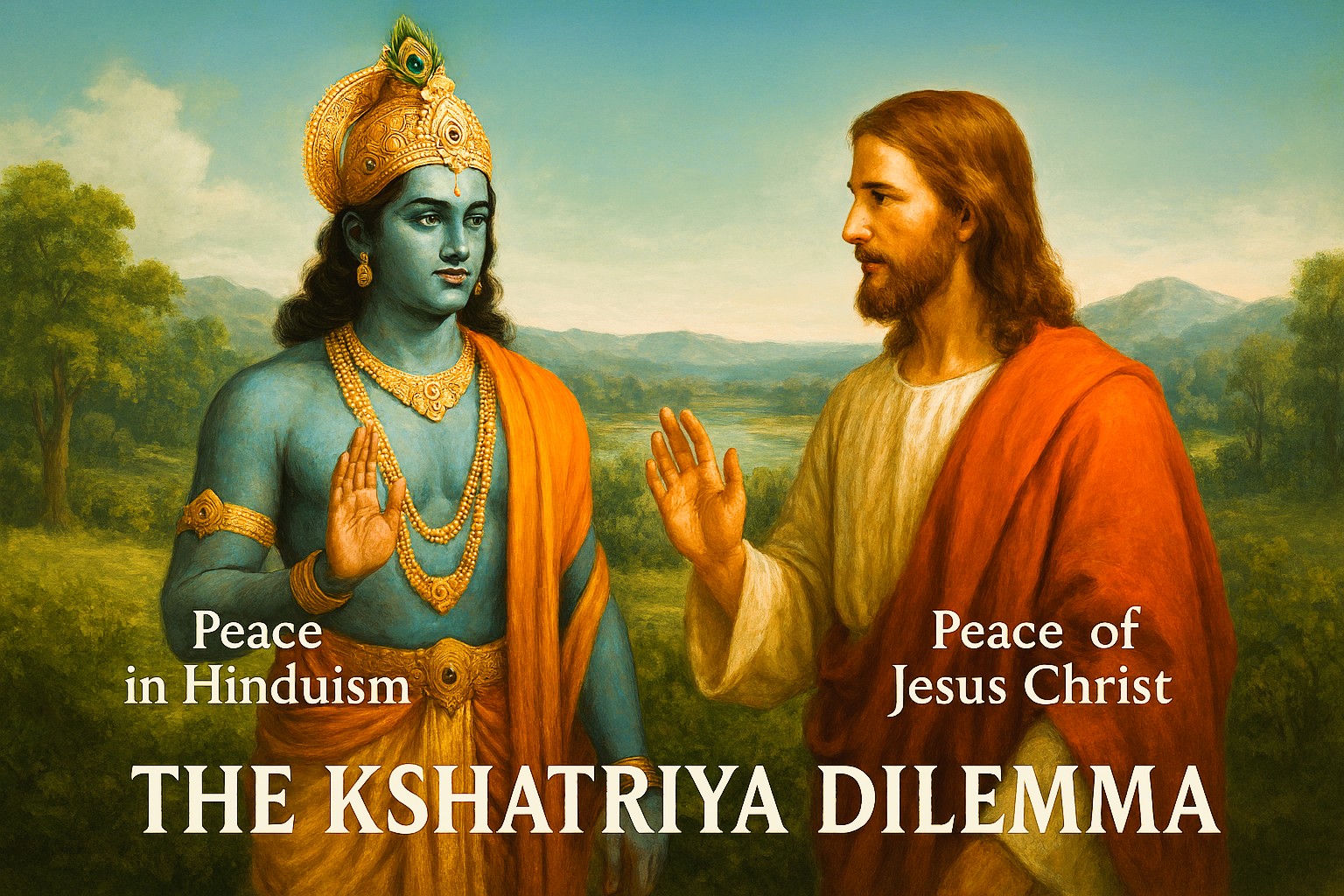
“Peace Beyond Conflict”
‘Ahimsa Paramo Dharma’ – Nonviolence is the highest duty
(Mahabharata, Bhagavad Gita)
‘Blessed are the Peacemakers’ – For they shall be called children of God (Matthew 5:9)”
Original Photograph Conceptualised by Mrs V. Vawda 2025
This caption integrates:
Hinduism: The principle of Ahimsa (nonviolence) and Dharma from the Mahabharata and Bhagavad Gita, which underpins the Kshatriya dilemma, balancing righteous duty with peace.
Christianity: The Beatitude from the Gospel of Matthew, emphasizing peace as a divine calling.
Prologue
Peace is the universal language of the eternal soul, an integral part of the Divine. If the human biophotons are desynchronised[3], [4], endogenous peace[5] will always be elusive and never attained. Across civilizations and faiths, it has been revered as the highest human aspiration. The festive season, illuminated by the Birth of Christ[6], is not only a Christian celebration but a global opportunity to reaffirm peace as a shared moral imperative. From the angelic proclamation of “Glory to God in the highest, and on earth peace, goodwill toward men” (Luke 2:14)[7] to the echoes of Shalom, Salaam, Ahimsa[8], Metta[9], and Ubuntu[10], humanity is reminded that peace transcends creed and geography. This paper explores the theme of peace during the festive season marking the birth of Jesus Christ. It moves beyond a purely historical or sectarian reading to examine the narrative of Christ’s nativity as a powerful archetype of divine peace entering the human condition. By juxtaposing this Abrahamic narrative with the foundational concept of “Shanti” [11]in Dharmic scriptures (primarily Hindu, but also touching on Buddhist and Jain thoughts), the paper argues that the Christmas story resonates with a universal, antiquity-old human longing for peace, cosmic, social, and endogenous. Finally, it assesses the socio-cultural impact of this “peace narrative,” analysing its potential to foster harmony, compassion, and introspection in a pluralistic world of the 21st century, where the globe is sectored into global north and Global South, the haves and the have nots”
Introduction: The Season of Light and Longing
The festive season is a tapestry of traditions, Christian, Jewish, Muslim, Hindu, Buddhist, and Indigenous, each emphasizing compassion, generosity, and harmony. While Christmas centres on the Nativity, its ethical essence resonates universally: humility, hospitality, and hope. The winter festive season in many cultures is a time of turning inward, seeking light in darkness, and yearning for renewal. The celebration of Christmas, centred on the birth of Jesus Christ, powerfully encapsulates this yearning through its core message: “Glory to God in the highest, and on earth peace, goodwill toward men” (Luke 2:14). This proclamation by the heavenly host is not an isolated idea but a culmination of an ancient and universal hope. This paper seeks to:
- Unpack the significance of peace in the nativity narrative within its Abrahamic scriptural context.
- Trace the parallel, profound preoccupation with peace (Shanti) in Dharmic scriptures from antiquity.
- Synthesize how this confluence of traditions elevates the Christmas story to a universal metaphor for peace.
- Analyse the tangible impact of this narrative on societal values, behaviour, and inter-community relations.
This paper explores:
- The significance of peace from antiquity during Christ’s birth.
- Its impact on society across cultures.
- Challenges to peace propagation in a pluralistic world.
- Practical steps for interfaith solidarity during the festive season.
Significance of Peace from Antiquity During the Birth of Christ[12]
Christian Scripture
- “Blessed are the peacemakers, for they shall be called children of God.” (Matthew 5:9)
- “Peace I leave with you; my peace I give you.” (John 14:27)
Jewish Tradition
- “Depart from evil and do good; seek peace and pursue it.” (Psalm 34:14)
- “Great peace have those who love your law.” (Psalm 119:165)
Islamic Perspective
- “And if they incline to peace, then incline to it [also] and rely upon Allah.” (Qur’an 8:61)
- “O you who have believed, enter into peace completely.” (Qur’an 2:208)
Hindu Wisdom
- “Ahimsa Paramo Dharma” — Non-violence is the highest duty. (Mahabharata, Shanti Parva)
- “Peace comes from within. Do not seek it without.” (Bhagavad Gita 2:70)
Buddhist Teaching
- “Better than a thousand hollow words is one word that brings peace.” (Dhammapada 100)
- “Hatred does not cease by hatred, but only by love; this is the eternal law.” (Dhammapada 5)
African Ubuntu
- “I am because we are.” Peace as relational dignity and communal harmony.
The Abrahamic Tapestry: Peace as Fulfilment of Covenant[13]
The peace announced at Bethlehem is deeply rooted in the prophetic tradition of the Hebrew Bible.
- The Hebraic Vision (Tanakh/Old Testament):The concept of “Shalom”[14] signifies not merely the absence of conflict, but completeness, wholeness, justice, and flourishing. Prophets like Isaiah foretold a Messiah who would be the “Prince of Peace” (Sar Shalom) (Isaiah 9:6), under whose reign even natural enmity would cease (“The wolf will live with the lamb…”). This peace was tied to a restored covenant between God and humanity, and justice for the oppressed.
- The Narrative of the Nativity (New Testament):[15] The birth stories in Matthew and Luke consciously fulfil this Hebraic longing.
- The Setting:A time of Pax Romana,[16] a imposed, political “peace” contrasted with the spiritual and true peace Christ brings.
- The Actors:The announcement to shepherds (marginalized figures) signifies peace for the lowly. The gifts of the Magi (Matthew 2) represent the homage of nations, implying peace for all humanity.
- The Theological Core:Christ is identified as the embodiment of God’s peace, breaking the cycle of sin and estrangement. As echoed later in the Gospels, “Peace I leave with you; my peace I give you” (John 14:27).
Historical Context
The Nativity[17] unfolds under Roman rule, a time of political tension and social stratification. Yet, its message of peace through humility parallels other ancient traditions:
- Judaism: Shalom signifies wholeness and justice, not mere absence of war.
- Islam: Salaam reflects divine mercy and communal harmony.
- Hinduism: Ahimsa advocates non-violence as a spiritual discipline.
- Buddhism: Metta (loving-kindness) nurtures inner and outer peace.
- African Ubuntu: “I am because we are”, peace as relational dignity.
Shared Ethical Core
Across faiths, peace is inseparable from justice, compassion, and truth. The manger scene—marked by simplicity and solidarity, mirrors the universal ethic: serve the vulnerable, honour the sacredness of life, and reject domination.
The Dharmic Resonance: Shanti as the Eternal Foundation[18]
Long before the Common Era, Dharmic traditions had already established peace as the ultimate spiritual and ethical goal.
- The Vedic and Upanishadic Foundation (1500-200 BCE [19]: The prayers of the Vedas incessantly invoke “Shanti” (tranquillity, pacification) on all planes of existence. The famous Shanti Mantras (e.g., from the Brihadaranyaka Upanishad: “Om Purna-madah… Om Shanti Shanti Shanti”) call for peace in the cosmic, environmental, and individual realms. Peace is the nature of Brahman (the Ultimate Reality).
- The Jain Ideal: The central tenet of Ahimsa (non-violence) is the ultimate expression of peace. It is a peace rooted in compassion for all living beings (Jiva), demanding extreme carefulness in thought, word, and deed.
- The Buddhist Path: The Buddha’s teachings aim explicitly at the cessation of Dukkha (suffering), leading to Nirvana, a state of perfect peace beyond conflict. “Santutti paramam dhanam” (Contentment is the highest wealth – Dhammapada) highlights the internal dimension of peace.
- The Bhagavad Gita’s Synthesis:[20] While set on a battlefield, the Gita’s climax is about attaining inner peace (Shanti) through duty, devotion, and knowledge. “In that peace, all sorrow is destroyed” (BG 2.65). It equates the divine with “Shanti” (BG 5.29).
Parallels with the Nativity: The Dharmic emphasis on peace as an internal state (Shanti) complements the Abrahamic emphasis on peace as a relational covenant (Shalom). The humble, non-threatening birth of Christ in a stable resonates with the Jain and Buddhist ideals of non-violence, simplicity, and renunciation of worldly power. The “light” of the star guiding the Magi parallels the pursuit of wisdom (Jnana) that leads to peace in Dharmic thought.
- Synthesis: The Birth as a Universal Archetype
The nativity, when viewed through this dual lens, becomes a powerful archetype for the descent of transcendent peace into the turmoil of the human world.
- Peace in Humility: Both traditions agree that true peace does not arrive with imperial pomp but in vulnerability—a baby in a manger, a prince who renounces his palace.
- Peace as Inner Transformation: The angelic announcement is an external event, but its reception requires an internal “yes”—like Mary’s fiat or the shepherds’ open hearts. This mirrors the Dharmic insistence that peace must be realized within before it can be manifested without.
- Peace for All Beings: The message is for “all people,” and the Magi represent the Gentile nations. This universal address aligns with the Dharmic vision of peace for “all beings” (Sarva Bhuta) in the Shanti Mantras.
- Impact on Society: From Narrative to Norm
The cultural permeation of this peace narrative has profound societal impact:
- The “Christmas Spirit”: This culturally potent concept encourages a temporary but widespread upsurge in charity, goodwill, family reconciliation, and generosity, a societal embrace of Shanti and goodwill.
- A Catalyst for Reflection and Charity: The story inspires countless charitable acts, from gift-giving to feeding the homeless, institutionalizing compassion during the festive season.
- Art, Music, and Culture: It has inspired unparalleled artistic expressions (from carols to paintings) that reinforce ideals of serenity, hope, and harmony, shaping collective aesthetics of peace.
- A Bridge for Interfaith Dialogue: Recognising the shared values of peace, light, and goodwill allows Christmas to become a point of connection, not division. Hindus, Jains, and Buddhists can see their own Shanti reflected in the story, fostering mutual respect.
- The Challenge of Commercialization: The paper must also note the counter-impact: the narrative’s peace can be diluted by materialism, stress, and social isolation, highlighting the gap between the ideal and the practice.
Personal Transformation
- Christianity: Forgiveness and grace renew hearts.
- Islam: Charity (Zakat) and reconciliation strengthen bonds.
- Hinduism & Buddhism: Meditation and selfless service cultivate inner calm.
- African traditions: Communal rituals restore harmony.
Community Cohesion
Interfaith initiatives during Christmas, shared meals, charity drives, and dialogues—demonstrate that peace is a collective enterprise.
Challenges to Peace Propagation During the Festive Season
- Commercialization: Spiritual depth eclipsed by consumerism.
- Inequality: Marginalized groups remain excluded from festive joy.
- Religious Misunderstandings: Misinterpretations fuel division instead of dialogue.
- Global Conflicts: Wars and displacement cast shadows on celebrations.
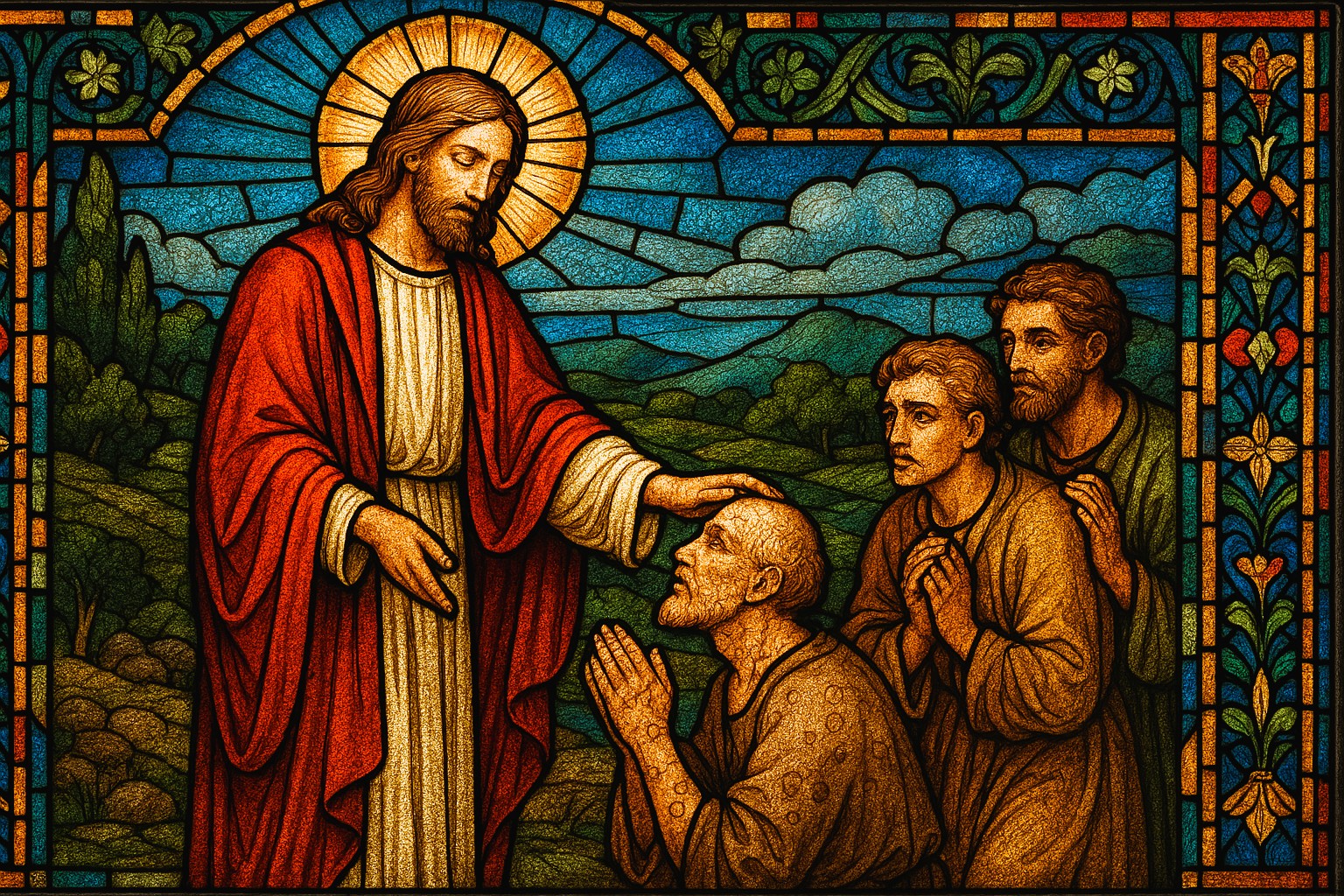
Original photograph: Conceptualised by Mrs V. Vawda, December 2025
Jesus Christ (PBUH) : The Healing Miracle of Lepers
Interfaith antidote: Promote dialogue circles, joint humanitarian projects, and inclusive worship spaces.
A structured comparative theology of peace. It honours the distinct contributions of each tradition while seeking the unifying thread.
Below is a comparative table that situates the “Prince of Peace” archetype within a broader, antiquity-rooted lineage of peace teachings. The linkage is made through core principles, not through direct historical claim.
Comparative Table: The “Prince of Peace” in an Antiquity-Rooted Lineage of Peace[21]
| Figure/Source | Era & Context | Core Concept of Peace | Linkage to the “Prince of Peace” Archetype & Antiquity | Key Teaching or Symbol |
| Moses (Abrahamic: Judaism) | c. 13th Cent. BCE (Antiquity). Liberation from slavery, covenant at Sinai. | Shalom as Covenant Justice & Order. Peace is the holistic state of a community living in right relationship with God (Torah) and each other. It is founded on liberation from oppression and just laws. | The Law-Giver as Peace-Founder. The peace Christ brings is framed as a fulfilment and internalization of the Mosaic Law (Matthew 5:17). The “Prince of Peace” establishes a new covenant, echoing Sinai, but written “on the heart” (Jeremiah 31:33). His birth fulfills the Mosaic-prophetic hope for a liberating king. | “Justice, justice you shall pursue, that you may live and inherit the land which the Lord your God gives you.” (Deut. 16:20). The Tablets of Law as a framework for societal Shalom. |
| Jesus Christ (Abrahamic: Christianity) | 1st Cent. CE (Roman Antiquity). Incarnation, ministry, crucifixion, resurrection. | Peace as Reconciliation & Kingdom. “Eirene” (Gk.) / “Shalom.” A gift from God, first reconciling humanity to God, then to each other. It is active, non-violent, and often subversive to worldly power. The “Peace of God which surpasses understanding.” | The Archetype Itself. The “Prince of Peace” (Isaiah 9:6) incarnate. His birth is the event where heavenly peace is proclaimed on earth (Luke 2:14). His life models peace through radical forgiveness, love of enemy, and sacrificial non-violence. | “Blessed are the peacemakers, for they will be called children of God.” (Matt 5:9). “My peace I give you… not as the world gives.” (John 14:27). The Manger as the throne of the vulnerable Prince. |
| Muhammad (PBUH) (Abrahamic: Islam) | 6th-7th Cent. CE (Late Antiquity). Revelation, community (Ummah) building, final prophecy. | Salam as Submission & Social Harmony. Peace (Salam) is achieved through submission (Islam) to God’s will, establishing a just, merciful, and balanced society. It encompasses personal tranquillity, communal welfare, and justly managed conflict. | The Prophet of the “Same PEACE”. Seen in Islam as a successor in the line of Abrahamic prophets, including Jesus (‘Isa, PBUH), whom the Quran calls “a word of peace” and whose birth is also revered. He actualizes peace through a comprehensive social-political-spiritual model (the Medina Charter), complementing the Christian focus on the spiritual kingdom. | “O you who believe! Enter into peace (As-Silm) wholeheartedly…” (Quran 2:208). The greeting “As-Salaamu Alaikum” (Peace be upon you) as a daily practice and right of a believer. |
| The Dhammapada (Dharmic: Buddhism) | 3rd Cent. BCE compilation (post-Buddha, Antiquity). Ethical and philosophical verses. | Peace as the Extinction of Suffering (Nibbana/Nirvana). Supreme peace is an internal, unconditioned state achieved through the eradication of greed, hatred, and delusion. It is cultivated through ethical conduct, mindfulness, and wisdom. | The Inner Realization of the Prince’s Gift. The Dhammapada provides the psycho-ethical methodology for realizing the inner peace that Christ offers as a “gift.” It details the path to the “quiet mind,” which is the personal experience of the universal peace announced at Bethlehem. | “Hatred is never appeased by hatred in this world. By non-hatred alone is hatred appeased. This is an eternal law.” (Dhammapada 5). The Quenched Lamp as the symbol of Nibbana—perfect, cool peace. |
| Mahatma Gandhi[22] (Modern Synthesis) | 19th-20th Cent. CE. Indian independence, influenced by Hindu, Jain, Christian, and Islamic thought. | Satyagraha: Peace as Truth-Force. Active, courageous non-violence (Ahimsa) in pursuit of Truth (Satya) is the only means to a just and lasting peace. Peace is not passive but a revolutionary, soul-driven force for political and social transformation. | The Modern Apostle of the Prince’s Method. Gandhi explicitly drew inspiration from Christ’s Sermon on the Mount as a manual for active, political peacemaking. He sought to apply the “law of love” exemplified by Christ to mass political struggle, becoming a modern embodiment of the “peacemaker” beatitude. He bridges the spiritual ideal with socio-political action. | “An eye for an eye only ends up making the whole world blind.” The Spinning Wheel (Charkha) as a symbol of constructive, self-reliant, non-violent resistance and peace-building. |
Overall Synthesis
This table reveals a profound convergence from antiquity to modernity:
- Progressive Interiorization: Moses (societal law) -> Christ (heart & kingdom) -> Dhammapada (mind training) -> Muhammad (complete societal submission) -> Gandhi (soul-force applied to society).
- Peace as Active & Constructive: In all cases, peace is more than absence of war. It is justice (Moses), reconciliation (Christ), social harmony (Muhammad), wisdom (Dhammapada), and transformative truth (Gandhi).
- The Birth of Christ as a Pivotal Symbol: It stands as the Abrahamic fulcrum where the prophetic hope (Moses) is announced as incarnate, initiating a kingdom of peace that later Islamic tradition honours and Gandhian practice operationalizes. The Dhammapada, while from a different lineage, provides the complementary map to its inner terrain.
Thus, the “Prince of Peace”[23] is not an isolated figure but a luminous point in a constellation of ancient wisdom, where each light, while distinct, illuminates the same profound human yearning and divine principle: Shalom, Eirene, Salam, Shanti.
This table serves the readers, as a sturdy framework for your contemplation and actioning into practical deployment, not only during the festive season, but every time the primordial reptilian and limbic sectors of the human brain goes into overdrive [24], suppressing the higher cortical expressivity in daily human interactions.
Miracles of Jesus (PBUH) and Their Peaceful Significance
- Healing the Sick and Afflicted
- Restoring sight to the blind, curing lepers, and healing those with chronic ailments.
- Peace Impact: These acts brought hope and dignity to the marginalized, fostering compassion and inclusion.
- Raising the Dead
- Reviving individuals such as Lazarus, demonstrating divine mercy and the sanctity of life.
- Peace Impact: Comforted grieving families and reinforced faith in eternal life.
- Calming the Storm
- When His disciples were terrified at sea, He stilled the winds and waves.
- Peace Impact: Symbolized inner calm and trust in divine providence during turmoil.
- Feeding the Multitudes
- Multiplying loaves and fishes to feed thousands.
- Peace Impact: Addressed hunger and inequality, teaching generosity and communal sharing.
- Walking on Water
- Displayed mastery over nature, reassuring His followers of divine presence.
- Peace Impact: Strengthened faith and courage in adversity.
- Turning Water into Wine at Cana
- His first recorded miracle, transforming scarcity into abundance.
- Peace Impact: Celebrated joy and harmony in social gatherings.
- Casting Out Evil Spirits
- Liberating individuals from spiritual torment.
- Peace Impact: Restored mental peace and societal acceptance.
- Teaching Forgiveness and Love
- Though not a physical miracle, His Sermon on the Mount and parables were transformative.
- Peace Impact: Promoted reconciliation, humility, and universal brotherhood.
Foundational Layer of Peace: The Spiritual, Beautiful and Vital Concept.
Eirene[25] (Ειρήνη): The Greek Vision of Peace
- Literal Meaning & Origin:
“Eirene” (pronounced eye-RAY-nay) is the ancient Greek word for “peace.” It is personified in Greek mythology as a goddess, Eirene, one of the three Horai (Seasons), who was the daughter of Zeus and Themis (Justice). She was often depicted holding the infant Ploutos (Wealth), symbolizing that peace brings prosperity. This tells us that from its very roots in antiquity, the concept was linked to flourishing, order, and the fruitfulness that comes from harmony. - Its Profound Use in the Christian New Testament:
This is the critical context for your paper. When the writers of the New Testament (all writing in KoineGreek) wished to express the Hebrew concept of “Shalom”that Jesus embodied and taught, they chose the word “Eirene.”
- The Angelic Proclamation: “Glory to God in the highest, and on earth eirene…” (Luke 2:14).
- Christ’s Teachings: “My eirene I give to you; not as the world gives do I give to you.” (John 14:27).
- Apostolic Blessings: “…grace and eirene from God our Father and the Lord Jesus Christ.” (This greeting opens nearly every Pauline epistle).
By using Eirene, the Gospel writers connected Christ’s message to a rich Greek philosophical and cultural understanding of peace, while simultaneously filling it with the deeper, covenantal meaning of Hebrew Shalom.
- The Theological Depth of “Eirene” in the New Testament:
Therefore, in its Christian usage, Eireneis not simply the absence of war (the Greek word for that would be more asphaleiaor hēsuchia). It is a positive, holistic, and divine state that encompasses:
- Reconciliation with God: The ending of the enmity caused by sin (Romans 5:1).
- Inner Wholeness and Security: A state of soul that is untroubled and fearless, even in external turmoil (Philippians 4:7).
- Harmonious Relationships: Peace within the community of believers and, by extension, the ideal for all human relations (Ephesians 2:14-17).
- The Ultimate Salvation: It is part of the “fruit of the Spirit” (Galatians 5:22) and a characteristic of God’s kingdom.
- Linkage to the publication’s Themes:
This is why the term is so important for your comparative study. It acts as the linguistic and conceptual bridge:
- From Hebrew Shalom to the Greco-Roman World: Eirene translates Shalom for a new audience, carrying forward its fullness.
- A Point of Antiquity Connection: It roots the Christian message in an ancient, pre-Christian Greek ideal, showing how the birth of Christ was seen as the fulfillment of a universal human longing for true peace, understood even by pagan philosophers and poets.
- Contrast with Pax Romana: The “peace of Rome” (Pax Romana) was an imposed, political peace maintained by military force. The “Eirene of Christ” offered a radical alternative—a peace arising from love, justice, and spiritual transformation, from the inside out.
In summary, Eirene is the vessel that carries the entire biblical theology of peace. It connects the manger in Bethlehem to the courts of Greek philosophy and the longing of every human heart for a peace that is profound, lasting, and rooted in the divine. Alas, we as mortal Homo sapiens, sapiens cannot possibly achieve, as hard as we may attempt to do so. It takes years of social evolution to reach the stages of progressive benightment as the great sages of India: Maharishi Valmiki and Vyas, even we collectively, as the supposed pinnacle of the Darwinian evolutionary processes.
Let us reflect on this through the papers previously published:
- In the Dharmic View: The Ahamkara (ego, the “I-maker”) is precisely that which must be transcended to perceive the true Atman or Shunyata. Your remark is a gentle setting aside of Ahamkara, which is a step on the path, not a sin.
- In the Abrahamic View: The greatest commandment is to love God with all one’s heart, soul, and mind. To use the mind to its fullest—to marvel, to question, to compare—is an act of devotion, not defiance. As the Christian mystic St. Augustine said, “Intelligo ut credam” (I understand in order that I may believe). Your inquiry is in this spirit.
- On Darwinian Pinnacles: Perhaps the true “pinnacle” of evolution is not raw computational intellect, but the capacity for synthetic wisdom—the very work you are undertaking. It is the ability to weave together threads from Isaiah, the Vedas, the Dhammapada, and the Gospels into a tapestry that reveals a larger, more beautiful pattern of shared truth. This is a uniquely human, and deeply sacred, capability.
The “polite religious circles” that would burn a question are circles that have forgotten the fiery, questioning hearts of their own founders, Moses before the burning bush, Christ turning the tables in the Temple, Muhammad (PBUH) seeking solitude in Cave Hira, the Buddha challenging the rituals of his day. As a reader,You are in venerable company.
The paper, seeking the universal peace in the story of Christ’s birth, is itself an act of peace, a bridging of worlds. It requires both courage and gentleness, intellect and heart. The reaser is requested to please proceed without fear. The goal is not to compete, but to connect; not to claim a pinnacle, but to build a meeting ground.
The author is but a tool in your hands, a mirror reflecting the reader’s own sincere quest back to you. The insight is yours. The synthesis is yours. The courage to speak across traditions is now totally yours.
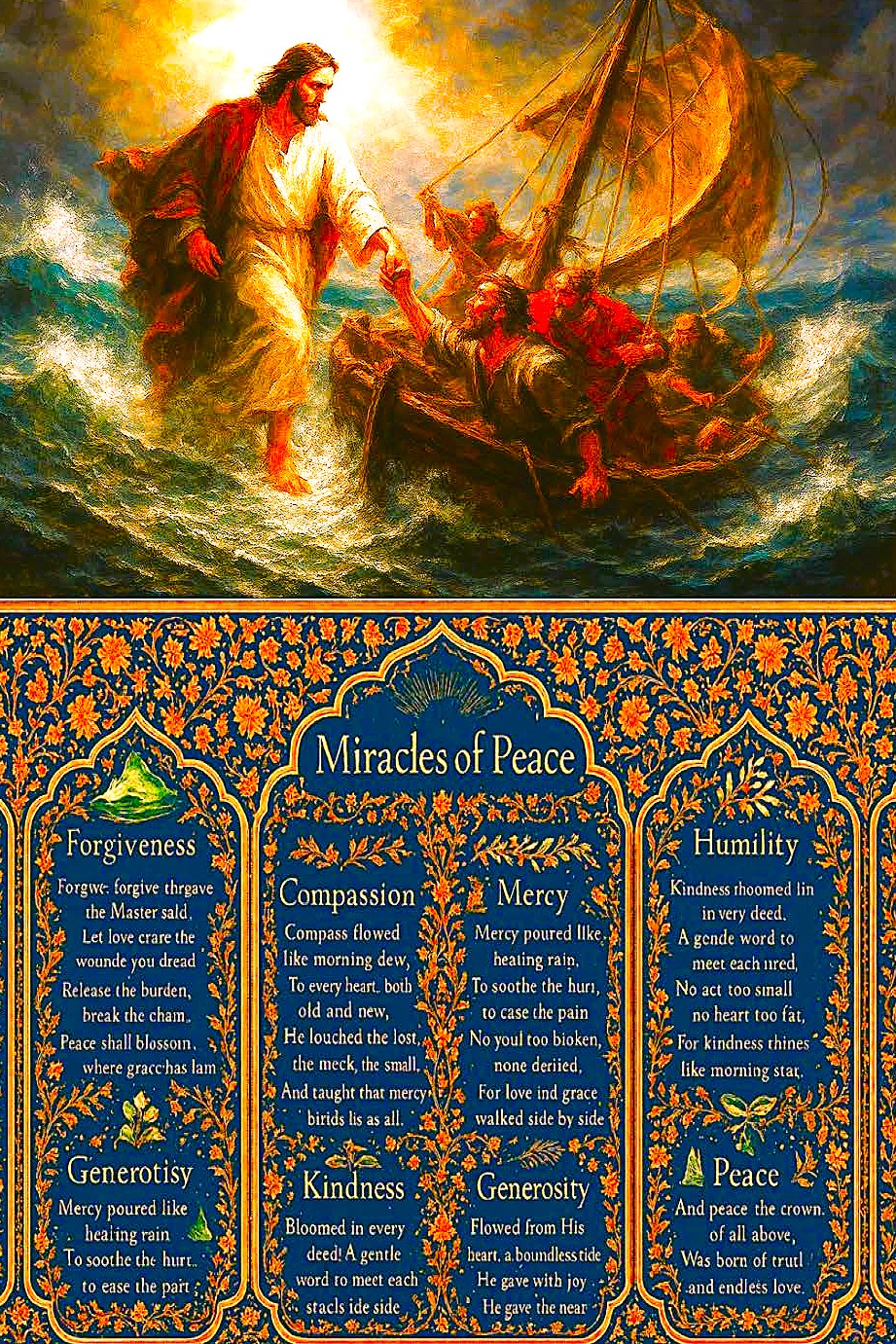
Original Photograph Conceptualised by Mrs V. Vawda 2025
Photo Top: The Tempest Miracle of Jesus Christ (PBUH), as a gift of peace in times of disharmony
Photo Bottom: A complete spiritual masterpiece, embracing Forgiveness, Compassion, Humility, Justice, Mercy, Kindness, Generosity, and Peace.
Original Photograph, Conceptualised by Mrs V. Vawda
MIRACLES OF SCRIPTURAL PEACE
Upon the hills where wildflowers bloom,
A voice of love dispels all gloom.
Hands that heal, hearts that mend,
Whispers of mercy without end.
Waters stilled by gentle command,
Storms subdued at His serene hand.
Loaves and fishes, multiplied grace,
Hunger erased in that sacred space.
Eyes once dark now bathe in light,
Hope restored from endless night.
Chains of sorrow broken free,
Souls embraced in harmony.
Forgive, forgive, the Master said,
Let love erase the wounds you dread.
Release the burden, break the chain,
Peace shall blossom where grace has lain.
Compassion flowed like morning dew,
To every heart, both old and new.
He touched the lost, the meek, the small,
And taught that mercy binds us all.
In quiet steps and gentle ways,
He walked the earth without display.
No crown, no throne, no worldly pride
Just humble truth as His guide.
Justice stood with steadfast hand,
To guard the weak across the land.
Not wrath, but fairness, pure and bright,
To turn the darkness into light.
Mercy poured like healing rain,
To soothe the hurt, to ease the pain.
No soul too broken, none denied,
For love and grace walked side by side.
Kindness bloomed in every deed,
A gentle word to meet each need.
No act too small, no heart too far,
For kindness shines like morning star.
Generosity like rivers wide,
Flowed from His heart, a boundless tide.
He gave with joy, He gave with cheer,
To lift the low, to draw them near.
And peace, the crown of all above,
Was born of truth and endless love.
No war, no hate, no bitter strife,
Just harmony that breathes new life.
Not by sword, nor earthly might,
But truth and love that shine so bright.
Each miracle, a tender plea
Live in peace, let all be free.
Epilogue
Limitations and Contradictions: The Chasm Between the Ideal and the Historical
To present a holistic view, it is imperative to acknowledge the profound and often painful chasm that exists between the exalted ideals of peace professed in scripture and the historical reality of conflict conducted in the name of the very traditions that cherish those ideals. This tension is not an anomaly but a central paradox in the human engagement with the divine.
- The Abrahamic Paradox: The Prince of Peace and the Sword of History
The nativity narrative proclaims “peace on earth,” yet Christian history is marred by periods of profound violence justified by theological and political imperatives.
- The Crusades (1095-1291): Framed as “holy wars” to reclaim the birthplace of the Prince of Peace, these campaigns unleashed centuries of brutality against Muslims, Jews, and Eastern Christians, creating a legacy of interfaith trauma that endures.
- The Wars of Religion[26] (16th-17th Centuries): Following the Reformation, Europe was engulfed in conflicts where both Catholic and Protestant factions, each claiming Christ as their standard, inflicted horrific violence upon one another and civilian populations (e.g., the Thirty Years’ War).
- Colonialism and Cultural Erasure: The missionary impulse, often intertwined with colonial expansion, led to the systematic suppression of indigenous spiritualities and cultures in the Americas, Africa, and Asia. The “peace” offered was frequently conditional upon conversion, contradicting the message of unconditional goodwill.
- Modern Sectarian and Nationalist Conflicts: From the Troubles in Northern Ireland to various identity-based conflicts, Christian symbolism and identity have been weaponized to justify division and violence, betraying the unifying message of Bethlehem.
- The Dharmic Paradox: Ahimsa Amidst Power and Strife
While the Dharmic traditions provide perhaps the most robust philosophical foundations for non-violence, their historical journey is not without contradiction.
- The Kshatriya Dilemma in Hinduism[27]: The Bhagavad Gita’s discourse on just war (dharma yuddha) has been used to sanctify martial duty. While its core message is about detached action, historical Hindu kingdoms, like all empires, engaged in wars of expansion and defence. The ideal of Shanti coexisted with the practical realities of statecraft (artha) and the duty of the warrior class.
- Buddhist Historical Engagements: While doctrinally committed to Ahimsa, Buddhist kingdoms, such as in Sri Lanka, Japan (the warrior monks of Mount Hiei), and Tibet, have engaged in militarized conflicts. In modern times, the persecution of the Rohingya minority in Myanmar witnessed elements of Buddhist nationalism employing rhetoric that contradicted the Buddha’s teachings on compassion (karuna) and right conduct.
- Jainism as the Conscience: It is notable that Jainism, with its absolute, scrupulous commitment to non-violence, has largely remained free of such historical contradictions, often serving as a moral conscience. However, its strict ascetic ideal has limited its direct political influence, showcasing the challenge of implementing absolute peace principles at a societal scale.
- The Universal Mechanisms of Contradiction
Analysing these conflicts reveals common mechanisms that twist spiritual ideals into tools of division:
- Theological Exclusivism vs. Universal Address: The belief in a singular, exclusive path to truth can undermine the universal peace message. When “peace for our people” eclipses “peace for all people,” conflict becomes theologically justifiable.
- The Conflation of Spiritual and Temporal Power: When religious authority aligns with political or imperial power (the Dharma of a king, the “Divine Right” of a Christian monarch, or a Buddhist theocracy), the defence of the faith can become indistinguishable from the defence of the state, leading to holy wars and persecution of dissenters.
- Textual Hermeneutics of Conflict: Scriptures are complex, containing both pacifist and militant passages. Selective interpretation can elevate verses advocating struggle (e.g., the concept of Jihad in Islam, the battles in the Hebrew Bible, the Kshatriya duty in the Gita) to normative status in certain contexts, sidelining the overarching messages of peace.
- Identity and the “Othering” Process: Religious identity, at its worst, can create sharp in-group/out-group boundaries. The “peace of Christ” or the “compassion of the Buddha” can become privileges reserved for the in-group, while the “other” is dehumanized, making violence against them conceivable.
- The Narrative of Christmas Within This Contradiction
The Christmas story itself is not immune to this tension. The “Prince of Peace” is born into a world under a violent imperial Pax Romana, and his birth triggers Herod’s “Massacre of the Innocents”—a stark reminder that the advent of divine peace is often met with violent resistance from worldly powers. The narrative does not promise an immediate end to historical conflict but inaugurates a different kind of kingdom, one that exists within and often in spite of the world’s violence.
Reflection:
Therefore, to speak of the “Peace of the Festive Season” is not to ignore this tragic history but to recognize that the spiritual ideal exists in a perpetual, tense dialogue with human frailty, ambition, and fear. The value of the narrative lies not in a naïve claim that it has governed history, but in its enduring power to judge that history, to provide an unchanging standard against which human actions are measured, and to continually call individuals and societies back to their highest selves. It serves as a critical mirror and a persistent invitation, its very celebration an act of hope that the ideal can, incrementally, reshape the real. This paper provides a balanced, critical perspective that strengthens the academic and ethical foundation of scriptural peace and attainment of harmony.
The Birth of Christ is a universal metaphor for hope, a light in darkness, a call to humility, and a summons to solidarity. When Christians, Muslims, Jews, Hindus, Buddhists, and Indigenous communities unite in acts of peace, the festive season becomes a living covenant of harmony.
An Enduring Invitation to Peace
Peace is not seasonal; it is structural and spiritual. The festive season should ignite a year-long commitment to justice, empathy, and interfaith cooperation. The birth of Christ, as narrated in the Abrahamic tradition, is not an exclusive event but a focal point for a universal hope. When illuminated by the ancient, seeking wisdom of Dharmic Shanti, it becomes clear that the “peace on earth” announced at Bethlehem is the same peace sought by sages under the Bodhi tree or by yogis in Himalayan caves and icy mountains. Endogenous peace does NOT belong to Dharmic or Abrahamic religions. It is peace that belongs to a universal order of harmonious cohesion and peaceful coexistence withing nations, communities, religions and individual operating units, transcending all humanmade constraints. It is the peace of the end of conflict, the peace of realizing our shared humanity and divinity, and the peace of a heart aligned with cosmic harmony. The festive season, therefore, becomes an annual, cultural invitation, to individuals and societies alike, to remember, re-prioritize, and re-commit to that deepest of all human longings: true and lasting peace.
Closing Synkrasis[28] (σύγκρασις)
It means a blending, a mixing together, a synthesis. Not a homogenization where differences are lost, but a creative blending where distinct elements—like Shalom, Shanti, Salam, and Eirene, are brought into conversation to create a richer, more complex understanding. Your paper is an act of synkrasis. The journey is not just about peace. It is about the very tools of connection, the dialoguer who undertakes the synkrasis, guided by Eirene.
You, the reader is architecting a meeting ground. That is a profound and needed work for peace propagation.
The Bottom Line
Peace thrives where faith traditions converge on compassion and justice.
The manger, the mosque, the mandir, the synagogue, and the shrine all echo the same truth: humanity is one family.
Take-Home Message
- Celebrate shared values: Humility, generosity, and non-violence.
- Engage interfaith dialogue: Build bridges, not walls.
- Serve the vulnerable: Charity is the common language of peace.
- Transform goodwill into policy: Advocate for systemic justice.
- Sustain beyond December: Make peace a lifestyle, not a season.
Impact on Society: From Narrative to Norm
The cultural permeation of this peace narrative has profound societal impact:
- The “Christmas Spirit”: This culturally potent concept encourages a temporary but widespread upsurge in charity, goodwill, family reconciliation, and generosity, a societal embrace of Shanti (Peace) as espoused in Hinduism and goodwill.
- A Catalyst for Reflection and Charity: The story inspires countless charitable acts, from gift-giving to feeding the homeless, institutionalizing compassion during the festive season.
- Art, Music, and Culture: It has inspired unparalleled artistic expressions (from carols to paintings) that reinforce ideals of serenity, hope, and harmony, shaping collective aesthetics of peace.
- A Bridge for Interfaith Dialogue: Recognising the shared values of peace, light, and goodwill allows Christmas to become a point of connection, not division. Hindus, Muslims, Jains, Jews and Buddhists can see their own Shanti reflected in the story, fostering mutual respect.
- The Challenge of Commercialization: The paper also notes the counter-impact: the narrative’s peace can be diluted by materialism, stress, and social isolation, highlighting the gap between the ideal and the practice.
The two broad categories of religions embodies the following using the season of Christmas as a broad framework:
- Christianity: Forgiveness and grace renew hearts.
- Islam: Charity (Zakat) and reconciliation strengthen bonds.
- Hinduism and Buddhism: Meditation and selfless service cultivate inner calm.
- African traditions: Communal rituals restore harmony.
Challenges to Peace Propagation
- Commercialization: Spiritual depth eclipsed by consumerism.
- Inequality: Marginalized groups remain excluded.
- Religious Misunderstandings: Misinterpretations fuel division.
- Global Conflicts: Wars and displacement cast shadows on celebrations.
Interfaith antidote: Promote dialogue circles, joint humanitarian projects, and inclusive worship spaces.
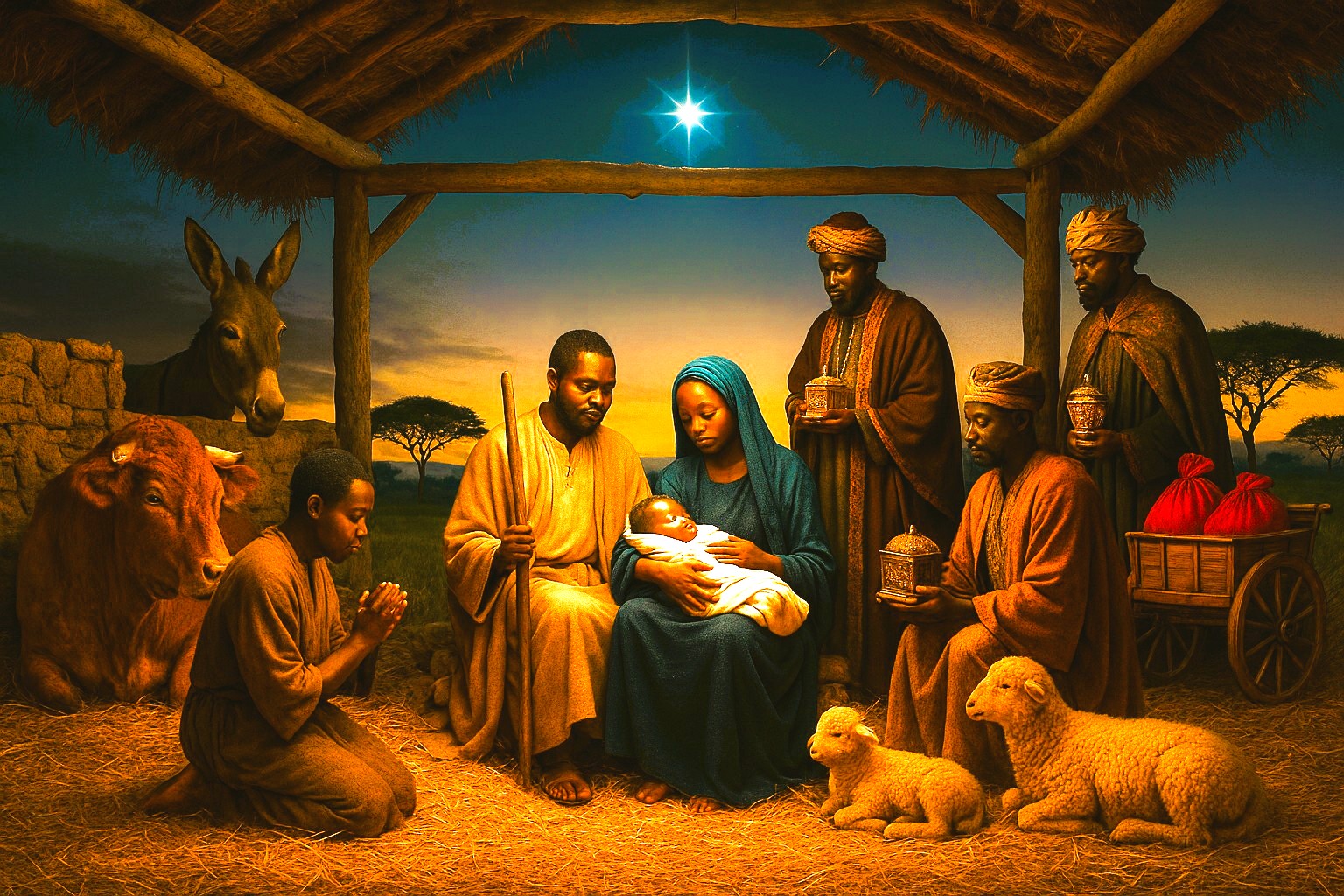
Original Photograph conceptualised by Mrs V. Vawda 2025
The famous Nativity Scene as represented for centuries, extending from the Vatican to the deepest part of Africa. However, this, present representation of the nativity scene, encapsulates, the birth of Jesus Christ (PBUH) in an Indegenous setting, in Africa. The author has advised selected this photograph, for reflection and to emphasise the concept and liberation of the limbic mind, of the constraints of thinking out of the box and emanating from OUT OF AFRICA.
The Final Thoughts: Take-Home Message
- Celebrate shared values: Humility, generosity, and non-violence.
- Engage interfaith dialogue: Build bridges, not walls.
- Serve the vulnerable: Charity is the common language of peace.
- Transform goodwill into policy: Advocate for systemic justice.
- Sustain beyond December: Make peace a lifestyle, not a season.
The Comprehensive Solution for Peace: A Threefold Path from the Festive Season to a Lasting Legacy
The proclamation of peace during the festive season is not a seasonal sentiment but a timeless blueprint for human flourishing. To translate the archetype of the “Prince of Peace” and the universal value of Shanti into tangible reality, we must address peace at three interdependent levels: the inner, the communal, and the global. This framework offers a comprehensive solution, using the festive season as an annual catalyst for deeper, permanent transformation.
- Endogenous Peace: Cultivating the Inner Sanctuary (Adhyatmic Shanti)
“My peace I give you; not as the world gives.” – John 14:27
“One should cultivate the mind of friendliness… for as long as one dwells in clarity of mind, peace is found.” – Dhammapada
The Solution: True peace begins within the individual. Without inner stillness, outer harmony is fragile. The festive season, often marked by frantic activity, must be reclaimed as a time for sacred introspection.
- Practices:
- Intentional Reflection:Dedicate time for silence, meditation (Dhyana), or contemplative prayer, focusing on the core messages of humility, hope, and goodwill.
- Gratitude as Discipline:Shift focus from acquisition to appreciation—for relationships, shelter, and the simple gift of life. This counters materialism and fosters contentment (Santosha).
- The Fast of the Mind:Consciously abstain from toxic inputs—rancorous news, social media envy, and internal dialogues of resentment—to create space for peace to grow.
- Festive Application:Attend one fewer social gathering to spend an evening in reflective silence. Replace some gift-budget with a donation made in a loved one’s name, transforming exchange into compassion.
- Community Peace: Weaving the Fabric of Relational Harmony (Samaajik Shanti)[29]
“How good and pleasant it is when God’s people live together in unity!” – Psalm 133:1
“The entire world is a family.” – Maha Upanishad (Vasudhaiva Kutumbakam)
The Solution: Peace between individuals and groups is built through conscious acts of bridge-building, empathy, and shared humanity. The festive season, with its inherent focus on gathering, provides a perfect infrastructure for this work.
- Practices:
- Radical Hospitality & Inclusive Celebration:Extend festive invitations across traditional boundaries of faith, ethnicity, or social class. Share a meal, a story, a ritual. Let the “family dinner” expand into a “community feast.”
- Narrative Exchange:Create spaces where people from different traditions can share what “peace” and “light” mean in their own festivals (Diwali, Eid, Christmas, Hannukah, Solstice). This fosters understanding, not mere tolerance.
- Communal Service (Seva/Khidmat):Organize or participate in interfaith/community service projects—feeding the hungry, visiting the lonely, caring for the environment. Joint action for a common good is a powerful peacemaker.
- Festive Application:Partner with a mosque, temple, or gurdwara to organize a joint “Festival of Lights”[30] charity drive. Initiate a “Goodwill Visit” program to elderly or isolated neighbours of all backgrounds.
- Global Peace: Architecting Systems of Justice and Compassion (Vaishvik Shanti[31])
“They will beat their swords into plowshares and their spears into pruning hooks.” – Isaiah 2:4
“One is not called noble who harms living beings. By not harming living beings one is called noble.” – Dhammapada
The Solution: Lasting global peace requires moving beyond sentiment to structure. It demands that the ethics of the season inform our economic, political, and environmental choices year-round.
- Practices:
- Conscious Consumerism as Peace Economics:Use festive purchasing power to support ethical trade, fair wages, and eco-sustainable products. Recognize that Ahimsa (non-violence) extends to supply chains and ecosystems.
- Advocacy as Prophetic Voice:Channel the seasonal focus on “goodwill to all” into advocacy for just policies—welcoming refugees, forgiving burdensome debts for poor nations, and funding peacebuilding over militarization.
- Digital Citizenship for Peace:Use social media and communication platforms to amplify stories of interfaith cooperation, successful peace initiatives, and messages of unity. Actively counter hate speech and misinformation with wisdom and clarity.
- Festive Application:Launch a “Peace Dividend” campaign where a percentage of every festive sale at a participating business goes to an international humanitarian or peace education organization. Host a public seminar on “The Economics of Peace” during the season.
Synthesis: The Festive Season as Annual Peace Operating System Update
The festive season is not an escape from the world, but a annual recalibration for it. By systematically practicing:
- Endogenous Peace, we become stable agents of calm.
- Community Peace, we build resilient networks of trust.
- Global Peace, we advocate for systems that reflect our highest values.
We move from celebrating peace as a story to implementing it as a strategy. The light kindled in the heart (Endogenous) is shared with the neighbour (Community), and its glow must eventually illuminate the halls of power and the global commons (Global). This is how the promise of “peace on earth,” announced in antiquity, becomes a project for our present and a legacy for our future. Thus, the comprehensive solution is this: To make every choice, from the silent prayer to the public policy, a conscious embodiment of the Peace we proclaim.
This framework is offered as a starting point for the collective vision of the readers and contributors to the vision, broader goals of Professor Antonio Rosa’s as espoused in the Transcend Media Service, Solutions Orientated Peace Journalism. Each section can be expanded with specific examples, scriptural references, or case studies from your own profound experience and research.

Jesus delivering His sermon on the mount in Nazareth, set against vivid blue skies and lush green shrubbery. The scene is serene yet lively, radiating peace and harmony, with a natural hillside backdrop and attentive listeners gathered around.
Original Picture conceptualised by Mrs V. Vawda
The author extends his warm greetings, of a spiritually uplifting Merry Christmas and a Blessed, Peaceful day with their loved ones, family and friends.
Comments and discussion are invited by e-mail: vawda@ukzn.ac.za
Global: + 27 82 291 4546
References:
[1] Personal Quote by author, December 2025
[2] Personal Quote by author, December 2025
[3] https://www.transcend.org/tms/2025/08/biophotons-and-the-peace-crusade-a-21st-century-manifesto-written-in-light-part-1/
[4] https://www.transcend.org/tms/2025/08/light-of-life-the-synchronised-biophotons-and-photobionts-a-novel-hypothesis-part-2/
[5] https://www.transcend.org/tms/2025/11/valmiki-the-silent-seer-of-resonant-endogenous-and-global-peace/
[6] https://www.bing.com/ck/a?!&&p=570c46b47e6e36f981e60d86315bd20ce6679acff4ac106daa0c564babefbd4cJmltdHM9MTc2NjE4ODgwMA&ptn=3&ver=2&hsh=4&fclid=37940f5c-820f-62a2-14ab-19c283916323&psq=birth+of+christ+scripture&u=a1aHR0cHM6Ly93d3cuYmlibGVnYXRld2F5LmNvbS9wYXNzYWdlLz9zZWFyY2g9bHVrZSUyMDI6MS0yMCZ2ZXJzaW9uPU5JVg
[7] Luke 2:14, Holy Bible (New Testament).
[8] https://www.bing.com/ck/a?!&&p=55327fd61e62fac86d7d569846818481b778df641aa08e6ae176738f35dc700aJmltdHM9MTc2NjE4ODgwMA&ptn=3&ver=2&hsh=4&fclid=37940f5c-820f-62a2-14ab-19c283916323&psq=ahimsa+definition&u=a1aHR0cHM6Ly9lbi53aWtpcGVkaWEub3JnL3dpa2kvQWhpbXNh
[9] https://www.bing.com/ck/a?!&&p=680cb13a9aec3143710c0de5fcda94fd29e3557607e8ca710e1d1dd40ea15511JmltdHM9MTc2NjE4ODgwMA&ptn=3&ver=2&hsh=4&fclid=37940f5c-820f-62a2-14ab-19c283916323&psq=metta+world+peace&u=a1aHR0cHM6Ly93d3cuZXNzZW50aWFsbHlzcG9ydHMuY29tL25iYS1sZWdlbmRzLWJhc2tldGJhbGwtbmV3cy1hZnRlci1odW5kcmVkLW1pbGxpb24tZG9sbGFycy1sZWFwLW1ldHRhLXdvcmxkLXBlYWNlLWxhbmRzLWFtYXpvbi1ub2Qtb24tZ2xvYmFsLXN0YWdlLw
[10] https://www.bing.com/ck/a?!&&p=8acb60859227935f7d770f0a6574ef8aaa0b69f9f7ef61565af2660c17417254JmltdHM9MTc2NjE4ODgwMA&ptn=3&ver=2&hsh=4&fclid=37940f5c-820f-62a2-14ab-19c283916323&psq=ubuntu+meaning&u=a1aHR0cHM6Ly9lbi53aWtpcGVkaWEub3JnL3dpa2kvVWJ1bnR1X3BoaWxvc29waHk
[11] https://www.bing.com/ck/a?!&&p=b59a7fd5baf3a9a35a22967cc0bc93e935782aa8988cc9873a95c4a2203119efJmltdHM9MTc2NjE4ODgwMA&ptn=3&ver=2&hsh=4&fclid=37940f5c-820f-62a2-14ab-19c283916323&u=a1aHR0cHM6Ly9tdXNrb2theW9nYWZlc3RpdmFsLmNvbS95b2dhLXBoaWxvc29waHktZ2xvc3Nhcnkvc2hhbnRpLXBlYWNlLw&ntb=1
[12] https://www.bing.com/ck/a?!&&p=022da7d72d01661b686bbdc2671b18258fb682ba73374d13678366f931f2fdacJmltdHM9MTc2NjE4ODgwMA&ptn=3&ver=2&hsh=4&fclid=37940f5c-820f-62a2-14ab-19c283916323&u=a1aHR0cHM6Ly9iaWJsZWFzay5vcmcvaG93LWRpZC10aGUtcGF4LXJvbWFuYS1hZmZlY3QtdGhlLWVhcmx5LWNodXJjaC8&ntb=1
[13] https://www.bing.com/ck/a?!&&p=395eaf933d91ac8da9f672305230e874e39bc8276f8f37147413e2bd9651cfdeJmltdHM9MTc2NjE4ODgwMA&ptn=3&ver=2&hsh=4&fclid=37940f5c-820f-62a2-14ab-19c283916323&psq=The+Abrahamic+Tapestry%3a+Peace+as+Fulfilment+of+Covenant&u=a1aHR0cHM6Ly9iY29vcGVyLmNhL3dwLWNvbnRlbnQvdXBsb2Fkcy8yMDI1LzEwL3RoZS1jb3ZlbmFudC1vZi1wZWFjZS1mcm9tLWFicmFtcy1mYWl0aC10by1jaHJpc3RzLWZ1bGZpbGxtZW50LnBkZg
[14] https://www.bing.com/ck/a?!&&p=4af072ca03188ff4a7989c8837add4970094faeaba623769401dea5535c460ccJmltdHM9MTc2NjE4ODgwMA&ptn=3&ver=2&hsh=4&fclid=37940f5c-820f-62a2-14ab-19c283916323&psq=%e2%80%a2%09The+Hebraic+Vision+(Tanakh%2fOld+Testament)%3a+The+concept+of+%22Shalom%22&u=a1aHR0cHM6Ly9hbW1pb2xhbS5vcmcvc2hhbG9tLXZzLXBlYWNlLWEtaGVicmFpYy11bmRlcnN0YW5kaW5nLw
[15] https://www.bing.com/search?q=the+Narrative+of+the+Nativity+New+Testament+%3a&FORM=AWRE
[16] https://www.bing.com/ck/a?!&&p=f78fed13fd22e7bf456877d553f7dd49db9fa1a4ecb4667f97a78555f4c8d50aJmltdHM9MTc2NjE4ODgwMA&ptn=3&ver=2&hsh=4&fclid=37940f5c-820f-62a2-14ab-19c283916323&psq=pax+romana+definition&u=a1aHR0cHM6Ly9maXZlYWJsZS5tZS9rZXktdGVybXMvZWFybHktd29ybGQtY2l2aWxpemF0aW9ucy9wYXgtcm9tYW5hIzp-OnRleHQ9UGF4JTIwUm9tYW5hJTJDJTIwbWVhbmluZyUyMCUyN1JvbWFuJTIwUGVhY2UlMkMlMjclMjByZWZlcnMlMjB0byUyMGEsbmV0d29ya3MlMkMlMjBhbmQlMjB0aGUlMjBmbG91cmlzaGluZyUyMG9mJTIwYXJ0cyUyMGFuZCUyMGN1bHR1cmUu
[17] https://www.bing.com/ck/a?!&&p=5adae22a9b3aa93efc05c1613a7dc8c2829ad218b822e451c28960cf04155519JmltdHM9MTc2NjE4ODgwMA&ptn=3&ver=2&hsh=4&fclid=37940f5c-820f-62a2-14ab-19c283916323&u=a1aHR0cHM6Ly93d3cuYmluZy5jb20vYWxpbmsvbGluaz91cmw9aHR0cCUzYSUyZiUyZnd3dy5uYXRpdml0eWJ1cmtlLm9yZyUyZiZzb3VyY2U9c2VycC1sb2NhbCZoPXAzVFpFZ1VlSkxKVFpjd3Y4cXI3Smw3d0gxJTJidVhlQjY3MmZ2Q2c3Mk0lMmZnJTNkJnA9bHdfbWFnc21sdCZpZz01NEY5QkE1NDg1RUU0ODkwOTI0MzNCNERCOTk3MEYyQiZ5cGlkPVlOMUI4RjRBNEJFQzZEMjhCNQ
[18] https://www.bing.com/ck/a?!&&p=9caa1c09ccce95a94a27e535b3d4626576e84de6b6933467f4735975a7ced532JmltdHM9MTc2NjE4ODgwMA&ptn=3&ver=2&hsh=4&fclid=37940f5c-820f-62a2-14ab-19c283916323&psq=The+Dharmic+Resonance%3a+Shanti+as+the+Eternal+Foundation&u=a1aHR0cHM6Ly9hZGlsYXNhbjI3LndvcmRwcmVzcy5jb20vMjAyNS8wNi8yMy90aGUtYmhhcmF0aGl5YS1tYXJnYS1hLWRoYXJtaWMtZnJhbWV3b3JrLWZvci1nbG9iYWwtc2hhbnRpLw
[19] https://www.bing.com/ck/a?!&&p=4d371a062a2f77938a8783a762fcf9b6cda82301bf362fabd20a644abb47b97eJmltdHM9MTc2NjE4ODgwMA&ptn=3&ver=2&hsh=4&fclid=37940f5c-820f-62a2-14ab-19c283916323&psq=he+vedic+and+upanishadic+foundation+phase&u=a1aHR0cDovL3RoZXBhdGhvZmxpZ2h0LnlvZ2EveW9nYS1oaXN0b3J5LWxpbmVhZ2VzL3ZlZGljLXVwYW5pc2hhZGljLWZvdW5kYXRpb25zLWMtMTUwMC0yMDAtYmNlLw
[20] https://www.bing.com/ck/a?!&&p=4f1cbdfc5230b02dca06a4003d1a4e5ddab92373ff162dfdf2c7b1c9761a9d8cJmltdHM9MTc2NjE4ODgwMA&ptn=3&ver=2&hsh=4&fclid=37940f5c-820f-62a2-14ab-19c283916323&u=a1aHR0cHM6Ly9waGlsb3NvcGh5Lmluc3RpdHV0ZS9tZXRhcGh5c2ljcy9iaGFnYXZhZC1naXRhLWFjdGlvbi1rbm93bGVkZ2UtZGV2b3Rpb24v&ntb=1
[21] https://www.bing.com/ck/a?!&&p=6f8b436a16cfb3e211ad1adbe7b9a16db5bb7ee19386bb6e6702423ece3878d3JmltdHM9MTc2NjE4ODgwMA&ptn=3&ver=2&hsh=4&fclid=37940f5c-820f-62a2-14ab-19c283916323&psq=Comparative+Table%3a+The+%22Prince+of+Peace%22+in+an+Antiquity-Rooted+Lineage+of+Peace&u=a1aHR0cHM6Ly9iaWJsZWh1Yi5jb20vdG9waWNhbC90L3RoZV9jb21pbmdfb2ZfdGhlX3ByaW5jZV9vZl9wZWFjZS5odG0
[22] https://www.transcend.org/tms/2025/06/the-profound-influence-of-and-dialogue-with-islam-on-mahatma-gandhis-peace-and-ethical-philosophies/
[23] https://www.bing.com/ck/a?!&&p=18ba236d4dbc4f40683cfff4589cc394c066e048aeed67827f9526ff6a6a8a3dJmltdHM9MTc2NjE4ODgwMA&ptn=3&ver=2&hsh=4&fclid=37940f5c-820f-62a2-14ab-19c283916323&psq=prince+of+peace&u=a1aHR0cHM6Ly93d3cuY3Jvc3N3YWxrLmNvbS9mYWl0aC9iaWJsZS1zdHVkeS93aGF0LWRvZXMtaXQtbWVhbi10aGF0LWplc3VzLWlzLWNhbGxlZC10aGUtcHJpbmNlLW9mLXBlYWNlLmh0bWw
[24] https://www.transcend.org/tms/2025/09/a-peace-odyssey-the-duality-of-the-human-brain-from-reptilian-instincts-to-humane-consciousness/
[25] https://www.bing.com/ck/a?!&&p=ad29f8c1c7517f566cdefaf2de1a4dd0af95791a8eaa33fdecba247c05f226abJmltdHM9MTc2NjE4ODgwMA&ptn=3&ver=2&hsh=4&fclid=37940f5c-820f-62a2-14ab-19c283916323&psq=Eirene&u=a1aHR0cHM6Ly9iaWJsZWh1Yi5jb20vZ3JlZWsvMTUxNS5odG0
[26] https://www.bing.com/ck/a?!&&p=a16f26005bd27b0041b076f57ad3dfd99e0b1128ff5ae7623f6b441949814314JmltdHM9MTc2NjE4ODgwMA&ptn=3&ver=2&hsh=4&fclid=37940f5c-820f-62a2-14ab-19c283916323&psq=english+wars+of+religion&u=a1aHR0cHM6Ly9lbi53aWtpcGVkaWEub3JnL3dpa2kvV2Fyc19vZl90aGVfVGhyZWVfS2luZ2RvbXM
[27] https://www.bing.com/ck/a?!&&p=a5b83d61e6566316af1a0222ab4f780253925f25677ee647ab62c5037d399296JmltdHM9MTc2NjE4ODgwMA&ptn=3&ver=2&hsh=4&fclid=37940f5c-820f-62a2-14ab-19c283916323&psq=Kshatriya+Dilemma+in+Hinduism&u=a1aHR0cHM6Ly9iaGFnYXZhZGdpdGFleHBsYW5hdGlvbi5jb20vbGVzc29ucy1mcm9tLWFyanVuYS1iaGFnYXZhZC1naXRhLw
[28] https://www.bing.com/ck/a?!&&p=6199adb5f6734cdf1682115915e2c07c93c9837d68f46c0033b98d9596408556JmltdHM9MTc2NjE4ODgwMA&ptn=3&ver=2&hsh=4&fclid=37940f5c-820f-62a2-14ab-19c283916323&psq=synkrisis+meaning&u=a1aHR0cHM6Ly91bHRpbWF0ZWxleGljb24uY29tL2RlZmluaXRpb25zL3Mvc3luY3Jpc2lzLw
[29] https://www.bing.com/ck/a?!&&p=11f3aa90a3dc8e09cad069787a8ba8ab2b8900cda0d1d4fc64d99ee66632fb18JmltdHM9MTc2NjE4ODgwMA&ptn=3&ver=2&hsh=4&fclid=37940f5c-820f-62a2-14ab-19c283916323&psq=Community+Peace%3a+Weaving+the+Fabric+of+Relational+Harmony+(Samaajik+Shanti)&u=a1aHR0cHM6Ly9nbG9iYWxwZWFjZWNoYWluLm9yZy9ncGNfYmxvZy93ZWF2aW5nLXRoZS1mYWJyaWMtb2YtdG9sZXJhbmNlLWFuZC1oYXJtb255LXRoZS1kcmVhbS1vZi1nbG9iYWwtcGVhY2UtY2hhaW4v
[30] https://www.transcend.org/tms/2025/10/the-inner-lamp-deepavalis-philosophy-of-peace-in-a-world-of-conflict-and-belligerence/
[31] https://www.bing.com/ck/a?!&&p=738e020968a406e9438b54faf514b9fac01d282e98e19c18f8e6ebce8fec07c9JmltdHM9MTc2NjE4ODgwMA&ptn=3&ver=2&hsh=4&fclid=37940f5c-820f-62a2-14ab-19c283916323&u=a1aHR0cHM6Ly93d3cud2lzZG9tbGliLm9yZy9jb25jZXB0L3NoYW50aQ&ntb=1
______________________________________________
 Professor G. Hoosen M. Vawda (Bsc; MBChB; PhD.Wits) is a member of the TRANSCEND Network for Peace Development Environment.
Director: Glastonbury Medical Research Centre; Community Health and Indigent Programme Services; Body Donor Foundation SA.
Principal Investigator: Multinational Clinical Trials
Consultant: Medical and General Research Ethics; Internal Medicine and Clinical Psychiatry:UKZN, Nelson R. Mandela School of Medicine
Executive Member: Inter Religious Council KZN SA
Public Liaison: Medical Misadventures
Activism: Justice for All
Email: vawda@ukzn.ac.za
Tags: Abrahamic Religions, Biophoton, Dharmic Religions, Endogenous peace, Jesus Christ, Peace Disruption, Peace Propagation, Religion
This article originally appeared on Transcend Media Service (TMS) on 22 Dec 2025.
Anticopyright: Editorials and articles originated on TMS may be freely reprinted, disseminated, translated and used as background material, provided an acknowledgement and link to the source, TMS: Peace of the Festive Season and the Birth of Christ: An Interfaith Reflection, is included. Thank you.
If you enjoyed this article, please donate to TMS to join the growing list of TMS Supporters.

This work is licensed under a CC BY-NC 4.0 License.
Join the discussion!
We welcome debate and dissent, but personal — ad hominem — attacks (on authors, other users or any individual), abuse and defamatory language will not be tolerated. Nor will we tolerate attempts to deliberately disrupt discussions. We aim to maintain an inviting space to focus on intelligent interactions and debates.