
The Colonized Eat Each Other: Apartheid’s Final Victory
TRANSCEND MEMBERS, 1 Jun 2026
Raïs Neza Boneza – TRANSCEND Media Service
27 May 2026 – South Africa did not defeat apartheid. It negotiated with it. That sentence alone will make some people uncomfortable. Good. History should itch when it is healing badly.
Because what we are watching today in South Africa — Black Africans hunting other Black Africans in the streets, dragging migrants out of hospitals, burning foreign-owned shops, screaming that Zimbabweans, Nigerians, Congolese, Somalis and Mozambicans are “stealing jobs” — is not simply xenophobia. It is something darker. It is colonial trauma wearing a Black face.
And that is the tragedy.
A country that once stood as the global symbol of resistance against white supremacy is now producing scenes where descendants of apartheid victims chase other Africans like enemies. The same continent that sheltered ANC militants, financed liberation struggles, issued passports, trained cadres and bled politically for South Africa now watches in disbelief as African migrants become the punching bags of a broken post-apartheid reality. Clearly before the outrage machines overheat: most South Africans are not attackers. Many condemn the violence. But they have no platform, no security, no power. Fear silences them. Exhaustion silences them. But silence is not neutrality. Silence is a vote. “Go ahead, brother. We’ll look away.” That’s how the few cowards but many in corrupt administration speak for the many.
And then comes the twist. Even Julius Malema—of all people—has denounced the Afro-phobic madness and asked the sharpest question:
“You beat up Nigerians, Zimbabweans… tell me, how many jobs have YOU created by doing that? You close a shop that hired five people… then what? You open your own? No. You just break.”
Exactly. Because the math is embarrassing.
You destroy a Somali-owned shop employing six South Africans. Congratulations. Now six more South Africans are unemployed. Revolutionary economics apparently now consists of looting your own neighborhood and calling it patriotism.
And yet the deeper irony is almost a “comedy noir”; many of these self-declared anti-migrant “warriors” suddenly become remarkably polite, hesitant, even submissive when facing white economic power. In front of Black migrants, they roar like lions. In front of white capital, “toothless”, they turn into customer service representatives.
That is not courage. That is psychological colonization.
Because apartheid did not merely segregate land. It reorganized dignity itself. It taught generations of Black South Africans where fear should travel and where rage should land. It produced a society where economic power remained largely in white hands while political administration was handed to the Black majority like the keys to a car without an engine.
This is the part liberals hate discussing.
Post-1994 South Africa became a strange historical compromise: Black faces in government. White dominance in the economy. The skyscrapers remained. The mines remained. The banks remained. The land patterns remained.
The wealth remained astonishingly racialized.
And into this wounded structure entered another reality: migrants from elsewhere in Africa, many from countries that gained independence earlier, often arrived with educational advantages, entrepreneurial habits, professional skills, or simply the survival instinct of people used to unstable economies.
They opened shops. They studied. They adapted. They hustled.
This is not a story about criminal networks—those exist across every background. Consider Lucky Dube. South Africa’s most celebrated reggae musician was not killed by a foreigner. He was murdered by Sifiso Mhlanga, Julius Gxowa, and Mbuti Mabe—three South Africans who wanted his car.
They took him from us
Meanwhile apartheid had intentionally crippled Black South African education through systems like the Bantu Education Act, designed specifically to produce cheap labor rather than empowered citizens.
So, frustration grew.
But instead of confronting the architecture of inequality itself, politicians found an easier drug: scapegoating foreigners. The west now has been exporting that business model for years.
“When things collapse, blame migrants.”
It is the favorite hymn of every failed political class from Paris to Rome to London. South Africa simply localized the soundtrack.
And this is where the entire situation becomes almost unbearably tragic: the real economic concentration in South Africa is still overwhelmingly tied to structures built during colonialism and apartheid. Yet the anger rarely marches toward Sandton boardrooms. It marches toward Ethiopian kiosks and Congolese taxi drivers.
Colonialism always wins twice: first economically, then psychologically.
The apartheid regime understood this perfectly. Which is why its violence was never only physical. It was biological, educational, psychological and generational. The old regime even explored horrifying programs like Project Coast, involving chemical and biological warfare ambitions aimed at controlling or reducing Black populations.
Think about the insanity of that history for a second.
A people nearly engineered into destruction by white supremacist systems are now told that their biggest enemy is a Nigerian mechanic selling spare parts.
That is not liberation. That is trauma management disguised as nationalism. And perhaps the cruelest irony of all is this: the rest of Africa once treated South Africa’s liberation as a continental mission. Countries sacrificed resources, diplomacy, training camps, scholarships, passports and political capital so apartheid could fall.
Today, some African migrants entering South Africa are treated like invaders rather than cousins who once stood in solidarity during the darkest years.
History must be exhausted watching humanity repeat itself with different accents.
The danger, however, goes beyond South Africa. Because the same model is emerging elsewhere across Africa: luxury towers rising beside oceans of poverty, tiny elites growing obscenely wealthy, politicians manufacturing ethnic or foreign scapegoats, young men drowning in unemployment and humiliation, cities becoming vertical advertisements for inequality.
Kinshasa, Lagos, Nairobi, Johannesburg — in many places the future is beginning to look less like independence and more like managed inequality with internet wireless connectivity.
And when societies fail to redistribute dignity, people start redistributing hatred instead. That is the real warning South Africa is sending the continent.
Not that Africans hate foreigners.
But here’s what happens when you leave that wound open—unresolved trauma, gaping inequality, rotting corruption, economic strangulation, and cynical political puppetry. It mutates. And the mutation is terrifying:
Victims learn to eat other victims. Meanwhile, the real architects of the misery never miss a single golf swing behind their electric fences.
The migrant is not the disease. The disease is handing the economy to colonial heirs and calling it a peace deal. The disease is a bloated, incompetent administration that steals its own people’s future. The disease is a beaten people too terrified to raise a fist at the top—so they unload on the nearest Black face that isn’t from their zip code.
Shameful. Predictable. Tragic.
South Africa, your brothers bled to pull you back from the abyss when the world looked away. Don’t spit on them now just because you’re too scared to meet the old master’s gaze.
Look up. Not sideways.
Apartheid officially died in 1994. But economically, psychologically, structurally?
The corpse is still twitching.
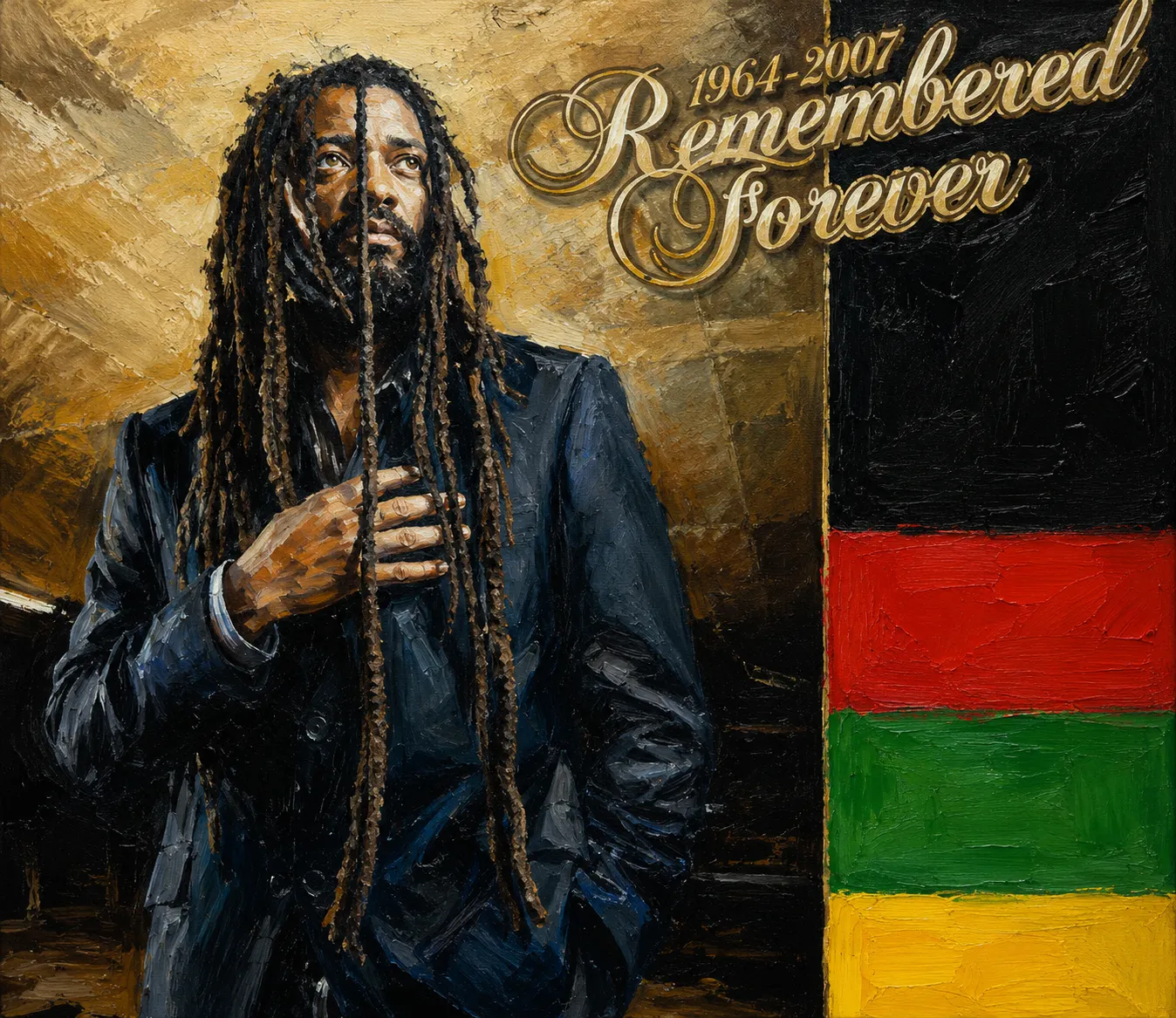
Lucky Dube – Different Colours, One People…
____________________________________________
 Raïs Neza Boneza is the author of fiction as well as non-fiction, poetry books and articles. He was born in the Katanga province of the Democratic Republic of Congo (Former Zaïre). He is also an activist and peace practitioner. Raïs is a member of the TRANSCEND Media Service Editorial Committee and a convener of the TRANSCEND Network for Peace Development Environment for Central and African Great Lakes. He uses his work to promote artistic expressions as a means to deal with conflicts and maintaining mental wellbeing, spiritual growth and healing. Raïs has travelled extensively in Africa and around the world as a lecturer, educator and consultant for various NGOs and institutions. His work is premised on art, healing, solidarity, peace, conflict transformation and human dignity issues and works also as freelance journalist. You can reach him at rais.boneza@gmail.com – http://www.raisnezaboneza.no
Go to Original – rboneza.substack.com
Tags: Africa, Apartheid, Colonialism, Ethnocentrism, Prejudice, Racism, South Africa, Tribalism, Xenophobia
DISCLAIMER: The statements, views and opinions expressed in pieces republished here are solely those of the authors and do not necessarily represent those of TMS. In accordance with title 17 U.S.C. section 107, this material is distributed without profit to those who have expressed a prior interest in receiving the included information for research and educational purposes. TMS has no affiliation whatsoever with the originator of this article nor is TMS endorsed or sponsored by the originator. “GO TO ORIGINAL” links are provided as a convenience to our readers and allow for verification of authenticity. However, as originating pages are often updated by their originating host sites, the versions posted may not match the versions our readers view when clicking the “GO TO ORIGINAL” links. This site contains copyrighted material the use of which has not always been specifically authorized by the copyright owner. We are making such material available in our efforts to advance understanding of environmental, political, human rights, economic, democracy, scientific, and social justice issues, etc. We believe this constitutes a ‘fair use’ of any such copyrighted material as provided for in section 107 of the US Copyright Law. In accordance with Title 17 U.S.C. Section 107, the material on this site is distributed without profit to those who have expressed a prior interest in receiving the included information for research and educational purposes. For more information go to: http://www.law.cornell.edu/uscode/17/107.shtml. If you wish to use copyrighted material from this site for purposes of your own that go beyond ‘fair use’, you must obtain permission from the copyright owner.
Join the discussion!
We welcome debate and dissent, but personal — ad hominem — attacks (on authors, other users or any individual), abuse and defamatory language will not be tolerated. Nor will we tolerate attempts to deliberately disrupt discussions. We aim to maintain an inviting space to focus on intelligent interactions and debates.