
Nonviolent Solutions Are Everywhere
NONVIOLENCE, 29 Jun 2026
Rivera Sun | Waging Nonviolence – TRANSCEND Media Service
Campaign Nonviolence Action Days invites people into the existing movement toward a nonviolent, equitable and livable world.
19 Jun 2026 – Imagine a world of nonviolent solutions.
It’s a place where community safety teams de-escalate violence in neighborhoods; where the peace budget funds unarmed peacekeeping around the world; where living wages, affordable healthcare and housing are available to all. It’s a society that chooses restorative justice, mediation and conflict resolution; where everyone learns conflict skills in school. In this world, renewable energy staves off the climate crisis; marine sanctuaries, sustainability and ecosystem restoration are repairing the harms of the past. It’s a society of dignity, respect and healing.
It’s a world already on its way.
In 2026, our organization decided to dedicate the entire year to collecting and sharing the real life examples of this vision. Pace e Bene Nonviolence Service has worked for 37 years to foster a culture of active nonviolence. Last year during our annual Campaign Nonviolence Action Days, we brought millions of people together in 5,630 actions and events to practice nonviolence toward self, others, world and the earth.
To build on this, we declared 2026: The Year of Nonviolent Solutions, engaging people in learning about the hundreds of examples of programs, policies and practices that prevent violence, heal harms and reduce destruction. In particular, we focused on alternatives to systemic and structural violence — the laws and institutions that embed harmful practices into a society’s way of life.
Systemic and structural violence is everywhere. In many ways, it defines our culture: spending trillions on weapons while cutting food stamps for children. Lack of affordable healthcare leading to early deaths and illness. Millions of unhoused people. A planet facing ecological collapse. Police brutality. Gun violence. Mass incarceration. Environmental racism. Wars and violent conflicts.
But if systemic and structural violence is everywhere, so are the people working on the alternatives: renewable energy, living wages, violence prevention teams, prison abolition, demilitarization, peacebuilding, unarmed security, affordable housing and healthcare, restorative justice and so much more. Together and individually, these are examples of systemic and structural nonviolence.
We call them: nonviolent solutions.
With 365 daily stories, social posts, virtual discussions, webinars and trainings, the Year of Nonviolent Solutions has been supporting people in learning about the hundreds of examples that exist. With action mobilizations throughout the year, people are working together to bring these solutions to decision-makers, both local and national.
These kinds of nonviolent solutions have already fostered big shifts in our society. Since 2000, two thirds of all youth prisons have been closed and the number of incarcerated youth — while still too high — has reduced by 75 percent. This is not only due to oppositional movements decrying the abuse of youth prisons and ineffectiveness of juvenile incarceration. The shift was hastened by thousands of local organizers, advocates and families implementing solutions on the ground. Youth diversion programs have worked with practices like restorative justice, teen court, peer mediation, and conflict resolution programs in schools to keep youth out of the prison system, and yet still provide accountability when harm happens.
Many nonviolent solutions offer a more effective and affordable alternative to the system they replace. For example, violence prevention teams have played a large role in the historic decline in homicide rates across the United States and cost a fraction of what law enforcement does. But officials (like President Trump) incorrectly ascribe lower crime rates to increased policing, and then make the mistake of defunding the solutions. By lifting up nonviolent solutions, we can demonstrate that there are better options, and challenge the old or outdated beliefs that drive the decision to choose destructive policies. For example, if the Trump administration understood that marine reserves actually increase fishing stock, instead of opening up our three Marine National Monuments to commercial fishing, we might expand our network of protected areas, like Vanuatu, Fiji, and Papua New Guinea are doing.
The Year of Nonviolent Solutions is about connecting these dots between isolated examples and showing that, as Arundhati Roy famously put it, “another world is not only possible, she is already on her way.”
During Campaign Nonviolence Action Days, from Sept. 21 through Oct. 2, 2026, we’re inviting people to move into action to “reflect, educate and act” on nonviolent solutions. Local groups can select the solutions they’re most excited about, study them, and bring them to the attention of decision-makers. Big organizations can hold mobilizations with their network to advance solutions they’re already working on. Together, thousands of communities will work together to uplift the incredible array of powerful practices, programs and policies.
Here are the three calls to action:
Reflect: Hold a vigil, prayer circle, or soulful gathering that reflects on the harm caused by the problem(s) and renews the commitment to building the solution(s).
Educate: Through teach-ins, film screenings, workshops, discussion groups and other educational events, bring people together to learn about one or more Nonviolent Solutions.
Act: Take visible action to practice or promote a Nonviolent Solution. This could include mutual aid or community care projects, restorative justice events, climate clean-ups, sit-ins, advocacy meetings, creative demonstrations, or other actions that share solutions with decision-makers and communities alike.
Everyone can participate in a way that works for them. We want to see people doing a wide range of actions, such as:
- Organizing a memorial march for victims of gun violence, share stories of how other cities are lowering homicide rates and recommit to implementing these kinds of programs.
- Hosting a Solutions Circle, a creative discussion group on one or more nonviolent solutions like peace teams, living wages, affordable housing or green spaces.
- Offering a workshop or webinar to train people in solutions like de-escalation, bystander intervention and restorative justice
- Giving a two minute public comment to your city council or school board about how North Minneapolis replaced cops in schools with a nonviolent security team.
- Holding a Solutions Sit-In with friends at your public utility about how Chicago’s city buildings run on renewables or how California ran for three months on 100 percent renewables with no blackouts.
There are hundreds of nonviolent solutions: forest restoration, bystander intervention, anti-bullying, debt abolition, mediation, green corridors, reparations, universal basic income, social housing, trauma-informed policies, marine sanctuaries, unarmed peacekeeping … the list is endless.
These seemingly disparate solutions are more connected than we think. Each one challenges harmful and destructive systems with a viable replacement. Each one demonstrates that the destruction, cost and ineffectiveness of those violent systems is unnecessary. And each one offers another piece of the puzzle that constructs a whole picture of a profoundly different society. A world of justice, peace, health and well-being, equality and equity, dignity and humanity, compassion, respect, redemption, healing and transformation.
It’s a culture of nonviolence … and it benefits us to see our issues connected in this way.
Millions of people are steadfastly working to advance solutions to violence in all its forms — from climate destruction to mass shooting, poverty to discrimination — yet, they rarely think of these solutions as nonviolence. Nor do we often articulate that a massive movement is well underway against all forms of violence and toward a nonviolent, fair,equitable and livable world.
Nonviolence holds a tenuous and undervalued place in the vision of a progressive future. Yet, seeing nonviolent solutions as a robust set of alternatives to violent, destructive and harmful systems links our efforts together, framing a future that stands together on the common ground. Nonviolence is more than just the absence of harm. It is the active presence of people and practices that challenge both violence and passivity, using creative solutions to liberate, heal and transform. From renewable energy to living wages, restorative justice to reparations, millions of people are already building a world that is anchored in nonviolence and the associated values of justice, peace, equity, healing, dignity, respect and compassion.
2026: The Year of Nonviolent Solutions uplifts the vision of this world. It shows how people are already building it. It unites our struggles and brings people into action to hasten the day when nonviolent solutions are everywhere.
_________________________________________________
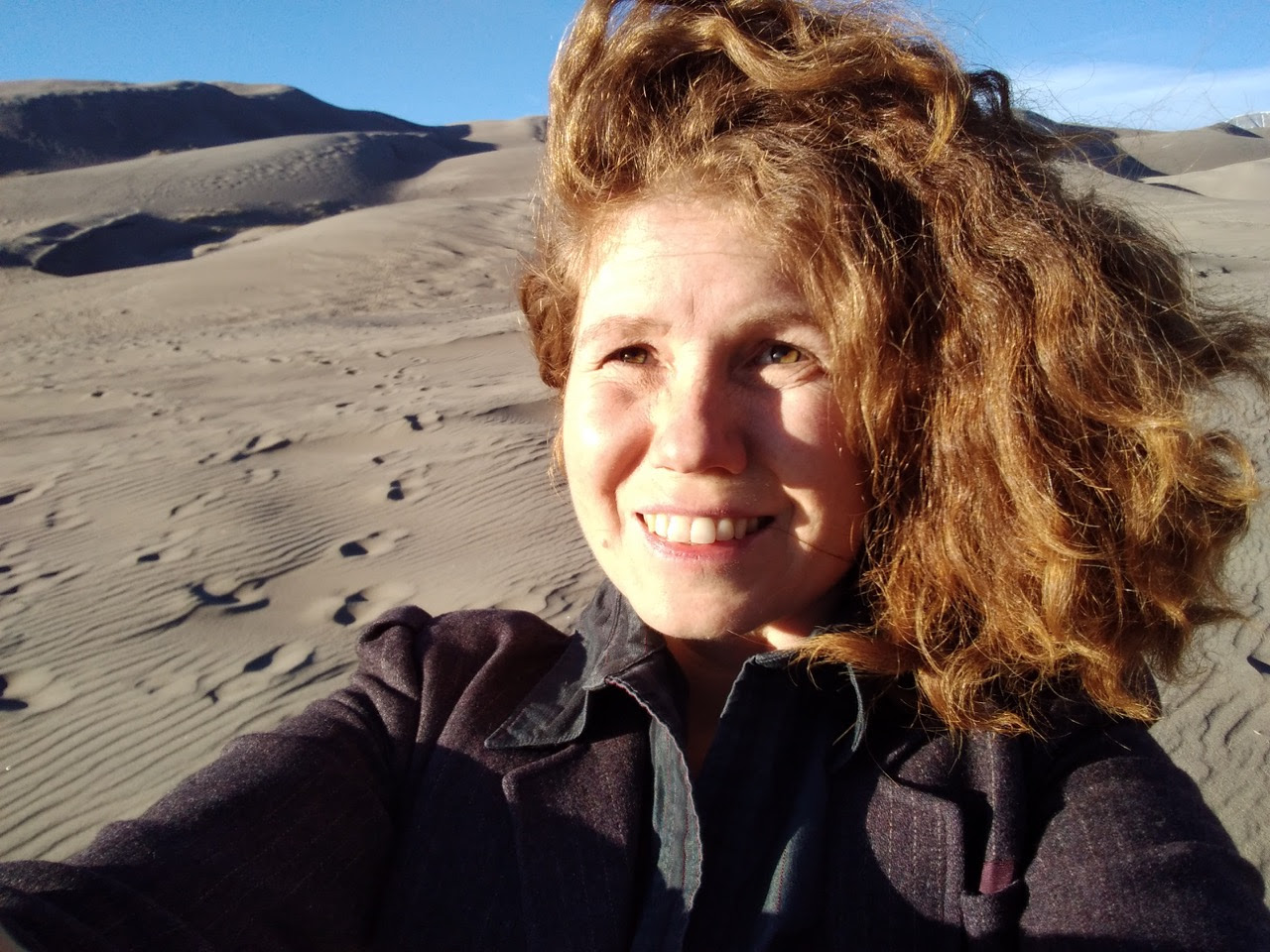 Author/Activist Rivera Sun is the editor of Nonviolence News, author of The Dandelion Insurrection and other books, and the Programs Coordinator for Campaign Nonviolence. She is a nationwide trainer in strategy for nonviolent campaigns. www.riverasun.com
Go to Original – wagingnonviolence.org
Tags: Direct Action, Nonviolence, Nonviolent Action, Nonviolent communication, Solutions, Solutions Journalism
DISCLAIMER: The statements, views and opinions expressed in pieces republished here are solely those of the authors and do not necessarily represent those of TMS. In accordance with title 17 U.S.C. section 107, this material is distributed without profit to those who have expressed a prior interest in receiving the included information for research and educational purposes. TMS has no affiliation whatsoever with the originator of this article nor is TMS endorsed or sponsored by the originator. “GO TO ORIGINAL” links are provided as a convenience to our readers and allow for verification of authenticity. However, as originating pages are often updated by their originating host sites, the versions posted may not match the versions our readers view when clicking the “GO TO ORIGINAL” links. This site contains copyrighted material the use of which has not always been specifically authorized by the copyright owner. We are making such material available in our efforts to advance understanding of environmental, political, human rights, economic, democracy, scientific, and social justice issues, etc. We believe this constitutes a ‘fair use’ of any such copyrighted material as provided for in section 107 of the US Copyright Law. In accordance with Title 17 U.S.C. Section 107, the material on this site is distributed without profit to those who have expressed a prior interest in receiving the included information for research and educational purposes. For more information go to: http://www.law.cornell.edu/uscode/17/107.shtml. If you wish to use copyrighted material from this site for purposes of your own that go beyond ‘fair use’, you must obtain permission from the copyright owner.
One Response to “Nonviolent Solutions Are Everywhere”
Join the discussion!
We welcome debate and dissent, but personal — ad hominem — attacks (on authors, other users or any individual), abuse and defamatory language will not be tolerated. Nor will we tolerate attempts to deliberately disrupt discussions. We aim to maintain an inviting space to focus on intelligent interactions and debates.
Comments in Response to: Nonviolent Solutions Are Everywhere
Nonviolence: More Fundamental than Disarmament
NONVIOLENCE
Surya Nath Prasad, Ph. D. – TRANSCEND Media Service, 8 Aug 2016
https://www.transcend.org/tms/2016/08/nonviolence-more-fundamental-than-disarmament/
Gandhi, Nonviolence and Peace
Surya Nath Prasad, Ph.D. – TRANSCEND Media Service, 6 Oct 2014
https://www.transcend.org/tms/2014/10/gandhi-nonviolence-and-peace/
Twenty-first Century School for Nonviolence
EDUCATION, 26 Jan 2026
Surya Nath Prasad – TRANSCEND Media Service
https://www.transcend.org/tms/2026/01/twenty-first-century-school-for-nonviolence/