
Carlos Castaneda, the Shamanic Messiah of the 1970s, Was also a Con Man, Plagiarist and Manipulative Cult Leader
EXPOSURES - EXPOSÉS, 6 Jul 2026
Don Lattin | Messiahs I Have Known | TRANSCEND Media Service
22 Jun 2026 – Back in the early 1970s, when I was an undergrad at UC Berkeley, it was hard to find a bookshelf that didn’t have a beat-up copy of the “Teachings of Don Juan” tucked between the cinder blocks.
Carlos Castaneda, an anthropology student at UCLA, had an incredible story to tell about his peyote-fueled adventures with an old Indian sorcerer he met at a bus depot on the Mexican border.
He first wrote this story up as “field notes” and turned it in as his master’s thesis. His magical mystery tour through the “Yaqui Way of Knowledge” was published in 1968, and by the early ‘70s Castaneda was a best-selling author and worldwide spiritual celebrity.
On his way to shamanic enlightenment, Castaneda learned how to fly, talked to a bilingual coyote and encountered amazing columns of singing light. It was magical. It was inspiring. But was it true?
Was it fiction? Was it symbolic? Or was it a hallucinogenic fantasy?
Did Don Juan really exist?
It almost didn’t matter. Like many of my college cohorts in Berkeley, I had taken a few too many mind-blowing acid trips. Reality itself was pretty slippery. Fact? Fiction? Who cares?
Looking back, it does matter, and we should care.
Carlos Castaneda pulled off one of the great literary hoaxes of the 20th century. In the two decades before his death in 1998, this alleged anthropologist, plagiarist and messianic narcissist went on to lead a secretive cult that destroyed the lives of a group of women who became his lovers and unquestioning disciples.
Ru Marshall, a non-binary writer and visual artist, has just put out the most exhaustive biography and exposé to date of this charismatic con man. It’s titled American Trickster — The Hidden Lives of Carlos Castaneda and it clocks in at 682 pages.
That’s the trimmed down version, and therein lies the backstory of this work’s rocky road to publication.
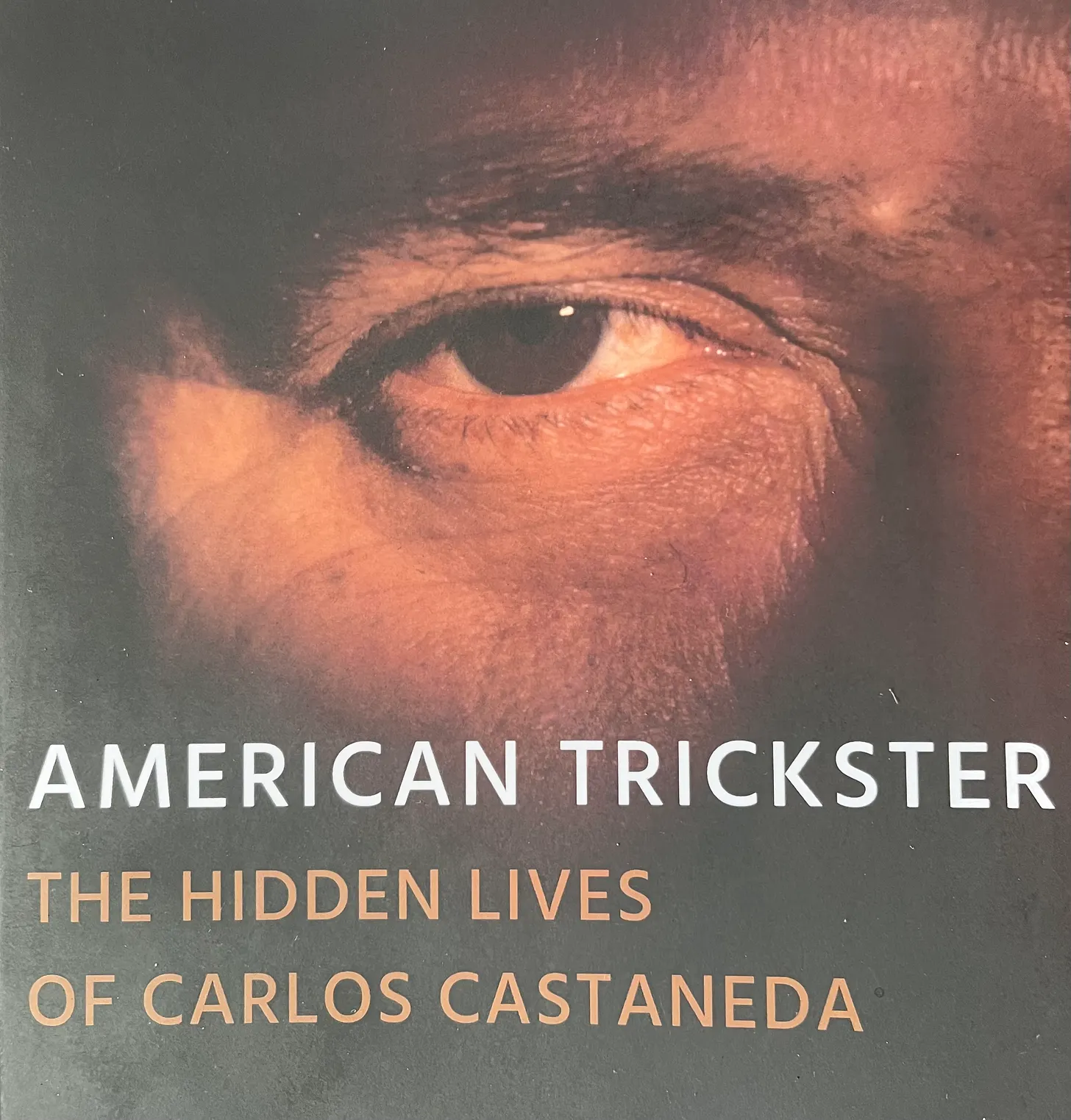
Marshall had originally contracted with the University of California Press, which had the dubious distinction of having put out Castaneda’s first book — by far the biggest best-seller the UC Regents have ever published. The book has been a goldmine, and a perennial embarrassment, for this otherwise respected academic publishing house.
The Teachings of Don Juan has long been exposed as a complete hoax. Castaneda lied about everything from his birthplace to his age to his real name. Not only did he invent his infamous shamanic sorcerer, we now know that Carlos did not even sample the sacred plant medicines that supposedly fueled his “separate reality.”
To this day, UC Press continues to fudge the fact/fiction dispute on its website. “Whether read as ethnographic fact or creative fiction, it is the story of a remarkable journey that has left an indelible impression on the life of more than a million readers around the world.”
Marshall and I shared an editor at UC Press, who asked me to be part of the academic review process for Ru’s book. This was some years after the publishing house put out one of my books, titled Distilled Spirits — Getting High, then Sober, with a Famous Writer, a Forgotten Philosopher and a Hopeless Drunk.
Academic publishers generally have a higher standard for fact-checking and detailed citations. I had a wonderful experience with UC Press. I was surprised when they took my original proposal — a group biography of Aldous Huxley, Gerald Heard and Bill Wilson — and suggested that I insert myself as a fourth character, adding the then-popular “recovery memoir” genre to the mix. I reluctantly went along with the idea, and in the end was glad I did.
Ru also puts themselves into their genre-defying book, which is fine. I gave the manuscript a mostly positive review, although I thought that it was too long and went off on too many tangents. Marshall cut it back and resubmitted, but by that time our editor had left UC Press and another one was assigned to shepherd the book into print.
UC Press and Ru wound up parting ways, and Marshall eventually found an alternative publisher, OR Books, to take on a project that took more than two decades to complete.
In Ru’s telling, the main problem with UC Press was a sociologist of religion on his review board. That reviewer did not like Marshall’s conclusion that Castaneda went on to lead a manipulative “cult” that exerted an unhealthy degree of control over the minds and bodies of his devotees.
Marshall and his book had become casualties of the ongoing “cult wars,” the polarized dispute over how we should view “new religious movements.” To oversimplify, there are two camps in this battle. On one side are the “apologists,” including some sociologists of religion, who think the dangers these groups pose are greatly exaggerated. A “cult” is simply someone else’s religion. Then there are the “alarmists,” who see brain-washing monsters lurking inside every Eastern ashram, Pentecostal church and New Age workshop.
Castaneda’s martial arts-oriented cult was Tensegrity, also known as Cleargreen, Inc. At the inner circle of this spiritual movement were a group of young female devotees Castaneda called his “witches” or “chacmools.” A half-dozen of them disappeared following Castaneda’s death, including one whose remains were later found in a remote corner of Death Valley.
In addition to his book, Ru has written a long essay about the cult wars in the Evergreen Review. “Castaneda had said he wouldn’t die,” Marshall writes. “But he was dying. The chosen one, however, can’t be normal. Carlos couldn’t depart in anything other than a fantastic manner. And thus the women had to go too. So they could “navigate infinity” together. They had to keep the story going. The cult leader will do anything to keep the story going. They cannot be normal, mortal human beings.”
Ru dramatically begins American Trickster with his account of the 2003 discovery of bones of Patricia Partin (aka Nuri Alexander) by two backpackers near the Panamint Dunes in Death Valley. Those hikers, Kevin Barth and Blaine Cowick, joined the author as surprise guests at a book reading last week in San Francisco.
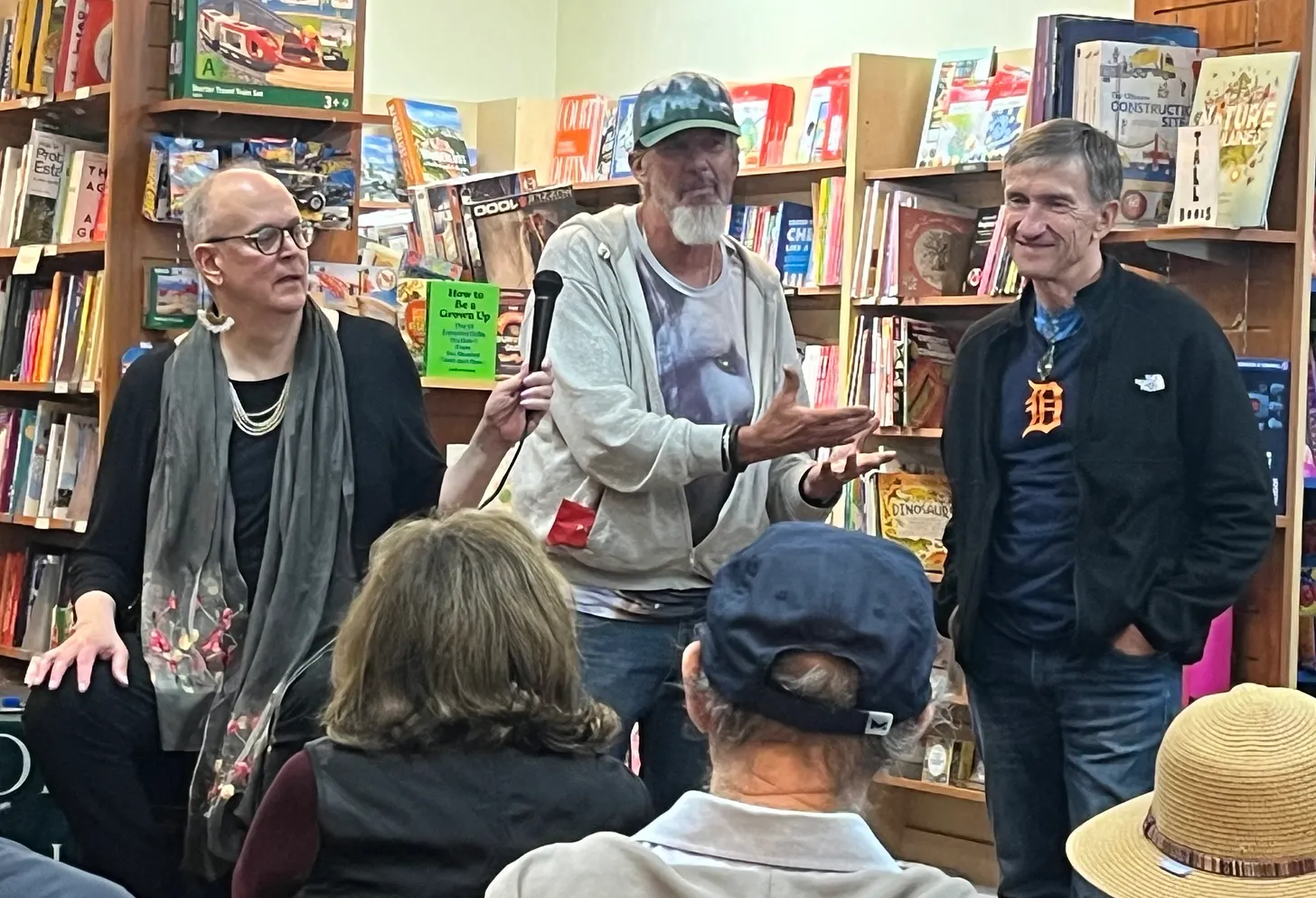
Ru Marshall, left, appeared last week at Bookshop West Portal in San Francisco with two surprise guests.
Another compelling account of the Castaneda saga and the mysterious disappearance of his witches was published a couple years ago in Alta magazine.
Did the missing women engage in a ritualized suicide, like the devotees of Jonestown and Heaven’s Gate? Or did the witches just run off the money? Like so much of Castaneda’s story, that piece of the puzzle remains a mystery.
For Castaneda, mystery was always better than reality. Few envisioned this articulate author and “impeccable warrior” for what he was — a short, pudgy Peruvian. His ex-wife once said he looked like a Cuban bellhop.
But he had charm and charisma and loved to appear at celebrity parties in Southern California back in the 1970s. And that’s where Castaneda met the writer Irving Wallace and his 17-year-old daughter, Amy, in 1973.
Thirty years later, Amy Wallace wrote an intimate, engaging memoir of her life and love affair with the mystery man.
Sorcerer’s Apprentice — My Life With Carlos Castaneda is the story of a spiritual seeker, troubled daughter, spurned lover, and, as Wallace describes herself, a “typical educated California hippie.”
Her sexual affair with the sorcerer did not begin until the 1990s, when Castaneda resurfaced to lead pricey workshops for a small circle of devotees. Among the spiritual techniques taught in the sessions were “magical passes,” an esoteric series of body movements supposedly passed down through Don Juan and 27 earlier generations of secret masters.
“Carlos was not a shifty huckster but a misguided philosopher whose experience of power was corrupting,” she writes. “Thus he damaged many lives, at the same time exalting many others.”
Wallace’s portrayal of Castaneda as a manipulative, deceptive and often cruel lover echoes the 1997 portrait painted by his ex-wife, Margaret Runyan Castaneda, in her memoir A Magical Journey With Carlos Castaneda.
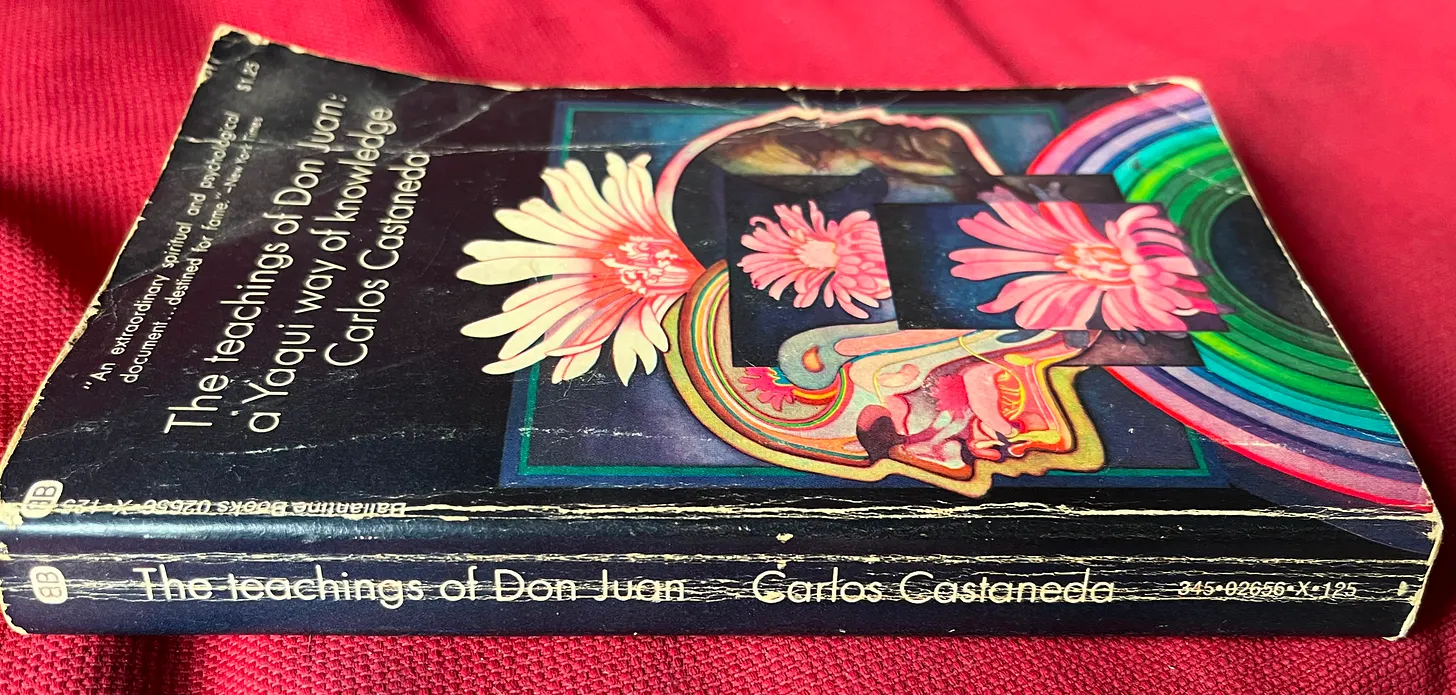
My copy of the paperback, purchased in Berkeley in 1973, five years after its 1968 hardcover release
Two other critical looks at Castaneda’s career were published — Castaneda’s Journey: The Power and the Allegory by Richard DeMille; and Carlos Castaneda: Academic Opportunism and the Psychedelic Sixties by Jay Courtney Fikes.
Toward the end of Ru Marshall’s new tome, the author of this latest work concludes that Castaneda, in his slippery fashion, both was and wasn’t a trickster.
“He was a particularly American trickster — a trickster of the Americas,” Ru writes. “A simulacrum, a trickster for consumer society. For trickster stories serve a social and ritual function. They’re employed in healing rituals. However much they disrupt society, they have a role in it. And, when the tricking is done, the charming perp disappears.”
In this regard, Carlos Castaneda is a bit like Donald Trump.
“Since 2016, there’s been much commentary on the ways the Republican Party, under Trump, has become cult-like,” Marshall observes. “A disturbingly large proportion of the population seems to live in an alternate reality, ready to believe whatever their leader tells them.”
__________________________________________________
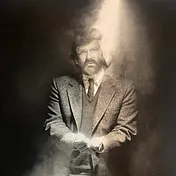 Don Lattin is an almost-retired journalist and author of seven books, including the best-selling “Harvard Psychedelic Club.” Learn more at www.donlattin.com
Go to Original – donlattin.substack.com
Tags: Carlos Castaneda, Don Juan, Fraud, Hoax
DISCLAIMER: The statements, views and opinions expressed in pieces republished here are solely those of the authors and do not necessarily represent those of TMS. In accordance with title 17 U.S.C. section 107, this material is distributed without profit to those who have expressed a prior interest in receiving the included information for research and educational purposes. TMS has no affiliation whatsoever with the originator of this article nor is TMS endorsed or sponsored by the originator. “GO TO ORIGINAL” links are provided as a convenience to our readers and allow for verification of authenticity. However, as originating pages are often updated by their originating host sites, the versions posted may not match the versions our readers view when clicking the “GO TO ORIGINAL” links. This site contains copyrighted material the use of which has not always been specifically authorized by the copyright owner. We are making such material available in our efforts to advance understanding of environmental, political, human rights, economic, democracy, scientific, and social justice issues, etc. We believe this constitutes a ‘fair use’ of any such copyrighted material as provided for in section 107 of the US Copyright Law. In accordance with Title 17 U.S.C. Section 107, the material on this site is distributed without profit to those who have expressed a prior interest in receiving the included information for research and educational purposes. For more information go to: http://www.law.cornell.edu/uscode/17/107.shtml. If you wish to use copyrighted material from this site for purposes of your own that go beyond ‘fair use’, you must obtain permission from the copyright owner.
Join the discussion!
We welcome debate and dissent, but personal — ad hominem — attacks (on authors, other users or any individual), abuse and defamatory language will not be tolerated. Nor will we tolerate attempts to deliberately disrupt discussions. We aim to maintain an inviting space to focus on intelligent interactions and debates.
Read more
Click here to go to the current weekly digest or pick another article:
EXPOSURES - EXPOSÉS: