
Berar: The Forgotten Crossroads of Indian Civilisation
TRANSCEND MEMBERS, 20 Jul 2026
Moin Qazi - TRANSCEND Media Service
17 Jul 2026 – Berar occupies a distinctive place in India’s intellectual history. Situated between northern India and the Deccan, Berar became a meeting ground for Islamic scholarship, Persian administrative culture, Urdu literature, Marathi learning, and, later, Western education. Despite changing dynasties, the region sustained a vibrant civilisation of learning through mosques, madrasas, khanqahs, libraries, and scholarly households, where knowledge was regarded as both a sacred trust and a public responsibility.
Unlike the celebrated centres of Delhi or Lucknow, Berar’s intellectual traditions flourished largely within families and local institutions that transmitted learning across generations. Their homes functioned as informal academies, producing jurists, theologians, teachers, physicians, poets, administrators, and public servants whose influence extended well beyond the region. Their greatest legacy lay not in political authority but in preserving and transmitting knowledge while uniting scholarship with service.
Arabic, Persian, Urdu, and Marathi flourished within a shared cultural environment, creating an intellectual tradition that balanced inherited learning with adaptation to changing historical circumstances. Mosques, madrasas, khanqahs, libraries, and private manuscript collections remained centres of education, sustained through community support and personal dedication.
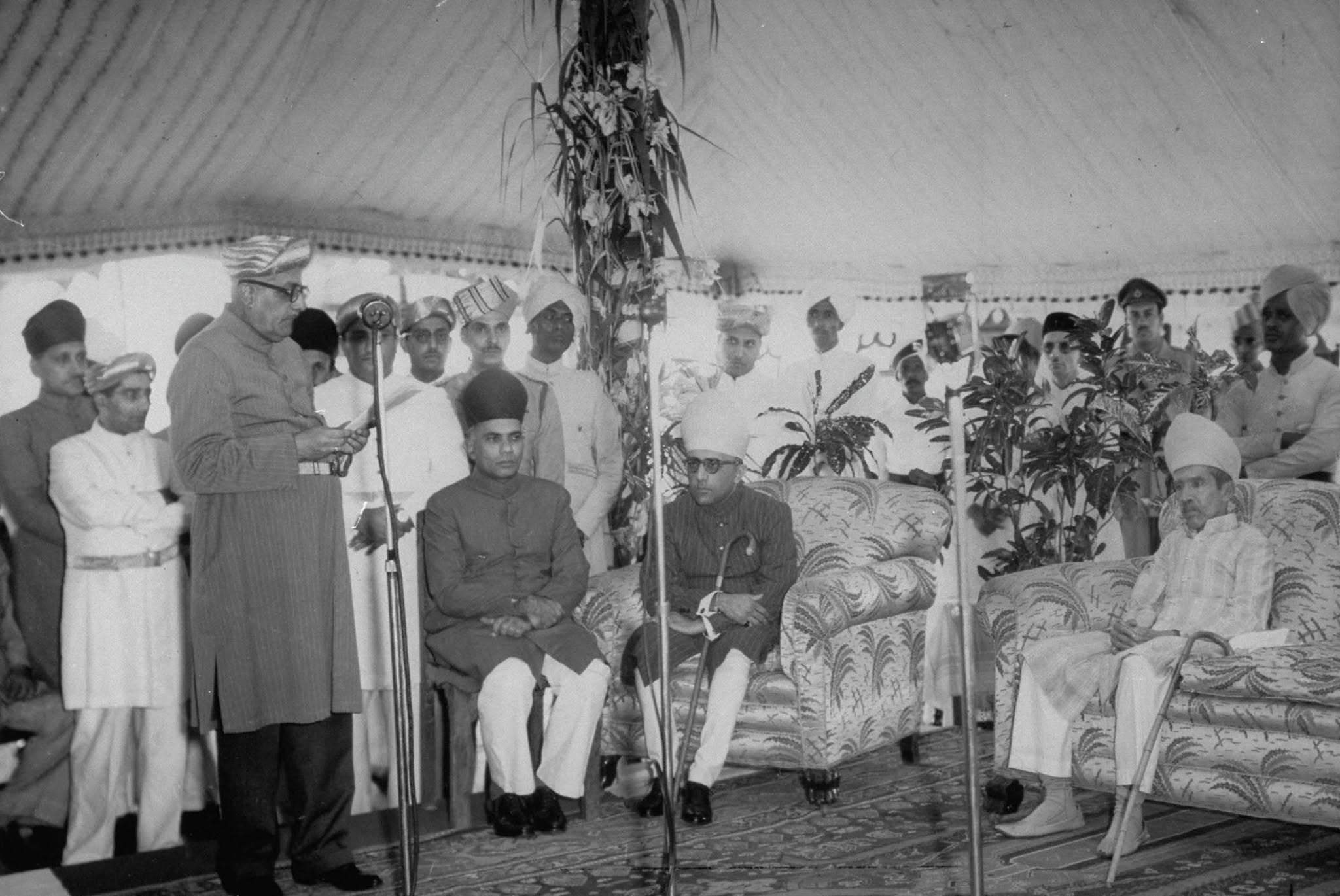
Nizam Osman Ali Khan of Hyderabad and Berar, Himayat Ali Khan the Prince of Berar
BERAR: A CIVILISATIONAL JOURNEY THROUGH THE AGES
The Berar Sultanate emerged in 1490, when Fathullah Imad-ul-Mulk, the Bahmani governor of Berar, declared independence amid the Bahmani Sultanate’s collapse, founding the Imad Shahi dynasty. With its capital at Ellichpur (Achalpur), the Kingdom became one of the five Deccan Sultanates. Fathullah strengthened its strategic forts, including Gawilgad and Narnala. His successors resisted repeated invasions from neighbouring Ahmadnagar, but internal instability weakened the state. In 1574, Murtaza Nizam Shah of Ahmadnagar invaded Berar, executed the regent Tufail Khan, and annexed the sultanate, bringing the independent Imad Shahi kingdom to an end.
Berar (present-day Vidarbha) possesses a rich civilisational heritage stretching from the ancient Kingdom of Vidarbha, celebrated in the Mahābhārata, to the medieval Bahmani and Imad Shahi periods, when Persianate culture blended with indigenous traditions. Under the Mughals, it became an important Subah, while the Nizams of Hyderabad nurtured its Urdu and Persian literary traditions. During British rule, Berar was administered with the Central Provinces and emerged as India’s premier cotton-growing region, while retaining its composite cultural identity.
Ancient Foundations
Historically known as Vidarbha, Berar has occupied an important place in India’s cultural history for over two millennia. References in the Mahābhārata, the Purāṇas, and other classical sources portray it as a land of political importance and cultural refinement. The Kingdom of Vidarbha is associated with King Bhishmaka and the celebrated legend of Rukmini and Krishna.
The region also participated in the wider intellectual currents of ancient India through Buddhist and Hindu centres of learning. Its fertile plains and strategic trade routes linking northern and southern India encouraged prosperity, settlement, and cultural exchange.
Classical and Early Medieval Period
Berar formed part of the Satavahana, Vakataka, Chalukya, and Rashtrakuta realms. The Vakatakas, with their capital near present-day Ramtek and their close association with Ajanta, achieved remarkable accomplishments in literature, art, religion, and scholarship. Prabhavatigupta’s connection to the Vakataka court linked Berar to the wider Gupta cultural world.
Over time, Sanskritic traditions, regional languages, and temple institutions combined to shape a composite regional identity that laid the foundations for later intellectual developments.
The Medieval Deccan
The arrival of Islamic rule connected Berar with the Persianate world of administration, literature, and scholarship. Under the Bahmani Sultanate and the Imad Shahi dynasty, Achalpur emerged as a major centre attracting jurists, theologians, Sufi scholars, poets, and administrators.
Persian became the language of administration while Arabic remained central to religious scholarship. The interaction of Persian, Arabic, Dakhani, and regional languages produced a distinctive Indo-Islamic culture. Khanqahs and madrasas flourished as centres of education, manuscript preservation, and ethical guidance. Within this environment emerged the distinguished Houses of Qazi, Khatib, and Qadri, whose judicial, literary, spiritual, and educational contributions shaped Berar for generations.
Achalpur and Balapur
Achalpur became one of the foremost centres of scholarship in the Deccan, where mosques, madrasas, khanqahs, and scholarly households nurtured Islamic sciences, Persian literature, and Arabic learning. Traditions of qazis, khatibs, and spiritual guides strengthened the region’s moral and intellectual life.
Balapur likewise developed into an important cultural centre through the Naqshbandi Sufi tradition and the Amjadi literary circle. Its rich interaction of Persian, Arabic, Urdu, Marathi, and Dakhani fostered poetry, religious scholarship, historical writing, and moral instruction.
Colonial Berar
British rule introduced modern education, law, journalism, and new administrative institutions. Traditional scholarly families successfully adapted to these changes, entering the professions of law, education, medicine, administration, and politics. Classical scholarship found new expression through universities, courts, and civic institutions while preserving its ethical foundations.
The Asaf Jahi Nizams of Hyderabad profoundly shaped the intellectual and administrative life of Berar. They preserved the region’s judicial institutions, encouraged Islamic scholarship, and patronised education, literature, and the arts. Madrasas, mosques, libraries, and khanqahs flourished under their rule, while Persian and later Urdu became important vehicles of learning and governance. The Qazis of Berar continued to administer justice, guide religious affairs, and uphold ethical standards within society. Close intellectual links with Hyderabad enabled scholars from Berar to pursue advanced studies and return as jurists, educators, and administrators, sustaining a vibrant tradition of scholarship, public service, and cultural refinement.
Mir Osman Ali Khan, the last Nizam of Hyderabad and Berar, was among the greatest benefactors of the Haramain Sharifain before Saudi oil wealth transformed the Kingdom’s finances. Between 1911 and 1954, he funded the construction of over thirty buildings in Makkah and Madinah to accommodate pilgrims. In 1955, King Saud bin Abdulaziz visited Hyderabad to personally express gratitude for the Nizam’s longstanding generosity towards the holy sanctuaries.
EMINENT MEMBERS OF MODERN BERAR
The Modern Legacy
Berar’s rich intellectual traditions continued into the modern era through its judicial lineages, literary circles, educational institutions, and public service. Madrasas, mosques, khanqahs, libraries, and scholarly households remained the custodians of an intellectual culture that regarded knowledge as an amanah—a sacred trust to be exercised with integrity, wisdom, and responsibility for the common good.
Across the Bahmani, Imad Shahi, Mughal, and Asaf Jahi periods, the Qazis of Berar successfully adapted to changing political systems without compromising the ethical foundations of their office. Their authority rested not upon political power but upon scholarship, moral integrity, and the confidence of the communities they served. This remarkable continuity enabled the House of Qazis to maintain its influence even as successive dynasties transformed the Deccan’s administrative landscape.
With the advent of modern India, this legacy assumed new forms. Descendants of Berar’s scholarly traditions emerged as judges, advocates, parliamentarians, educationists, scientists, physicians, administrators, industrialists, writers, entrepreneurs, and spiritual leaders. While their professional pursuits diversified, they remained united by a shared commitment to justice, learning, ethical leadership, and public service. In doing so, they demonstrated how a centuries-old culture of scholarship could flourish within the institutions of a democratic nation.
Foremost among these distinguished personalities stands Justice Mohammad Hidayatullah (1905–1992), one of the greatest jurists produced by the erstwhile Central Provinces and Berar. Educated at Morris College, Nagpur, before proceeding to Trinity College, Cambridge, and Lincoln’s Inn, he returned to practise at the High Court of the Central Provinces and Berar. His brilliant legal career included serving as Advocate General, Judge, and Chief Justice of the Nagpur High Court before his elevation to the Supreme Court of India in 1958. In 1968, he became India’s first Muslim Chief Justice. He subsequently served the nation with distinction as Acting President of India and later as Vice President of India, embodying the highest ideals of constitutionalism, judicial independence, and public service.
The biographical sketches that follow present some of the most eminent representatives of Berar’s modern legacy. Though drawn from diverse professions and walks of life, each reflects the enduring values that have characterised the region’s intellectual and spiritual heritage: scholarship, integrity, compassion, and an unwavering commitment to serving humanity.
Kazi Syed Karimuddin
Kazi Syed Karimuddin belonged to the distinguished Qazi family of Berar, a lineage renowned for its contributions to Islamic jurisprudence, education, and public service. A respected legal practitioner and community leader, he upheld the family’s longstanding traditions of scholarship, integrity, and social responsibility. Through his professional work and civic engagement, he strengthened the Qazi family’s reputation while encouraging education, communal harmony, and ethical public life.
Kazi Syed Ghiyasuddin
Qazi Syed Ghiyasuddin belonged to the distinguished hereditary Qazi family of Berar, long associated with judicial learning and community leadership. A senior statesman of Maharashtra, he served as a Cabinet Minister for more than a decade under Chief Minister Y. B. Chavan. Subsequently, he held several important portfolios in the State Government. His distinguished public career reflected the family’s enduring tradition of administrative leadership and dedicated public service.
Justice Mohd. Mujibuddin Qazi
Justice Mohd. Mujibuddin Qazi served with distinction as a Judge of the Bombay High Court, being appointed an Additional Judge in September 1981 and confirmed as a permanent Judge in December 1982. Widely admired for his judicial scholarship, integrity, fairness, and balanced judgments, he retired in February 1992 after a distinguished career devoted to the administration of justice. Following his retirement, he served as Chairman of the Maharashtra Administrative Tribunal and later as Chairman of the Anjuman Hami-E-Islam Trust, continuing his distinguished contribution to public life and educational administration.
Justice Mohd. Arifur Rahman Khan
Justice Mohd. Arifur Rahman Khan was a distinguished member of the higher judiciary whose career was marked by scholarship, integrity, and judicial independence. Through his service on the Bench, he upheld constitutional values and the rule of law while contributing significantly to the administration of justice. His achievements reflect Berar’s enduring legacy of legal excellence.
Justice Zaka Azizul Haq
Justice Zaka Azizul Haq is a distinguished former Judge of the Bombay High Court, serving principally at the Nagpur Bench. Elevated to the Additional Judge rank in 2013 and later confirmed as a permanent Judge, he became widely respected for his judicial scholarship and integrity. Following his retirement, he was designated a Senior Advocate by the Supreme Court of India. He was appointed sole Administrator of the Anjuman Hami-E-Islam Trust, one of Nagpur’s foremost educational institutions, where he has continued to render distinguished service in educational administration and public life.
Dr Syed Mahmood Hussain (S. M. H.) Khatib
Dr Syed Mahmood Hussain (S. M. H.) Khatib was an eminent zoologist, pioneering entomologist, and former Head of the Department of Zoology at the Institute of Science, Nagpur. His outstanding research advanced entomological studies in Central India and inspired generations of scientists. Rashtrasant Tukadoji Maharaj Nagpur University perpetuates his memory through the Dr S. M. H. Khatib Memorial Gold Medal and the S. M. H. Khatib Memorial Entomology Research Forum.
Qazi Mohd Sirajuddin
Qazi Syed Sirajuddin Qazi belonged to the distinguished lineage of the Qazis of Berar. A scion of the hereditary Qazis of Kalamb, he inherited one of the region’s oldest judicial and religious traditions. He was associated with the honorary title historically held by the family. Through his standing within the community, he helped preserve the prestige of an institution that had served Berar for generations as a guardian of justice, scholarship, and moral leadership.
Dr. Syed Naimuddin
Dr Syed Naimuddin was an eminent Urdu and Persian scholar who served as Professor, Head of the Department, and later Principal of the Government Vidarbha Institute of Science and Humanities, Amravati. His advanced research in Turkey earned international recognition, culminating in the Turkish Government publishing one of his scholarly works.
Dr Syed Rafiuddin Qadri
Dr Syed Rafiuddin Qadri was a distinguished scholar of Arabic and Islamic studies, widely respected for his erudition and lifelong devotion to higher learning. He received the President’s Award for Arabic. Through his teaching, research, and public service, he strengthened the intellectual heritage of Berar and inspired generations of students and scholars devoted to Arabic and Islamic learning.
Dr Syed Firozuddin Qadri
Dr Syed Firozuddin Qadri was a distinguished scholar of Islamic thought and Urdu literature. His doctoral research on Shah Waliullah Dehlawi made a significant contribution to the understanding of one of the greatest reformers, theologians, and intellectual figures of eighteenth-century India. Through his teaching, research, and scholarly writings, he enriched the fields of Islamic studies and Urdu scholarship while upholding Berar’s enduring tradition of learning and intellectual inquiry.
Syed Saulat Hussain Kazi
Syed Saulat HussainKazi served with distinction as a District Judge and earned widespread respect for his impartiality, legal scholarship, and administrative ability. Throughout his judicial career, he upheld the highest standards of fairness, integrity, and judicial independence. Beyond the Bench, he was an accomplished mystic poet whose writings reflected spiritual insight and literary refinement. His wife was herself an accomplished fiction writer.
Dr Mirza Rafi Ahmad Baig
Dr Mirza Rafi Ahmad Baig, affectionately known as “Mirza Express,” lived in Amravati for much of his later life, from where he enthralled audiences across Maharashtra with more than 6,000 performances. His residence, aptly named Mirza Express, became a landmark for admirers of his humour, Varhadi poetry, and literary genius.
Sulaiman Khateeb
Sulaiman Khateeb was the foremost exponent of Dakhani Urdu poetry and was celebrated as the Badshah-e-Mizahiya Shayari. Through humour, satire, and vivid portrayals of everyday Deccan life, he elevated Dakhani into a respected literary medium while preserving its distinctive language, culture, and enduring literary heritage.
Nawab Anees Ahmad Khan
Nawab Anees Ahmad Khan graduated in Commerce from Jamia Millia Islamia, New Delhi. A distinguished philanthropist and educational patron, he served the Maharashtra State Urdu Academy, the Berar Muslim Education Society, the Vidarbha Youth Welfare Society, and the Khondeshwar Sugar Factory. Throughout his life, he remained devoted to educational advancement, charitable work, and community welfare.
Syed Zulfiquar Hussain Khatib
Syed Zulfiquar Hussain Khatib was the son of Syed Azmat Hussain Khatib and Mohammadi Begum. After obtaining his LL.B. from Aligarh Muslim University, he devoted himself to legal practice, public service, and the preservation of the distinguished religious and educational traditions associated with the historic Jama Masjid of Achalpur.
Zohra Begum Khatib
Zohra Begum Khatib received her education at home despite the absence of formal schooling. A gifted poet in Urdu and Persian, she devoted herself to her family while encouraging education, particularly for girls. She is remembered for her literary refinement, cultural influence, and enlightened vision of family life.
Syed Akram Husain Khatib
Syed Akram Husain Khatib studied under the Calcutta Board before pursuing higher education at Aligarh Muslim University. He served as Rationing Officer at Nagpur from 1945 to 1955 before assuming the hereditary office of Khatib of Ellichpur. Remembered for his generosity and compassion, he devoted his life to assisting students, patients, and families facing social and legal difficulties. His humility, scholarship, and spirit of public service earned him enduring respect throughout Berar.
Syed Abdur Rauf Shah
Syed Abdur Rauf Shah was one of the foremost political leaders produced by Berar during the closing years of British rule. A Member of the Legislative Assembly in the Central Provinces and Provincial President of the All-India Muslim League, he worked closely with Quaid-e-Azam Muhammad Ali Jinnah in strengthening the League’s organisation. At the historic Lahore Session of March 1940, he emerged as one of the principal spokespeople of the Muslims of the Central Provinces in support of the Lahore Resolution. He also served as Salar-i-Ala (Supreme Commander) of the Muslim League National Guards in the region.
Sami Khatib
Sami Khatib was an eminent industrialist and philanthropist, and the founder of one of India’s leading pharmaceutical enterprises. Widely recognised as a pioneer of the Indian pharmaceutical industry, he received the prestigious Vijay Ratna Award in 1991. He subsequently served on the Government of India’s Drugs Advisory Committee (1996–1999). Through the Sinkhai Foundation and his long association with Anjuman-i-Islam, Maharashtra College, and Kamala Nehru College of Pharmacy, he rendered distinguished service to healthcare, higher education, and philanthropy.
Mohammad Mohibbul Haq
Mohammad Mohibbul Haq was a distinguished parliamentarian of the Indian National Congress who represented the Akola Parliamentary Constituency in the Third Lok Sabha after his 1962 election. A respected public representative from Vidarbha, he actively participated in parliamentary affairs and consistently worked for the region’s political, educational, and economic development.
K. M. Asghar Husain
K. M. Asghar Husain represented Akola in the Fourth and Fifth Lok Sabhas as a distinguished parliamentarian of the Indian National Congress. Throughout his public life, he devoted himself to advancing Vidarbha, earning widespread respect for his integrity, accessibility, and steadfast commitment to democratic values.
Qazi Syed Shahabuddin
Qazi Syed Shahbuddin obtained postgraduate qualifications in the humanities and law. He is remembered among the eminent personalities associated with Berar’s intellectual heritage for his contributions to education, scholarship, and community life. His career reflected the family’s enduring commitment to learning and public service.
Mohd Izhar Qazi
Izhar Kazi is a distinguished human resource professional based in Mumbai. He has served as a trustee of one of India’s leading minority educational institutions and has actively contributed to educational administration, institutional development, and community service. His professional accomplishments demonstrate the Qazi family’s continued engagement with modern educational and social institutions.
Razia Sultana Ahmed
Razia Sultana Ahmed was a distinguished educationist and social worker based in Mumbai. She was the first woman from Berar to obtain a postgraduate degree from Osmania University, Hyderabad. Throughout her career, she occupied leadership positions in several Muslim educational and social organisations, becoming a pioneer in promoting women’s education and social empowerment.
Khalida Sultana Qazi
Khalida Sultana Qazi obtained her postgraduate degree in Philosophy from Osmania University. Widely respected as an authority on the philosophy and thought of Sir Muhammad Iqbal, she made significant contributions to the study of Islamic philosophy, comparative thought, and modern Muslim intellectual history through her scholarship and public lectures.
Qazi Syed Moinuddin
Qazi Syed Moinuddin was a prominent advocate practising at Yavatmal. Widely respected for his integrity, legal scholarship, and public spirit, he enjoyed an excellent reputation within the legal fraternity. His distinguished professional career strengthened the longstanding association of the Qazi family with the administration of justice.
Prof. Mohd. Ahtemad Qazi
Prof. Mohd. Ahtemad Qazi devoted his academic career to the teaching of Zoology. An inspiring teacher and respected scholar, he earned the admiration of generations of students through his scholarship, dedication, and commitment to scientific education. His work exemplified the growing contribution of the Qazi family to higher education.
Prof. Syed Salahuddin Qazi
Professor Syed Salahuddin Qazi was an accomplished teacher of Zoology at a leading college. Remembered for his commitment to scientific education and academic excellence, he inspired generations of students through his disciplined scholarship and devotion to teaching.
Prof. Syed Minhajuddin Qazi
Prof. Syed Minhajuddin Qazi was a distinguished educationist and social figure of Nagpur. A respected Professor of Chemistry, he devoted his career to higher education while actively participating in educational, literary, and community initiatives. His influence extended far beyond the classroom through his mentorship of students and involvement in public life.
Qazi Syed Saifuddin
Qazi Syed Saifuddin graduated in Science from Aligarh Muslim University after securing a merit scholarship. Deeply committed to humanitarian service, he made his residence in Nagpur a welcoming home for students from Yavatmal and neighbouring districts pursuing higher education. His generosity and hospitality benefited countless young scholars.
Prof. Abrar Hussain Khatib
Prof. Abrar Hussain Khatib earned a doctorate in Physics and taught at a leading college. Alongside his distinguished academic career, he served as the Khatib of Ellichpur, exemplifying the harmonious integration of religious scholarship with modern scientific education. He remains an outstanding example of intellectual versatility.
Syed Hishamuddin Khatib
Syed Hishamuddin Khatib was a prominent political leader of Balapur. Serving for many years as President of the Municipal Council, he earned widespread respect for his civic leadership, administrative ability, and dedication to public welfare. His long public career contributed significantly to local self-government.
Syed Natiquddin Khatib
Syed Natiquddin Khatib represented Balapur in the Maharashtra Legislative Assembly and also served as Chairman of the Municipal Council. His distinguished public career reflected his commitment to democratic governance, efficient administration, and community development, making him one of the region’s respected political leaders.
Abdul Qadar Khatib
Abdul Qadar Khatib was a distinguished educationist and scholar of Urdu, Arabic, and Persian. He taught these classical languages at a leading college in Vidarbha and inspired generations of students through his scholarship, simplicity, and devotion to learning. His intellectual legacy continued through his son, Dr Humayun Khatib, an internationally respected ophthalmic surgeon based in Edinburgh.
Dr Naim Durdana Kazi
Dr Naim Durdana Kazi was an eminent scholar of Urdu, Persian, and Arabic, holding Triple M.A. degrees, a PhD, and the traditional qualifications of Maulvi, Munshi, and Fazil. She served as Principal of Bapuji Aney Mahila Mahavidyalaya, Yavatmal, and was a member of the Boards of Studies of both Nagpur and Amravati Universities. Her research on Allama Rashidul Khairi and her contribution to Urdu scholarship earned her widespread academic respect.
Mardan Ali Khan
Mardan Ali Khan was a distinguished advocate of Akola who earned widespread respect for his legal acumen, professional integrity, and unwavering commitment to justice. Throughout his career, he rendered valuable service to the legal fraternity and the wider community. His reputation for fairness, sound legal counsel, and public service secured him an honoured place among Berar’s eminent legal personalities.
Dr. Mansha-ur-Rahman Khan
Dr Mansha-ur-Rahman Khan was a distinguished Professor of Urdu, celebrated poet, literary critic, and scholar. Through his teaching, research, and creative writings, he made enduring contributions to the Urdu language and literature. Widely respected as a mentor and public intellectual, he enriched the literary and cultural heritage of Berar through his refined scholarship and poetic expression.
Begum Noorjahan (Noor) Bano Salam Ahmad
Begum Noorjahan (Noor) Bano Salam Ahmad was a pioneering educationist and visionary institution-builder who championed women’s higher education in Vidarbha. She founded the region’s first women’s law college and a women’s degree college at Wani, creating educational opportunities that empowered generations of young women through quality higher education.
Syed Ejauddin Tariq Qazi
Syed Ejauddin Tariq Qazi is a distinguished civil engineer who graduated from the Maulana Azad National Institute of Technology (MANIT), Bhopal. He also obtained professional qualifications in accountancy in the United Kingdom and is presently settled in London. His successful international career reflects the continuing professional excellence and global outlook of the Qazi family.
THE ENDURING LEGACY OF BERAR
The history of Berar’s scholarly families is ultimately the history of ideas carried through generations. Kingdoms disappeared, political frontiers shifted, and administrative systems were repeatedly transformed, yet the ideals that sustained these families remained remarkably constant. Justice, learning, ethical leadership, and service to society continued to define their identity across nearly seven centuries.
The preservation of this legacy now assumes particular importance. Many manuscripts remain unpublished; family archives await systematic documentation; oral traditions risk disappearing as older generations pass away; and numerous scholars who contributed significantly to regional intellectual life remain absent from mainstream historical narratives. Recovering these forgotten histories is therefore not merely an academic exercise but an act of cultural preservation.
Future research must extend beyond biography to encompass the broader institutional history of Berar’s mosques, madrasas, khanqahs, libraries, schools, and courts. Such studies will reveal that the region’s intellectual life was sustained through networks of scholars whose influence extended across the Deccan, Central India, and beyond. Berar deserves recognition not merely as a geographical region but as one of India’s important centres of learning.
In remembering the Houses of Qazi, Khatib, and Qadri, we recover more than the history of distinguished lineages. We recover a vision of civilisation in which knowledge is inseparable from character, public office is inseparable from moral responsibility, and learning achieves its highest fulfilment in the service of humanity. That vision constitutes Berar’s enduring gift to India and secures its rightful place in the nation’s intellectual history.
____________________________________________
 Moin Qazi, PhD Economics, PhD English, is a member of the TRANSCEND Network for Peace Development Environment and a member of NITI Aayog’s National Committee on Financial Literacy and Inclusion for Women. He is the author of the bestselling book, Village Diary of a Heretic Banker. He has worked in the development finance sector for almost four decades in India and can be reached at moinqazi123@gmail.com.
Tags: Berar, History, India, Islam, Persia, Urdu
This article originally appeared on Transcend Media Service (TMS) on 20 Jul 2026.
Anticopyright: Editorials and articles originated on TMS may be freely reprinted, disseminated, translated and used as background material, provided an acknowledgement and link to the source, TMS: Berar: The Forgotten Crossroads of Indian Civilisation, is included. Thank you.
If you enjoyed this article, please donate to TMS to join the growing list of TMS Supporters.

This work is licensed under a CC BY-NC 4.0 License.
Join the discussion!
We welcome debate and dissent, but personal — ad hominem — attacks (on authors, other users or any individual), abuse and defamatory language will not be tolerated. Nor will we tolerate attempts to deliberately disrupt discussions. We aim to maintain an inviting space to focus on intelligent interactions and debates.