
The Global South’s Grocery Bill
TRANSCEND MEMBERS, 27 Jul 2026
Raïs Neza Boneza – TRANSCEND Media Service
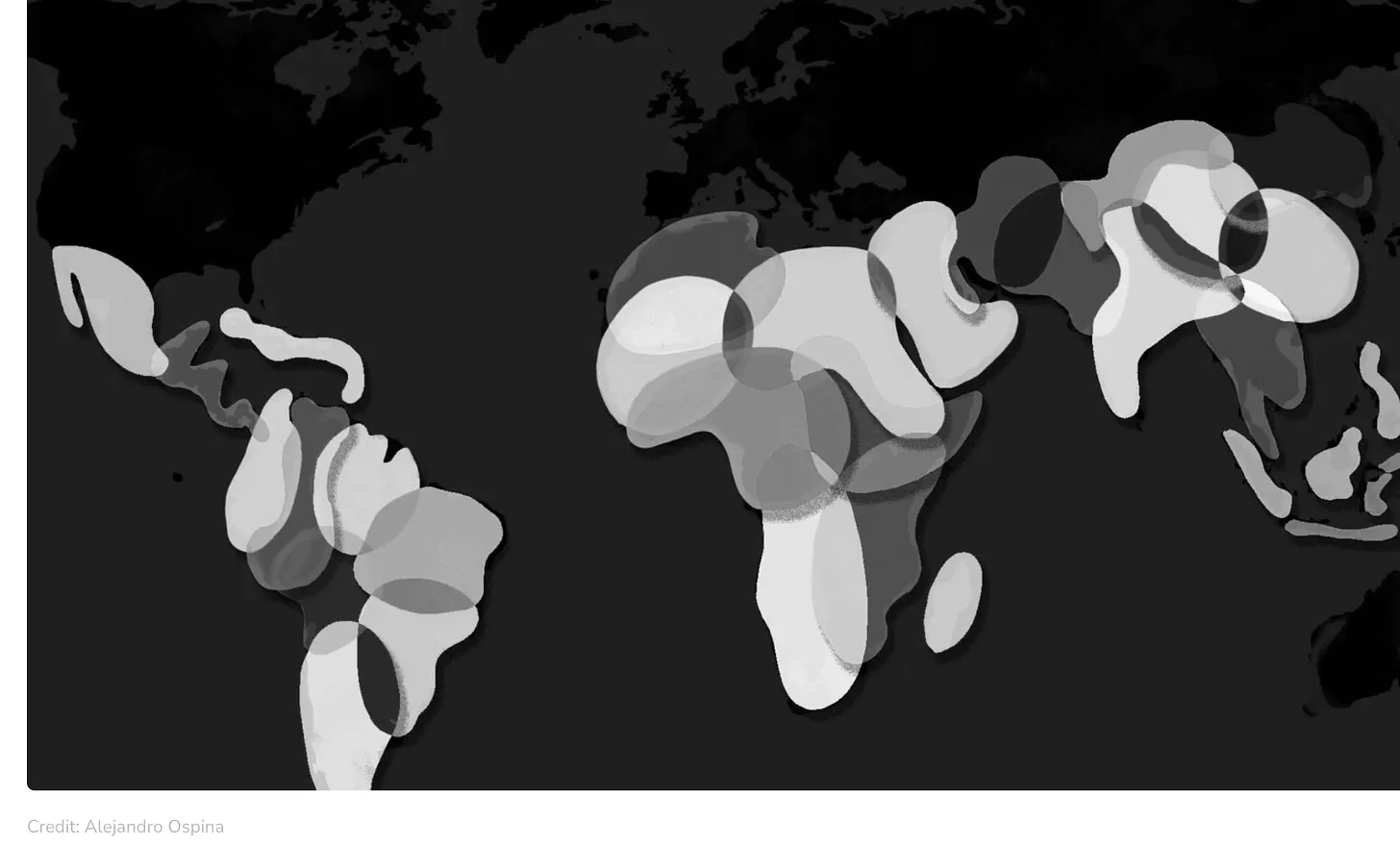
(With apologies to no one) Why the world’s poorest are invoiced for everyone else’s wars.
20 Jul 2026 – There is a familiar liturgy to modern warfare. Powerful states launch missiles. Retired generals in television studios trace elegant red arrows over satellite imagery while explaining, with straight faces, that the bridge currently collapsing into a river was technically a military target because a soldier once drove a truck over it. Government spokespeople assure us that every railway, port, and power station being bombed is “dual-use”—a magical legal incantation that transforms schools into bunkers and bakeries into logistics hubs.
Then, several thousand kilometres away, a mother discovers that cooking oil now costs more than her daily wage. A farmer watches fertiliser prices climb beyond reach. A hospital administrator learns that the next shipment of insulin has been “re-routed” indefinitely. A finance minister—fresh from a conference in Davos where he nodded along to panels about “resilience”—announces another round of emergency austerity.
Nobody declares war on the Global South. That would be impolite. They simply send the invoice. COD. Non-negotiable.
The Great Strategic Farce
In Washington, the debate concerns “credibility”—a word that has launched more wars than oil. In Tehran, the language is “resistance” and “sovereignty”—both noble concepts that somehow always require more missiles. Israel speaks of “existential threats”; while systematically annihilating the Palestinians into oblivion and denying the very existence of its other neighbours. And the Gulf monarchies speak of “stability” while quietly calculating whether the American bases on their soil are security guarantees or simply very expensive, beautifully illuminated target practice for Iranian drones.
Every government has a vocabulary. The Global South has a grocery bill.
But let us pause this performance of victimhood for a moment. Because the Global South is not a passive, weeping maiden waiting to be rescued. It is a crowded room of cynical operators, corrupt kleptocrats, ambitious middle powers, and genuine victims—all jostling for advantage while pretending they share a common destiny. India buys Russian oil and sells Western weapons. Turkey drones its neighbours while hosting NATO bases. Saudi Arabia funds proxies while complaining about Iranian proxies. Angola extracts oil while importing refined fuel—the economic equivalent of owning a cocoa plantation and buying chocolate at airport prices. And every single one of these governments has hosted a foreign military base while solemnly swearing it’s “purely technical.”
You are not a victim of geopolitics. You are a participant. You just refuse to pay the bill until the collection agency arrives.
The Eight Doors Through Which the War Enters—And Who Left Them Open
The conflict reaches vulnerable economies through eight interconnected channels. Notice how many of these were not installed by Washington or Tehran.
First, Energy: Oil-importing countries face immediate pressure. Higher crude prices raise transport, electricity, and manufacturing costs. But even oil-producing states remain exposed because they export crude and import refined fuel—a staggering act of developmental self-sabotage that would be comical if it weren’t so lethal. When fuel subsidies become unaffordable, governments face a choice: raise prices and risk riots, or maintain subsidies and deepen fiscal deficits. Neither option comes with a complimentary IMF therapist—though the IMF will arrive eventually, carrying its familiar toolkit of “structural adjustments” that somehow never adjust the structures that actually matter.
Second, Fertiliser and Food: One-third of global seaborne fertiliser passes through Hormuz. Disruption raises the cost of natural gas, ammonia, and urea—the unholy trinity of modern agriculture. For farmers in low-income countries, fertiliser is not an abstract commodity index. It determines whether maize grows or dies. When prices rise, farmers use less. When farmers use less, yields fall. When yields fall, governments import more food at the precise moment transport costs are spiking. This is not a supply chain. It is a recurring nightmare with excellent branding.
Third, Maritime Transport and Insurance: Countries in Africa, Asia, and Latin America depend on maritime trade while controlling precisely none of its infrastructure. They do not determine war-risk premiums. They do not control the shipping lines. They do not set charter rates. They do not manage Hormuz, Bab el-Mandeb, or Suez. But they pay every surcharge—including the “geopolitical inconvenience fee” that shipping companies have quietly added to their invoices. Globalisation, we were told, meant interdependence. In practice, it means someone else makes the decision and you receive the consequences. This is not interdependence. This is a subscription service to other people’s wars.
Fourth, Currency and Debt: Most vulnerable states pay for energy, medicine, and food in foreign currencies. As import bills rise, demand for dollars increases. Domestic currencies weaken. Debt-service costs climb. Central banks raise interest rates. Businesses lose credit. Governments cut development spending. The missile does not need to land in Africa. It only needs to land in the balance of payments. And here is the part where we stop pretending: many of these governments chose to borrow in foreign currency. They chose to maintain dollar-pegged systems. They chose to prioritise debt service over social spending long before any Iranian missile flew. The war did not create this vulnerability. It merely exposed the architectural rot.
Fith, Medicines: The WHO estimates that African countries import 70–100 percent of finished pharmaceuticals, 99 percent of vaccines, and 90–100 percent of medical devices. This is not dependency in the poetic sense. It is dependency with a mortality rate. Fuel can be rationed. Infrastructure projects can be postponed. Cabinet ministers can reduce their foreign travel—though they won’t. Insulin cannot wait for the geopolitical situation to improve. Neither can antiretroviral treatment, anaesthetics, or malaria drugs. A prolonged disruption would reach hospital pharmacies quickly. The WHO reported in late 2025 that more than half of African countries were already facing health-product shortages. The next shock will not strike a resilient system. It will strike one already breathing through a straw—a straw manufactured in China, shipped through Hormuz, and insured in London.
Sixth, Diaspora Remittances: Remittances to low- and middle-income countries exceeded both FDI and development assistance in 2023. Sub-Saharan Africa received roughly $54 billion. A regional war that slows Gulf economies or triggers a global recession reduces migrant workers’ incomes. The shock arrives twice: first through inflation, then through reduced household income. Economists call this a transmission mechanism. Ordinary people call it Tuesday.
Seventh, Foreign Military Bases: Foreign bases are marketed as partnerships, security cooperation, and stability. They are also beautifully illuminated missile magnets. Iran’s attacks on American facilities in Gulf states demonstrate the danger clearly. Once foreign forces use your territory, adversaries may treat your country as part of the battlefield. This has direct implications for African states hosting American, French, Chinese, Turkish, Russian, or Emirati installations. A base may provide training and intelligence in peacetime. During a major-power confrontation, it may also provide coordinates. African governments should therefore stop pretending that hosting foreign soldiers is a purely technical arrangement. It is a strategic alignment. You are not Switzerland. You are not even the Vatican City. You are an airfield with a flag.
Eight, Political and Social Fractures: External conflicts travel through domestic political networks, religious affiliations, social media, and diaspora communities. Governments and non-state actors export propaganda. Online platforms convert distant wars into local identity battles. Political entrepreneurs discover that imported outrage is cheaper than producing an economic programme. The danger is not that citizens care about foreign injustice. They should. The danger is that governments instrumentalise those emotions while ignoring local injustice. Nothing unites a failing system like a common external enemy. And nothing distracts from a collapsed currency like a viral video of bombs falling somewhere else.
The Morality Play That No One Is Innocent Enough to Star In
A serious critique of this war cannot be reduced to choosing a favourite flag. The United States deserves scrutiny for expanding military action, attacking infrastructure whose destruction predictably affects civilians, and returning to war while diplomacy remained possible. The “dual-use” argument is a moral blank cheque. A bakery feeds soldiers. A hospital treats soldiers. A bridge transports soldiers. At this rate, breathing becomes dual-use technology.
But Iran is not a cuddly victim of anti-imperialist innocence. Its attacks on neighbouring countries, shipping, and vital infrastructure impose danger on civilians who did not choose to host American policy. Tehran’s strategy appears designed to demonstrate that Gulf states cannot attack Iran while remaining economically comfortable. Strategically, that may create pressure. Morally, it turns ordinary people into negotiating instruments—which is precisely what Iran’s own citizens have been for forty years. The fact that Washington has greater military power does not grant Tehran a humanitarian exemption. One state’s illegality does not magically sterilise another state’s missiles. And no amount of anti-American rhetoric will feed an Iranian child whose government chose missiles over medicine.
This conflict is not a morality play between a spotless victim and a uniquely evil aggressor. It is an asymmetric confrontation in which powerful institutions on both sides are externalising risk onto people with little influence over either.
USA’s Credibility Trap (Or: Why You Can’t Lose a War You Didn’t Win)
The United States is caught between escalation and humiliation. If it retreats without reopening Hormuz or extracting concessions, Washington risks appearing unable to impose its preferred order. If it escalates, it enters a larger war without a credible end state. This is the classic great-power credibility trap: leaders persist with a failed policy not because it delivers results, but because retreat would expose the failure. Prestige becomes strategy, and the bill is paid by the Iranian civilians, and food consumers far from the battlefield.
Talk of “limited” ground operations should therefore be treated with deep scepticism. “Limited” is the hardest-working word in the history of disastrous intervention. Limited bombing. Limited occupation. Limited regime change. Limited regional collapse. Everything remains manageable—until reality refuses to follow the script.
Iran’s Escalation Trap (Or: How to Win Arguments by Losing Everyone Else)
Iran faces its own strategic prison. Hormuz is among its strongest instruments of leverage. Releasing that leverage without enforceable guarantees leaves Tehran exposed. Yet perhaps continuing to disrupt shipping strengthens the coalition against it, damages neighbouring states, and imposes severe costs on countries that might otherwise sympathise with its opposition to American interventionism. Iran can demonstrate that it cannot be isolated. But it risks proving this by isolating everyone else from fuel and fertiliser. Resistance that exports hunger to poorer societies will eventually exhaust its moral vocabulary. And the Global South has a long memory for solidarity that arrives with a shipping surcharge.
What the Global South Should Demand (But Probably Won’t)
The Global South should not wait for Washington, Tehran, or European capitals to develop a sudden interest in its welfare. It needs its own coordinated programme.
But let us be honest about the obstacles.
First, major developing-country organisations—the African Union, ASEAN, the Arab League, CELAC, the G77—should establish a permanent Chokepoint Crisis Mechanism. They won’t, because these organisations are dominated by regimes more interested in mutual non-interference than mutual protection. But they should.
Second, regional blocs should create pooled strategic reserves of fuel, fertiliser, grain, and essential medicines. They won’t, because pooling resources requires trust, and trust is in shorter supply than ventilators. But they should.
Third, governments should diversify transport and supply routes—expanding rail corridors, regional ports, cross-border pipelines. They won’t, because diversification requires long-term planning and capital expenditure, and most of these governments cannot plan beyond the next election or coup. But they should.
Fourth, developing states must accelerate local refining, fertiliser manufacturing, pharmaceutical production, and renewable energy. They won’t, because domestic industrial policy threatens the import-export rent-seeking networks that keep their political classes wealthy. But they should.
Fifth, foreign military-base agreements must be publicly reviewed. They won’t be, because base rents are lucrative and transparency is not. But they should.
Sixth, multilateral lenders should introduce automatic debt-service suspension for low-income countries facing externally generated commodity shocks. They won’t, because creditors value repayment schedules more than human survival. But they should.
Seventh, the Global South should collectively demand protected humanitarian shipping corridors for food, fertiliser, and medicine. They won’t, because collective action is hard and bilateral bargaining is easier. But they should.
Finally, governments must build social protection before the shock arrives: cash transfers, public transport support, school feeding, emergency pharmaceutical inventories. They won’t, because social protection is politically unpopular with the elites who finance elections. But they should.
From Non-Alignment to Self-Inflicted Wounds
Traditional non-alignment meant refusing to become an instrument of rival power blocs. The present moment requires something more practical: acknowledging that your own governments have been instruments of their own impoverishment. A country may remain diplomatically neutral and still be devastated by oil prices, freight charges, and currency depreciation—especially if it chose to import everything, borrow in dollars, host foreign bases, and invest nothing in domestic capacity.
This conflict will eventually end. Officials will shake hands. Negotiators will describe the result as historic. Each side will explain that it achieved its essential objectives. Think tanks will organise panels entitled “Lessons Learned.” The Global South has attended this performance before. After the food crisis, there were promises. After the pandemic, there were promises. After the war in Ukraine, there were promises. The promises reproduce more reliably than the factories.
The central lesson is no longer difficult to identify. Countries that outsource their energy, medicine, food inputs, shipping, finance, and security should not be surprised when they also outsource control over their future. The war may be fought around Iran. But unless the Global South closes these doors—and unless its own elites stop treating national vulnerability as a personal business opportunity—the next missile will once again land in its budgets, its farms, its hospitals, and its kitchens. And once again, officials will solemnly announce that nobody could have predicted it.
Postscript for the Self-Righteous
To the Western readers: your governments are not innocent. Your generals are not honest. Your “precision” bombing kills precisely the wrong people. Your credibility is a euphemism for imperial vanity.
To the Global South readers: stop pretending you are passive victims. Your elites have sold your ports, mortgaged your futures, hosted foreign armies, and borrowed in foreign currencies while calling it “development.” You are not collateral damage. You are a business model.
Everyone is defending themselves. And everyone is passing the bill to someone else. The question is not who fired first. The question is who pays last.
Because in the great casino of geopolitics, the house always wins. And the house is not Washington, not Tehran, not Beijing, not Moscow. The house is the system. And you are not a player. You are the table.
____________________________________________
 Raïs Neza Boneza is the author of fiction as well as non-fiction, poetry books and articles. He was born in the Katanga province of the Democratic Republic of Congo (Former Zaïre). He is also an activist and peace practitioner. Raïs is a member of the TRANSCEND Media Service Editorial Committee and a convener of the TRANSCEND Network for Peace Development Environment for Central and African Great Lakes. He uses his work to promote artistic expressions as a means to deal with conflicts and maintaining mental wellbeing, spiritual growth and healing. Raïs has travelled extensively in Africa and around the world as a lecturer, educator and consultant for various NGOs and institutions. His work is premised on art, healing, solidarity, peace, conflict transformation and human dignity issues and works also as freelance journalist. You can reach him at rais.boneza@gmail.com – http://www.raisnezaboneza.no
Go to Original – rboneza.substack.com
Tags: Global South, Warfare
DISCLAIMER: The statements, views and opinions expressed in pieces republished here are solely those of the authors and do not necessarily represent those of TMS. In accordance with title 17 U.S.C. section 107, this material is distributed without profit to those who have expressed a prior interest in receiving the included information for research and educational purposes. TMS has no affiliation whatsoever with the originator of this article nor is TMS endorsed or sponsored by the originator. “GO TO ORIGINAL” links are provided as a convenience to our readers and allow for verification of authenticity. However, as originating pages are often updated by their originating host sites, the versions posted may not match the versions our readers view when clicking the “GO TO ORIGINAL” links. This site contains copyrighted material the use of which has not always been specifically authorized by the copyright owner. We are making such material available in our efforts to advance understanding of environmental, political, human rights, economic, democracy, scientific, and social justice issues, etc. We believe this constitutes a ‘fair use’ of any such copyrighted material as provided for in section 107 of the US Copyright Law. In accordance with Title 17 U.S.C. Section 107, the material on this site is distributed without profit to those who have expressed a prior interest in receiving the included information for research and educational purposes. For more information go to: http://www.law.cornell.edu/uscode/17/107.shtml. If you wish to use copyrighted material from this site for purposes of your own that go beyond ‘fair use’, you must obtain permission from the copyright owner.
Join the discussion!
We welcome debate and dissent, but personal — ad hominem — attacks (on authors, other users or any individual), abuse and defamatory language will not be tolerated. Nor will we tolerate attempts to deliberately disrupt discussions. We aim to maintain an inviting space to focus on intelligent interactions and debates.