
Journalism: Shaping a World at Peace
PAPER OF THE WEEK, 25 May 2026
UNESCO – TRANSCEND Media Service
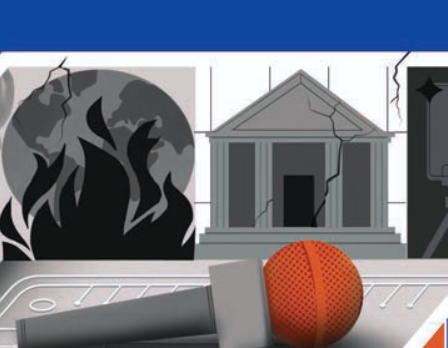
World Trends in Freedom of Expression and Media Development: Global Report 2022 /2025
Foreword
Press freedom is under attack worldwide. The global Freedom of Expression Index has dropped by 10% since 2012. Proliferating armed conflicts in many regions of the world continue to inflict unimaginable suffering on millions of civilians, while numerous governments continue to tighten control and dis-information spreads like wildfire across the global information landscape.
Against this backdrop, journalists continue to stand on the front lines and report the truth, working to defend human dignity and advance justice. Yet, they often do so at the cost of their safety: in too many places, they are attacked, exiled, or forced into silence.
Protecting freedom of expression has been a central pillar of UNESCO’s mandate since its founding in 1945, with the importance of the unrestricted pursuit of objective truth and the free exchange of ideas and knowledge embedded in its Constitution. In working to protect freedom of expression as a public good, we are working to protect the cornerstone of democratic societies. But to do so, we must first understand what is eroding it – which is the purpose of the flagship World Trends Report on Freedom of Expression and Media Development.
This 2025 edition provides insights into how the global landscape has shifted since 2021. Despite ongoing threats to freedom of expression, this report offers a few rays of hope. Community radio continues to connect people and amplify local voices, while investigative reporting exposes corruption and injustice. Journalists, civil society and local media worldwide are finding new ways to persevere and innovate: new technologies have expanded access to information for billions of people, and initiatives uniting journalists across borders show how collective action can safeguard media as a public good.
Yet, in a world grappling with misinformation and disinformation, amplified by the growing presence of artificial intelligence (AI), we must further step up our action to defend freedom of expression.
Firstly, by safeguarding media viability. In an era when support for traditional media is dwindling amid economic uncertainty, political pressure and technological shifts, defending free, independent journalism must be recognized as a development priority – and as part of wider efforts to uphold freedom of expression and information.
Promoting transparency in the digital sphere is equally crucial, although it is difficult to define and hard to achieve. In a globalized, online media landscape, concerted efforts to promote cooperation among all those involved in the information cycle are vital to ensure transparent access to information, foster accountability and empower users to make informed choices.
Lastly, as new technologies reshape how information is created and shared, we must continue to advance media and information literacy (MIL). By teaching citizens to critically engage with information and safely navigate the digital environment, we can build greater trust in today’s information ecosystem.
These challenges are at the heart of the Windhoek+30 Declaration on Information as a Public Good. This text, unanimously endorsed 30 years after the original 1991 Windhoek Declaration, reaffirms our shared responsibility to defend free, independent and pluralistic media – and underpins UNESCO’s efforts in this area.
UNESCO’s founding mission reminds us that peace is built on foundations of trust, knowledge, and dialogue. This Report speaks to the role of journalism in cementing these foundations – and offers insights into how we can fulfill our collective responsibility to protect media and information as a public good.
Dr Tawfik Jelassi, Assistant Director-General for Communication and Information UNESCO
DOWNLOAD PDF FILE:
Journalism: Shaping a World at Peace
PAPER OF THE WEEK STAYS POSTED FOR 2 WEEKS BEFORE BEING ARCHIVED
Tags: Freedom of Speech, Freedom of information, Freedom of the press, Journalism, Media, Peace Journalism, UNESCO
This article originally appeared on Transcend Media Service (TMS) on 25 May 2026.
Anticopyright: Editorials and articles originated on TMS may be freely reprinted, disseminated, translated and used as background material, provided an acknowledgement and link to the source, TMS: Journalism: Shaping a World at Peace, is included. Thank you.
If you enjoyed this article, please donate to TMS to join the growing list of TMS Supporters.

This work is licensed under a CC BY-NC 4.0 License.
Join the discussion!
We welcome debate and dissent, but personal — ad hominem — attacks (on authors, other users or any individual), abuse and defamatory language will not be tolerated. Nor will we tolerate attempts to deliberately disrupt discussions. We aim to maintain an inviting space to focus on intelligent interactions and debates.