


Artificial Intelligence and Nonviolent Conflict Resolution: What’s the Alternative?
TRANSCEND MEMBERS, 15 Jun 2026
Prof. Antonino Drago – TRANSCEND Media Service
AI vs. Nonviolence
14 Jun 2026 – Are we, nonviolent people, aware that AI is taking away nonviolence itself?
Previous technologies weakened deep human relationships: think of the classic scene of a family sitting at the dinner table staring at television images. Today, it’s clear that AI is draining personal relationships, reducing them to the bare minimum of an individualistic coexistence dominated by the artificial. This was immediately noticed at the first use of email; the immediacy of communication easily overshadowed human contact, causing irritation and even creating conflict. Today, this phenomenon is evident in young people and high school students: they are poorly sensitive to emotional reactions and human warmth. The statistics are shocking: the introduction of smartphones among the population drastically reduces fertility.
Without human relationships, there is no nonviolent conflict resolution. On the other hand, artificial intelligence (AI) claims to be able to resolve (in its own way, artificially) conflicts using the best possible techniques. Today, it is clear that AI is capable of implementing many technique involving human relationships. It is easy to predict that AI will soon absorb all nonviolent techniques; that is, it will “resolve” conflicts with techniques far more complex and sophisticated (even psychologically) than those employed by an expert trainer in nonviolent techniques. In other words, AI has the power to consider all nonviolent techniques of the past as childish compared to its enormous capacity to employ infinite techniques.
For Christians, I would add that AI applied to conflict could also resolve all religious problems, that is, all those involving the relationship with oneself, with others, with the structural sins, and with God; AI would make Christ’s crucifixion and resurrection superfluous. In practice, we will become worshipers of a totem that provides us with every solution without our engagement. This is the scene of the adoration of the second Beast in Revelation 13. The Christian revolution, instead, is founded precisely on the personal nonviolent resolution of conflicts: the conflict of the relationship between man and God, for which the Son of God took on the mission of resolving it; and the conflict of the disparity in the Trinity, which the Holy Spirit resolves by making it a Unity.
The suggestion of the digital bicycle?
What do we, as nonviolent people, propose regarding AI? Get caught up? Let ourselves be dragged along? Walk slowly?
One might ask whether there is a “convivial” alternative—to use Ivan Illich’s key term—to technological progress. But it should be noted that we are no longer dealing with a technology to be used; today, technology uses us (our data, first and foremost). This is the inversion announced by MacLuhan: “The medium is the message”: by watching TV we see the message, and the medium imposes itself on us.
Perhaps a little rationality would be enough to discover Columbus’s egg? For example, the idea of a “digital bicycle” might be tempting. It suggests that, without withdrawing from the race, we can render ourselves, at least individually, “innocent” in this world fraught with great dangers for humanity. But is this option really granted to us? Isn’t this the politics of “bread (our social survival in a digital society) and circuses (without giving up the phantasmagoria of virtual excitement)”? That is, a politics of small-scale survival while Nero is still around?
But perhaps can we follow the perspective of the AI consumer, who compensates for his subordinate position with the myth of David versus Goliath? This is certainly a policy, but it is only a counter-policy; it’s not about its relentless strategic planning. For example, how could a consumer predict that the LLM neural network will communicate like a human, thus overturning the previous frontiers of AI?
The history of nonviolent action has already been paved with good intentions (think of the search for the supposed “limit” to progress); as has the history of computer scientists (remember the exultation of computer scientists and hackers who in the world of computing believed they had created at least a partial democracy?). It’s not a good idea to add another, hoping to find the phoenix of a “limit,” or an easily circumvented “conviviality”, or a bicycle that would easily be knocked to groud by the inexorable progress of AI.
So, in my opinion, a clear alternative presents itself here: either you follow AI or you follow nonviolent conflict resolution.
Bicycle, Science, and Ethics
Therefore, in order to find out an intelligent reaction to AI we need to delve deeper into this issue.
Looking at the historical evolution of our political struggles, it seems to me we can confidently say that a digital bicycle will not exist until at least one alternative scientific principle to AI is identified, as in the face of nuclear science and technology the second law of thermodynamics did (which requires aligning the temperatures of energy sources to the desired consumption temperatures); and on this basis almost each country has been formulated (mainly by Amory Lovins) alternative energy plans.
Here, unfortunately, we lack collective reflection. Over the last half century, in the name of a never-clarified theory of complexity, we have allowed science to develop for too long without criticism (as those happened between the 1950s and 1980s: Koyré, Kuhn, Lakatos, Popper, etc.). If in politics concerning scientific issues we remain without scientific guidance, we will only be able to follow our passions, which AI activists will easily dismiss as “fear of progress” or “flat-Earth irrationality.” Conversely, with at least one alternative scientific principle to AI, we will have adequate scientific guidance to fight “on equal terms,” demonstrating that we have fully understood this civilization.
So, let’s note that if, as in the case of nuclear energy, we had an alternative scientific principle to AI, we could introduce not a limit, but a choice regarding technology. And since choices are a matter of ethics, it is clear that we must establish an ethics for it, and for AI in particular.
Therefore, a “digital bicycle” will not exist until we are able to identify an alternative ethics to the “transhumanist” ethics of AI progress.
But we must realize that today, among the various peoples of the world, there is no common ethic; much less among the various religions. So much so that today there are only generic ethical perspectives on AI, expressed in general terms (humanity, dignity, culture, etc.) that cover everything, but in practice almost nothing.
The Pope Leo’s encyclical Magnifica Humanitas deserves great credit: 1) for placing the Catholic Church’s voice on this issue from the outset (in the general silence of other religions, institutions, and states); 2) for definitively distancing itself from the nineteenth-century left’s vision, which essentially placed its trust in technology (which will merely “shift social contradictions to a higher level,” inevitably leading to the progress of peoples); 3) for treating the topic in highly interesting humanistic terms; 4) for highlighting the sinister link between AI and war, launching the imperative to “disarm AI!” But here’s the ethical crux: who should have the obligation to disarm AI? States? The soldiers who pilot drones? The military chaplains who are supposed to care for the spiritual health of the entire army? The encyclical is certainly courageous, but it too fails to provide precise ethical guidance.
The scientific basis of the very word “nonviolence”
Do we nonviolent people have at least an alternative ethical principle? YES!
In matters of ethics, we have the great teaching of Gandhi and the Italian nonviolent teachers (Capitini, Lanza del Vasto, Don Milani): the ethics of nonviolence (called consequentialist ethics because, unlike the ethics of principles to be applied more or less completely, it rightly considers the consequences of one’s actions). And we note that nonviolence is the best candidate in the world to become a universal first principle for all peoples.
But what connection does it have with scientific thinking?
Usually people reduce a conflict to a single dimension: either that of facts (objective guilt, on which the courts adjudicate) or that of contradictions (feelings of antipathy) or that of motivations (“We are starting from different premises”). And then, reasoning linearly, according to the classical logic of cause and effect, action and reaction, from this premise one derives a necessary logical consequence; which, not surprisingly, always proves the correctness of the person who posed that premise.
In the past I have already emphasized that the word “nonviolence” is of great importance because it has strong scientific implications. Nonviolence is a word with a double negative that has no affirmative equivalent (see, for example, the court ruling: “Acquitted due to insufficient evidence of guilt“; which does not mean “Innocent”). That is, sometimes two negatives affirm, other times they do not affirm, as, remarkably, in nonviolence (or in “The enemy of my enemy is…”). As a double negative, the word nonviolence belongs to non-classical logic, primarily intuitionist logic. This logic is equivalent to modal logic, that of subjunctives, conditionals (in English we say “I want…”, while in Italian we say “Vorrei…[I would like…]”), and more colloquial words, such as “amiable”; and (and this is very important), in it one reasons, although by analogy and by demonstrations ad absurdum (like Gandhi’s argument ad absurdum: “An eye [taken out] for an eye [taken out] makes the world blind”; that is, “If we accepted the rule of an eye for an eye, we would arrive at the absurdity that we would all become blind”). Therefore, the word nonviolence belongs to the non-classical logic called intuitionist and implies an alternative way of reasoning.
This explains why Capitini was inclined to multiply double negatives beyond that of “do not kill”: “do not lie,” “do not obey,” “do not collaborate,” “no one excluded,” “not closed,” etc.; and it explains why Lanza del Vasto sought to find a new logic, specific to conflicts, which he called Novissimum Organon. It also clarifies Galtung’s great innovation of defining a conflict as an A-B-C. This is an alternative to the centuries-old way of viewing conflicts with classical logic. Indeed, his definition is based on the inequality between A, B, and C; if they were not, everything would boil down to a single thing, A (“I am right”), or to a contradiction (A right / B wrong; A good / B bad). Furthermore, note that if A is different from B, and B is different from C, then is C (which is not B, which in turn is not A; and therefore is non–not-A) equal to A or not? If it were equal, the triad would no longer exist because we would be back to a contraposition A(=C) / B. Only if C, that is not–not-A, is different from A, the three terms of the triad are distinct and have the capability to circumscribe the entire conflict according to three dimensions. Therefore, Galtung’s triad is placed within a logic in which double negatives do not assert, the intuitionist one.
Remarkably, AI and computers all fall within the classical logic of A/B or ‘Yes or No,’ except to try, through statistical trial and error, to imitate human behavioral solutions. Therefore AI cannot use intuitionist logic and consequently cannot apply nonviolence.
Here a fundamental political point appears and only we, nonviolent people interested in resolving conflicts with nonviolence, can raise it: however sophisticated, AI is essentially incapable of truly resolving human conflicts. A nonviolent approach to conflict is alternative to AI’s. And this alternative can be substantiated by the alternative logic to classical logic, the dominant logic: the intuitionist logic, an accurately defined mathematical logic since the ‘30’s.
Nonviolence and Nonviolent Techniques: A Necessary Reform
We note that Gandhi said that “Westerners ignore how to manage nonviolence.” In fact, since the 1930s, the West has witnessed a rush, initiated by Richard Gregg, to intend nonviolence “concretely,” that is, with objective techniques. Later Gene Sharp surprisingly discovered that in past millennia an incredible number (198) of non violent techniques have been applied! Subsequently pragmatist Sharp’s attitude reducing nonviolence to techniques (plus stubborn obedience to a strategist) became dominant in the West. Many today believe that nonviolent conflict resolution is simply a technique they advocate (a training session, a giraffe, a distinction between minor and major, a sleight of hand with many ABC triads). And in doing so, they reduce Gandhi’s revolution to a set of bureaucratic rules (as happens in many so-called “nonviolent” training sessions!).
So, as an alternative to AI, our nonviolent conflict resolution must recover nonviolence as a profoundly human response, according to that intuitionist logic that AI cannot achieve. We must therefore recover the history of Gandhi’s nonviolent actions, which, as Lanza del Vasto said, performed “historic miracles” by managing with his profound humanity to engage the souls of his adversaries.
And then it will be clear that, to truly resolve conflicts, we must rely on non-artificial, essentially creative processes. It has already been said before: reasoning by contradiction; these reasonings ultimately lead to an act of faith in human rationality and the humanity of reason. For example, to avoid blinding the world through the law of retaliation, we must trust that it can be overcome, and we must overcome it with acts of faith in others (for example, not carrying weapons to defend ourselves from possible armed attacks); that is, by believing in general brotherhood and/or in God, the Father of all men. All things that AI cannot do.
What method of behavior should we then follow? We must finally clarify the methods of Capitini (adding an “element” to the given conflict situation), of Lanza del Vasto (finding the coincidence of opposites at a higher level, perhaps infinite), and of Galtung’s key word, “transcend.” Nonviolence involves inviting the other to participate in our acts of cooperation, having faith in humanity (and/or in God, the Father of all men): for example, giving him the cloak when he has taken the tunic, encouraging him to think proactively about the common future, etc. Finally, Freud’s method when, in his work “On Negation” (1925), he explains how internal conflicts are healed; because his method can also be applied to interpersonal conflicts: identifying in the other’s unconscious the denial of a fundamental trauma and then denying this denial: this is the hypothesis for conflict resolution. In interpersonal conflicts one has to strike the opponent’s conscience in finally his fear of death, facing possible death with a different spirit, a spirit that recalls him to profound humanity. For example, being the first to suffer the war as Don Tonino Bello did with the 500 in Sarajevo in 1992, or, as the Flotilla has been doing for years, offering oneself as hostages to the naval blockade of Gaza. AI can neither perform nor suggest all these actions because they put our entire humanity at stake.
Conclusion
In conclusion, we, the nonviolent, more than anyone else political group, hold the key to the alternative to AI, starting with the very word “nonviolence.” Given our small number, it seems incredible that we have the primary responsibility to fight artificial intelligence in depth. Yet even in the past fight against nuclear power plants, we nonviolent people played a crucial role globally.
But is today’s alternative perhaps so thin and narrow? Indeed, it requires not a simple ideology in our minds (like Marxism) or a principle of a physical theory, but a completely different way of thinking and a profound revision of our own nonviolence.
But we’ve known this since the time of the atomic bomb that humanity can commit suicide (and in many ways!). And, after being so “smart” and doggedly determined to not only create atomic bombs that threaten the survival of humanity, and to live under this threat along 80 years, we have also created AI, which encompasses almost all our knowledge and inventions. So, what way out can we expect today? That there is even a wide and simple alternative? Like reckless children, we have been playing with fire for too long. Now, escaping our past recklessness can only be difficult.
But for us nonviolent people, this way out has already been indicated out by our teachers. Which is a huge advantage; just look at the uncertainty surrounding us to believe it.
______________________________________
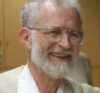 Prof. Antonino Drago: University “Federico II” of Naples, Italy and a member of the TRANSCEND Network. Allied of Ark Community, he teaches at the TRANSCEND Peace University-TPU. Master degree in physics (University of Pisa 1961), a follower of the Community of the Ark of Gandhi’s Italian disciple, Lanza del Vasto, a conscientious objector, a participant in the Italian campaigns for conscientious objection (1964-1972) and the campaign for refusing to pay taxes to finance military expenditure (1983-2000). Owing to his long experience in these activities and his writings on these subjects, he was asked by the University of Pisa to teach Nonviolent Popular Defense in the curriculum of “Science for Peace” (from 2001 to 2012) and also Peacebuilding and Peacekeeping (2009-2013. Then by the University of Florence to teach History and Techniques of Nonviolence in the curriculum of “Operations of Peace” (2004-2010). Drago was the first president of the Italian Ministerial Committee for Promoting Unarmed and Nonviolent Civil Defense (2004-2005). drago@unina.it.
Tags: Artificial Intelligence AI, Conflict Resolution, Nonviolence, Nonviolent Action, Nonviolent communication
This article originally appeared on Transcend Media Service (TMS) on 15 Jun 2026.
Anticopyright: Editorials and articles originated on TMS may be freely reprinted, disseminated, translated and used as background material, provided an acknowledgement and link to the source, TMS: Artificial Intelligence and Nonviolent Conflict Resolution: What’s the Alternative?, is included. Thank you.
If you enjoyed this article, please donate to TMS to join the growing list of TMS Supporters.

This work is licensed under a CC BY-NC 4.0 License.
Join the discussion!
We welcome debate and dissent, but personal — ad hominem — attacks (on authors, other users or any individual), abuse and defamatory language will not be tolerated. Nor will we tolerate attempts to deliberately disrupt discussions. We aim to maintain an inviting space to focus on intelligent interactions and debates.