
What Happens When the US President Ignores International Law? We’re about to Find Out, again
INTERNATIONAL LAW, 6 Apr 2026
Candace Rondeaux | New America - TRANSCEND Media Service
29 Jan 2026 – When ousted Venezuelan President Nicolás Maduro appeared in a Manhattan courtroom on January 6, he faced an unusual dilemma: Plead guilty to drug trafficking charges or assert that his arrest itself was a war crime. He chose the latter. “I am not a criminal,” he told the judge. “I am a prisoner of war.”
The exchange captures the legal paradox that will define this case for years. Is Maduro a defendant or a hostage? Is the Trump administration waging war on “narcoterrorists” or on the distinction between law enforcement and military force? And which legal framework—US courts or international law—gets to answer?
The U.S. special forces raid on Maduro’s Caracas hideout stunned the world. It sparked immediate debate about President Trump’s appetite for military force, his assertion of American dominance in the Western hemisphere, and his vision of a world divided into spheres of influence controlled by Washington, Beijing, and Moscow. Those are important questions.
But they miss something more uncomfortable.
The legal architecture that made this operation possible exposes a long-standing truth: American exceptionalism, the claim that the United States upholds a rules-based international order, has always depended on selective enforcement. The Trump administration’s logic traces back to a controversial 1989 legal memo arguing that a president may order actions that violate international law, and American courts cannot intervene. Written by Bill Barr—who went on to serve as Attorney General under George H.W. Bush and Donald Trump in his first term—to justify the invasion of Panama and capture of Manuel Noriega, the memo has lingered ever since, establishing a foundation not to question how a foreign leader was captured or when law enforcement blurs into military action. What distinguishes Maduro’s case is timing—it unfolds amid historically low faith in American institutions and an unprecedented contest over the constitutional bedrock of the separation of powers between branches.
Maduro’s Future in an US Court
Maduro’s prosecution will not be resolved under a single presidential administration. It will pass through the 2026 midterms, through a presidential transition in 2028, and into a political landscape shaped by leaders who did not initiate it.
The legal architecture of [Maduro’s capture] exposes a long-standing truth: American exceptionalism has always depended on selective enforcement.
The complexity of Maduro’s trial ensures that court action will move slowly, and by the time the prosecution moves beyond the pre-trial stage—likely months from now—control over Congress may have narrowed or even flipped following the 2026 midterms, making Venezuela, the use of force, and the legal basis for intervention natural targets for oversight, hearings, and confrontation. War-powers questions muted under a Republican-controlled government could reemerge under divided rule and pull the prosecution itself into domestic political conflict.
By the time the case reaches a decisive stage, it may be unfolding amid the 2028 presidential election. It is conceivable that the case may no longer be in the hands of the Justice Department that brought it. A future administration could inherit a prosecution forged under very different assumptions about executive power, enforcement, and legitimacy, in a political environment even more polarized than today, and courts deciding Maduro’s fate may simultaneously be asked to consider expanded federal enforcement powers and militarized tactics across the U.S., based on what we are seeing now in Minneapolis.
That creates multiple possible endings, none of them clean: a negotiated plea and exile arrangement, a prolonged trial that collapses under diplomatic strain, a conviction followed by years of jurisdictional transfers, or an unraveling in which the legal process never reaches judgment at all. Whether or not it ends in a conviction, the prosecution has already achieved what lawfare does best: It deployed military force under the banner of law enforcement, collapsing the distinction between the two while establishing a precedent that will constrain diplomatic choices for years.
The Cases That Have Set Precedent for Maduro’s Arrest
Whatever the outcome, this case will shape how future governments judge the durability of U.S. power, the consistency of its legal commitments, and the risks of being drawn into an American system of justice that can change character with every election. Three cases comparable to Maduro’s illustrate the point: the prosecutions of Panama’s Noriega, Chile’s Augusto Pinochet, and Serbia’s Slobodan Milošević.
Like Maduro, all three leaders share a reputation for authoritarian despotism. All three were also prosecuted for crimes committed in a territory outside the jurisdiction of the court that heard the case or where the conduct principally occurred, raising thorny questions about jurisdiction, sovereign immunity, and the reach of foreign law.
Whatever the outcome, this case will shape how future governments judge the durability of U.S. power, the consistency of its legal commitments, and the risks.
The U.S. case against Maduro follows a similar logic of Noriega’s 1990 Miami charges of drug trafficking and racketeering activity that occurred largely in Panama and Central America. At the time, the U.S. did not recognize Noriega as Panama’s head of state, undermining his immunity defenses. The U.S. government’s assertion that Maduro has governed without a legitimate electoral mandate works in a similar fashion to undermine head-of-state immunity.
Pinochet’s case pushed questions of sovereign immunity and foreign law even further. In the early 1970s, Washington had covertly worked to destabilize the democratically elected Chilean government of Salvador Allende, helping create the conditions for the military coup that brought Pinochet to power. That history complicated later efforts to frame Pinochet’s prosecution as a clean story of accountability divorced from geopolitics.
In 1998, years after leaving office, Pinochet was arrested in London on a Spanish warrant for torture and other abuses committed during his rule. Pinochet claimed immunity as a former head of state, but British courts ruled that crimes like torture could not be protected acts of sovereignty. The decision marked a turning point in international law, underscoring how legal accountability often trails long after the political interventions that shaped the crimes. Pinochet eventually returned to Chile on health grounds and never stood trial abroad. But the precedent weakened the idea that former leaders could rely on immunity and shaped future debates about accountability, human rights, and the limits of state power.
The 1999 prosecution of Milošević followed a different path but led to a similar outcome. As wars waged in the Balkans, an international tribunal indicted Serbia’s president for war crimes and crimes against humanity. Later transferred to The Hague and put on trial by a United Nations–backed court, Milošević died in custody before a verdict was reached as the proceedings stretched over years. What mattered most from the trial was its role in managing political fallout. The indictment set a new precedent in negotiations over aid, sanctions, and Serbia’s future relationship with Europe. Justice moved slowly, but the legal process itself reshaped diplomacy and constrained political choices long after the fighting stopped.
The risk is not that law collapses but that it endures in altered form. That exceptional enforcement becomes governance. That exception becomes habit.
Today, alongside Noriega and Pinochet, the “Milošević precedent” is viewed as the final erosion of the idea that a leader can hide behind borders. Arguably, it is this precedent that has constrained leaders from traveling freely, like Russia’s Vladimir Putin who also faces war crimes charges at The Hague. Yet when Trump hosted Putin in Alaska in August 2025, it revealed how these principles rest on selective enforcement. Maduro gets a military raid and prosecution. Putin gets a red carpet and a B2 stealth bomber flyover. The difference is not the law; it is power and self-interest.
What’s Next in the Complicated Story of Trump and Maduro
There is another, more unsettling symmetry at work. For all their differences, Maduro and Trump share a governing instinct shaped by distrust of constraint. Both have treated courts, elections, and bureaucratic processes less as guardrails than as tools to be worked around when they threaten political survival. Both have relied on loyal security forces and emergency powers to project authority amid contested legitimacy. And both have blurred the line between personal power and state power in ways that make accountability harder to isolate from politics.
That parallel does not make the two leaders equivalent. But it does complicate the story the United States is telling as it prosecutes a foreign president for criminality and democratic erosion. The case against Maduro is unfolding at the same moment American institutions are being asked to tolerate expanded enforcement powers, militarized tactics at home, and threats to invoke extraordinary authority in the name of order.
That is how lawfare works. It blends and bends the rules, pushing justice deeper into the gray zone. It does not announce itself as permanent; it accumulates. It hardens quietly through continuity, through appeals, through institutional momentum. By the time political winds shift, the machinery is already in motion. The risk is not that law collapses but that it endures in altered form. That exceptional enforcement becomes governance. That exception becomes habit.
If Maduro’s prosecution feels questionable, that may be the point. The verdict that matters most may not be delivered in a courtroom, but in the years ahead, when Americans confront what kind of power their legal system has learned to carry forward—and what it is willing to live with once it does.
____________________________________________________
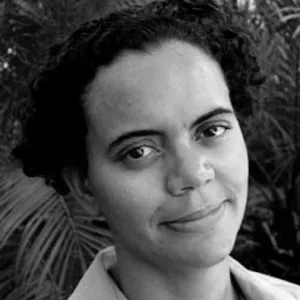 Candace Rondeaux, a globally recognized expert on international affairs, U.S. national security, irregular warfare, and the strategic use of organized violence, is a Fellow at the Future Security program at New America. Her book, Putin’s Sledgehammer: The Wagner Group and Russia’s Collapse into Mercenary Chaos (PublicAffairs, May 2025), reveals how mercenaries, mobsters, and oligarchs have become central tools of Kremlin power projection. She previously served as lead of New America’s Future Frontlines program and Planetary Politics initiative. Rondeaux is also a professor of practice with the Future Security Initiative at Arizona State University and a faculty affiliate with ASU’s Melikian Center for Russian, Eurasian and East European Studies. Before joining New America and ASU, she served as a Senior Program Officer at the U.S. Institute of Peace, where she led the RESOLVE Network, a global research consortium on countering violent extremism. As Senior Analyst for the International Crisis Group in Afghanistan and Strategic Adviser to the Special Inspector General for Afghanistan Reconstruction, she produced high-impact analysis on national elections and security sector reform. (More)
Tags: Anglo America, Hegemony, Imperialism, International Law, Justice, Latin America Caribbean, Maduro, Mafia, North America, Rogue states, South America, State Terrorism, Trump, US empire, USA, Venezuela
DISCLAIMER: The statements, views and opinions expressed in pieces republished here are solely those of the authors and do not necessarily represent those of TMS. In accordance with title 17 U.S.C. section 107, this material is distributed without profit to those who have expressed a prior interest in receiving the included information for research and educational purposes. TMS has no affiliation whatsoever with the originator of this article nor is TMS endorsed or sponsored by the originator. “GO TO ORIGINAL” links are provided as a convenience to our readers and allow for verification of authenticity. However, as originating pages are often updated by their originating host sites, the versions posted may not match the versions our readers view when clicking the “GO TO ORIGINAL” links. This site contains copyrighted material the use of which has not always been specifically authorized by the copyright owner. We are making such material available in our efforts to advance understanding of environmental, political, human rights, economic, democracy, scientific, and social justice issues, etc. We believe this constitutes a ‘fair use’ of any such copyrighted material as provided for in section 107 of the US Copyright Law. In accordance with Title 17 U.S.C. Section 107, the material on this site is distributed without profit to those who have expressed a prior interest in receiving the included information for research and educational purposes. For more information go to: http://www.law.cornell.edu/uscode/17/107.shtml. If you wish to use copyrighted material from this site for purposes of your own that go beyond ‘fair use’, you must obtain permission from the copyright owner.
Join the discussion!
We welcome debate and dissent, but personal — ad hominem — attacks (on authors, other users or any individual), abuse and defamatory language will not be tolerated. Nor will we tolerate attempts to deliberately disrupt discussions. We aim to maintain an inviting space to focus on intelligent interactions and debates.