
Araghchi: BRICS Look at Iran with Different Eyes after “US Failure”
BRICS, 18 May 2026
Juan Cole | Informed Comment - TRANSCEND Media Service
16 May 2026 – The BRICS (a broad geopolitical group including Brazil, China, Egypt, Ethiopia, India, Indonesia, Iran, Russia, Saudi Arabia, South Africa and United Arab Emirates) held a summit for foreign ministers in New Delhi on May 14-15 that was overshadowed by the relatively fruitless Trump meeting with China’s President Xi Jinping in Beijing. Iran, which attended as an observer, was naturally a big subject of conversation.
The Hormuz blockade is affecting different BRICS countries differently. India, South Africa, Egypt, Ethiopia and Indonesia are suffering with high energy and gasoline prices. India’s shortfall in Liquefied Natural Gas because Qatar supply is cut off has caused restaurants to close. Russia is getting rich off the rise in petroleum prices. Brazil is cushioned by its use of ethanol for auto fuel, and China is cushioned by its huge oil reserves and its substantial electric vehicle fleet, the largest in the world. Saudi Arabia and the UAE are blockaded and suffering huge GDP losses.
The Hormuz stand-off is extremely inconvenient to most BRICS members apart from Russia. Still, Moscow is also critical of US policy, complaining of attempts to interfere with India’s purchase of Russian oil to replace lost Persian Gulf crude.
Iranian Foreign Minister Abbas Araghchi, who attended as a non-member observer, told Iranian wire services that BRICS countries look at Iran with different eyes after what he called “the American failure” in its attack on the country. They consider, he said, that “the Islamic Republic” “has been able to establish itself as a power and actor in the region; an actor who has the ability to confront the greatest powers.”
He said many delegates were very interested in knowing how Iran stood up to the American onslaught and in benefiting from Iran’s tactics.
Since the UAE is a member of BRICS, he had pointed remarks for Abu Dhabi, condemning its close alliance with Israel and the United States against Iran and dismissing its complaints that Iran attacked it, insisting that Iran only targeted US and Israeli facilities and personnel in the Emirates that were part of the war effort. The UAE insists that Iran hit neutral targets in the Emirates. Abu Dhabi was rocked yesterday when Israeli Prime Minister Benjamin Netanyahu revealed that he had flown to the UAE during the assault on Iran, underlining the tight alliance between himself and Emirates President Mohammed Bin Zayed al-Nahayan. MBZ’s office denied the Israeli statement, but the denial was undermined when the Israeli army chief of staff also said he had visited the UAE during the war.
Indian External Affairs Minister Subrahmanyam Jaishankar pleaded, “safe and unimpeded maritime flows through international waterways, including the Strait of Hormuz and the Red Sea, remain vital for global economic well-being.”
Tass reported that Russian foreign minister Sergey Lavrov remarked that for Trump and Washington, what drove the attack on Iran was petroleum interests. He said,
“When this aggression against Iran was launched, it was launched with a clearly stated goal: to supposedly end the 47 years during which Iran terrorised all its neighbours and the world. Just like for the kidnapping of the Venezuelan president [Nicolas Maduro] the theme of his involvement in drug trafficking was invented, only for it to later turn out that it wasn’t drug trafficking at all, but Venezuelan oil that the US was interested in. Just as now, with Iran, everything has been reduced to the oil that is meant to flow through the Strait of Hormuz.”
He added, “But it wasn’t Iran that blocked this situation, it wasn’t Iran that created the problem, including with the Persian Gulf countries.”
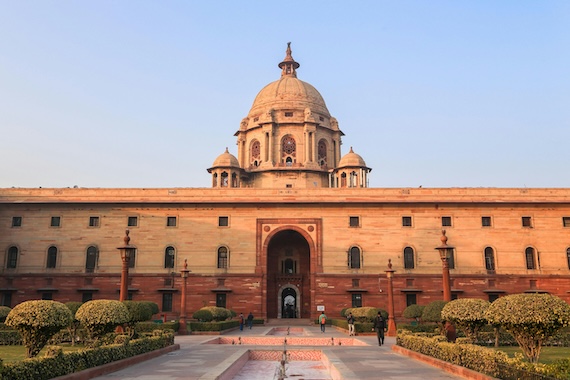
Photo by Maahid Photos on Unsplash
He pointed out that until Israel and the US launched their 28 February attack on Iran, the Strait of Hormuz had been entirely open to global shipping. He decried the attempt by Trump and Secretary of State Marco Rubio to pressure China into strong-arming Iran to reopen the strait. Lavrov asked, “What does the People’s Republic of China have to do with this?”
Lavrov said it was an inappropriate form of international diplomacy for Washington to seek to have China solve the impasse that Trump’s own policies created, remarking that the US is basically saying,” We’ve started something, we’ve reached a dead end, and we need to unblock energy, fertiliser, and food supplies through the Strait of Hormuz, but it’s not really convenient for us to do it. Iran doesn’t want to, so you put pressure on Iran.”
_____________________________________________
 Juan Cole is the founder and chief editor of Informed Comment. He is Richard P. Mitchell Professor of History at the University of Michigan and author of, among many other books, Muhammad: Prophet of Peace amid the Clash of Empires and The Rubaiyat of Omar Khayyam.
Tags: BRICS, Iran, USA
DISCLAIMER: The statements, views and opinions expressed in pieces republished here are solely those of the authors and do not necessarily represent those of TMS. In accordance with title 17 U.S.C. section 107, this material is distributed without profit to those who have expressed a prior interest in receiving the included information for research and educational purposes. TMS has no affiliation whatsoever with the originator of this article nor is TMS endorsed or sponsored by the originator. “GO TO ORIGINAL” links are provided as a convenience to our readers and allow for verification of authenticity. However, as originating pages are often updated by their originating host sites, the versions posted may not match the versions our readers view when clicking the “GO TO ORIGINAL” links. This site contains copyrighted material the use of which has not always been specifically authorized by the copyright owner. We are making such material available in our efforts to advance understanding of environmental, political, human rights, economic, democracy, scientific, and social justice issues, etc. We believe this constitutes a ‘fair use’ of any such copyrighted material as provided for in section 107 of the US Copyright Law. In accordance with Title 17 U.S.C. Section 107, the material on this site is distributed without profit to those who have expressed a prior interest in receiving the included information for research and educational purposes. For more information go to: http://www.law.cornell.edu/uscode/17/107.shtml. If you wish to use copyrighted material from this site for purposes of your own that go beyond ‘fair use’, you must obtain permission from the copyright owner.
Join the discussion!
We welcome debate and dissent, but personal — ad hominem — attacks (on authors, other users or any individual), abuse and defamatory language will not be tolerated. Nor will we tolerate attempts to deliberately disrupt discussions. We aim to maintain an inviting space to focus on intelligent interactions and debates.