
Macron, the Would-Be Pan-African: The Arsonist’s Script
TRANSCEND MEMBERS, 18 May 2026
Raïs Neza Boneza – TRANSCEND Media Service
How France’s Colonial Reflexes Betray Its Partnership Rhetoric
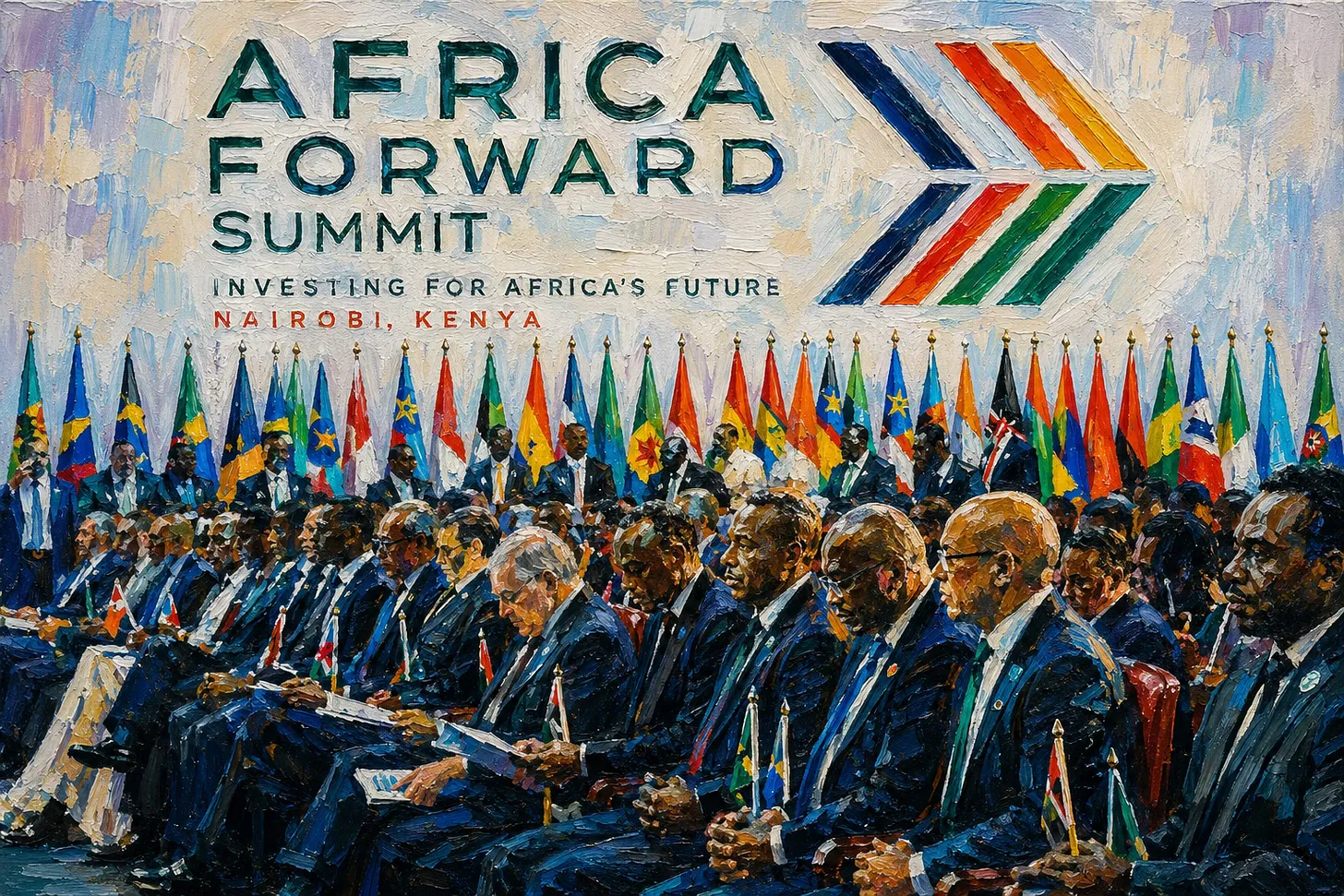
13 May 2026 – Emmanuel Macron arriving in Kenya to present France as the defender of Pan-Africanism is like an arsonist showing up at the funeral with a fire safety brochure.
Or a burglar giving TED Talks about home security. Imagine Dracula opening a blood donation center. Imagine the Titanic launching a webinar on maritime safety.
That was Macron in Nairobi.
A man representing a state accused for decades of assassinations, regime manipulation, monetary control, military interference, and resource extraction — now explaining Africa to Africans like a substitute teacher who just discovered Wikipedia thirty minutes before class. The absolute cinema of it all.
Because seriously, France calling itself “the true Pan-Africanist” power is one of the greatest pieces of geopolitical stand-up comedy seen in years. This is a state that helped assassinate Thomas Sankara — one of Africa’s most visionary sons — and nearly four decades later still cannot even produce the minimum human decency of an apology. Not even a proper acknowledgment. Just archives opened slowly like an old landlord returning stolen furniture one spoon at a time.
And yet Paris still walks into Africa with the confidence of a man who burned your house down but expects gratitude because he brought marshmallows.
For decades, France behaved in Africa less like a partner and more like an emotionally unstable ex-boyfriend. The kind that says: “If I cannot have you, nobody will.” France in Africa has always had the energy of a narcissistic ex who cannot accept the breakup. The tragedy is that Macron genuinely thinks the problem is communication. That if he simply says “equal partnership” slowly enough, Africans will forget seventy years of geopolitical toxicity. Brother, Africans are not angry because of bad branding.
You cannot rebrand colonial hangover with PowerPoint slides and LinkedIn vocabulary. And the setting made it even funnier.
When African countries tried to leave the colonial arrangement, France often left behind sabotage, monetary dependency, military pressure, political interference, and a carefully cultivated local elite trained to confuse obedience with diplomacy. The roads, the electricity grids, the financial architecture, the intelligence networks — all designed not merely for cooperation, but for permanent psychological tenancy.
That is the part Western commentary always avoids: colonialism was not only territorial. It was neurological.
The deepest colony is the mind.
And this explains why Macron’s performance in Nairobi felt so revealing. Not because he said something new — France has been repackaging the same speech for thirty years — but because the audience has changed. The African youth of 2026 is not the African political class of 1996. They are connected, multilingual, historically aware, and increasingly unimpressed by Europeans arriving with PowerPoint presentations about “equal partnership” while military footprints, CFA franc debates, and resource politics remain unresolved.
Paris understands something terrifying: the old magic is fading.
So Macron arrived in East Africa like a divorced man trying his luck in another neighborhood because everybody in the old district already knows the stories. That is why the choice of Kenya mattered. France’s traditional sphere of influence in the Sahel is collapsing. Mali, Burkina Faso, and Niger have become symbols of rupture. So Macron travels to anglophone East Africa searching for diplomatic oxygen, hoping perhaps that history has a shorter memory there.
But then came the fatal reflex.
That paternal tone.
That moment where he corrected the room as though Africa were still a classroom and France the irritated headmaster. It echoed his infamous performance years ago in Burkina Faso, where many Africans already saw the problem clearly: Macron speaks the language of modern partnership, but the operating system underneath still runs on colonial software.
And software updates cannot fix imperial instincts. Because this is France’s eternal African problem: they learned the new vocabulary but kept the old operating system. They now say “partnership” instead of “civilizing mission.” “Stability” instead of “control.” “Security cooperation” instead of “troops everywhere.”
But Africans can still hear the accent. And here is the truly terrifying part for Paris: Africa’s youth no longer fears Europe psychologically.
The irony is almost tragic. France genuinely does have enormous cultural connections to Africa. African writers, musicians, intellectuals, athletes, and workers helped build modern France itself. Paris without Africa is not Paris. Marseille without Africa becomes a museum. French culture has African fingerprints everywhere — in language, music, cuisine, sport, philosophy, fashion.
Yet instead of humility, Paris often chooses managerial arrogance. It treats Africa like a problematic franchise branch rather than a continent of sovereign civilizations.
Meanwhile, Africans themselves must confront another uncomfortable truth: foreign manipulation survives best where internal fragmentation exists. Colonial trauma did not disappear at independence. It mutated into elite dependency, artificial borders, ethnic instrumentalization, and chronic institutional weakness. Divide-and-rule was never retired. It was subcontracted.
And here enters the dangerous seduction now unfolding in countries like Kenya: the belief that “this time France will be different.”
History laughs.
Across the continent, nations that already survived the French embrace are watching like exhausted older sisters observing somebody date the same toxic man they escaped ten years ago. “You think he changed?” “No, ma chère. He just learned new vocabulary.”
The geopolitical earthquake happening in Africa today is not simply about France losing influence. It is about Africa psychologically exiting the waiting room of Europe.
Twenty years ago, a European president arriving in Africa still carried the aura of global authority. Today, African youth are online, politically aware, historically armed, and deeply unimpressed. Half of them have already fact-checked your speech before your plane lands. The old magic is dying. The old intimidation is fading.
France is discovering, in real time, the most painful experience known to narcissists:
people healing.
That is the real panic.
Because once young Africans stop seeking validation from former colonial capitals, the entire architecture of postcolonial influence begins to crack. Suddenly Paris is not the center of gravity anymore Just another capital. With strikes, riots, pension protests, expensive baguettes,
and a superiority complex large enough to require its own visa category.
En plus, neither is Brussels. Nor London. Nor Washington are center anymore either
Meanwhile some African elites still behave like France is a luxury brand instead of a geopolitical ex with attachment issues. Watching this from the rest of Africa is hilarious. And perhaps that is the real story here. Not that France refuses to let go of Africa. But that Africa is finally beginning to let go of France.
Africa starts speaking to itself. And that may be the most revolutionary thing of all.
 ____________________________________________
 Raïs Neza Boneza is the author of fiction as well as non-fiction, poetry books and articles. He was born in the Katanga province of the Democratic Republic of Congo (Former Zaïre). He is also an activist and peace practitioner. Raïs is a member of the TRANSCEND Media Service Editorial Committee and a convener of the TRANSCEND Network for Peace Development Environment for Central and African Great Lakes. He uses his work to promote artistic expressions as a means to deal with conflicts and maintaining mental wellbeing, spiritual growth and healing. Raïs has travelled extensively in Africa and around the world as a lecturer, educator and consultant for various NGOs and institutions. His work is premised on art, healing, solidarity, peace, conflict transformation and human dignity issues and works also as freelance journalist. You can reach him at rais.boneza@gmail.com – http://www.raisnezaboneza.no
Tags: Africa, Emmanuel Macron, France, Kenya, Pan-Africanism
DISCLAIMER: The statements, views and opinions expressed in pieces republished here are solely those of the authors and do not necessarily represent those of TMS. In accordance with title 17 U.S.C. section 107, this material is distributed without profit to those who have expressed a prior interest in receiving the included information for research and educational purposes. TMS has no affiliation whatsoever with the originator of this article nor is TMS endorsed or sponsored by the originator. “GO TO ORIGINAL” links are provided as a convenience to our readers and allow for verification of authenticity. However, as originating pages are often updated by their originating host sites, the versions posted may not match the versions our readers view when clicking the “GO TO ORIGINAL” links. This site contains copyrighted material the use of which has not always been specifically authorized by the copyright owner. We are making such material available in our efforts to advance understanding of environmental, political, human rights, economic, democracy, scientific, and social justice issues, etc. We believe this constitutes a ‘fair use’ of any such copyrighted material as provided for in section 107 of the US Copyright Law. In accordance with Title 17 U.S.C. Section 107, the material on this site is distributed without profit to those who have expressed a prior interest in receiving the included information for research and educational purposes. For more information go to: http://www.law.cornell.edu/uscode/17/107.shtml. If you wish to use copyrighted material from this site for purposes of your own that go beyond ‘fair use’, you must obtain permission from the copyright owner.
Join the discussion!
We welcome debate and dissent, but personal — ad hominem — attacks (on authors, other users or any individual), abuse and defamatory language will not be tolerated. Nor will we tolerate attempts to deliberately disrupt discussions. We aim to maintain an inviting space to focus on intelligent interactions and debates.