
Why the World Needs China to Save More, Not Less
SPOTLIGHT, 18 May 2026
Jeffrey D. Sachs | South China Morning Post – TRANSCEND Media Service
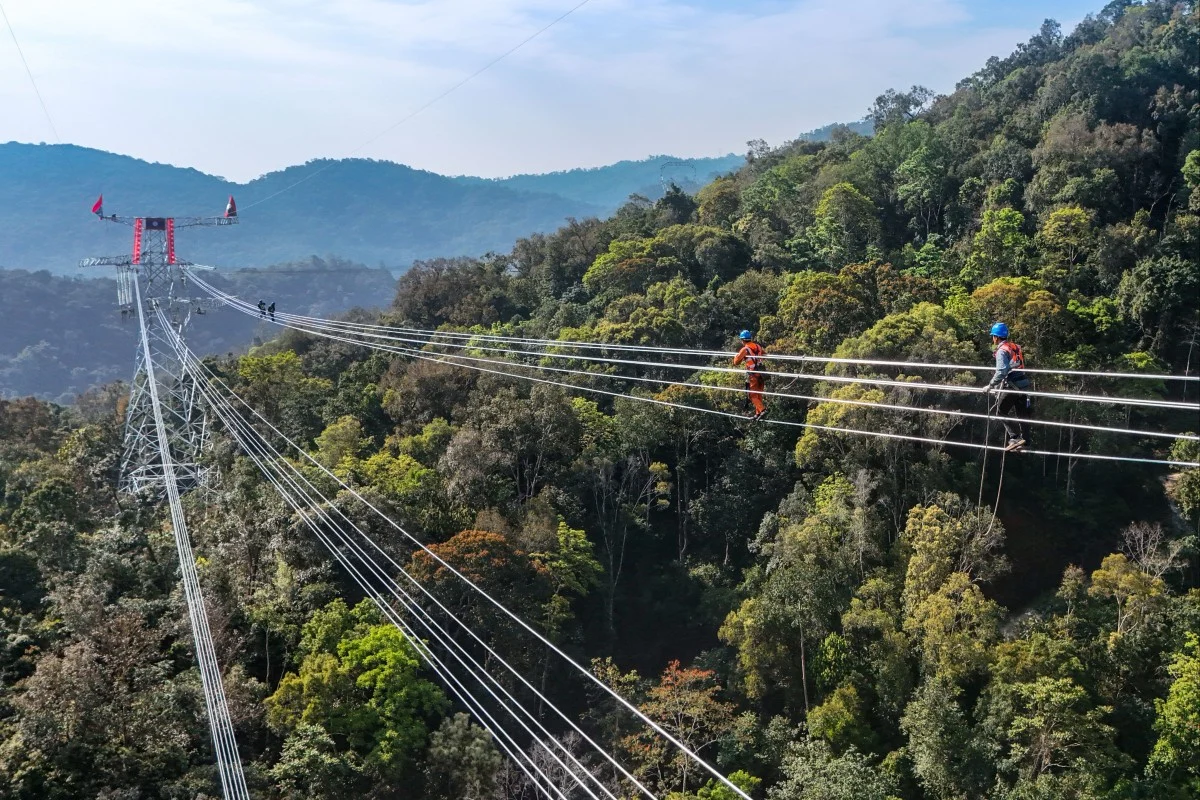
The IMF assumes China should save less. China’s saving is key to financing the developing world’s need for green infrastructure.
13 May 2026 – The G7 economists’ memo from March and the IMF’s April report on global imbalances arrived at the same prescription: China’s current account surplus is excessive and should be cut by boosting consumption.
The diagnosis is wrong. The world economy, especially emerging markets and developing economies, benefits from China’s high saving.
A current account surplus is the excess of national saving over domestic investment. The saving is not lost; it is exported abroad in the form of net capital outflows, with an equivalent increase of China’s financial claims on the rest of the world.
These claims add to China’s wealth and future national income. The economically relevant question is not whether such a surplus should exist, but whether the net capital outflows finance worthwhile investments.
However, the Group of 7 and the International Monetary Fund assume that China saves too much and should consume more. Such a view is arbitrary. China’s consumption grows over time, roughly alongside its rising national income. If the question is whether China should save less, grow less rapidly over time and reduce saving and investment, the answer is no.
The IMF speaks of “consumption-led growth in China” as opposed to saving-led and investment-led growth, but this is naive. True, decades ago, John Maynard Keynes wrote about a paradox of thrift, in which a higher saving rate in a closed economy under certain conditions can reduce output and thereby overall saving.
Yet today’s conditions are different. China’s saving is not contributing to a decline in national output or global output. It helps contribute to greater Chinese exports, greater overseas investments and growth of China’s income and foreign output.
Long-term growth comes from capital accumulation, technological progress and structural transformation, not from boosting domestic consumption. If China consumes more and saves less, there would likely be less global capital formation.
Less infrastructure would be built abroad. Fewer solar farms would be installed. Fewer transmission lines, fibre optic cables and fast rail would traverse the developing world. Global growth would slow.
On the other side of China’s current account surplus are the world’s largest investment needs. Emerging markets and developing economies require an unprecedented era of green capital formation to electrify their economies, modernise their grids, build storage and long-distance transmission, electrify their transport sectors and develop the mineral supply chains on which global decarbonisation depends. China’s saving is key to financing these investments.
By the standard credit-rating criteria, there are few creditworthy low-income or lower-middle-income countries. Despite supposed risk premiums, emerging markets and developing economies have potential for high growth. The main problem is liquidity, not solvency.
Liquidity crises or “sudden stops”, triggered by global shocks such as Covid-19, wars, and Wall Street panics, interrupt long-term development plans. The IMF, when it arrives, often arrives too late, and conditions its support on austerity rather than on long-term productive investment.
The US Federal Reserve provides liquidity, but usually just to countries geopolitically favoured by Washington. The financial architecture undersupplies liquidity to most emerging markets and reduces long-term green capital formation in regions where rapid growth and decarbonisation should occur.
The IMF report seems to be aware of these liquidity risks but it is giving the wrong prescription. Rather than addressing liquidity, it concludes that there should be lower capital outflows from China. We shouldn’t solve liquidity crises by stopping lending. We should solve them by bolstering the provision of liquidity and long-maturity lending.
China holds a key. It offers a critical potential supply of long-term financing for emerging markets and developing economies, together with the industrial capacity to turn investment demand into physical infrastructure.
China’s estimated solar-module producing capacity is 1,000-1,200 gigawatts per year. The world is currently installing only around half of that. Some call that China’s “overcapacity”. Yet with increased long-term financing, emerging markets and developing economies could install solar capacity at much higher rates.
The mix of China’s high saving rate, emerging markets’ need for green infrastructure and Chinese capacity to produce green capital goods offers a remarkable opportunity for the world economy. Beijing’s high saving should promote high rates of investment in developing countries, high rates of exports for China and speed up transitions to systems based on renewable energy, as well as bankroll long-distance power transmission, electric vehicles, grid-scale battery storage and other technologies.
The policy implications are clear. China should redirect a meaningful share of its industrial policy support from further domestic capacity expansion, where marginal returns have fallen, towards long-term green finance for emerging markets.
This external financing could come in many forms: increased market-based outflows through Hong Kong and Shanghai; increased policy-based loans through the Belt and Road Initiative; increased outward foreign direct investment by Chinese companies in overseas production; and expanded financing through multilateral institutions such as the New Development Bank and the Asian Infrastructure Investment Bank. The People’s Bank of China can also promote the internationalisation of the renminbi.
The objection to this strategy will not, in the end, be economic. It will be geopolitical. Washington will object to a strategy that assigns China a central role in global green finance. Yet the United States has stepped back from green industrialisation, halting its own investments in renewable energy and electric vehicles.
The US cannot object when others step forward. China’s green industrial capacity, deployed through long-term finance to developing economies, is the most rational, growth-promoting and climate-aligned use of the country’s high rate of saving.
______________________________________________
 Jeffrey D. Sachs, Professor of Sustainable Development and Professor of Health Policy and Management at Columbia University, is Director of Columbia’s Center for Sustainable Development and the UN Sustainable Development Solutions Network. He has served as Special Adviser to three UN Secretaries-General [Kofi Annan (2001-7), Ban Ki-moon (2008-16), and currently serves as an SDG Advocate under Secretary-General António Guterres. His books include The End of Poverty, Common Wealth, The Age of Sustainable Development, Building the New American Economy, and most recently, A New Foreign Policy: Beyond American Exceptionalism. Sachs was also an advisor to the last leader of the Soviet Union, Mikhail Gorbachev, as well as to the first president of the Russian Federation, Boris Yeltsin.
Tags: Anti-hegemony, Anti-imperialism, China, Development, Diplomacy, Economics, Global South, Taiwan, Trump, USA, Xi Jinping
DISCLAIMER: The statements, views and opinions expressed in pieces republished here are solely those of the authors and do not necessarily represent those of TMS. In accordance with title 17 U.S.C. section 107, this material is distributed without profit to those who have expressed a prior interest in receiving the included information for research and educational purposes. TMS has no affiliation whatsoever with the originator of this article nor is TMS endorsed or sponsored by the originator. “GO TO ORIGINAL” links are provided as a convenience to our readers and allow for verification of authenticity. However, as originating pages are often updated by their originating host sites, the versions posted may not match the versions our readers view when clicking the “GO TO ORIGINAL” links. This site contains copyrighted material the use of which has not always been specifically authorized by the copyright owner. We are making such material available in our efforts to advance understanding of environmental, political, human rights, economic, democracy, scientific, and social justice issues, etc. We believe this constitutes a ‘fair use’ of any such copyrighted material as provided for in section 107 of the US Copyright Law. In accordance with Title 17 U.S.C. Section 107, the material on this site is distributed without profit to those who have expressed a prior interest in receiving the included information for research and educational purposes. For more information go to: http://www.law.cornell.edu/uscode/17/107.shtml. If you wish to use copyrighted material from this site for purposes of your own that go beyond ‘fair use’, you must obtain permission from the copyright owner.
Join the discussion!
We welcome debate and dissent, but personal — ad hominem — attacks (on authors, other users or any individual), abuse and defamatory language will not be tolerated. Nor will we tolerate attempts to deliberately disrupt discussions. We aim to maintain an inviting space to focus on intelligent interactions and debates.